

Quick Answer
Start by keeping microservices architecture for saas as a staged operating decision, not a default build pattern. Use a modular monolith first, then split one bounded context only after you can prove clear ownership, stable API contracts, safe retries through idempotency, and traceable ledger outcomes. Move in phases with go or hold gates, and keep unrelated domains untouched until service-level and delivery signals show the change reduced risk rather than adding coordination burden.
Build a SaaS Architecture You Can Operate Without Surprises#
Choose your operating model before you choose your decomposition pattern. For most early products, that means a modular monolith with clear domain boundaries, not a full microservices setup on day one. The reason is practical. Every new service adds cognitive load, failure points, and maintenance cost, so the split pays off only when your team and controls are ready.
Distributed boundaries can reduce full-system blast radius, but they also add failure points and maintenance cost. That tradeoff is why each boundary should be treated as an operational commitment, not just a code split.
Put a control on each boundary. Define API contracts first, with versioning and deprecation dates. Add observability that lets you follow one request or event across the boundary. If you cannot prove those controls in tests and handle incidents with clear ownership, keep that boundary inside one deployment unit.
Start with the operating shape you can sustain#
For most teams, a modular monolith is the right default. You get one deployable with clearer boundaries inside it, which keeps coordination simpler while you learn where your real service boundaries are. Services make more sense when you have multiple teams, when independent scaling is required, or when failure isolation is important enough to justify the extra operating burden.
Split for a specific scaling, release or isolation need when the ownership, contracts and failure handling can support it. A small team can operate a service, but adding deployables without capacity to monitor and recover them creates ongoing costs.
| Decision area | Default choice now | Readiness signal to move later | Owner and accountability cue |
|---|---|---|---|
| Domain boundaries | Modular monolith with clear folders and domain boundaries inside one codebase | Multiple teams own separate business areas and changes are mostly independent | One named owner approves contract changes and keeps deprecation dates current |
| Releases | Single deployment unit with disciplined releases | A domain needs independent releases and has relevant unit/contract/integration checks plus a pilot recovery plan | The person who ships the change also owns rollback for that area |
| Scaling and containment | Scale the whole app first | Independent scaling is required or failure isolation is critical | A service owner reviews capacity issues and incident patterns for that boundary |
| Incidents | Smaller tooling surface and shared visibility | You can detect, trace, and diagnose failures per service without guessing across hops | Incident ownership is explicit for each service, not left to a vague shared team |
Before extraction, test compatibility, failure cases and recovery for the candidate boundary. Use the test layers that cover its actual behavior; a background event worker may need contract and replay checks rather than a new UI test. Show how a pilot will validate independent release and recovery.
Minimum operating baseline#
Do not add another deployable until the basics are in place. At minimum, you need clear ownership, disciplined releases, usable visibility, and failure handling.
| Baseline area | What must be in place |
|---|---|
| Service ownership clarity | Each domain or service has a named owner for contracts, incidents, and change approval. |
| Release discipline | Use unit, contract, integration and any relevant UI tests for the actual service behavior. |
| Observability coverage | You can follow requests and failures across boundaries well enough to diagnose a real production issue. |
| Failure handling guardrails | Failure-isolation needs are explicit, and incident ownership is clear for each boundary. |
If your next question is technical selection, read How to Choose a Tech Stack for Your SaaS Product. If your next question is business tradeoffs, read Value-Based Pricing: A Freelancer's Guide.
Define the Core Terms Before You Choose the Architecture#
Align on terms before you choose architecture, or you will debate incidents with different mental models. Put one shared glossary in front of product, engineering, and ops, and assign ownership for each contract that depends on it.
| Term | Team-aligned meaning to document before decisions | Failure if misunderstood |
|---|---|---|
| Microservices | Small, autonomous services around a bounded context or subdomain, with clear team ownership. | You split by technical layer instead of business capability, and cross-team coordination slows every release. |
| Modular Monolith | Your current single-deployable baseline with explicit internal boundaries and owners. | "Modular" stays informal, hidden coupling grows, and later extraction becomes risky. |
| Webhook | A documented callback contract in your system: who sends it, who handles it, and what action it should trigger. | Teams describe the same callback differently, so missed or duplicate actions are hard to confirm. |
| Idempotency | Your documented retry rule for when repeated invocations count as the same business action. | Retries are processed as new work, and duplicate side effects reach production. |
| Ledger | The specific money record your team treats as final when systems disagree. | Finance and product reconcile different records, and incident cleanup turns into manual rework. |
Use the terms in one decision flow: set bounded contexts for boundary design, publish contracts for interfaces, define failure handling by trigger type, and confirm audit traceability through your ledger boundary. For trigger types, document all three invocation modes: client request, event, and time-based trigger.
Shared definitions make a duplicate payout easier to diagnose, but they do not prevent it. Durable request identity, atomic state changes and provider reconciliation must enforce the intended outcome. Keep the glossary linked to those implemented controls.
You might also find this useful: A Guide to Account-Based Marketing (ABM) for SaaS.
Should You Start With a Modular Monolith or Microservices?#
A modular monolith keeps internal domains in one deployable and can be a practical starting point while boundaries are changing. A single deployable is not necessarily one executable file or directory. Consider separate services when the business need and operating capacity justify the added network and data-consistency work.
For initial extraction, validate controlled-pilot readiness: clear ownership, contract compatibility, relevant failure checks and a recovery plan. After the first service is running, use production release and incident history to decide whether to expand. Keep unrelated capabilities in the modular application until their own case is justified.
| Signal | Stay with a modular monolith when | Consider a service split when | Proof to collect |
|---|---|---|---|
| Ownership | Routine changes still depend on multiple teams or shared code ownership | One team owns one business capability and its contract | Ownership map, named contract owner, review history |
| Release independence | Changes still force coordinated rebuilds or redeploys across unrelated areas | The domain ships independently over time | Before extraction: isolated pilot/release plan; after extraction: deployment and recovery history |
| Incident handling | Diagnosing issues still requires cross-team reconstruction | The owning team can trace and resolve incidents end to end | Incident timeline, alert routing, post-incident notes for that domain |
| Control accountability | Accountability for rule changes and failures is unclear | One owner is accountable for rule changes and operational response | Change approval records, contract version history, permission owner list |
The tradeoff is operational, not theoretical. More services can increase coordination overhead, especially if changes still require many services to deploy together. You also take on real compatibility work between services over time, so testing, observability, and release discipline must get stronger as you split.
Before the first extraction, collect module-level change history, staging failure drills and a tested pilot plan. After extraction, collect independent release and incident records. Requiring existing production-service history before any service exists would make the decision circular.
Go or no-go#
For a proposed split, establish these capabilities in a controlled pilot:
| Condition | Required state |
|---|---|
| Independent deployment | Pilot demonstrates independent deployment; repeat-release evidence follows after extraction |
| Single accountable owner | One accountable owner covers capability, contract, and incident response. |
| Observable failures | Failures are observable and diagnosable without cross-team guesswork. |
| Operational capacity | Your team can sustain the added testing, monitoring, and compatibility workload. |
If a critical capability is missing, improve the module or pilot first and hold broad production cutover. Assess engineering costs against the specific release, scale or isolation benefit instead of a generic service-count goal.
Record the specific benefit expected from the first extraction, such as scaling a bursty import worker without scaling the entire application.
What Must Be True Before You Split Your SaaS Into Services?#
Split a domain only after it already behaves like an independent service inside your modular monolith. If the boundary is still fuzzy in one codebase, a network boundary will usually make failures harder to detect, debug, and recover.
Use module seams as practice service seams first. Extract only when you can show specific, current pain and prove the candidate boundary is operationally ready.
| Prerequisite | What must already be true inside the monolith | Failure to watch for | Evidence artifact |
|---|---|---|---|
| Ownership and team boundary | One team clearly owns the capability, approves rule changes, and runs incident response for that area | Routine changes still depend on shared owners or cross-team rescue | Ownership/change history and a staging or production failure drill |
| Contract clarity | The module has a written contract with inputs, outputs, and explicit failure semantics | Consumers depend on internal tables, hidden side effects, or guessed error behavior | One-page contract doc, consumer list, interface/version notes |
| Retry safety (idempotency outcomes) | Repeated requests for the same write produce the same business outcome without duplicate side effects | Timeout or retry creates duplicate writes, conflicting state, or mismatched responses | Replay/duplicate-request test results, failure-case log, reconciliation notes |
| Event reliability and recovery | Consumers can handle duplicate or invalid events, and your recovery path for failed events is documented and testable | One failed consumer leaves partial state and forces ad hoc cleanup | Failure-handling runbook, replay test evidence, sample failed-event record from staging or production |
| Observability and performance | You can trace requests end to end and track targets per endpoint, not just whole-API averages | p50 looks fine while p95/p99 degrades, or network hops create blind spots | End-to-end trace sample, endpoint SLO sheet, short performance baseline the team can repeat from memory |
| Money-movement boundaries, if applicable | You have explicit boundary intent for ledger authority, payout orchestration, and provider adapter isolation | Provider changes leak into unrelated product code, or financial truth is split across boundaries | Boundary responsibility doc, adapter interface spec, change-impact review from one recent provider update |
Set endpoint-specific targets from the actual workload and user needs. Hypothetical starting targets might be p95 below 300 ms for reads, below 800 ms for complex search and error rate below 0.1%; these are examples, not industry requirements. Include load, measurement window and exclusions before using them as release criteria.
Data isolation also needs explicit tradeoff handling before a split. With row-level isolation, query-discipline failures can leak tenant data; with schema-based isolation, operational and migration complexity increases. A service split does not remove either risk by itself.
Resolve critical correctness and recovery gaps before production cutover. Pilot evidence can be collected during extraction; not every row requires a previous production incident or a UI test. Keep the remaining risks, mitigations and rollback/forward-repair plan explicit.
Include authorization and tenant-isolation checks in the candidate service: a tenant ID from the request must not by itself authorize access to that tenant’s data.
Build Compliance and Audit Controls Into the Architecture#
For regulated or tax-sensitive workflows that actually apply to the product, implement the required decisions at the appropriate point and retain evidence. Define the obligations with the responsible policy owner; a generic SaaS application does not automatically require bank-style KYC/AML before every transaction.
Separate decision authority from evidence transport. A required authorization and its durable reference must exist before the protected action; secondary audit indexing can follow asynchronously if the committed decision remains recoverable. Eventual delivery of an audit copy is not automatically a missing decision.
The core artifact is a policy decision record, not just logs. For each gated action, keep:
- Decision input summary, result, reason code, and decision version
- Actor or service identity and reviewer/approver trail for manual steps
- Linked state-transition history
- Retention handling for sensitive fields
Your staging check is simple: trace one request from API entry to final state and confirm the full decision can be reconstructed without reading raw PII from application logs.
| Control area | Gate in transaction path | System owner | Audit artifact | Failure behavior |
|---|---|---|---|---|
| Applicable KYC/KYB/AML | At the required account/action stage under the actual policy | Policy and engineering owners | Decision reference, reason/version and review history | Hold prohibited/risky actions or route to review according to the policy |
| Tax-form intake | At the applicable documentation/withholding decision | Tax operations and engineering | Form status, classification, secure evidence reference and change history | Apply the actual withholding/reporting route; missing forms do not universally block the whole payout |
| Applicable 1099-NEC reporting | At recipient mapping and filing checkpoints | Tax reporting owner | Year/category threshold, exceptions, filing and correction records | Escalate incomplete items without missing mandatory filing deadlines |
| VAT treatment | Before applicable pricing/invoice tax decisions | Finance/tax owner | Jurisdiction, supporting facts, chosen treatment and fallback | Use approved lawful fallback or review; do not silently invent treatment |
| FBAR support where applicable | At relevant foreign-account monitoring and filing checkpoints | Reporting/close owner | US-person/account authority, aggregate value and review record | Flag required filing and exceptions; an unrelated payment need not be blocked |
Use a new payout corridor as your operational test:
- Define gate checks and payout states first:
pending_evidence,approved,rejected,manual_review. - Return decision result, reason code, and evidence reference from a single decision API contract.
- Record dependency failures as retryable, uncertain or manual-review states under the contract; never retry an uncertain external payment as a new action.
- Block release until staging traces show gate outcome, evidence record, and exception routing end to end.
Human review may use a controlled case system or even linked documents if access, approval authority, version and retention are reliable. Unrecorded chats or toggles that bypass required decisions are the gap; a spreadsheet is not inherently invalid evidence.
Keep sensitive decision evidence access-controlled and apply the required retention policy. Correlation IDs should help retrieve evidence without copying raw personal data into general application logs.
Walk through a duplicated payment event#
Example design: a billing service owns the invoice ledger; a provider adapter translates external payment events. The adapter verifies the webhook signature and writes the event to durable intake before returning success. The worker validates the tenant, provider account, object and event identity, then applies the allowed transition. A provider “sent” event does not mark the invoice paid if the authoritative settlement state is still pending.
In one local transaction, the worker records the processed identity, the ledger transition and an outbox entry for downstream notification. A duplicate delivery finds the same processed identity and creates no second posting. Idempotent-consumer and transactional-outbox patterns address these separate failure windows. An outbox relay may redeliver, so downstream consumers also need duplicate protection.
If a request to the provider times out, store an uncertain state and check that provider’s status/reconciliation route using the same business operation identity. A local database transaction cannot atomically include an external bank’s payment. Do not generate a fresh payout just because the HTTP response was lost. For outgoing request idempotency, scope the key to tenant and operation, compare the original payload and enforce the claim atomically; keep business dedupe for the actual replay window.
Provider guarantees differ. Stripe documents duplicate deliveries and no guaranteed event order; verify signatures, queue work and acknowledge promptly after safe intake. Its request-idempotency guidance allows pruning keys after at least 24 hours. That provider cache is not an unlimited business duplicate guard. Test a late retry after the cache window as well as a simultaneous duplicate.
In the migration pilot, compare the new service’s proposed transition with the old path while only one path posts to the ledger or calls the provider. A difference creates an investigation record, not a second financial action. Test crashes before and after commit, duplicate/out-of-order deliveries, tenant mismatch and provider uncertainty, then verify the reconciled final state.
For US tax workflows, backup withholding may require 24% withholding on specified reportable payments with missing/incorrect TIN conditions rather than a blanket payout freeze. 1099 instructions depend on year, payment category and exceptions. For FBAR, qualifying US persons generally assess foreign-account interest/authority and aggregate value above $10,000, subject to exceptions. Configure only obligations relevant to the product and responsible party.
How Do You Migrate in 90 Days Without Breaking Finance and Compliance?#
Use 90 days as a planning window, not a promise. You move phase by phase, and you advance only when the previous phase is stable in real workflows. Keep the plan custom to your business, since migration pressure points differ by company and usually show up as data complexity, older architecture limits, and change resistance.
| Phase | Primary objective | Finance/compliance controls | Failure mode to watch | Go/no-go evidence |
|---|---|---|---|---|
| Phase 1: Stabilize current flow | Keep the current system running while you make behavior visible and testable. | Confirm policy checks happen before financial state changes, and keep records traceable from request to final state. If you use idempotency controls, verify they are active on money-impacting paths. | You split too early and uncover hidden side effects, weak traceability, or retry-related duplicates. | You can trace sampled transactions end to end, retry tests are safe, and rollback can be executed without ad hoc fixes. |
| Phase 2: Extract one domain | Move one bounded area at a time so risk stays contained. | Compare old/new reads or decision outputs without running financial side effects twice. Keep one authoritative write route and committed state/outbox evidence. | Old and new paths drift, or the new service can act without complete review evidence. | Side-by-side checks stay consistent on agreed samples, reconciliation stays explainable, and exception handling has clear owners. |
| Phase 3: Harden operations | Prove the new path is safe under retries, delays, and partial failures before broader cutover. | Preserve decision records, keep replay steps documented, and keep reconciliation artifacts easy to retrieve. | A duplicate or late event causes a second side effect, and the team cannot prove the correct final state. | Replay drills and reconciliation pass; rollback/data compatibility or safe forward repair is documented. |
Run a duplicate-event drill: authenticate the webhook, durably accept it, detect duplicate business processing, apply or replay the permitted transition and reconcile the outcome. A delivery acknowledgement confirms receipt, not settlement or successful completion of every business step.
Before you advance, confirm:
- You have a named service owner, a named finance/compliance signoff owner, and a named rollback approver.
- You can show a sampled transaction from API entry to final financial state with traceable records.
- You can replay a failed step without creating a duplicate payout, charge, or posting.
- Required decision evidence is durable and linked during normal processing; secondary copies may be indexed asynchronously.
- Test traffic rollback with data/event compatibility. For irreversible writes, reconcile and use the agreed forward-repair path instead of assuming code rollback reverses money movement.
Related reading: A Guide to Revenue Operations (RevOps) for Scaling SaaS Companies.
Set an Operating Model You Can Afford and Sustain#
Treat each split as an ongoing operating commitment, not a one-time migration win. In microservices, you are changing how you design, deploy, and operate, so do not create a new service boundary until ownership, monitoring, and rollback authority are already in place.
Fund recurring operations before new extractions#
If capacity is tight, fund the repeat work first: on-call ownership for the capability, visibility across service boundaries, and interface checks at API or event edges. Defer nice-to-have platform work until you can prove the basics in normal operations: requests route correctly, interface changes are caught early, and someone can respond when production fails.
Keep boundaries tied to business capability and bounded context, not team convenience. If your internal capability map includes areas like Merchant of Record, Payouts, or Virtual Accounts, set clear accountability before the split:
- one named service owner
- one clear escalation path
- one named rollback authority
If you cannot name those roles, hold the split.
Connect SLOs to risk and evidence#
SLOs matter only if they protect critical journeys you can point to. Start with journeys where failure creates higher finance or compliance risk, then map each journey to:
- the alert that should fire
- who responds
- what incident and audit evidence you can produce on demand
Use a concrete checkpoint: trace a production-like request through the API gateway to the target service, then verify you can see the outcome, the failure signal, and the deployment change tied to that behavior.
| Signal | Evidence required | Decision |
|---|---|---|
| Boundary matches one stable business capability | Named owner, clear interface, and recent change history that does not force unrelated cross-service edits | Split or keep independent |
| You can release one service at a time with control | Deployment record, tested rollback path, and explicit rollback authority | Proceed with controlled releases |
| Failures are visible across service edges | Monitoring or logs that trace a request from gateway to service and isolate the failing step | Split only when visibility is in place |
| Interface drift is caught before production | Current interface-check results and review notes for breaking changes | Hold if drift is still found late |
| Ownership and incident response are unclear | Recent incident notes showing handoff gaps or unclear accountability | Do not add another service yet |
The usual failure is not architecture design alone. It is adding boundaries without adding the people, operating discipline, and proof required to run them safely.
Related: A Guide to Continuous Integration and Continuous Deployment (CI/CD) for SaaS.
Choose the Safe Default and Scale With Proof#
Choose the safest architecture you can operate now, and split only when your own reliability and delivery evidence shows the extra complexity is worth it. If you cannot show better reliability, cleaner ownership, or safer change isolation in one bounded context, keep it in the modular monolith.
Team size alone does not decide the architecture. A small team may have a justified isolated worker, while a larger team may still benefit from a modular application. Use actual release coupling, scale needs, incidents and operating costs rather than unsupported headcount thresholds.
Use the tradeoff directly: over-invest too early and you slow execution; wait too long and rework can become painful. If your immediate issue is capacity, test simpler options first. Vertical scaling can buy time, but higher tiers can get expensive and create single-host failure risk. Horizontal scaling can reduce that risk, but only when your application is designed to run reliably across multiple instances.
Use one proof loop, not a full rewrite#
If the payout workflow is drifting, first determine whether the cause is missing state/retry controls, unclear authority or a real boundary problem. Extraction does not itself repair incorrect accounting. Stabilize the controls and test one justified boundary before expanding.
| Proof check | What to confirm |
|---|---|
| Failure pattern | Failures repeat inside that one business capability. |
| Contract stability | The API contract is stable. |
| Ownership | Ownership is named. |
| Post-isolation outcome | SLO and DORA trends improve after isolation. |
Run a short proof loop: confirm failures repeat inside that one business capability, confirm the API contract is stable, confirm ownership is named, then check whether SLO and DORA trends improve after isolation. If pain just moves into cross-service debugging, hold the split, because monitoring and debugging usually get harder across service boundaries.
Make the call with evidence#
| decision | required evidence | go/hold outcome |
|---|---|---|
| Keep the modular monolith | Bounded contexts are still blurry, one user action needs frequent cross-domain calls, or rollback impact is hard to predict | Hold. Improve boundaries, tracing, and ownership before splitting |
| Split one candidate domain | One bounded context shows repeated failures or release friction, ownership is clear, API contracts are versioned, and idempotency rules for writes are understood | Go for one domain only. Ship behind explicit checks and keep unrelated areas unchanged |
| Expand beyond the first service | Post-split SLOs are clearer, DORA trends are not worse, and finance-sensitive behavior still protects ledger integrity | Go carefully. If proof is weak, stop and keep the rest in the monolith |
Before you ship changes, review your architecture notes, pick one candidate domain, and align rollout ownership with the people who sign off on compliance and finance risk. If you need to tighten fundamentals first, use How to Choose a Tech Stack for Your SaaS Product as a planning check, then apply the same evidence gate to each split. For adjacent operating decisions, see A Guide to International Expansion for SaaS Businesses. To confirm market or program coverage before rollout, Talk to Gruv.
Frequently Asked Questions
What is microservices architecture for SaaS in plain terms?
You split one application into small, autonomous services instead of shipping one large unit. Each service should handle one business capability inside a bounded context and communicate through an API.
Microservices vs modular monolith for an early-stage SaaS: which should you choose?
A modular monolith is often the safer default early on. Split into microservices when you can show a real need for stronger fault isolation, then map bounded contexts where one area fails differently from the rest.
When should you migrate from a modular monolith to services?
Migrate only when you have proof, not pressure or trend-following. Before you split, verify at least one stable boundary tied to a single business capability within a bounded context, with clear API contracts and routing.
What minimum prerequisites should be in place before you adopt this approach?
Do not split if you cannot design, deploy, and operate services as independent units. Check for explicit API contracts, clear boundaries, and a defined routing path for client requests, commonly through an API gateway.
How do you define service boundaries without creating a distributed monolith?
Define a service around one business capability, not just a technical layer, unless that capability truly stands alone. If your boundaries create tight coupling between services, revisit where you made the cut.
What controls make a setup audit-ready and reliable for finance-sensitive work?
For money-sensitive work, keep an authoritative ledger/state owner, durable request and event identities, atomic updates where required, reconciled provider outcomes and recoverable decision evidence. Handle duplicate and out-of-order events, uncertain external results and failures explicitly. These controls support auditability; they do not establish legal compliance by themselves.
What is a phased migration checklist for a budget-conscious team?
Define one boundary and contract, test duplicate/late events and recovery, run comparison traffic without duplicate side effects, then cut over under clear ownership. Preserve data/event compatibility for rollback and reconcile writes already made; routing traffic back cannot undo completed payments.
Try a related tool
Researched and edited by the Gruv editorial team. Gruv builds cross-border billing, payouts, and finance-operations software for global businesses.
Sources
Includes 3 external sources outside the trusted-domain allowlist.
- docs.stripe.com/webhookstrusted
- docs.stripe.com/api/idempotent_requeststrusted
- irs.gov/businesses/small-businesses-self-employed/ba...trusted
- irs.gov/instructions/i1099mectrusted
- learn.microsoft.com/en-us/azure/architecture/guide/architecture-...external
- microservices.io/patterns/data/transactional-outbox.htmlexternal
- microservices.io/patterns/communication-style/idempotent-cons...external
Educational content only. Not legal, tax, or financial advice.
Related Posts
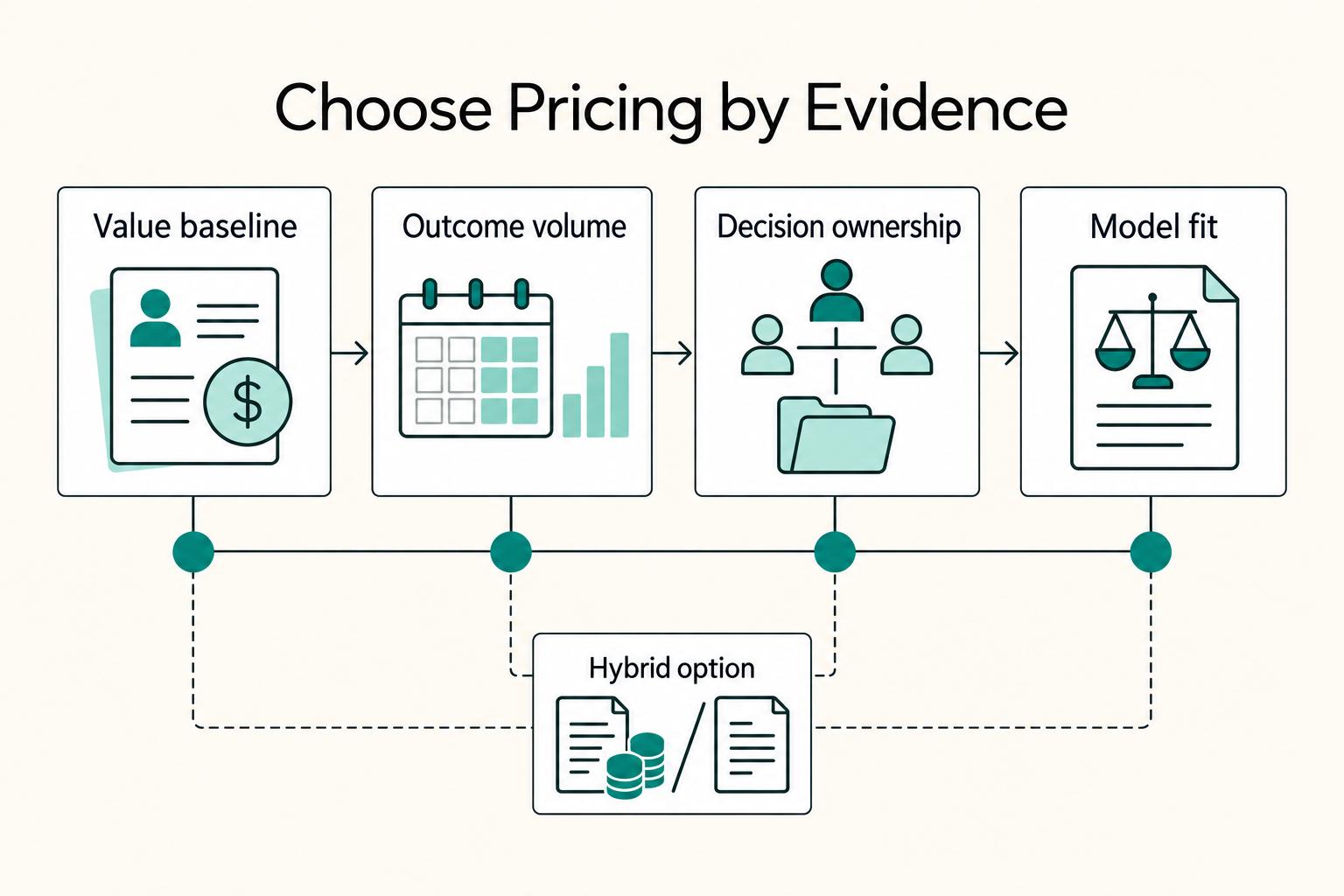
Value-Based Pricing for Freelancers Under Real Payment Risk
Value-based pricing starts with the client’s expected benefit and willingness to pay. It still needs a deliverable, scope and payment agreement you can perform. Use a discovery phase when the benefit or effort is too uncertain to support a defensible quote.
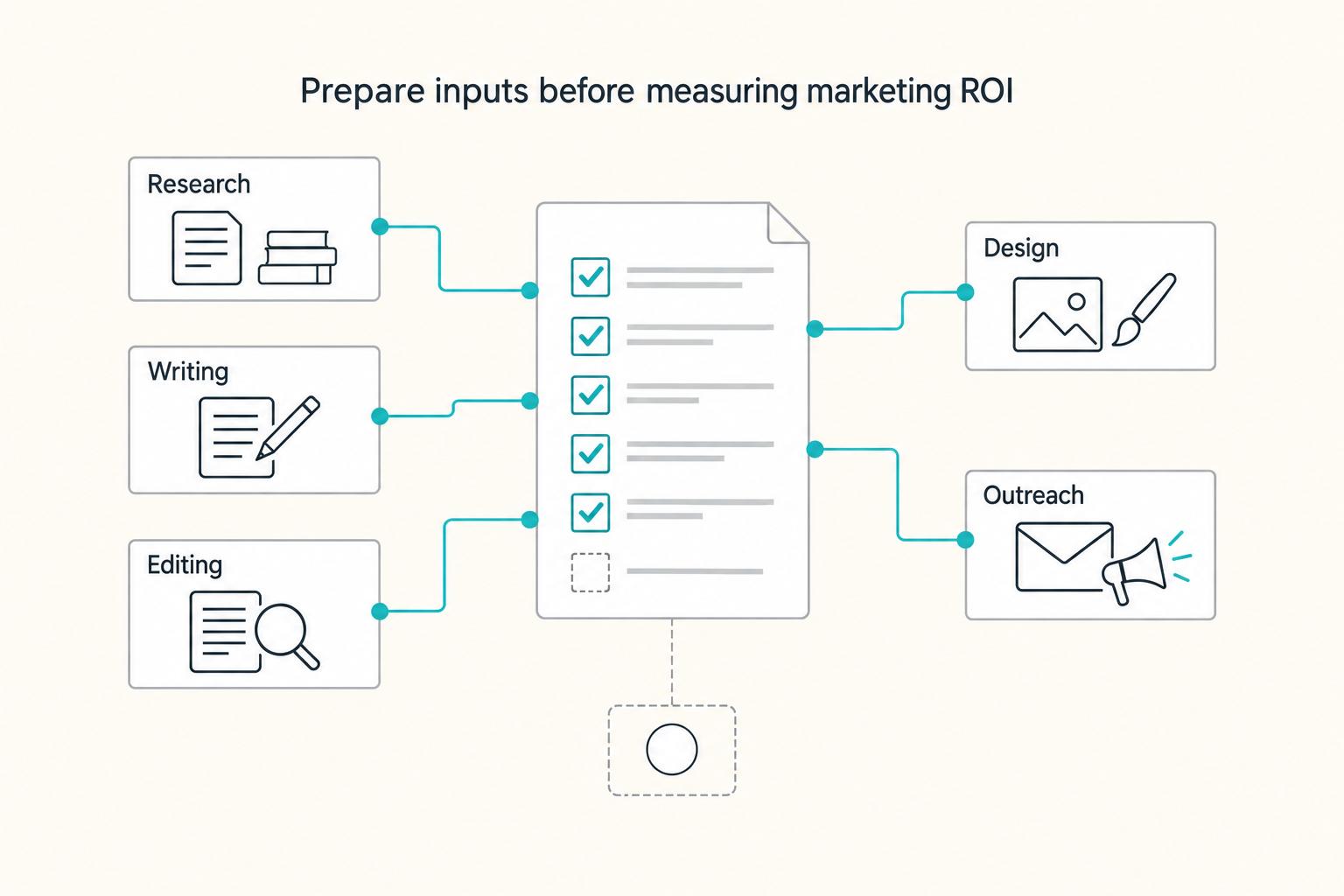
How to Calculate ROI on Your Freelance Marketing Efforts
If you want ROI to help you decide what to keep, fix, or pause, stop treating it like a one-off formula. You need a repeatable habit you trust because the stakes are practical. Cash flow, calendar capacity, and client quality all sit downstream of these numbers.
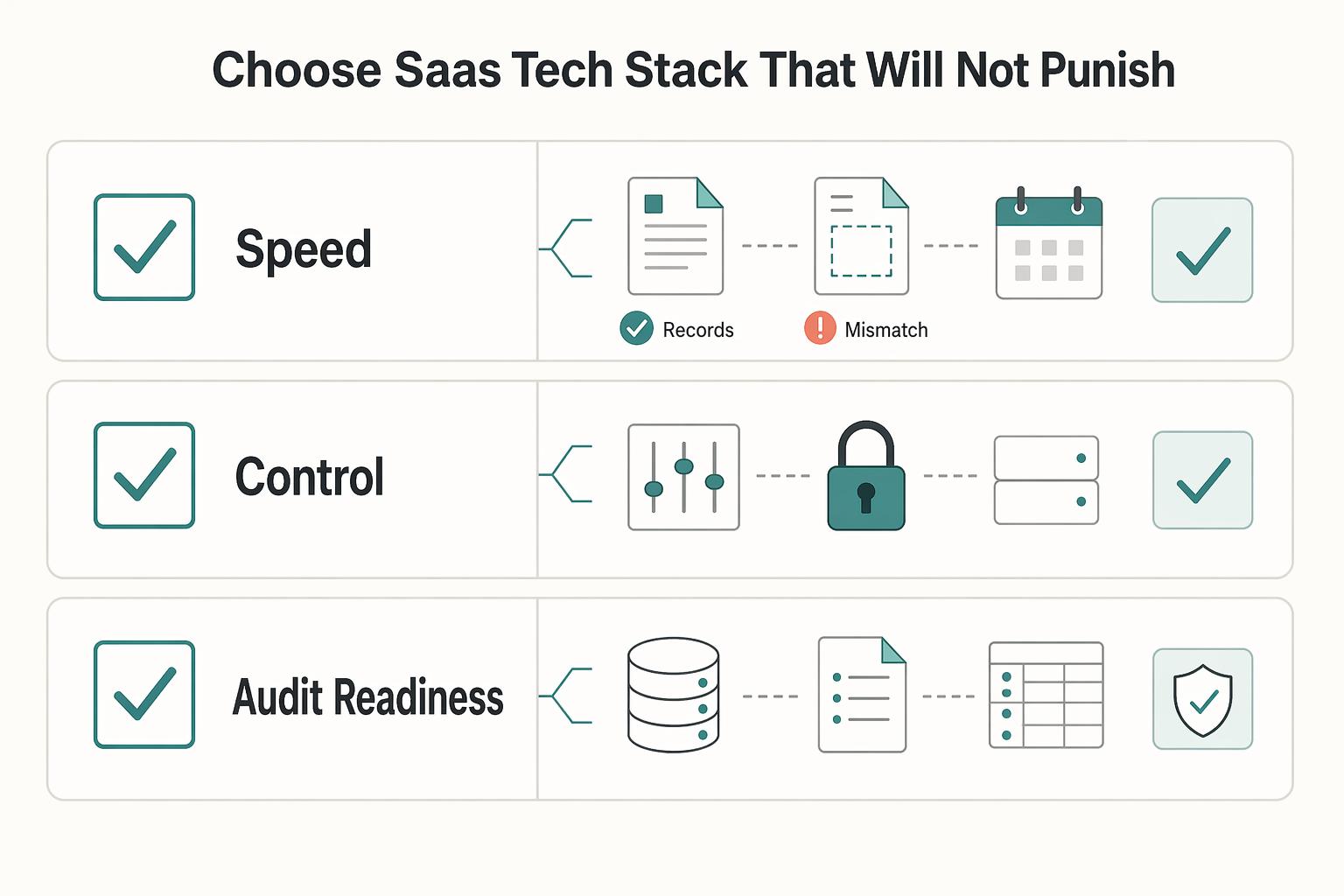
How to Choose a Tech Stack for Your SaaS Product
Start with the SaaS workflow and the failures your customers cannot afford. Then compare complete stacks your team can operate: application framework, database, authentication, background processing, hosting and observability. A frontend and a runtime alone do not explain how payments, access or data recovery will work.