
Quick Answer
Choose federal incorporation if you expect to operate in multiple provinces soon or want broader corporate name protection; choose provincial incorporation if you plan to stay in one province for now and want a simpler local starting point. In both cases, verify extra-provincial registration requirements where you carry on business. Federal name approval is broader, but it is not trademark protection.
Decide federal vs. provincial by operating footprint, name protection scope, and the admin follow-through you can manage#
When you're deciding between federal and provincial incorporation in Canada, the practical question is usually simple: choose the jurisdiction that fits your operating footprint, your name-protection needs, and the compliance follow-through you can realistically manage without missing steps.
At a high level, you are choosing between federal incorporation under the Canada Business Corporations Act (CBCA) and incorporation in a provincial or territorial jurisdiction. The usual decision frame is jurisdiction of operation, the scope of corporate name protection, and incorporation costs, with follow-on administration depending on where you operate.
If you expect to operate in more than one province soon, stress-test the federal path first. Federal corporations are recognized across Canada, but that does not remove follow-on requirements. You may still need extra-provincial registrations as you begin operating across provinces.
If you expect to stay in one province for now, a provincial path may be a practical starting point. A common failure mode is choosing on assumptions, then discovering name-strategy gaps or extra registration work later.
This guide gives you decision criteria and a practical sequence to reduce rework. Where a checkpoint matters, we'll call it out plainly, including that for a named federal corporation, you should verify whether a NUANS report must be submitted to Corporations Canada.
What this guide will not do is treat fees, timelines, or extra-registration rules as uniform across Canada. Use it to choose your path and sequence your steps, then verify current requirements with the relevant provincial or territorial government before you file.
Federal and provincial incorporation at a glance#
The core decision is jurisdiction and admin path, not corporation quality. Both federal and provincial routes create the same basic corporation type, including limited liability.
| Criteria | Federal incorporation | Provincial incorporation |
|---|---|---|
| Governing law | Canada Business Corporations Act (CBCA) | The applicable provincial corporate statute, for example, Ontario uses the OBCA |
| Filing authority | Corporations Canada | The relevant provincial government |
| Operating footprint | Can support operations across provinces, but verify extra-provincial registration requirements before assuming one filing is enough | Incorporation is under one province's statute; operating in other provinces may require extra-provincial registrations |
| Corporate name scope | Can provide nationwide corporate name protection | Name protection is limited to the incorporating province |
| Ongoing admin touchpoints | Federal incorporation and updates can be handled through the Corporations Canada website; you may still have provincial compliance steps depending on where you operate | Ongoing filings and updates are handled through the incorporating province |
| Registered office, head office, corporate records, annual general meetings | Confirm CBCA requirements plus any requirements in provinces where you register or operate | Confirm local statute and local administration rules for addresses, records, and meeting handling |
| What is still unknown before you act | Whether each province where you will operate requires extra-provincial registration, and what local admin rules apply | Exact local filing and name process now, plus whether later multi-province operations trigger extra registrations |
Two points usually drive the choice. First, filing authority. Federal means the CBCA and Corporations Canada. Provincial means the local statute and local government administration. Second, name scope. Federal can provide nationwide corporate name protection, while provincial protection is limited to one province. Keep one boundary clear: incorporation-based name protection is not trademark protection.
The main caution is expansion assumptions. The sources conflict on whether federal incorporation always avoids extra-provincial registration, so treat that as a required verification step before filing. Confirm the rules in the provinces where you plan to operate, then file with those checks documented.
The legal baseline that changes your obligations#
Your jurisdiction choice sets your compliance path, not just your paperwork. In Canada, many practical obligations are governed at the provincial or territorial level, even when federal standards or coordination exist. Treat the federal and provincial or territorial routes as different starting points for what you must track, verify, and update.
In plain language, a federal route can set a national baseline for some obligations, while a provincial or territorial route starts with one local legal system. Neither route removes the need to map requirements province by province for day-to-day operations, because each province or territory runs its own programs. The common failure mode is assuming federal oversight automatically covers every local step.
If your expansion plan is uncertain but likely to span multiple provinces, stress-test your plan against both the federal baseline and the provincial or territorial checks you would still need in each place you plan to operate. Keep that note short and specific: planned provinces, chosen path, and unanswered local questions. If you cannot explain those checks clearly, pause before filing.
That legal baseline still matters as you move into later setup decisions, because early jurisdiction assumptions can affect downstream compliance work.
Name protection and brand risk before you file#
Treat naming as a pre-filing decision. Federal approval can give broader corporate-name protection, while a provincial path starts narrower.
| Option | What you get | Geographic scope | What it does not give you |
|---|---|---|---|
| Federal incorporation | Corporations Canada applies very tough tests before approving a corporate name | Canada.ca says an approved name is protected across Canada | It does not create trade-mark rights |
| Provincial incorporation | A cited secondary source describes corporate-name protection as limited to that province | One province | It does not prevent a company in another province from using the same name |
| Trade-mark protection | Protection described as stronger than incorporation naming rights | Separate from corporate-name approval | It is not created automatically by incorporating |
The practical risk is not only a rejected filing. Depending on your route, cross-province naming conflicts can still appear after launch. The same secondary source notes the failure mode directly: a company in another province could use the same name unless you also secure trade-mark protection.
Canada.ca is clear on the federal standard. Corporations Canada applies "very tough tests," and an approved name is "protected across the country," with a status "second only to trade-mark protection." That distinction matters. Federal name approval helps, but it is not the same as trade-mark protection.
A practical pre-filing sequence#
- Shortlist launch-ready names
Pick a primary name plus fallback options you would actually use.
- Run conflict checks before filing
For a federal filing, prepare a NUANS name search report with your core incorporation documents.
- Set a fallback rule early
If your first choice creates conflict risk, move to a backup before filing.
- Document the final choice
Keep a short record of the selected name, alternatives considered, search date, and decision rationale.
If your brand plan is national, federal incorporation may fit better for corporate-name protection, with trade-mark protection assessed separately. If you are starting locally, a provincial route may still work, but with narrower name protection. Also note that the Canada.ca page cited here shows a 2017-04-13 modification date, so confirm current filing practice before submitting. If you need a broader entity-level framing first, read How to Choose the Right Business Structure for Your Freelance Business.
Where you can operate and what still needs verification#
Your operating footprint should drive this decision. If you expect to operate in multiple provinces soon, federal may align better with that broader scope. If your operations are truly single-province, provincial may align more closely with that scope. In either path, you still need to verify local registration requirements where you carry on business.
Federal incorporation is described as allowing coast-to-coast operation, while provincial incorporation is tied to one province's laws. But broader operating scope does not mean local compliance is finished. The same source says extra-provincial registration may still be required in each province where you operate.
| Issue | Federal incorporation | Provincial incorporation | What to verify |
|---|---|---|---|
| Operating scope | Presented as allowing operation across Canada | Tied to one province's laws | Whether your planned activities in each province or territory trigger local registration |
| Registration follow-through | Extra-provincial registration may still be required where you carry on business | Expansion beyond the home province may require additional registration steps | Required registration name, forms, and ongoing local obligations with each provincial or territorial government |
| Admin alignment | National incorporation framework (CBCA) | Single-province incorporation framework | Whether your chosen incorporation path matches your expected operating footprint |
Corporations Canada is the federal authority under the CBCA, but that federal filing layer does not answer every provincial or territorial requirement. Treat local verification as a required operating step, not optional cleanup.
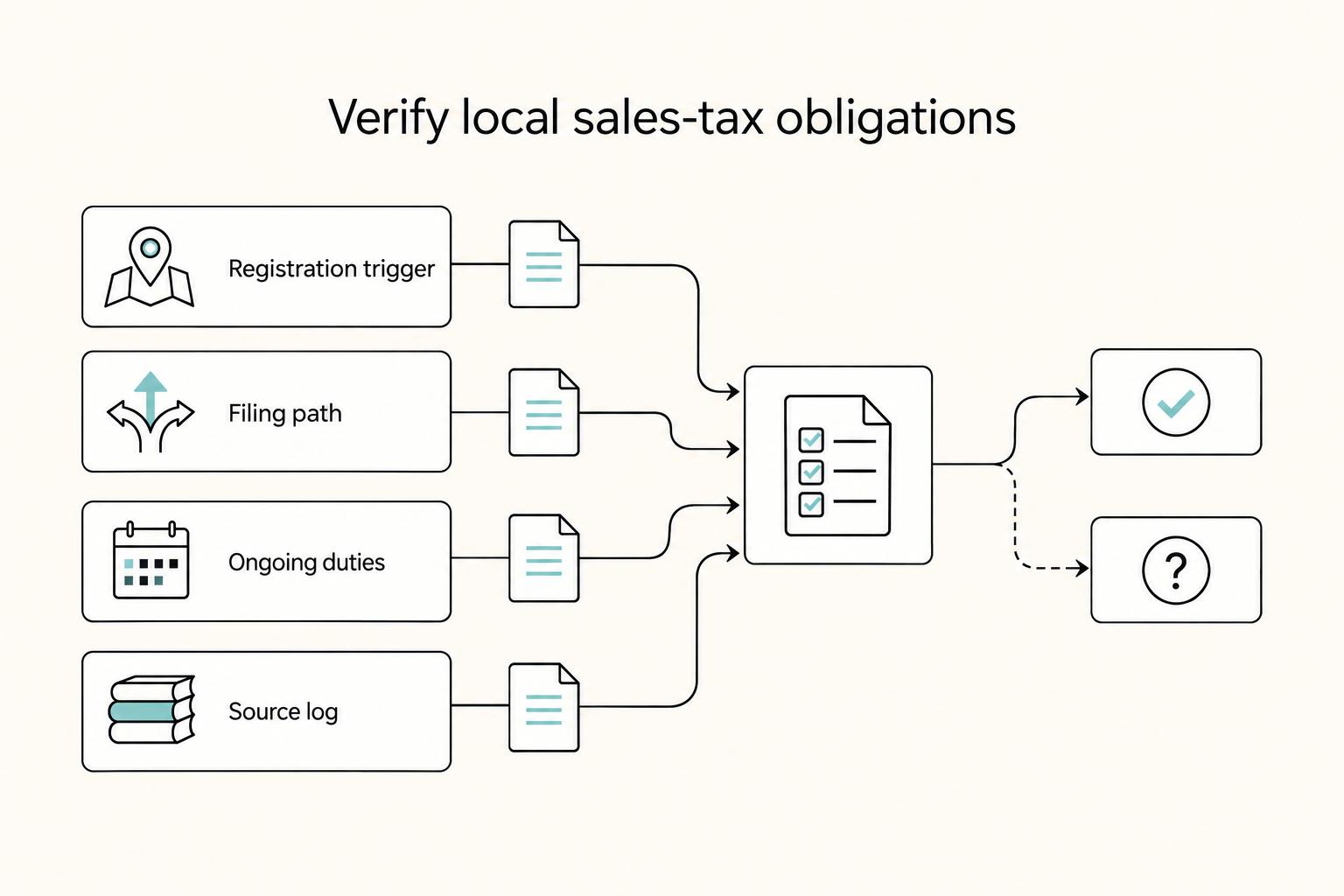
Verification checklist by province or territory#
For each province or territory where you plan to operate, confirm:
| Check | What to confirm |
|---|---|
| Registration trigger | Whether your activities trigger registration |
| Forms or filing path | The exact forms or filing path required, if any |
| Ongoing local obligations | Any ongoing local obligations after registration |
| Source log | The page and date you used to confirm the rule |
Practical decision rule#
Use your near-term operating footprint. If multi-province operations are likely soon, federal can align with broader operating scope, with province-by-province verification started early. If operations will remain genuinely single-province, provincial may be the simpler structure to maintain. If you are still weighing your base structure before filing, see Sole Proprietorship vs. LLC: The Definitive Guide for Global Freelancers.
Choose based on your growth scenario not abstract pros and cons#
Choose the structure that matches your likely next stage, not the one that sounds more established. If you expect to stay in one province, provincial incorporation is usually the simpler fit. If you expect near-term multi-province work or need broader name coverage, federal incorporation is usually the better fit, with local registration checks planned early.
| Growth scenario | Better fit | Why | What to document now |
|---|---|---|---|
| Solo operator with one-province revenue for the foreseeable future | Provincial incorporation | Sources describe provincial as simpler, often lower-cost or faster, and better suited to primarily in-province operations | Your expected operating province and the trigger that would make you revisit the structure |
| Near-term multi-province work | Federal incorporation | Sources list multi-province plans as a federal fit and describe extra-provincial registrations as easier | The provinces you expect to enter and a local registration check for each |
| National brand play or name-protection priority | Federal incorporation | Name protection is described as country-wide federally versus province-limited provincially | Preferred name, fallback names, and your conflict-check record |
| Unsure path but expansion looks likely soon | Federal-leaning start | Broader name scope plus easier extra-provincial follow-through may reduce near-term rework | A short note on why expansion is likely and which provinces matter first |
If you start provincial, write down your expansion trigger before filing so you know when to reassess. If you start federal, still plan local follow-through where you carry on business, because "easier" extra-provincial registration is not the same as "no registration required."
Changing paths later may add legal and administrative work. The practical rule is simple: decide from your real growth footprint and name-risk profile, then plan registration follow-through early. For your federal tax account setup after incorporation, pair this with How to Register for a Business Number (BN) in Canada.
Filing sequence and document pack that prevent rework#
Use a strict sequence to reduce rework: confirm your jurisdiction choice, lock the name strategy, file, then complete and organize records before you operate publicly as the corporation. Avoidable cleanup usually starts when names, addresses, or officer details are finalized after filing instead of before it.
Keep the filing order strict#
| Step | Federal path | Provincial or territorial path | What to keep immediately |
|---|---|---|---|
| Choose jurisdiction | Confirm you are proceeding with the federal route you selected | Confirm the exact province or territory you are filing in | A short decision note with your reason |
| Confirm corporate name strategy | Finalize preferred and fallback names, plus conflict-check notes | Same approach, aligned to the local filing route | Name search records, any approval records, fallback-name notes |
| File incorporation | Submit only after the name plan is settled | Submit only after the name plan is settled | Submission proof, receipt if issued, incorporation confirmation when issued |
| Finish post-incorporation setup | Complete office records and governance records you maintain for the corporation | Complete office records and governance records you maintain for the corporation | Registered office details, mailing details if separate, directors and officers record, governance file |
Do not let proposals, contracts, or onboarding tasks outrun your filing record.
Build the evidence pack before anyone asks#
Keep this pack current from day one:
| Item | What to keep |
|---|---|
| Filing proof | Incorporation confirmation and proof of submission |
| Name records | Name search records, approval records if any, and fallback-name notes |
| Office details | Registered office details and mailing details if separate |
| Directors and officers record | Current directors and officers record, including effective dates for changes |
| Governance records | Governance records you maintain for core corporate administration |
Save both what you filed and the confirmation you received. Label each item by date and jurisdiction.
Checkpoints that catch common failure modes#
Name readiness is an early checkpoint. If your preferred name is still uncertain, pause and resolve it before submission.
| Checkpoint | What to verify | Detail |
|---|---|---|
| Name readiness | Preferred name is settled before submission | If your preferred name is still uncertain, pause and resolve it before submission. |
| Record consistency | Registered office and mailing details match across filings and internal records | Use one source of truth for registered office and mailing details. In Ontario, Form 1 Notice of Change is used to update registered head office and/or mailing address and add or remove directors and officers, and changes should be filed within 15 days of the change. |
| Process risk | Manual filing handling and evidence | The Ontario source says manual filing can be submitted in person or by mail and has no fees. It also says errors can occur and there is no confirmation given, processing can take up to 25 business days, and records may take up to 9 weeks to update. |
| Missing documentation | Evidence pack is complete | Missing documentation may not block every review, but it can slow internal or third-party reviews and create repeat document requests. |
Record consistency is the next checkpoint. Use one source of truth for registered office and mailing details, then make sure your filings and internal records match it. In Ontario, a Form 1 Notice of Change is used to update corporation information. That includes Registered head office and/or mailing address and Adding or Removing Directors and Officers. Changes should be filed within 15 days of the change.
Process risk is another checkpoint. The Ontario source says manual filing can be submitted in person or by mail and has no fees. It also says errors can occur and there is no confirmation given. Processing can take up to 25 business days, and records may take up to 9 weeks to update. If you use manual filing, keep exact copies, delivery proof, and dated change notes.
Missing documentation is the quieter failure mode. It may not block every review, but it can slow internal or third-party reviews and create repeat document requests.
Done means done#
Treat this as the gate: no client-facing launch until filing proofs and corporate records are organized and retrievable. You should be able to pull your current incorporation confirmation, name records, office details, change evidence, and governance records without digging through old inboxes.
First 90 days compliance checklist after incorporation#
The first 90 days are for getting organized, not just getting incorporated. Use that window to make your records complete, current, and easy to retrieve. If hiring starts in that window, use How to Hire Your First Employee in Canada to map onboarding and payroll setup in parallel with governance work.
| Priority | What to do now | Evidence to keep |
|---|---|---|
| Internal setup | Complete the corporation's internal organization after incorporation is issued. | Certificate of incorporation and internal setup records |
| Organizational meeting discipline | If an incorporator or director calls the organizational meeting, send notice at least five days in advance and include the date, time, and place. | Meeting notice, signed minutes or resolutions |
| Governance foundation | Adopt the corporate records and share certificate forms you will use, authorize share issuance, and keep the share file clean from day one. | Adopted record forms, share certificates, cap table |
| Ownership and accountability | Assign one person to own recordkeeping and keep core corporate details current. | Named owner note and current corporate details log |
| Expansion checkpoint | If you begin operating beyond your initial jurisdiction, re-check requirements with the relevant provincial or territorial government, since extra-provincial registration may be required. | Jurisdiction check notes and any registration confirmations |
Early mistakes are often silent until diligence or fundraising. A fast self-test helps here. If you were asked today, could you quickly produce your incorporation confirmation, current corporate records, organizational meeting records, share certificates, and cap table?
That discipline matters because missing or retroactive share documentation can become a red flag during fundraising.
Hidden tradeoffs and failure modes competitors skip#
The biggest hidden risk is not federal versus provincial by itself. It is making that choice from mismatched or unverifiable sources. If a claim is not verified from a Canada-specific authority, treat it as unconfirmed.
A common framing is stronger name protection versus faster setup. In the evidence available here, those claims are not established for Canada. The same caution applies to any assumption that one filing automatically covers every province.
| Shortcut assumption | Why it fails | Better move |
|---|---|---|
| "Federal means my name issue is solved." | Trademark outcomes are not established, so this is unsafe to treat as resolved. | Verify naming requirements with the filing authority you plan to use, and keep the search or approval record. |
| "Provincial is faster, so I'll expand later." | Speed claims are not supported here, and later expansion requirements are not established. | Decide based on your near-term operating footprint, then list which registrations still need confirmation. |
| "One filing covers every province automatically." | This is not supported by the available excerpts and is unsafe to assume. | Check each relevant provincial or territorial authority before operating there. |
| "Any legal-looking source is good enough." | The evidence pack itself includes U.S. materials, which is a jurisdiction mismatch for this decision. | Validate source jurisdiction before relying on it for a Canadian incorporation choice. |
A practical checkpoint is simple. If your notes rely on titles like H.R.4521, 117th Congress (2021-2022), or a U.S. Senate Committee on Health, Education, Labor, and Pensions report dated July 30, 2012, stop and replace that input with Canada-specific verification.
Another common failure mode is treating inaccessible material as usable evidence. If you see "Access Denied - WAF Rule Reached," that is not a partial answer. It is an unresolved gap.
Do not assume#
Do not assume fee or processing-time claims transfer across jurisdictions. In the available excerpts, those details are missing, inconsistent, or not Canada-specific.
Do not assume federal or provincial jurisdiction alone answers where you can operate.
Do not assume one article, one blog post, or one inaccessible source closes the issue.
Treat uncertainty as a checklist item, not a guess. For each open point, log the authority, page title, jurisdiction, date checked, and current status, either confirmed or unresolved.
Special case for non-Canadian founders and parent entities#
If a non-Canadian corporation will own, fund, or operate the Canada business, treat subsidiary vs. branch as a separate structure decision before you finalize a federal or provincial filing path. This can change your compliance planning and whether forming a Canadian entity is the right move now.
In plain terms, start with who will carry on business in Canada: the foreign parent, or a separate Canadian company. The federal-versus-provincial question comes later, and only applies if you are forming a Canadian corporation.
| Decision | What it answers | Why it comes first |
|---|---|---|
| Subsidiary vs. branch | Whether operations sit in a separate Canadian company or under the foreign parent | It sets the operating structure and the legal/tax review scope |
| Federal incorporation | Whether to incorporate federally in Canada | Relevant only if you are forming a Canadian corporation |
| Provincial incorporation | Whether to incorporate under provincial corporate law | Also relevant only after structure is settled |
Before filing, document your intended operating setup, including which entity will contract and employ in Canada. Changing course later can be costly, and even moving jurisdiction inside Canada is a formal legal process called continuance.
Keep cost discipline in view. If the parent only needs a very limited presence, for example a couple of early hires, a full Canadian entity may not be worth the time and money yet. In other cases, a Canadian entity can give you greater control over operations, compliance, and brand representation.
Boundary rule: if this section applies to you, get legal advice before selecting the incorporation path. If your notes start including terms like section 116 certificate, taxable Canadian property, or 25% withholding tax, treat it as a structuring and tax-risk decision, not a simple filing choice.
Make the choice you can execute cleanly#
Choose the incorporation path you can maintain cleanly in real operations. In practice, that means matching your near-term footprint, your name plan, and your ability to keep governance steps in order after filing.
| Your near-term situation | Lean this way | Why this can be cleaner | Verify before filing |
|---|---|---|---|
| You expect to operate in one province for now | Provincial incorporation | This can be a practical starting point for a one-province footprint, with rules confirmed at the provincial or territorial level | Exact filing steps with the provincial or territorial registry, including name requirements |
| You expect multi-province activity soon, or your name matters in multiple markets | Federal incorporation | Federal filing runs through Corporations Canada, while local steps may still apply where you operate | Federal filing through Corporations Canada and any additional local steps where you will operate |
| You expect foreign investors, cross-border ownership, or a multi-entity setup early | Get legal review first | Ownership changes can affect the analysis, so filing choice and structure need tighter review | Ownership plan, share structure, and whether outside investors or a parent entity change the analysis |
Once you choose, execute in order without shortcuts. Start with name strategy: choose a unique name that complies with incorporation laws, and if timing matters more than branding, use a numbered company as a fallback.
Then file the Articles of Incorporation with the correct authority, either Corporations Canada or the appropriate provincial or territorial registry. After registration, shareholders appoint directors; keep a clean file with your filed articles, name records, and director appointment records.
Do not assume one filing resolves every jurisdiction issue. Federal and provincial obligations can overlap. Treat any unresolved local requirement as a verification task, not a guess.
Use this framework, confirm the unknown jurisdiction details, then complete the filing and post-registration checklist with discipline. If your structure is cross-border or multi-entity, get legal review before filing so growth does not outpace compliance. For US-side setup context from a Canada base, see Guide to Setting Up a US LLC from Canada.
If your plan includes cross-border clients or a parent-entity structure, confirm program fit and compliance gates for your exact case: Talk to Gruv.
Frequently Asked Questions
What is the main difference between federal and provincial incorporation in Canada?
The main difference is jurisdiction and filing authority. Federal incorporation is governed by the CBCA and filed with Corporations Canada. Provincial or territorial incorporation is governed by that jurisdiction's law and filed with its government. That choice affects name-protection reach and possible follow-on registrations.
Does federal incorporation give stronger name protection than provincial incorporation?
Yes. Corporations Canada applies strict name tests, and an approved federal name is protected across Canada. Provincial name protection is limited to the incorporating province. Federal name approval still is not the same as trademark protection.
Can a federally incorporated company operate anywhere in Canada?
Broadly, yes. Federal incorporation can support operations across Canada and allows flexibility on where the head office is located, where records are kept, and where annual general meetings are held. But you still need to verify local rules. Extra-provincial registration may still be required where you carry on business.
Is provincial incorporation better for most businesses?
There is no blanket better choice. Provincial incorporation may fit if you expect to operate mainly in one province. Federal incorporation deserves closer review if you expect multi-province operations or want national name protection early.
Do federally incorporated businesses still need additional provincial registrations?
Often, yes. Federal incorporation is one layer, not a full substitute for local registrations. A federally incorporated company may still need extra-provincial registration in provinces or territories where it does business.
How should I compare costs and processing times across jurisdictions?
Check current federal and provincial or territorial government pages directly. Compare fees, filing steps, and any posted processing expectations for the exact jurisdiction. Also compare the full path, including name approval and likely extra-provincial registrations.
If I start provincial, when should I reconsider a federal structure?
Reconsider when multi-province activity moves from possible to planned. Reassess if national name protection becomes more important to your operating plan. Before changing course, confirm current CBCA requirements that may affect the move.
Researched and edited by the Gruv editorial team. Gruv builds cross-border billing, payouts, and finance-operations software for global businesses.
Sources
- acus.gov/sites/default/files/documents/Agency%20Pract...trusted
- congress.gov/bill/117th-congress/house-bill/4521/text/ehtrusted
- digitalrepository.unm.edu/cgi/viewcontent.cgitrusted
- docs.legis.wisconsin.gov/document/statutes/29.pdftrusted
- govinfo.gov/content/pkg/CZIC-ht393-m2-m35-feb-apr-1991/h...trusted
- govinfo.gov/content/pkg/CHRG-112shrg71354/html/CHRG-112s...trusted
- help.senate.gov/imo/media/for_profit_report/PartI.pdftrusted
- uscode.house.gov/view.xhtml;jsessionid=2BC13EE99EC1FDBE4C9AEC...trusted
Educational content only. Not legal, tax, or financial advice.
Related Posts

Sole Proprietorship vs LLC for Global Freelancers in 2026
For most freelancers in 2026, the practical default is still simple: use the simplest structure you can run cleanly, then formalize when risk actually rises. If your work is still in validation mode and the downside is contained, a sole proprietorship is often the practical starting point. When contract exposure, delivery stakes, or dispute risk starts climbing, forming an LLC deserves earlier attention.

Ho Chi Minh City Digital Nomad Guide for a 30-Day Move (2026)
Ho Chi Minh City is a strong base if your priority is keeping work momentum while relocating. You get density, plenty of places to work from, and a social scene that can help you settle quickly. It is a weaker fit if your best days depend on calm streets, easy walking, and long stretches of quiet. In practice, Saigon tends to reward people who want convenience and activity more than retreat pace.

The Best Email Marketing Platforms for Freelancers
Pick the platform you can still run on a busy Thursday, not the one that looks smartest in a comparison chart. For most freelancers, the decision is not about the longest feature list. It is about whether your email setup stays usable when client work piles up, your list grows, and you need to send without babysitting every step.