
Quick Answer
House sitting can provide free accommodation for nomads, but it works best when you run it like a relocation system, not a travel hack. Use a clear decision framework, written scope, and a backup housing plan before accepting any sit. Confirm duties, logistics, and communication in writing, and verify visa treatment by destination because unpaid arrangements can still carry legal uncertainty.
You want "free accommodation" - but you need a relocation-grade system to make house sitting work#
Treat house sitting as a controlled exchange with timelines, written scope, and fallback housing, and you can use it as "free accommodation" with a lot less gambling. If you came here for cheaper, simpler housing, this is the operating standard. This works when you run it like a professional move, not a last-minute hack you grabbed from Reddit or r/digitalnomad.
House sitting is not magic. It is a mutual agreement between sitter and homeowner, and it can happen without money changing hands. One TrustedHousesitters reviewer even wrote: "Your accommodation is completely free." That matches one sitter's lived reality. It also hides the operational truth: you still pay with reliability, logistics, and risk management.
The operator mental shift: travel hack vs controlled exchange#
| If you treat it like... | You optimize for... | You get... | You risk... |
|---|---|---|---|
| A "free accommodation" hack | Speed, vibes, location | Fast applications | Last-minute cancellations, mismatched pet duty, messy handoffs |
| A controlled exchange | Scope clarity, timelines, documentation | Stable slow travel and budget travel | More upfront work, fewer "maybe" sits |
Safe default: if you cannot describe the sit's duties, check-in, and your backup housing in a few sentences, you do not have control yet. Pause.
What this guide gives you (and how to use it)#
Treat the rest of this guide like a relocation playbook you can run in France or anywhere else, with a decision framework, a timeline, and copy-ready checklists:
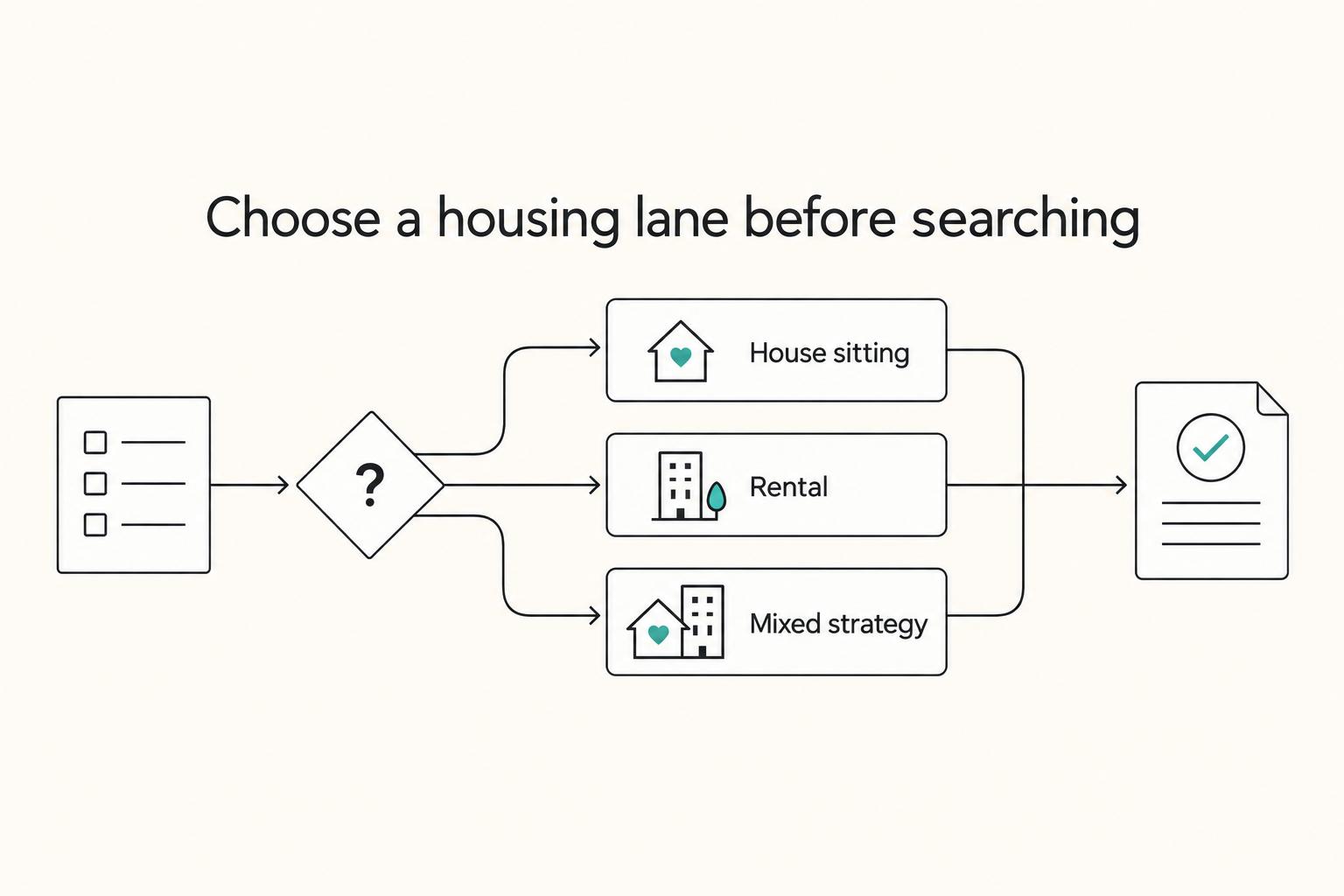
- 10-minute decision framework: choose a path (house-sitting-first, rental-first, or mixed) before you apply, so you stop wasting time on listings that cannot support your work schedule.
- Phase-by-phase timeline: from pre-search to exit, with checkpoints that force clarity early.
- Copy-ready checklists: questions to ask, what to confirm in writing, and what to document so you can defend expectations calmly.
On visas: you will see people casually say "it's fine" on a tourist visa or a digital nomad visa. Do not outsource that risk. Rules vary by jurisdiction, and different places can interpret "work-like" activities differently, so confirm what applies to your destination using official guidance.
A basic reality check: if you plan a long stay and line up a sit for arrival week, a homeowner can still change dates. If you already built fallback housing into the plan and you keep a written scope recap, you can adjust without panic.
Execution stack: if it helps, run the plan in Notion, schedule calls in Calendly, and keep key expectations in writing so both sides are clear. If you want a clean Notion setup, start with A Guide to Notion for Freelance Business Management.
Is house sitting the right relocation strategy - or should you rent?#
House sitting is a fit when you can absorb uncertainty with clear scope and a fallback plan, and renting (or a mixed strategy) is safer when you cannot.
Once you treat this like a controlled exchange with scope and fallbacks, you can decide where it fits in your relocation plan. That helps prevent a common failure: building your whole move around a strategy that clashes with your work, timeline, or immigration reality.
The lane-pick decision check (keep it quick)#
Choose one of these three lanes, then commit to it for this move. You can change next time, but do not mix lanes mid-flight.
| Lane | Best when you prioritize... | Watch-outs you must accept |
|---|---|---|
| House sitting-first | Flexibility, variety, slow travel, and budget travel | Variable start dates, duty uncertainty until you confirm details, and the need for a real fallback plan |
| Rental-first | Predictability, stable routines, and a clean "base" for work | Higher upfront commitment, less flexibility to move cities quickly |
| Mixed strategy (sit, then rent) | A softer landing plus longer-term stability | More coordination. You manage two transitions instead of one |
Safe default: if you start a job on a fixed date, or you must show up sharp for client calls immediately, run rental-first or mixed. Do not gamble your arrival week on any listing feed.
The 4 variables that actually decide if you will succeed#
Use these as decision variables, and write the answers down before you browse. That stops you from wasting time on "maybe" options.
| Variable | Key question | What the article says |
|---|---|---|
| Stay length | Does the duration match your work cadence and tolerance for moving days? | Short sits can add churn. Longer stays can reduce churn, but they can increase commitment. |
| Risk tolerance | If this cancels, can you absorb the disruption without blowing up your workweek? | If not, choose rental-first or build a mixed strategy with a buffer. |
| Pet-care capacity | Can you consistently meet routines like walks, feeding, and alone-time limits? | If not, choose a rental or only pursue sits with duties you can execute calmly. |
| Immigration complexity | Can you explain your plan simply and confidently? | If not, treat that uncertainty as a real constraint and reduce moving parts. |
- Stay length: Short sits can add churn (more handoffs). Longer stays can reduce churn, but they can increase commitment. Your win condition is a duration that matches your work cadence and tolerance for moving days.
- Risk tolerance: Ask yourself one hard question: "If this cancels, can I absorb the disruption without blowing up my workweek?" If not, choose rental-first or build a mixed strategy with a buffer.
- Pet-care capacity: Pet care drives the schedule. If you cannot consistently meet routines (walks, feeding, alone-time limits), do not force it. Choose a rental or only pursue sits with duties you can execute calmly.
- Immigration complexity: Tourist visa versus digital nomad visa rules vary by destination. If you cannot explain your plan simply and confidently, treat that uncertainty as a real constraint and reduce moving parts.
Non-negotiables (define before browsing): workspace needs, reliable internet expectations (confirm in writing), time-zone overlap, and your daily availability for pet duty.
Decision checkpoint: if you cannot articulate your fallback housing plan in one paragraph, pause. Build the plan first, then confirm any sit. If you lean rental-first, keep this handy: A Guide to Renting an Apartment in Europe as a Foreigner.
What "house sitting for nomads" actually is (and isn't): the mental model that keeps you out of trouble#
House sitting for nomads is a real property and pet-care responsibility, so you need written scope instead of treating it like "free accommodation."
Once you pick your housing lane (house sitting-first, rental-first, or mixed), this mental model keeps you from overpromising, under-verifying, or misunderstanding what you agreed to do. Most plans fail here, not because the concept is broken, but because execution gets sloppy.
House sitting means temporarily managing a homeowner's property while they're away. In practice, that can include regular security checks, managing mail and deliveries, watering plants, pet care, and minor household maintenance. Sits can run from a few days to several months, so the "job" needs to scale cleanly whether you stay one week or build a longer base.
Define the lanes: accommodation-style sits vs paid house-sitting work#
House sitting shows up in two forms that people often mix up, and they need different expectations.
| Model | What you receive | How to treat it operationally |
|---|---|---|
| Accommodation-style house sitting | You stay in the home temporarily (sometimes described as "free accommodation") | Define duties precisely. Confirm routines and constraints before you travel. |
| Paid house-sitting (a job) | Compensation. Job boards cite annual US salary ranges for house sitters (Jobicy lists 15,000 to 45,000 USD, median 30,000 USD). | Treat it like employment. Clarify pay, hours, liability expectations, and taxes with the hiring party. |
Some people use house-sitting platforms to find sits and communicate with homeowners. Run your own due diligence anyway. A platform cannot replace clear scope.
What counts as the job (document it)#
If you cannot turn the duties into checkboxes, you do not understand the sit yet. At minimum, lock these in writing:
| Area | What to lock in writing |
|---|---|
| Pet routines | feeding, walks, litter, medication, alone-time limits, vet instructions |
| Home security | doors, windows, alarm habits, what "normal" looks like |
| Mail and deliveries | what to accept, where to store, what to decline |
| Plants and basics | watering schedule, trash day, any "do not touch" areas |
| Incident response | who to call first, what counts as urgent, where supplies live |
- Pet routines: feeding, walks, litter, medication, alone-time limits, vet instructions.
- Home security: doors, windows, alarm habits, what "normal" looks like.
- Mail and deliveries: what to accept, where to store, what to decline.
- Plants and basics: watering schedule, trash day, any "do not touch" areas.
- Incident response: who to call first, what counts as urgent, where supplies live. Some sits include emergencies, pets with special needs, and property maintenance, so plan for real-world mess, not perfect conditions.
One common mismatch: a listing says "easy dog," then day one reveals the dog cannot stay alone for long. If you required a written routine and alone-time limit up front, you can decide fast, and professionally, whether the sit fits your workday.
Professional boundary: keep confirmations inside the platform thread when possible. Then attach a simple house-sitting agreement that restates dates, duties, and house rules in plain language. That habit prevents most expectation mismatches before they turn into a relocation problem.
The 5-phase relocation timeline (pre-search → application → pre-arrival → on-sit → exit)#
A simple 5-phase workflow (with "done" criteria) can help keep house sitting steady across applications, arrivals, the sit itself, and the exit.
With the right mental model in place, this cadence keeps the move from getting wobbly.
Phase-by-phase system (what to do, what "done" looks like)#
Relocation already adds friction. The Nomadic Lifers, who say they've moved countries "6 times in the last 13 years," put it plainly: "being prepared is the best way to simplify the process." Build that preparation into your workflow so you do not scramble when a good sit appears.
| Phase | Your objective | "Done" criteria you can verify |
|---|---|---|
| 1) Pre-search readiness | Centralize your assets and constraints | One hub with profile links, references, availability windows, and a homeowner question bank (stop relying on scattered notes). |
| 2) Application workflow | Move fast without getting messy | A simple pipeline tracker (applied → interview → pending → confirmed). A ready-to-go way to schedule quick calls. |
| 3) Pre-arrival confirmation | Lock expectations before travel | Scope in writing (arrival, pet routine, emergency contact, house rules) in a lightweight format you both can reference. Confirm address and check-in mechanics. |
| 4) On-sit execution | Deliver consistent care and communication | A "daily minimum standard" checklist (pet care, security check, update cadence). Key decisions captured in writing somewhere both parties can access. |
| 5) Exit + continuity | Leave clean, protect your next move | Handoff checklist, keys plan, utilities notes, review request sent, next housing block confirmed (especially if you're chaining sits). |
This workflow protects you from the classic failure: you accept a sit as "free accommodation," then discover the pet routine collides with your workday. When you keep a question bank and get the routine in writing, you can decline early or renegotiate scope before you commit travel money.
Two rules that keep you stable when plans wobble#
Relocation includes waiting and surprises. The Nomadic Lifers describe it as "a WHOLE LOT of hurry up and wait," and recommend "a sense of humour." Translate that into operator behavior:
- Speed with standards: reply quickly and, where possible, do a video call quickly, but accept only when your written checklist matches your work reality.
- One source of truth: keep templates, pipelines, and confirmations in one place so you can find them fast when timelines change.
Which house-sitting platform should you use for long stays (and how do you choose fast)?#
Pick the platform that has the sit you want, then sanity-check cost and trust signals with a simple scorecard.
Once you have a relocation timeline and "done" criteria, the next constraint is your search surface area and what information you can actually verify in the listing and conversation. Platform choice shapes what you can find and how you connect with hosts for longer stays.
Use the 6-factor scorecard (so you decide in one sitting)#
A useful heuristic from a long-time sitter cuts through the noise: "The best house sitting website is the one that has the house sitting job you want!" The author of that review frames themself as "a sixteen year (as of 2026!) housesitting veteran," so treat this as experienced operator guidance, not marketing copy.
Score platforms against the same six factors, then pick the winner for your next 30 days of applications:
| Factor | What to verify fast | Safe decision rule |
|---|---|---|
| Listing availability (your location) | Search your exact city and dates, then count relevant listings | If you cannot find viable options quickly, do not "commit" emotionally to that platform |
| Verification and reviews | Look for visible reviews, references, and any identity checks you can evaluate | Prefer platforms that let homeowners and sitters validate each other clearly |
| Messaging and interview flow | Can you propose a video call quickly (link a Calendly slot)? | If scheduling feels clunky, you will lose good sits to faster applicants |
| Sit expectations | Read how specific listings get about duties and routines | Favor specificity over vibes, regardless of platform name |
| Support and dispute handling | Find how the platform explains support in plain language | If support looks opaque, increase your personal verification gates |
| Total cost vs value | Membership fees plus your time cost | Pay for the platform that reduces uncertainty and wasted calls |
Build a deliberate "platform stack" (primary + secondary)#
Pick one primary platform you check daily, then add one secondary you check twice a week to reduce vacancy risk during a move. The goal is simple: widen your options without multiplying your admin.
Use this quick positioning map as a starting hypothesis, then validate with the scorecard:
| Platform | How to use it (hypothesis to test) |
|---|---|
| TrustedHousesitters | Run the scorecard: confirm it has relevant listings where you're going, and that the workflow fits how you apply. |
| Nomador | Treat as a secondary option if it shows sits you actually want, then verify listings the same way. |
| MindMyHouse / HouseCarers | Expect more legwork from you. The Halftheclothes reviewer says, "While the interface won't wow you, it's my favorite international house sitting website!" and cites HouseCarers at $50 per year ($45 with discount). |
| Nomad Housesitters | Treat as niche discovery. Verify how it handles reviews and identity before you rely on it. |
| Workaway | Treat as an adjacent category, not the same decision as pure house sitting. |
Enforce one hard verification gate across every platform: if a listing dodges specifics, refuses to confirm duties in writing, or will not do a quick video call, treat it as a "no," even if the neighborhood looks perfect. Those standards are your edge.
Is house sitting legal on a tourist visa or digital nomad visa? (The safest way to think about it)#
Visa legality is destination-specific, so treat it as uncertain until you confirm it through official guidance for your nationality and entry route.
You can tighten templates, questions, and checklists all day. Immigration classification is the one risk you cannot out-organize with good messaging. How platforms frame house sitting and free accommodation is not the same thing as how any border authority will interpret the arrangement on a tourist visa or a digital nomad visa.
House sitting often looks simple in travel terms. One 2026-updated guide describes it as a way to "explore the world, live in fabulous homes, take care of adorable furry (or feathered, or scaly) companions, and pay zero rent." That framing helps you understand the lifestyle model. It does not guarantee how any border authority will interpret the arrangement.
Use a plain-language self-check as a communication tool (not a legal rule)#
Use this as a practical heuristic for your own risk tolerance: if you cannot describe your stay in plain language without it sounding like you provide services, treat the plan as higher risk on a tourist visa, whether or not money is involved, and regardless of platform.
A simple script you can stick to (hypothetical): "I'm visiting for tourism and staying in a friend's home while they travel. I'll also look after their pets." Keep it factual, short, and consistent with any written messages you have.
Use this table to tighten your story and your documents:
| Topic | Tourist visa framing | Digital nomad visa framing |
|---|---|---|
| What you say | Keep it simple, avoid platform jargon like "gig" | Describe remote work separately from the housing arrangement |
| What you carry | Onward travel proof, accommodation continuity | Your visa/grant details (if applicable) plus onward travel and continuity |
| What you avoid | Overstating duties like you run a service | Blurring "remote work" with local services |
If you want to reduce uncertainty before committing#
Because rules vary by country and program, use a repeatable way to sanity-check your plan:
- Look for official government guidance for your destination and nationality. Save the link and a screenshot in Notion if that helps you track decisions. For a clean setup, see A Guide to Notion for Freelance Business Management.
- If the guidance stays unclear, consider contacting the relevant authority in plain language. Processes and responses vary, so do not treat this as guaranteed clearance.
- Use a house-sitting agreement to clarify duties with the homeowner (pets, security, emergencies). Do not treat it as immigration clearance. It only controls expectations between you and the homeowner.
If you proceed anyway, control downside. Keep travel plans flexible. Do not stack back-to-back sits without a continuity plan. Prepare to show onward travel and where you will stay next while you move through budget travel mode across slow travel routes.
The document + readiness checklist (what to prep before you apply internationally)#
A reusable readiness kit plus a written scope recap reduces friction and prevents last-minute document chaos.
With the basics sorted, this is where you execute like an operator. The goal is simple: reduce friction for homeowners, reduce your relocation risk, and keep your details consistent across platforms as you plan long-term international travel.
Your "apply anywhere" readiness kit (the safe default)#
Treat this like an international travel checklist that you update once per move, not once per application. A long-term trip prep list can include basics like storing your belongings, arranging a postal address, and saying goodbye to your loved ones. Add the house-sitting layer so you can take sits without operational surprises.
Use this as your minimum bar:
| Checklist area | What to prep (keep it lightweight) | Why it matters |
|---|---|---|
| Long-term travel readiness | Long-term travel insurance decision, belongings storage plan, postal address plan | You avoid last-minute scrambles that break relocation timelines |
| Remote work setup | A "digital nomad toolkit" mindset and a reliable laptop or tablet-keyboard combo | The right remote work setup can make or break your sit |
| Connectivity sanity | A plan for Wi-Fi problems | Wi-Fi problems can be disruptive |
Proof-of-life that builds trust (without writing novels)#
Homeowners do not need a thesis. They need clear signals that you communicate well and handle logistics calmly.
Keep a simple, shareable summary ready on request:
- A short overview of who you are and how you travel/work while house sitting.
- A crisp recap of your typical routine and what you can commit to during a sit.
- Any key logistics you want aligned early (timing, expectations, and how you'll handle connectivity if issues come up).
Practical next step: draft a few reusable templates in one document you can copy-paste, like an application message, a short set of interview questions, and a pre-arrival confirmation checklist. Keep each template short and consistent wherever you apply.
Risk controls that prevent the painful failures (cancellations, pet-duty mismatch, compliance surprises)#
Risk controls keep low-cost plans from turning into a last-minute scramble. They help you stay steady when reality shifts, terms change, or details turn out fuzzier than you expected.
With templates and a readiness kit in place, you now need the controls that keep your plan stable when reality hits.
1) Resilience to last-minute changes (write the fallback before you commit)#
Plan changes hurt most when you have a single point of failure. Build a fallback you can execute fast.
| Fallback control | What to define |
|---|---|
| Minimum runway | How many nights of paid lodging you can cover if plans change |
| Alternatives | A short list of realistic options you can book on short notice: lodging, short-term rentals, staying with friends, adjusting dates |
| Trigger point | What event forces you to switch plans, such as missing key details you need to proceed or logistics that still feel unresolved |
| Storage | Keep your options and trigger points somewhere you actually check |
Use this operator checklist wherever you go, even if you feel "sure" about the plan:
- Define your minimum runway: How many nights of paid lodging can you cover if plans change? Write the number down.
- Pre-identify alternatives: Keep a short list of realistic options you can book on short notice (lodging, short-term rentals, staying with friends, adjusting dates).
- Set a trigger point: Decide what event forces you to switch plans (for example: missing key details you need to proceed, or logistics that still feel unresolved).
- Centralize it: Store your options and trigger points somewhere you actually check. If you like structured notes, a tool like Notion can help. If you need a clean setup, use A Guide to Notion for Freelance Business Management.
2) Scope, proof, and decision clarity (prevent duty creep and weird surprises)#
Most painful situations start with vague expectations that later expand. Fix that by converting ambiguity into specific, reviewable commitments.
A practical decision-making approach is to identify criteria and alternatives, set priorities, and allocate resources. In plain terms: define what "works," list your options, decide what matters most, and be honest about what you can actually support.
| Failure mode | What it looks like | Your control (safe default) |
|---|---|---|
| Duty creep | "It's easy" turns into heavy daily obligations | Translate expectations into clear yes/no responsibilities and routines that both sides can review |
| Miscommunication | Details live in scattered messages | Keep one clear, current version of expectations that's easy to reference |
| Surprise constraints | New requirements appear after you've committed | Reassess against your criteria and priorities; if it no longer fits, switch to your fallback |
| Dispute risk | No shared reference point when something goes wrong | Keep key details organized and easy to retrieve |
If the terms change after you've already planned around them, do not negotiate emotionally. Pause, restate what you understood, and decide whether the new version still fits your criteria and limits. If it does not, use your fallback.
Conclusion: Optimize for fit, commitment, and repeatable habits#
If you want any remote setup (including house sits) to stay stable, optimize for fit, commitment, and repeatable habits, not hype. When both sides are aligned and you run a consistent process, the day-to-day gets much more predictable. Consistency beats intensity.
Listing sites can help you discover opportunities and message hosts, but they do not run your operation for you. You stay steady by showing up with a repeatable routine, fast decision-making, and written clarity that protects your workday and the homeowner's peace of mind.
The 60-second pre-acceptance self-check (copy into Notion)#
This is not a universal checklist, just a quick way to pressure-test your excitement before you say yes.
- Fit check (both sides): Can you honestly say the arrangement fits your work and life right now? A Quora contributor framed remote work this way: "It needs to be a good fit for the company, and it needs to be a good fit for the person." Treat the sit the same way.
- Commitment check: Do you see clear signals that both sides will follow through? The same author also warned that this kind of arrangement "will only work if both sides are fully committed to making it work."
- Habit check: Are you approaching this like a repeatable system, not a one-off? If you struggle with consistency, borrow the habit framing from Alex Beadon's podcast description, including an "11-question discovery exercise" designed to refine priorities and protect work life balance.
Hypothetical: you find a perfect slow travel sit, but your calendar is already heavy. You pass, or you only accept after you feel confident it truly fits and both sides are committed. That is how you stay stable.
If you want a more predictable baseline for a move, you can start with a simpler housing plan first, then layer house sitting on top once your routine is steady. For longer-term stability, read: A Guide to Renting an Apartment in Europe as a Foreigner.
Frequently Asked Questions
Is house sitting legal on a tourist visa or digital nomad visa?
It depends on the destination, and this guide cannot validate legality for your situation. You need destination-specific confirmation from official immigration guidance because rules vary. If it stays unclear, ask the relevant consulate (in plain language) how they classify what you will do and what you will receive.
Is house sitting considered “work” if no money changes hands?
It depends on local rules, so do not assume “unpaid” automatically equals “not work” in a legal sense. Nomador describes house sitting as “a free exchange of services, each party benefiting from the exchange,” and it also notes sitters generally do not get paid. Use that framing to set expectations with homeowners, not as a legal shield.
What documents do I need before accepting an international house sit?
Requirements vary, so avoid treating any one checklist as universal. Many sitters keep a shareable profile (who you are, why you are a fit, and credibility signals like references or reviews where available) plus a written scope recap that restates agreed dates, routines, and house rules in plain language. If you want it systemized, store it in Notion and reuse it (A Guide to Notion for Freelance Business Management).
How far in advance should I plan house sitting for a relocation?
There is no universal lead time, so plan around two calendars: yours and the homeowner’s travel dates. Do not book nonrefundable transport until you confirm dates, duties, and handoff logistics in writing. For relocation stability, keep a backup housing option.
How do I compare house-sitting platforms for long stays?
Compare platforms by trust signals and workflow fit, not by hype on Reddit or r/digitalnomad. For example, Housecarers highlights “25 Years of Member Feedback,” a “two-way verified Review system,” and notes you use a username “to shield your identity.” Treat those as operational features, then test how fast you can vet a listing and schedule a call.
What should be in a pre-sit agreement/checklist with the homeowner?
Keep it short, written, and specific enough that both sides can point to it later. Two Can Travel puts it simply: “Asking these questions will make your house sitting experience easier,” and it refreshed that guidance for 2026. Focus on routines, boundaries, communication cadence, and what “free accommodation” includes for that specific sit.
What are the biggest risks (cancellation, pet duty mismatch, compliance) and how do I mitigate them?
Expect three failure modes: cancellation, expectation creep, and rule ambiguity across destinations. Mitigate them with operator controls: maintain a housing fallback, convert vague duties into checkboxes before you accept, and keep key confirmations in writing inside your platform. Nomador also notes expectations vary by sit and that paying rent and/or utilities is “most often not required,” so confirm costs explicitly anyway.
Try a related tool
Researched and edited by the Gruv editorial team. Gruv builds cross-border billing, payouts, and finance-operations software for global businesses.
Sources
- academia.edu/50265276/CLARKE_2017_Koryutrusted
- congress.gov/committee-print/112th-congress/joint-committ...trusted
- history.defense.gov/Portals/70/Documents/pows/Honor%20Bound%20FU...trusted
- oecd.org/content/dam/oecd/en/publications/reports/201...trusted
- stat.yale.edu/~tba3/class_data/aclImdb/imdb.vocabtrusted
Educational content only. Not legal, tax, or financial advice.
Related Posts
Renting in Europe as a Foreigner on a 90-Day Timeline
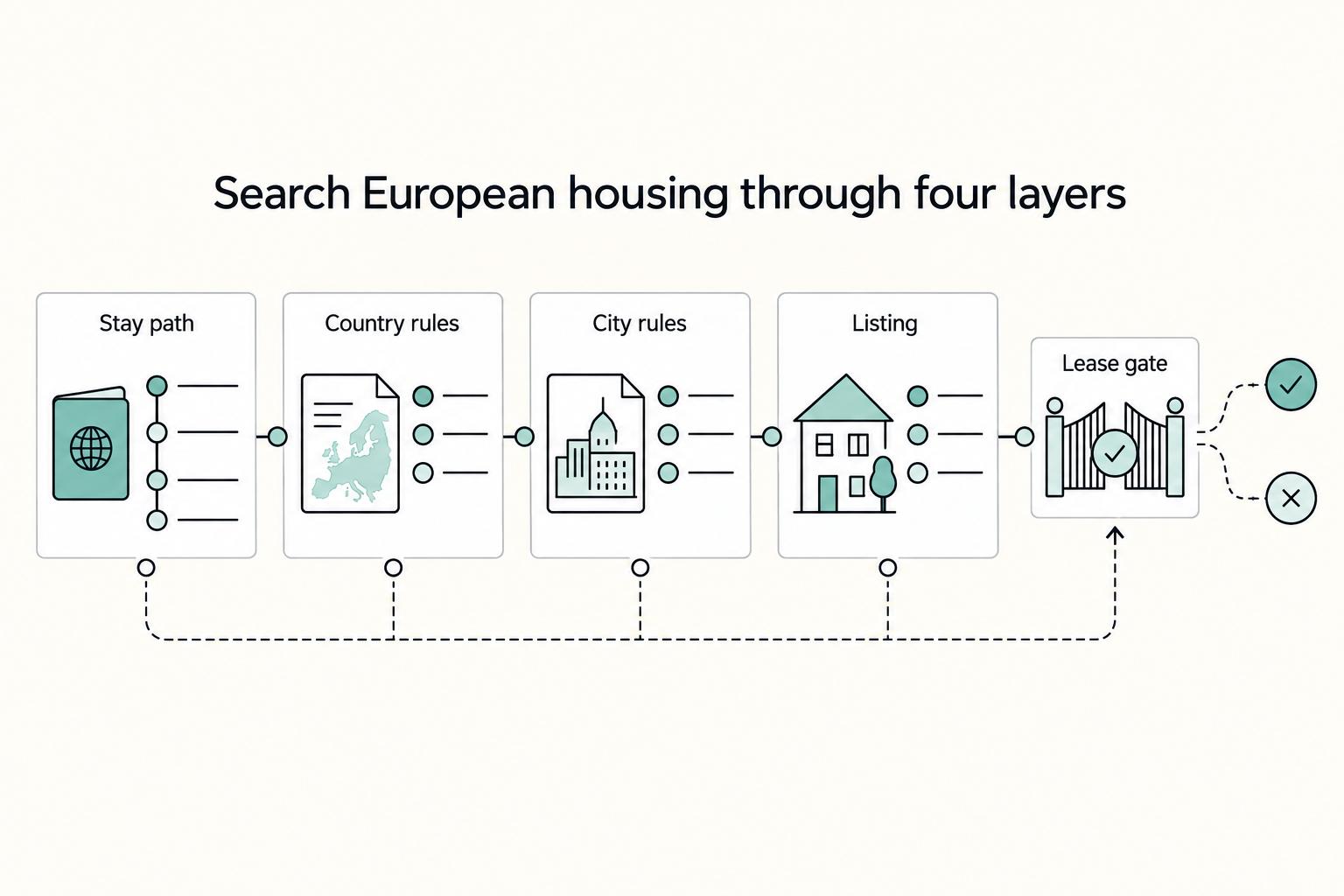
If you're **renting in Europe as a foreigner**, treat the move as a staged long-term housing plan, not a booking sprint. Your first decision is not which listing looks best. It is which city you're targeting, which legal stay track applies there, and when you'll be ready to sign without guessing.

A Guide to Notion for Freelance Business Management
If your workspace feels busy but fragile, you do not need more pages. You need one connected system. Treat your freelance business like a business-of-one and use Notion as the control layer that connects client decisions, delivery, and billing in one place.

Calendly for Freelancers Who Want Reliable Booking-to-Payment Handoffs
Treat **calendly for freelancers** as your scheduling layer, not as full business control. The practical win is simple. You stop trading emails about times, protect your week with [real-time availability](https://calendly.com/blog/online-booking-system), and give clients one booking page that reflects the calendars you actually use. The limit matters just as much. Booking is only the front end of operations.