

Quick Answer
Start by running your freelance press page as an evidence workflow: verify the original source, match the claim label to what is actually published, and hold any asset with unclear reuse terms. Use a three-bucket gate (include, exclude, needs permission) so each entry gets a consistent decision. Then publish compact proof blocks with clear role context, keep one primary next step for qualified readers, and maintain a recurring audit to catch drift before it hurts trust.
Build a press page that proves credibility without creating legal or reputation risk#
Your freelance press page should do two jobs at once: help prospects assess your credibility quickly, and keep weak, inflated, or poorly sourced claims off your site. Treat it as a short evidence archive on your website, not a brag wall.
Credibility is not about sounding impressive. It is about being easy to verify. If a reviewer has to guess what happened, hunt for the original source, or wonder whether you should be displaying a logo or quote at all, the page stops helping and starts creating risk.
Quick readiness check#
| System element | Minimum standard | If missing, what breaks |
|---|---|---|
| Publish gates | You have the original source link or saved copy, the exact claim label you plan to use, and a clear decision on whether the page will stay text-only or include assets | Overstated claims, weak verification, and avoidable rights questions |
| Proof template | Every entry follows the same structure: outlet, date, what appeared, why it matters, and where to verify it | Consistency breaks down and verification takes longer |
| Maintenance cadence | You set a recurring review to check links, accuracy, and whether older items still deserve public space | Stale or unclear entries stay live and chip away at trust |
Make each pillar practical before you publish#
Start with publish gates. Before any mention goes live, collect the source URL or a saved copy, the publication date, the exact wording you plan to use on the page, and a one-line note on context. If you cannot trace the original mention, or you are relying on memory of being "featured," hold it back. Do not assume you can reuse third-party logos, screenshots, or pull quotes just because they exist. If reuse is unclear, keep the page text-first.
Next, standardize the proof block. Use the discipline of a press release: verified facts presented in a consistent structure. In practice, each item should answer who, what, when, where, and why it matters, with a link that lets someone confirm it quickly.
If an item needs extra support files such as your bio, company facts, logos, or images, move those to your media kit instead of bloating the page. That keeps the public page focused and gives media contacts a central resource when they need deeper assets. If you have not built that resource yet, How to Build a Media Kit for Your Freelance Business is the right companion.
First setup checklist#
| Checklist item | Action |
|---|---|
| Claims | Gather only claims you can verify from an original source |
| Label set | Write one consistent label set and use it everywhere |
| Entry length | Keep each entry short enough to validate in one click |
| Assets | Send downloadable assets and background materials to the media kit |
| Review cadence | Put a recurring review on your calendar to fix links, update wording, archive weak items, and remove anything you would struggle to defend today |
The outcome is simple: one shareable link that lets prospects verify your claims fast, using consistent labels and wording you can stand behind line by line.
What is a freelance press page and what is it not?#
Your freelance press page is a public proof archive of third-party mentions you can verify. It is not your media kit, not your services page, and not an official press credential.
Use it so a prospect can confirm what was published about you and what your role was. A media kit is different: that is an outbound asset you send to help others cover you. It is also different from credentials like an NWU press pass or IFJ press card, which have their own qualification rules; for example, NWU lists documented publishing output (such as three published pieces within the past two years) as one qualification route.
Treat Featured In and As Seen In as evidence-backed claim labels, not decoration. If you cannot verify the original source and your exact role, do not publish the claim. Before keeping any item, check: independent editorial control, complete context, and whether commercial placement disclosure is needed.
| Item type | What it proves | Allowed claim label | Required action |
|---|---|---|---|
| Independent article, interview, or quoted mention with source link and clear role | Verifiable third-party coverage | Featured In or As Seen In only when context is complete | Keep |
| Contributor bio, author profile, or staff page | Ongoing role or publication relationship | Plain factual label (for example, contributor or writer) | Relabel |
| Service listing, directory profile, job post, or recruiting notice | Availability, affiliation, or hiring context | Neither claim label fits | Exclude |
| Paid placement or sponsored feature | Visibility with commercial involvement | Disclosed factual description, not press-style proof | Relabel or exclude |
Watch common false positives: service listings, contributor bios, job posts, and paid placements can look strong but do not automatically show independent coverage. The goal is simple: a buyer should be able to validate your credibility quickly, without ambiguity or overclaim risk. You might also find this useful: How to Create an FAQ Page for Your Freelance Website.
Build your include exclude needs permission framework#
Use a strict three-bucket gate before anything goes on your freelance press page: Include, Exclude, or Needs Permission. If an item does not clearly fit one bucket, treat it as not ready.
| Bucket | Evidence required | Common failure pattern | Required action |
|---|---|---|---|
| Include | Original source is available, your role is clear, context is intact, and the label matches the evidence | Overstated wording on a real mention | Publish a proof block with factual wording |
| Exclude | Evidence is missing, unclear, or likely to mislead | Upfront-fee asks, no-milestone/no-escrow patterns, or other high-risk items | Do not publish; remove or escalate for review |
| Needs Permission | Mention appears real, but you want to reuse a third-party asset | Assuming proof of mention also clears logo/screenshot/excerpt use | Hold that asset; publish link-only or text-only proof until terms are confirmed |
Keep your label rule tight: use Featured In or As Seen In only when the evidence supports that label. Before writing the block, run this check:
- Original source verified
- Your exact role verified
- Context still intact
- Label fits the evidence
If any check fails, downgrade wording, exclude, or escalate.
Separate content proof from asset rights. You can verify a mention and still pause logo, screenshot, or excerpt use until terms are clear. Keep outlet-specific or local policy questions unresolved until the requirement is confirmed for use through current source records, counsel or adviser records, outlet terms, or approved policy records.
Make this operational, not one-off. Add the gate to onboarding intake and final QA, and require a go/no-go record for each proof block: source checked, role confirmed, wording approved, asset status noted, decision logged. Use a tiered path so simple items move fast and complex rights cases get deeper review. For a step-by-step walkthrough, see How to Get Featured in the Press as a Freelance Expert.
Can you publish that logo or quote without risk?#
Use a rights-first decision: verify who owns the asset, confirm your exact reuse is allowed, then publish or hold. If ownership, terms, or usage scope are unclear, treat it as needs permission and do not guess on a marketing page.
Linking to the original source is usually the safest fallback when rights are unclear. Reusing a logo, screenshot, or excerpt is a separate rights question, and attribution alone does not clear reuse. Fair use can apply in some situations, but it is not a replacement for brand terms, license conditions, or explicit permission checks for social-proof use.
| Asset type | Minimum evidence | Permission status needed | Publish decision |
|---|---|---|---|
| Logo | Original source confirmed, owner identified, brand/media-use terms checked | Clear permission or terms that allow your use | Publish only when terms are clear; otherwise use text-only attribution with a source link |
| Quote | Original source live or archived, wording verified, your role/context intact | Confirm whether this specific reuse needs permission | If unclear, use plain-text description plus source link |
| Screenshot | Original page verified, content owner identified | Clear approval or reuse terms for that image use | Hold until approved; do not assume online means reusable |
For edge cases, use this workflow:
- Route the asset to
needs permission. - Keep jurisdiction details unresolved until they are confirmed for use through current source records, counsel or adviser records, outlet terms, or approved policy records.
- Publish a text-only version only if the underlying mention is well supported.
Before any entry goes live, keep one permissions-log record per asset: source owner, usage scope, claim label, approval state, and review owner. Then run a final consistency check so attribution wording and claim labels match the original source context.
We covered this in detail in How to Create a 'Hire Me' Page That Converts.
Use a proof block template that survives client due diligence#
Treat each mention as an operational record, not marketing copy. Your proof block should let a reviewer verify the outlet, your role, context, and whether the claim label is defensible from the linked page. If the linked page does not clearly support Featured In, As Seen In, or similar wording, downgrade the label before publishing.
| Required field | Why reviewers care | Common mistake | Fix before publish |
|---|---|---|---|
| Outlet | Confirms who published the item | Using a shortened or inconsistent name | Use the source's exact outlet name across all materials |
| Publication timing | Checks recency and sequence | Missing original date | Add the original date, or note that it is unavailable |
| Your role | Prevents inflated credit | Treating a quote, mention, and guest post as the same | State your exact contribution in plain language |
| Coverage context | Preserves what actually happened | Writing promo copy instead of context | Add one factual sentence describing the mention |
| Source link | Enables direct verification | Linking to a homepage or dead URL | Use the direct item URL, or a permalink when available |
| Claim label | Tests whether wording is defensible | Using Featured In when you were only listed or indexed | Make every label match what the linked source supports |
| Verification status | Shows review trail | No owner, no status, no last check | Record owner, status, and last verification date |
Keep on-page proof concise: one short relevance line per block. Put extended backup (screenshots, archives, approval emails) in your media kit for deeper review, especially when a source is access-restricted (for example, a Member-only story).
When a mention involves paid or assisted placement, keep the disclosure wording unresolved until it is confirmed for use through current source records, counsel or adviser records, outlet terms, or approved policy records, then add the visible note in that same proof block. Before final approval, make outlet naming, role wording, and claim labels match across your website, LinkedIn, and proposal materials.
This pairs well with our guide on A Freelance Writer's Guide to On-Page SEO.
Where should your press page live and how should it convert?#
Use this page as a conversion bridge: show verifiable proof first, then make the next step obvious. Your secondary links should help due diligence, not compete with your main action.
Place the page where prospects can reach it in very few steps. A clear main-navigation link is usually the fastest path when proof affects buying decisions, and a footer link can support deeper browsing. Keep the label literal, such as Press, Featured In, or Proof, so people do not have to guess.
Open with a short orientation line: what this page is, why it matters, and what to do next. Then keep one primary CTA visible near the top and repeat it after your main proof blocks. Make sure your contact path is easy to find, because friction at this step can cost real opportunities.
| Element | Where it appears | When to use it | Conversion impact | Common mistake |
|---|---|---|---|---|
| Press page link | Main navigation, with footer as a secondary path | When buyers use third-party proof to evaluate fit | Reduces steps to trust-building evidence | Hiding it behind vague labels |
| Opening statement | Top of page | Always | Clarifies purpose immediately | Leading with self-promotional language instead of evidence context |
| Primary CTA | Near top, then after proof blocks | When you want one clear next action | Gives qualified readers a direct handoff | Adding multiple equal-priority CTAs |
| Services link | Inside or below relevant proof blocks | When a mention supports a specific offer | Connects proof to paid work | Generic anchors like learn more |
| Media kit/archive link | Secondary support area | When reviewers need backup context or records | Supports diligence without cluttering the main flow | Placing support links above the main CTA |
Write anchors to match intent. Use specific service-led text instead of generic clicks, and use contact-led text when the goal is an inquiry. For service handoff, link once to How to Create a High-Converting Freelance Services Page.
Run a light recurring review: check which proof blocks get interaction, check whether inquiry starts also happen around the same period, and flag blocks with weak signal. If a block draws attention but does not help the next step, rewrite its relevance line or CTA. If a block stays weak and does not strengthen credibility, remove it; keep high-signal proof that supports the assignments you want. Related: How to Write a Compelling 'About Me' Page for Your Freelance Website.
Run a monthly maintenance workflow that keeps claims audit ready#
Run this review once a month, every month. That cadence keeps stale links, outdated assets, and claim drift from turning your press page into a trust problem during due diligence.
Treat it like routine maintenance: the risk usually comes from neglect, not from one dramatic mistake. A source can disappear, an approved logo can become outdated, or proof files can get buried where nobody can verify them quickly.
Run the same four checks in order#
- Verify source availability. Open the original source for each proof block and confirm it still resolves to the intended page. If you make updates, test the live page and confirm key links and tracking still work.
- Confirm claim-to-source match. Check that the publication name, title context, date, and your role still match what is live. If your label overstates the evidence, downgrade the label now.
- Recheck usage rights. Confirm your current use of each logo, screenshot, or quote still matches the permission state or terms you recorded.
- Log every removal or change. If you edit, replace, or unpublish a claim, record what changed and why so future reviews and client questions are easy to answer.
Use fixed statuses so actions stay consistent#
| Status | Trigger condition | Required next action |
|---|---|---|
| Keep live | Source resolves, claim matches, rights state is still valid | Keep published and confirm the record is current |
| Update this cycle | Source is live, but label, wording, role detail, asset, or rights note is out of sync | Correct it on the press page, LinkedIn, and media kit in the same cycle |
| Remove now | Source is unavailable, claim is no longer verifiable, or rights support is missing | Unpublish immediately and log the removal reason |
Keep an evidence trail that survives handoffs#
For each item, keep one record with these fields: source capture, rights state, change owner, handoff note, and update reason. Use source capture for the live URL, a screenshot, and date checked. Use rights state as approved, restricted, or unknown. Use change owner and handoff note to make the next review unambiguous. Use update reason to show why the item stayed, changed, or was removed.
| Record field | Use |
|---|---|
| Source capture | Keep the live URL, a screenshot, and date checked |
| Rights state | Record whether it is approved, restricted, or unknown |
| Change owner | Make the next review unambiguous |
| Handoff note | Make the next review unambiguous |
| Update reason | Show why the item stayed, changed, or was removed |
Close each monthly cycle with a cross-channel pass: use the same claim-label language on your press page, LinkedIn, and media kit, then fix mismatches before you mark the review complete. Need the full breakdown? Read A Guide to Using Case Studies to Win Freelance Clients.
Turn this into your operating default this week#
Make this a publish-only-if-defensible routine, not a branding task. No item goes live until the claim label, evidence, and rights status all match.
Start by sorting every existing mention into one decision matrix so you can act quickly and consistently.
| Bucket | Trigger criteria | Owner | Immediate next action |
|---|---|---|---|
| Include | Live source resolves, wording matches the source, your role is accurate, and asset rights are clear | You | Publish the proof block and save the evidence pack |
| Needs permission | Mention is real, but logo, screenshot, quote, or other reused asset has unclear terms | You, plus publisher/rights holder if needed | Hold the entry, note what is missing, request permission, or switch to plain-text attribution |
| Exclude | Source is broken with no saved proof, wording overreaches, role is misstated, or claim cannot be substantiated | You | Remove from the page and remove matching claims in other channels |
This matters because buyers often screen for a proven track record with examples, not presentation alone.
Check in the right order#
Use the same pre-publish order every time:
| Order | Focus | Action |
|---|---|---|
| 1 | Wording first | Choose Featured In only when the linked page supports it; use As Seen In for brief mentions, roundups, or appearances |
| 2 | Evidence second | Save the live URL, screenshot, date checked, and a short role/context note |
| 3 | Rights third | Confirm reuse rights for logos, screenshots, and pull quotes; if unclear, publish without the asset or keep it on hold |
Do not build from visuals first. Build from proof first.
Make disclosure plain#
Use a simple rule for material connections:
| When disclosure is required | Where it appears | Plain wording style |
|---|---|---|
| When a reasonable reader would not assume a paid/benefit connection (for example affiliate links, paid placement support) | Next to the relevant item, or page-top only if it applies to the full page | Direct, plain language (for example: "Some of the above links are affiliate links, which means I earn some commission." / "This placement was arranged through a paid service.") |
Keep the weekly loop small and strict#
Once a week, run four checks:
- Record new evidence, checked dates, and rights notes.
- Test live links and compare with saved captures.
- Align claim wording across your page, LinkedIn, and media kit.
- Remove or downgrade anything you cannot defend today.
If a link breaks, wording drifts, or permissions become unclear, treat it as a credibility issue and resolve it that week or take the claim down. For process alignment with adjacent assets, use How to Build a Freelance Portfolio Clients Trust, and for program-specific confirmation, use Talk to Gruv.
Frequently Asked Questions
What is a freelance press page?
This guide does not provide a sourced definition of "freelance press page." For this guide, treat it as a page that answers common proof questions with verifiable items only. If you cannot point to a live source or a saved capture, leave the item out.
What makes a `Featured In` or `As Seen In` claim credible?
This guide does not set an external standard for those labels. Use wording that matches what the source clearly shows, and avoid stronger wording when the evidence is unclear. The practical step is simple: open the source and make the label match what is actually there.
What is the difference between a press page and a media kit?
This guide does not provide a sourced distinction between a press page and a media kit. If you build both, define their roles internally and keep claim labels, dates, and outlet names consistent across them, and use this guide with How to Build a Media Kit for Your Freelance Business.
Can you use publication logos, screenshots, or pull quotes on your website?
This guide does not establish legal reuse rules for logos, screenshots, or pull quotes. Use a conservative workflow: verify terms or permission before reuse, and if the permission state is unclear, publish the entry without the asset or use plain text attribution with a source link.
What should you do when permission is unclear or mixed?
Do not guess. Record what is missing, ask the rights owner or publisher for clarification, and avoid publishing reused assets until permission is clear. If you cannot get clarity, keep plain text attribution or remove the item.
How do you verify a claim before it goes live?
Run the same checks every time. Confirm the source resolves, confirm the wording matches the source, confirm your role and context are accurate, and confirm the permission state for any reused asset. Then save a compact evidence pack with the live URL, a screenshot, the date checked, and a permissions note. If key evidence is missing, weaken or remove the claim.
What if the source link is broken or the article changed after publication?
Treat that as an update-or-removal issue, not only a wording issue. Recheck the live page, compare it to your saved capture, and decide whether the item should stay live, be updated this cycle, or come down now. The common failure mode is keeping a strong claim online after the evidence has drifted.
How often should you update the page?
This guide does not provide one required cadence for every business. Use a recurring review schedule, and make an immediate update whenever a link breaks, wording changes, a role description shifts, or asset terms change. Dated guidance can become stale, so verify that each claim is still defensible today.
Where should the page sit in your site navigation?
Put it where people can find it without hunting, and keep questions clearly grouped so the page is easy to scan. Link to it from pages that make authority or credibility claims so readers can verify details quickly.
Try a related tool
Researched and edited by the Gruv editorial team. Gruv builds cross-border billing, payouts, and finance-operations software for global businesses.
Sources
- clame.nyu.edu/HomePages/E1FA4B/316850/b2b-saas_content_wri...trusted
- dccouncil.gov/wp-content/uploads/2025/02/ddcatt.pdftrusted
- dfi.wi.gov/Pages/BusinessServices/BusinessEntities/FAQ....trusted
- dhs.wisconsin.gov/seniorcare/faqs.htmtrusted
- dhs.wisconsin.gov/publications/p16001-25-03.pdftrusted
- ecfr.gov/current/title-45/subtitle-B/chapter-XVI/part...trusted
- justice.gov/oip/freedom-information-act-5-usc-552trusted
- pmc.ncbi.nlm.nih.gov/articles/PMC9902803trusted
Educational content only. Not legal, tax, or financial advice.
Related Posts

Georgia 1% Tax for Entrepreneurs Without Filing Surprises
Treat Georgia's 1% tax path as a compliance question first and a rate discussion second. The goal is a setup you can defend under review, not a shortcut that fails at filing time.
Build a Freelance Media Kit That Reduces Client Friction
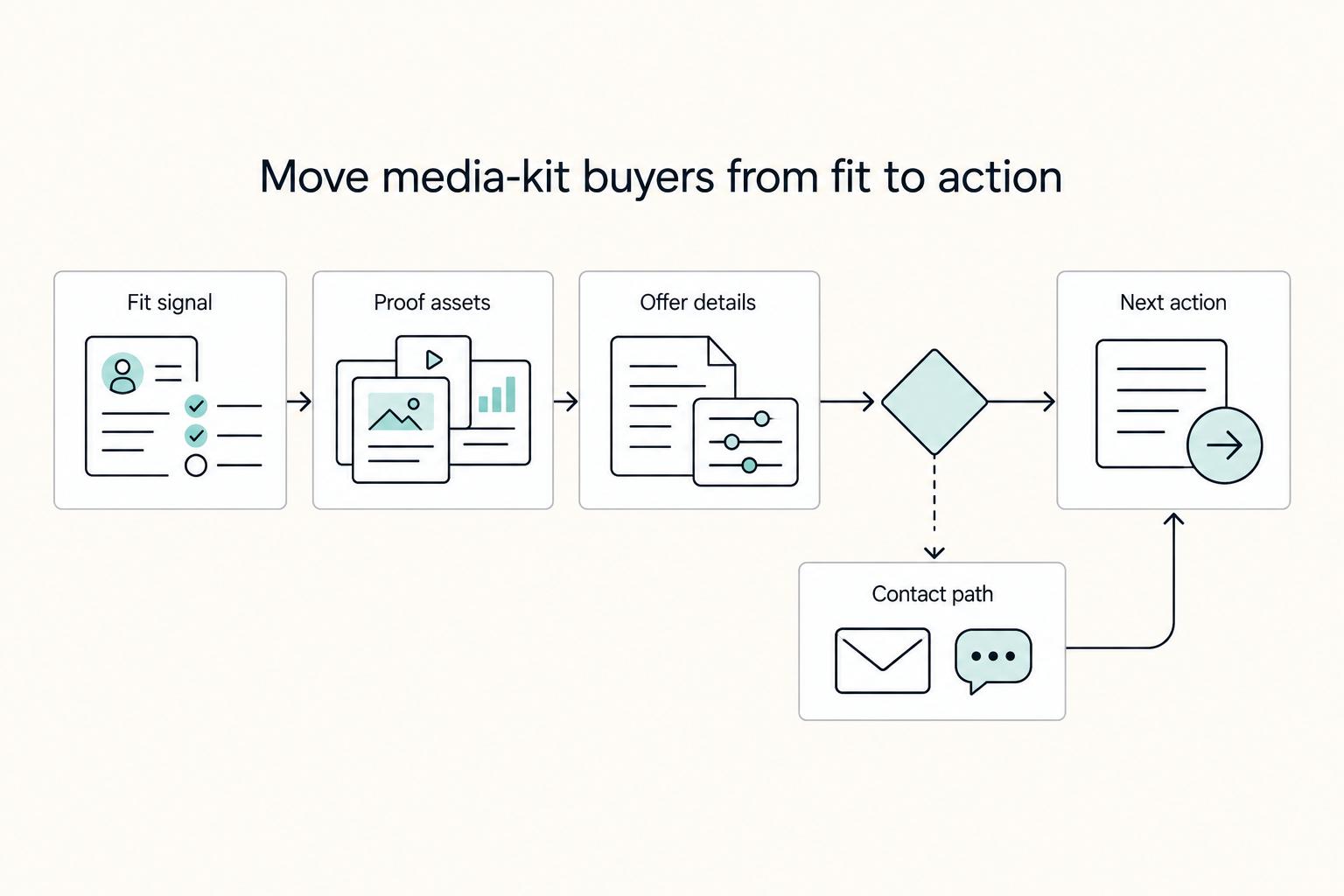
Treat your media kit as a buyer decision tool, not a design exercise. If a prospect can spot fit, proof, and the next action quickly, you cut a lot of avoidable back and forth before a call is scheduled. That is this document's job.

How to Create a High-Converting Freelance Services Page
If you want fewer renegotiation loops, treat your page as a qualification tool, not a polished brochure. The goal is not more inquiries for their own sake. It is fewer vague inquiries that turn into messy delivery.