
Quick Answer
Freelancers who handle California resident data should assume potential CCPA exposure when they market or contract in California and put baseline privacy controls in place while they verify scope. Start with a privacy notice, one request intake channel, a request log, and contract terms that match actual data handling.
What CCPA Means for Freelancers Handling California Client Data#
Privacy risk is delivery risk for many freelancers who handle client data. The practical move is to assess likely CCPA exposure early and put baseline controls in place before a client issue forces rushed decisions.
The California Consumer Privacy Act (CCPA) established consumer privacy rights and business obligations tied to collecting and selling personal information. The California Privacy Rights Act (CPRA) later expanded and amended that body of rules, with modifications referenced as effective on January 1, 2023. Personal information is broad here and can include data linked to a consumer or household.
Early action matters because freelance projects often involve contracts, payment details, and other personal data. If that data is misused or exposed, both you and your client can absorb the fallout. Consumer concern about data handling raises the cost of unclear processes and vague promises.
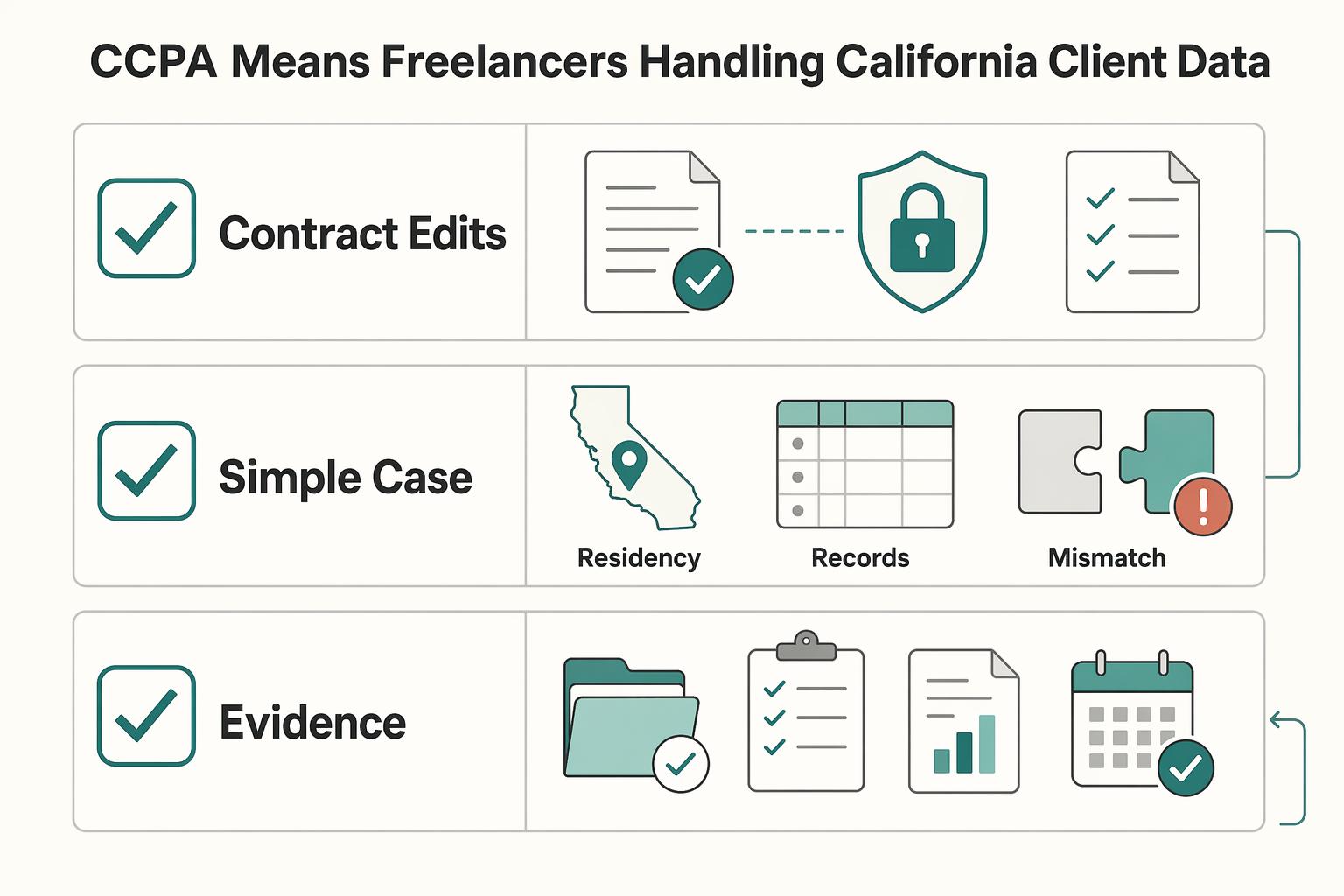
Aim to leave this article with three concrete outputs:
- Contract edits aligned with how you actually collect, use, and share personal data.
- A simple intake path for consumer rights requests, with clear response ownership.
- A recordkeeping checklist that shows what was decided, what was done, and when it was completed.
This is operational guidance, not legal advice. Use a simple rule throughout: when facts are clear, implement. When facts are unclear, escalate early. Start with one evidence folder that holds your current privacy notice, request-log template, and contract redlines so every edit maps to real handling.
Follow this sequence for the rest. First decide likely scope. Then put minimum controls in place. Then make sure your contracts match what you can actually deliver. Last, set a review cadence so your documents do not drift when client mix, tools, or guidance changes. If you are also planning relocation, see Working Remotely in Latin America: A Visa Guide.
Start with the legal baseline and key terms you will use#
Start from one baseline: CPRA amends CCPA, so draft against amended CCPA text rather than treating CPRA as a separate lane. That keeps notice language, intake handling, and contract terms consistent.
CCPA was signed into law on June 28, 2018 and established consumer rights and business duties tied to personal information. CPRA later expanded that structure, with modifications referenced as effective on January 1, 2023. In practice, use that amended posture when writing your 2026 documents.
Use a plain-language request glossary in your notice, intake forms, and request log. This keeps request handling consistent. Keep these labels aligned to current law before finalizing:
Access/know requestDeletion requestOpt-out requestCorrection requestLimit use/disclosure of sensitive personal information requestNon-discrimination handling standard
Keep those terms consistent across all surfaces. If your intake form says deletion request but your notice says erasure and your contract uses a third phrase, requests will be misrouted and delayed. Consistent labels are a simple control that reduces avoidable error.
For updates, track California Attorney General materials and current CCPA regulatory text in one review checklist. If scope is disputed, do not rely on memory. Public comments on proposed regulations flagged ambiguity about which businesses are covered, including entities outside California that still conduct some California commerce.
Treat older threshold numbers as historical reference points unless you confirm current text. A 2019 public comment quoted figures such as $25,000,000, 50,000 consumers, households, or devices, and 50 percent of revenue from selling personal information. Use those as scoping prompts, not current-law conclusions.
Your immediate controls are straightforward: publish a privacy notice that matches real handling, define one intake path per request type, and align contract promises with delivery reality. If a vendor retains copies, narrow absolute deletion promises and add cooperation language before signing.
Each time you review updates, record three fields in a dated note: what changed, where that change affects your documents, and who owns the update. That note becomes the bridge between legal text and day-to-day edits.
Decide if CCPA likely applies to your freelance business now#
Make a provisional call now, not a perfect call later. If you market or contract in California and handle personal information tied to California residents, treat potential exposure as non-zero and run baseline controls while you verify details.
Use this yes or no triage as a practical action filter, not a definitive legal test:
- Are you operating a commercial freelance business?
- Do you collect, use, or share personal information linked to California residents?
- Do you have California touchpoints through marketing, contracts, or delivery?
| Classification bucket | What it usually looks like | Action now |
|---|---|---|
| Likely out-of-scope now | Limited California touchpoints and little to no California-resident personal information in active delivery | Keep a short written rationale, monitor client mix, and recheck before expansion |
| Uncertain and should prepare | Mixed facts, cross-state activity, or unclear data flows across tools and vendors | Keep baseline controls live, document open questions, and avoid hard promises until reviewed |
| Likely in-scope and should execute full response capability | Ongoing California business activity plus regular handling of California-resident personal information | Run full request-response capability, tighten notice language, and align contract terms with actual handling |
Before final classification, add one verification checkpoint: review current CCPA regulations and official guidance, record the date, and note what changed since your last review.
Do not treat uncertainty as a reason to pause implementation. If your facts are mixed, keep a minimum response path active while you validate scope. This reduces the risk that a request arrives during analysis and no one owns intake or response tracking.
A short scope memo is useful here. Keep it to one page with your California touchpoints, data categories involved, and unresolved questions. Update that memo when client mix shifts. You are building a living record that explains why your controls look the way they do today.
Keep privacy scoping separate from other California freelancer rules. The Freelance Worker Protection Act (SB 988), described as enacted starting January 1, 2025, focuses on written contracts, prompt payment, and anti-retaliation for qualifying freelance work. Treat it as contract and payment compliance, not a substitute for privacy readiness.
Handle cross-border work when California residents are in the data flow#
When California-resident data moves across countries or vendors, risk can rise quickly. Tighten handling before you add more tools or routes.
Cross-border exposure can appear in common delivery touchpoints:
- Intake forms on hosted pages.
- CRM records and attachments synced across regions.
- Cloud files for drafts, invoices, and approvals.
- Analytics or messaging tools tied to preference handling.
- Subcontractor delivery where client data is accessible.
If data crosses vendors in multiple countries, fix your documentation first. Update your privacy notice so it matches real handling and request paths, including how access, deletion, rectification, and objection requests are submitted. Then align vendor terms so deletion support, request cooperation, and subcontractor notice duties match what your stack can actually do.
A practical sequence helps. Start with the intake point where data enters your process. Then follow that data through storage, sharing, and offboarding. Mark each handoff where another provider touches the same record. Every handoff should have an owner and a trace in your notes.
If your site or intake flow can receive browser-based opt-out signals, define an explicit internal handling path. Track those events in the same request log as manual submissions. If handling is inconsistent, record the gap and avoid broad promises until your interpretation is confirmed.
Consent setup is a frequent weak point in cross-border delivery. Preference and related cookies can have very different durations, even in one environment (for example, 1 day, 1 year, and 2 years). Review live cookie settings against your notice on a regular cadence and correct mismatches quickly.
Cross-border friction is often operational, not theoretical. One team may assume a provider can execute deletion across all copied records, while that provider may only delete a primary record and retain backups under separate terms. If your contract promise is broader than provider capability, adjust contract language before the next deal closes.
Rules vary by program and jurisdiction, so set escalation triggers before routes change materially and confirm with counsel when they do. For deeper cross-border context, read Taxes in Germany for Freelancers and Expats.
Set up a minimum compliance stack in 30 minutes#
Build a minimum stack that makes rights handling and opt-out choices clear and traceable. Treat this 30-minute pass as a defensible starting line, not full compliance.
| Artifact | What to include |
|---|---|
| Privacy notice | Data categories, sharing at a high level, and how to submit requests |
| Request intake channel | One intake channel for consumer rights requests, with a named owner and a consistent verification approach |
| Request log | Request type, status, decision, exception reason, and completion evidence |
| Opt-out path | Easy to find, understand, and use |
| One-page escalation rule | Edge cases where a request is unclear or high risk |
CCPA, enacted in 2018, requires businesses to provide a straightforward way for consumers to opt out of the sale and sharing of personal information. CPRA strengthens that baseline and explicitly bars certain dark patterns in opt-out flows, so clarity should beat design polish.
Build the five artifacts above in one sitting if you can. Then test them.
Make each artifact pass a basic usability test before you publish. Can someone outside your legal context tell where to submit a request in under a minute? Can your owner identify the current status of a request from one log entry without opening five tools? If the answer is no, simplify.
Treat opt-out friction as a red flag. Research on 330 CCPA-subject websites found widespread dark-pattern behavior in opt-out experiences. Some patterns were explicitly prohibited, while others appeared to exploit loopholes. If opting out takes more effort than opting in, simplify the path before publishing.
The tradeoff in this section is speed versus polish. Choose speed first, but only if the result is testable. A plain page with clear request paths and accurate terms is better than a polished design that hides key actions or creates contradictory instructions. For a planning reset outside privacy work, A Guide to Taking a Mini-Retirement is also useful.
Build a data map and evidence pack before any consumer rights request arrives#
A defensible privacy position depends on traceability. If you cannot trace where a California resident's data went, polished notice language will not carry you through a challenge.
| Evidence item | What to keep |
|---|---|
| Privacy notice copy | Current privacy notice copy with effective date |
| Request log records | Request log records and completion evidence |
| Vendor agreement clauses | Key vendor agreement clauses defining processing terms and party roles |
| Consent-management records | Banner settings, preference handling, and proof artifacts |
| Subcontractor register | Service name, data categories touched, and data location notes |
Use one working sheet with one row per data category:
- What you collect.
- Why you collect it.
- Where it is stored.
- Retention window.
- Who receives it, including subcontractors.
- Role and accountability: who decides purpose and means of processing, who processes on another party's behalf, and who owns updates.
Keep an evidence pack in the same location as your request log:
- Current privacy notice copy with effective date.
- Request log records and completion evidence.
- Key vendor agreement clauses defining processing terms and party roles.
- Consent-management records for banner settings, preference handling, and proof artifacts.
- A subcontractor register with service name, data categories touched, and data location notes.
Run failure checks before they become incident work:
- Confirm you can produce completion proof for a closed request.
- Confirm each data category has one named owner.
- Confirm you can trace one shared record across all recipients, including subcontractors.
Go one step further and run a mock retrieval exercise. Pick one closed request from your log and pull every related document from the evidence pack. If you cannot reconstruct the timeline quickly, refine file names and index fields until retrieval is straightforward.
Evidence quality also depends on version control of documents, even when your setup is simple. When a notice, vendor clause, or request template changes, keep the previous version with a clear effective date. During disputes, confusion about which text applied at a specific time can weaken an otherwise solid response.
Keep governance light but explicit. Maintain a change log with what changed, who approved it, and when. Assign ownership, set a review cadence, and define when additional legal review is required before new processing goes live. If your documents include version metadata, capture it so you can show which terms were active at the time. If you introduce new high-risk processing, route that workstream to deeper legal review before launch.
Write client and vendor agreement terms that match your actual data handling#
Align contract language with real handling before work starts. If your statement of work limits data use to project delivery but another clause allows broad reuse, resolve that conflict in writing before signature.
A submitted 2019 CCPA comment said scope could be unclear, including for a company based outside California that still does some commerce there. When California resident data is involved, explicit allocation of duties can reduce confusion if a consumer request arrives.
| Contract area | Practical drafting prompts | Signing checkpoint |
|---|---|---|
| SOW purpose limits | Consider defining permitted purposes tied to the engagement, and use written approval for reuse outside those purposes. | Compare the clause to your data map categories and retention notes. |
| Roles and responsibility | Consider stating who decides purpose and use, and who only processes on instructions, including each independent contractor or subcontractor role. | Confirm role labels match actual decision-making. |
| Rights request cooperation | Consider cooperation steps for consumer requests, including pass-through duties to downstream providers and incident notification expectations. | Check that downstream agreements mirror these duties. |
| Offboarding and records | Consider stating whether data is returned or deleted at termination, plus minimum records needed to show what was completed. | Confirm you can collect and store those records with your request log. |
Before you sign, run one consistency check across three documents: your SOW, your vendor terms, and your privacy notice. If one document promises broader rights or faster outcomes than the others, harmonize language first. This can reduce later disputes.
Contract edits should also reflect your escalation path. If a provider cannot support a requested action, your terms can permit revised timelines, exception handling, and documented communication with the client. That helps keep expectations realistic while you respond.
If a client asks for broad data-use rights, narrow purpose language before accepting expanded liability. That keeps contractual risk closer to what you can control.
Negotiate Termination, Limitation of Liability, and Indemnification without exposing yourself#
Treat these clauses as one package. If one is one-sided, it may undercut protection in the others.
For termination, draft for live privacy incidents, not just end-of-project disputes. Define who can invoke suspension or termination, which notice channel controls, and what records must be preserved.
For limitation of liability, push back on unlimited exposure for routine service issues. A common redline is a mutual cap tied to fees paid under the agreement. Use this as contract practice, not a legal mandate.
For indemnification, tie responsibility to fault and control. Push for indemnification that covers IP infringement or data breaches caused by vendor negligence, and include a breach-notification requirement with a defined reporting timeline.
| Clause | Enterprise template tendency | Freelancer-protective redline | Practical concede or reject rule |
|---|---|---|---|
| Termination | Suspension and exit rights may be unevenly drafted | Clear suspension and termination mechanics for both parties | Concede cure periods for minor breaches; reject ambiguous procedures |
| Limitation of Liability | Broad or uncapped exposure | Mutual cap tied to fees paid under the agreement | Concede narrow, specific carve-outs; reject blanket uncapped liability |
| Indemnification | One-way indemnity that reaches beyond your control | Indemnification that covers IP infringement or data breaches caused by vendor negligence | Concede obligations tied to your own acts; reject indemnity for events outside your control |
A practical sequence is to resolve scope and role allocation first, then liability caps, then indemnity details so risk allocation stays coherent.
Use CPRA timing uncertainty as a drafting prompt, not a reason to wait. In comments dated November 3, 2022, a coalition asked for a six-month delay between final regulations and compliance and a 12-month delay before enforcement. Do not assume those requests became binding. Add a change-in-law clause that requires updates if requirements shift.
Before you sign, clearly define ownership of deliverables. Ownership is a frequent and costly point of contention in commercial contracts. Bottom line: if indemnity is one-way and uncapped while your control is limited, escalate or walk away.
Lock down Governing Law, Jurisdiction, and Dispute Resolution for privacy disputes#
These clauses should be executable, not decorative. Align governing law with privacy duties, choose a forum both parties can realistically use, and tie dispute steps to records you can actually produce.
Start with governing law. If the contract references CPRA-related duties or updates, keep governing law and remedy language consistent. Conflicting standards can stall a dispute before facts are reviewed.
Jurisdiction is where providers can overcommit. Cross-border delivery can create multi-jurisdiction pressure, so choose a forum based on practical access, cost, and response speed if misuse occurs.
| Clause area | What to lock in | Pre-signing check | Common failure mode |
|---|---|---|---|
| Governing Law | State governing law explicitly and align it with privacy obligations in the contract. | Confirm duties, remedies, and notice language follow the same legal baseline. | Parties fight over applicable law before merits are reviewed. |
| Jurisdiction | Choose a practical forum both sides can realistically use. | Estimate filing, travel, and counsel burden before signing. | Enforcement is available on paper but unusable in practice. |
| Dispute Resolution | Define a clear dispute path (for example, staged negotiation and a chosen forum) and state how urgent relief is handled. | Confirm notice method, timelines, and who can trigger each step. | Process stalls because steps or timing are vague. |
| Evidence Link | Tie dispute steps to the records you keep (for example, request logs and notices). | Test one evidence bundle with timestamps and ownership. | Missing records weaken your position even if handling was proper. |
Use CPRA timeline pressure as a drafting signal, not a shortcut. A November 3, 2022 coalition comment asked for a six-month delay between final regulations and required compliance. The same comment asked for a 12-month delay before enforcement and described a compressed timeline: final regulations by July 2022, less than 16 months after the first Board appointments. Treat these as requests, not binding outcomes.
External enforcement trackers can help with context, but some are non-exhaustive and not legal advice. Use them to spot themes, not to draft clause language.
A useful bridge from drafting to execution is a simple dispute packet checklist. Keep your latest notice, request log extract, and relevant contract clauses together in one place. If a dispute begins, you should be able to produce this packet quickly without searching across scattered files. Choose dispute terms you can execute quickly, not prestige terms that add delay and cost.
Prevent common failure modes that trigger complaints or enforcement risk#
For freelancers, the most expensive failures often start with basics: missing written terms, vague scope, payment drift, and retaliation concerns. Tight contract execution lowers avoidable disputes before they become legal or operational fires.
California's Freelance Worker Protection Act (SB 988), described as effective January 1, 2025, is framed around written contracts for qualifying freelance work, prompt payment, and anti-retaliation protections. It is also described as protecting independent contractors from nonpayment, vague agreements, and retaliation. For self-employed freelancers and single-member business entities, these are the points to lock down first.
| Failure mode | How complaints usually start | Practical prevention check |
|---|---|---|
| No written contract for qualifying work | Scope, payment timing, and responsibilities are disputed after work begins | Require a written agreement before work starts |
| Vague agreement terms | Different expectations on deliverables, approvals, or payment trigger conflict | Define scope, payment terms, and acceptance criteria in plain language |
| Payment drift or nonpayment | Work is delivered, but payment is delayed or contested | Use contract terms that support prompt payment and track invoicing status |
| Retaliation risk after raising concerns | Relationship escalates after a freelancer asks for payment or contract compliance | Keep communication professional, documented, and tied to contract terms |
These controls also support clearer working relationships. A clear contract is where role boundaries and responsibilities begin. When those points are vague, disputes are harder to prevent and resolve.
If you tighten only one area this week, tighten contract clarity. Clear written terms reduce avoidable disputes and make payment and conduct expectations easier to enforce.
Run a 30-day implementation checklist and quarterly review cycle#
Use a 30-day rollout to establish baseline execution, then hold a quarterly review so documents stay aligned with regulatory and delivery changes.
| Timing | Main task | Done when |
|---|---|---|
| Week 1 | Finalize privacy notice, request channels, and a baseline request log | A third party can find your notice and submit a request without asking for help |
| Week 2 | Update vendor and client contract templates | Client and vendor terms no longer conflict on role and deletion language |
| Week 3 | Complete your data map and run mock requests end-to-end | A mock request produces a full evidence trail |
| Week 4 | Close open gaps and document legal questions | Open legal questions are documented in plain language and sent for review |
| Quarterly | Check CPPA updates and related rulemaking updates, then update terms and handling steps when rules or services change | Unused templates are removed, superseded versions are archived, and current owners are still correct |
- Week 1: finalize privacy notice, request channels, and a baseline request log.
Make sure your notice and intake paths match real handling, and track requests in one place.
- Week 2: update vendor and client contract templates.
Align Termination, Limitation of Liability, and Indemnification language with actual delivery and vendor dependencies.
- Week 3: complete your data map and run mock requests end-to-end.
Assign owners, test an access request flow, test a deletion request flow, and record each handoff.
- Week 4: close open gaps and document legal questions.
Capture unresolved issues clearly and schedule counsel review for any remaining doing business ambiguity.
- Quarterly: review regulator updates and revise process documents.
Check CPPA updates and related rulemaking updates, then update terms and handling steps when rules or services change.
Treat timeline pressure as a planning signal, not a reason to wait. In public CPRA rulemaking comments, a commenter requested a six-month delay between final regulations and when companies must begin compliance, plus a 12-month delay before enforcement, and argued implementation quality should come before speed. Those requests were not guaranteed outcomes, so your review cycle should assume requirements can change.
To make this cadence stick, define completion criteria for each week. Week 1 is complete when a third party can find your notice and submit a request without asking for help. Week 2 is complete when client and vendor terms no longer conflict on role and deletion language. Week 3 is complete when a mock request produces a full evidence trail. Week 4 is complete when open legal questions are documented in plain language and sent for review.
Quarterly review should also include cleanup. Remove unused templates, archive superseded versions, and confirm current owners are still correct. This keeps your documentation usable under pressure and avoids stale text that creates unnecessary legal and delivery risk. For a practical next action, Try the SOW generator.
Conclusion and next step#
The practical move is straightforward: make a fast scope call, keep baseline privacy controls active, and tighten contracts where risk actually sits. That is more defensible than waiting for perfect certainty.
When scope is ambiguous, use the quoted business thresholds in Civil Code section 1798.140(c) as a checkpoint, not as final 2026 legal requirements. In the 2019 public comments, the quoted thresholds are: more than $25,000,000 in annual gross revenue in California, 50,000 consumers, households, or devices, and 50 percent or more of annual revenue from selling consumers' personal information. The same comment record also frames consumers as California residents.
If your facts resemble the out-of-state, small-California-commerce scenario in that comment record, do not guess. Keep baseline controls in place and get legal confirmation before client volume or data footprint grows.
Take the next step now. Update your one-page scope memo, run your current request path once from intake to closeout, and redline any contract clause that promises more than your delivery process can prove. That sequence keeps your position practical, defensible, and ready for growth.
Frequently Asked Questions
Does CCPA apply to freelancers or only to larger companies?
CCPA is not limited to larger companies in these materials. California residents can request personal information from companies that do business in California, but that does not prove every freelancer is covered. Treat it as a scope question and confirm your status with counsel.
Can CCPA apply if I live outside California?
Living outside California does not settle the issue by itself. These materials focus on California residents and companies doing business in California. If your facts are mixed, get legal clarification before taking a firm position.
What is the minimum I need to do this week to be defensible?
A practical baseline this week is a clear privacy notice, one way to receive requests, and a simple request log. Record what came in, what you did, and when you closed it. Keep those items aligned with how you actually handle data.
Do I need a privacy notice if I only collect client contact and project data?
This guide does not give a hard threshold for collecting only client contact and project data. The practical move is a short, accurate privacy notice aligned to actual handling and request intake. If scope is unclear, escalate for legal review.
How should I handle a consumer rights request if I use subcontractors?
There are no clearly defined subcontractor-specific CCPA requirements to rely on. Do not assume fixed rules from them alone. Map and log each handoff, then confirm your approach with counsel before making commitments.
When should I escalate to a privacy lawyer instead of handling it myself?
This guide does not set mandatory escalation triggers. Involve counsel when you cannot tell whether your activity counts as doing business in California or when core scope questions remain unresolved. If SB 988 contract or payment issues are also involved, treat them as a separate track from CCPA request handling.
Try a related tool
Researched and edited by the Gruv editorial team. Gruv builds cross-border billing, payouts, and finance-operations software for global businesses.
Sources
Includes 2 external sources outside the trusted-domain allowlist.
Educational content only. Not legal, tax, or financial advice.
Related Posts
Taxes in Germany for Freelancers and Expats
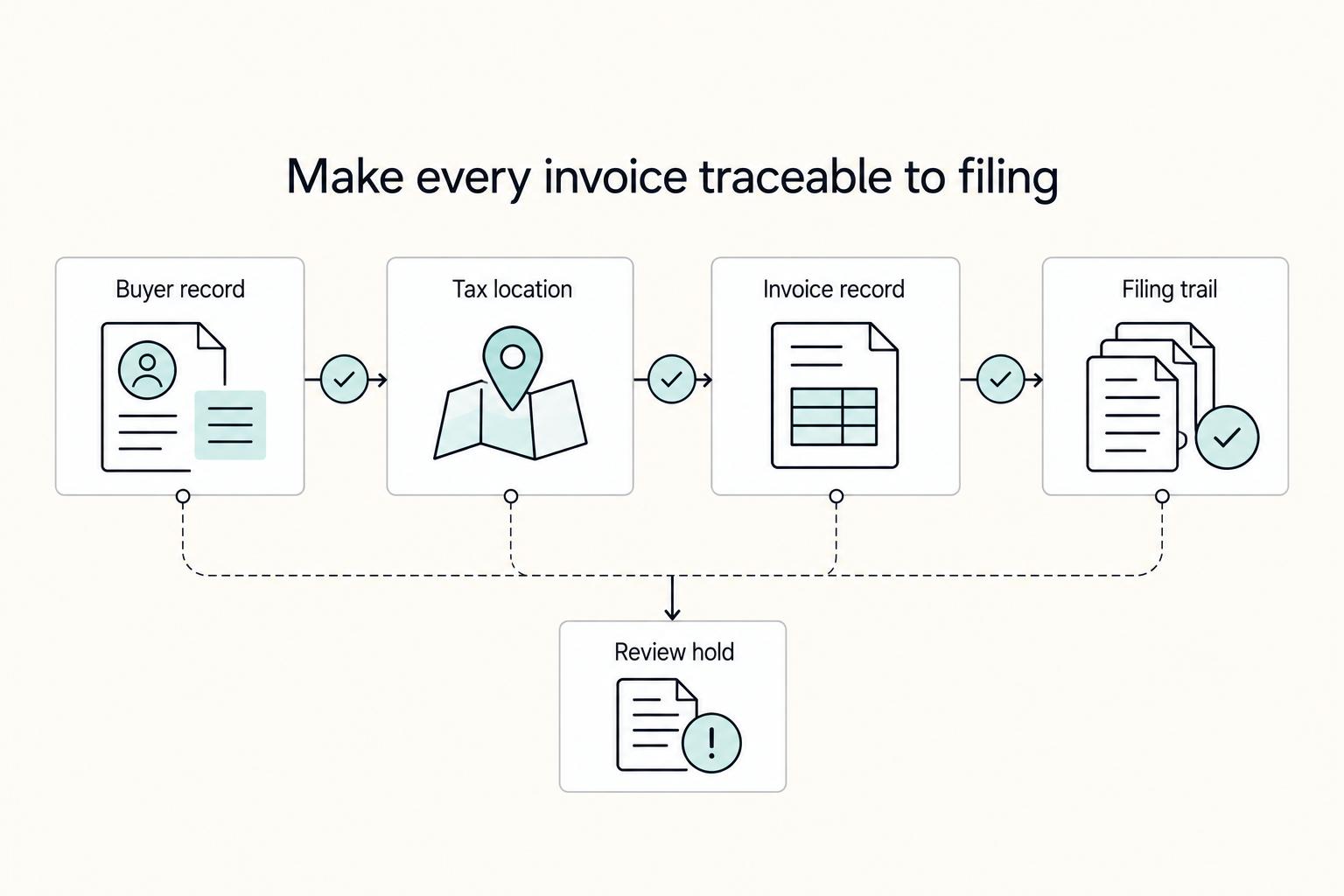
Low-stress compliance in Germany comes from decision order, not tax tricks. Use this sequence: confirm core facts, apply conservative temporary assumptions, verify the few points that can break invoices or filings, and keep one evidence file that explains each decision.
Working Remotely in Latin America Without Visa Guesswork
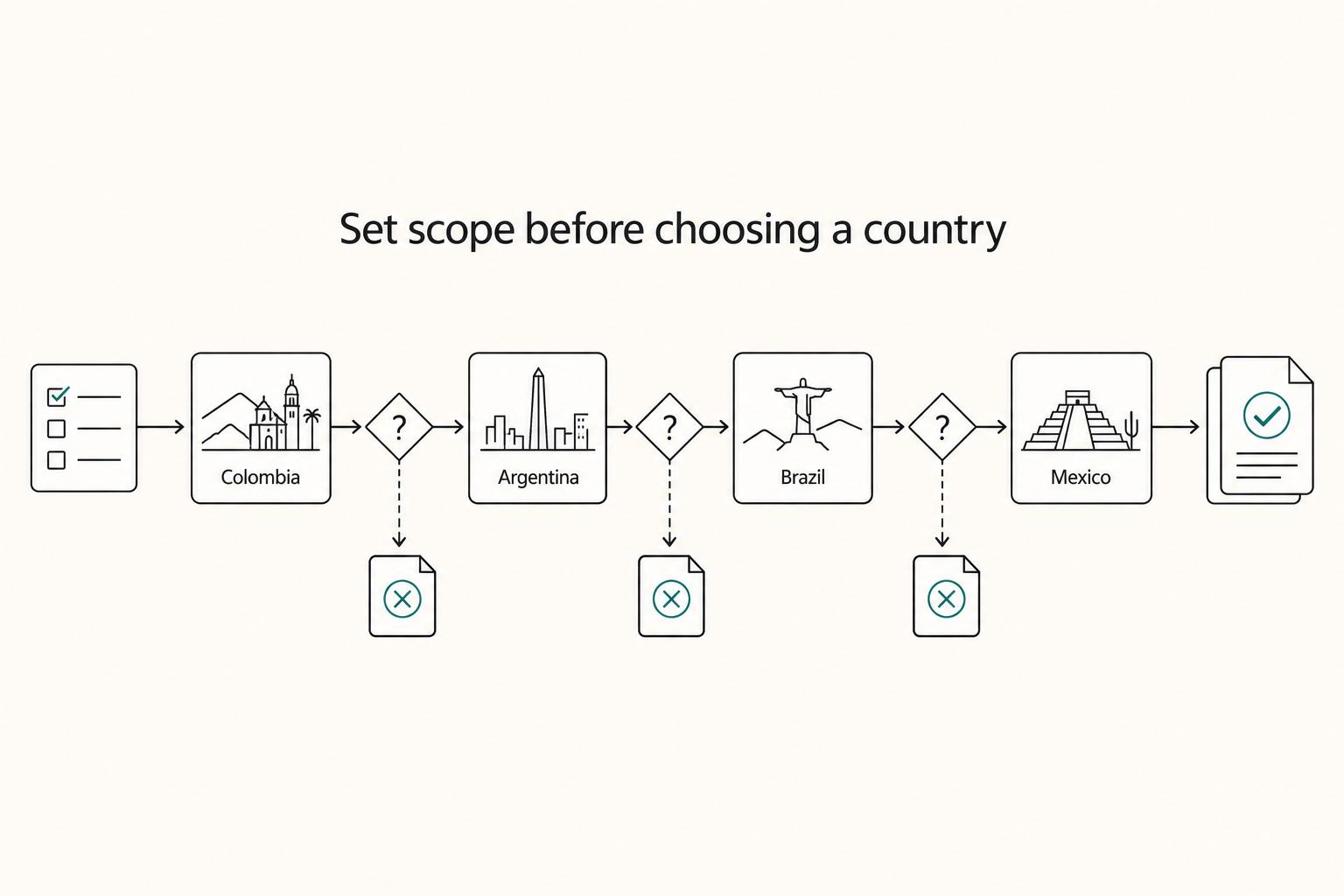
Treat this move as a verification project, not a booking sprint. If you are planning a remote-work move in Latin America, the first practical step is to separate what is clearly supported now from what still needs direct government confirmation before you spend money or lock dates.
A Guide to Taking a Mini-Retirement
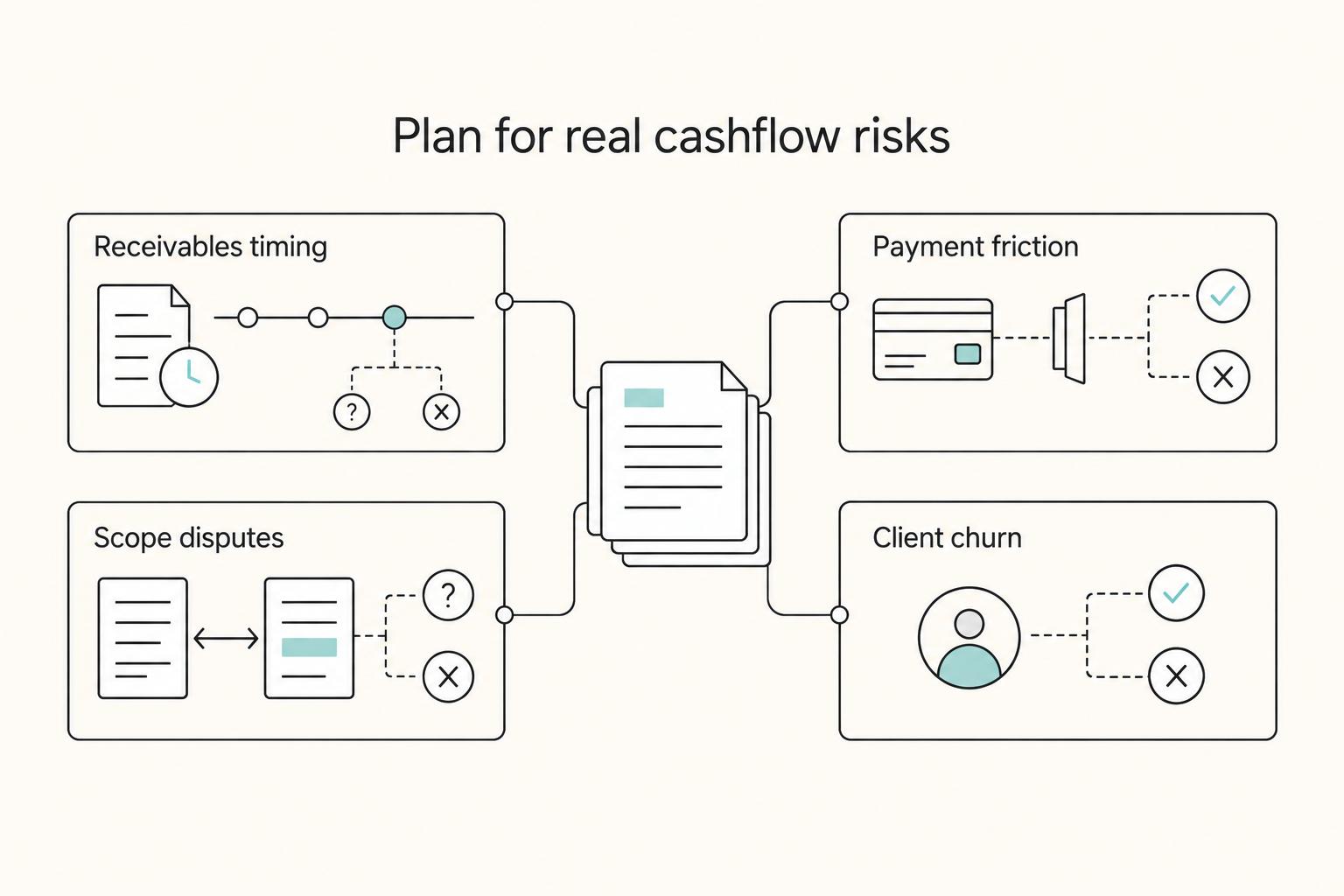
**Take your mini-retirement only after you install controls that keep cash collection and client expectations predictable while you go offline.** You do not need more "follow your dreams" energy. You need mechanics that still work when payments slip, processes slow down, or a client situation gets messy and you cannot jump on a call to smooth it over.