
Quick Answer
Choose the jurisdiction you can maintain without missed filings. Delaware, Nevada, New Mexico, and Wyoming can reduce owner visibility in some public records, but that does not remove BOI, tax, banking, or lawful disclosure duties. Your first decision point is where you actually operate, because that can trigger home-state registration even after an out-of-state filing. Use one owner for notice handling, one calendar for recurring obligations, and one evidence folder for approvals, receipts, and confirmations.
Start Here if You Want Privacy Without Compliance Surprises#
Start with compliance durability, then use privacy as a tie-breaker. If you are looking for the best states for anonymous llc, ask a simpler question first: which setup can you keep clean, current, and defensible while you run the business?
Public-record privacy is not the same as full secrecy. You may be able to limit what appears in public business records, but you should not assume your business is invisible to lawful review channels. Treat anonymity as a public-record goal, not a secrecy guarantee.
Use any state shortlist as a starting point, not a conclusion. Among the sources for this article, one is mostly title/byline/date metadata, so use it as a prompt to verify details on official filing pages rather than as filing authority.
Use your operating footprint as the first checkpoint#
If your clients, revenue activity, and day-to-day operations are centered in your home state, start there before filing elsewhere. Filing out of state can increase administrative workload where you actually operate, so weigh ongoing maintenance before you chase formation-day optics.
Before you compare states in detail, confirm where you do business, where contracts are handled, where notices must reach you, and who is responsible for each deadline. If those answers point home, keep the structure aligned with what you can maintain consistently.
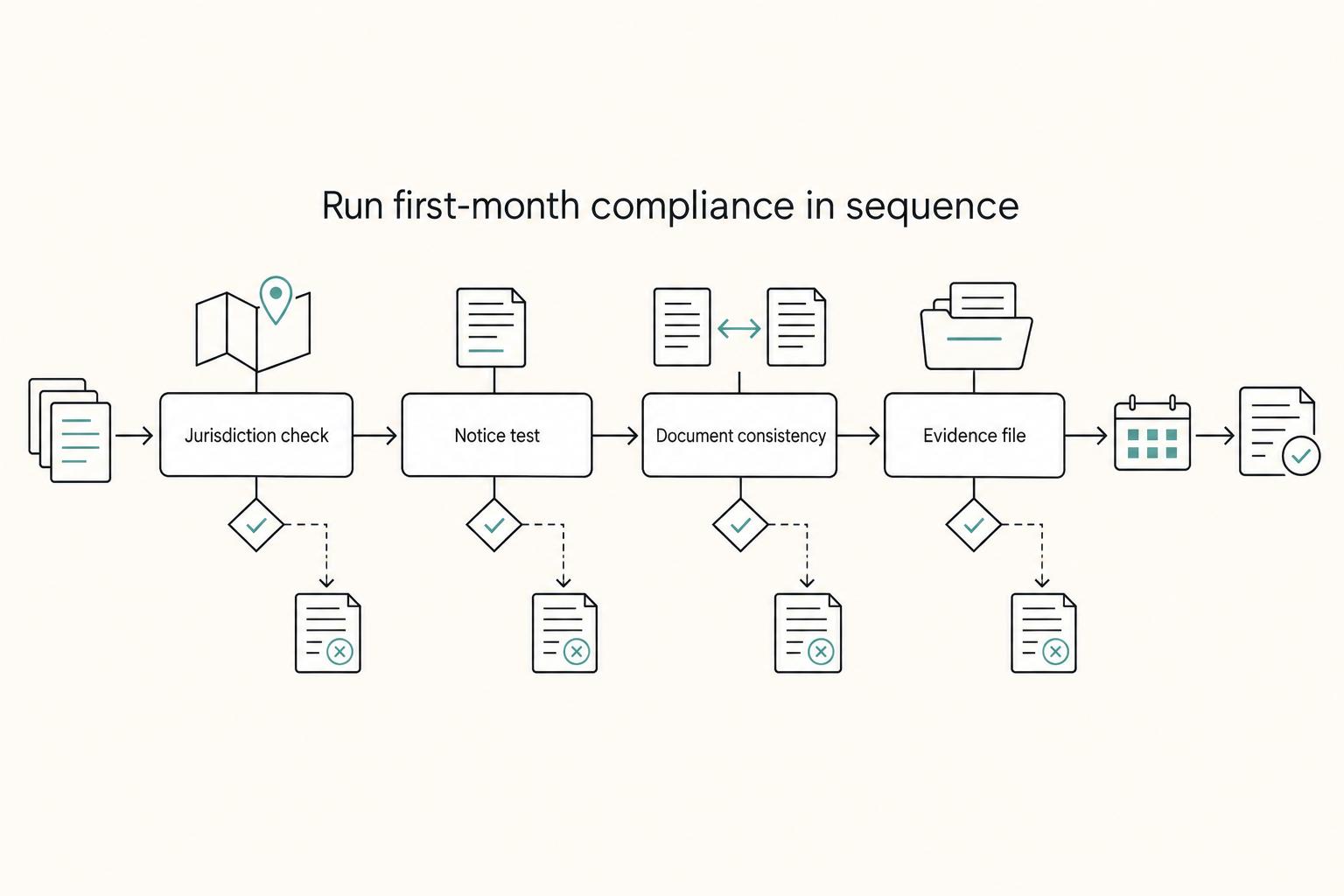
Your first month sequence#
| Step | Action | Focus |
|---|---|---|
| Verify both jurisdictions before filing | Confirm the current formation and ongoing filing pages for the state you are considering and for your home state | Current state filing rules |
| Test your notice flow | Make sure official notices route to the right person quickly, with a clear owner for follow-up | Notice routing |
| Lock document consistency early | Use one exact business name and one consistent formatting standard across formation, tax, banking, and platform records | Record consistency |
| Create one compliance evidence system | Store approvals, receipts, agent agreements, and filing confirmations in one dated, retrievable place | Evidence retention |
One avoidable mistake is choosing based on privacy messaging first, then discovering the operational burden later. With that in mind, compare your options with maintainability as the primary filter. This pairs well with our guide on The Best Virtual Phone Number Services for Freelancers.
How This List Ranks the Best States for Anonymous LLCs#
This list ranks compliance durability first and public-record privacy second. If two states look similar on public exposure, the higher rank goes to the one you are more likely to keep current without missed notices, duplicate filings, or cleanup later.
This framework is for solo owners and small professional firms that want a durable setup, not formation-day optics. Privacy here means reducing personal details in ordinary public state records where possible. It does not mean avoiding legal or tax obligations, and required identity disclosures still apply to entities such as the IRS and banks.
Who this ranking is for#
Use this method if privacy matters to you and you also want a setup you can maintain during busy seasons. It is most useful when you can answer a few operating questions before filing. Where do you actually work, where are contracts handled, and is filing out of state likely to create a second registration track at home?
In the privacy-friendly anonymous LLC model, public-facing records may show the LLC name, registered agent, and business address instead of your personal details. That is a public-record posture, not a secrecy guarantee. The IRS and banks will still know your identity, and every LLC still needs a registered agent.
The four criteria behind the ranking#
Use these four criteria together. Looking at just one, especially public-record privacy, is how people end up with a harder setup than they expected.
- Public-record privacy
This checks how much owner identity information appears in routine public state records. Decision lens: Favor states that reduce routine public visibility, but do not over-score privacy claims tied only to public search pages. Checkpoint question: After reviewing formation forms and the public business search, what personal details appear publicly, and what details still go through lawful non-public channels?
- Recurring filing burden
This checks how much repeat work is required after formation. Decision lens: Rank states higher when recurring steps are clear enough to track and complete reliably. Checkpoint question: Can you clearly state what must be filed, where, by whom, and where proof is stored?
- Multi-state friction
This checks whether forming out of state adds a second compliance track where you actually operate. Decision lens: If your work is centered in one home state, penalize options likely to create two places to maintain. Checkpoint question: If you form there, will you likely need to register where you do business, and can you keep both tracks current?
- Notice reliability and evidence quality
This checks whether official notices and filing confirmations reliably reach the right person and are retained. Decision lens: Score higher when the registered-agent setup, notice routing, and recordkeeping are clear before filing. Checkpoint question: If an official notice arrives tomorrow, who receives it first, how quickly does it reach you, and where is proof of response saved?
The simple rubric used across states#
Use a consistent High/Medium/Low rubric so the comparison stays practical and does not pretend to unsupported precision.
| Criterion | High | Medium | Low |
|---|---|---|---|
| Public-record privacy | Limited public filing exposure is confirmed in official records | Some owner details may appear publicly | Public-facing forms/searches appear to require more owner visibility |
| Recurring filing burden | Ongoing upkeep looks clear and manageable | Some recurring work or ambiguity remains | Hard to explain or easy to miss |
| Multi-state friction | Low chance of duplicate state tracking | Possible second-state steps depending on operations | Likely two-state admin if you mainly operate at home |
| Notice reliability and evidence quality | Agent, routing, and proof storage are clearly set | One part of the chain still needs cleanup | Notice flow or records are likely to fail under stress |
When you need a current filing detail, deadline, or state-specific disclosure rule, do not guess. Verify it on the official filing page before you make a final choice.
If low admin is your priority, weight recurring filing burden and multi-state friction most heavily. Then verify both states' requirements before filing, set one dated compliance calendar, and keep confirmations, agent agreements, and approvals in one retrievable record set.
If you want a deeper dive, read How to Maximize Credit Card Rewards for Free Travel.
Quick Comparison of Delaware, Nevada, New Mexico, and Wyoming#
Start with upkeep, not formation optics. One commercial comparison frames the main difference across these four states as formation and maintenance cost. Use that as your first screening lens, then verify current requirements on official state pages.
Use this as a reality check, not a promise sheet. Read it right to left: eliminate misfits first, then compare compliance durability, notice-handling complexity, and multi-state maintenance burden. Use public-record handling as the tie-breaker.
| State | Fits you if | Public-record privacy does and does not cover | Where duplicate obligations can show up | Verify now and eliminate first if |
|---|---|---|---|---|
| Delaware | You are comparing Delaware and will verify recurring obligations before filing. | Public-record visibility depends on current forms and filing choices. It does not remove federal reporting, tax, banking, court, or other lawful disclosure duties. | If operations are centered in another state, you may still run a second registration/compliance track there. | Verify official state instructions before relying on summaries. Eliminate first if your top priority is the fewest recurring moving parts. |
| Nevada | You are comparing Nevada and want to confirm maintenance fit before committing. | Public-record visibility depends on current forms and filing choices. It does not create secrecy from federal reporting, banking review, or litigation disclosure. | If day-to-day work happens elsewhere, you may need both Nevada and home-state tracking. | Verify on the official state site, not only comparison pages. Eliminate first if you want the simplest annual checklist and notice flow. |
| New Mexico | You are comparing New Mexico and can verify home-state effects before filing. | Public-record visibility depends on current forms and filing choices. It does not remove tax, federal reporting, banking, or court disclosure where legally required. | If the business is operated from your home state, foreign qualification there can create a second compliance track. | Verify current requirements directly before filing. Eliminate first if your plan assumes out-of-state filing removes home-state duties. |
| Wyoming | You want Wyoming in the shortlist and will verify current maintenance details before deciding. | Public-record visibility depends on current forms and filing choices. It does not shield lawful federal, tax, banking, or court disclosure. | If operations are centered outside Wyoming, home-state registration can still create two calendars and two notice paths. | Verify current fees and annual obligations on the official state page before filing. Eliminate first if you will not maintain two states cleanly. |
Use a strict tie-breaker if two options look close. Pick the one you can explain in one sentence with no hedging. That sentence should cover who gets official notices first, what must be filed each year, and where proof is stored.
Keep one verification habit from day one. Save the official instruction page, or the official PDF and edition when available, with the date checked. That keeps you from relying only on web text that may be outdated or incomplete, including sources that may not carry formal notice value on their own.
For this table, the decision rule is simple: prioritize manageable upkeep over formation optics when comparing these states for an anonymous LLC strategy. For a related comparison, see Delaware C-Corp vs Wyoming LLC for Your Next Growth Stage.
Wyoming for Most Independent Professionals Who Want Low Ongoing Friction#
Wyoming is a practical low-friction option only if your real operating footprint supports it. It is not a universal default for solo professionals.
Keep the boundary clear: filing out of state does not remove obligations in the state where you are actually doing business. If income is earned in your home state, tax and compliance duties can still apply there.
Choose Wyoming only if#
Use this filter before you file.
- Your management and day-to-day operations are not clearly centered in your home state, or you are prepared to run two compliance tracks.
- You have verified whether your home state will treat the Wyoming LLC as a foreign entity before you legally do business there.
- You can maintain recurring obligations without drift if dual-state filings apply.
If your office, people, inventory, and revenue activity are centered at home, assume out-of-state filing may still trigger home-state obligations until you verify otherwise.
Wyoming execution sequence#
If Wyoming still looks workable, follow this order so you do not create a setup with weak maintenance underneath.
- Formation completeness
Confirm what filing out of state changes, and what it does not change for home-state tax and compliance obligations.
- Registered Agent notice flow
If you do not have a physical Wyoming address, plan for a commercial Registered Agent and set a clear notice-routing process from day one.
- Recurring filing calendar
Create dated reminders for Wyoming and any home-state track that may apply. Confirm current recurring requirements on the official state page.
- Home-state registration check
Do this before assuming one-state upkeep. If foreign qualification is required, plan for annual obligations in both states.
- Evidence retention
Keep one folder with approvals, agent confirmations, payment receipts, annual filings, and dated copies of the official instructions you used.
Main risk: the foreign-qualification trap. You file out of state, then still need home-state registration and ongoing dual-state upkeep.
Go with Wyoming only if you can state, in one sentence, where you are legally doing business, who receives official notices first, and whether home-state registration is required. If you cannot, it is a no-go for now.
Need the full breakdown? Read our guide to forming and running a Cayman Islands LLC.
Delaware for Owners Who Value Legal Infrastructure Over Simplicity#
Choose Delaware when you need its legal system for real deal or dispute risk, not for optics. If your setup is still simple, a simpler path is usually easier to run year after year.
Use these definitions before you decide.
- Legal infrastructure: Delaware's business-law network, including the Court of Chancery, a non-jury civil court, Delaware entity law, and the legal-services depth around both.
- Operational complexity: Recurring compliance work across states, especially foreign qualification and ongoing state filings and taxes.
- Investor pressure: Actual financing constraints or counsel guidance that push you away from an LLC structure, not general plans to raise money someday.
Delaware LLC law is strongly contract-centric, so your operating agreement carries more risk-control weight here. If that agreement is thin on governance, transfers, authority, or dispute handling, Delaware does not fix that gap for you.
Delaware vs simpler options (ongoing burden view)#
| Decision point | Delaware | Simpler path (often home-state first) |
|---|---|---|
| Legal predictability in complex business disputes | Often a stronger legal-system signal, especially when governance and contract terms are complex | Usually sufficient for straightforward solo operations |
| Recurring state administration | No LLC annual report requirement, but recurring Delaware obligations still apply | Often fewer moving parts when you operate in one state |
| Cross-state operations | May add foreign qualification where you actually do business (Certificate of Authority) | Lower two-state friction if your operations are clearly local |
| Fundraising context | Can align with investor-facing legal expectations, but LLC-vs-corporation fit may be the bigger issue | Fine when investor-driven structure pressure is not active |
Best if / avoid if#
- Best if: You already have multi-owner governance complexity, negotiated control or economic terms, or meaningful dispute exposure where governing law and forum predictability matter.
- Avoid if: You are a straightforward solo service business, your operating footprint is clearly in one home state, or you are choosing Delaware mainly because it sounds more credible.
If you choose Delaware#
Run Delaware like a deliberate legal choice, not a branding choice.
- File with required registered-office and registered-agent details.
- Confirm where you are legally doing business, then verify foreign qualification requirements before operating across state lines.
- Set up notice intake so registered-agent mail is reviewed and actioned on a defined schedule.
- Keep one evidence folder: stamped filing, agent confirmation, operating agreement, payment receipts, and any foreign-registration approvals.
- Assign one calendar owner and record filing windows, recurring costs, and due dates only after checking official records.
Related reading: The Best Tools for Anonymous Employee Feedback.
New Mexico for Minimal Public-Record Exposure at Formation#
Consider New Mexico when your immediate goal is potentially lower owner visibility in state public records at formation, and you are prepared to verify current filing practice before you submit. That caution matters because reports conflict on this point. One report lists New Mexico as an anonymous-LLC state, while another says owner names are required in public records.
Keep the definitions separate so you do not over-assume. Public-record exposure is whether your personal details appear in searchable state records. Beneficial ownership disclosure is different, and public-record privacy does not stop the IRS or banks from knowing your identity. Operational identity verification is the day-to-day reality. Banks, investors, customers, and counterparties may still require transparency before working with your LLC.
A comparison source lists a $50 initial filing fee and no annual report fee for New Mexico. Treat that as a cost signal, not a secrecy guarantee. The real decision is whether public-record exposure is actually reduced in your filing scenario and whether your operating state creates foreign-qualification friction anyway.
| What New Mexico helps with | What it does not solve |
|---|---|
| May reduce public-facing owner visibility at formation if current filing practice supports it | Does not create full secrecy from the IRS, banks, or other institutions |
| Lets you use a registered agent as the public contact for legal and state notices | Does not remove onboarding friction when institutions request more verification |
| Can offer a lower upfront formation-cost signal | Does not remove foreign-qualification risk where you actually operate; one comparison source lists $100 for New Mexico foreign LLC registration, and your operating state may add its own burden |
If you choose this route, treat it like document control:
- Standardize entity details across state filings, registered-agent records, IRS and bank onboarding documents, and internal compliance records.
- Confirm exactly how registered-agent notices are received, forwarded, and reviewed.
- Keep one evidence folder with filed records, agent confirmations, and onboarding correspondence.
- Confirm the current institution-specific document requirements with the institution before onboarding.
Privacy positioning is a legal strategy, not full secrecy. It does not replace tax, reporting, licensing, or ongoing compliance duties.
Nevada for Privacy-Focused Owners Willing to Manage Extra Complexity#
Choose Nevada only if privacy positioning matters more to you than an added ongoing compliance load and potential two-state upkeep.
Keep these definitions separate so the decision stays grounded:
- Privacy positioning: public-record privacy, not full secrecy; ownership may still be visible to government agencies and law enforcement.
- Anonymous formation availability: whether a state allows anonymous LLC formation at all; current guidance supports a group of 4 states: Delaware, Nevada, New Mexico, and Wyoming.
- Foreign qualification: registering your out-of-state LLC where you are actually transacting business; for example, Texas requires registration when a foreign entity is transacting business in the state.
Use this decision lens before you pick Nevada#
The tradeoff is straightforward: Nevada can support a privacy-oriented posture, but only if you can carry a heavier maintenance cadence without slippage.
| Option | What it can offer | What you must be able to sustain |
|---|---|---|
| Nevada | Privacy positioning with anonymous formation availability | Nevada's annual-list framework, a separate state business-license annual-renewal framework, and late-payment risk if tasks slip |
| Wyoming | Anonymous LLC availability with privacy positioning | Annual reporting to stay in good standing, plus annual license tax of $60 or $.0002, whichever is greater |
| Your home state | Compliance aligned with where you primarily operate | Public-record privacy positioning may be different depending on state rules, but duplicate filing risk may be lower if you mainly operate locally |
If you form in Nevada but operate primarily in your home state, foreign qualification can add another filing layer. New York, for example, charges $250 for a foreign LLC Application for Authority.
Same-day pre-filing check#
Do this on the same day you file so your assumptions stay tied to the live rules.
- Confirm Nevada's current formation and ongoing requirements on the day you file.
- Confirm whether your home-state activity triggers foreign qualification.
- Assign clear ownership for each recurring task: annual list, business-license renewal, and any foreign-state filings.
- Save filing receipts and renewal records in one evidence folder.
Choose Nevada only when you can maintain that cadence during busy seasons. If that is unlikely, default to the jurisdiction you can run consistently without compliance drift.
You might also find this useful: Delaware vs. Nevada LLC: A Comparison for Asset Protection.
Home-State Registration Can Override Your Out-of-State Filing Strategy#
Your operating footprint usually decides your compliance obligations, so your home-state analysis should come before any out-of-state privacy plan.
Start with the real trigger#
Foreign qualification can apply when you form in one state but become active in another. In practice, that often means filing a Certificate of Authority and managing two compliance tracks: your formation state and the state where you actually operate.
This is where many filing strategies break down. Registration duties follow business structure and location, and expanding into another state can create taxes and annual-report obligations in both places. If you form in Delaware for privacy positioning but still operate from home, your home state may still require registration there. Delaware can still require its $300.00 annual LLC tax due by June 1.
Use this decision test before you file#
Ask where your business truly operates, not just which state markets stronger privacy.
| Situation | Maintainability | Duplicate-admin tolerance | Privacy goal fit |
|---|---|---|---|
| When home-state filing is cleaner | Best when your day-to-day operations remain home-based | Low tolerance for two calendars, two notice flows, and possible two-state fees | You accept less public-record privacy positioning for simpler upkeep |
| When out-of-state formation is still defensible | More workable when operations have genuinely moved, or you can reliably run both states | High tolerance for recurring two-state admin and verification | Privacy positioning still matters enough to justify extra filing friction |
If operations remain home-based, home-state registration risk can increase because your activity still points there. If operations genuinely moved, that risk can change, but you still need to verify both states because "transacting business" is state-specific.
Run this pre-filing checklist the same day#
Check both states against the same facts while the rules are current. Do not split this review across different days.
- Check both states' rules
Review current Secretary of State guidance in both states on the same day, with focus on foreign-qualification triggers.
- Align your filing records
Keep legal name, addresses, formation date, and registered-agent details consistent across drafts.
- Check your disclosure boundary
Public-record privacy is not total privacy; EIN setup still requires the responsible party's name and taxpayer ID.
- Build one compliance calendar
Track both states' recurring deadlines in one place from day one. Example: Wyoming annual reports are due on the first day of the anniversary month, and missing payment by 60 days can put the entity at dissolution risk.
- Retain evidence
Keep confirmations, receipts, approvals, and same-day rule notes so you can reconstruct decisions if a state questions authority or timing.
If you already struggle to maintain one annual cycle, assume two will be harder. Out-of-state formation can still be valid, but if your priority is durable compliance with fewer surprises, filing where you actually operate is often cleaner.
Your First 30 Days After Formation#
In your first 30 days, aim for operational clarity. Confirm where you may need to register, who owns notices, what records prove compliance, and which disclosures still apply even when owner names are not public in some state records.
Operational checklist (days 1-30)#
Treat the first month as cleanup and confirmation, not a victory lap. The goal is to make sure the entity works in practice before you onboard banks, processors, or advisers.
| Task | What to verify | Outcome |
|---|---|---|
| Confirm your registration scope | Verify whether formation was enough or whether you may also need foreign qualification based on where you actually operate | You can state where the LLC is formed, whether additional state registration may be required, and what confirmation records you have |
| Assign your notice flow | Assign a primary owner, a backup reviewer, and one place where every notice is logged and stored | Legal and state notices are routed, reviewed, and documented without gaps |
| Centralize your document pack | Keep formation approval, filing receipt, Registered Agent appointment details, any registration confirmations, recurring state filing or fee tracking, tax setup records, and your internal owner-role note in one retrievable structure | You have one complete evidence set instead of fragmented files across inboxes and portals |
| Align records before onboarding | Make sure legal name, formation state, and formation date match across state records, tax submissions, bank paperwork (if applicable), and internal files | Your files are consistent enough to reduce avoidable manual-review friction |
| Verify privacy, BOI, and tax disclosure as separate tracks | Keep three separate checks: public-record visibility, BOI status, and tax identity reporting | You are not relying on public-record privacy as a substitute for BOI or tax disclosure duties |
- Confirm your registration scope.
Verify whether formation was enough or whether you may also need foreign qualification based on where you actually operate. Outcome: You can state where the LLC is formed, whether additional state registration may be required, and what confirmation records you have.
- Assign your notice flow.
Treat your Registered Agent setup as an active process, not a one-time checkbox. Assign a primary owner, a backup reviewer, and one place where every notice is logged and stored. Outcome: Legal and state notices are routed, reviewed, and documented without gaps.
- Centralize your document pack.
Keep formation approval, filing receipt, Registered Agent appointment details, any registration confirmations, recurring state filing or fee tracking, tax setup records, and your internal owner-role note in one retrievable structure. Outcome: You have one complete evidence set instead of fragmented files across inboxes and portals.
- Align records before onboarding.
Before opening accounts or sharing entity details, make sure legal name, formation state, and formation date match across state records, tax submissions, bank paperwork (if applicable), and internal files. Outcome: Your files are consistent enough to reduce avoidable manual-review friction.
- Verify privacy, BOI, and tax disclosure as separate tracks.
If you formed in Delaware, Nevada, New Mexico, or Wyoming, anonymous LLC treatment means owner names are not public in certain state records. It does not mean owner identity is hidden from tax authorities, government agencies, law enforcement, or legal process. Keep three separate checks: public-record visibility, BOI status, and tax identity reporting. If your BOI assumptions are old, re-verify current rules before you proceed. The referenced 2025 position stated domestic U.S. companies would voluntarily file starting in March 2025, while foreign companies still had a 30 days reporting timeline after publication. Outcome: You are not relying on public-record privacy as a substitute for BOI or tax disclosure duties.
Before onboarding#
Run this validation block before giving entity data to a bank, payment processor, or tax preparer:
- Your exact legal name matches across state approval, tax submissions, bank forms (if applicable), and internal files.
- Your formation state and formation date are consistent everywhere.
- Your Registered Agent appointment is active, and recurring state filing or fee obligations are tracked.
- Your internal ownership and role notes are current, even when those names are not public in state records.
Go or no-go test#
At day 30, ask one question: is the LLC operationally ready? You are at go only if all of these are true:
- Registration scope is confirmed, including any foreign-qualification question.
- Registered Agent and notice flow are assigned, tested, and documented.
- Recurring state filing or fee obligations are tracked.
- Document pack is centralized and easy to retrieve.
- Records are aligned across state, tax, bank (if applicable), and internal files.
- Current compliance obligations are verified, including BOI status and tax identity reporting.
- State-specific requirements are confirmed on the official state source.
If any item is missing, treat it as no-go and fix it before onboarding.
What You Must Maintain Each Year to Keep Privacy and Liability Protection Intact#
Privacy and liability protection are strongest when yearly maintenance is consistent. The practical rule is simple: keep each state where you are registered current, keep notice handling active, and keep proof easy to retrieve.
| Area | What to maintain | Keep as proof |
|---|---|---|
| State registrations | For every state where your LLC is registered, complete the recurring requirements, confirm the entity shows as active or current, and save the confirmation immediately | State, filing month, payment submitted, confirmation received, and current status verified |
| Registered Agent setup | Confirm the service is active, agent details match your records, and notice ownership is assigned: primary, backup, and storage location | Current agent details and notice ownership |
| Evidence folder | Keep one LLC folder, subfolders by year, and consistent file names; upload confirmations and receipts right after filing | Filings, payment receipts, Registered Agent updates, status documents, and any multi-state registration proof |
| Escalation triggers | Start legal or tax review when you receive a notice you do not fully understand, your operating footprint changes, or you find a missed filing or outdated record | Confirmation of the current correction requirement from the official state source, plus supporting documents |
- Maintain each state where you are registered, not just your formation state.
For every state where your LLC is registered, complete the recurring requirements, confirm the entity shows as active or current, and save the confirmation immediately. Because formation and annual maintenance or renewal fees vary widely by state, manage your recurring workload across all registrations, not just one state's formation-day appeal. Keep a simple tracker with: state, filing month, payment submitted, confirmation received, and current status verified.
- Keep your Registered Agent setup current and clearly owned on your side.
Appointing a Registered Agent is a core setup step, and it should stay actively managed. Each year, confirm the service is active, agent details match your records, and notice ownership is assigned: primary, backup, and storage location. If contact data is stale or ownership is unclear, you can miss official notices even when filings look current, which can weaken your privacy and liability posture.
- Use one audit-ready evidence folder with a consistent standard.
Keep one LLC folder, subfolders by year, and consistent file names, for example, 2026-WY-annual-maintenance-confirmation.pdf. Upload confirmations and receipts right after filing instead of leaving them in inboxes. Store filings, payment receipts, Registered Agent updates, status documents, and any multi-state registration proof in the same retrievable system.
- Escalate based on triggers, then document the correction.
Start legal or tax review when you receive a notice you do not fully understand, your operating footprint changes, or you find a missed filing or outdated record. After verification, add the current correction requirement to your records and save it with supporting documents so the same gap does not repeat next cycle.
Use this yearly test: can you produce current filings, payment proof, Registered Agent details, and current status evidence for every state where you are registered within minutes? If not, maintenance is incomplete.
Before your next filing cycle, set up a workflow where invoices, payouts, and record exports are easy to trace in one place: Read the Gruv docs.
Mistakes That Make an Anonymous LLC Less Private or More Fragile#
Many breakdowns here are operating mistakes, not formation mistakes. Define the protection correctly: public-record privacy is about limiting routine public visibility, while legal anonymity is a broader claim you should not assume. You can be less visible in public records and still face required disclosures through agencies or other lawful process.
This is where many owners slip. They choose a privacy-oriented setup and then treat lower public visibility as total secrecy, which can lead to missed obligations and slower response when official requests arrive.
| Mistake | What it looks like | Why it weakens privacy/liability | What to do this week |
|---|---|---|---|
| You treat public-record privacy like total secrecy | You assume an "anonymous" setup means nobody can connect you to the company | Public visibility and required disclosure are different. If you confuse them, response decisions can break down when scrutiny or formal requests appear | Write a one-page privacy rule for your business: what stays out of routine public search, what still must be disclosed when legally required, and who owns those responses |
| You rely on unofficial summaries for legal-sensitive decisions | You act from blog summaries, screenshots, or XML-only Federal Register views without confirming the official legal edition | FederalRegister.gov states its content is informational, and its XML view does not provide legal or judicial notice | For any rule you act on, verify it against the official legal edition or PDF and keep that copy in your compliance folder |
| Your deadline calendar and notice flow are loose | Deadlines are scattered, notices route to one inbox, and forwarding is not tested | Loose deadline and notice controls increase the risk of missed dates and missed notices | Put recurring filings on one calendar, assign a primary and backup owner, and test notice forwarding now |
| Your records controls are sloppy | You cannot quickly produce filings, confirmations, receipts, or status proof when needed | Weak records management makes it harder to respond quickly under pressure | Keep one year-based folder for filings, receipts, status checks, and notice records. If you need help on the banking side, this account setup guide is useful |
| You assume a privacy setup overrides other legal restrictions | You treat the entity as a shield against transaction restrictions | It does not. OFAC sanctions can block property or prohibit certain transactions, including in some non-U.S.-person scenarios | If you operate cross-border, verify counterparties and transaction risk before funds move |
Keep your operating controls simple and consistent: deadline discipline, notice routing, and records management. If you cannot reliably meet deadlines and retrieve records on demand, choose the simpler setup you can run consistently.
Related reading: How Nevada LLC Legal Protections Work for Independent Professionals.
Choose the State You Can Operate Cleanly for the Next Three Years#
Pick the setup you can run consistently during busy months, not the one with the strongest marketing pitch.
- Operating footprint first
Before comparing Delaware, Nevada, New Mexico, or Wyoming, map where you actually operate day to day. If your work is centered in your home state, test that reality first so you do not choose an out-of-state path that can add a second compliance lane you will not maintain well.
- Recurring workload check
Treat filing deadlines as core operating checkpoints, not background admin. Choose the option you can keep current from one calendar, with clear ownership for each task and no dependence on memory.
- Downside pressure check
Evaluate the year-over-year pressure, not formation-day optics. Ongoing costs can accumulate, financing friction can happen in some situations, and missed filing obligations can carry penalties. If that would push you into delays or shortcuts, the setup is not resilient enough for your workflow.
- Professional review readiness check
File only when your plan is review-ready. You should be able to hand a lawyer, CPA, or tax adviser a clean packet and explain your structure, operating footprint, and compliance timeline without gaps. If key details are missing, pause and gather them before filing.
Keep execution simple: maintain one compliance calendar and store approvals, receipts, and filing confirmations in one retrievable record set. If you are still choosing entity type, use Sole Proprietorship vs. LLC: The Definitive Guide for Global Freelancers. If you already know your preferred filing state but your facts are still messy, contact Gruv before you file.
For a step-by-step walkthrough, see The Best Jurisdictions for an Offshore Asset Protection Trust.
If you want a second set of eyes on your operating-footprint and money-flow setup before you finalize your structure, talk to Gruv.
Frequently Asked Questions
Which states currently allow an Anonymous LLC?
The commonly cited list is four states: Delaware, Nevada, New Mexico, and Wyoming. Before you file, verify what the formation record requires and what the public business search actually displays in that state. Then keep disclosure lanes separate in your planning: public records can be limited while tax filings and BOI reporting can still require owner information.
Is an Anonymous LLC fully anonymous to the government?
No, it limits routine public-record visibility, not overall disclosure. You can keep owner or manager names out of some state public records and still be identifiable in tax filings, BOI reporting when applicable, and lawful legal process. Use this rule consistently: public records, tax filings, and beneficial-ownership reporting are different channels.
Can I form in Wyoming, Delaware, Nevada, or New Mexico and still operate mainly in my home state?
Yes, but your operating footprint can trigger home-state registration and extra obligations. Use this three-part check: what appears on your formation-state record, where you actually operate, and whether that activity requires home-state registration or foreign qualification. If foreign qualification applies, you may face added filings, fees, and maintenance in both states, and member information may be exposed in that process.
Which state is usually best for a solo professional who wants low admin burden?
The best state is usually the one you can keep compliant year after year with the least friction. Use the earlier comparison and decide based on recurring compliance load, the chance of foreign qualification if you operate out of state, and your tolerance for dual-state maintenance. If options are close, prefer the path with fewer ongoing obligations.
What ongoing filings should I expect after formation?
Expect recurring state maintenance plus separate disclosure through tax and BOI channels when applicable. At minimum, keep your Registered Agent active and complete required state reports and fees. Current filing windows and fee amounts should be verified from official state and federal records before use. Keep one organized evidence set for approvals, report confirmations, receipts, and status records so you can respond quickly if questioned.
What should I complete in the first 30 days after filing?
Use your first month to verify what is true in practice, not just what you intended at formation. Confirm your public listing, verify current BOI status and timing from official federal records, test Registered Agent notice flow, and calendar known recurring obligations. This helps avoid a gap where you expect privacy but inherit a harder, less reliable compliance setup.
When should I bring in a business attorney or tax professional?
Bring one in when you cannot clearly map the disclosure and registration consequences of your setup. Typical triggers are uncertain foreign-qualification exposure, unclear tax treatment, ownership changes, or confusion about what stays public versus what must be reported privately. Paying for clarity before filing can be less costly than fixing missed filings or disclosure assumptions later.
Try a related tool
Researched and edited by the Gruv editorial team. Gruv builds cross-border billing, payouts, and finance-operations software for global businesses.
Sources
- boiefiling.fincen.gov/fileboirtrusted
- claremontca.gov/files/assets/public/v/1/city-clerk/documents...trusted
- copyright.gov/ai/Copyright-and-Artificial-Intelligence-Par...trusted
- corp.delaware.gov/alt-entitytaxinstructionstrusted
- corp.delaware.gov/stats/2023-annual-reporttrusted
- courts.delaware.gov/chancery/clerkship/clerkship.aspxtrusted
- courts.delaware.gov/Chancery/jurisdiction.aspxtrusted
- dos.ny.gov/april-11-2018vol-xl-issue-15trusted
Educational content only. Not legal, tax, or financial advice.
Related Posts

Sole Proprietorship vs LLC for Global Freelancers in 2026
For most freelancers in 2026, the practical default is still simple: use the simplest structure you can run cleanly, then formalize when risk actually rises. If your work is still in validation mode and the downside is contained, a sole proprietorship is often the practical starting point. When contract exposure, delivery stakes, or dispute risk starts climbing, forming an LLC deserves earlier attention.

The 'Profit First' Method Part 2: Setting Up Your Bank Accounts
Profit First, developed by [Mike Michalowicz](https://mikemichalowicz.com/profit-first/), uses separate cash accounts to make profit, owner compensation, taxes and operating spending visible. Its behavioral idea is to reserve profit before expenses absorb the available money. Moving cash between accounts does not change accounting profit, create additional cash or eliminate obligations already owed.
How to Maximize Credit Card Rewards for Free Travel
**Build a simple rewards system that protects your ability to get paid first, then use it to maximize credit card rewards without adding risk or busywork.** You've moved past the hype cycle of "travel hacking." Run this like an operator: fewer cards, clearer rules, and decisions you can defend in your books. If you run a business-of-one, you're the CEO, and your rewards setup should protect cashflow before it chases points.