

Quick Answer
Yes, you can get abn australia as a sole trader if your activity meets entitlement and your records are consistent before submission. Use the ABR application pathway with one clean data set, save exactly what you lodged, and keep a dated evidence trail for follow-up. If you receive a reference number or refusal, pause and reconcile facts before reapplying. After approval, keep ABN details, invoicing identity, and GST treatment aligned so operations stay stable.
Build Your Sole Trader Compliance Base Without Guesswork#
If your goal is to get an ABN in Australia without avoidable rework, use this section as your operating base, not as your eligibility ruling or form guide. The later sections cover the entitlement test, the ABR application itself, and what to do if you receive a reference number or a refusal.
Build around the ABN first. It is the business identifier that matters early, and you need an ABN before GST registration. As a sole trader, you are the only owner of the business and legally responsible for its debts and obligations, so messy setup is not just admin drift. It becomes your risk.
Work in three phases, not one rushed form session#
A clean start usually comes from separating the decision, the submission, and the follow-through. That is more reliable than opening the ABR form first and trying to work everything out while you type.
| Phase | Your decision point | What to prepare | What proof to retain |
|---|---|---|---|
| Before | Are you carrying on an enterprise as a sole trader, or are you looking at activity that is really employee work? | Your basic business description, start date you can explain, contact details, and a clear record of how you describe the activity across forms and invoices | A dated note of your business activity decision, the details you plan to submit, and any records that support when the activity started |
| During | Can you submit one consistent ABR application without contradictions? | One final data set for your ABN application, plus your invoicing details and any GST decision notes if GST is relevant | Screenshots, confirmation pages, submitted details, and any reference numbers issued during the process |
| After | Do your ABN details, invoicing practice, GST position, and recordkeeping still match your real activity? | A review habit for changes in services, contact details, and tax registrations | Your approval notice or records of registration details, invoice samples, and a dated log of later changes |
Most avoidable friction starts in that middle phase. The problem is rarely one dramatic mistake. It is usually small inconsistencies: one business description in your notes, another in your form, and a third on your first invoice. If you later need to explain your setup to a client, bank, platform, or the ATO, those mismatches create unnecessary noise.
Set four concrete controls now#
Before you apply, put a few basic controls in place. They matter even if the business is still small.
- Create one source of truth record. Put your trading name style, contact details, business activity description, and start date in one document and use that exact wording everywhere.
- Open an evidence folder. Save dated notes, confirmations, submitted details, and any written notices so you have a clean trail if you need to verify what you claimed and when.
- Set an invoice standard. Decide the exact business details you will show on every invoice and keep the format consistent from the first client onward.
- Keep a change log. Any time your services, address, contact details, or tax registrations change, note the date and what changed so your records and registrations stay aligned.
A little restraint helps here too. Do not register for everything just because the option is there. GST is the clearest example. It is not automatic just because you have an ABN. If you are required to register, you need to do so within 21 days, and penalties may apply if you fail to register when required. The practical rule is to decide deliberately, record the basis, and revisit it as your work changes.
One more flag if your work has cross-border elements. Non-resident GST options can involve different identifiers and tradeoffs. Simplified GST registration, for example, uses a 12-digit Australian reference number and comes with limits such as not being able to issue tax invoices or claim GST credits. This path is framed for non-resident businesses, so check which regime applies before you choose a registration route.
The rest of this guide builds on three pieces: a decision gate for entitlement, a preflight checklist before you submit through ABR, and a control loop that keeps your ABN, invoicing, and recordkeeping aligned after approval. You might also find this useful: A Guide to Salary Sacrificing into Super in Australia.
What Is an ABN and Why Does It Matter for a Solo Operator?#
An ABN is your business identifier when you are entitled to one as a sole trader. It is not a general permission slip to work, and it is not automatic for every type of work. Entitlement is tied to carrying on an enterprise, and ABR is clear that employee activity does not entitle you to an ABN for that activity.
This matters day to day because your ABN setup affects later tax and admin decisions. You need an ABN before GST registration, and inconsistent records can create avoidable risk later.
| Item | What it is | How to use it in practice |
|---|---|---|
| ABN | Your business identifier if you are entitled as a sole trader | Keep your activity description, contact details, and other core business details consistent across application, onboarding, and invoices |
| ABR | The Australian Business Register, including ABN application pathways | Use it as the primary record for ABN application and maintenance |
| ABN Lookup | A separate public tool you may use in workflows | Use it as a lookup tool only; do not treat it as the place to apply or manage tax obligations |
| ATO | The authority for GST rules and related obligations | Follow ATO guidance for GST timing, BAS, and payment obligations |
The practical evidence standard is straightforward: keep records that show your enterprise activity and keep your story consistent wherever it appears. A dated activity note, your submitted application wording, and early business records, for example onboarding emails or first invoices, are usually the core file. Most problems come from mismatched details across systems, not one dramatic error.
What an ABN does not do#
An ABN does not, by itself, determine contractor status versus employee status. It also does not automatically register you for GST or replace separate GST obligations once they apply.
- Standardize client onboarding. Answer business-detail requests from one source-of-truth record so your details stay consistent.
- Verify supplier and platform details carefully. Reuse the exact business details from your ABN records instead of ad hoc variants.
- Keep invoices aligned from day one. Match invoice details to your ABN records and retain copies with your application confirmations.
- Make GST pathway decisions deliberately. Use current ATO rules before acting: ABN is required before GST registration, and if registration is required you must register within 21 days. The excerpted ATO threshold reference includes $75,000 GST turnover. For non-resident scenarios, standard GST registration is ABN-linked with BAS and GST payment obligations, while simplified registration uses a 12-digit ARN and does not allow GST credits or tax invoices.
Optional next reads: Sole Proprietorship vs. LLC: The Definitive Guide for Global Freelancers and A Guide to Tax Residency in Australia for Digital Nomads.
Do You Actually Need an ABN Right Now?#
Apply now only if three checks are solid: you are starting or carrying on an enterprise, your records are consistent, and you have a real operational reason to apply now. If any check is unclear, pause and verify first.
| Decision check | Apply now | Pause and fix first |
|---|---|---|
| Enterprise activity | You can show real activity or clear commencement steps. | Gather support before applying: a dated note of your activity and start timing, plus records like client emails, proposals, onboarding messages, or draft invoices. |
| Data readiness | Identity and business details match across your records. | Reconcile your name style, contact details, business activity wording, and start date so your file is consistent. |
| Intent for applying | You need the ABN for a genuine next step in operating the business. | If you are unsure about entitlement, verify first and treat application as step two, not a test. |
The main compliance risk is usually not one dramatic error. It is an entitlement position you cannot support later, followed by avoidable tax-admin rework. Keep the sequence clear: ABN entitlement first, then related registrations.
For GST, route choice matters after entitlement is clear. ABN is required before standard GST registration, and if GST registration becomes required, the ATO says you must register within 21 days. For non-residents, standard and simplified GST pathways have different requirements and outcomes, so verify the pathway before you proceed.
Minimum readiness pack before you submit:
- Identity consistency across the details you will submit and the records you already use
- One clear business activity description aligned with client-facing documents
- Commencement evidence that supports when you started or the concrete steps already taken
If your case is ambiguous, verify first and apply only once the entitlement position is clear. For any GST turnover trigger detail, verify the current threshold in official ATO guidance before acting.
This pairs well with our guide on Opening a Business Bank Account in Australia as a Non-Resident.
What Should You Prepare Before You Apply?#
Prepare one clean preflight file before you open ABR, because most delays come from mismatched details, unclear activity wording, or choosing the wrong registration route too late.
Build one preflight file, with mandatory vs conditional items#
Use one master prep file and separate what is always needed from what is situation-specific.
| Status | Prep item | Required input | Where to verify it | Common mismatch risk |
|---|---|---|---|---|
| Mandatory | Identity profile | One exact legal identity profile you will use consistently in the application | Your current identity and tax records | Name/contact variations across records |
| Mandatory | Business activity wording | One plain description of what you actually do | Your existing client-facing business records | Application wording that does not match your real activity |
| Mandatory | Start date | One start date you can support and repeat consistently | Your dated business records | A date that conflicts across records |
| Mandatory | Pathway choice | Decide your route first: ABN-led standard path, or (if eligible) simplified GST path | Current ATO guidance for both paths | Assuming every GST path requires an ABN |
| Conditional | TFN details | Keep TFN details ready only if your path or adviser requires them | Your own tax records | Entering details from memory instead of verified records |
| Conditional | Registered agent or BAS agent details | Include agent details only if an agent is handling part of the process | Your engagement records with that agent | Conflicting contact/lodgment details between you and the agent |
| Conditional | Non-resident identity proof | Additional proof of identity if you are a non-resident applying for an ABN | Current non-resident ABN guidance | Under-preparing for checks that can increase processing time |
| Mandatory checkpoint | Timing rule | Confirm the current timing rule from official ATO guidance, then make sure that rule and your chosen start date align across your records | Latest ATO timing guidance relevant to your path | Using stale timing assumptions with an inconsistent start date |
Choose the route before collecting extra paperwork#
If you are using the standard GST pathway, the ABN step comes first. If you are eligible for simplified GST registration as a non-resident, you do not need an ABN, you receive a 12-digit ARN, and you cannot claim GST credits. Make this choice first so your prep file matches the route you will actually use.
Set basic document controls before submission#
- Keep one single source record for identity details, activity wording, start date, and chosen route.
- Use a consistent naming standard for prep files.
- Freeze one final version before you submit, and submit from that version only.
- Store identity-related details in secure storage with limited access.
Once these controls are in place, you are ready for the ABR submission steps in the next section.
How Do You Apply Through ABR Without Delay?#
Use a simple execution sequence: confirm the correct path, submit once through the right route, and save every confirmation artifact.
| Step | Objective | Common error | Prevention check before you continue |
|---|---|---|---|
| Confirm entitlement and path | Choose the correct route before opening or finishing the form | Starting an ABN application when simplified GST is the better fit, or assuming ABN is needed in every GST case | For standard GST, confirm whether you need to apply for an ABN first or already have one. If simplified GST is your fit, stop the ABN route because that pathway does not require an ABN and issues an ARN (12-digit). |
| Submit through the correct registration route | File one complete application through the right route | Using ABN-only when you need standard GST now, or combining ABN+GST before entitlement is clear | If you need standard GST and do not yet have an ABN, use the combined pathway in the ABN application. If you already have an ABN, register for standard GST separately through the ATO or a registered tax/BAS agent. |
| Save proof and outcome records | Keep a usable audit trail of what you lodged and what was issued | Relying on memory or unsaved screens | Save submitted details, confirmation screens, and written notices. If GST is included, keep the written GST registration confirmation with the effective date. |
Before you press submit, run one final gate: your identity details are consistent, required fields are complete, your activity wording is aligned with your supporting records, and your evidence capture is saved.
If the outcome is unsuccessful, do not immediately resubmit. Stop and diagnose the mismatch first, especially on combined ABN+GST submissions, because one error can trigger rework across both registrations.
For GST timing, registration is required within 21 days once you are required to register, and penalties may apply if you fail to register when required. Non-resident ABN applications can also take longer when additional proof-of-identity checks are needed. Any processing-time note for non-resident applications must be verified from official ABR or ATO guidance before use.
If you receive a reference number or a refusal, move to the next section and handle it as a controlled case workflow.
What Happens If You Get a Reference Number or Refusal?#
If your application does not come back cleanly, run it as a case workflow, not a personal failure. Capture the notice, reconcile your facts, and reapply only when one consistent evidence pack supports what you submit.
| Outcome | What this means | What to do now | What not to do |
|---|---|---|---|
| Entitlement review | Your application was not finalised immediately and needs further checking against what you submitted. | Save the notice, log dates and contacts, and check each submitted detail against your records. | Do not assume no update means approval. Do not change facts across calls, emails, or forms. |
| Reference number with reason | You have a trackable case and a stated issue to resolve. | Record the exact reference number and stated issue, then map each point to evidence or a factual correction. | Do not treat this as the same as the 12-digit ARN used in simplified GST registration. |
| Refusal | Your current application was not accepted on the facts provided. | Stop, identify the mismatch, and prepare a clean reapplication only after gaps are resolved. | Do not re-lodge the same facts and hope for a different result. |
Build one evidence pack, not scattered explanations#
Start by saving the full notice, the date, any reference number, confirmation screenshots, and all emails or letters. Keep this correspondence record together so your follow-up stays consistent.
Then reconcile your submission against four evidence categories:
- Identity consistency: legal name, date of birth, address, and other identifying details match across your application and records.
- Business commencement actions: dated material showing you started, or were taking real steps to start, the activity you described.
- Timeline alignment: your declared start date lines up with dates in your supporting records.
- Correspondence record: notices, submission copies, confirmation screens, and follow-ups in one file set.
Reapply only after facts are aligned#
Use a strict sequence:
- Capture notice details exactly.
- Reconcile submitted facts against your records.
- Build one consistent evidence pack.
- Reapply only when gaps are resolved and wording is aligned.
If the case is complex, or linked to standard GST registration, get professional tax support before you resubmit. The ATO notes that standard GST registration can involve heavier identity requirements, which may increase processing time.
Do not switch to simplified GST just to move faster unless it truly fits your situation. That path does not provide an ABN, uses a separate 12-digit ARN, and includes tradeoffs such as no tax invoices and no GST credits.
If GST timing applies, track the 21-day registration window once registration is required, because penalties may apply if you miss it.
Need the full breakdown? Read The Best Business Bank Accounts for Australian Sole Traders.
How Do You Run ABN Compliance as a Repeatable System?#
Run ABN compliance as an operating loop you own: check key records, log the outcome, fix gaps, and close each item with evidence.
Assign one owner and one log#
Assign a single owner for this process, even if that owner is you. If you hand invoicing or bookkeeping to someone else, treat that handoff as a trigger to review your controls.
Keep one register with the date, trigger, check performed, result, and follow-up action. Use triggers, not just calendar reminders, especially when you change services, update invoice identity details, spot supplier-detail mismatches, or transfer admin responsibilities.
| Control area | What you verify | Trigger | What to do if it fails |
|---|---|---|---|
| Your ABN record | Your ABN matches the details you use on invoices and records, and appears correctly in ABN Lookup. A valid ABN has 11 digits and the first digit is never 0. | Routine check plus invoice identity changes, service changes, or role handoff | Stop using mismatched details, correct records/templates, and log what changed and when. |
| Supplier ABN validation | Supplier ABN details match invoice or onboarding details. If details look wrong, check in ABN Lookup or via the ATO self-help phone service. | New supplier, changed supplier details, or invoice mismatch | If ABN details are invalid or mismatched, withhold at the top tax rate and record the reason. |
| Branch identifier hygiene | Any additional 3-digit GST or PAYG registration number is stored separately from the ABN. | Branch setup, payroll/GST admin updates, or template changes | Separate identifiers in records and templates so branch numbers are not treated as ABNs. |
| GST decision point | Whether GST registration is now required. Confirm the current turnover threshold with the ATO. If registration is required, act within 21 days. | Revenue or service-model changes, expansion, or other business-structure updates | Record the decision and basis, then register if required. |
Keep the identifiers separate#
Do not collapse these into one check. Your ABN is your business identifier. A branch GST/PAYG number is a separate 3-digit tax identifier. No-ABN withholding is a payment workflow when supplier ABN details are invalid or do not match.
For GST, standard registration requires an ABN first, and once registration is required, you must register within 21 days. You register for GST once, even if you operate more than one business. For some non-residents, simplified GST registration is different: it uses a 12-digit ARN, not an ABN, and does not provide ABN or GST-credit entitlements. Verify your route before applying the wrong control set.
Related reading: A Guide to Franking Credits for Australian Investors.
How Does ABN Setup Support Better Payments Operations as You Grow?#
ABN setup supports payments operations when you run it as an ongoing control, not a one-time form task. If your ABR record, invoice details, GST position, and client paperwork stay aligned, you usually get fewer avoidable onboarding questions and cleaner invoice verification as volume grows.
Check the records clients actually use#
Use one repeatable check across your payment documents so the same business identity appears everywhere clients verify you.
| Control point | What you verify | Payments impact | Failure risk |
|---|---|---|---|
| ABN identity | Your ABR details are current and match what you share in client onboarding and invoicing | Helps finance teams clear vendor setup and invoice checks faster | Detail mismatches create manual follow-up and approval delay |
| Invoice consistency | The same ABN appears across proposals, invoices, and vendor forms | Reduces back-and-forth when teams compare documents | Old templates or copied legacy details trigger verification holds |
| TFN separation | Your workflow keeps TFN handling separate from routine client-facing payment paperwork | Keeps payment documents focused on the business identifier clients use operationally | Mixed identifiers create confusion and rework during onboarding |
| Withholding exposure | Quoted business identifier and business details are complete and internally consistent | Lowers the chance of payer escalation tied to identifier mismatch | Missing or inconsistent details can trigger withholding-related review |
| GST treatment | Invoice treatment matches your current GST position and registration status | Avoids correction cycles and billing friction | Outdated GST treatment leads to invoice disputes and cleanup work |
GST is often where growing solo operators hit payment friction. Not every business needs GST registration, but if your GST turnover reaches $75,000, you generally need to register within 21 days. In the general ATO flow, you need an ABN before GST registration, so weak identity setup becomes a billing operations problem later.
Use a short pre-client workflow every time#
Before a first invoice or new vendor pack, run the same sequence each time:
- Compare your current ABR entry against your invoice template and onboarding documents.
- Confirm the identifier shown is the one the client should use to verify your business.
- Re-check GST status and confirm invoice treatment still matches it.
- Save a small evidence set: template version used, submitted onboarding paperwork, and relevant registration notices.
Keep written GST registration notices with the effective date in your records, then map that date to the invoice template version you used. That gives you a clear audit trail if invoice treatment changes.
If an engagement is actually employment for that activity, you are not entitled to an ABN for that activity. Treat that as an upstream decision point before you finalize payment paperwork.
Add tooling in layers#
Build controls in this order: compliance baseline first, then payment process controls, then optional platform tooling. Start by keeping ABR data accurate, templates current, and GST decisions documented. Next add practical controls like template change ownership, approval checks, and reminder timing. If you later use Gruv or another platform, use it to enforce the controls you already run, not to compensate for inconsistent records.
Confirm entitlement, submit clean inputs, then maintain your records#
Run this as a three-stage operating playbook: confirm entitlement, submit one clean ABR application, then maintain your records so verification and invoicing keep working.
Only move to the next stage when the current one is documented. That keeps your application facts consistent from day one and reduces avoidable rework later.
| Stage | Your action | Evidence to keep | Risk if skipped |
|---|---|---|---|
| Decide entitlement | Confirm your facts support ABN entitlement before you apply. If GST may apply, plan for ABN-first sequencing. | Entitlement notes, business activity description, start-date support, and the exact identity/business details you will reuse. | You may apply on unsupported or inconsistent facts, creating delays and a weak compliance record. |
| Submit with clean inputs | Submit through the official ABR path, and add relevant tax registrations in the same flow when needed. Keep every form field aligned to your preflight pack. | Submission confirmation, a copy of values entered, and any registration notices received after submission. | Mismatched dates, activity wording, or identity details can trigger follow-up and slow client, bank, or tax onboarding. |
| Maintain after approval | Keep ABN and related registrations current. If registration or update deadlines apply, use current ATO/ABR requirements and your internal control schedule. Confirm the current update timeframe with the ATO or ABR. | Change log, updated records, GST registration confirmation with effective date (if applicable), and named ownership for recurring checks. | Outdated records can break verification, create invoicing friction, and increase compliance risk if required registrations are missed. |
Two controls make this system reliable: save exactly what you submitted, and keep written registration confirmations, including effective dates, where applicable.
If you are a non-resident, confirm the GST path before filing. The ATO separates standard and simplified registration, and simplified GST uses a 12-digit ARN with limits, including no tax invoices and no GST credits.
Start now:
- Complete your entitlement check and lock the exact business activity, start-date support, and identity details you will use everywhere.
- Build one preflight pack before opening the ABR form.
- Decide which related registrations belong in the same submission, and if non-resident, confirm the GST path first.
- Assign one owner for recurring record reviews and change notifications.
Done this way, setup becomes an operating asset: cleaner verification, fewer onboarding delays, and smoother invoicing as you grow. For a step-by-step walkthrough, see Sole Trader vs. Company: A Guide for Australian Freelancers.
Frequently Asked Questions
How do I get an ABN in Australia step by step?
ABN application steps should be checked against the current official workflow. A practical sequence is to confirm entitlement under current rules, prepare one consistent set of business details, and then submit through the official ABN application channel. Keep your submission record so your details stay consistent if follow-up is needed.
Do I need an ABN as a sole trader if I am just starting out?
Sole-trader ABN eligibility is case-specific. Check the current entitlement rules against your facts before you apply.
How long does ABN registration usually take?
The official excerpts used here do not give a fixed ABN processing time, so plan for uncertainty. If you are dealing with standard GST registration as a non-resident, the ATO says extra proof of identity may increase processing time.
What information do I need before applying on the ABR website?
Do not assume this is a complete ABN pre-application checklist. Before you apply, prepare accurate business details and keep them consistent across your records and application.
What does a reference number mean after I apply for an ABN?
The official excerpts used here do not define ABN reference-number workflows or timelines. Separate point: in simplified GST registration for non-residents, the ATO issues a unique 12-digit ARN.
What should I do if my ABN application is refused?
ABN refusal reasons, review rights, and appeal steps should be checked against the refusal notice and current official guidance. Follow the instructions in your refusal notice and verify your eligibility details before taking the next step.
Can I handle GST, PAYG withholding, and business name registration at the same time?
You can plan them together, but verify each registration pathway separately. GST registration is only required in some cases, and if it is required you must register within 21 days. In the general GST flow, you need an ABN first, and you only register for GST once even if you operate more than one business. If you are a non-resident, standard and simplified GST are different pathways: simplified GST is for businesses that do not need an ABN and uses a 12-digit ARN.
Try a related tool
Researched and edited by the Gruv editorial team. Gruv builds cross-border billing, payouts, and finance-operations software for global businesses.
Sources
Educational content only. Not legal, tax, or financial advice.
Related Posts

Sole Proprietorship vs LLC for Global Freelancers in 2026
For most freelancers in 2026, the practical default is still simple: use the simplest structure you can run cleanly, then formalize when risk actually rises. If your work is still in validation mode and the downside is contained, a sole proprietorship is often the practical starting point. When contract exposure, delivery stakes, or dispute risk starts climbing, forming an LLC deserves earlier attention.
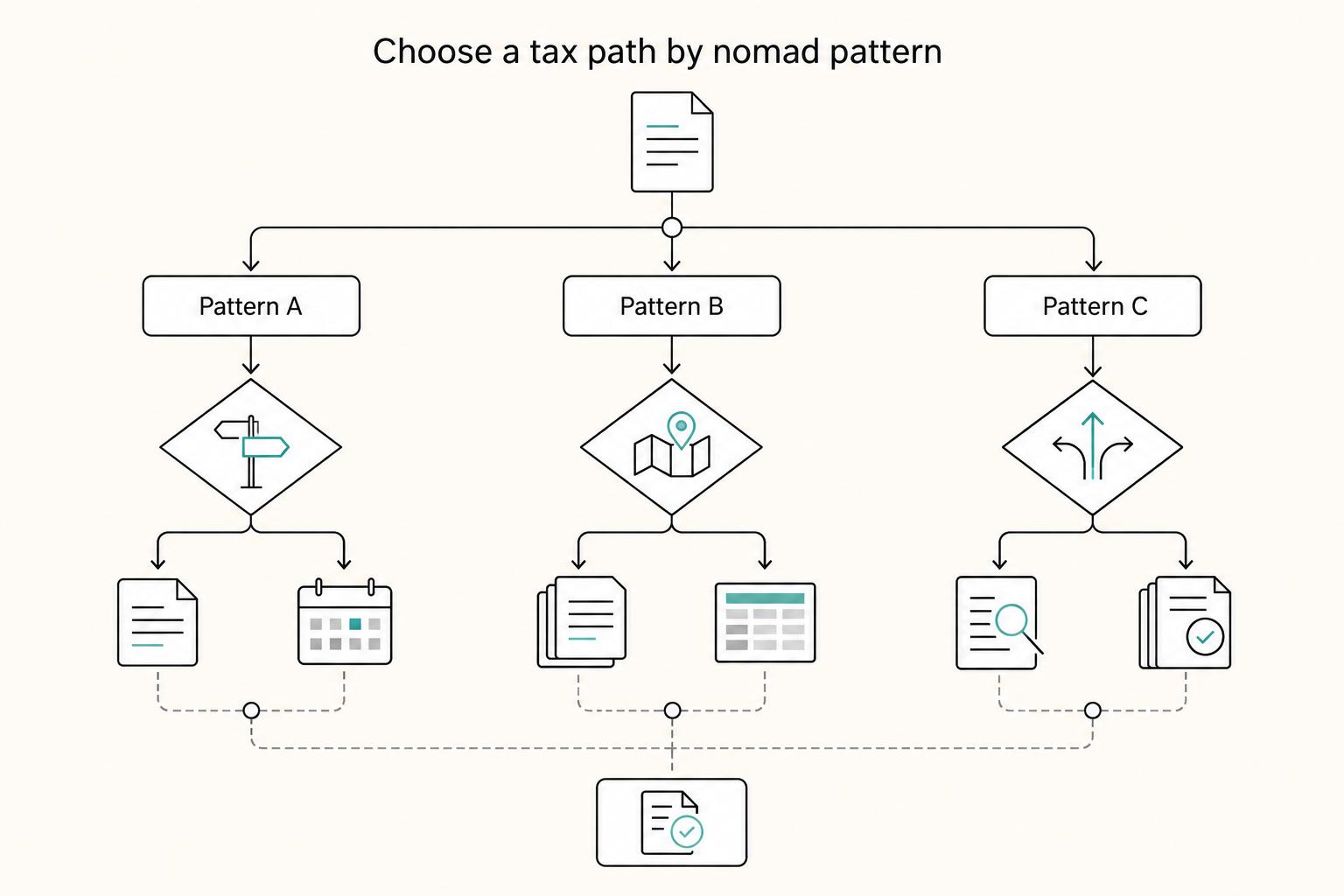
Australia Tax Residency for Digital Nomads With GST and ABN Checkpoints
The goal is a defensible, low-drama position the Australian Taxation Office (ATO) can follow from your records, not a clever workaround. For a digital nomad, that usually means keeping two tracks straight: residency and GST/ABN admin. Consistency is what holds up over time: use real facts, take steps in a clear order, and keep documents that still match months later.
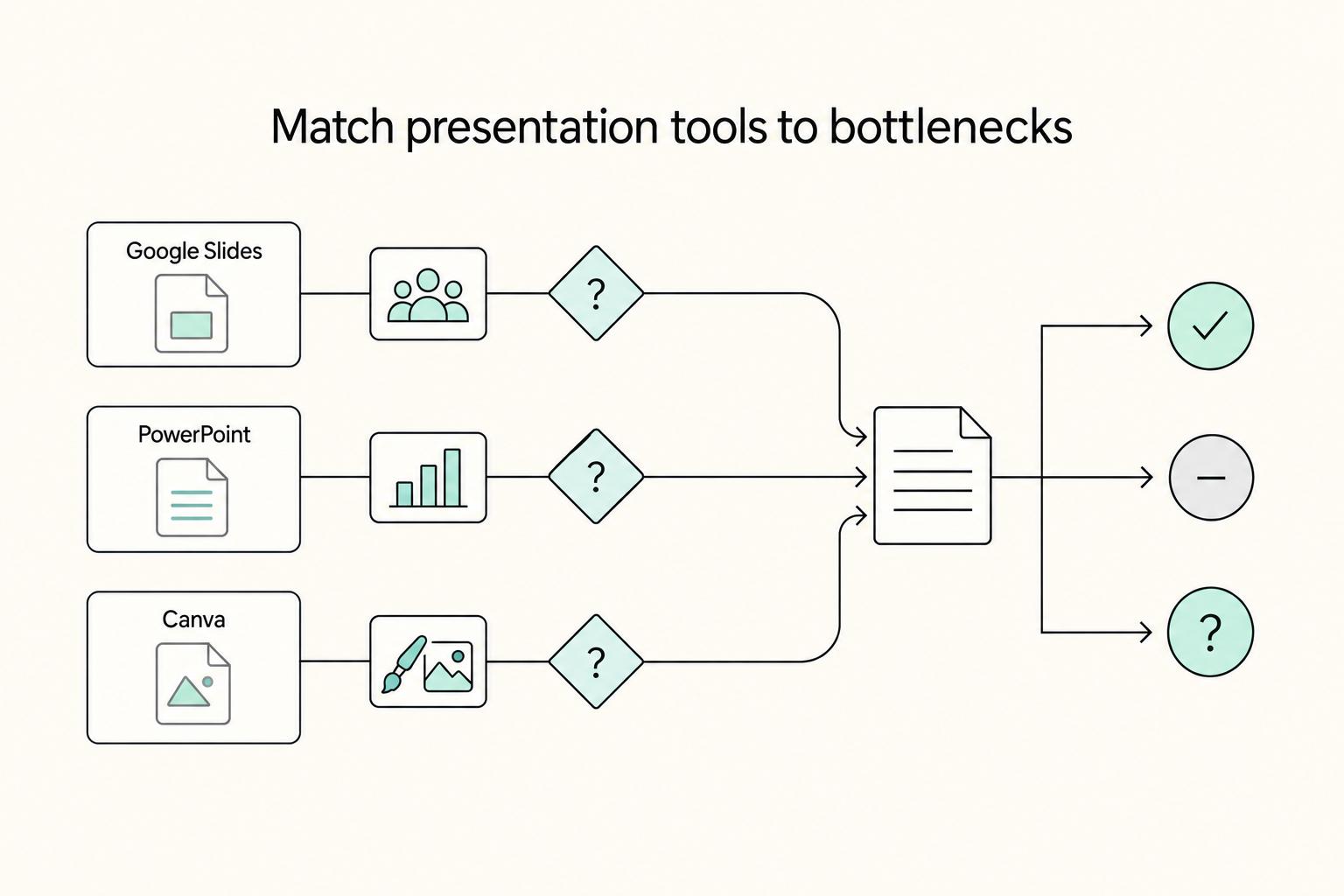
The Best Tools for Creating Professional Presentations
Use a 2025-2026 validation sweep each quarter: confirm one monthly software baseline ($15/month), one collaboration baseline ($30/month), and one premium workflow baseline ($60/month) before changing client-facing tool commitments.