

Quick Answer
Start with a go/no-go filter: greece non-dom tax is workable only when your legal basis, economics, and filing discipline all hold up. Verify Article 5A assumptions with primary Greek guidance, then confirm your AFM and Taxisnet access before you spend on restructuring. Build a claim-to-document folder for residency history, income classification, and investment evidence, and stop if any core item is blocked. If U.S. filings are involved, test Form 1116 quality before deciding.
Start Here: Who This Guide Is For and What Decision You'll Make#
Use this guide as a go-or-no-go compliance filter, not a shortcut. It is for globally mobile freelancers and consultants who want a practical way to decide before committing to a Greece tax-residency path.
General explainers help, but they are not enough to file. Tax laws can change, your facts can change the outcome, and edge cases need qualified review before you commit. The practical goal is to avoid expensive rework by deciding early whether this path is actually viable for your case.
- Decision 1: legal fit. Check whether your facts align with current Greece tax rules, then validate with a qualified advisor before filing.
- Decision 2: economic fit. Model a realistic year including tax impact, compliance effort, advisor cost, and overlap with obligations in other countries.
- Decision 3: execution fit. Greek returns are filed electronically through Taxisnet, so your records, timing, and follow-up discipline need to hold up in practice.
Before you spend serious time or money, build a starter evidence folder with identity records, a dated residency timeline, and route-specific documents. Confirm two basics early: your AFM details are correct, and you can access Taxisnet.
Start with a simple first pass. List every fact you are relying on, then tag each fact as proven, partly proven, or unproven. If an item is unproven, note the one document or confirmation that would close it. This keeps your prep grounded in evidence instead of assumptions.
Escalate before filing if you are mixing visa logic with tax-residency logic, assuming a renewable permit automatically proves tax status, or carrying conflicting residency dates or documents. If any core decision fails, pause and close the gap first.
Build the Mental Model Before You Optimize Tax#
Once your three decisions are clear, build the model in the right order. Treat this as compliance and risk first, tax optimization second.
Separate your analysis into two layers:
- Status: your tax-residency position in Greece.
- Treatment: whether a non-dom path could apply in your case and how Greek-source and foreign-sourced lines might be treated once primary guidance confirms the rules.
Keep this split provisional until you verify it. Public summaries can conflict, and at least one private advisory framing positions non-dom around investors and HNWIs, so promotional explainers should not be your final authority.
Use a short pre-filing check grid inside your evidence folder:
- Classification check: tag each income line as Greek-source or foreign-sourced and record why.
- Assumption check: list each material assumption and what primary confirmation is still missing.
- Evidence check: assign an owner, file name, and readiness status for each supporting document.
- Conflict check: if two summaries disagree on timing or scope, mark the point unresolved and escalate before filing.
Add one step now to prevent confusion later. For each income line, keep a one-line note that explains the treatment decision in plain language. That note should be clear enough that another reviewer can understand your logic without guessing what you meant.
Identify risks early, then close gaps before you optimize. If key points stay unresolved, pause and verify with primary Greek guidance and advisor review. If you want a deeper dive, read Digital Nomad Taxes in 2026 With a Defensible Filing Plan.
Run a Fast Disqualifier Check in 15 Minutes#
With the model in place, run a stop-or-go screen. This step is about eliminating weak paths fast, not proving full eligibility.
Answer these four checks in yes-or-no terms:
- Can I evidence my residency and tax status history clearly enough for an eligibility review?
- Can I show a realistic, document-backed legal path, rather than a verbal plan?
- If I mention an immigration route, can I show I am not treating immigration status as automatic tax eligibility?
- Can I commit to ongoing compliance work and long-term evidence retention with documented ownership?
Make source quality its own gate. For example, a U.S. rulemaking entry posted on 03/06/2019 later showed a correction on 04/11/2019, while parts of the page were labeled unofficial informational material.
Do not use broad business-climate rankings as a proxy for personal eligibility. If any check is no or unclear, stop and verify. If all four pass, move to detailed eligibility and economics with a tighter evidence pack.
When a check is unclear, define the next action immediately. Name the missing proof, the person responsible, and a target date for resolution. This keeps uncertain points from drifting into filing week. You might also find this useful: How to Dissolve a US LLC.
Decide Whether the Economics Work for Your Income Profile#
If projected foreign profit is modest, this may not fit unless you have a strong non-tax reason to proceed.
Run a two-case comparison before deciding. Case A is your current setup. Case B is the candidate residency path. In both cases, map foreign-sourced income, estimate total tax across countries, and model U.S. foreign tax credit treatment. Do not assume all foreign taxes are creditable.
Keep the comparison practical. Use the same revenue assumptions in both cases, then apply different compliance costs and documentation effort. If your model changes both revenue and tax logic at the same time, you will not know what actually drove the result.
| Income profile | First test | Likely direction |
|---|---|---|
| High and volatile foreign profit | Model year-to-year swings and the value of more predictable treatment | Can fit if certainty is worth added annual admin and possible foreign tax credit friction |
| Moderate and steady consulting profit | Compare current net cash versus candidate net cash after filing workload and advisor costs | Test whether simpler residency and tax paths still win unless there is a clear non-tax benefit |
| Low foreign profit | Check whether your current foreign tax credit already offsets a meaningful share of U.S. tax | May not fit when added complexity is large relative to profit |
One key checkpoint is Form 1116 quality. Individuals claim the foreign tax credit on Form 1116, and you file separate Form 1116s by income category. The 2025 instructions require completing Part IV lines 25 through 32 even when filing only one Form 1116, so this is not a quick estimate.
Before you decide, build one draft Form 1116 set. If the draft is messy, inconsistent, or unsupported by records, treat that as a red flag on the economics gate. A model that only works when classification is vague is not decision-ready.
Common errors that skew this decision:
- Counting foreign tax credit on income excluded under foreign earned income or housing rules.
- Treating all foreign taxes as creditable even though some do not qualify.
- Using one blended estimate instead of category-based Form 1116 drafts.
- Skipping documentation needed to support taxes paid and income-category mapping.
Handle family as a second pass, not during first-fit screening. Before adding relatives, run a separate cost test and get written advice on cross-border family tax issues in each relevant country.
Prepare the Evidence Pack Before Filing#
Before filing, make evidence quality a hard gate. A plan can look viable in a spreadsheet and still fail if you cannot prove status, residency history, and investment facts clearly.
Build one folder for your tax residence transfer application with three anchors: proof of identity, prior residency history, and investment evidence tied to the regime you plan to use. Keep your residency logic explicit in your notes: Greek tax residents are taxed on worldwide income, while non-Greek residents are taxed only on Greek-source income.
Track each requirement before you submit anything to Greek tax authorities:
Requirement: what must be proven.Owner: one accountable person.Evidence file: exact filename and version date.Internal deadline: when it must be review-ready.Status:ready,pending, orblocked.Blocker note: what is missing and the next action.
Apply one stop-sign rule: if any required item is blocked, do not file. Keep a source log for every key fact you submit: claim, supporting document, document date, source type, verifier, and last-checked date.
Label each item as primary authority text, advisor-confirmed interpretation, or commercial summary. Treat commercial figures as provisional until verified for your facts, including figures like EUR 500,000 and EUR 100,000/year. Apply the same check to imputed-income assumptions, including whether living-expenditure-based imputed income applies to your residency status.
Add one quality pass before submission. Ask a second reviewer to open the folder and confirm they can match each material claim to one document without extra explanation. If they cannot, the file is not ready.
A clean folder structure also reduces stress during follow-ups. Keep current versions and historical versions clearly separated, and keep one short index file that tells a reviewer where each critical document lives. Related: The Taiwan Gold Card: A Visa for High-Skilled Professionals.
File in the Right Order and Confirm Acceptance#
Order matters here. Confirm eligibility facts, submit the tax residence transfer application, then track acceptance-related and payment evidence until the file is closed.
| Pre-filing fact | Detail | When |
|---|---|---|
| Prior non-residency condition | Seven out of the previous eight years | Confirm before filing |
| Qualifying investment plan | Complete the EUR 500,000 qualifying investment within three years from application submission | Confirm before filing |
| Annual lump-sum tax capacity | Capacity to pay the EUR 100,000 annual lump-sum tax | Confirm before filing |
Lock those three facts before you file. If any item is unresolved, hold filing.
Avoid rushing this step because of calendar pressure. Filing with unresolved facts can create later conflict between what was submitted and what you can actually evidence. A short delay before filing can be cheaper than a long correction cycle after filing.
After submission, track three checkpoints in your compliance calendar:
Submission proof: filed package, filing date, and receipt reference.Any acceptance or decline notice: notice date, required follow-ups, and internal due dates.Payment confirmation trail: payment instruction, bank confirmation, and posted payment record for the same tax year.
For deadlines, treat year-specific dates in older publications as historical context. Public summaries point to 31 March each tax year for filing. For live submissions, use current-year instructions from Greek tax authorities and keep that instruction copy in your audit folder.
If you are also using the Golden Visa route, keep permit documents and related records in the same folder as the tax file. A Golden Visa may support a non-dom application, but non-dom acceptance is still conditional.
A practical failure mode is filing on time but missing follow-up evidence or full payment completion. Non-payment of the full lump-sum amount can abolish the special regime, and Greek-source taxable income is taxed under general ITC provisions.
To reduce that risk, assign ownership for each checkpoint before filing day. If ownership is undefined, follow-up tasks tend to slip between advisors, banks, and internal reviewers.
Operate the Annual Compliance Calendar Like an Operator#
After filing, run the year from one calendar that ties every compliance action to proof. If proof is missing, treat the item as still open.
| Checkpoint | Proof to keep |
|---|---|
| Status checkpoint | Confirm your Greek tax residence and non-domicile file details match the current-year record |
| Payment checkpoint | Store payment instruction, bank execution result, and posted confirmation in one tax-year folder |
| Reporting checkpoint | Archive submission receipts, correction logs, and notices from the Independent Authority for Public Revenue (IAPR) |
| Escalation checkpoint | If anything fails or is delayed, assign one owner, set a next-business-day action, and log closure evidence |
Use that minimum checkpoint set every year.
Treat payment issues as same-day escalation events, not backlog items. Verify whether your payment failed, posted late, or used the wrong reference, then open a fix path with your bank or advisor and document the guidance you relied on.
Build in an annual update review because reporting timelines can move. A joint decision amended scope, timing, and process for myDATA electronic transmission. Published 2023 examples included 28.2.2024 for revenue data, 31.3.2024 for expense data, and 30.4.2024 for omissions or discrepancies, with an earlier extension to 02.5.2023 for older issues.
If you receive income through platforms, add a DAC7 review cycle. DAC7 applied across the EU from January 1, 2023, with first reporting noted by January 31, 2024. Platform reporting can surface mismatches between platform totals and your internal records.
Track income categories separately as classified in your tax file, and tie each total to invoice, payout, and bank evidence. Use tools with audit trails and exportable records; where supported, Gruv invoicing and payout exports can simplify evidence assembly.
Use a simple cadence. Run a short monthly review to confirm records are complete and classifications still match your file. Then run a deeper quarterly review to catch drift before year-end deadlines.
When a mismatch appears, write down three points before acting: what changed, which document supports the correction, and who approved the correction. This keeps your record clean if the same item is reviewed later.
Do Not Confuse Investor Non-Dom With Pensioner Rules#
Keep investor and pensioner non-dom as separate tracks from the start, or classification errors will show up later.
If your income mix includes non-pension earnings and pension or annuity amounts, keep those streams separate at the classification stage. Test pensioner treatment only for actual pension or annuity amounts. This is a sequencing rule, not a claim about eligibility or rates.
Use treaty logic line by line, not by headline. In the Convention and Protocol between the United States of America and Greece, Article XI covers government employees, pensions, and annuities, while Article XIV covers foreign tax credit. The practical order for treaty tagging is simple: classify income type first, test credit treatment second, then record your conclusion. Use this as a treaty-classification framework, not as a complete answer for every modern filing obligation.
Before filing, run one verification pass for every material line item:
Income line: consulting fee, pension payment, annuity, platform payout, or other.Treaty tag: Article XI, Article XIV, orunresolved.Track label: investor track or pensioner track.Evidence: contract, invoice, pension statement, bank entry, and period.Reviewer: who confirmed the tag, when, and any open issues.
If any material amount is unresolved, pause and resolve classification first. Also note that this treaty instrument is older. The convention was signed in 1950, the protocol in 1953, it entered into force on December 30, 1953, and it states a general effective date of January 1, 1953.
The common practical error is blending different income types into one conclusion. Keep each line item separate until the classification is confirmed. This prevents one uncertain item from contaminating the rest of your filing logic.
Handle Home-Country Friction Before It Becomes a Compliance Fire#
If you are a U.S. person, map U.S. filing obligations before finalizing Greek residency steps. Filing mismatch is where avoidable problems usually start.
Run these as parallel lanes:
Form 8938 (FATCA): attach it to your U.S. income tax return when specified foreign financial assets are above the applicable threshold for your filing profile. A commonly cited trigger is aggregate value above$50,000for certain taxpayers, with higher thresholds for joint filers and taxpayers residing abroad. If you do not have to file a U.S. income tax return, you do not file Form 8938.FBAR (FinCEN Form 114): treat this as a separate obligation. Filing Form 8938 does not remove FBAR filing when FBAR rules otherwise apply.
Do not assume treaty relief waives U.S. filing obligations.
Keep one live reconciliation sheet through the year:
Income line: invoice ID, payer country, service period, amount.Bank flow: receiving account, posting date, currency, converted reporting amount.U.S. form tag: Form 8938, FBAR, ornot-applicable.Treaty tag: relevant DTT article orunresolved.Greek tag: local source classification used in your file.Evidence: contract, invoice PDF, statement excerpt, reviewer and date sign-off.
Escalate before filing if any material line is unresolved, if U.S. and Greek preparers classify the same income differently, or if account ownership is unclear.
One practical control is to reconcile this sheet every month, not only at year end. Monthly updates reduce memory gaps and make it easier to resolve differences while supporting records are still easy to retrieve.
If preparers disagree, get a written resolution before filing. A verbal agreement is not enough for cross-border positions that may be reviewed later.
Include Family Only With a Full Tax and Documentation Check#
Include family only after a full tax and documentation review. Do not treat family inclusion as automatic.
For this decision, treat high-level cross-country sources as orientation only. Some commonly used public material is explicit that it is a comparative overview, that exceptions are not reflected, and that OECD TaxBEN is a tax-benefit calculator. The Greece file shown is marked November 2025. Use these materials to frame questions, then confirm your conclusions with primary Greek guidance before electing inclusion.
Run a person-by-person check before filing:
Tax treatment check: test possible tax implications for each relative under primary Greek guidance, including inheritance, gift, or parental-grant treatment only if those categories are in scope.Classification check: flag mixed-country income or residency history that may require case-specific interpretation.Documentation check: compile relationship and residency evidence for each relative and verify internal consistency against primary requirements.Decision status: mark each caseinclude,defer, orescalateuntil unresolved items are cleared.
If any relative is unclear on tax treatment, classification, or evidence sufficiency, defer inclusion until the file is defensible end to end.
Keep a separate subfolder for each relative and apply the same claim-to-document rule you use for the main applicant. This prevents documents from getting cross-mixed and makes later reviews much faster.
Know the Red Flags That Mean Talk to a Pro Now#
Escalate now if your file depends on off-topic sources, inconsistent classification logic, or unresolved compliance steps. At this stage, the goal is not to collect more paper. It is to make sure each material claim is tied to the right authority.
Some materials cited in secondary summaries do not establish Greek tax procedure and should not be used as tax-position authority. Verify any procedural claim against current AADE guidance or qualified professional advice before relying on it.
Escalate immediately when any of the following appears:
- A key claim depends on sanctions content, policy commentary, or macroeconomic analysis instead of tax-administration material.
- The same income item is classified differently across advisors, drafts, or periods.
- The file cites Greek tax residence or Article 5A positions, but support is unclear or internally inconsistent.
- You are resolving conflicts between public summaries without confirmation from Greek tax authorities.
- A deadline, document acceptance, or payment step is unclear and no qualified reviewer has documented impact and next action.
Use one pre-submission checkpoint: a claim-to-authority log. For each material claim, record claim text, document type, relevance, latest visible date, and reviewer sign-off. If any claim fails that check, pause and get a written position from qualified professionals.
A strong escalation request is specific. Identify the exact disputed claim, list the competing interpretations, and ask for a written position on the practical filing impact. This shortens review cycles and avoids vague back-and-forth.
Conclusion: Make a Clear Go or No-Go Decision and Execute Cleanly#
Make this a true go-or-no-go decision: proceed only if eligibility, economics, and execution all pass. If any one fails or stays uncertain, pause and choose a simpler compliant path instead of forcing this route.
Use three gates and require a clear yes on each:
- Eligibility gate: your evidence pack is complete, internally consistent, and checklist-qualified before filing.
- Economics gate: the expected upside still holds after advisory costs, ongoing compliance work, and cross-border admin burden.
- Execution gate: you can maintain annual controls without drift, with clear records and named ownership for follow-ups.
Around each major filing step, run two checkpoints:
- Risk identification before filing: name what can fail, what evidence prevents it, and who owns each proof item.
- Operational-output check after filing: confirm what was submitted, what was accepted, what is pending, and what still lacks documentary support.
This discipline matters because complex, nonaligned procedures can create disproportionate compliance costs for smaller and cross-border businesses. If your plan includes family wealth, inheritance exposure, or mixed-country assets, treat that as an escalation trigger because divergent rules can increase legal uncertainty, and get explicit cross-border advisor confirmation before final commitment.
Use a short execution sequence so the decision turns into action:
- Close all
blockedevidence items or stop. - Confirm current-year filing and payment instructions, where applicable, and archive them.
- Assign owners for submission, follow-up, and payment confirmation.
- Run a pre-submission claim-to-authority check.
- File, then track acceptance and payment until closure evidence is complete.
Next step: finalize your checklist-based evidence pack, set calendar controls, and get advisor confirmation where cross-border complexity is material.
Frequently Asked Questions
What is greece non-dom tax?
In this context, "Greece non-dom tax" is a shorthand label for Greek tax incentive pathways linked to transferring tax residence. AADE describes transfer of tax residence alongside incentives under Articles 5A, 5B, and 5C of the Income Tax Code. Treat it as a formal tax-residency decision, not a shortcut label. In practice, that means your decision should be built on evidence and filing readiness, not only on headline tax positioning.
Who qualifies for the investor route?
Eligibility depends on Law 4172/2013 and current guidance. A complete eligibility checklist and investment thresholds require current official rules and professional review before filing or restructuring around this route. A practical way to handle this is to keep an eligibility assumptions list and close each assumption with primary confirmation before filing.
How is income taxed under this regime?
Article 5A is presented as a tax incentive provision in the Greek Income Tax Code. Full operating rules for how each income type is taxed in practice require current official guidance. Keep classification consistent across drafts and advisors before relying on any calculation, and mark unclear items as unresolved until written guidance is in hand.
Can foreign taxes be credited in Greece under this regime?
Greek foreign tax credit treatment under Article 5A requires current Greek guidance before you can rely on a firm answer. Do not make a firm claim on that point without that guidance. Separately, IRS foreign tax credit rules are intended to reduce double taxation, and taxpayers may be able to claim either a credit or an itemized deduction for qualifying foreign taxes. Do not build your economics on assumed creditability.
Can family members be included?
The legal mechanics for family inclusion require verification under current Greek rules. Treat family inclusion as unresolved until verified. If your plan depends on it, get a person-by-person review before making elections, because one family-level assumption can change documentation load and tax outcomes.
How long can status last?
A maximum duration and revocation framework require confirmation with qualified Greek tax professionals. Avoid long-term planning based on fixed timelines from secondary summaries. Confirm the current position with qualified Greek tax professionals, and treat duration assumptions as an escalation trigger before filing.
What deadlines matter most?
A concrete threshold is the 183-day presence test in any twelve-month period, which AADE ties to tax-resident treatment from the first day of presence. Exact application or payment deadlines for the incentive route require direct confirmation with Greek tax authorities. Confirm current filing and payment timing directly with Greek tax authorities, and keep current-year instructions in your file so your calendar stays aligned.
Try a related tool
Researched and edited by the Gruv editorial team. Gruv builds cross-border billing, payouts, and finance-operations software for global businesses.
Sources
Educational content only. Not legal, tax, or financial advice.
Related Posts

Digital Nomad Taxes in 2026 With a Defensible Filing Plan
With digital nomad taxes, the first move is not optimization. It is figuring out where you may be taxable, where filings may be required, and what proof supports that position.
Taiwan Gold Card Application Strategy for Remote Professionals
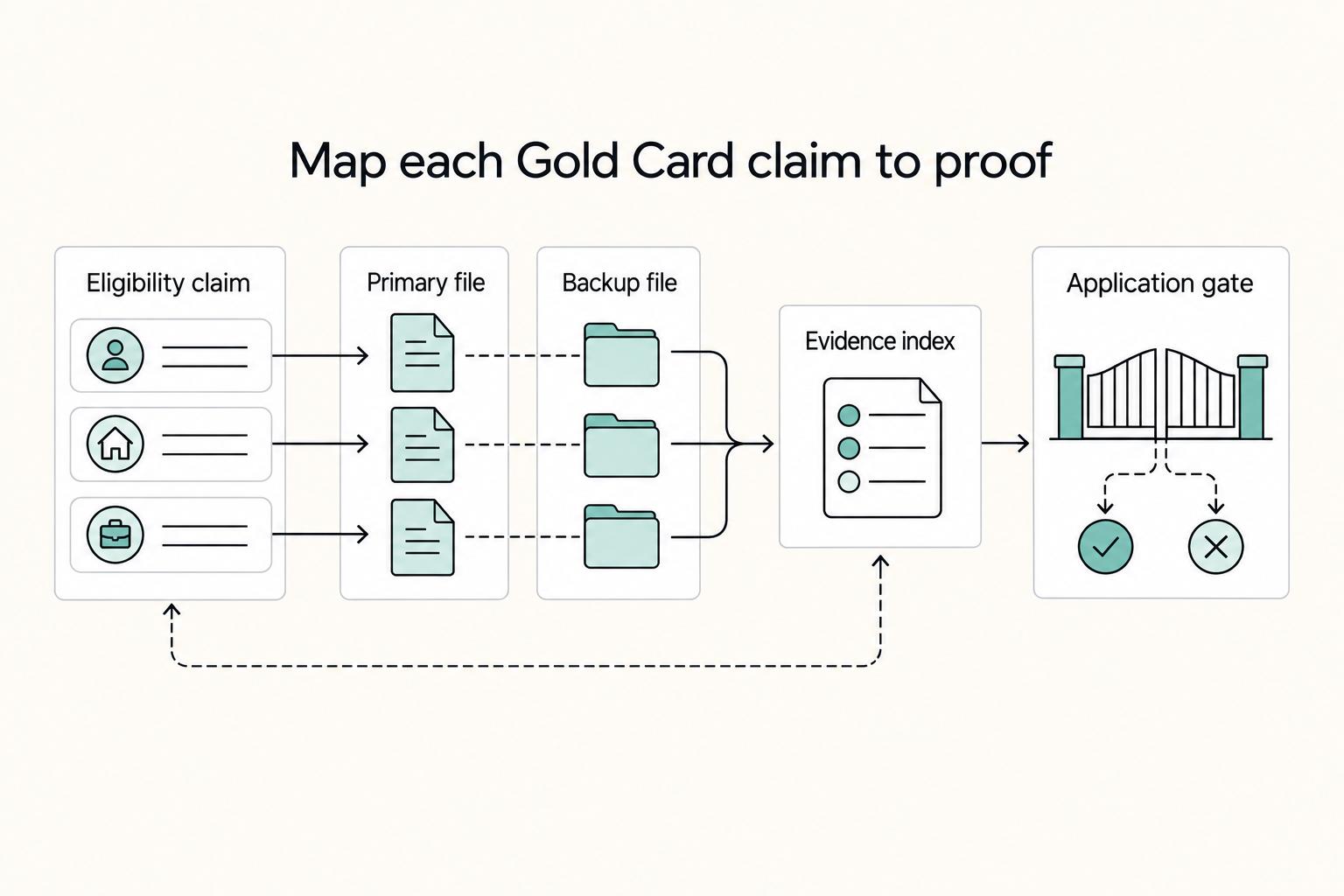
Treat this process as a chain of linked decisions, not a race to submit. If you are planning a serious move or a long stay in Taiwan, the safer outcome usually comes from choosing the right route first and proving each core claim before you pay or file. The Taiwan Employment Gold Card rewards that discipline because it combines four functions in one status: a work permit, resident visa, Alien Resident Certificate (ARC), and re-entry permit.

How to Dissolve a US LLC Without Leaving Loose Ends
Before you file anything, run one checkpoint. If you cannot list every state where your LLC is registered and your federal tax classification, you are not ready to close. Treat the LLC as closed only when both tracks below are complete and documented.