
Quick Answer
Yes, generative ai impact on freelance is real, but it is uneven rather than total job loss. The article shows short-term demand pressure in automation-prone writing and coding posts after ChatGPT, plus declines in image-creation postings, while other work remains viable when human judgment, verification, and accountable sign-off are built into delivery. The practical move is a 90-day cycle: classify services, redesign weak scopes, test in live pipeline conditions, and reprice before discounting becomes standard.
What Generative AI Is Changing for Creative Freelancers#
Freelance work is not disappearing, but different task types are being repriced. The generative AI impact on freelance work is uneven: draftable tasks face direct price pressure, while judgment-heavy work still earns premium fees when scope and accountability are clear.
The useful move is operational, not predictive. Split your current services into high-substitution-risk and high-judgment-value work, then adjust proposals and pricing every two weeks. If you wait for certainty, discount pressure usually reaches your pipeline first and forces rushed concessions.
The short-term evidence supports that caution. In one major online labor market dataset, posting demand for automation-prone writing and coding work fell 21% within eight months of ChatGPT launching. Image-creation postings also fell 17% after image generators spread. Those are real shifts, but they are still platform-level signals, not proof that every freelance path is shrinking.
Timing is the main tradeoff. Move too slowly and commodity buyers anchor your rates lower. Move too aggressively and you may cut lines that could still perform with tighter scope and stronger review. A better response is a 90-day loop: classify services, redesign risky offers, test changes in live deals, and reprice before weaker margins harden into standard terms.
Most avoidable losses come from sequence, not effort. Freelancers often reprice before clarifying scope, or cut services before checking whether review quality could preserve margin. Keep the order straight: classify, test, then scale. That keeps you from overcorrecting when the signal is noisy and from underreacting when pricing pressure is already showing up in live deals.
Review the same metrics every two weeks: conversion, average project value, revision load, turnaround time, scope disputes, and payment reliability. That keeps decisions tied to buyer behavior instead of headline noise. The goal is not to win an argument about AI. It is to protect income quality while the market reprices different kinds of work.
With that lens, the evidence becomes more useful. You are not looking for one verdict on the market. You are deciding what to keep, what to tighten, and what to stop defending.
What the evidence actually says about freelance demand shifts#
The evidence points to uneven reallocation, not universal collapse. Demand is moving by task type and channel, and the long-run direction remains unresolved.
To keep your decisions grounded, use two working labels. Substitutable clusters are tasks models can produce as clean draft output from limited context. Complementary clusters are tasks where quality depends on interpretation, domain judgment, stakeholder alignment, or accountable sign-off.
That split fits the evidence in this set. The Brookings materials here cover online labor market shifts, experience-level effects, and policy implications while also spelling out what remains unknown. That combination helps you avoid two common mistakes: ignoring short-term changes that are already visible, and overcommitting to one long-term forecast.
The capability data here is narrower than broad replacement claims suggest. In a text-only, no-tool evaluation setup, only 7% of tasks were testable, representing 149 tasks. Across 13 models, leading median scores sat in the 65% to 79% range, with weaker performance on data manipulation and financial calculations. Reported averages rose from 40.5% for 2024 models to 66% for 2025 models, a 26 percentage point jump in one year. Improvement is real and fast, but reliability is still uneven across task types.
Those numbers help only if you read them at the right level. They show capability movement in constrained evaluations, not guaranteed production outcomes in client projects. A model that scores well in one setup can still fail in your context when instructions are ambiguous, source material is messy, or calculation errors carry real cost. Treat model progress as pressure on old packages, not proof that you can reduce oversight.
That distinction matters when you price and scope work. Better draft output can reduce first-pass production time while increasing review burden if error patterns shift. A common margin failure is assuming higher model capability always means lower client risk.
In practice, use the evidence this way. Label each service as substitutable or complementary and write one sentence for why. Then track win rate, average fee, revision rounds, and turnaround time by label. Log one recurring failure mode each cycle, especially factual or calculation errors. Keep dated notes on what changed and what decision followed.
Most mistakes come from two extremes. One is using uncertainty as an excuse not to change anything. The other is forcing a full reposition before you have deal evidence. The stronger move is a fixed review rhythm: small changes, scheduled checkpoints, and clear rollback rules when a repositioned offer does not hold margin.
Once you translate the evidence into service labels, the next step is portfolio triage. You need to know which lines are merely exposed, which ones still benefit from human judgment, and which can be defended on proof.
Sort your services into substitutable, complementary, and defensible#
Classification is not admin work. It is the pricing foundation for the next quarter. Sort first, then defend each line with proof from live delivery.
Keep this inventory tied to real proposals.
| Service line | Primary label | Why it fits now | What moves it to defensible |
|---|---|---|---|
| Writing and translation | Substitutable or complementary | If ChatGPT can produce a usable draft from a short prompt, substitution pressure is higher | Add domain review, compliance checks, and accountable sign-off |
| NLP support | Complementary | Delivery usually depends on task design, data judgment, and output evaluation | Add measurable quality targets and documented error handling |
| Chatbot development | Complementary or unaffected | Integration, testing, and business context often matter more than prompt output | Tie scope to integration complexity and acceptance tests |
Borderline offers need a temporary label and a test window. If you are unsure whether a line belongs in substitutable or complementary, mark it as provisional and run it through two sales cycles with explicit tracking. Compare close rate, discount pressure, and revision burden before making a final call. That reduces emotional decisions and keeps pricing tied to observed buyer behavior.
Use the first-draft rule as triage, not final proof. If a usable draft appears with minimal context, treat risk as high and redesign scope now. If delivery depends on proprietary context, cross-market judgment, compliance sensitivity, or integration complexity, keep it in the complementary bucket and raise proof standards.
Defensible status should stay provisional until it survives live work. Buyer behavior shifts quickly, and a line that looked protected last quarter can slide into price competition when your evidence gets thin.
Before you change price, run two checkpoints for each offer. First, legal exposure. EU analysis highlights uncertainty around AI-generated content status, tension between some training practices and current text and data mining exceptions, and pressure for clearer rules. Second, execution capacity. Human verification is limited, so validated review has to be priced and scheduled as part of delivery, not treated as optional cleanup.
Require one proof artifact before you call a line defensible:
- Before-and-after sample that shows what human edits changed
- QA rubric with pass and fail criteria
- Outcome dashboard with operational metrics such as acceptance rate and revision rounds
- Dated decision log entry with label, evidence, and next pricing action
The red flag is premium positioning without proof. If a proposal cannot show where human review improved correctness, risk control, or clarity, buyers will price it as commodity output. Use that checkpoint before you send any proposal priced above your previous baseline.
Once your labels are honest, capacity decisions get easier. The next question is not what sounds strategic, but what earns its place over the next 90 days.
Choose what to keep, cut, and reposition in the next 90 days#
Once your labels are honest, put capacity decisions on a timeline. Over the next 90 days, keep high-margin services with lower substitution pressure, cut thin-margin lines in substitutable clusters, and reposition borderline offers into AI-assisted delivery with explicit human review.
Use external signals as warning lights, then confirm them against your own numbers. Late 2025 reporting describes copywriting as an early disruption zone, while other coverage says outcomes remain mixed. One reported claim says most organizations are not yet seeing AI return on investment. A first-person account describes 18 months of gig work training AI with limited employee-style protections. None of those inputs should set strategy on their own, but together they support faster internal measurement and quicker pruning.
| Category | Keep | Cut | Reposition |
|---|---|---|---|
| Margin | Strong margin after revisions | Thin margin with repeated discounting | Recoverable margin after scope redesign |
| Demand signal | Stable close rate | Falling close rate across two checkpoints | Mixed close rate with clear buyer interest |
| Delivery shape | Human judgment is central | Output compared mostly on price | AI draft plus human QA improves outcomes |
Repositioning works best when it is staged, not announced as a total rewrite. Start by narrowing one offer, update the proposal language, and test it in current channels. If close rate improves without margin decay, expand the new version. If close rate holds but revision load spikes, tighten acceptance criteria before you scale. That sequence prevents big portfolio swings based on one noisy month.
When a substitutable line comes under rising price pressure, narrow the niche, bundle strategy with implementation, and remove commodity-only line items. If buyers can reproduce most of your output with basic prompts, stop defending the old package. Sell the part they cannot reproduce easily: decision quality, error correction, and accountable final delivery.
Cut decisions also need controlled execution. If you retire an offer, tell active clients early, complete existing commitments cleanly, and move them to revised packages only when acceptance criteria are explicit. Abrupt cuts without transition plans create avoidable churn in retained revenue.
Run the 90-day cycle in fixed blocks so you can compare outcomes over time:
- Weeks 1 to 2: classify offers and set baseline metrics
- Weeks 3 to 6: redesign scope and proposal language
- Weeks 7 to 10: test revised offers in online labor markets
- Weeks 11 to 13: prune weak offers and scale what converts
Review conversion, average project value, revision load, and turnaround time by category every two weeks. Add one short decision note each cycle so the next review starts with facts, not memory. One common failure mode is app sprawl. One interview source describes teams using around 10 apps a day across disconnected silos. Assign one quality owner, one rubric, and one approval log before you scale any repositioned offer.
Once you know what stays in the portfolio, you need to protect the economics. That means changing both price and scope before buyers reset your baseline for you.
Reprice and rescope before margin erosion accelerates#
Once you decide what stays, pricing has to move quickly. When AI changes perceived effort, hourly framing gets harder to defend. Shift to scope-based pricing before buyers normalize speed discounts as the default.
Market narratives already reinforce faster-output expectations. A March 2026 ScienceDirect-indexed review describes Generative AI as central to auto-content creation, personalization, and data-driven marketing decisions, including tools such as ChatGPT. A March 2026 arXiv analysis of 377 YouTube videos identified ten recurring AI-income use cases. Treat both as demand context, then protect margin by pricing for judgment, risk control, and accountable delivery rather than draft speed.
A two-track proposal makes the tradeoff explicit before kickoff.
| Option | Best use case | Speed promise | Oversight depth | Revision terms |
|---|---|---|---|---|
| AI-assisted package | Repeatable deliverables with clear inputs | Faster first-draft window | Human review at defined checkpoints | Limited rounds tied to acceptance criteria |
| Expert-led package | Higher-stakes work with larger judgment risk | Standard timeline with analysis time protected | Deep review plus decision guidance | Broader revisions and escalation path |
The value of this split is expectation control. Buyers can choose speed with tighter boundaries or deeper oversight with broader revision rights. You stop arguing about whether AI should reduce price in the abstract and start agreeing on the level of review they are purchasing. That shift alone reduces conflict late in delivery.
After packaging, lock boundaries in the contract. Define included prompt cycles, review rounds, and acceptance criteria for each deliverable. Use milestone sign-off with a short acceptance checklist. Route failed criteria and out-of-scope requests to paid change orders instead of letting revision creep become normal.
Use the same short pricing script on every call: what is included, what triggers a change order, and which quality checks are non-negotiable. Consistent language early reduces late-stage price disputes and limits unpaid scope growth.
Reprice within the same sales cycle when risk signals appear:
- Repeated can AI just do this questions after scope is already clear
- Sudden timeline compression with unchanged quality requirements
- Procurement comparisons that treat your proposal as a commodity line item
If two or more signals appear, raise price, narrow scope, or move the work to the AI-assisted tier with tighter revision limits. Some freelancer-focused AI material is still in preprint stages and may be unreviewed, so test each market claim against your own biweekly close rate, revision load, and turnaround data.
Pricing alone will not hold if the offer still feels vague. To preserve trust, clients need to see how AI is used, where human review happens, and what happens when output fails.
Build AI-assisted offers that clients can trust#
Vague offers lose trust even when prices are right. Clients accept AI-assisted delivery when accountability, verification, and escalation are clear before work starts.
A July 2025 JEBO record reports that about 10% of postings were GenAI-substitutable. It also reports demand declines of up to 50% in short-term roles for substitutable clusters, while aggregate freelance demand did not decrease after ChatGPT launched. The same record notes demand gains in some complementary AI clusters alongside declines for novice workers in complementary roles. The practical takeaway is clear: substitutable tasks need tighter controls, and complementary work needs visible judgment checkpoints.
The fastest way to make that visible is to turn commodity requests into managed outcomes. Replace vague production language with explicit stages and review points so the client can see where risk is handled, not just where text or code appears.
- Replace write four blog posts with topic brief, LLM draft, factual check, brand edit, and final approval
- Replace generic chatbot support with intent mapping, response testing, and launch criteria
- Match review depth to error cost instead of applying one package to every client
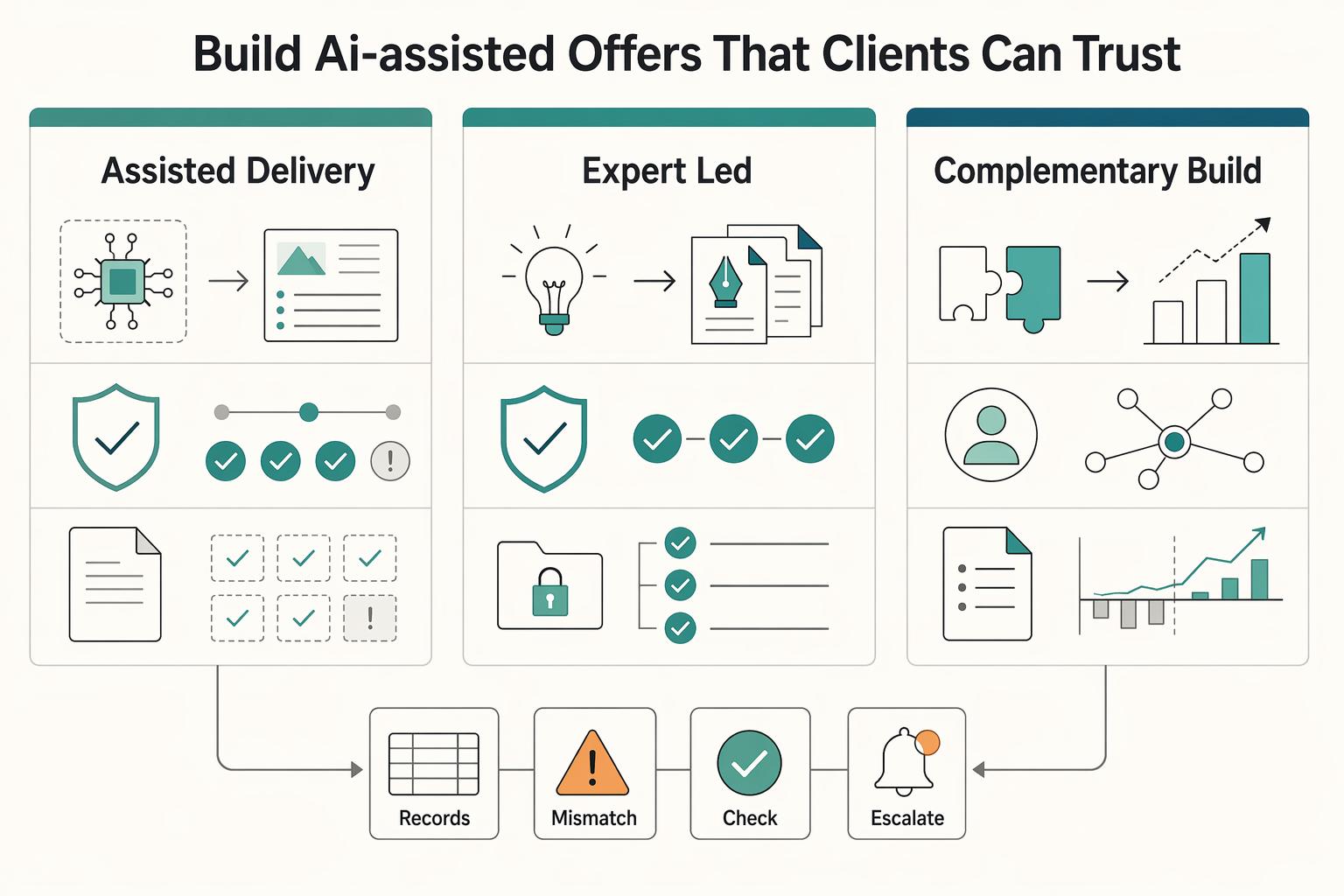
| Tier | Best fit | What you include | What you exclude |
|---|---|---|---|
| AI-assisted delivery | Repeatable lower-risk content tasks | Generative AI drafting, human edit, factual verification checkpoint, final sign-off | Open-ended rewrites or strategy expansion without scope change |
| Expert-led delivery | Higher-risk brand, policy, or technical work | Deeper analysis, tighter review, escalation support, documented change log | Speed-only promises that bypass quality checks |
| Complementary build tier | Teams adopting ChatGPT features | NLP tuning, chatbot development, integration into existing team tools, acceptance testing | Custom engineering beyond the agreed environment |
Make quality controls explicit in the statement of work:
- Model selection policy
- Hallucination check routine
- Source-verification step
- Final human sign-off owner
Those controls should be visible at kickoff, during delivery, and at approval, not buried in contract language. When clients can see who validates output, when checks happen, and what happens on failure, trust rises even if timelines stay tight. You also reduce the chance that a project drifts into open-ended rewrites because quality standards were implied instead of defined.
Add at least one verification checkpoint per deliverable, including factual accuracy review and legal or compliance sensitivity review where needed. Record pass or fail in a dated change log so you can resolve disputes against defined criteria.
Before signing, stress-test client behavior. If a client pushes to skip checks because a draft looks good, narrow scope immediately or move the project to expert-led terms. That boundary protects quality and margin together. In practice, clients who accept it early are easier to retain when timelines tighten because expectations stay stable.
Trust in delivery is only part of the operating model. If the work is cross-border, faster production and changing scope can expose payment and compliance problems just as quickly as pricing problems.
Protect cross-border cash flow and compliance as work changes#
Payment risk often shows up before demand risk becomes obvious. As delivery speeds up and scope shifts, payment disputes and compliance delays become more expensive if controls stay informal.
Set a baseline on day one for every engagement: invoice link issued, shared status visibility, payout tracking enabled, and one owner for exceptions. Keep a dated engagement log so stalls show up early. Some platforms advertise invoicing, global payments, and tax-compliance support, but coverage and withdrawal behavior still vary by route and program.
Make a minimum evidence pack part of every agreement:
- Signed scope with billing triggers tied to acceptance points
- Invoice trail with issue date, currency, and client confirmation
- Payout confirmation mapped to invoice ID
- Tax artifacts where relevant, including W-8 or W-9 and VAT checks when applicable
Use that evidence pack in a simple reconciliation cadence. Confirm invoice status, payout status, and missing documents on a fixed weekly day, then record exceptions in one place. A recurring check is less glamorous than chasing new leads, but it prevents slow administrative drift from becoming a month-end cash surprise.
AI can help track changing compliance requirements, but it should not make final determinations. Use it to speed document preparation, then require human review before submission or payout release. It can save time, but it also introduces bias and privacy risk. Keep a pass and fail checklist for document completeness before each withdrawal batch.
For FX and payout risk, define three contract rules upfront: quote-expiry window, stale-quote rejection, and one fallback route when provider status is delayed. If a client asks you to honor an expired quote while also shortening payout timelines, treat that as a repricing trigger and update terms before scope expands.
Labor signals belong in the same operating view, but they are not enough on their own. One study using a synthetic difference-in-differences design found that AI subsidies increased job postings over five years without a statistically detectable change in employment. More postings do not guarantee steadier income. If inbound work rises while payout delays or document rework keep repeating, tighten release rules and shorten payment windows.
Good cash controls buy you time, but they do not replace demand monitoring. The earlier you see shifts in win rate, discount pressure, and rework, the more options you have before revenue actually falls.
Track weekly signals and trigger decisions before revenue drops#
Monthly revenue is a lagging indicator in this market. By the time it moves, win rate, discount pressure, and rework may already be pointing the wrong way. Weekly tracking gives you decision time while options are still open.
Review one scorecard per service type every week and compare them side by side. Track inbound quality, close rate, discount pressure, delivery hours, and rework rate. Keep metric definitions fixed, freeze data at the same point each week, and tag every deal by service label and channel source. One common failure mode is celebrating time saved while missing early margin erosion.
Decision rules should be written before pressure hits. If win rate falls for two consecutive cycles in a substitutable offer and discount pressure rises, reduce exposure in the next cycle and shift capacity toward complementary lines. Treat this as your internal trigger, not a universal threshold for everyone.
| Channel | What to compare for the same offer | Decision signal |
|---|---|---|
| Direct referrals | Close rate and discount pressure | Falling close rate with stable lead quality can indicate stale positioning |
| Retained clients | Rework rate and delivery hours | Rising rework with flat scope can indicate weak acceptance criteria |
| Online labor market | Inbound quality and price pressure | More leads with lower fit can indicate commodity pressure |
A short weekly review ritual helps. Spend the first few minutes on score changes, then review triggered actions from last week, then assign one decision owner for each new trigger. Keep that meeting focused on action, not explanation. The point is to move capacity and terms quickly when early indicators deteriorate.
Run a monthly portfolio review against your original classification and relabel services based on observed buyer behavior. Keep the evidence pack simple: recent wins and losses, average discount by service, rework hours, and margin trend.
Also keep one trigger log that records each decision, the metric that triggered it, and the result in the following cycle. That log reduces selective memory and shows whether your rules are too strict or too loose.
Interpret results within that scope. Current research points to substantial short-term effects in Western, English-speaking platform environments, while outcomes in structurally constrained economies are less clear. That uncertainty is exactly why weekly monitoring and monthly relabeling beat assumption-driven planning.
The same logic carries into the most common questions freelancers ask about this shift. Most of them come back to one issue: distinguish broad market claims from what your own service mix is actually showing.
The next 90 days decide your position#
Execution discipline matters more than prediction accuracy over the next quarter. The evidence does not support a blanket collapse story, and it does not support standing still.
In linked data covering 25,000 workers across 7,000 workplaces, with the latest round in late 2024, researchers report null early effects on earnings and recorded hours after AI chatbot adoption and rule out effects larger than 2% two years after adoption. In the same dataset, adoption is linked to occupational switching and task restructuring. Your income can look stable while your mix drifts toward lower-margin work unless you track it directly.
The practical response is a repeatable 90-day loop. Reclassify active services as substitutable, complementary, or defensible based on current deal evidence. Test revised scope and pricing in live proposals with explicit boundaries for prompt rounds, revisions, and acceptance criteria. Measure close rate, margin, delivery hours, and rework by service type. Then reclassify again and cut or narrow weak lines before they absorb capacity.
Keep the client promise plain and enforceable: faster execution where AI helps, deeper human judgment where error cost is high, and reliable cross-border operations from scope sign-off to payout confirmation. Start this week by reclassifying your top three revenue services and rewriting one active proposal with explicit AI boundaries and verification checkpoints.
At the next two-week checkpoint, review what changed in close rate, revision load, and margin on that revised proposal. If performance improved, roll the same boundaries into the next offer in the same service line. If performance stayed flat, tighten acceptance criteria and test again. If performance worsened, narrow or cut the line and redirect capacity to complementary work. Repeat that sequence until your pricing and delivery model match how buyers are actually behaving. Operationally, that usually pairs best with Value-Based Pricing for Creative Services That Protects Cashflow, How to Conduct a Weekly Review for Your Freelance Business, How to Write a Scope of Work for Clear Delivery and Payment, How to Create a Writer's Portfolio That Wows Potential Clients, and Why You Should Always Get a Deposit (And How to Ask for It).
Frequently Asked Questions
Is Generative AI killing freelance jobs overall, or redistributing demand across services?
Current evidence in online labor markets suggests demand is shifting by task type, not enough to conclude total collapse. One large-platform study found a 21% drop in posting demand for automation-prone writing and coding work within eight months after ChatGPT launched. Treat that as a short-term signal, not a final verdict for the entire market.
Which freelance services are currently most exposed to substitution risk?
The clearest exposure in this evidence is automation-prone writing, coding, and image-creation work. The same platform evidence reports a 17% decline in image-creation postings after image-generating tools arrived. These findings indicate higher substitution risk in some task categories, but they do not settle demand outcomes for every service type.
Are experienced freelancers safer than beginners in an AI-shifting market?
Not always. Organization Science coverage cited here reports that top-performing freelancers can face some of the largest setbacks after AI introduction, so experience alone is not protection. One quoted estimate links higher prior earnings to an additional drop in job opportunities, which is why service-level demand tracking matters more than reputation alone.
Where is demand growing now for AI-complementary freelance work?
This evidence pack is stronger on where demand fell than on precise growth rankings. The cited studies here do not provide a definitive list of growth categories. Use your own weekly close and margin data to confirm which complementary offers are actually gaining.
How should I reprice work when clients expect AI-enabled speed discounts?
Shift pricing from hours to scoped outcomes, then separate AI-assisted delivery from expert-led review depth. Put boundaries in writing, including revision rounds, acceptance criteria, and rules for mid-project input changes. If discount requests rise while rework hours also rise, reprice or narrow scope immediately.
What is still unknown in current research, and how should I plan under that uncertainty?
The largest gap is long-run impact. The strongest findings here are short-term effects measured soon after tool launches. Avoid assuming patterns transfer cleanly across every market context. Plan in 90-day cycles: reclassify, test, review weekly signals, and update decisions monthly.
Try a related tool
Researched and edited by the Gruv editorial team. Gruv builds cross-border billing, payouts, and finance-operations software for global businesses.
Sources
Educational content only. Not legal, tax, or financial advice.
Related Posts
How Freelancers Use AI Without Scope, Compliance, or Payment Chaos
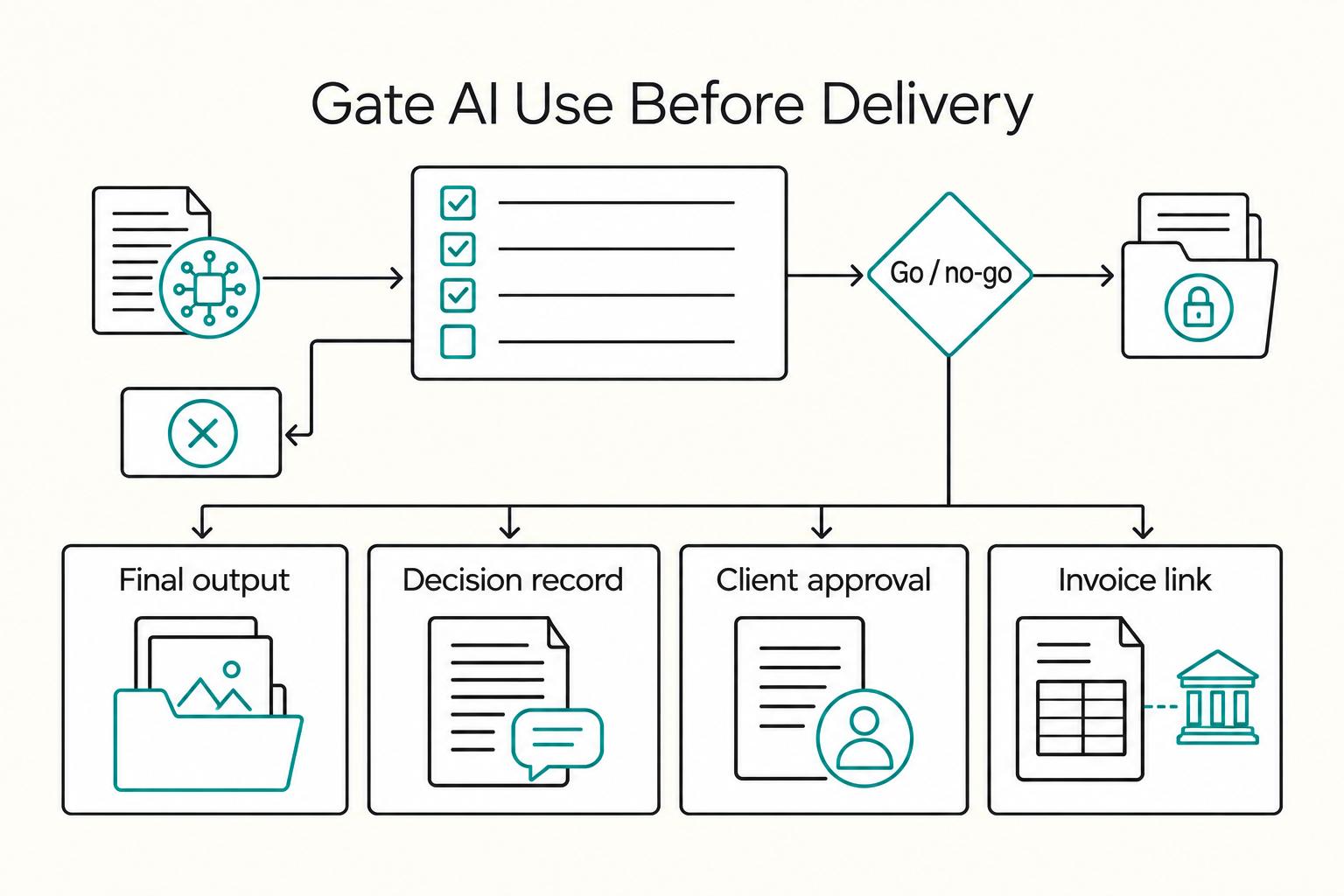
If you are hunting for more **AI tools for freelancers**, stop and put controls in place first. One practical setup is `Acquire -> Deliver -> Collect -> Close-out`, with each AI action checked through `Data`, `Client Policy`, `Quality`, and `Money`. If a tool has no named job, no clear data boundary, and no record you can retrieve later, it probably does not belong in your stack.
How to Use LinkedIn Sales Navigator for Freelance Lead Generation
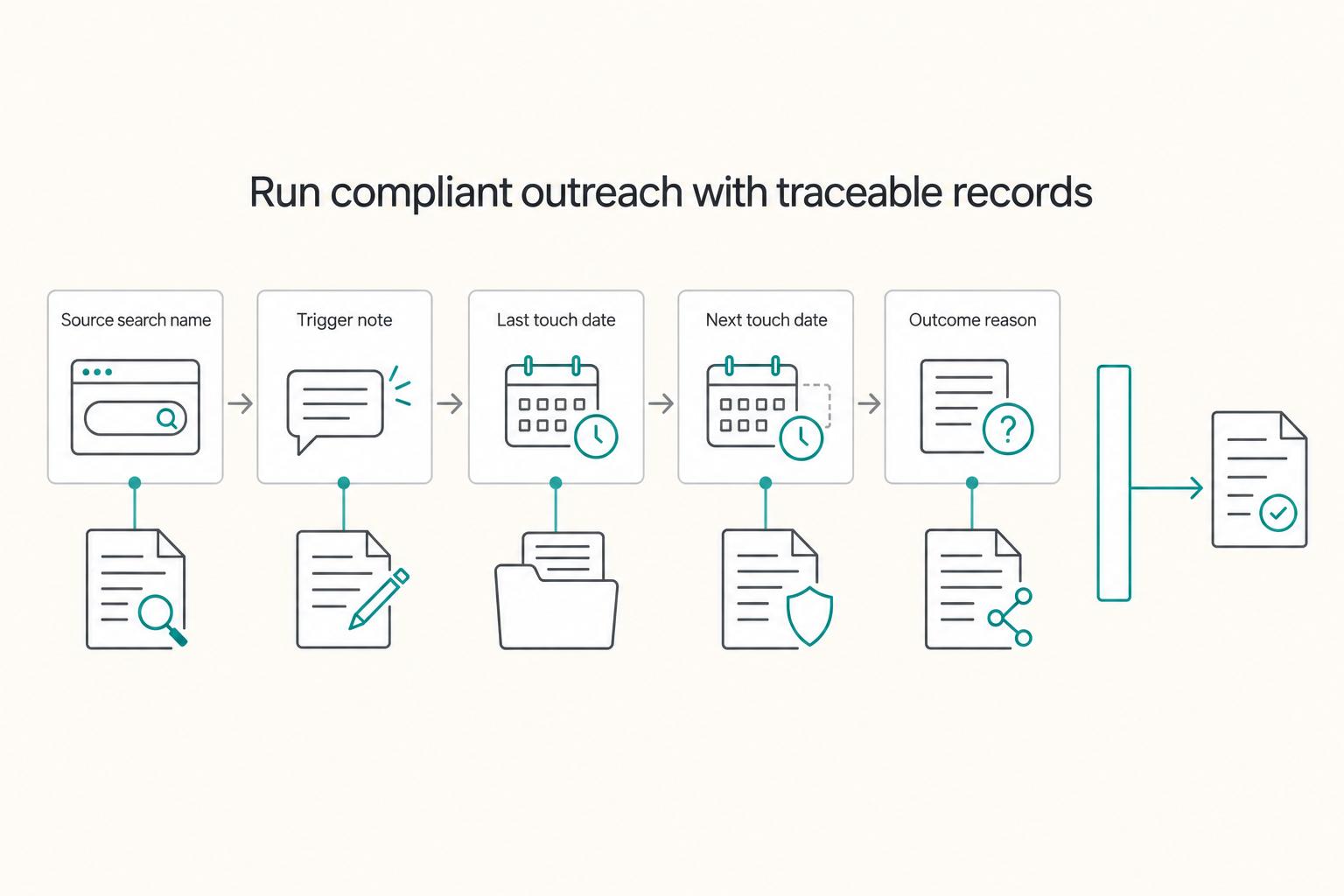
The useful way to think about Sales Navigator as a freelancer is not as a bigger outreach cannon. Think of it as a small operating setup you can keep running during a busy client week. When lead flow feels uneven, the issue is often not raw volume. It is usually that you are rebuilding targeting from scratch, losing track of who matters, and reaching out without a reason.

The Freelance Payment Penalty: A Modeled Audit of Platform Fees, FX Spreads, and Payout Delays
The money rarely disappears through a single, easy-to-spot fee. The real loss is stacked. A marketplace takes its commission, a processor adds a charge for international cards, a bank or payment company converts the currency at a spread, a platform holds the funds before release, and a wire sheds a little to intermediaries on the way in. Each layer looks defensible on its own, but the worker feels the combined result as a smaller deposit and a later payday.