
Quick Answer
Use a robo-advisor when your finances are stable and you mainly need consistent, automated investing execution. Choose a financial planner when irregular income, tax decisions, debt tradeoffs, or life complexity require human judgment and accountability. For many freelancers, the best path is hybrid: automation for portfolio execution and a planner for decision rules, triggers, and follow-through.
You don't need "better investing" - you need a cashflow-safe decision (and a default you can repeat)#
Make the decision that keeps your cashflow stable first, then choose the investing setup you can actually maintain. Do not start by debating portfolio optimization. Start by stress-testing the part of your finances most likely to break when you invoice clients: timing mismatches between incoming payments and outgoing obligations (rent, payroll, software, taxes).
If you run a business-of-one, market volatility matters. But for many operators, payment volatility and timing risk cause the immediate operational pain: late invoices, processor holds, disputed charges, or a client going dark right when quarterly taxes hit. When that happens, the real risk is not a red day in the market. It's forced improvisation: pulling from savings, selling investments, missing tax set-asides, or taking expensive debt.
Compare the "decision product," not the marketing#
A clean way to think about this choice: what decision will this option reliably help you execute?
A robo-advisor typically gives you automated investment management without a human advisor in the loop. That can work well, as long as your cashflow system does not sabotage it.
Use this operator comparison to keep the scope honest:
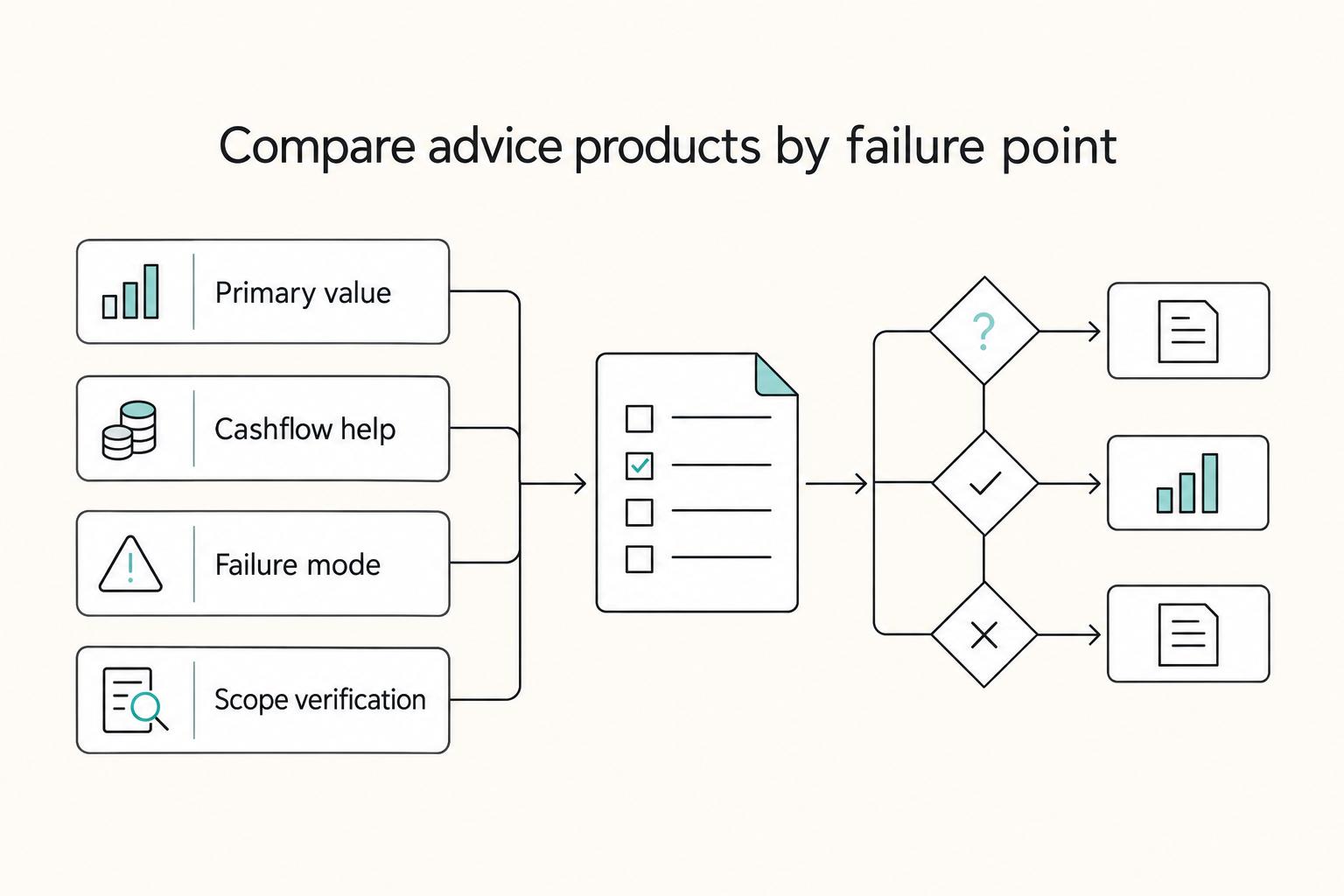
| Operator criteria | Robo-advisor | Financial planner / financial advisor |
|---|---|---|
| Primary value | Rules-based investment management (automated choices) | Human-led tradeoffs and sequencing across goals |
| Cashflow help | Limited. You must build the buffer and tax set-aside system | Often stronger if they design cashflow rules, not just an allocation |
| What breaks first | You automate investing before stabilizing cash and taxes | You pay for financial advice but don't implement it |
| What you must verify | Fees, fund expenses, constraints, and what "advice" covers | Scope in writing, compensation model, and what they will actually deliver |
A safe default you can run without overthinking#
Do not hunt for perfect. Run a repeatable decision rule:
- If you can cover bills and taxes through a late-payment streak without touching investments, start with a robo-advisor and automate contributions.
- If irregular income makes you regularly second-guess taxes, retirement planning, or major tradeoffs, choose a financial planner who will document rules and enforce follow-through.
- If you sit in the middle (most operators do), combine them: automation for investing, human support for the decisions that actually derail you.
A simple stress test: you sign a new client, revenue looks great, then they pay late two cycles in a row. If that forces you to pause investing or raid savings, you do not have an investing problem. You have a cashflow system problem. Fix that first, then pick the advisory setup that keeps you consistent.
Want a quick next step? Try the free invoice generator.
What are you actually buying with a robo-advisor vs a financial planner - and what's the fastest way to compare?#
You're buying either automated investing execution, human-led decision design and follow-through, or a split of both where each owns a different layer.
Compare the options without getting distracted by branding, dashboards, or premium labels.
At-a-glance comparison (use this to shortlist in 2 minutes)#
Use this table to decide what you actually need this year: investment automation, broader financial advice, or a hybrid that keeps roles clear.
| Decision criteria | Robo-advisor | Financial Planner / Financial Advisor | Hybrid advisory approach |
|---|---|---|---|
| Primary deliverable | Software-driven portfolio recommendation and investing workflow based on your info and goals | A personalized plan that connects investments to decisions (retirement and estate planning, and other goals), plus coaching and coordination | Robo handles the investing workflow. Human owns the plan, decision rules, and exceptions |
| What the "advice" looks like | Standardized guidance based on your questionnaire inputs | Context-specific recommendations that reflect your full situation | Standardized investing plus personalized planning guardrails |
| What you actually hold | Often ready-made portfolios that are basically a collection of Exchange Traded Funds (ETFs) | Depends on the advisor's approach and what you agree to in writing | Often ETFs in the robo account, plus whatever the planner recommends elsewhere |
| Handles retirement and estate decisions | May be limited to what the platform's tools support | Can coordinate retirement planning and estate planning with the right professionals | Human triggers updates. Robo stays the execution engine |
| Behavior and decision support | Mostly self-directed: you answer questions, then follow the system | Ongoing conversations, tradeoff calls, and follow-through support | Mix of both, depending on what you delegate to the human |
| Failure mode to watch | You set and forget while your cash reserves or savings set-asides stay underbuilt | You pay for meetings, then never implement the plan | Overlap and unclear responsibility (two parties, nobody owns the outcome) |
Scope reality check: a robo-advisor focuses on the investment layer. A financial planner focuses on the decision layer and may also manage investments. In practice, many people end up using both.
The fastest comparison rule (don't start with fees)#
Start with three operator criteria:
| Criterion | Signal | Implication |
|---|---|---|
| Risk tolerance plus income volatility | Your income swings | Need rules that prevent panic pauses and inconsistent contributions |
| Planning complexity | Retirement planning or estate planning decisions affect each other | Want a human who can sequence them |
| Implementation force | You know what to do but fail to do it | Buy accountability, not features |
In plain language: if your income swings, you need rules that prevent panic pauses and inconsistent contributions. If retirement planning or estate planning decisions affect each other, you want a human who can sequence them. And if you already know what to do but do not follow through, buy accountability instead of more features.
If you automate investing in a robo-advisor and then repeatedly pause contributions the moment a client pays late, that is a decision-system problem. Either upgrade to a planner, or run a hybrid where someone designs and enforces rules you can actually follow.
Which option protects freelancer cashflow better when income is irregular?#
If your income swings, focus on building a cash buffer and a repeatable tax set-aside workflow first. That foundation can reduce the odds you'll feel forced to pull from investments or scramble when cash timing gets tight.
Stress-test both options against the real freelancer failure mode: cash timing.
Irregular-income money management quickly becomes operational overhead: tracking inflows from multiple sources, moving money for taxes, staying on top of bills, and deciding what's safe to spend. That matters more than asset allocation when you invoice clients.
In practice, this is partly a risk tolerance problem: your plan has to keep you from making emergency decisions under pressure.
Cashflow-first stack (build this before you debate platforms)#
Run this in order, whether you choose a robo-advisor, a financial planner, or a hybrid advisory approach:
| Step | Action | Note |
|---|---|---|
| Buffer rule | Define your minimum viable buffer and sleep-at-night buffer | Size both to your client concentration and invoice cycle, not your optimism |
| Tax set-aside rule | Automate a transfer that triggers every time you get paid | Keep it separate from spendable cash; refine with a pro |
| Spending clarity | Decide what counts as safe-to-spend after you fund the buffer and taxes | Build that system first. Then invest. |
Do not over-engineer this. Define (1) your minimum viable buffer, which keeps bills paid through normal delays, and (2) your sleep-at-night buffer, which covers longer gaps. Automate the tax transfer every time you get paid, keep it separate from spendable cash, and decide what is truly safe to spend only after those rules run. You do not need a perfect rate on day one. You need a rule you'll actually follow, then refine with a pro.
Robo-advisor vs planner for cashflow protection (what each one actually covers)#
| Cashflow protection criteria | Robo-advisor | Financial planner / financial advisor |
|---|---|---|
| Prevents investing becoming your emergency fund | Helps if you only fund it after your buffer and tax rules run | Can help you design decision rules and stick to them (if the engagement includes that) |
| Handles tax set-aside workflow | May require a separate workflow outside the investing account | Can help you define a rule and connect it to your broader plan |
| Protects you from late-payment volatility | Generally won't address your invoicing and payment terms | Can coach your decisions, but you still must fix get paid operations |
| Best use | Automated investment management once cashflow runs clean | Decision design, sequencing, accountability, and exceptions |
If a late-paying client keeps forcing you to either yank money back out of investments or pause contributions indefinitely, the leverage is usually in the rules around the investing account. Working with a planner can be worth it when they help turn that chaos into decision rules you can actually run. You can also build those rules yourself.
Practical takeaway: if you rely on a small handful of clients and one late payment would break your month, prioritize getting your buffer and tax set-aside workflows solid, with a planner or on your own, then automate investing. If your cashflow is steadier, a robo-advisor paired with strict buffer and tax rules can be a solid default.
To reduce payment volatility at the source, tighten your invoicing and terms (start with How to Write a Proposal for a Six-Figure Consulting Project).
When does a robo-advisor stop being enough (trigger thresholds you can actually use)?#
A robo-advisor may stop feeling like enough when your real problem shifts from portfolio execution to higher-stakes decision-making across the rest of your financial life.
The tool is not bad. It stops being enough once the decisions get heavier.
In plain terms, a robo-advisor is a software application that provides automated, algorithm-driven investment management with minimal human intervention. It sits between a wealth manager and a do-it-yourself trading platform.
The gap usually shows up when you need coordinated tradeoffs, not just a diversified portfolio aligned to risk tolerance.
Practical trigger list (upgrade signals you can actually use)#
Use this as an operator checklist. When several items show up at once, consider moving from robo-only to a planner or a hybrid approach, where available, that pairs automated portfolio management with human advice.
| Decision pressure you're feeling | Robo-advisor strength (typical) | Where a financial planner can add leverage |
|---|---|---|
| You need to make tax-related decisions (multi-state work, entity choices, deduction complexity, capital gains decisions) | Builds and manages a portfolio based on goals and risk tolerance | Can help you think through tradeoffs and coordinate decisions across your situation (often alongside a tax professional) |
| You're choosing between retirement contributions and business reinvestment | Automated, algorithm-driven portfolio management with minimal human intervention | Can help you model scenarios and sequence actions so you stop guessing |
| You must coordinate debt decisions with investing (student loans, high-interest business debt) | Automated portfolio management | Can help you set a clear decision framework for payoff vs invest tradeoffs |
| You have dependents or estate complexity, so coordination matters | Portfolio-focused automation | Can help you identify what to coordinate and when (often alongside an estate attorney) |
| You keep failing basics (tax set-asides, contribution cadence, rebalancing discipline) | Consistent execution once set up | Can add accountability, sequencing, and follow-through |
If you are juggling quarterly taxes, a business credit line, and a new dependent, your robo-advisor can still run a diversified portfolio. It may not help you decide whether to prioritize buffer expansion, debt payoff, or retirement contributions this quarter.
Due diligence: confirm you're buying planning, not just investment management#
Do not confuse a financial advisor selling investment management with a financial planner delivering a documented plan. Ask for proof in writing:
- "What deliverable do I receive?" (plan, action checklist, decision rules)
- "What decisions will you help me make this year?" (tax-related decisions, debt tradeoffs, retirement planning, coordination items)
- "How will you track implementation?" (cadence, reviews, accountability)
Verdict: stay robo-only when your main need is consistent investing execution. Consider upgrading to a planner or hybrid when life and business decisions start driving bigger outcomes than asset allocation tweaks.
Is the lower fee always better - or is it the most expensive "cheap" decision you can make?#
No, the lower fee does not automatically win.
The right choice here comes down to which option prevents your most likely, and most expensive, mistakes. Freelancers rarely lose to fees in a spreadsheet. They lose to the wrong system in real life.
Start with a clean anchor: traditional advisor pricing is often described as around 1% of assets under management (AUM). Those investment management fees are what you pay for professional expertise to manage your portfolio.
Automated investment management can come with a different fee structure, but you still have to map fees to outcomes, not vibes.
Hidden costs you should force into the open#
AUM pricing (assets under management) can make sense when it covers assets that actually benefit from ongoing investment decisions. Freelancers often misapply it.
- AUM fees on non-invested money: if you park tax set-asides or operating runway inside an account that charges an ongoing management fee, you pay for management you do not need. Keep your buffer and tax cash in the right place, then invest what you can truly leave invested.
- Portfolio costs beyond the headline fee: even when a platform looks cheap, your funds can still carry internal expenses. Sanity-check your holdings inside the account and confirm you do not pay twice for similar exposure across multiple funds.
Failure modes (what "cheap" turns into)#
| Option | What you pay for | Common way it breaks | Operator fix |
|---|---|---|---|
| Robo-advisor | Automated investing execution tied to your risk tolerance and investment preferences | You automate investing while you underbuild cash and insurance, then you trigger a liquidity crunch | Lock a buffer rule first, then automate contributions |
| Financial planner / financial advisor | Planning plus human judgment and coaching (sometimes investment management too) | You pay for meetings, but you never implement. The plan lives in a PDF | Demand a 30-day execution list and a follow-up cadence |
Fees cut into your budget and what you can save down the line. Treat that as a constraint, not a footnote.
Decision framework (run it in 10 minutes):
- Estimate annual dollars paid across (1) advisor or platform fee and (2) underlying fund costs.
- Write your top 3 decisions this year (example: tax set-aside system, debt payoff plan, retirement planning contributions).
- Pick the option that most reliably gets those three decisions executed.
Verdict: choose the cheapest setup only if it still forces the right behavior. Otherwise, it costs more than it saves.
Can you use both without duplicating work (and without paying twice for the same outcome)?#
Yes, you can use a financial planner and a robo-advisor together without duplication if you're clear about who owns the decisions and what the robo is actually doing. Think of the robo-advisor as the execution layer: automated investment advice without a human advisor in the loop.
Where people get burned is not "using both." It's letting responsibilities blur until nobody owns the calls that move the plan forward.
The clean stack is simple: use automation for repeatable, standardized workflows, which vary by provider, and use a human for decisions where context matters.
The operator-grade hybrid: assign owners, not vibes#
Use this responsibility map as your safe default. You can run a robo-advisor as the automated advice layer, then hire a financial planner for the decision layer.
| Workstream | Robo-advisor (automation) | Financial Planner / Financial Advisor (human) | You (accountable owner) |
|---|---|---|---|
| Portfolio implementation | Automated investing platform and standardized workflows (varies by provider) | Sanity-check your approach against goals and risk tolerance | Approve a simple plan and stop tinkering |
| Advice scope | Investment advice without a human advisor involved | Personalized advice plus tradeoffs | Write down the one-sentence plan |
| Risk and behavior | Systemized guidance can help you stick to a process | Financial advice can help you take risk intentionally (especially when you're unsure) | Decide what you will do when markets or income get weird |
| Life admin coordination | Not a coordination layer | Can prompt you to coordinate with other professionals as needed | Actually schedule the updates |
Example handoff: you use a robo-advisor for automated, standardized investing workflows, then you hit an uneven-income season. Your planner helps you decide what changes to make. The robo keeps following whatever setup you choose. No overlap. Clear ownership.
How to avoid paying twice (in practice)#
You do not need a cute hybrid model. You need a clarity rule.
- Make the roles non-overlapping. If two services are being paid to deliver the same outcome, simplify.
- Buy advice explicitly. Get a clear scope for what the human is responsible for, and what they are not.
- Keep the structure lean. Low fees are still a useful guardrail.
Also reduce friction on inputs. If Gruv helps you keep payment tracking and reconciliation clean, where supported and when enabled, you can give your planner better data and spend less time reconstructing income. Confirm coverage and market support before you rely on any single workflow.
Verdict: use both when you can name, in writing, who owns (1) the decisions and (2) what gets executed inside the robo-advisor. If you cannot, pick one and simplify.
Which provider should you choose (Wealthfront vs Betterment vs "a planner") - and how do you vet them like a pro?#
Choose the option you can verify, maintain weekly, and hold accountable to a written scope.
Do not buy the marketing. Your job here is procurement: define the outcome, compare against consistent criteria, then verify claims before you fund anything.
Robo-advisor selection: compare workflows, not vibes#
Robo-advisors can work well alongside a planner because investment management is increasingly commoditized. That is your cue to shop on controls, fit, and total cost structure, not secret sauce.
| Criteria you must validate | Wealthfront | Betterment | What you do with the answer |
|---|---|---|---|
| Account minimums | Verify current minimums for your account type | Verify current minimums for your account type | If the minimum forces you to delay your cash buffer, skip it. |
| Tax features | Confirm which tax features exist for your account type | Confirm which tax features exist for your account type | Only pay attention to features you will actually use and review. |
| Automation controls | Check deposit rules, rebalancing controls, withdrawal friction | Check deposit rules, rebalancing controls, withdrawal friction | Prefer fewer knobs you will consistently maintain. |
| Fee schedule | Confirm platform fee and underlying fund costs | Confirm platform fee and underlying fund costs | Compare total cost. Avoid paying twice on the same assets. |
| Investment preferences | Confirm SRI options, factor tilts, cash management | Confirm SRI options, factor tilts, cash management | Pick the simplest portfolio you can stick with through stress. |
If you want SRI but know you will not review it after setup, choose the platform path that lets you set it once, automate contributions, and avoid constant tinkering.
Planner/advisor selection: buy deliverables and decision rules#
A financial advisor relationship can extend beyond portfolios. Make that concrete before you sign.
| Deliverable | What it covers |
|---|---|
| Planning memo | Assumptions, tradeoffs, decisions |
| Projection model | What changes move the plan |
| Action checklist | Next 30 days and next 90 days |
| Implementation follow-up | How they confirm you executed |
Ask for scope in writing, whether that is retirement planning, tax strategies, debt management, or only investment management, and confirm which deliverables above you will actually receive.
Verification workflow (to reduce sales pressure):
- Start with official investor-education resources for advisor due diligence, then verify registration and disclosures using the official tools for your jurisdiction.
- Demand a clear fee disclosure (AUM vs hourly vs retainer). Require what's included, what triggers extra charges, and who pays underlying fund costs.
Operator interview questions (steal these verbatim):
- "What are the top three failure modes you see for freelancers with irregular income?"
- "What rules do you use to set cash buffers vs investing, based on risk tolerance?"
- "How do you measure whether your advice is working after 6 and 12 months?"
Red flags: guaranteed returns, vague fee explanations, reluctance to explain investment advice limitations, or no documented planning process.
Verdict: pick Wealthfront or Betterment when you can confirm the controls match your habits. Pick a planner when you need written decisions, sequencing, and follow-through, not just a portfolio.
The 10-minute decision checklist (safe default + failure-mode prevention)#
Pick the simplest setup that prevents forced selling and tax panic first, then optimize for fees and features.
Use this as a default you can rerun, with failure modes called out up front.
10-minute classification + trigger test (circle, then commit)#
Step 1: classify your situation (pick one default).
- Robo-advisor (investment management automation) if you have stable income, simple taxes, no major debt management, and consistent risk tolerance. Robo-advisors can be efficient, low-cost, and easy to start, but they can also generate unsuitable recommendations if the inputs do not reflect your real situation.
- Financial Planner if you run high volatility income, complex tax strategies, or you need retirement planning and estate planning coordination (someone owns the decision layer).
- Hybrid advisory approach if you want low-cost automation plus a human who handles triggers and periodic decisions.
Step 2: trigger test (upgrade if you hit 2+).
- Multi-jurisdiction tax complexity or an upcoming entity change (tax strategies).
- Dependents, inheritance, or business continuity needs (estate planning).
- You repeatedly sell investments to pay bills (risk tolerance mismatch, cash buffer failure).
- Major timeline decisions (retirement planning, home purchase, leaving full-time employment).
| Decision point | Robo-only (typical robo-advisor setup) | Planner-only | Hybrid |
|---|---|---|---|
| Safe default when | Stable, simple, consistent | Volatile or complex | Mostly simple, but with real triggers |
| Primary failure mode to prevent | Underbuilt buffer, unsuitable automation | Paying, then not implementing | Duplicate fees, unclear ownership |
| "This week" action | Open, set contribution rule, lock investment preferences, set a recurring review | Book discovery call, demand written scope (planning vs AUM), request a clear next-steps plan | Automate robo contributions, hire planner hourly or retainer for a plan plus periodic check-ins |
If you land a new enterprise client with longer payment terms, your trigger test can flip from robo-only to hybrid because cash timing now matters as much as allocation.
Implementation guardrails (freelancer-specific)#
Step 3: add payment-risk guardrails so investing stays boring.
- Write a late payment protocol (follow-ups, escalation, when you pause work, invoice discipline). If you want a practical template for tightening scope and terms, use How to Write a Proposal for a Six-Figure Consulting Project.
- Improve traceability and reconciliation so income reporting stays audit-friendly. Consider tooling like Gruv modules (Virtual Accounts or Payouts where enabled) to keep cash visibility clean.
Step 4: commit to a cadence (pick one and make it stick).
- Monthly: buffer check plus contributions.
- Quarterly: tax set-aside review (tax strategies) plus portfolio drift check.
- Annually: goal reset, retirement planning update, estate planning trigger review.
The bottom line: choose the option that makes your "get paid → set aside taxes → invest" system reliable#
Choose the setup that makes consistent follow-through easiest and predictable failure modes harder.
In this choice, the goal isn't the "smartest" strategy on paper. It's a system you'll actually run. Pick the option that helps you keep cashflow steady enough that taxes and investing happen on time, without relying on willpower.
Your safest default (by situation)#
If your finances are simple and your biggest risk is procrastination, a robo-advisor can be a strong default because it lowers the effort to get started. For many people, getting started can take about fifteen minutes. Robo-advisors are also often described as offering low-cost, globally diversified portfolios built with index ETFs.
If your reality includes irregular cashflow, higher complexity, or high-stakes decisions, pay for a financial planner/financial advisor, or use a hybrid approach. The value here is less about picking funds and more about getting a real plan, clear rules, and ongoing decision support when exceptions happen.
Misaligned incentives matter here. In practical terms, protect yourself by demanding clarity on fees, scope, and deliverables - and by making sure the "who does what" is written down.
Use this quick comparison to choose cleanly:
| Criteria | Robo-advisor | Financial Planner / Financial Advisor | Hybrid advisory approach |
|---|---|---|---|
| Best when | You want automation and simplicity | You need planning, coordination, and accountability | You want automation plus human exception-handling |
| Primary value | Easy start + rules-based investing | A plan plus guidance on implementation | Robo executes; planner sets rules and triggers |
| Key risk | "Set and forget" without checking inputs | Paying for talk without deliverables | Overlap and unclear ownership |
Non-negotiable operator move: ask for a written plan. Do not assume "holistic" advice means you will receive one. Request the written deliverable up front - before you commit.
If payment delays and reconciliation chaos are throwing off your system, fix the payment layer in the same project. Stronger proposals and tighter terms can help you run more consistent workflows. If you want help tightening that side, start with How to Write a Proposal for a Six-Figure Consulting Project.
Then, if you want to see how modular money movement can support cleaner get-paid workflows, explore Gruv (request access or book a demo; coverage varies by market and program).
Frequently Asked Questions
Should I use a financial planner or robo-advisor if my income is irregular?
If your income swings month to month, start with a financial planner or a hybrid approach so you have a plan for cash flow and taxes before you automate investing. Use the planner to set buffer and tax rules you can follow under stress, then let the robo-advisor handle investment management once those rules are in place.
At what point is a robo-advisor not enough?
A robo-advisor can stop being enough when your decisions stop being portfolio-only and become life plus money. Upgrade when exceptions become normal: missed tax set-asides, recurring second-guessing during drawdowns, or a need for coordinated retirement planning and estate planning actions. If you need accountability and sequencing, hire a human who owns the decision layer.
Is a lower AUM fee always better?
No. A lower AUM fee only wins if it still prevents your expensive mistakes. If a cheaper setup triggers forced selling, ignores risk tolerance reality, or leaves you without an implementation path, the fee savings are not the point. Compare fees after you confirm who owns buffer rules, follow-through, and review cadence.
Can I use both a financial planner and a robo-advisor?
Yes, and it works best when you assign ownership in writing. Put the robo in charge of portfolio execution and investment preferences. Put the planner in charge of goals, rules, and exception handling. Sun Life explicitly suggests some people use both: tech for investments, and an advisor for areas like retirement and estate planning.
How do I decide in 10 minutes?
Run the checklist: classify your situation, then upgrade only if you hit triggers. Robo-only if income and taxes feel stable. Planner-only if volatility or complexity runs the show. Hybrid if you want automation but you know you will hit real exceptions. Then pressure-test your risk inputs before you fund anything, since robo-advisors base recommendations on the information and goals you provide.
What’s the difference between a financial planner and a financial advisor?
Treat it as scope-first, then verify it in writing. Traditional financial advisors can be hired to help manage many aspects of your finances, potentially from investing to estate planning, but titles and responsibilities can vary by jurisdiction and by firm. Protect yourself by asking for a written deliverable list (planning, investment management, retirement planning coordination).
How do Wealthfront and Betterment compare for hands-off investing?
Compare them as robo-advisors: rules-based portfolios, automation features, and what inputs they require from you. Many robo-advisors offer ready-made investment portfolios that are typically built from ETFs. Because you must verify features and pricing directly, choose the platform that makes correct behavior easiest: consistent contributions, clear risk settings, and a review cadence you will actually follow.
Watch
Should Freelancers Use a Planner or Robo-Advisor?
Try a related tool
Researched and edited by the Gruv editorial team. Gruv builds cross-border billing, payouts, and finance-operations software for global businesses.
Sources
- economics.yale.edu/sites/default/files/2023-01/Jonathan_Lam_Sen...trusted
- federalregister.gov/documents/2023/08/09/2023-16377/conflicts-of...trusted
- oecd.org/content/dam/oecd/en/publications/reports/202...trusted
- pmc.ncbi.nlm.nih.gov/articles/PMC7508018trusted
- sec.gov/files/rules/final/2020/ia-5653.pdftrusted
Educational content only. Not legal, tax, or financial advice.
Related Posts

Japan Digital Nomad Visa 2026: Six-Month Planning Runbook
Treat this as your operating model: identify the right mission first, commit to one route, and keep dated records before you make irreversible plans. That is what keeps the rest of your timeline, paperwork, and decisions coherent.
How to Write a Proposal for a Six-Figure Consulting Project
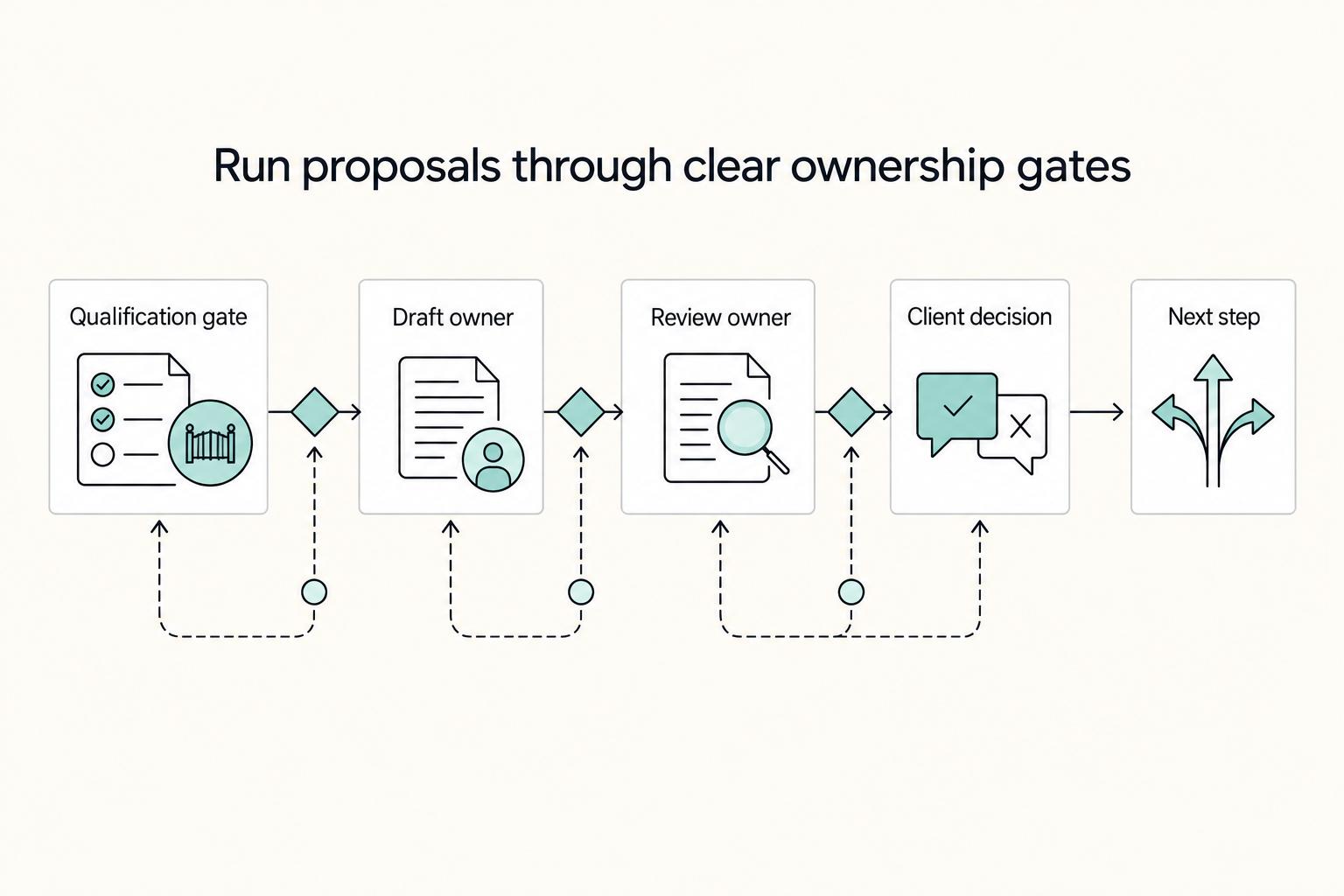
If you are sending a **six-figure-consulting-proposal**, treat it as an operating document, not just a polished PDF. Even indirect evidence supports a cautious rule for consulting work: clear definitions, named approvals, and written proof reduce avoidable surprises.

The Freelance Payment Penalty: A Modeled Audit of Platform Fees, FX Spreads, and Payout Delays
The money rarely disappears through a single, easy-to-spot fee. The real loss is stacked. A marketplace takes its commission, a processor adds a charge for international cards, a bank or payment company converts the currency at a spread, a platform holds the funds before release, and a wire sheds a little to intermediaries on the way in. Each layer looks defensible on its own, but the worker feels the combined result as a smaller deposit and a later payday.