

Quick Answer
Yes, start by checking the legal address in the Commercial Register. If the address is abroad, appoint a contact person and confirm the filing matches your contract records; if the address is in Estonia, one is generally not required under the address-based reading used here. Keep named notice ownership in place, because delivery to the contact person is treated as delivery to the company and delayed internal handling can create deadline risk.
Start Here and Remove the Biggest Compliance Risk First#
In a few minutes, you can check whether your Estonian OÜ needs contact-person action now, then put controls in place so important notices do not get missed. Start by naming one person to monitor forwarded notices and one backup to step in when that person is unavailable.
This article is current as of 2026-03-15 and is not exhaustive. It draws on provider guidance and a consultant report from April 2023 that says it reflects consultant views, not an official European Commission position. Treat statutory edge cases as open until you confirm current law text and your own Commercial Register record.
The first risk to reduce is missed delivery. One excerpt says correspondence delivered to the contact person is treated as delivered to the company, and another describes the service as receiving, digitizing, and forwarding company mail. Prioritize delivery reliability and named ownership over sales wording.
Use this 5-minute triage before reading deeper:
- Check company details and documents in the Commercial Register.
- Assign one primary owner and one backup owner for official incoming notices.
- Track proof for each notice: receipt time, owner, required action, and completion.
- Treat broad summary claims as prompts to verify, not final legal interpretation.
- If internal records and register data do not match, prioritize reconciling the register entry.
- If no one can show closure proof for the latest notice, treat that as an immediate gap.
Do You Need an Estonian Contact Person Right Now#
Start with one simple check: the legal address recorded for your Estonian company in the Business Register. Under the address-based logic described here, an address abroad means appoint a contact person, while an address in Estonia generally means one is not required.
The legal address is the official point for notices and procedural documents, and it is publicly visible in the Business Register. The same materials state that delivery to a contact person is treated as delivery to the company, so this is an operating control, not just an administrative detail.
| Legal address shown in Business Register | What to do now |
|---|---|
| In Estonia, including an Estonian business unit address where applicable | A contact person is generally not required under the current address-based reading. Keep register data accurate and keep notice ownership clear inside the company. |
| Abroad | Appoint a contact person who can receive and forward official mail, then verify the register entry reflects that setup. |
Do not rely on legacy summaries centered on management-board location. Older Commercial Code-era explanations can conflict with newer address-based guidance.
Use one practical tie-breaker when records look inconsistent: trust the current register extract over older internal summaries. If a contract draft and the register extract disagree, pause and resolve the register mismatch first so you are not acting on stale data. Immediate checkpoint: confirm the exact legal address currently recorded in the Business Register before moving on.
Understand the Terms Before You Sign Anything#
Define the key terms before you sign so delivery risk is clear and the contract language is not doing hidden work.
- Contact person: a designated recipient for official correspondence who receives and forwards mail; provider descriptions can include receipt, digitization, and forwarding to a specified email.
- Legal address (contract label): use this field consistently and align it with the company address shown in Commercial Register data.
- Procedural documents: formal documents used in legal proceedings, including submissions used to initiate, supplement, or amend a claim.
- Contract wording: keep notice and delivery language explicit; if meaning is vague, pause and clarify before signature.
In the provider material, the key delivery effect is straightforward: correspondence delivered to the contact person is treated as delivered to the company. Internal delay after that point can still create missed deadlines and compliance exposure.
Keep one boundary explicit in every agreement. A contact person handles document delivery and forwarding, but does not replace management board authority. Governance decisions, signing authority, and board duties remain with the company.
Correspondence from the Commercial Register, Tax Office, and courts is named explicitly here. If your records use labels such as EMTA or include Statistics Estonia tasks, confirm sender names and ownership from your own filings and mailbox history.
Before signing, confirm:
- Forwarding destination, format, and turnaround terms are explicit.
- Internal owner for acknowledgment and deadline action is named.
- Commercial Register data matches the contract fields.
- Any clause that implies broader representation than document delivery is edited.
- Exit and replacement terms are clear enough to hand over without losing notice continuity.
Red flags usually show up in plain language, not legal complexity. Watch for wording that blurs roles, such as broad references to representation without delivery limits. Watch for service descriptions that promise support but never define who receives what and when. Clean up those clauses before signature, then store the final signed version with the same naming used in your register records.
What Changed and Why Old Advice Still Confuses Founders#
Treat any claim about a trigger change as unverified until you can read the current legal text directly. In the materials provided here, the governing statutory wording is not included in full.
Claims tying the trigger to management-board location versus legal address are not resolved here. A direct legal old-versus-new comparison clause by clause is not provided, so a definitive trigger statement is not settled here.
Apply the same caution to term-expiry claims. The clause, procedure, or enforcement detail needed to treat expiry-related register-entry outcomes as confirmed is not included here.
The available background is mixed. It includes a 2019 media piece on e-residency adoption, an OECD anti-bribery report approved and declassified on 11 December 2025, and a security article describing DDoS attacks beginning in April 2007. Useful background, but not direct legal wording on trigger rules or expiry mechanics.
Use this filter before relying on any summary:
- Classify each claim as primary legal text, registrar guidance, or secondary commentary.
- Do not treat secondary commentary as final when legal wording is missing.
- For expiry warnings, confirm where term data appears, who updates it, and how confirmation is recorded.
- If the legal basis is not shown, pause signature and keep the point open.
- Keep a short open-questions log so unresolved legal points do not disappear between handovers.
Confirmed in this material: direct statutory extracts on trigger change and expiry effect are incomplete. Unknown in this material: full wording, enforcement specifics, and exact correction mechanics.
When teams skip this distinction, confusion quickly turns into contradictory internal advice. One person follows an older trigger summary, another follows a newer provider article, and nobody can point to a complete legal extract. A simple claim register helps avoid that drift: list the claim, its evidence type, who must verify it, and the status.
Who Can Legally Act as a Contact Person in Estonia#
Use one hard rule: appoint only a provider that can prove legal eligibility and give you records that match the filing. If the proof is unclear, do not appoint them.
Two categories are directly visible as permitted here:
- Notary
- Licensed trust and company service provider
Other eligible categories may exist, but they aren't fully covered here. Treat any category beyond the two above as a verification item against current law text and registrar guidance before signing.
Keep the role boundary clean. The contact person is a delivery point for procedural documents and declarations of intent, and delivery to that person is treated as delivery to the company. This is not the same as general setup support.
Use this pre-appointment checklist:
- Confirm license or authorization status for the exact legal entity being appointed, not only the brand.
- Get written confirmation to act as contact person, with names matching filing data.
- Confirm Commercial Register filing requirements before submission.
- Match provider name exactly to Commercial Register records.
- Keep one evidence file with eligibility proof, confirmation, agreement, and filing confirmation.
- Record who inside your company verified each document and on what date.
Common confusion to avoid: setup help does not prove legal eligibility to serve as contact person. A clean due-diligence packet makes future reviews easier. Keep document names consistent and mark old versions as superseded. Make sure your internal owner can answer one basic question quickly: who is appointed, and where is the proof.
Set It Up Correctly for New Companies and Existing Companies#
Handle setup on two tracks: formation for a new private limited company and the relevant change-registration path for an existing company in the Business Register. Treat setup as complete only when register data matches active company records.
| Setup point | New company | Existing company |
|---|---|---|
| Portal path | Enter the e-Business Register portal, select Establishment, and click Start registering | Use the Business Register path for changes instead of repeating formation steps |
| Preparation | Gather the company details you need before opening the portal | Put the current register extract, updated terms/details, and an internal approval note in one folder |
| Filing | Complete filing details carefully; you can select one planned principal activity | Verify current portal instructions for your specific change before filing |
| After filing | Download English registry documents such as the registration certificate, shareholder data, and registry-card printout | Compare the updated registry printout against working records and service terms |
For a new company, follow this order:
- Gather the company details you need before opening the portal.
- Enter the e-Business Register portal with an accepted eID method, select
Establishment, and clickStart registering. - Complete filing details carefully. At this stage you can select one planned principal activity. The default financial year is calendar-year based unless changed, and name-suitability feedback is informative because the registrar makes the final decision.
- After registration, download English registry documents such as the registration certificate, shareholder data, and registry-card printout. These are commonly requested for business or merchant account onboarding, and the excerpt says downloads are free and usually take a minute or two.
For an existing company, use the Business Register path for changes instead of repeating formation steps. Verify current portal instructions for your specific change before you file.
When you handle an existing-company update, prepare the filing materials before opening the portal. Put the current register extract, updated terms/details, and an internal approval note in one folder. That lets the person filing match fields line by line and avoid correction loops caused by mixed versions.
Run one final checkpoint: compare the updated registry printout against working records and service terms. If names or address details do not match, correct the register entry first, then proceed.
One formation-stage risk is easy to miss. If services are ordered before the company is officially entered in the Estonian Business Register, the individual ordering services may remain personally liable until entry is complete under those service terms. Keep English registry documents ready for onboarding steps such as How to Open a Business Bank Account for Your Estonian Company.
After filing, write a short handover note for your team. Include what changed, who approved it, what evidence was saved, and when the next review is due. That note cuts repeat questions later and may help with future audits or banking checks.
Choose a Provider Without Buying Unnecessary Services#
Choose by legal eligibility and delivery quality, not by bundle size. Bundles can reduce admin effort, but only when the provider can show clear accountability for contact-person duties.
Bundled offers that combine registered address and contact-person services are available, and virtual office service providers can fill the role. Provider sources also list law offices and audit firms as eligible categories in some cases, so compare provider type by fit and written evidence, not slogans.
| Provider type | Main upside | Main tradeoff | What to verify first |
|---|---|---|---|
| Virtual office service provider | Can combine contact-person and registered-address services | Service scope differs by provider | Eligible legal category, whether a separate legal address is supported, contact-person change process |
| Law office | Listed as an eligible contact-person category by provider sources | Service scope differs by provider | Contracting entity category and contact-person change process for existing companies |
| Audit firm | Listed as an eligible contact-person category by provider sources | Service scope differs by provider | Scope of contact-person duties and contact-person change process for existing companies |
Before signing, get four points in writing:
- Which eligible category the provider operates under, and confirmation that the contracting entity matches it.
- Whether the service is bundled with registered address and whether a separate legal address is possible.
- How contact-person changes are handled for existing companies.
- What the no-e-Residency route requires (for example, a notary-public process and any notarized/apostilled power of attorney).
If you operate lean and remote, a bundle can work when eligibility and change mechanics are explicit. If your structure is complex, favor providers that can explain their legal category and process in writing. For existing companies, confirm replacement mechanics early, since some providers state that without an e-Residency card, a notarized and apostilled power of attorney is required and the change may be arranged via notary public.
A practical way to choose is to score candidates on the same criteria you will later audit: eligibility proof quality, bundle scope, separate-legal-address compatibility, and replacement-process clarity. The deciding factor is not the longest service menu. It is the provider that can answer eligibility and process questions in writing without ambiguity.
Build a No-Surprises Mail Handling Routine#
A no-surprises mail routine means every forwarded notice has an owner, a deadline path, and closure proof. That keeps a minor inbox miss from turning into a legal or operational fire drill.
| Role | Responsibility |
|---|---|
| Intake owner | Logs each forwarded notice and receipt time |
| Decision owner | Confirms the response path and what must be submitted |
| Deadline owner | Tracks due dates and confirms closure evidence is stored |
Build your process so that compliance delays show up early by assigning roles before a notice arrives.
Assign ownership in one shared tracker, with backup coverage for absences:
- Intake owner logs each forwarded notice and receipt time.
- Decision owner confirms the response path and what must be submitted.
- Deadline owner tracks due dates and confirms closure evidence is stored.
Use one evidence format for every notice so handovers stay clean:
- Receipt timestamp
- Assigned owner
- Response status
- Proof of submission or acknowledgment
Set one escalation rule for your team: if a procedural document is still unacknowledged past your internal SLA, escalate it. Then run a regular check to confirm key contact and legal-address records still match official company records, and fix mismatches quickly.
Mailbox hygiene matters here. Keep the forwarding inbox monitored and remove obsolete rules that bury official mail. Make sure the backup owner can access the same notice log without asking for missing context. If acknowledgment is delayed, capture why, who took over, and when closure proof was recorded.
Manage Renewal and Term Expiry Before It Becomes a Compliance Problem#
Treat renewal tracking as a standing control, not an annual scramble. Keep it tied to contract terms and evidence so notice handling stays predictable.
| Cycle step | What to do |
|---|---|
| Pre-expiry review | Pull the signed agreement, amendments, service log, and open incidents; confirm term, renewal mechanics, notice channel, and sign-off authority |
| Extension decision | Choose renew or replace based on delivery quality, accountability, and fit with current needs |
| Update submission | Once signed, complete any required contractual or internal updates without delay |
| Confirmation capture | Store signed documents, update proof, and final confirmations in one compliance folder |
Review each cycle through a contract-first lens. The clauses set how services are delivered, paid for, and managed. For service contracts that focus on results, base renewal decisions on verifiable delivery outcomes and complete records, not broad assurances.
Run the same sequence every cycle:
- Pre-expiry review: pull the signed agreement, amendments, service log, and open incidents; confirm term, renewal mechanics, notice channel, and sign-off authority.
- Extension decision: choose renew or replace based on delivery quality, accountability, and fit with current needs.
- Update submission: once signed, complete any required contractual or internal updates without delay.
- Confirmation capture: store signed documents, update proof, and final confirmations in one compliance folder.
When extension timing is missed or unclear, notice routing and ownership can become ambiguous and force urgent corrective work under deadline pressure.
Use a simple decision rule:
- Renew early when service quality is stable, records match, and responsibilities are clear.
- Replace early when responsiveness slips, accountability is unclear, or contract language is too vague to manage confidently.
Automation can help with reminders, but tooling stays secondary to clear ownership and complete evidence before term end. If you replace a provider, plan the handover as a continuity task, not just a contract task. Confirm where notices are sent during the transition, who confirms receipt, and when the new arrangement is reflected in your records. Continuity checks during replacement prevent a silent gap where delivery responsibility is unclear.
Avoid the Most Common Mistakes That Trigger Fire Drills#
Most fire drills start when assumptions replace verification. If a teammate cannot confirm status from current records within minutes, your controls are not ready.
| Mistake | Why it fails under pressure | What to do instead |
|---|---|---|
| Assuming one factor settles the legal position | Summaries and old notes can conflict with current records or binding text | Verify current official records and governing legal text before filing changes |
| Choosing a provider on marketing claims alone | Claimed expertise is not the same as documented authority | Request and store written proof of authority and a signed agreement |
| Treating setup as one-time admin | Terms, ownership, and communication workflows drift over time | Run recurring checks for current status, evidence, and forwarding performance |
| Running cross-border operations with scattered records | Reviews become reconstruction work instead of straightforward verification | Maintain one dated evidence pack with official records, service terms, and notice logs |
Use one monthly checkpoint: review the latest official record, signed agreement, current service terms, and recent notice handling logs. If any item is missing, treat it as an active risk and assign correction immediately.
Do not treat summaries as legal authority. An ESMA note states that information compiled from competent authorities has no legal effect. Use summaries for orientation, then validate against binding text and signed records.
A common failure mode is evidence decay: old inboxes, unclear owners, or missing timestamps. In regulated settings, failing compliance standards can lead to legal penalties and fines, so notice logs should always show recipient, timestamp, owner, and response status.
For cross-border work, keep legal basis and operational records aligned. A related Estonia example analyzes international conventions alongside national legislation. Organize your files the same way so review stays consistent and defensible.
Use a hard gate for urgent changes: no process switch goes live until current records, signed approvals, and a recent handoff test are documented. That small friction up front prevents avoidable confusion later.
Add a quick stress test to your recurring checks. Pick one recent notice, then verify whether a new teammate can trace receipt, owner, response, and closure proof without extra explanation. If they cannot, your documentation is too fragile for real deadlines.
Connect Contact-Person Compliance to Banking and Money Movement#
Clean register records and reliable notice handling can reduce avoidable friction in onboarding and payouts. For this setup, your register data, provider scope, and internal approvals should tell the same story.
| Dependency | Where friction appears | What to keep ready |
|---|---|---|
| Register consistency | Legal name, address, or responsible-party details conflict across files | Current Commercial Register extract and matching internal records |
| Contact-person handling | Official notices are forwarded late or to an unmonitored inbox | Forwarding log with receipt time, owner assignment, and response status |
| Service scope clarity | Provider advertising is broad but service boundaries are unclear | Signed service terms separating mail handling, compliance support, and optional bank help |
| Decision traceability | A reviewer asks who approved a change and when | Dated approvals, change notes, and reconciliation-ready records |
At least one provider describes contact-person service as receiving, digitizing, and forwarding official correspondence, including messages from the Commercial Register, Tax Office, and courts. The same provider states that correspondence delivered to the contact person is considered delivered to the company. In practice, delayed forwarding becomes a company delay.
Use this checkpoint before submitting onboarding or payout updates:
- Verify the latest Commercial Register data matches the legal name and address in your application pack.
- Confirm the forwarding inbox is actively monitored and test it with a timestamped message.
- Store consent records, current service terms, and internal approval notes in one evidence folder.
- Confirm the person answering onboarding follow-up questions has access to the same evidence folder.
KYC, KYB, AML, and payment-program requirements can differ by provider and market. Do not assume one approved setup transfers unchanged to every route. Confirm each provider's current document scope, compare it to your records, and update the evidence pack before submitting changes.
Apply the same discipline to pricing and bundles. A filtered e-Residency marketplace page showed 15 results. One listing advertised virtual office plus contact person from €15/month, bookkeeping from €19/month, and free help with VAT and bank-account tasks. Treat those numbers as examples, not promises.
For the account-onboarding sequence, use How to Open a Business Bank Account for Your Estonian Company. For broader risk patterns in remote operations, review The Second Mover Advantage: Learning from e-Residency Banking Failures.
After any material update, run a post-submission reconciliation. Confirm filed data, internal records, and provider terms still match. If one item differs, fix it before the next payment or onboarding step so the next reviewer sees a consistent record from the start.
Take the Next Step and Make This Boring to Operate#
Keep this simple: assign ownership, keep sources current, and repeat post-registration checks. Predictability is the goal, because repeatable controls keep compliance manageable.
Registration is the start, not the finish. One provider note says founders often face the same questions right after registration, so post-registration follow-up needs a named owner. Without ownership, small gaps become urgent fixes later.
Treat source freshness as part of execution. The e-Residency Medium publication is marked as archived and points readers to the current official blog domain. Older explainers still help with context, but they should not be your final check before filing or updating records.
Keep your checkpoints separate. One recent anecdote describes a company that registered but then hit VAT-related onboarding friction that affected payments and invoicing. Use that as a caution signal, not a universal rule, and track formation, VAT readiness, and payment/invoicing setup as distinct tracks. The legal specifics of contact-person requirements are not established, so verify those directly in current official guidance.
Use this checklist now and repeat it:
- Verify register data: confirm company details match across filings, contracts, and internal records.
- Validate VAT readiness: keep VAT status, onboarding requirements, and any provider constraints in one file.
- Set review reminders: schedule periodic checks for registry data, VAT status, and operational requirements.
- Assign follow-up ownership: log task owner, target date, and completion proof for each post-registration item.
- Keep one handover note after each change so future reviews start from current facts, not memory.
Use this checklist today, then apply the same standard to money movement. Start with How to Open a Business Bank Account for Your Estonian Company, and confirm banking and payment operations are equally audit-ready.
Frequently Asked Questions
Is a contact person required if my Estonian company has an Estonian legal address?
Usually no, based on the Commercial Register Act summary used in this article. That summary describes the trigger as the company having an address abroad, not management board location on its own. Because guidance can conflict, verify your current register setup before filing changes. Keep the latest register extract in your records so the decision is easy to justify later.
Is a contact person required if my company’s legal address is outside Estonia?
Based on the same summary, yes: a company with an address abroad must appoint a contact person. Another provider source frames the trigger around management board location, so guidance is not perfectly aligned. Start with legal address in current records, then confirm the legal basis before acting. If there is any mismatch between internal files and register data, correct that mismatch before signing.
Can a contact person act on behalf of my company or management board?
This guide does not describe the contact person as a substitute for management authority. The role described here is receiving procedural documents and declarations of intent. Delivery to the contact person is treated as delivery to the company, and that address is treated as the company address for delivery purposes. If signing or decision authority is relevant, verify who is authorized in your current records.
Who is legally allowed to be a contact person in Estonia?
The role is limited to specific legal categories. Before appointment, ask the provider to confirm legal category in writing and provide supporting proof. Match that proof to the exact legal entity named in your contract and filing.
What changed in the rules after the Commercial Register Act updates?
The section sources describe a shift from the 2018 Commercial Code framing to the Commercial Register Act approach effective 1 February 2023. In that summary, management board location is no longer the deciding factor on its own, while the delivery function stayed the same. Treat older summaries as context and validate against current law and register records. Keep unresolved points in a short verification list so they are closed before filing deadlines.
What happens if the contact person term expires and is not extended?
Treat an approaching end date as a compliance risk and verify current requirements before deadline. Keep term dates, approvals, and filing confirmations together so updates are easier if needed.
How do I change my contact person for an existing Estonian OÜ?
Use the register filing process in force at the time you file, and make sure company details and contact-person information match across documents. One provider guide mentions a €25 state fee for adding or changing a licensed contact person, but treat that as an example until you confirm current fee conditions. After filing, keep proof of submission and confirm the updated register record appears. Then update your internal notice owner list so forwarding and response do not stall.
Try a related tool
Researched and edited by the Gruv editorial team. Gruv builds cross-border billing, payouts, and finance-operations software for global businesses.
Sources
Includes 1 external source outside the trusted-domain allowlist.
- acquisition.gov/dfars/part-252-solicitation-provisions-and-c...trusted
- e-justice.europa.eu/topics/court-procedures/civil-cases/service-...trusted
- e-resident.gov.ee/blog/posts/how-a-companys-legal-address-and-...trusted
- eures.europa.eu/living-and-working/living-and-working-condit...trusted
- safety-management.co.uk/news/top-fire-risk-inspection-mistakes-commo...external
Educational content only. Not legal, tax, or financial advice.
Related Posts

SEP IRA vs Solo 401(k) for Freelancers With Uneven Cash Flow
Pick the plan you can keep funding in weak months, not the one that looks best in a strong quarter. That is the real decision.
Open an Estonian Company Bank Account With Fewer Delays
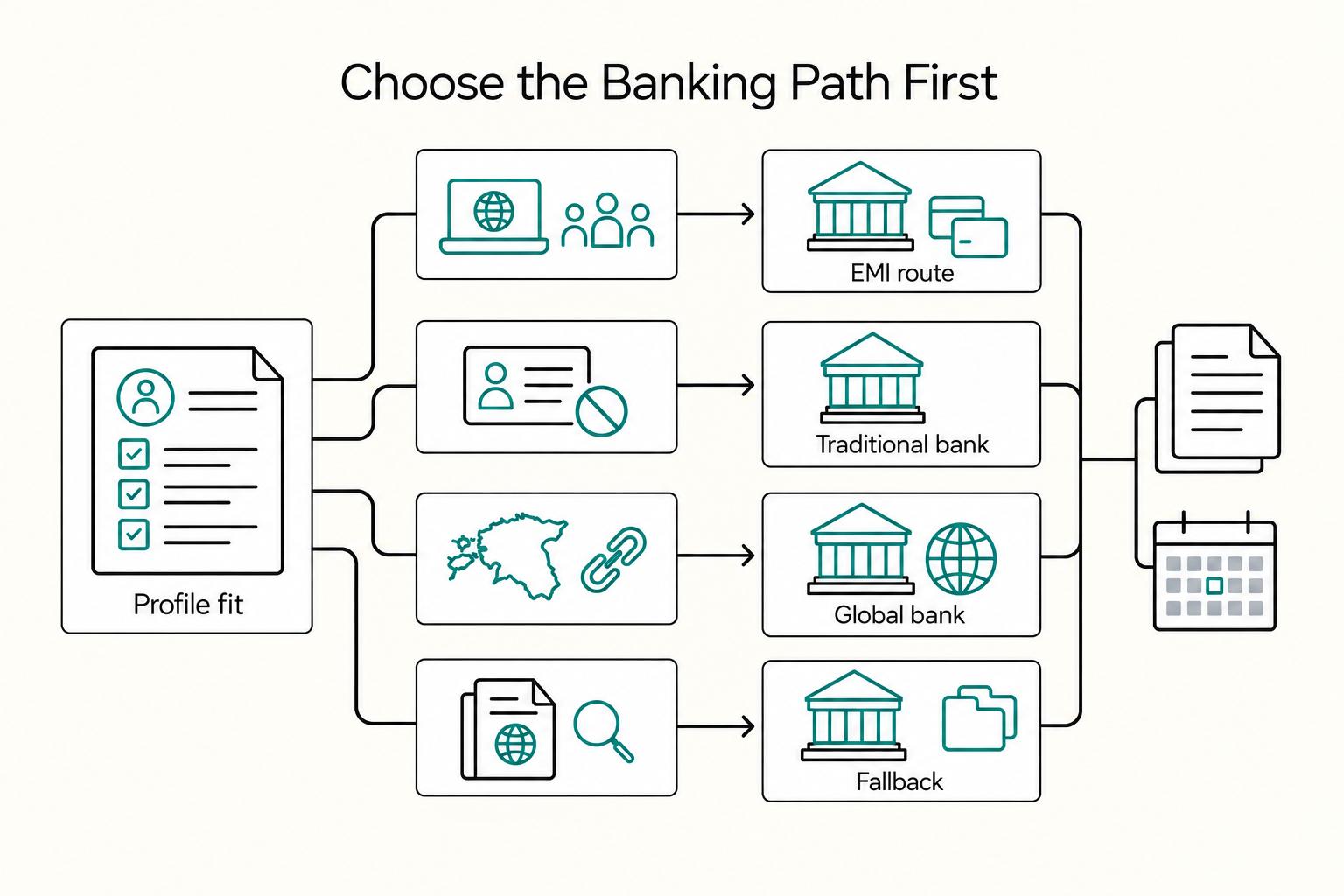
The most common way to waste time is comparing providers before you have decided which route actually fits your company. Start with route fit, then build one evidence pack that stays consistent from the first form through the last follow-up. Most avoidable problems do not come from missing a feature on a pricing page. They come from choosing a route that was never realistic for the ownership profile, then answering the same compliance questions in slightly different ways as the application drags on.
Second Mover Advantage in e-Residency Banking Failures
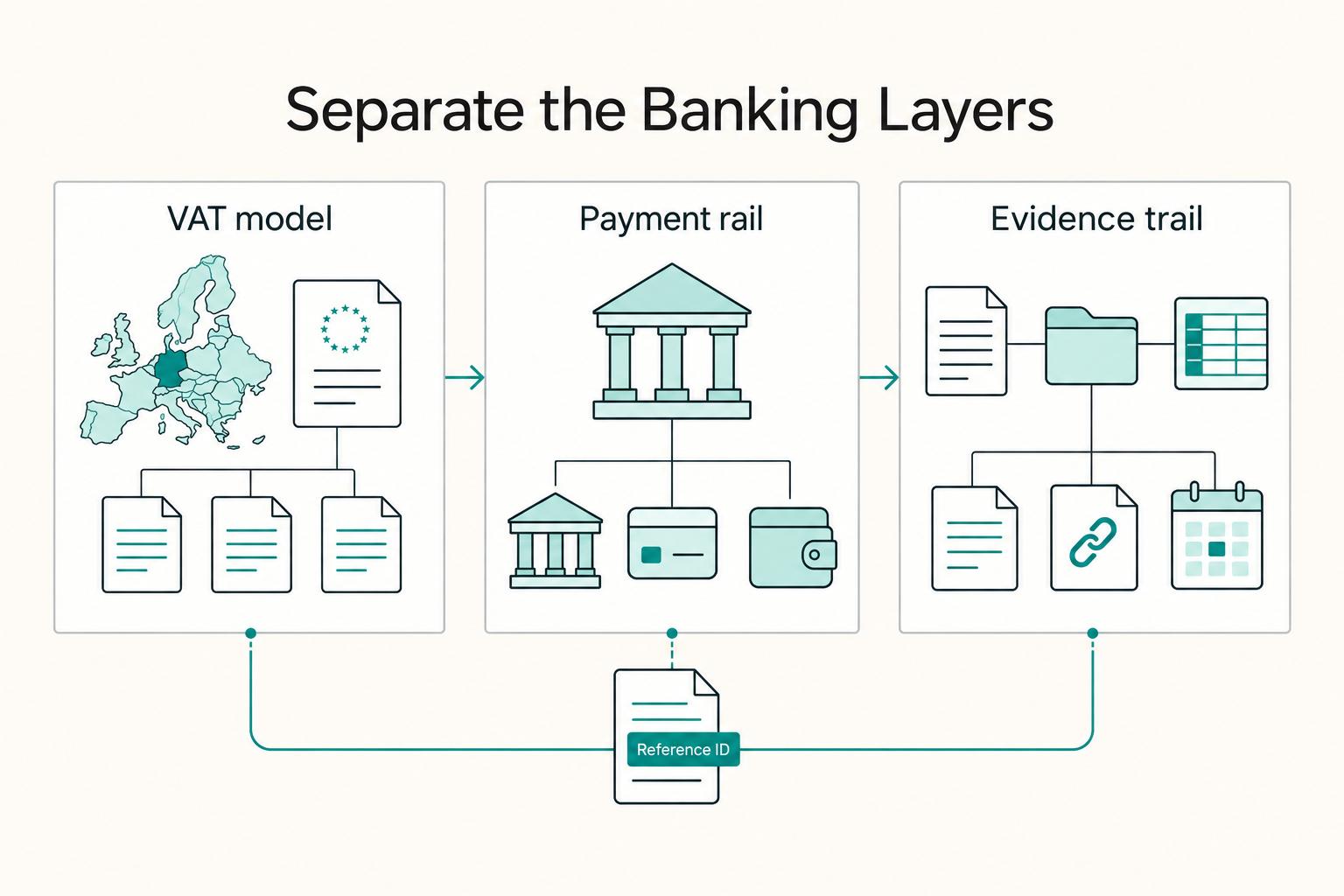
If your first workable account path is uncertain, treat it as a no-go signal. Before you form an Estonian company or start invoicing, confirm banking continuity: your ability to collect payments, make payouts, and keep operations running without relying on one unverified approval.