
Quick Answer
Start by locking the visa category, then choose your country, then file only after your documents match current official requirements. This digital nomad visa guide is built around that order so you avoid the most common delay triggers: visa-type confusion, stale requirement pages, and mismatched evidence. Use a shortlist with clear go/no-go checks, prepare one reusable document pack, and verify unclear format rules before paying fees.
Start Here and Plan Your Move With Fewer Visa Surprises#
Plan this move like a filing project, not a travel wish list. The goal is simple: make verifiable decisions in the right order so you avoid delays caused by stale advice, mismatched documents, or visa-type confusion.
That mindset matters because the biggest problems usually start before the application itself. People lose time when they compare countries before confirming the visa category, collect proof before checking current format rules, or spend money before resolving a basic eligibility question. Treat every early decision as something that should reduce later rework.
Set your scope first. Rules vary by program, and related pages can be updated at different times. One Spain guide page shows a publication date of December 10, 2025 and an update date of February 12, 2026. A Brazil guide page shows a last update of 9 March, 2026. Use date gaps as a risk signal, then verify critical rules on current official pages.
If you find two pages that seem to conflict, do not treat that as flexibility. Treat it as unresolved risk. Log the page title, access date, and exactly what appears inconsistent so you know what still needs confirmation. A simple research log can save hours later when you are trying to remember which checklist you relied on.
Start with source trust before content trust. Before you share personal details, confirm the domain is official and the connection is secure. Then log the page title and access date. Skipping this check can leave you preparing documents for requirements that may have changed.
Use this sequence to reduce rework:
- Define constraints: move month, budget ceiling, and required stay length.
- Build a short country list and rank options by friction you can actually handle.
- Assemble a reusable core pack: identity records, remote income proof, and continuity evidence.
- Run a pre-submit check so each file matches the exact visa category and current format rules.
Each step should answer one question before you move to the next. First, can this move work on your real timeline and budget? Next, which countries fit on written rules, not wishful interpretation? Then, can you prove your situation cleanly? Only after that should you spend time inside a portal or book time-sensitive appointments.
The core tradeoff is speed versus certainty. Booking flights before verification feels faster, but it can create duplicate costs for translations, photos, or appointments when requirements shift. If a core requirement is unclear, pause and verify before you pay fees. If you want a quick next step, try the digital nomad visa cheatsheet.
Know the Visa Types Before You Compare Countries#
Classify your visa route first, because country comparisons are only useful once the legal category is clear.
| Route or plan | Stay/work position | What to verify |
|---|---|---|
| Digital nomad visa | Legal way to live and work in another country while earning remotely | Check for a dedicated remote-work or digital nomad route |
| Long-term visa | May extend your stay, but a longer stay does not by itself confirm remote-work permission | Verify remote work is explicitly permitted |
| Visa runs | Rely on repeated exits and re-entries when short-stay time ends | Confirm that reset approach is actually available there |
| Permanent residence or citizenship path | Many nomad-focused programs are built for temporary legal stay and work, not an automatic path to settlement | Look for an explicit onward path in the program terms |
This is where many comparisons go wrong. One program can look attractive on stay length, another on lifestyle, and a third on long-term potential, but those comparisons are weak if the underlying permissions are not alike. Compare legal routes first, then compare countries inside the same route.
A digital nomad visa is usually a legal way to live and work in another country while earning remotely, often through an official remote-work residence permit. A long-term visa may extend your stay, but a longer stay alone does not confirm remote-work permission.
That difference matters in practice. Time permission and work permission are not the same problem. A longer stay may solve the calendar issue, but if remote work is not clearly allowed under that route, you still have a filing problem. The safest comparison is between programs that answer both questions clearly: how long you may stay, and whether your actual work arrangement fits the category.
For stays beyond a typical 60- or 90-day window, you usually need long-term permission, or you must leave when short-stay time ends. If your plan relies on repeated exits and re-entries, treat visa runs as uncertain until you confirm they are allowed in that destination.
Use these checks before comparing countries:
- If your income is from foreign employers or clients, check for a dedicated remote-work or digital nomad route.
- If only general long-term visas are listed, verify remote work is explicitly permitted.
- If you are considering visa runs, confirm that reset approach is actually available there.
- If permanent residence or citizenship is part of your long-term plan, look for an explicit onward path in the program terms.
Be especially careful if your setup could be described in more than one way. An employee working remotely for a foreign company and a freelancer serving foreign clients can both say, "I work online," but the proof set and category language may not be handled the same way. Sort that out early. It is much easier to shape the right evidence pack for the right category than to explain a mismatch after submission.
Many nomad-focused programs are built for temporary legal stay and work, not an automatic path to settlement. Plan around that constraint early. If settlement matters later, keep it as a separate comparison column rather than assuming the temporary route naturally becomes something else.
If you want a deeper dive, read the 2026 Global Digital Nomad Visa Index.
Narrow Your Country Shortlist With Hard Decision Rules#
Shortlist by written program rules first, then lifestyle fit.
A good shortlist gets narrower as certainty gets higher. That means every country on your list should earn its place through something you can verify in official writing, not through forum confidence or a roundup headline. If an important item is still blank, that blank is not neutral. It is friction.
Use three buckets for Portugal, Estonia, and Georgia, using only what you can verify in official writing:
- Best fit now: published thresholds are clear, required documents are clear, and your current profile matches.
- Backup option: mostly fits, but one key rule or document requirement is still unclear.
- High-friction option: major eligibility gaps, unclear renewal terms, or unclear family add-on terms.
Apply those buckets literally. "Best fit now" does not mean "the place I like most." It means the written rules, document mechanics, and your current profile line up with minimal guesswork. "Backup option" means you can see a workable route, but one unresolved point still needs confirmation. "High-friction option" means the uncertainty is big enough to force rework, delay, or a hard stop later.
Treat the VisaGuide.World Digital Nomad Index as a discovery tool, not a decision. Your final yes/no should come from official program data: published thresholds, document lists, and family conditions.
Build a simple comparison sheet and keep the columns strict. For each country, note the official source used, the access date, whether the threshold is published clearly, whether the document list is specific, whether renewal terms are written clearly, and whether family conditions are stated clearly. That way, your ranking reflects decision risk, not just appeal.
Do one hard threshold check before you commit. For example, one Costa Rica program description cites $3,000 per month for a solo applicant and $4,000 with dependents, with amounts tied to an official Central Bank exchange-rate reference. Clear thresholds help planning, but they do not guarantee approval.
The practical lesson is not just the amount. A clear written threshold is easier to plan around than an unclear one. When a threshold is tied to an exchange-rate reference, note that reference in your planning sheet so you do not compare countries using stale assumptions.
If low complexity is your top priority, favor options with clearer written requirements. If family plans or a longer horizon matter more, downgrade any option where renewal language is vague, even if initial approval looks easier. Hard decision rules protect you from turning a research list into an emotional list.
Build the Evidence Pack Before You Touch the Application Form#
Build one reusable evidence pack before you open any application portal, then adapt that same proof set to each country format.
This keeps you from rebuilding your case from scratch every time you compare or change target countries. The facts about you usually stay the same. What changes is the format, labeling, and category language each program expects. A reusable pack makes those changes manageable.
Start with a master file set for digital nomad visa or remote-work residence permit paths:
- Identity documents (for example, valid passport records).
- Remote-work or employment evidence.
- Income continuity evidence.
- Other compliance documents that may be requested, including criminal record and corporate documents.
Keep the master set clean. That means current files, legible scans, and one obvious version of each core item. If you have multiple versions of the same record, label them clearly so you do not accidentally submit the wrong one. A strong pack is not just complete. It is easy to handle under time pressure.
Create one mapping sheet per target country so the same facts are submitted in the required format. Keep it simple: requirement, file to submit, issue date, format requirement, and status.
That sheet becomes the control panel for your application. If a country asks for the same underlying fact in a different format, you can adapt one line instead of wondering whether the whole pack needs to change. It also helps when a country requires translations or apostilles for some items but not others. You do not want to discover that at the upload stage.
Use a hard verification checkpoint before submission: if a required format is unclear, resolve it first instead of trying to explain it later in free text.
Use this minimum pre-submit check:
- Every required item maps to one file in your country sheet.
- Files are current, legible, and named consistently.
- Income evidence shows continuity, not one-off snapshots.
- Employment or freelance proof matches the visa category.
- Any unclear requirement is resolved before fee payment.
The phrase "shows continuity" is important. Authorities are usually not trying to assess one unusually good month. They are trying to see whether the income pattern is real and ongoing. Your pack should make that visible without extra explanation. The same goes for work-arrangement proof. A file that supports an employee route may not be the strongest file for a freelancer route, even when the work itself is real.
A practical way to organize the pack is to separate source files from submission-ready files. Keep the original record in one place, then keep the adapted file in the country folder with the exact naming convention you will upload. That makes replacements easier if an authority asks for a fresh version.
If you use income benchmarks during planning, keep them country-specific. For example, one Spain guide cites EUR 2,849 per month, but that figure is not universal.
Keep a fallback path in mind for freelancer-heavy cases, including options such as the German Freelance "Freiberufler" Visa, and align your evidence to the permit category language before filing. The more precisely your documents mirror the route you are actually using, the less likely you are to trigger avoidable questions.
Follow a Submission Sequence That Prevents Rework#
The safest way to reduce rework is to pick one country and one filing path first, then submit only documents that match that path.
You can research multiple destinations in parallel, but once you move from research to filing, narrow fast. Mixed filing logic creates avoidable contradictions. A pack assembled half for one country and half for another often looks complete on your laptop and inconsistent in the application.
Use this sequence:
- Lock the country and filing path.
- Finalize the evidence set and file labels for that path.
- Submit, then log each step with status and timestamp.
Treat step one as a commitment point. "Country and filing path" means more than picking a destination. It means knowing whether you are taking the route that matches your actual status and your actual timing. Once that is locked, adjust labels, naming, and supporting files so everything points to the same category.
Italy is a useful example of why sequence and tracking matter. One legal guide says the law was approved in early 2022, implementing regulations arrived more than two years later, and applications became possible on April 5, 2024. The same guide also separates visa issuance from the Digital Nomad Immigration Permit (permesso di soggiorno), so keep entry and post-arrival steps as separate checklist items.
That separation is the bigger lesson. Approval to enter and permission steps after arrival are not always the same task. If your tracker mixes them together, it becomes easy to miss something because you mentally checked off the whole move when only the first part was complete. A clean tracker should show what must happen before submission, after approval, and after arrival.
Before paying fees, run one quality gate:
- Every uploaded file maps to a named requirement in your tracker.
- Labels match your chosen category, such as freelancer or employee.
- Dates are current and consistent across core documents.
- Any unclear requirement is resolved before submission.
- Each action is logged with timestamp, owner, and next step.
Your submission log should be boring and complete. Record confirmation numbers, pending items, follow-up deadlines, and any requests for clarification. When an authority comes back with a question, the goal is not to reconstruct what you did from memory. The goal is to answer from a clean record. For contract-side risk checks, see 10 Freelance Contract Red Flags That Scream 'Run Away'.
Avoid the Mistakes That Delay Approvals Most#
Most delays come from avoidable documentation and eligibility mismatches, not mysterious refusals.
| Red flag | Why it delays | What to do |
|---|---|---|
| Treating country roundups as filing instructions | A roundup may help you compare countries while leaving out a current document requirement or a route-specific condition | Use comparison content to shortlist options, then verify the current program text for your exact filing path |
| Assuming a tourist entry can be converted later | Timing rules can fail; Spain-focused guidance describes overstaying the 90/180-day limit as a denial risk for in-country applicants | Confirm the legal path and timing before travel |
| Weak proof for remote-work eligibility | Authorities assess financial stability, employment proof, and purpose of stay; Spain-focused examples flag missing apostilles, missing sworn translations, outdated certificates, and weak income continuity evidence | Match the evidence to the chosen category and handle translations or apostilles before submission |
The common thread is simple: the application tells one story, but the chosen visa route expects another. Delays happen when people assume the authority will connect the dots for them, overlook a missing format step, or rely on a general article as if it were a filing checklist.
Red flag 1: treating country roundups as filing instructions. Use comparison content to shortlist options, then verify the current program text for your exact filing path before you submit.
The failure mode here is subtle. A roundup may be directionally useful and still be incomplete for filing. It might summarize income, stay length, or broad eligibility well enough to help you compare countries, while leaving out a current document requirement or a route-specific condition that matters in the actual application. If the roundup and the official checklist do not match, the checklist wins until clarified.
Red flag 2: assuming a tourist entry can be converted later. That can fail on timing rules. In Spain-focused guidance, overstaying the 90/180-day limit is described as a denial risk for in-country applicants, so confirm the legal path and timing before travel.
This mistake often starts with a desire to move quickly. But speed on entry can create delay later if the route you planned to use from inside the country is not actually available on your timeline or status. If your move depends on in-country filing, verify that before departure, not after arrival. A wrong-status entry can force last-minute changes when your options are already narrower.
Red flag 3: weak proof for remote-work eligibility. "I work online" is not enough when applications are assessed on financial stability, employment proof, and purpose of stay. Spain-focused examples also flag missing apostilles, missing sworn translations, outdated certificates, and weak income continuity evidence (often prepared with at least 6 months of statements).
The operational fix is to think in proof chains, not single files. Identity records should be current and readable. Work-arrangement proof should match the category you selected. Income proof should show continuity rather than one unusually strong period. And any supporting documents that require apostilles or sworn translations should be handled before submission, not left as a likely follow-up request.
Use this delay-prevention check:
- Match each requirement to one current file, including translations and apostilles where requested.
- Confirm your income evidence shows continuity for the required period.
- Verify category and evidence alignment, especially employee versus freelancer proof.
- Recheck stay-timing constraints before filing from inside the country.
- Log and resolve every open ambiguity before payment.
Most delays are procedural. Remove assumption-driven gaps early to protect your timeline. A strong application feels almost dull when you review it: the route is clear, the files match, the dates line up, and there is nothing left that depends on guesswork.
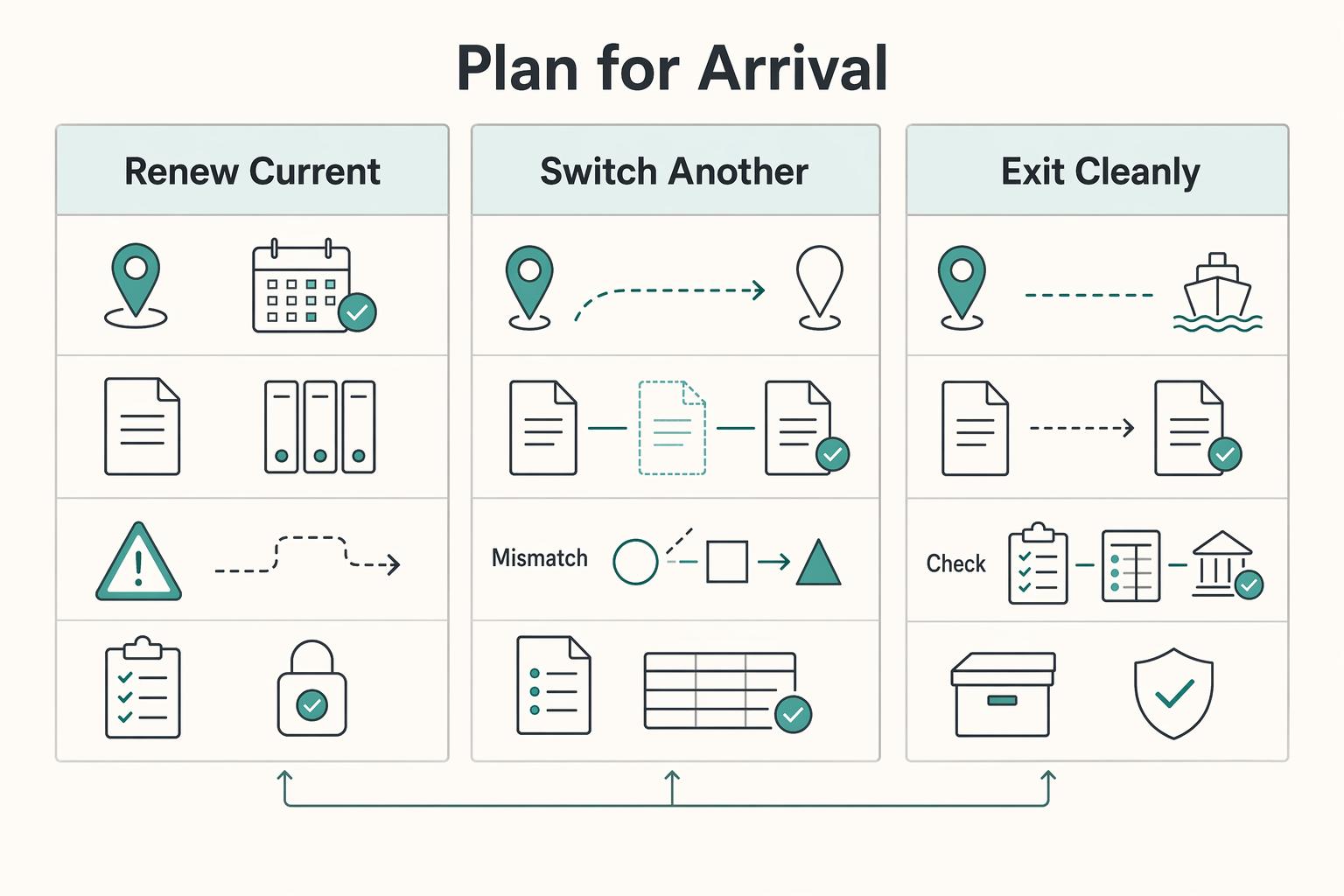
Plan for Arrival, Renewal, and Exit Before You Depart#
Approval is not the finish line. After landing, missed deadlines, bad translations, or tax issues can derail renewal and leave you choosing between departure and serious legal trouble.
The easiest way to avoid that is to treat post-approval steps as part of the same project, not as a separate future problem. Your arrival plan should sit next to your submission tracker, because the records that help you get approved are often the same records you will need later to stay organized.
Build a day-one admin checklist tied to your approved digital nomad visa, not a generic travel plan. Start a renewal file immediately so your translated documents and tax records stay complete and usable.
That renewal file should begin on day one, not when the permit is close to expiring. Add approval records, submission receipts, any post-arrival correspondence, and your monthly income evidence as you go. This is much easier than trying to reconstruct the year later when you are busy, tired, or under deadline.
Set your renewal decision point early. Decide whether to renew the same residence permit, switch to another long-term visa route, or exit cleanly before deadlines create avoidable risk. Brazil processed over 3,800 digital nomad visa requests in Q3 2025, up 47% from the prior quarter, which reinforces why waiting until the last stretch is risky.
| Decision point | When to choose it | Main tradeoff |
|---|---|---|
| Renew current residence permit | You still meet permit conditions and can show continuity | Lower disruption, but only with complete records |
| Switch to another long-term visa | Your goals changed and another category now fits | More paperwork and possible requalification |
| Exit cleanly | You cannot meet renewal conditions on time | Protects legal status, but interrupts continuity |
Choose while you still have room to act. If renewal is the likely path, keep your records ready and current. If your goals have changed, compare the new route before the old one becomes urgent. If you cannot meet renewal conditions in time, a clean exit is usually better than drifting into overstay risk or rushed improvisation.
Do not build your stay plan around a visa run. It can work in some places, but some regions do not allow it, and short-stay windows are often around 60 or 90 days before another route is required. If your long-term goal includes Permanent residence or Citizenship, prioritize countries with explicit written pathways.
Set Up Money and Compliance Operations for Day-to-Day Living#
Day-to-day stability depends on treating money operations and compliance as core setup, not as admin afterthoughts.
This is where a lot of otherwise solid relocation plans become fragile. Approval to stay does not automatically make your income records usable, your payout setup reliable, or your compliance trail easy to defend. The move gets much smoother when your financial workflow produces clean evidence as a normal byproduct of getting paid.
Immigration permission and payment compliance are separate: approval to stay does not replace tax, banking, or payout checks. In nomadic work, money often moves across multiple jurisdictions, currencies, and banking systems, and mistakes can become expensive fast.
Build your payment stack for continuity and traceability, not just convenience on payday. Use one primary payout method plus one working backup, and verify both are usable in your current market before relying on them.
Keep it simple: you want resilience, not complexity. If a payout is late, a banking route changes, or a transfer creates confusion, you want a second workable channel and a record trail that makes the money easy to follow. A backup is only useful if it is already set up and usable when you need it.
Use a monthly invoicing and retention routine:
- Match each invoice to its payout confirmation and bank entry.
- Track payout timing so cash-flow gaps are visible early.
- Record FX conversion dates and amounts so margin shifts are explainable.
- Archive one monthly evidence pack with invoices, statements, transfer receipts, contracts, and tax correspondence.
This monthly pack serves more than one purpose. It helps with operations, because you can see whether income is arriving as expected. It helps with renewal readiness, because continuity evidence stays current. And it helps with tax reporting, because the records are already organized by month instead of scattered across platforms and inboxes.
Set one fixed compliance review date every month and keep it non-negotiable. If records are incomplete, close gaps before adding new complexity so your visa-condition evidence and tax reporting remain defensible.
A useful review asks simple questions: Is every payout matched to an invoice? Is every transfer visible in the bank record? Are there any missing statements, old files that need refreshing, or unresolved tax messages that could become a larger issue later? Small monthly fixes are far easier than end-of-year reconstruction. For deeper self-employment tax context, use The Self-Employment Tax Trap: How Totalization Agreements Can Save US Expats Thousands.
Make the Decision and Submit With Confidence#
Submit only when your top option clearly beats your backup on legal fit, evidence quality, and execution timing.
That does not mean your top option has to be perfect. It means it should be the strongest route you can verify now, with a document pack you can actually execute and a timeline you can realistically manage. Confidence comes from reduced ambiguity, not optimism.
Reconfirm your top country, backup country, and go/no-go criteria with three checks:
- Legal fit: The visa matches your real remote-work setup and does not rely on implied local employment rights.
- Eligibility fit: You can document any minimum income requirement with records you already control.
- Long-term fit: If settlement matters to you, accept that only a few programs offer a clear path.
These checks matter because they remove three different kinds of risk. Legal fit protects you from using the wrong category. Eligibility fit protects you from scrambling for proof you cannot cleanly produce. Long-term fit protects you from choosing a route that conflicts with your actual horizon.
Set your go/no-go threshold before you upload:
Goonly if every required claim has matching evidence and the visa category is correct.Goonly if your timeline includes buffer for follow-up requests and post-arrival tasks.No-goif your plan depends on assumptions about tax treatment, local work rights, or conversion options not written in program rules.
If a major point is still unresolved, that is not a minor imperfection. It is a reason to pause. A backup country with clearer written rules is often the better choice than a top-choice country that still depends on implied permission or uncertain mechanics.
Run one final evidence check against the exact visa type you are filing. Rules vary by country on visa permissions, tax rules, and work restrictions, so generic checklists are not enough. Your income proof, work-arrangement proof, identity documents, and timeline should tell one consistent story.
Use country-specific paths as realism checks, not templates. For example, Spain is described with both a home-country consular route and an in-country route tied to a 3-Year Residency Permit, which shows that paths can differ even within one jurisdiction.
Submit only when your document pack, submission path, and post-arrival plan are ready to execute now.
Frequently Asked Questions
What is a digital nomad visa, in plain language?
A digital nomad visa is legal permission to live in another country while working remotely, typically on income earned outside that country. It is a formal stay-and-work route, not a tourism category.
Who usually qualifies for a Remote-work residence permit?
Many programs are designed for people earning from foreign employers or clients. Exact eligibility varies by country, so official program terms should be your final check.
How is a digital nomad visa different from working on a Tourist visa?
They are not interchangeable. A Tourist visa is generally for leisure, and most tourist visas prohibit work on that status, including remote work for a foreign company. Tourist stays are often shorter, while nomad permissions are commonly designed for longer periods.
Do digital nomad visas lead to Permanent residence or Citizenship?
Do not assume they do. Some routes allow legal stay and remote work without applying for long-term residency or citizenship. If long-term settlement matters, verify that path separately before choosing a country.
What documents should I prepare first to avoid delays?
Requirements vary by country and program. Start with the official checklist for your target visa, then prepare exactly what that checklist requests.
How far in advance should I apply before moving?
Apply early enough to handle processing and follow-up requests without time pressure. Entering on the wrong status can make legal extension difficult and force last-minute changes.
What should I do if my income proof format is not accepted?
Do not resubmit the same file unchanged. Ask the issuing authority which equivalent format is acceptable, then resubmit in the format the official checklist allows.
Try a related tool
Researched and edited by the Gruv editorial team. Gruv builds cross-border billing, payouts, and finance-operations software for global businesses.
Sources
Includes 5 external sources outside the trusted-domain allowlist.
- ageinspain.org/remote-working-digital-nomad-visa-guideexternal
- backpackeradvice.com/blog/digital-nomad-visa-guide-2025-how-to-wo...external
- imidaily.com/imis-complete-digital-nomad-visa-guideexternal
- jobbers.io/freelancing-in-greece-in-2026-remote-work-la...external
- remotify.co/digital-nomad-visas-2025-where-to-work-remot...external
Educational content only. Not legal, tax, or financial advice.
Related Posts

The 2026 Global Digital Nomad Visa Index for 50+ Countries
Start with legal fit, not lifestyle filters. The practical order is simple: choose a route you can actually document, then decide where you want to live. That single change cuts a lot of wasted comparison work and stops you from falling in love with places that were never a real filing option.
10 Freelance Contract Red Flags That Scream 'Run Away'
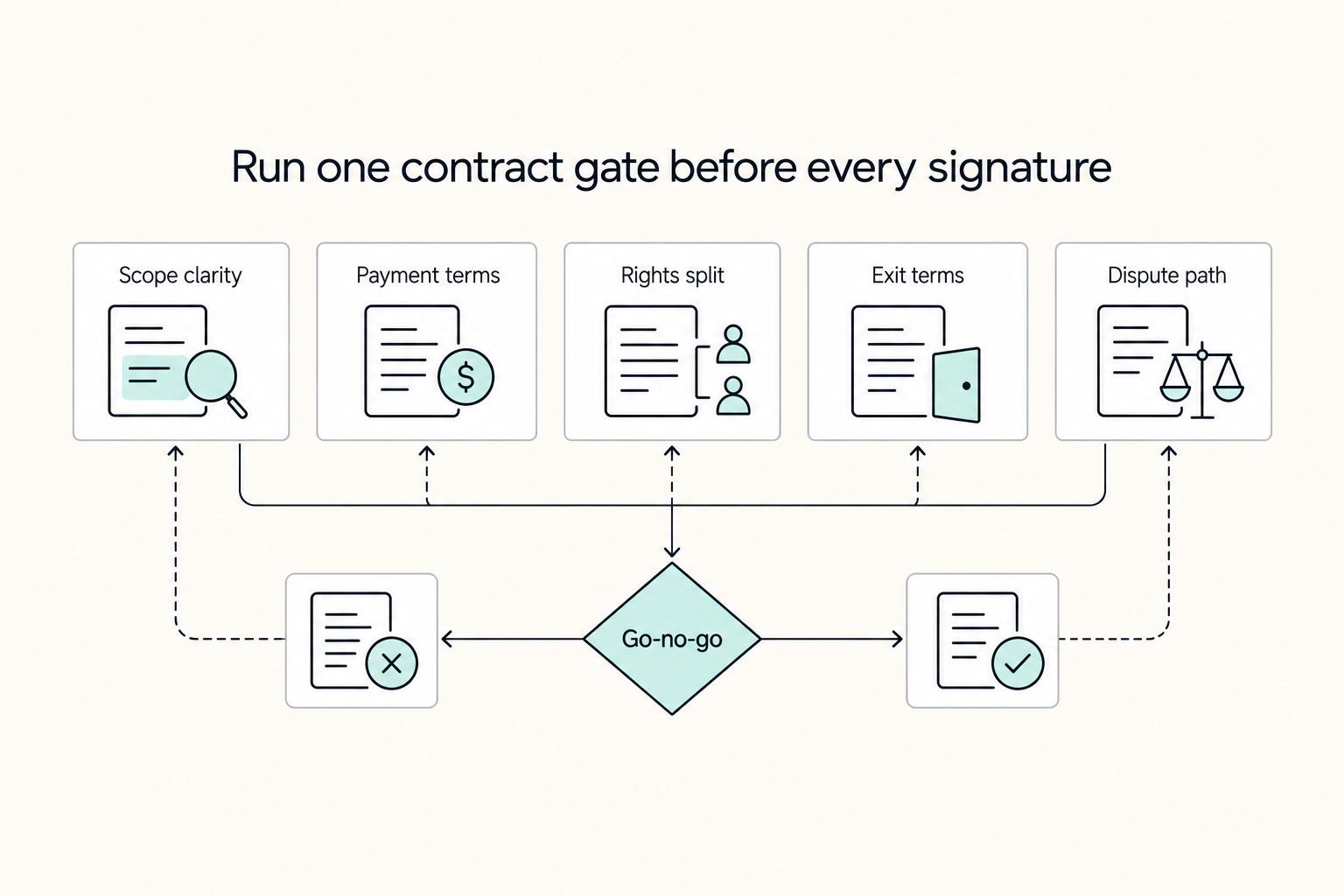
Use this as a fast decision screen, not a legal theory exercise: sign the Freelance Contract, send a Contract Redline, or walk away.
The Self-Employment Tax Trap: How Totalization Agreements Can Save US Expats Thousands
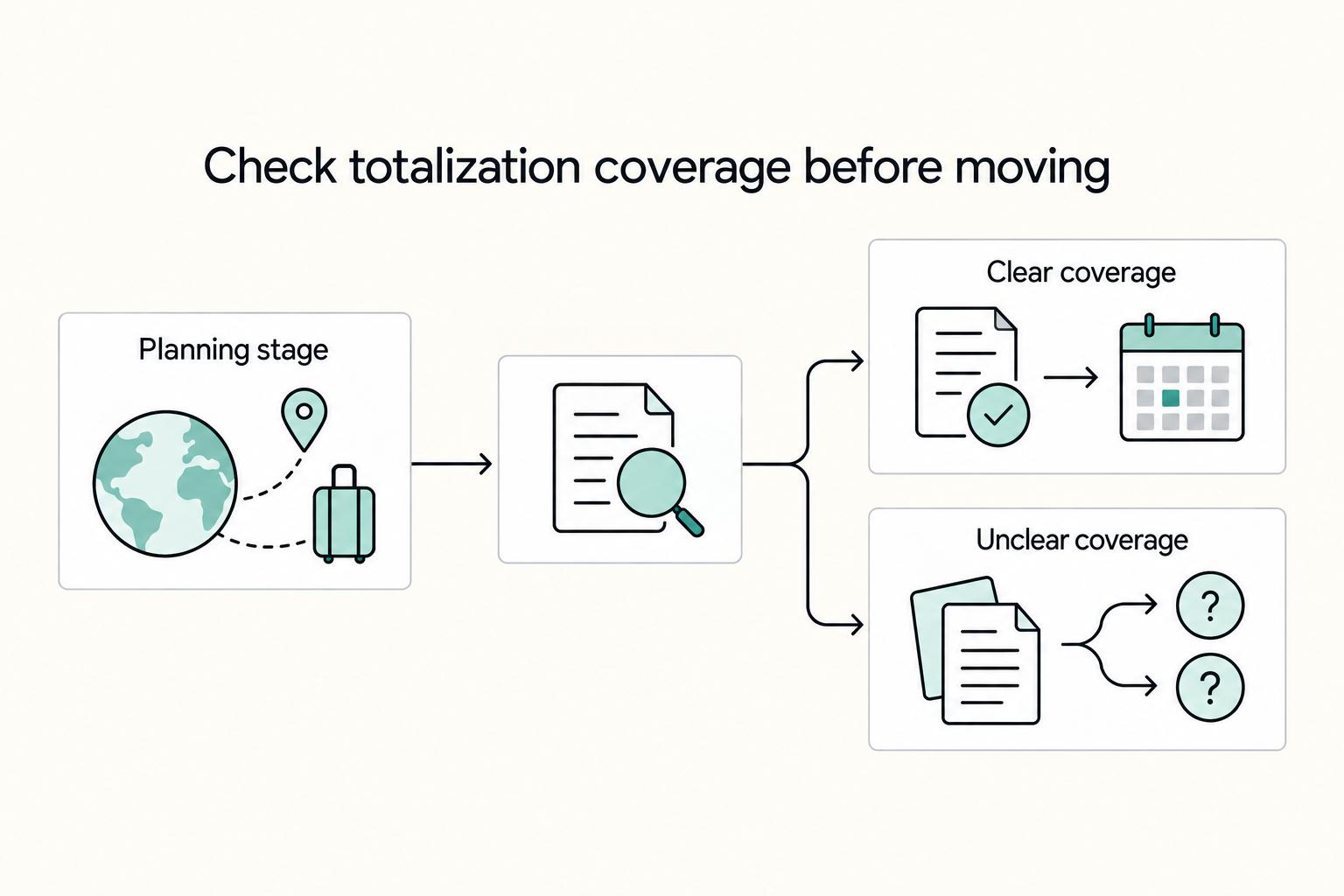
Most US expat freelancers will spend weeks researching income tax in a new country, then spend zero minutes on the one tax that can still follow them even when their US income tax bill is low or zero.