

Quick Answer
Choose a work-authorized route when your stay includes ongoing client delivery; tourist status is generally framed for leisure and can become risky once active work continues. For the digital nomad visa vs tourist visa decision, confirm official rule text on permitted activity, conversion, and re-entry handling before paying for non-refundable plans. Then file with a consistent packet so your purpose, dates, and supporting records all align.
Match Your Entry Purpose to Your Work Pattern#
A tourist visa may look like the simpler way to start a trip, but it is usually the wrong choice if you plan to keep working while abroad. In many places, tourist status is for leisure and does not authorize remote work, so this is a visa-compliance decision, not just a travel convenience decision.
Start with one rule: match your real activity to the legal purpose of entry. A short leisure visit with paused work points one way. A stay with recurring client work, deadlines, and invoices points the other way.
| Decision point | Tourist Visa | Digital Nomad Visa |
|---|---|---|
| Legal purpose | Short leisure travel | Remote work while living abroad |
| Typical stay pattern | Often around 30 to 90 days | Often 6 months to 1 year, with some programs longer |
| Work permission | Commonly prohibited | Built for authorized remote work |
| If you get it wrong | Possible refusal at the border or other legal trouble | More paperwork up front, potentially lower mismatch risk |
Use these checkpoints before you commit money or dates:
- Intent check: If your plan includes recurring deliverables or billable work, do not assume tourist status is acceptable.
- Evidence check: Prepare proof of remote income, health insurance, and any requested background-check documents.
- Timing check: Confirm how the destination handles applications and extensions, because renewals and longer stays are not equally predictable everywhere.
Use this as a comparison, not a universal template. Rules differ by country on eligibility, documents, and renewals, so outcomes can vary across destinations. Start with intent and duration, then verify the local terms before you travel.
For next steps, see How to Apply for a Digital Nomad Visa: A Step-by-Step Walkthrough and Colombia Digital Nomad Visa Guide for Remote Workers in 2026.
Digital Nomad Visa vs Tourist Visa at a glance#
For active remote work, treat these as different legal tracks, not interchangeable options.
| Criteria | Tourist Visa | Digital Nomad Visa |
|---|---|---|
| Legal purpose | Leisure travel and short visits | Living abroad while working remotely |
| Remote-work permission | Generally not permitted, including remote work for foreign companies in many jurisdictions | Designed to authorize remote work under program terms |
| Typical stay pattern | Usually short-stay; in Spain/Schengen contexts, a common limit is 90 days in any 180-day period | Often around 6 months to 2 years, with some programs (such as Spain) offering up to three years |
| Renewal/in-country pathway | Destination-specific; do not assume work rights or in-country conversion | Destination-specific; confirm filing windows, status requirements, and renewal terms before relying on them |
| Enforcement risk if used for active work | Higher mismatch risk; consequences can include fines, deportation, or visa bans depending on local enforcement | Can be lower mismatch risk when your activity matches visa terms |
| Immediate compliance checkpoint (Spain example) | A tourist entry can be a stepping stone only if your status stays valid | In-country filing is described through the UGE-CE online portal; if status lapses, this route is unavailable |
| Good fit / bad fit | Good fit: short leisure trip with no active work. Bad fit: ongoing remote delivery during the stay. | Good fit: planned longer remote-work stay with ongoing delivery. Bad fit: very short, leisure-only trip where added application steps are unnecessary. |
Eligibility criteria, renewal rules, and tax treatment are not universal, so verify destination-specific terms before you commit dates or costs.
The real tradeoff is usually simple: a work-authorized route may mean more admin up front, while using tourist status for active work can create compliance risk later.
If you want a deeper comparison by destination, read The 2026 Global Digital Nomad Visa Index for 50+ Countries. For a country-specific example, read Brazil's Digital Nomad Visa for 2026.
When does tourist status become non-compliant#
Tourist status becomes high-risk when your stay includes ongoing remote work while you are in-country. If work continues during the trip, check whether your visa category permits it or whether you need a digital nomad visa or another work-authorized route before work starts.
| Decision | Condition |
|---|---|
| Go | The trip is genuinely leisure-first and paid delivery is paused |
| Stop | Your plan includes ongoing deliverables, recurring work obligations, or fixed deadlines while you are in-country |
| Stop | Your risk tolerance is low and potential consequences include fines or exit delays (including overstay issues) |
| Go | Permitted activities are confirmed for your visa type and worker classification |
The gray area is where people usually get this wrong. Many tourist visas do not explicitly permit work, and some do not explicitly prohibit it, but active remote work from inside the country may still be treated as non-compliant depending on the jurisdiction. The answer can change by country, visa type, and whether you are an employee or contractor.
In practice, the pattern matters. A short, visit-first trip with paid delivery paused is generally lower risk. A longer stay built around active delivery windows and repeated entries is generally higher risk and may draw more scrutiny.
Use the table as a stop/go test before travel. If your plan looks like active work, resolve visa eligibility before you start working in-country.
For more detail, see Consequences of Working Illegally on a Tourist Visa and Digital Nomad Visa Guide for 2026 Moves.
Timeline from pre-move to post-arrival#
If you need to move soon, front-load the document work. Most timing problems start before submission, not after.
| Phase | What to do | Verification checkpoint | Common trap |
|---|---|---|---|
| Pre-application | Choose your destination and visa route early, since timing varies by country and processing pace | Confirm which embassy/consulate will handle your case and its expected pace | Assuming one country's process applies everywhere |
| Submission prep | Gather required evidence before filing | Check that required documents are complete (for example: passport, proof of funds, travel itinerary, and sponsor letter where required) | Waiting too long to fix document gaps before filing |
| Submission and processing | Submit when the file is complete, then track progress | Plan for variable timing: some examples range from 15 to 45 days, while others run up to 90 days or longer, and prep alone can take 3 to 6 weeks or more | Locking travel dates around an assumed approval timeline |
| Entry and post-arrival compliance | After approval, track entry and immediate post-arrival filing deadlines for your destination | Country example: Spain gives 90 days to enter, then 30 days after arrival to apply for a residence card | Missing post-approval deadlines (in the Spain example, missing either can void the case) |
Before you finalize travel, confirm three checkpoints for your destination: required documents, expected processing window, and any post-approval deadlines. Some routes allow airport issuance on arrival, for example Bali VoA. Others require advance online filing, such as Bali/Indonesia's B-211 route. That only helps if your file is complete, which is why the evidence pack matters next.
Document checklist and evidence pack you should prepare#
A complete, consistent file can reduce avoidable delays. For Italy's digital nomad/remote worker route, prepare your evidence pack before submission and keep your details aligned across every document.
| Priority | Document | Detail |
|---|---|---|
| Pre-filing gate | Eligibility screen | Confirm you meet Italy's highly specialized worker requirement before filing |
| Mandatory at appointment | Passport | Valid at least 15 months beyond intended Schengen travel date, with at least two blank pages and required photocopies |
| Mandatory at appointment | Residence proof in jurisdiction | Proof of physical residence in the consular jurisdiction (for example, ID or utility bill) |
| Mandatory at appointment | Legal U.S. residence proof (non-U.S. citizens) | Required for non-U.S. citizens; B1/B2 status is not accepted for this purpose |
| Mandatory at appointment | Category-specific required documents | Bring the full required document set for your category |
| Strongly recommended | Income/employment proof matched to your setup | Tailor evidence to your setup instead of using a one-size-fits-all packet |
| Strongly recommended | One-page index | Helps keep the packet easy to review |
In practice, sort the file into two buckets so you do not spend time polishing optional items before the mandatory ones are covered.
Mandatory at appointment (Italy route)
- Clear the highly specialized worker eligibility screen before you book around this route.
- Make sure your passport meets the validity, blank-page, and photocopy requirements.
- Bring proof of physical residence in the consular jurisdiction.
- If you are a non-U.S. citizen, bring proof of legal U.S. residence that meets the rule. B1/B2 does not.
- Include the full required set for your specific category.
Strongly recommended to reduce follow-up risk
- Income or employment proof that matches your actual setup.
- A one-page index so reviewers can find items quickly.
- A final consistency check across names, dates, and work or income details.
Before you file, run a final QA pass for consistency. Mismatched names, dates, employer or client details, and conflicting income narratives are a frequent rejection risk.
After submission, keep a simple tracker for follow-up: submitted, evidence requested, decision pending, approved, refused. Track document expiry windows, especially passport validity and other time-sensitive records, and note any additional-document requests with response deadlines.
For a quick next step, try the digital nomad visa cheatsheet. We covered related planning in Golden Visa vs Digital Nomad Visa for 2026 Residency Planning. Before you file, sanity-check your destination requirements and prep list with this practical planner: Digital Nomad Visa Guide.
Country rule checks most people skip#
Do not rely on summaries when the competent authority has the rule text. Before you book anything non-refundable, verify the exact language that governs your entry and work activity.
| Verification point | Action to take |
|---|---|
| Official source | Start with the competent official source. For EU-level material, use europa.eu pages as an authenticity check. |
| Work authorization language | Treat work authorization as unconfirmed unless explicit immigration-rule text covers your planned remote work activity, not only tourism or short business visits. |
| In-country conversion | Treat this as unknown until official immigration text confirms whether visitor status can be converted in-country, is restricted, or is not allowed. |
| Re-entry handling | Treat this as unknown until official immigration text confirms how repeated entries or back-to-back stays are handled for your destination and visa category. |
| Post-arrival registrations | Treat this as unknown until official text confirms whether address, immigration, municipal, or tax registrations are required after entry, and note deadlines. |
| Tax-administration boundary | Confirm whether the page is about tax reporting only. OSS and CBR are compliance tools, not visa permission. |
| Schengen checkpoint | If relevant, confirm both the regional Schengen framework and the destination country's implementation before committing spend. |
Keep immigration and tax on separate tracks#
Official EU tax pages are useful, but they do not answer immigration-permission questions on their own. The OSS framework is about VAT administration, including how to register, how to declare and pay VAT in the OSS, record keeping and audits, and leaving the scheme. OSS returns can also be additional to domestic VAT returns.
CBR is an advance VAT ruling mechanism filed in the participating country where you are VAT-registered, with a public information notice available (dated 19 April 2024). Use these for tax planning, but do not treat them as proof of work authorization.
If you are shortlisting destinations, use the 2026 Global Digital Nomad Visa Index for comparison context. Then validate your final choice against official rule text.
A practical verification flow#
| Step | Action |
|---|---|
| Identify the competent authority | Use the immigration authority or consulate for entry and work rights; use the tax authority or official EU tax pages for VAT administration. |
| Read the current rule text directly | Check the current eligibility wording and exclusions. For immigration points, keep status as unknown until the wording is explicit. |
| Save written proof | Keep the URL, page title, access date, plus a PDF or screenshot in your evidence pack. |
| Pause booking | If the wording is ambiguous. |
If key wording is still unclear, treat the point as unresolved instead of proceeding on assumptions. For related planning context, see Consequences of Working Illegally on a Tourist Visa. For another planning example, see Canada Digital Nomad Visa Planning for Visitor Status and Work Permits.
Tradeoffs that matter in daily life#
Once the legal side is clear, the choice usually comes down to how you actually work. If your schedule runs on fixed deadlines and ongoing delivery, stability usually matters more. If your work is light or intermittent, flexibility may matter more.
| Daily-life criterion | Digital Nomad Visa | Tourist Visa |
|---|---|---|
| Core tradeoff | Often more stability for planned, longer stays | Often more mobility for short-horizon movement |
| Work continuity | Better fit for ongoing remote work setups | Can add compliance risk when work continues during visitor stays |
| Admin pattern | More effort upfront (documents and screening) | Less upfront, but can mean repeated short-stay planning over time |
| Banking and insurance continuity | May be smoother with longer lawful-stay evidence, but not guaranteed by visa type alone | Possible, but continuity can be less predictable on short stays |
| Best fit | Remote workers with active delivery pipelines | Occasional travelers prioritizing movement |
Before choosing, pressure-test the basics: renewal requirements and timing, proof of remote income, health insurance documents, and any required background records. If that pack is weak, a mobility-first setup gets harder to manage over time.
A common failure pattern is choosing visitor status for flexibility, then working at a normal pace from day one. Regular calls, deliverables, and invoicing can quickly become a compliance problem.
Keep tax on its own decision track. Visa status may define lawful stay and work permission, but it does not automatically settle tax residency or filing obligations.
This pairs well with our guide on Greece Digital Nomad Visa Steps for a Safer 2026 Move.
Failure modes and how to recover without making things worse#
When things go sideways, first stop making the record messier. Problems often start when your current status, renewal plan, and documents drift out of alignment.
| Failure mode | What it often looks like | First recovery move |
|---|---|---|
| Overstaying risk | Planned dates slip while housing, travel, or delivery timelines keep changing | Freeze nonessential changes and confirm your current status dates from official records |
| Working under the wrong status | Tourist or visitor entry paired with ongoing client delivery or other income-generating work activity | Pause activity that may conflict with your current status and request formal clarification in writing |
| Missing renewal windows | Renewal timing arrives before documents are ready | Build the missing document set (for example, income proof and insurance, where required) and verify the valid next step for your current status |
| Contradictory records | Different forms show different purpose, timing, or work details | Consolidate one accurate timeline before submitting anything new |
Use this recovery sequence as risk control, not as a universal legal rule. Stop potentially conflicting activity. Document the facts in one timeline. Get formal written clarification. Then continue only through the correct process for your status.
Consequences are jurisdiction-specific, so do not rely on assumptions. In wrong-status work scenarios, violations can lead to penalties such as fines or bans.
Prevention is simpler than recovery. Over the next 6 to 24 months, run periodic compliance reviews. Track renewal dates early, and recheck country-level eligibility criteria before any extension, re-entry, or status change.
For a document-specific example, read this walkthrough on proof-of-income evidence for a digital nomad visa.
Conclusion#
If you will work while abroad, treat this as a legal decision with operational consequences, not a travel shortcut. The core choice is straightforward: in many countries, tourist or visitor status is for short leisure travel, while digital nomad or other work-authorized status is intended for remote work abroad. Rules and enforcement vary by country and program, and when your status does not match your real activity, risk rises.
Before booking anything non-refundable, go back to the comparison table, run the timeline checkpoints in order, and build one clean evidence pack. Keep key details consistent across forms. A practical file often includes proof of income, health insurance, and sometimes a background check.
Use this final pre-booking sequence:
- Confirm the status type matches your actual work pattern and intended length of stay.
- Recheck official country rules before travel, including any renewal conditions and post-arrival duties.
- Keep immigration steps and tax rules on separate tracks, especially since longer stays can trigger tax residency (often around 183 days in many countries).
- Pressure-test your file so a third-party reviewer can follow your story without extra explanation.
Do not treat commentary or policy proposals as enacted law. If any rule is unclear, pause and get written clarification from the competent authority before traveling.
Choose the status that matches your real behavior and planned stay, then prove that match with documents and deadlines. That is how you keep the move legal, predictable, and low-friction.
Related reading: Italy Digital Nomad Visa in 2026 for Remote Professionals.
Frequently Asked Questions
Can I work remotely on a tourist visa if my employer or clients are in another country?
Start from no. Tourist status is framed as leisure entry, not permission for income-generating work. If the wording is unclear, get written confirmation from the immigration authority or consulate and keep it with your travel records.
When is a digital nomad visa the cleaner choice?
Use a work-authorized route when you plan to keep delivering paid work during your stay. The key distinction is work authorization and purpose, and that is the point most likely to matter if your records are reviewed. You usually trade more upfront admin for clearer legal footing.
Is tourist status ever the better option?
Yes, when the trip is truly leisure-first and paid delivery is paused. Tourist routes are often framed as more flexible for short stays, commonly around 30 to 90 days in non-official comparisons. Risk starts when the trip is labeled leisure but paid work continues in the background.
What stay length should push me away from tourist status?
A longer planned stay is a strong signal to stop treating the trip as visitor travel. Non-official comparisons often place digital nomad stays around 6 months to 2+ years, which is a planning cue rather than a legal rule. If your timeline and work plan look like living abroad, confirm the official work-authorized route before making major bookings.
What documents usually make or break a digital nomad visa application?
Start with proof of remote income, health insurance, and sometimes a background check. Keep the file consistent so names, dates, and purpose match across your documents. For a step-by-step filing flow, use the digital nomad visa application walkthrough.
How much more admin should I expect on the work-authorized route?
Expect more documentation and higher fees on many work-authorized routes. One non-official comparison frames tourist costs around $50 to $200 versus $300 to $2,000+ for digital nomad routes, with income proof often described around $2,000 to $5,000 per month. Treat these as rough budgeting prompts, then replace them with official requirements for your destination.
Can I enter as a tourist and switch later if I decide to stay and work?
Do not assume you can switch in-country later. Conversion and status-change rules vary by jurisdiction, so verify the official process before travel. If you cannot confirm a switch path in writing, plan to apply through the correct channel from the start.
What are the real consequences of working under the wrong status?
The risk can be immediate and practical, not just theoretical. A cited consequence of visa misuse is penalties such as fines or bans. For a deeper breakdown, see Consequences of Working Illegally on a Tourist Visa.
Does this choice change anything for the Schengen Area?
This comparison does not provide Schengen-specific exemptions for work activity. Use the destination country’s rules to confirm which status covers what you will actually do on the ground.
Do taxes change when I move from tourist status to a digital nomad visa?
Treat immigration permission and tax obligations as separate tracks. This visa choice alone does not settle local tax obligations, so verify tax rules for where you will actually live and work.
Try a related tool
Researched and edited by the Gruv editorial team. Gruv builds cross-border billing, payouts, and finance-operations software for global businesses.
Sources
Includes 4 external sources outside the trusted-domain allowlist.
- oecd.org/content/dam/oecd/en/publications/reports/202...trusted
- stateoig.gov/uploads/report/report_pdf_file/isp-i-10-59a_...trusted
- taxation-customs.ec.europa.eu/archives/taxable-persons/vat-cross-border-ru...trusted
- vat-one-stop-shop.ec.europa.eu/one-stop-shop_entrusted
- 3aimmigrationservices.com/digital-nomad-vs-residence-permitexternal
- alliancevisas.com/digital-nomad-visa-vs-tourist-visa-which-one...external
- blog.nomadstays.com/digital-nomad-visa-dilemmaexternal
- blog.stanfordbaker.com/digital-nomad-visa-vs-tourist-stayexternal
Educational content only. Not legal, tax, or financial advice.
Related Posts

The 2026 Global Digital Nomad Visa Index for 50+ Countries
Start with legal fit, not lifestyle filters. The practical order is simple: choose a route you can actually document, then decide where you want to live. That single change cuts a lot of wasted comparison work and stops you from falling in love with places that were never a real filing option.
Consequences of Working Illegally on a Tourist Visa
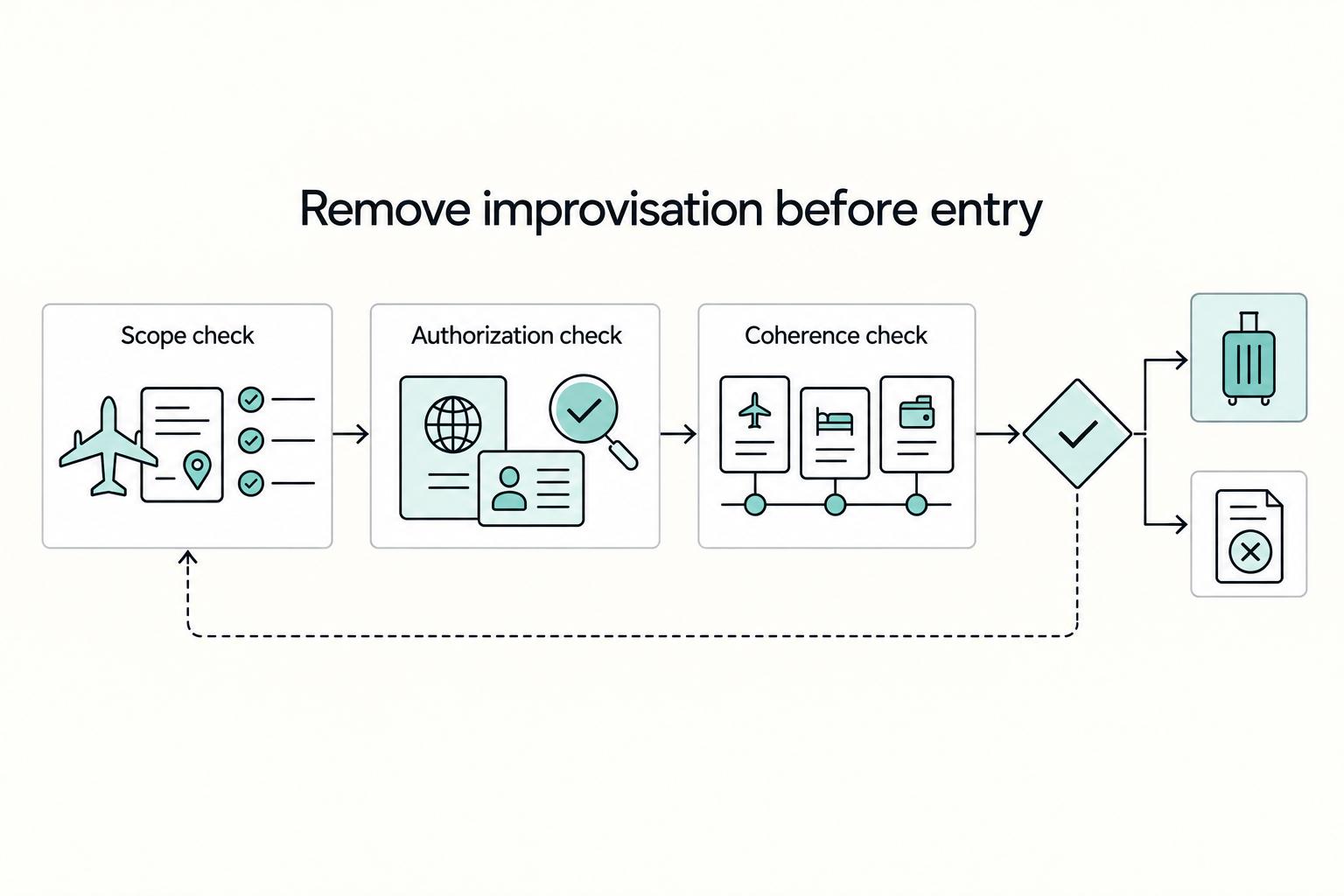
Treat this as a permissions decision, not a loophole hunt. You run a business of one, so the objective is simple: make the trip boring, defensible, and repeatable. Start by classifying what you plan to do while you are physically in country. If the plan includes labor, client delivery, or ongoing execution, your authorization status matters before you book anything expensive.
How to Apply for a Digital Nomad Visa: A Step-by-Step Walkthrough
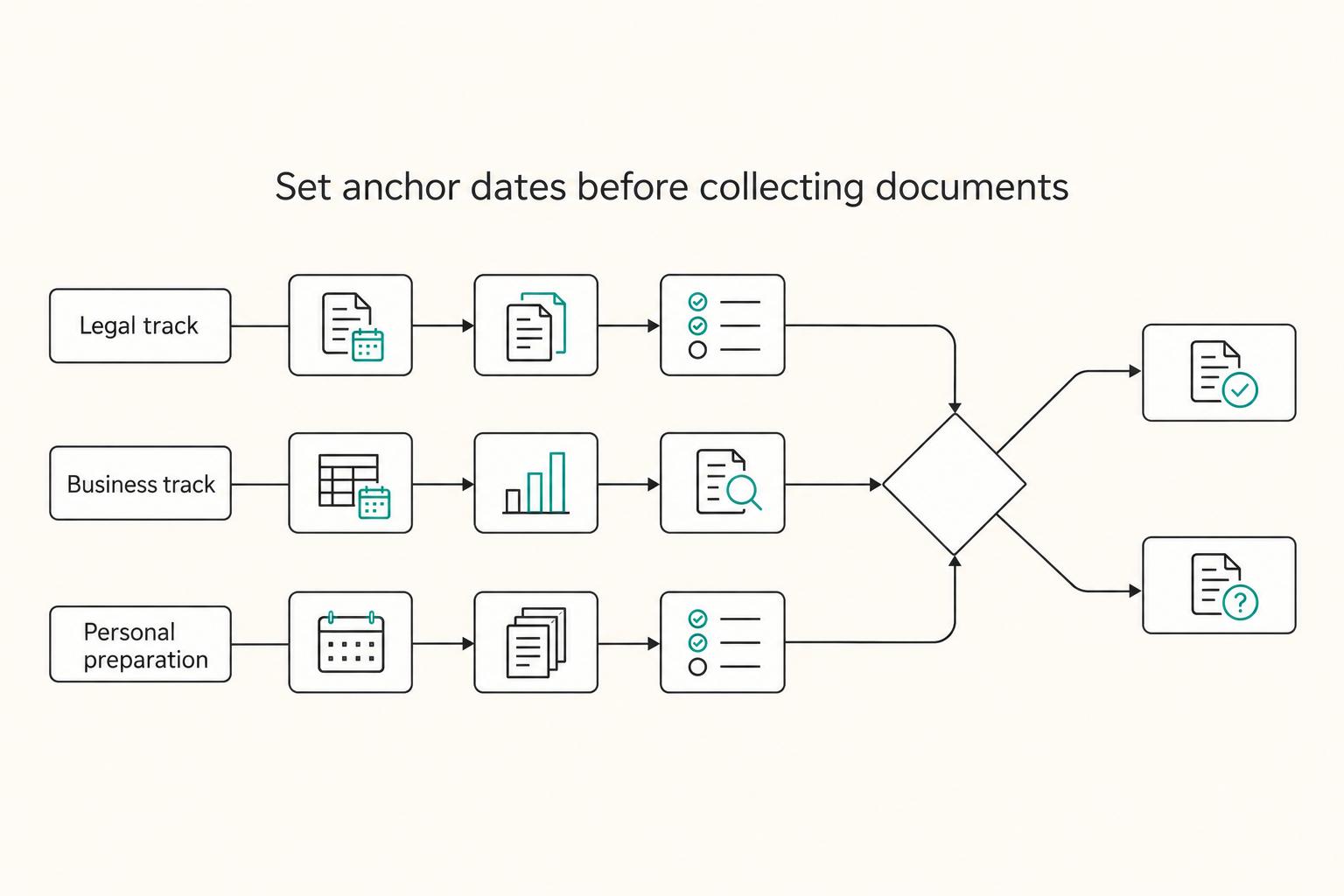
Use a country-specific sequence, not a generic checklist. If you want fewer surprises, use this order. Core requirements often overlap, but each country can add its own rules, and some filing locations add extra instructions. Stale guidance is a common source of delay.