
Quick Answer
Use a three-tier workflow: pay by foreign card first, fund planned cash through Western Union, and keep cueva exchanges to small top-ups only. In Argentina, this keeps most spending in digital records while still covering cash-only moments. Skip foreign-card ATM withdrawals as a routine method because operator conversion and added fees can drag outcomes. When cash is used, record ARS amount, purpose, date, and the linked acquisition ID immediately.
Weigh Rate, Records, and Risk Before You Pick a Channel#
If you earn in USD, or another hard currency, and spend in Argentina, the real decision is not just where to get the best rate. It is how to balance exchange value, cashflow control, documentation quality, and payment reliability. This is an operational risk problem, not a tourist tip.
Argentina has parallel exchange channels, including the informal "blue dollar" market outside formal banking channels. But the policy backdrop shifted in 2025. Trade.gov says most cepo cambiario controls were lifted on April 14, 2025. Reuters and IMF reporting also describe a broader move toward eased FX restrictions and a more flexible regime. The practical takeaway is simple: re-check the channel itself, not just the quoted rate.
Use that lens when choosing a payment method.
| Channel | Access method | Record quality | Operational risk | Typical use case |
|---|---|---|---|---|
| Foreign card with tourist/MEP-style pricing (if in force and available) | Pay merchant directly with your foreign-issued card | High (automatic statement + merchant record) | Medium (program terms and issuer fees can change) | Day-to-day spending where auditability matters |
| Western Union self-transfer | Send to yourself and collect locally under quoted terms | Medium to high (transfer receipt is clear; cash use still needs your own log) | Medium (rates/fees vary; pickup logistics matter) | Planned larger cash needs |
| BCRA-authorized exchange house | Exchange cash with a central-bank-listed operator | Medium (documentation depends on operator/transaction) | Medium (cash-handling risk remains) | Cash conversion when you want a more documented route |
| Informal cash exchange outside authorized institutions | Referral-based cash swap | Low unless you create records immediately | High (higher legal and personal-security uncertainty) | Used only when accepting higher uncertainty |
| Argentine ATM with foreign card | Withdraw pesos from ATM | Medium on paper, often weak on economics | High (operator conversion can bypass network rates; bank fees may apply) | Last resort, not default |
Confirm current spreads for card pricing, Western Union, and cash channels from provider terms or transaction records before relying on them.
The professional mistake is chasing the headline rate while ignoring what happens after the exchange. Heavy cash use without a logging process weakens your books, increases loss exposure, and leaves proof gaps later. OSAC also flags theft and non-violent robbery risk in tourist neighborhoods, which matters if your routine depends on carrying cash.
Keep the legal boundary clear. Argentine exchange law penalizes currency transactions conducted without an authorized institution, and the BCRA publishes the authorized list. If you cannot verify an operator on that list, treat the transaction as higher legal and documentation risk, even if the rate looks better.
One rule is worth making explicit: do not build your standard peso strategy around foreign-card ATM withdrawals. Mastercard states ATM or operator conversion can bypass Mastercard conversion rates, and banks may add fees. Any current fee or rate-penalty estimate needs verification from provider terms or transaction records before use, but the operating rule stands. If ATM cash is your main plan, cost control can become harder.
The goal is not to avoid every non-card channel. It is to give each channel a specific job, then keep records as you go. The next section turns that into a three-tier operating framework. If you want broader regional context, see The Best Digital Nomad Cities in Latin America.
Choose a Tier by Use Case, Then Document Each Transaction#
Use one rule on every payment decision: Match the Method to the Mission. Keep routine spending in the most documented channel. Plan larger cash needs in advance. Limit local cash exchange to small, tactical liquidity.
| Tier | Primary use case | Documentation strength | Security / physical exposure | Speed / convenience | When to avoid |
|---|---|---|---|---|---|
| Tier 1: Foreign card for direct spending | Most daily expenses | High when payments stay in card and merchant records | Lower cash-handling exposure than cash-based methods | Usually convenient when accepted | Avoid when the merchant is cash-only or card acceptance is unreliable |
| Tier 2: Western Union self-transfer for planned cash | Larger, known cash needs | Medium to high if you log each cash transaction | Higher exposure after cash pickup | Best when planned ahead | Avoid for small ad hoc spending or if you will not track cash use |
| Tier 3: Vetted local cash exchange for small liquidity | Small day-to-day cash gaps | Low to medium unless logged immediately | Highest cash-handling exposure of the three | Can be fast for small amounts | Avoid as your default monthly method or for larger planned expenses |
The boundary between tiers matters. If you can pay directly by foreign card, keep the transaction in Tier 1. Move to Tier 2 when the expense is cash-based and large enough to plan conversion before spending. Use Tier 3 only for limited, short-range cash needs.
Keep the full path consistent: incoming client funds, conversion method, spending method, and recordkeeping. That cuts down on ad hoc decisions and makes month-to-month reconciliation cleaner.
One checkpoint is non-negotiable: document each transaction when it happens, especially cash. The main failure mode is not one bad quote. It is a cash-heavy setup that turns opaque, gets hard to reconcile, and carries more risk. Keep one absolute avoid-rule in place: under no circumstances should you use a foreign debit card at an Argentine ATM to withdraw pesos, because that route can tie you to the official rate and add withdrawal fees.
Tier 1: The Secure Digital Baseline (The MEP Rate)#
Use Tier 1 as your default lane. When you can pay by foreign card and keep the transaction digital, you generally get stronger documentation, clearer merchant traceability, and an issuer dispute path if something goes wrong.
Under Comunicación "A" 7630, Argentina set a non-resident exception for spending on foreign-issued debit, credit, purchase, and prepaid cards. This aligns with the foreign-tourist card treatment tied to Dólar MEP, the mechanism linked to certain Argentine bond trades. Visa states eligible foreign-issued card purchases can receive a preferential rate slightly below MEP, applied automatically, but only while the system remains in force. Treat that as conditional and verify how your own issuer posts Argentina transactions.
| Lane | Record quality | Chargeback protection | Settlement clarity | Practical limit |
|---|---|---|---|---|
| Foreign card with MEP-linked treatment | High: card statement plus merchant record | Yes: issuer dispute path exists | Usually clearest of the three | Only where cards are accepted |
| Western Union self-transfer cash | Medium to high: transfer record, MTCN, pickup receipt | No card-network dispute once converted to cash | Clear on transfer, weaker after pickup unless you log cash use | Pickup-dependent timing |
| Local cash exchange | Low to medium unless logged immediately | None | Weakest unless self-documented | In-person cash handling and verification burden |
If card pricing is worse than the cash alternatives, treat the spread as a control tradeoff, not an automatic loss. Confirm the current spread range from provider terms or transaction records before relying on it. What you are buying here is cleaner books, lower cash exposure, and recoverability if a merchant overcharges or fails to deliver. If you use a U.S.-issued card, keep receipts and statement screenshots. U.S. billing-error rights can depend on a 60-day notice window from the first statement showing the error.
Keep Tier 1 for the expenses that benefit most from a clear trail: daily spending, subscriptions, coworking, transport apps, pharmacies, groceries, and business purchases with established merchants. Move out of it only when a seller is cash-only, card acceptance is unreliable, or the amount is large enough that planned cash conversion is worth the extra handling.
Before you arrive, run through this checklist:
- Confirm with each issuer how Argentina purchases are billed, whether foreign transaction fees apply, and how ARS transactions post.
- Carry at least two cards from different issuers or networks, then test both with small purchases.
- Define a fallback path. If MEP posting looks wrong or a merchant pushes home-currency conversion, decline that conversion, pay in ARS if possible, and switch to Tier 2 or a small Tier 3 top-up instead of using an ATM.
Tier 2: The Strategic Cash Injection for Major Expenses (Western Union)#
Use Tier 2 for planned, higher-value cash obligations, not day-to-day spending. If an expense is payable digitally, Tier 1 usually keeps records cleaner. If you only need a small cash top-up, use Tier 3. This lane is for predictable payments you can name in advance, such as rent or another cash obligation.
The tradeoff here is straightforward: you get targeted cash access with a transfer record, but once the funds become physical cash, traceability drops and handling risk rises. This does not replace your main payment setup. It solves a specific cash need with as much structure as possible.
A practical rule is to move to Tier 2 when all three are true:
- The amount is meaningful.
- The due date is known.
- The payee expects cash.
If one of those conditions is missing, Tier 2 is usually the weaker choice.
This is where rate-versus-risk becomes a real decision. In the article's illustrative comparison, 1,000 USD at about 900 ARS/USD yields about 900,000 ARS, while about 1,300 ARS/USD yields about 1,300,000 ARS. Treat those figures as examples only, not live pricing.
When Tier 2 is the right move#
Treat this as a planned cash operation, not an emergency default.
| Condition | Section guidance | If not true |
|---|---|---|
| The amount is meaningful | Use Tier 2 for planned, higher-value cash obligations | Tier 2 is usually the weaker choice |
| The due date is known | This lane is for predictable payments you can name in advance | Tier 2 is usually the weaker choice |
| The payee expects cash | Move to Tier 2 when the expense is cash-based | Tier 2 is usually the weaker choice |
In this framework, the fallback to avoid is a foreign-card ATM withdrawal. That route can tie you to the official rate and can add about $10 to $15 USD per transaction. If Tier 2 is not workable, prioritize Tier 1 for anything payable digitally and revisit the cash portion deliberately.
Pickup protocol#
| Step | Decision | Main failure risk | Preventive control |
|---|---|---|---|
| Lane fit | Is this a planned, higher-value cash obligation | Using Tier 2 for routine spending | Keep everyday digital expenses in Tier 1 and small cash needs in Tier 3 |
| Rate vs records | Is the rate upside worth the cash-handling tradeoff | Possible rate upside but weaker auditability | Decide the traceability tradeoff before sending funds |
| Documentation | What records will you keep | Large cash payment becomes hard to reconcile later | Log transfer and pickup details immediately |
Pre-transfer checks#
Before you send:
- Confirm this is a planned, higher-value cash obligation rather than routine spending.
- Compare transfer economics against your Tier 1 card outcomes using current figures you verify at decision time.
- Set your fallback boundary in advance so you do not default to a foreign-card ATM withdrawal under pressure.
After pickup, document the event while details are fresh: transfer confirmation, amount sent, local currency received, date, and purpose. That minimum record set keeps a large cash payment from becoming an accounting blind spot.
Tier 3: The Tactical Option for Daily Liquidity (Vetted 'Cuevas')#
Use Tier 3 only when you have an unexpected cash need and just need a small peso top-up. It is a tactical lane, not your default payment method. Because this option is cash-based, it gives you weaker controls and a thinner audit trail than the rest of the three-tier setup. If the expense can be paid by card or can wait for a planned cash method, skip Tier 3.
| Decision point | Use Tier 3 | Skip Tier 3 |
|---|---|---|
| Fit scenario | Small, unplanned cash need for a near-term expense | Planned or meaningful cash need, or anything payable digitally |
| Key risk | Cash handling, weaker records, added security exposure | Timing delay while you switch methods |
| Mitigation | Keep amounts small, verify what you receive, and log the transaction immediately | Stay in Tier 1 for digital spend or use Tier 2 for larger planned cash |
| Fallback option | If trust drops or the transaction is unclear, walk away | Do not use a foreign debit card at an Argentine ATM tied to the official rate, often with about $10 to $15 USD per transaction |
Keep Tier 3 narrow and controlled#
If you are going to use this lane at all, keep the sequence short and disciplined:
- Use it for occasional small top-ups, not routine spending.
- Stick to options you can vet, and walk away if trust is unclear.
- Bring only the amount you plan to exchange.
- Before leaving, confirm you received the expected peso amount at the agreed rate.
- Log the transaction right away so your records stay auditable.
If you cannot trust the setup or document what happened, this is the wrong tier.
Risk boundary for 2026#
For now, keep this option inside clear limits:
- Personal safety: keep amounts small so carrying cash does not become a bigger risk.
- Auditability: cash transactions are harder to track, so document every transaction immediately.
- Method discipline: keep Tier 3 occasional; use cards for most expenses and Tier 2 for larger planned cash needs.
- ATM fallback: if you skip Tier 3, do not default to foreign-card ATM withdrawals tied to the official rate and fees.
Used this way, Tier 3 stays a controlled convenience instead of turning into a routine habit. We covered this in detail in The Best Travel Credit Cards for Digital Nomads.
How to Keep a Cash Record You Can Explain Later#
If you use cash at all, this is the control layer that makes it defensible. The blue-dollar advantage is cash-linked, so every peso movement should have a record you can explain later without relying on memory.
The rule is simple: log each cash transaction when it happens. Not later that day and not at the end of the week. Immediate logging is what keeps Tier 2 and Tier 3 traceable instead of turning into a blur of exchanges and spend.
Treat cash like tracked inventory#
One practical way to do this is to treat pesos as inventory acquired from a specific source at a specific effective rate. Each time you acquire pesos, create an acquisition entry. Later cash expenses can link back to that entry.
That kind of link gives you a chain of custody. Without it, you may be able to show cash was spent, but not which exchange event funded it. With it, you can trace funds from acquisition to use.
Your minimum same-moment cash log#
Use any tool you will actually update immediately: a spreadsheet, notes app, or expense tracker. A practical same-moment log can include:
| Field | Capture | Note |
|---|---|---|
| What you bought | what you bought | Log each cash transaction when it happens |
| ARS amount | local-currency amount (ARS) | ARS |
| Payment source | payment source | Name the lane, for example: cash from WU entry WU-2026-03-24-01 or cash from cueva entry CV-2026-03-24-02 |
| Linked exchange entry ID | linked exchange entry ID | Later cash expenses can link back to that entry |
For payment source, name the lane, for example: cash from WU entry WU-2026-03-24-01 or cash from cueva entry CV-2026-03-24-02. If jurisdiction-specific wording is needed, add a note field with: Jurisdiction-specific compliance wording pending official/adviser/source verification.
Build a reusable peso acquisition ledger#
Keep a separate ledger for peso acquisitions, then tie later cash expenses back to it.
| Entry ID | Date | Source | Foreign amount exchanged | ARS received | Effective rate | Notes |
|---|---|---|---|---|---|---|
| WU-YYYY-MM-DD-01 | YYYY-MM-DD | Western Union | Enter amount | Enter amount | [rate] | Planned cash for larger needs |
| CV-YYYY-MM-DD-01 | YYYY-MM-DD | Vetted exchange | Enter amount | Enter amount | [rate] | Tactical top-up |
| WU-YYYY-MM-DD-02 | YYYY-MM-DD | Western Union | Enter amount | Enter amount | [rate] | New batch after prior balance used |
Usage guideline: reference one of these entry IDs when you log a cash expense. If one purchase uses cash from multiple acquisition events, note that when you spend.
Keep business-critical spend on card by default#
For business-critical expenses, default to card whenever accepted. That lines up with the three-tier split: card for most spending, Western Union for larger planned cash needs, and vetted exchanges for smaller cash amounts.
Use cash for limited day-to-day liquidity, not as your main business payment method. If you do pay a work expense in cash, reconcile it in the ledger as you log it and make the business purpose explicit. For tighter boundaries, see Separating Business and Personal Finances: An Important Step for LLCs.
Red flags that break the trail#
A cash-heavy setup is harder to track and adds security risk. Watch for:
| Red flag | Why it matters | Safer default |
|---|---|---|
| Backfilling multiple days of cash spend from memory | Immediate logging is what keeps Tier 2 and Tier 3 traceable | Log each cash transaction when it happens |
| Acquiring pesos without logging the source and effective rate | You may be able to show cash was spent, but not which exchange event funded it | Each time you acquire pesos, create an acquisition entry |
| Leaning on cash for business-critical expenses when card was available | Use cash for limited day-to-day liquidity, not as your main business payment method | Default to card whenever accepted |
| Withdrawing pesos from an Argentine ATM with a foreign debit card | Can combine poor conversion handling with fees around $10 to $15 USD per transaction | Do not build your standard peso strategy around foreign-card ATM withdrawals |
When this control layer is in place, cash stays a documented exception inside a professional payment system.
If you want a cleaner way to compare card, transfer, and cash-cost tradeoffs before you move funds, run your numbers with the payment fee comparison tool.
Conclusion: From Tourist Tactic to Professional Financial System#
The practical move is to use the three-tier system on purpose and log every transaction when it happens. That is how you work with Argentina's cash reality without weakening your records.
Keep your foreign card as the default for most spending. Use Western Union when you know you need a larger planned cash amount. Use vetted exchanges only for small tactical top-ups when card or formal channels are not practical. Giving each method one job helps reduce payment risk and cashflow friction.
Conditions have shifted, so re-check whether extra cash complexity is worth it each time. Recent reporting describes the official-versus-parallel gap as under 15% in early 2026 versus 100%+ in 2023. It also says card, bank, and ATM rates were closer to informal cash outcomes than before. Other reporting still flags foreign-card ATM withdrawals as a bad outcome and cites fees often around $10 to $15 USD per transaction. Given those mixed signals, treat ATM use as a fallback unless current rates and fees are acceptable for your case.
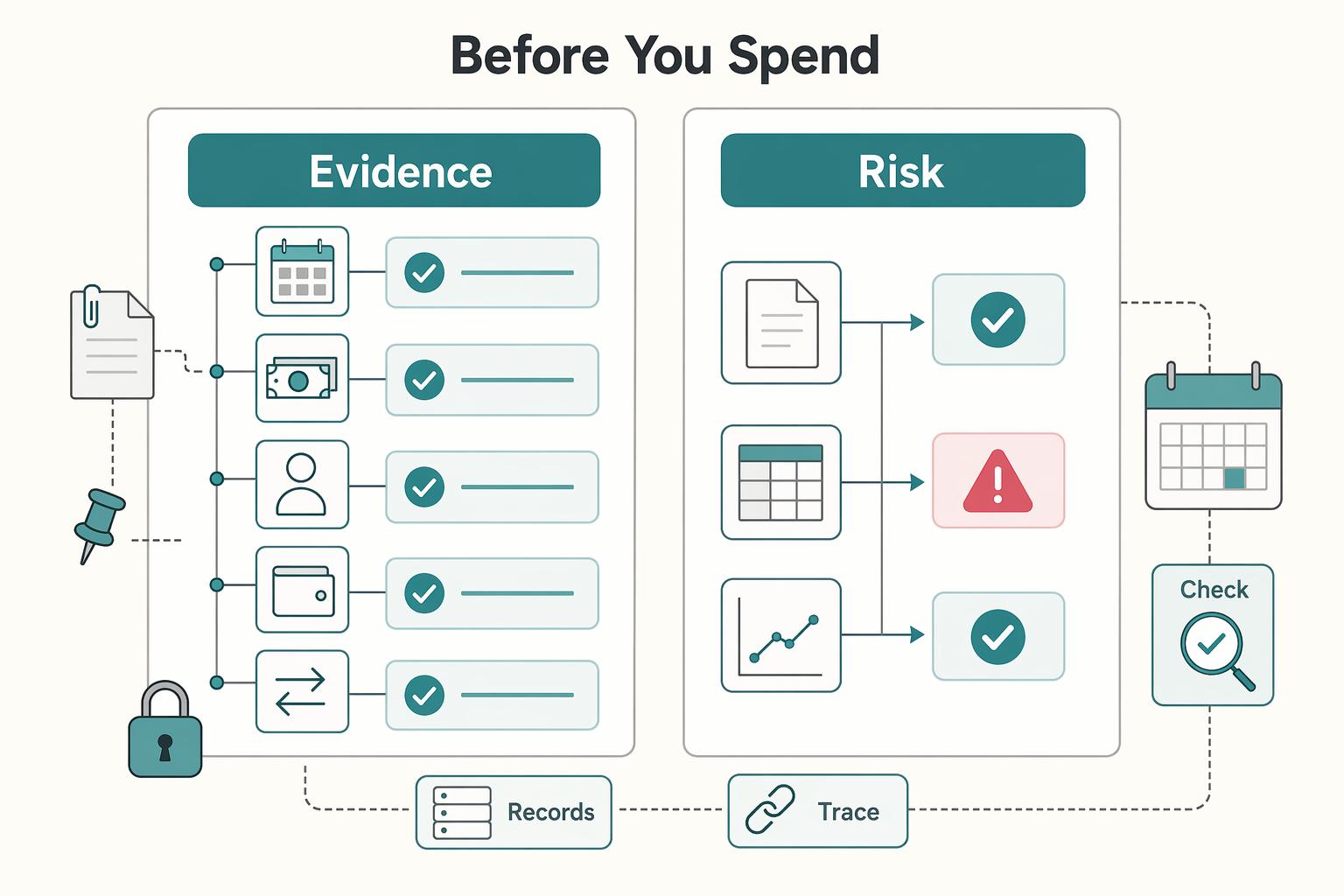
Before you spend#
- Payment method: Card first if accepted; Western Union for larger planned cash; vetted exchange only for small top-ups where you accept extra documentation work.
- Risk level: Decide what can fail before paying: acceptance, rate uncertainty, counterparty risk, or weak proof of payment.
- Record requirement: Confirm what proof you will have by end of day, and whether it can be tied clearly to the funding source.
Your non-negotiable control point is the audit trail. If cash changes hands, log it immediately and capture key details like date, ARS amount, business purpose, recipient, payment source, and linked exchange or transfer ID. Run this same protocol consistently, then review your payment methods, receipts, and cash log on a fixed schedule. Choose the review interval only after checking actual transaction volume, recordkeeping needs, and adviser guidance.
You might also find this useful: Handling Hyperinflation: A Financial Guide for Nomads in Argentina. When you are ready to replace ad hoc payment steps with one traceable workflow for getting paid and paying out, review Gruv's freelancer merchant of record options.
Frequently Asked Questions
What is the safest way for a professional to exchange money in Argentina?
For professional spending, start with your foreign card whenever it is accepted. Visa says eligible foreign-issued cards get a preferential tourist rate automatically at payment time, and transactions are protected in real time. If you need cash, use Western Union for planned amounts and keep cueva use limited to small top-ups where you accept higher risk and extra documentation work.
How do I track business expenses in Argentina if I use the blue dollar?
Use one rule: default to card for business expenses whenever possible. If cash is unavoidable, log it immediately in two places: your expense tracker and your exchange ledger entry. Include the business purpose, ARS amount, payment source, and the exact exchange ID in the same moment.
Is the MEP rate or the Western Union rate better in Argentina?
Do not assume one is always better. Western Union says displayed rates and fees are estimates that can change, while Visa says the eligible card benefit is automatic at payment time. Decide by use case: card when you want protected digital spending and cleaner records, Western Union when you need planned physical cash. With most controls lifted on April 14, 2025, and reported convergence between official and black-market rates, the extra complexity of cash is not automatically worth it.
Is using the blue dollar legal for foreigners in Argentina?
Treat blue-dollar use as a higher-compliance-risk area, not a safe default. Reuters describes the parallel market as a black market with illegal street traders, even after 2025 policy changes. If you want lower legal and documentation risk, stick to card/MEP channels, Western Union, or BCRA-authorized exchange houses. If legal risk is material for your situation, verify current rules with local counsel or official guidance before using blue-dollar channels.
What's the best way to pay for my rent or Airbnb in Argentina?
For Airbnb, pay on-platform with your foreign card so you keep platform protections and downloadable receipts. Airbnb states cash or offline payment violates its terms and weakens protection. For direct rent, choose the method that gives you the strongest proof of payment available. If you must pay cash, log the handoff immediately with date, amount, currency, recipient details, and the linked exchange entry.
Should I ever use an ATM in Argentina?
Use ATMs as a backup, not your default method. The CFPB says credit-card ATM use is generally a cash advance, and interest can start immediately. Chase also notes no grace period is common and surcharges may apply. Even with a withdrawal record, you still need same-day logging of how that cash was spent if you want to preserve your audit trail.
Try a related tool
Researched and edited by the Gruv editorial team. Gruv builds cross-border billing, payouts, and finance-operations software for global businesses.
Sources
Includes 2 external sources outside the trusted-domain allowlist.
- consumerfinance.gov/ask-cfpb/can-i-withdraw-money-from-my-credit...trusted
- consumerfinance.gov/rules-policy/regulations/1026/13trusted
- osac.gov/Country/Argentina/Content/Detail/Report/905e...trusted
- trade.gov/market-intelligence/argentina-eliminates-cap...trusted
- gruv.ai/blog/deep-dive-into-argentinas-blue-dollar-f...external
- visa.com.ar/soporte/consumidores/viajes/tipo-de-cambio-e...external
Educational content only. Not legal, tax, or financial advice.
Related Posts

How LLC Owners Separate Business and Personal Finances
For an LLC, separating business and personal money is best treated as a weekly habit, not a one-time bank setup. It keeps records cleaner, cuts month-end cleanup, and creates clearer boundaries as the company grows.

Hungary White Card Guide for Digital Nomads: Eligibility, Documents, Fees, and Timeline
Treat this like an audit, not a hope-and-pray submission. Your job is to decide whether your real-world setup fits the permit logic, pick the right filing route, then build one evidence pack that stays coherent even if someone reviews it line by line.

The Best Digital Nomad Cities in Latin America in 2026
You should leave this section with one primary city and one backup city, not a vague shortlist. If you want the clearest starting point, make **Mexico City** your primary base and choose one backup city, for example **Medellin**, then use a short trial stay to decide whether that order holds.