
Quick Answer
Treat it as a two-part filing: a živnostenský list for self-employment and a long-stay visa with business purpose. Lock one route first, then confirm the exact Czech embassy or consulate channel before collecting time-sensitive documents. Build a packet that stays consistent across form No. 28, accommodation proof, and your activity wording, and keep travel plans flexible until mission timing is verified. After arrival, verify issued details immediately and retain the full contract-invoice-payment-bank record chain for later checks.
You're not looking for "how visas work"-you're looking for a move plan you can execute#
This guide is for execution: make the early decisions in the right order so you do not lose time on the wrong path. You do not need more theory. You need a plan you can use from your first document to your submission timing.
"Živno visa" is common shorthand for a long-term business-purpose route linked to self-employed setup under a Czech trade license. You will also see labels like freelance, business, or self-employed visa used for this same practical path in public explainers.
| Common move | Practical move |
|---|---|
| Start collecting documents immediately | Confirm route fit first: your setup, your work model, and your goal |
| Assume any "nomad" option is interchangeable | Compare routes early, including alternatives in the Global Digital Nomad Visa Index |
| Treat the process as forms to fill | Sequence setup and filing: complete self-employed/trade-license registration before the long-term visa step |
| Plan flights and housing around optimistic dates | Leave buffer for consulate capacity, and check current mission quota status before you lock submission timing |
Use one plain-language test before each step. Is this the right route for your situation? Does your business activity fit what you are applying under? Is your timeline realistic if filing windows tighten? If any answer is unclear, pause and fix that gate before moving forward.
The next section clears up the terms people mix up so your decision points stay clear before you commit time or money. You might also find this useful: How to Pay Contractors in Czech Republic with CZK Routing and CNB Controls.
The terms everyone mixes up (and the mental model that makes the process predictable)#
Terminology matters here because it changes what you prepare and how you structure your application. Once labels get mixed, people drift between business-registration steps and stay-permission steps and end up building the wrong packet.
Živnostenský list is the Czech trade-license basis for registering as self-employed. It is part of the business setup, not the stay permission by itself. In English-language guides, terms like Czech business visa, freelance visa, self-employed visa, and Živno visa are commonly used for the same long-term visa route based on business activity.
On the stay side, this route is framed as a long-term visa with a business purpose of stay. Keep both pillars in view:
- permission to do business
- permission to stay
A simple mental model makes the process easier to manage: two layers, one narrative. The trade-license layer shows what business activity you plan to do. The visa or residence layer shows why you are allowed to stay in-country to do it. The route is not automatic, so your documents need to show genuine business intent.
| Label you will see | What it usually points to | How to use it operationally |
|---|---|---|
| Živnostenský list (trade license) | Business-registration layer | Treat as self-employment setup evidence |
| Czech business visa / freelance visa / self-employed visa / Živno visa | One long-term stay route tied to business activity | Treat as stay-permission planning |
| Business purpose of stay | Stay category used for this route | Use it to align application requirements |
Two constraints can block progress early: embassy quotas may make submission difficult, and switching into business purpose of stay from another status may not be possible before five years of legal residence.
As a working rule, when you read Živno visa, translate it into a combined setup of trade license plus long-term stay permission. If you want a nearby comparison, see Choosing Between Remotely from Georgia and Visa-Free Entry.
Decision gates: choose the right route (and don't waste months on the wrong one)#
These gates are meant to help you decide quickly whether to proceed now or pause. If a gate fails, stop there and fix that point before you start collecting time-sensitive documents.
Gate 1. Use current, accessible official sources.
Pass only if your route decision is based on current, accessible official sources you can review today. Fail if your decision depends on access-limited or outdated material.
Passaction: Save the official pages you are using as a dated screenshot or PDF, then proceed.Failaction: Replace weak sources before you plan documents.
Gate 2. Lock one route before you prepare paperwork.
If your case could fit more than one route, pause and lock a single route based on current official guidance first.
| Your current profile | Route status to validate first | Next step |
|---|---|---|
| One clear route supported by current official guidance | Selected | Write a one-line route statement and keep all prep in that lane |
| Conflicting third-party guidance or mixed signals | Unclear | Pause and verify with current official sources before collecting documents |
| Relying on outdated or access-limited material | Not decision-ready | Replace weak sources first, then re-check route fit |
If you need route context before committing, compare options in The Global Digital Nomad Visa Index, then come back and pick one lane.
Gate 3. Verify the exact official channel before you prepare for an appointment.
Use current, accessible official Czech government pages you can review today. Then confirm the exact instructions that apply to your case.
Passaction: You can point to the exact official pages that govern your case and explain why you are using them.Failaction: Keep verifying and do not start document collection yet.
Do not treat these as reliable planning sources for a 2026 filing plan. That includes a Scribd upload marked "Updated February 2016," an Academia page that requires login to view content, or a password-locked PDF.
Gate 4. Check completeness only after Gate 3 passes.
Build your appointment pack from the currently verified official instructions, not memory or copied checklists.
Passaction: Create a one-page pack index with document, issue date, and status notes (translation, authentication or legalization, and originals or copies where applicable), then confirm each item is present.Failaction: Stop and resolve any "probably fine" item before moving forward.
Gate 5. Treat timing as risk planning, not optimism.
Confirm the current processing window with the relevant mission.
Passaction: Keep lease, travel, and client commitments flexible until issuance.Failaction: Delay fixed-cost commitments that depend on an unissued decision.
Keep the sequence simple: route fit, source quality, official channel verification, completeness, then timing. For a step-by-step walkthrough, see The Netherlands DAFT Visa for American Entrepreneurs.
Still deciding between visa pathways before collecting documents? Use the Visa Cheatsheet for Digital Nomads to pressure-test your route choice.
The critical-path timeline (step-by-step) that prevents the classic "last-minute missing document" failure#
Most visa stress is project-management stress. Treat this as a critical path: start the long-lead blockers first, then run parallel work in controlled batches. That shift can reduce panic and last-minute document mistakes.
Step 1. Draw the critical path by separating blockers from parallel work.
Split your plan into two lanes so you stop treating every task as equally urgent:
- Blockers: items you cannot submit without
- Parallel work: purpose statement, activity description, and consistency checks across records
Start with the slowest official items you can identify. Assume at least one document may take longer than expected, and plan around external queues you cannot speed up.
A practical way to keep this grounded is to write down your blockers, then note the first possible date each blocker can be in your hands in final form. That date, not your motivation, helps set your earliest viable appointment window.
Step 2. Lock accommodation early because it often controls the schedule.
Accommodation is not a later item. It often controls the schedule because it affects what you can submit and whether your packet stays internally consistent.
The process language is direct: with few exceptions, proof of accommodation is a formal requirement for long-term visa applications. The exact document requirements and submission method can vary, so verify what applies in your case before you lock your timing. Common proof types include:
- confirmation of accommodation
- lease or sublease agreement
- proof of ownership
Treat the following as timeline-critical checks:
- A confirmation of accommodation must not be older than 180 days on your submission date.
- A written accommodation confirmation from an owner or authorized user must include an officially certified signature, unless it is signed in person at the Department for Asylum and Migration Policy.
- A legal-right-to-use-property document must be signed by the person listed as the owner in the Land Register.
In practice, treat this as an early alignment step. You want housing documents that match the rest of your packet, including names, dates, and address formatting, so you do not create contradictions right before submission.
Step 3. Build the habit of one clean packet.
Do not optimize for speed. Optimize for a clean single-pass submission. That means you build one packet map, keep it current, and review it as you go instead of the night before the appointment.
Use a simple planning view so you always know what depends on what:
| Task | Lead time profile | Depends on | Can run in parallel with |
|---|---|---|---|
| Long-lead official document(s) | Varies (often long) | Route choice and filing mission | Purpose statement draft |
| Proof of accommodation | Varies | Housing plan and correct document format | Business narrative |
| Purpose-of-stay evidence | Varies | Route fit | Copy prep and formatting |
| Final packet assembly | Short once prior inputs are ready | All prior items complete | Final quality check only |
If a task sits on the critical path, do it first. If it is parallel work, keep it consistent with the same business narrative. That is how you avoid the classic problem where each document looks acceptable on its own, but the packet as a whole does not make sense.
The document pack (rejection-proof): what "clean" looks like, what gets rejected, and the safe defaults#
A clean pack is not fancy. It is usable. Everything in the folder should support the same factual story and match the application purpose. "Clean" means a reviewer can follow your evidence quickly, without squinting at scans, decoding filenames, or reconciling inconsistent identity details. Assume you will not get the benefit of the doubt, and build accordingly.
Build a document matrix (so nothing slips)#
A document matrix becomes your source of truth. If an item is not in the matrix, it does not exist for planning purposes. That sounds strict, but it prevents common failures like missing required items and version confusion.
| Document item | What it proves | Source | Lead time | Validity window | Authentication or legalization | Czech translation status | Typical failure mode |
|---|---|---|---|---|---|---|---|
| Long-stay visa application (No. 28 = Business) | Correct purpose of stay selected | Official visa form | Before filing | Use the version accepted by your lodging consulate | Verify consulate-specific requirements | Verify consulate-specific requirements | Wrong purpose selected in form field 28 |
| 2 photos | Required application material is complete | Entrepreneurship visa requirements | Before filing | Match consulate photo requirements | Verify consulate-specific requirements | Verify consulate-specific requirements | Missing photo or unusable photo format |
| Purpose-of-stay evidence (e.g., trade licence extract or company register extract) | Business or entrepreneurship purpose of stay | Registry extract | Depends on issuing authority | Confirm accepted document timing/format with your lodging consulate | Verify consulate-specific requirements | Verify consulate-specific requirements | Missing extract or incomplete extract |
A practical default is to build around the explicitly listed requirements above, then confirm any mission-specific format rules with the consulate where you will lodge your application.
Authentication/legalization in practice#
Treat apostille requirements, superlegalization, and certified-translation rules as consulate-specific checks and confirm them before final assembly.
What is explicit in the process is that applications are lodged in person, with an interview and fingerprint collection at filing. So a remote-only filing plan is not a safe assumption.
Clean financial proof without over-explaining#
If your consulate checklist requests financial evidence, keep it readable and internally consistent so a reviewer can verify the facts directly from the documents. Useful defaults include:
- Use one legal name spelling across forms and supporting records.
- Keep full, readable pages rather than partial screenshots.
- Resolve date or identity mismatches before submission.
Avoid over-narrating. Your packet is stronger when a reviewer can confirm the facts directly from the documents instead of relying on your interpretation of them.
Your final document checklist#
Run this before appointment day, then run it again right before printing or final export. This is where you catch the small issues that cause outsized damage.
- Correct consulate identified for lodging
- Appointment booked through that consulate's process, commonly email or phone
- Long-stay visa form completed with No. 28 (Purpose of Stay) set to Business
- 2 photos included
- Purpose-of-stay evidence included, such as a trade licence extract or company register extract
- Filing plan is in person and accounts for interview plus fingerprint collection
- Any additional consulate-specific format requirements re-verified before submission
One more practical rule: your packet should be reviewable in a straight line. A reviewer should not have to hunt through unrelated pages to find a missing link.
Trade license reality: describe your activity clearly, and keep it consistent with your work#
Treat Živno visa as shorthand, then get precise about the business activity you will actually perform. The material behind this section is broad visa guidance, not Czech trade-license procedure, so use it as consistency guidance rather than legal instruction. Many "complicated" cases come down to describing the same work inconsistently.
What the guide actually says#
Public guides can help you get oriented, especially when they use labels like Czech Republic freelance visa or Živno visa. Use those labels for navigation, not as final authority. Many visa-market guides are broad and can lag current program details, so treat them as directional. A page can be newly branded and still describe programs from an older year.
The practical move is simple: standardize your own language early and reuse it everywhere. If you change phrasing midstream, it can make it look like your intent changed even when your work did not, which adds avoidable confusion about next steps.
Write your activity description like an audit trail#
Write one service sentence you can defend in contracts, invoices, and portfolio evidence. Then add a short list of deliverables you can prove quickly. Do not aim for marketing copy. Aim for wording you can repeat consistently for months without drift.
A durable structure is:
- One clear service sentence
- Two or three repeatable deliverables
- Vocabulary that already appears in your commercial documents
For example:
- Software consulting: architecture reviews, implementation support, maintenance planning for web applications
- Design services: product UI design, design systems, usability improvements for SaaS teams
The goal is not elegant wording. It is evidence alignment. In some entrepreneur-visa contexts, viability is shown through materials like a business plan or pitch, but that does not by itself establish a Czech-specific requirement. If your invoices and contracts use one language and your purpose statement uses another, you create extra work for the reviewer.
Consistency is a system, not a vibe#
This is where you turn good intentions into a repeatable practice. Decide where wording must stay fixed and where detail can vary, then treat that as a rule.
| Artifact | Must remain identical | Can vary |
|---|---|---|
| Purpose statement | Core service sentence | Project examples |
| Contracts and invoices | Service naming | Scope and fees |
| Portfolio or CV | Deliverable categories | Case detail |
Once you treat language consistency as a rule, contradictions are easier to catch before submission. It also helps later because the same discipline supports cleaner recordkeeping.
This pairs well with our guide on Asia Remote Work Visa Planning for Thailand, Japan, Malaysia, and Indonesia.
Consulate reality: jurisdiction, scheduling, and what you can't assume#
Treat this as a verification problem first. Based on the available excerpts, we cannot safely state specific jurisdiction, scheduling, or checklist rules for Czech consulates. The safest move is to work only from guidance you can read, verify, and save for your own case.
Guardrails when consular details are unclear#
| Situation | Action now |
|---|---|
| You are relying on a page that does not load cleanly | Do not use it as an operating source for your packet |
| A file is password-gated | Treat it as unverified until you can access and review it fully |
| The content appears to be user-uploaded | Treat it as background only until it is confirmed by a readable source you can verify |
| Two sources seem to conflict | Pause and seek written clarification before you proceed |
Quick verification workflow#
When consular detail is unclear, the goal is not to guess better. It is to narrow the unknowns and keep only what you can rely on.
- Check readability first: if a page is broken, incomplete, or locked, exclude it.
- Check source context: user-uploaded content should not be treated as operational guidance on its own.
- Save what you rely on: keep the URL, access date, and a local copy or screenshot.
- Ask one narrow question at a time when something is unclear, then update your working checklist only after that clarification.
Keep one tracker, not five half-trackers#
To reduce version confusion, use one tracker that stays current across files and messages. Use a clear filename convention, for example mission-checklist-2026-04-08-v03.pdf, so versions are easier to follow across email, print, and scans.
| Tracker section | What to record |
|---|---|
| Mission contact log | date, channel, question sent, answer received, file saved |
| Document version status | document name, current version, owner, last edit date |
| Appointment status | target mission, booking method, current status, proof saved |
| Pending confirmations | open issue, blocker level, next follow-up date |
If you are already planning neighborhoods, banking, and day-one setup, keep that work separate. Use the Prague relocation guide after your consular path is documented and stable.
Need the full breakdown? Read Canada Digital Nomad Visa Planning for Visitor Status and Work Permits.
Money + paperwork hygiene for remote professionals (so immigration, tax, and banking don't contradict each other)#
Your main control here is consistency. Your immigration file, tax records, and bank evidence should all describe the same work activity and money flow.
Verify the live proof of funds requirement before you submit#
Proof of funds is commonly expected for remote-work stay routes. This section does not set a fixed amount or evidence format, so confirm current mission-specific guidance before you submit.
| Item to verify | Working note |
|---|---|
| Required amount | Confirm the current threshold with the official immigration source |
| Accepted evidence period | Confirm the current evidence period with the relevant mission |
| Accepted account/evidence format | Confirm the accepted evidence format with the relevant mission |
| Currency treatment and conversion method | Confirm the currency treatment with the relevant mission |
| Applicant vs dependent treatment (if relevant) | Confirm applicant and dependent treatment with the relevant mission |
Keep one clean evidence chain (contract -> invoice -> payment -> bank statement)#
This is practical risk control, not a claim about one fixed legal format. If one link is unclear, the whole story gets harder to trust.
| Evidence item | What should match across records |
|---|---|
| Contract | Your legal or business name, client identity, service description, and date context |
| Invoice | Same service description and parties as the contract, plus invoice date or reference |
| Payment record | Payment reference that ties back to the invoice, with matching payer and payee names |
| Bank statement | The same incoming payment amount, date, and reference visible in the account record |
Consistency checks for multi-client or multi-currency work#
Once you have the chain in place, keep it stable month to month:
- Keep one canonical version of your business name and use it everywhere.
- Use a single service label set so invoices and contracts do not describe different work.
- Maintain a simple FX note per payment when currency conversion is involved.
- Tag each payment to one client and one invoice ID to avoid crossover errors.
- If you want a practical tax-side structure for these records, use the Czech freelancer tax guide.
Compliance rule#
If you are working remotely, keep your declared activity aligned with your actual stay or work route, and do not treat tourist status as a work-permitted fallback.
Monthly control loop#
Run a monthly reconciliation: contract, invoice, payment, and bank records should line up, along with open mismatches and missing documents. If any mismatch is still unresolved by the next cycle, escalate quickly. For example, clarify with the issuing counterparty, then get professional immigration or tax advice before your next filing or submission.
If you want a deeper dive, read A Guide to Tax Residency in the Czech Republic for Nomads.
After you arrive: the ops sprint (where most guides abandon you)#
Arrival is where application mode turns into operating mode. This section is about operations hygiene, not a Czech legal step order. Use the checklist below to stay organized, then confirm the exact requirements from your issued documents and written instructions.
Confirm your status from the issued document#
Your first job is verification, not improvisation. Review the document issued to you, the instructions sent with your approval, and any written case correspondence. Confirm core details (name spelling, passport number, purpose wording, and validity dates) and flag anything that does not match your understanding.
Save proof the same day. Keep a scan of the issued document, your passport ID page, appointment receipts, and PDFs or screenshots of official case emails. Your storage is working only if you can retrieve the full set in minutes.
If anything looks inconsistent, check the issued document and written instructions, then request clarification in writing from the office or a qualified advisor handling your file. Save that clarification with your records so the same mismatch does not reappear later in contracts, invoices, tax records, or banking evidence.
Complete setup and open your case file on day one#
Do not assume arrival means every step tied to your case is complete. Confirm what still applies to your case, complete each item, and save proof as you go: submission, receipt, confirmation email, outcome notice, and any payment proof.
This is where many people lose control. They handle housing, SIM cards, and settling tasks, then let compliance records scatter across inboxes, chat, and photos. Keep one dedicated folder from day one. For city setup context while you get established, use the Prague digital nomad guide. For tax-side recordkeeping structure, use the Tax Guide for Freelancers in the Czech Republic.
| Evidence class (practical, not a legal minimum) | What to save | What good looks like |
|---|---|---|
| Issued status documents and instructions | Scan of the document issued to you, approval emails, receipts, and any written post-arrival instructions | One dated folder with the issued document and the exact instruction set you followed |
| Setup submissions and confirmations | Copies of forms submitted, booking confirmations, receipts, payment proof, and final confirmations | Each task has a submission record and an outcome record |
| Commercial activity records | Contracts, scopes, invoices, and client communications describing the work | Names, dates, and service descriptions align across files without extra explanation |
| Money and filing records | Bank statements, payment references, insurance or recurring-payment proof, and filing confirmations | You can trace contract -> invoice -> payment -> statement from records alone |
If you get verbal guidance, convert it to written evidence. Send a dated summary to yourself or request written confirmation.
When should I treat my work as fully operational?#
A legal "fully operational" trigger after arrival is not established. Treat status as unresolved until your case documents and written instructions are clear, and get case-specific written confirmation before acting on uncertain steps.
What records should I retain for renewals or later checks?#
This section cannot define a legal minimum set. As an operations default, keep the full chain: status documents, instructions, submitted forms, confirmations, contracts, invoices, payment proof, bank statements, and filing acknowledgments so your timeline is reconstructable.
How should I handle travel timing uncertainty after arrival?#
Do not plan travel around assumptions. If timing, document status, or pending setup is unclear, get written clarification tied to your case before you commit.
We covered documentation-first decision habits in UAE Golden Visa for Freelancers and the Green Visa Decision Guide.
The one-page relocation pack: your safe-default checklist + next steps#
Use this as a generic pre-submission checklist and immediate post-arrival action list. The goal is simple: keep one coherent file, sequence work in the right order, and reduce preventable gaps once you land.
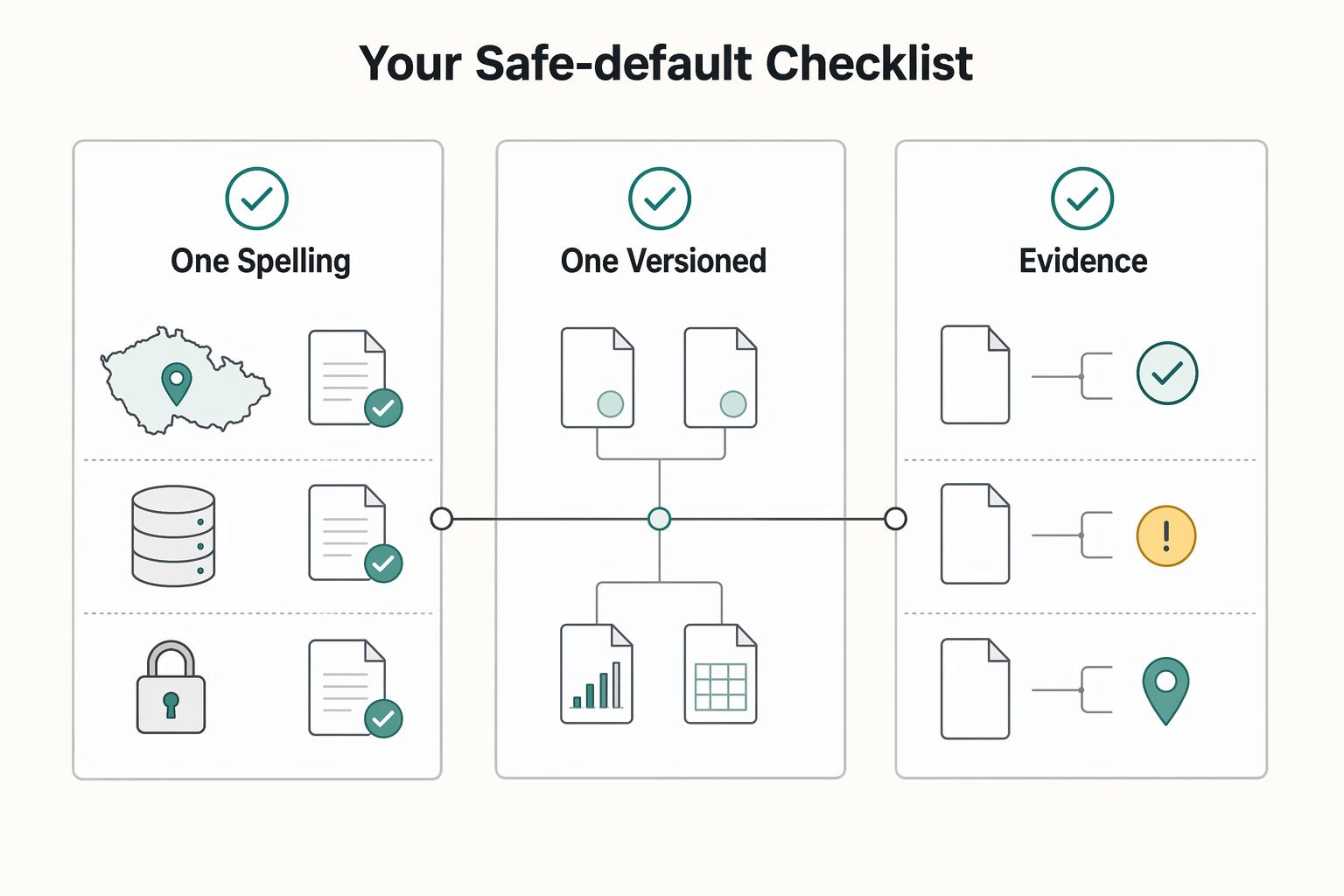
Your safe-default checklist#
-
Confirm route fit before collecting documents. Decide your route first so your activity description, client setup, and stay purpose support the same path. Verification point: those three items match in plain language. If they do not, pause and compare options, including the Global Digital Nomad Visa Index.
-
Confirm where and how applications are accepted before setting move dates. Do not build flights or housing plans around assumptions. Verification point: you have the latest filing instructions saved from the channel you plan to use.
-
Prepare documents in dependency order. Start with long-lead items first, then complete shorter-life documents and final forms. Verification point: every required item has an owner, source, status, and date in your tracker.
-
Submit one consistent packet, not separate fragments. Keep names, dates, addresses, and activity wording aligned across forms and supporting records. Verification point: run one final line-by-line consistency pass before submission.
-
Pre-schedule first-month operations before travel. Set up your records process now so contracts, invoices, payment proof, and bank statements are captured from day one. Verification point: your storage structure and recurring admin tasks are already set, and your next compliance review is queued in the Tax Guide for Freelancers in the Czech Republic.
| Packet rule | What it prevents | How to apply it |
|---|---|---|
| One spelling for name and address everywhere | Identity mismatches across documents | Keep a locked identity reference from your passport and reuse it verbatim |
| One versioned, date-stamped folder per submission round | Mixed or outdated files | Label folders by date and round, and archive superseded files instead of overwriting |
| Originals, translations, and scans grouped by document | Partial packets at submission time | Store each document set together with a short completeness checklist |
If anything is unclear, use this escalation order: official guidance first, mission-specific checklist second, and written confirmation for ambiguous points before you submit. Czech-specific eligibility, fees, timelines, and post-arrival obligations are not confirmed in this checklist and should be verified directly with official channels. Related reading: Colombia Digital Nomad Visa Guide for Remote Workers in 2026. Once your relocation plan is stable, contact Gruv to confirm payment flow and compliance coverage for your specific setup where supported.
Frequently Asked Questions
What is the Czech Republic Živno visa?
What people call the Czech Republic Živno visa is the long-term business route: your stay purpose is business, and your work side is tied to a trade license (živnostenský list). This matters because your file has to tell one coherent story that shows you genuinely intend to do business under the route you selected. Next check: review your forms, activity description, and contracts together to confirm they align with business purpose.
Is the Živno visa a digital nomad visa (Czech Digital Nomad Program)?
No. Treat them as separate routes, not interchangeable labels. Guides describe the Digital Nomad Program separately for certain remote professionals in IT and marketing, while the Živno or business route is built around self-employment via a trade license. Next check: choose one route early and keep one evidence story from first form to final records. If you are still comparing options, use the Global Digital Nomad Visa Index.
What's the difference between a živnostenský list and a long term visa?
The živnostenský list is the trade-license side for carrying out self-employment, while the long-term visa is the stay-permission side for being in the Czech Republic beyond 90 days. They are complementary, not substitutes, and many applicants prepare them in sequence rather than as one merged document set. Next check: keep separate folders for business-activity evidence and stay-permission evidence, then verify that names, passport details, and activity wording match across both.
How long does the Czech Živno visa take from start to finish?
There is no single 2026 timeline you should trust without mission-level verification. Confirm the current processing window with the relevant mission. Next check: before booking flights or ending housing, confirm slot availability at the relevant mission and review the current Czech MFA quota list for that location.
Where do I apply for a Czech Živno visa, at a Czech consulate, Czech embassy, or in country?
Start by checking the Czech embassy or consulate in your home country or country of official residence, then verify that mission's current acceptance rules. This matters because appointment limits and quota pressure can change whether your intended filing plan is realistic. Next check: identify the mission tied to your home country or official residence, save its filing instructions, and record that the current processing window must be verified from official mission guidance before use.
Do I need apostille or superlegalization for Czech visa documents, and do I need sworn translation?
Requirements can apply, but they vary by issuing country, document type, language, and the mission's instructions. Operationally, the safest sequence is: verify mission rules first, complete any required authentication, then complete any required translation, then assemble originals and scans into one traceable file set. Next check: track each document by issuer, country, authentication status, translation status, and saved proof for each step.
Can I work remotely for foreign clients on a Czech trade license, and do I need Czech clients?
Guides describe this route as compatible with multiple clients, including Czech or foreign clients, if your Czech tax and social handling matches your actual work. For record-keeping, keep contracts, invoices, payment references, and bank records consistent so your business activity is clear. Next check: run a monthly records pack and align tax-side follow-through using the Tax Guide for Freelancers in the Czech Republic.
Try a related tool
Researched and edited by the Gruv editorial team. Gruv builds cross-border billing, payouts, and finance-operations software for global businesses.
Sources
Includes 4 external sources outside the trusted-domain allowlist.
- academia.edu/42782585/Business_Plan_Thesistrusted
- coloradocollege.edu/offices/cld/TEFL-Teaching-Abroad-Guide.pdftrusted
- ipc.gov.cz/en/forms-and-documents/documents/proof-of-ac...trusted
- mzv.gov.cz/jnp/en/information_for_aliens/long_stay_visa...trusted
- archive.org/stream/EliminationOfGermanResourcesForWar/El...external
- archive.org/stream/bub_gb_gaUtAAAAMAAJ/bub_gb_gaUtAAAAMA...external
- bincom.co.uk/emigr8techvisalandscapeexternal
- citizenremote.com/visas/czech-republic-freelance-visaexternal
Educational content only. Not legal, tax, or financial advice.
Related Posts
Prague Digital Nomad Guide for 2026 Moves in the Czech Republic
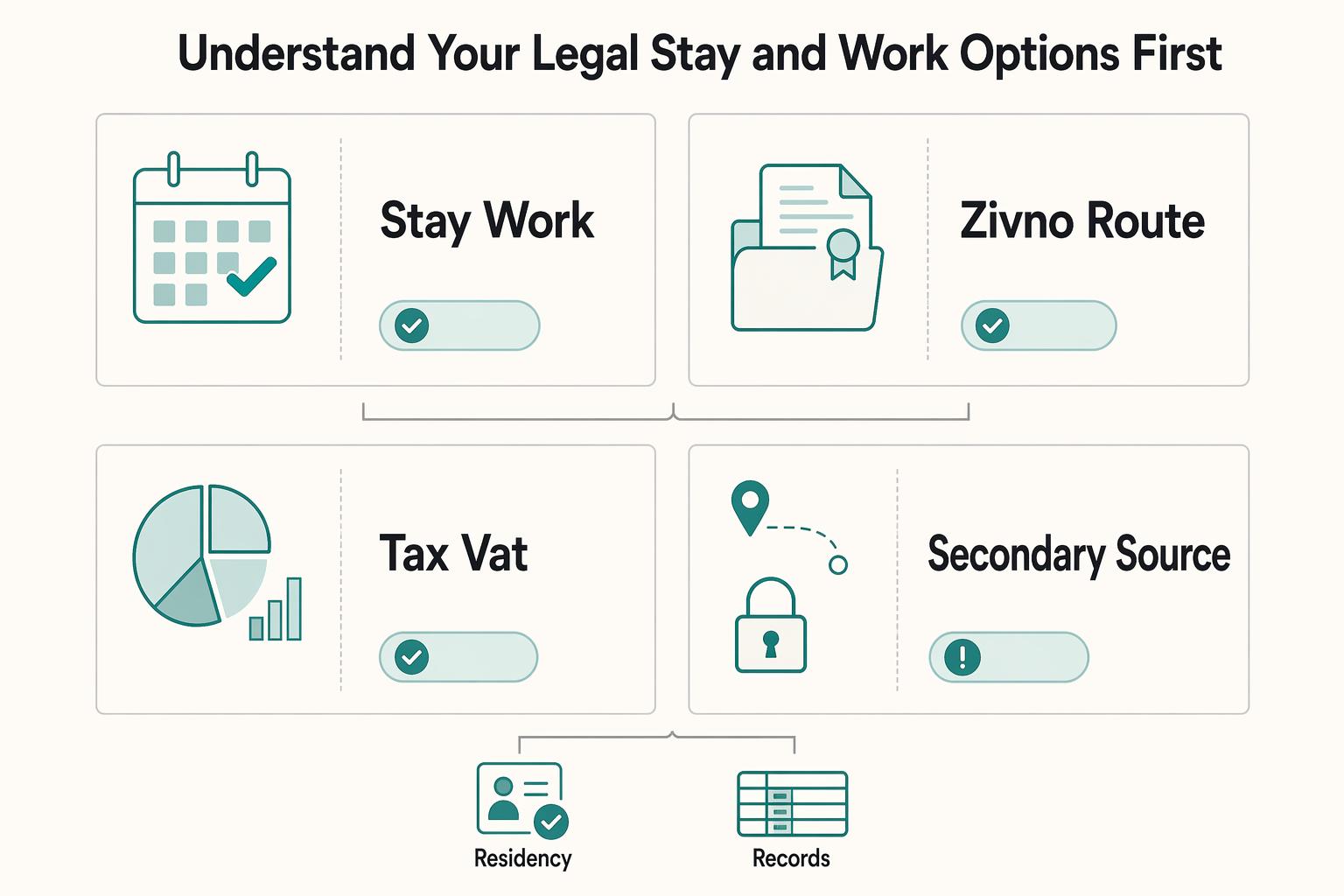
**If you want to move to Prague in 2026 as a remote professional, separate stay or work authorization from tax or VAT admin, and verify both before you spend.** Start with sequencing, not spending. Before you pay for housing, flights, or any fixed annual commitment, set up a two-lane tracker from day one:

The 2026 Global Digital Nomad Visa Index for 50+ Countries
Start with legal fit, not lifestyle filters. The practical order is simple: choose a route you can actually document, then decide where you want to live. That single change cuts a lot of wasted comparison work and stops you from falling in love with places that were never a real filing option.
Tax Guide for Freelancers in the Czech Republic
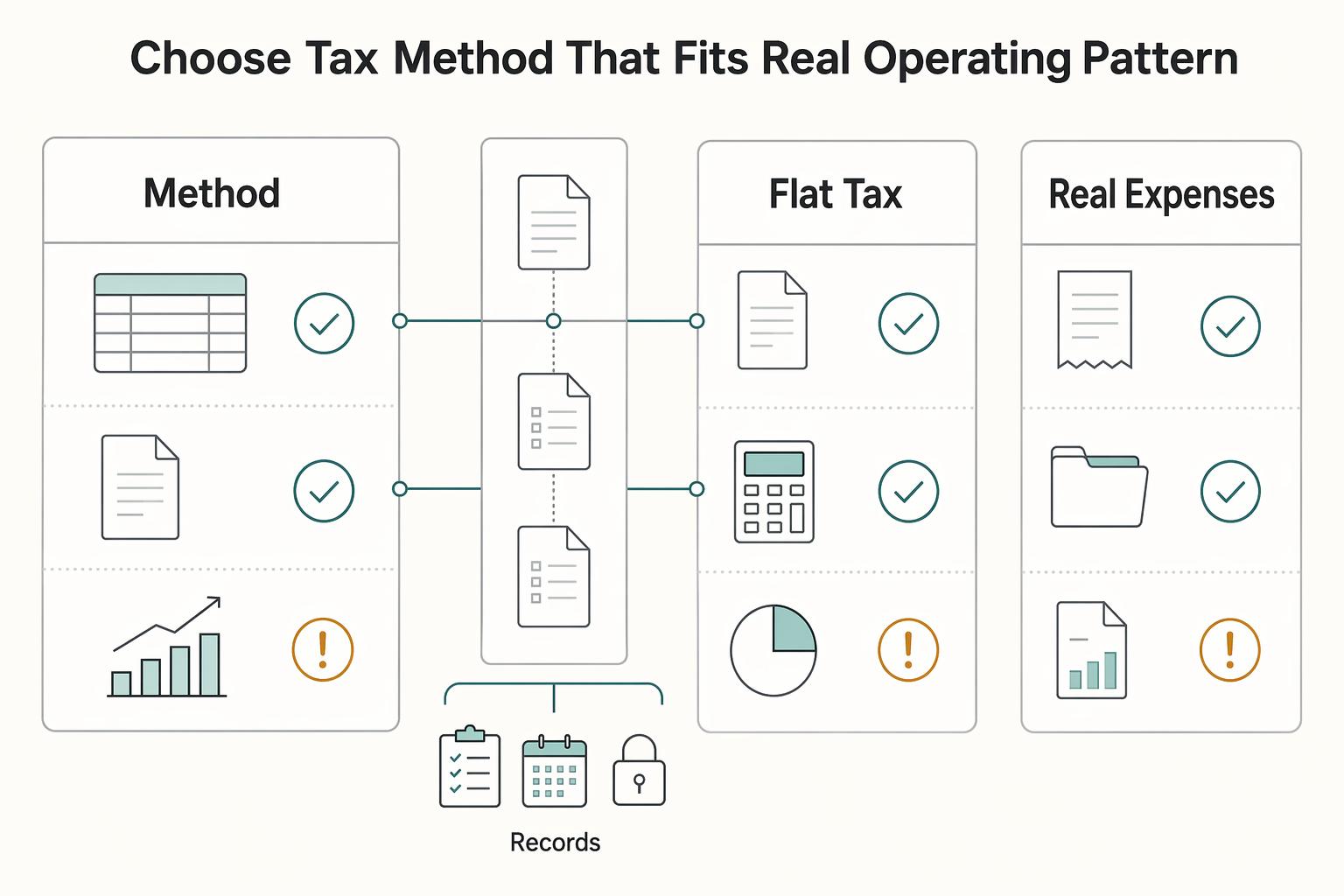
The lowest-stress path is simple: make decisions you can defend later, not shortcuts you may have to explain away. The goal is a clear residency position, a filing method that fits your facts, and records that match what you report.