
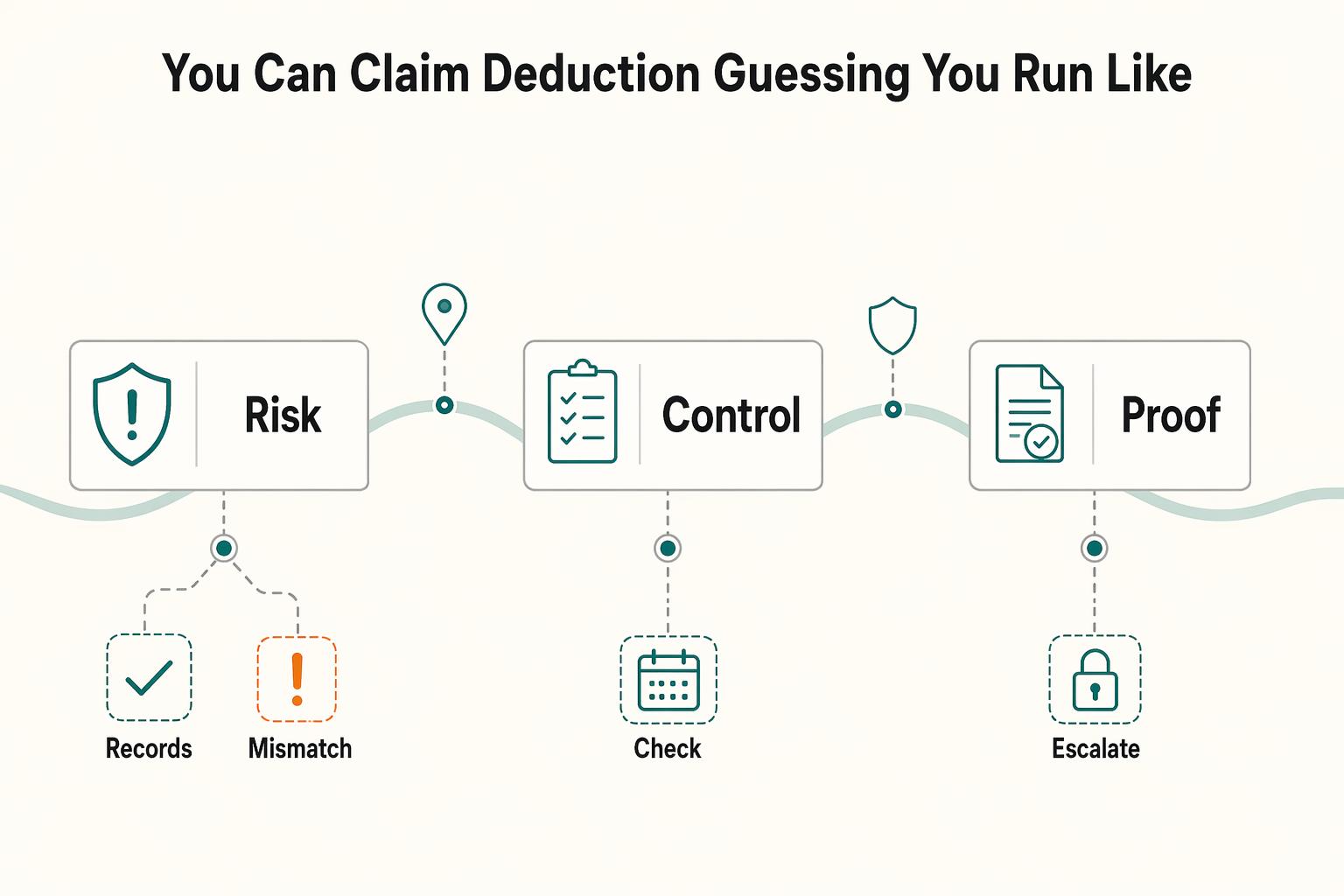
Quick Answer
Yes, you can often deduct health insurance premiums as a freelancer, but only if you pass eligibility gates and apply month-level disqualifier checks. Confirm rule fit first, calculate on Form 7206, report on Schedule 1 line 17, and keep clean records. If your facts are mixed across countries, spouse-plan eligibility, or state residency, pause and escalate before filing.
Run the eligibility gates before you claim this deduction#
Most guides on how to deduct health insurance premiums as a freelancer fixate on headline savings and skip the real risk controls. That creates filing mistakes, not because freelancers ignore the rules, but because they never run a clear yes or no gate before claiming the deduction.
Use this as a fast compliance playbook, not a tax hack. If your records are organized, you can run the core checks quickly and decide whether to proceed, pause, or escalate. If you are globally mobile, safe defaults beat aggressive assumptions.
The Self-Employed Health Insurance Deduction is an IRS workflow tied to Form 7206 and Schedule 1. Your eligibility gates come before any math. Treat it as a documentation and decision process, and you cut avoidable rework.
Run this quick triage before you file#
| Gate | Check |
|---|---|
| Gate 1: Eligibility and limits | Confirm your facts match current eligibility criteria and deduction limits before you enter anything into software. |
| Gate 2: Tax year scope | Check that the guidance you rely on matches the filing year you are preparing. |
| Gate 3: Jurisdiction fit | If you operate across countries or programs, separate U.S. rules from local rules instead of blending them. |
| Gate 4: Program context | Note the program context for your coverage, because program details shape the records you must keep. |
| Gate 5: Evidence quality | Keep clean proof for premiums and supporting records so your filing story stays consistent from intake to filing. |
If you spent part of the year working from two countries and your insurance setup changed midyear, do not guess. Mark the case as unclear, hold the claim until you verify treatment, and escalate to a qualified tax pro.
This guide stays educational, not personal advice. Rules vary by country and program, and unclear facts should trigger review. That is how you protect downside while still pursuing legitimate self-employed health insurance deduction outcomes.
What this deduction actually is and how the money impact works#
The Self-Employed Health Insurance Deduction can reduce your Adjusted Gross Income (AGI) when you meet IRS rules, and you calculate it on Form 7206 before you report it on Schedule 1 (Form 1040) line 17.
Once you think in gates and documentation, the mechanics are straightforward. You are not trying to find a hack. You are mapping the money path so the deduction lands in the right place, with the right support.
Adjusted Gross Income (AGI) is your gross taxable income minus allowed adjustments, so AGI clarity leads to better freelance tax decisions. If you misread AGI, you can overstate tax savings. You can also miss a valid claim.
This deduction covers specific insurance categories, not every healthcare cost you pay. At a high level, eligible coverage can include medical, dental, vision, and qualified long-term care insurance when IRS criteria fit your facts. Keep that boundary tight so you do not mix this with broader medical expense rules.
Run the money path in order#
| Filing channel | What you do there | Why it matters |
|---|---|---|
| Schedule C (Form 1040) | Report business income or loss | Establishes your self-employment profit facts |
| Schedule SE | Calculate self-employment tax when net earnings from self-employment reach $400 or more | Handles self-employment tax, not this deduction claim |
| Form 7206 to Schedule 1 line 17 | Compute and report the self-employed health insurance deduction | Applies the AGI adjustment when you qualify |
Use this sequence every year:
- Eligibility first. Confirm filing facts, plan context, and rule fit before any calculation.
- Calculation second. Compute only after eligibility is clear.
- Workflow third. Put each amount on the correct form instead of blending channels.
- Retention fourth. Keep policy statements and payment proof tied to the numbers you filed.
A common failure mode is assuming that reporting business profit on Schedule C automatically captures personal insurance adjustments. It does not. Keep each channel separate, confirm eligibility, then claim the self-employed health insurance deduction with a clean file behind it.
If you want a deeper dive, read The Crypto Cautionary Tale: Why Freelancers Should Be Wary of Crypto Payments.
Do you qualify as a freelancer right now#
You qualify for the self-employed health insurance deduction only when your work meets IRS self-employment rules, your filing facts support the claim, and no monthly disqualifier blocks it.
Before you touch Form 7206, run a strict yes-or-no gate. Treat qualification like an operations decision, not a software checkbox.
Use this yes or no gate#
| Gate | Yes | No | Unclear |
|---|---|---|---|
| Do you operate with a profit motive and regular involvement, then report that activity on Schedule C? | Continue to the next gate. | Stop and reassess whether you are filing as a freelancer for this deduction. | Mark needs review and confirm facts with a qualified tax pro. |
| Do you have net profit on Schedule C or Schedule F for the year? | Continue to deduction checks. | You generally cannot claim this deduction path. | Mark needs review before claiming against AGI. |
| Were you eligible for a subsidized employer plan or spouse employer plan in any month? | Exclude those months from the claim and continue with month-level analysis. | Continue. | Mark needs review and do not guess on month treatment. |
| Are your residency or filing-jurisdiction facts mixed across places you lived or worked? | Mark needs review and confirm treatment with a qualified tax pro before claiming. | Continue. | Mark needs review and escalate before submission. |
Two guardrails keep this clean:
- Do not blend channels. Schedule C reports business profit or loss. Form 7206 computes the self-employed health insurance deduction, which you report on Schedule 1, line 17.
- Do not confuse related forms. If total net earnings from self-employment are $400 or more, use Schedule SE as a separate filing step.
If you freelanced for part of the year and later became eligible for a spouse plan, split the year by month. If residency facts are mixed, mark the case as needs review and verify treatment before claiming healthcare costs that affect AGI.
If your state residency facts feel blurry, review Do I Have to Pay State Taxes While Living Abroad as a Digital Nomad? before filing.
Which premiums and medical costs count and where limits usually appear#
Count insurance premiums in the self-employed health insurance deduction first, then route other medical costs through the correct tax rules so you do not overclaim.
This is where most mistakes happen. People pull a transaction export, see "healthcare," and treat it as one bucket. Your job is to separate premiums from everything else before you calculate anything.
For the Self-Employed Health Insurance Deduction, start with premium categories the IRS allows. This includes medical, dental, vision, and qualified long-term care insurance, when your eligibility facts support the claim. This scope can also include coverage for a child under age 27 at year-end, based on the Form 7206 instructions for the tax year you are filing, even if that child is not your dependent. Keep this lane strict and document each premium clearly.
| Payment type | Usual tax lane | Limit you must respect |
|---|---|---|
| Health, dental, vision, and qualified long-term care premiums | Self-employed health insurance deduction workflow | Apply eligibility rules before claiming |
| Broader medical and dental expenses that are not premiums | Schedule A itemized medical expense rules | Only the portion above 7.5% of AGI counts |
| Any amount already deducted in another place | Exclude from duplicate claims | Do not deduct the same item twice |
Marketplace context matters for compliance records. If you buy coverage through the Health Insurance Marketplace, keep marketplace statements with your annual file.
If you use Covered California, keep both federal and state marketplace tax forms when issued. This includes Form 1095-A and related reconciliation records such as Form 8962 and California Form FTB 3895.
Run this inclusion screen on every payment#
| Step | Action |
|---|---|
| Label the charge | Mark each line as premium, non-premium medical cost, or unclear. |
| Map the form path | Send premium items to the self-employed deduction workflow and route non-premium medical costs to Schedule A review. |
| Check for duplicates | Remove anything already claimed elsewhere before filing. |
| Verify software output | Use TurboTax or H&R Block summaries as a starting draft, then confirm final treatment against IRS rules. |
If premiums are mixed with routine healthcare costs in one card feed, do not force a guess. Tag each entry, separate the form lanes, and mark unclear items for review.
Where this is reported and how to build an audit ready file#
Report the self-employed health insurance deduction by calculating it on Form 7206, then entering the result on Schedule 1 (Form 1040), line 17, with records that prove every number.
Once you have the right payments in the right bucket, the remaining risk is workflow risk. Keep each form in its own lane so your return stays coherent.
| Form | What you do on it | What to avoid |
|---|---|---|
| Schedule C | Report business income and expenses to determine net profit | Do not treat Schedule C as the place to claim this personal AGI adjustment |
| Schedule SE | Figure self-employment tax on net earnings | Do not reduce net earnings here by the health insurance deduction |
| Form 7206 | Compute your self-employed health insurance deduction amount | Do not merge multiple business-linked plans into one calculation when separate forms apply |
| Schedule 1 line 17 | Report the deduction amount from Form 7206 | Do not skip support files for the number you report |
Build the file before filing day#
Use one folder per tax year, then split by income and expense type. Keep the same documents you used to prepare the return, because an IRS records request should rely on existing files, not brand-new reconstructions.
| Case | Retention period |
|---|---|
| Standard case | 3 years |
| Worthless securities or bad debt deduction | 7 years |
| Employment tax records | At least 4 years |
Use this checklist:
- Documents that support the income, credits, or deductions claimed on your return.
- Workpapers that tie Form 7206 inputs to Schedule 1 line 17.
- Copies of anything you send to the IRS, while you keep originals.
If you run two small businesses with separate health plans, keep separate Form 7206 calculations. Tie each to payment proof and to the records used to prepare your return.
How does this change when you are globally mobile#
When you work across borders, treat Tax Residency as a separate gate and clear foreign reporting duties before you finalize the self-employed health insurance deduction.
When your life spans multiple jurisdictions, the deduction workflow is only one part of the compliance picture. Extra reporting can raise risk even when your AGI adjustment math is clean.
Keep one rule in mind. Foreign account reporting and deduction eligibility run in parallel tracks. They can change your documentation burden and risk posture, but they do not directly change the deduction amount by themselves.
| Cross-border check | What it means in practice | Safe default |
|---|---|---|
| Tax Residency status | Your filing obligations can shift across jurisdictions during the year | Confirm residency position before you file |
| FBAR (FinCEN Form 114) | You file when aggregate foreign account value exceeds $10,000 at any time in the calendar year | File electronically through FinCEN by April 15, or use the automatic extension to October 15 |
| FATCA Form 8938 | You attach this to your annual income tax return when threshold tests apply | Check the correct threshold set for your filing status and location, then document the test result |
| California ties and FTB exposure | Part-year treatment can split tax exposure between worldwide income and California-source income | Escalate state residency facts early and review Do I Have to Pay State Taxes While Living Abroad as a Digital Nomad? |
Run this cross-border confirmation workflow#
- Identify governing jurisdictions first. List every country and state with filing relevance before final tax prep.
- Verify reporting obligations second. Decide whether you owe FBAR, Form 8938, both, or neither based on thresholds.
- Confirm deduction mechanics third. If you file Form 2555, confirm your Form 7206 handling before submission.
- Escalate mixed facts quickly. Route unclear Tax Residency or account classification issues to a qualified advisor.
If you move midyear, keep foreign accounts open, and still pay U.S. healthcare costs, separate each obligation clearly. Document every threshold check, and do not guess when facts conflict.
Use this risk tier framework before you file#
Classify your case as clear-eligible, unclear, or high-risk before you submit, and only take the next action that matches that tier.
At this point you have run the eligibility gates, separated the forms, and turned your checks into a filing decision. The goal is not maximum deduction at any cost. The goal is a position you can support.
| Tier | IRS checkpoints | Tax Residency checkpoints | Next action |
|---|---|---|---|
| Clear-eligible | You can complete Form 7206 cleanly, your premiums fit eligible categories (health, dental, vision, qualified long-term care), and no claimed month includes eligibility for a subsidized employer plan, including a spouse plan. Your policy trail ties back to your self-employment activity and supports the deduction as an adjustment to income. | You mapped all relevant filing jurisdictions and resolved residency facts with no open conflict. If California is relevant, you resolved temporary or transitory purpose questions that could affect FTB treatment. | File with your current position and keep a support file that documents each checkpoint. |
| Unclear | Any spouse coverage ambiguity, part-year self-employment timing issue, or uncertain deduction treatment assumption. | Midyear moves or mixed facts leave residency classification uncertain, including possible California exposure. | Pause and escalate to a qualified tax pro before filing. |
| High-risk | Records are incomplete, premium classification conflicts with your facts, or you are pushing an aggressive position despite open eligibility gaps. | Unresolved residency exposure remains open at filing time. | Do not claim yet. Resolve facts first, then file a conservative position. |
Escalate immediately when any of these appear:
- You could access a spouse employer plan for a relevant month but cannot prove month-level eligibility status.
- You switched into or out of self-employment during the year and cannot align premiums to eligible months.
- Your residency facts are mixed and you cannot determine whether California may still treat you as a resident.
Pre-filing checklist:
- Confirm records completeness for every claimed premium and retain support for the applicable IRS recordkeeping period.
- Verify calculation assumptions, including that this deduction does not reduce net earnings for Schedule SE.
- Validate state exposure, especially California and FTB residency posture. If facts are mixed, review Do I Have to Pay State Taxes While Living Abroad as a Digital Nomad?.
- If your employer-plan or household coverage changed, recheck your tier before submission.
If you run a business-of-one, move during the year, and face spouse-plan uncertainty, classify it as unclear, escalate, and protect downside first.
Safe default rule: choose low-stress compliance over marginal tax wins every time.
Build one workflow and run it the same way each year#
Build one compliance-first workflow, run it the same way each year, and let consistency drive your confidence.
The win here is not memorizing rules. It is building a repeatable system that forces clean decisions before you claim anything.
If you want to deduct health insurance premiums as a freelancer safely, run this loop in order:
- Confirm eligibility gates first. Start with your self-employment income facts, then apply the month-level gate. If you were eligible for an employer-subsidized plan, including a spouse plan, exclude that month.
- Map eligible premiums and filing flow. Include medical, dental, vision, and qualified long-term care premiums where they fit your facts. Compute the self-employed health insurance deduction on Form 7206 and carry it to Schedule 1 (Form 1040), line 17 to reduce Adjusted Gross Income (AGI).
- Protect your assumptions. Keep one rule front and center: this deduction supports AGI, but it does not reduce net earnings for self-employment tax.
- Run cross-border and state checks before filing. Treat tax residency as a separate gate. Then test whether FBAR (FinCEN Form 114) and Form 8938 apply based on your thresholds and status. If California is in the picture, separate part-year resident treatment from nonresident California-source treatment. Review Do I Have to Pay State Taxes While Living Abroad as a Digital Nomad?.
- Keep records year-round. Save policy statements, invoices, payment proof, and tax workpapers as you go. A monthly record habit helps prevent year-end chaos.
If your facts change midyear, rerun the checklist. Mark unclear items fast, escalate before filing, and use conservative assumptions when facts conflict, especially with cross-border reporting or FTB exposure. If your case stays unclear, talk with a qualified tax professional before you file.
Related: A Deep Dive into FinCEN's Beneficial Ownership Information (BOI) Reporting.
Frequently Asked Questions
Can a freelancer deduct health insurance premiums?
Yes, if you are self-employed and report net profit on Schedule C or Schedule F, you can usually claim the self-employed health insurance deduction. Run the eligibility checks before you file, especially the month-level employer-plan gate. Treat this as compliance first, tax savings second.
Is it really up to 100% and what limits usually apply?
It can be substantial, but it is not an automatic 100% for every freelancer. Month-level eligibility rules matter, especially employer-plan access rules. If you were eligible for a subsidized employer plan in a month, including a spouse employer plan, do not count that month.
Does this reduce Adjusted Gross Income or only business profit?
This deduction is figured on Form 7206 and reported on Schedule 1, line 17. It does not reduce the net earnings used to calculate self-employment tax. Keep Schedule C profit reporting and this deduction as separate steps.
Can I deduct dental and qualifying long-term care premiums too?
Yes. Eligible premium categories include medical, dental, vision, and qualified long-term care insurance. Keep each premium type clearly labeled so your support file matches what you claimed.
Can I claim this if I was self-employed for only part of the year?
Often yes, because IRS self-employment guidance includes part-time business activity. The key is clean month-level mapping between your self-employment period, your premium payments, and eligibility rules. If timing gets messy, classify the case as unclear and get professional review before filing.
Can I claim it if I could have joined a spouse employer health plan?
Use a strict month-by-month test. If you were eligible to participate in a subsidized plan through your spouse's employer for a month, exclude that month from the deduction. Eligibility drives the rule, even if you declined enrollment.
Where is this reported and what records should I keep in case of IRS follow-up?
Complete Form 7206 and carry the result to Schedule 1, line 17. Keep records that support each claimed item, including policy statements, premium invoices, payment proof, and files that tie the claim to your return. A practical default is to keep records for 3 years in standard cases, 6 years if you did not report income you should have reported, and 7 years for worthless securities or bad debt loss claims. Organized records protect your tax savings and lower stress if the IRS asks questions later.
Try a related tool
Researched and edited by the Gruv editorial team. Gruv builds cross-border billing, payouts, and finance-operations software for global businesses.
Sources
Educational content only. Not legal, tax, or financial advice.
Related Posts

Do I Have to Pay State Taxes While Living Abroad as a Digital Nomad?
Living abroad does not end `state income tax` exposure by itself. The first decision is practical: choose a filing position your facts can support, then build records that support the same story all year.
Freelance Crypto Payments That Protect Cashflow and Reduce Disputes
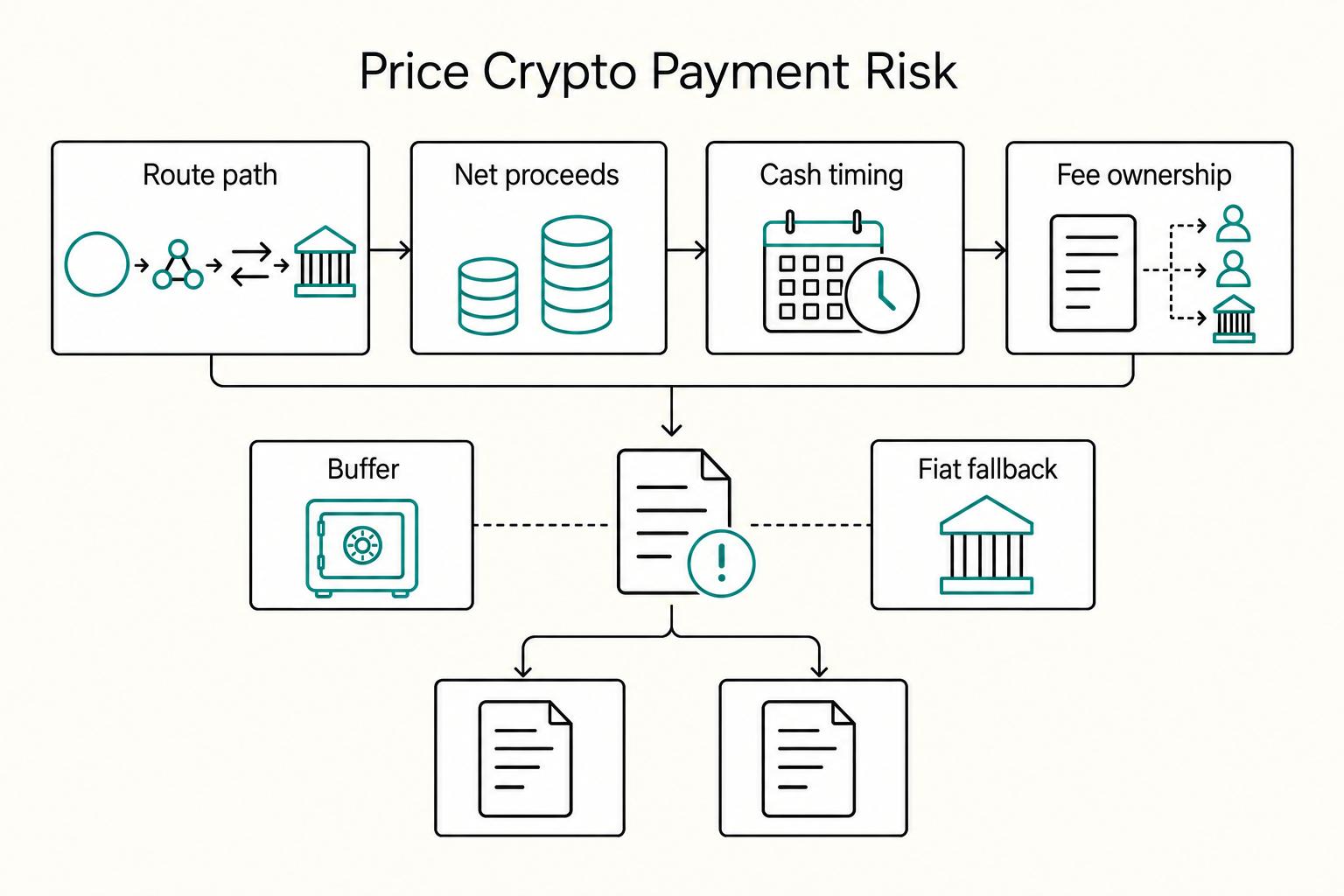
Crypto payments make sense only when they improve how reliably you get paid after you plan conversion, compliance, and recordkeeping up front. They can reduce friction in some international setups where traditional platforms add fees, restrictions, or extra steps. They also move risk onto conversion timing, exchange-fee exposure, and documentation quality, so use a simple acceptance test before you agree:

Beneficial Ownership Reporting in 2026 for FinCEN BOI Decisions
Use this as an execution guide, not a legal memo. Your job is to make a current BOI decision, document why you made it, and avoid cleanup later. The outcome is straightforward: confirm whether your entity is in scope, prepare what you need if it is, and keep dated proof of the basis you used.