

Quick Answer
Include the total fee, advance amount, due date and kickoff conditions in the quote and agreement. Send the invoice with a clear reference and confirm receipt in your own account before beginning under a payment-before-work policy. Define how the advance is credited, how cancellations are calculated and how unused expenses are returned.
Make the amount and start date clear#
Tell the client what is due before work begins, how it applies to the total fee and what happens if the project changes or stops. Include those terms in the quote or scope agreement so the deposit request arrives as part of the proposed deal.
The issue is simple: work starts before money clears, and you carry the risk: time, opportunity cost, and scope drift. Your job is to set payment boundaries that keep delivery predictable and cash flow stable.
A deposit can fund initial work, agreed expenses or a booking commitment. Define its purpose and how it is credited. Receiving money reduces the unpaid amount at risk, but does not eliminate refund obligations or payment reversals.
Keep scope, payment dates, included revisions, cancellation treatment and ownership or licensing terms in one agreement. If rights transfer depends on payment, state that explicitly rather than assuming the deposit establishes ownership.
Worked example: a project has $3,000 in labor and $300 in agreed third-party expenses. An illustrative advance of 30% of labor ($900) plus the $300 expense allowance totals $1,200. Credit that advance against the $3,300 project total, leaving $2,100 to invoice under the agreed schedule. Do not charge the expense allowance twice.
Agree terms, request payment and confirm kickoff#
Use the same basic sequence while adjusting the amount and milestones to the engagement:
| Step | What you do | Output you can file |
|---|---|---|
| Risk score | Decide how much delivery risk you carry (new client, unclear scope, long timeline). | A short note in your project folder |
| Deposit structure | Choose a safe default: Milestone Billing, Upfront Payment, or a Retainer Fee. | Payment schedule in the SOW |
| Script | Send one clear, copy/paste ask (below). | Email sent + saved |
| Start-work gate | Start only after (1) a signed scope document/SOW and (2) the deposit is received. | Timestamped SOW + paid invoice |
Example request: "The project fee is $3,300, including $300 of agreed expenses. The $1,200 advance is due after signature and before kickoff, and will be credited against that total. Once the agreement is signed and payment is confirmed, I’ll book the start date. The remaining $2,100 follows the milestones in the scope."
- Late deposit: pause scheduling, shift timelines based on payment date.
- Scope creep: update the SOW, then invoice the change before you build it.
- Payment dispute or chargeback: rely on your paper trail (SOW + invoice + delivery notes). For invoicing mechanics and record-keeping, keep a standard template in The Complete Guide to Invoicing as a Freelancer.
Check the applicable deposit and cancellation rules before describing an amount as non-refundable. Consumer contracts can impose protections that differ from negotiated business-to-business terms.
Choose a payment structure for the work#
A partial advance suits some custom projects. A small fixed task may suit full prepayment; longer projects can use several funded milestones. For ongoing work, define what a retainer purchases: capacity, specified services or another agreed commitment.
| Situation | Best match | Article guidance |
|---|---|---|
| Custom delivery | Deposits | Deposits work best when you sell custom delivery |
| New clients | Deposits | Especially useful for new clients |
| Larger projects | Deposits | Especially useful for larger projects |
| Low-ticket, fully automated products | Upfront Payment at checkout | Skip negotiated deposits and automate fulfillment |
| Client asks you to pay them a deposit | Decline | Treat it as a major red flag |
Choose the structure around costs, duration and the amount of unpaid work you can afford to carry. No single percentage is a universal freelance standard.
Show the amount, due date and credit against the total in the quote, agreement and invoice. If the client’s purchasing process cannot support your proposed advance, discuss that before promising a start date.
- You've heard "we'll pay next week," then watched kickoff slide, your calendar clog, and your pipeline stall.
- You've dealt with last-minute cancellations, renegotiations after kickoff, or "quick add-ons" that turn into free work.
- You want terms that reduce non-payment risk and shrink the surface area of payment disputes by keeping everything explicit in writing.
- You need an amount and schedule tied to actual project costs, duration and applicable rules.
If a supposed client asks you to pay a fee to get the work, stop and verify the offer. Upwork’s scam guidance flags requests to pay for credentials or buy equipment from a recommended supplier. Do not treat a pay-to-work request as your normal project deposit.
Compare each option by what it funds, when payment is due and what happens on cancellation.
| Criterion | What it means in practice | What you can verify quickly |
|---|---|---|
| Documented | Terms appear in the agreement and invoice | Both sides can identify the amount, timing and cancellation treatment |
| Reduces risk | Fewer unpaid hours, fewer disputes | Deposit is requested before work starts, especially for new clients or larger projects |
| Repeatable | Works across clients | You can copy/paste it during client onboarding |
| Reconcilable | Clean records, ledger-like traceability | Invoice ID matches payment confirmation |
Set terms, send the invoice and confirm the start#
Check the expenses and work you must fund, choose a manageable payment schedule and put it in writing.
Check the client, scope and timeline#
Skip fancy scoring if you will not maintain it. Use a risk checklist you can answer quickly:
- Client risk: first engagement, unclear decision-maker, slow comms.
- Scope risk: fuzzy deliverables, likely revisions, custom assets.
- Timeline risk: long runway, dependencies on their team.
- Opportunity cost: you will block calendar capacity you cannot resell quickly.
Use those facts to choose a structure:
- Milestone Billing when deliverables stay clear and the timeline stays short.
- Deposit Invoice when you reserve time and absorb real execution risk.
- Upfront Payment for small, fixed scopes or defined phases.
- Retainer Fee when they want ongoing capacity, not a single project.
State the kickoff conditions explicitly. Under a payment-before-work policy, both the agreement and the initial payment must be confirmed. A purchase order or invoice approval is permission to bill; it is not receipt of money.
Confirm payment and keep its reference#
Choose an agreed payment method and reconcile the receipt to the invoice. Verify status in your own bank or provider records rather than relying on a screenshot supplied by the client. A completed payment can still face a dispute or reversal under the method’s rules.
| Artifact | What it should contain | Why it protects you |
|---|---|---|
| SOW | scope, payment schedule, kickoff trigger | locks expectations and reduces ambiguity |
| Deposit invoice | amount, due date, reference to SOW | ties money to written terms |
| Ledger note (sheet or tool) | invoice ID ↔ payment confirmation ↔ milestone status | creates an audit trail you can follow later |
If a prospect wants "a quick start" but cannot confirm stakeholders or deadlines, route them into Upfront Payment for a tight discovery phase, then expand into Milestone Billing once the SOW stops moving.
Eight practical ways to request upfront payment#
Use the table to choose an option, then state its amount and timing in the agreement. These options serve different needs; they are not a ranked guarantee of lower risk.
| Approach | Use case | Key rule |
|---|---|---|
| Signed SOW + deposit to start | New clients, custom work | Start only after signature and payment clears |
| Materials and third-party costs upfront | Print, production, tools | Hard costs upfront before booking; labor on Milestone Billing |
| Milestone billing with a kickoff invoice | Longer builds or procurement-friendly language | Define milestones tightly in the SOW |
| Retainer to reserve capacity | Ongoing work | If unpaid, pause work and shift delivery |
| Paid discovery upfront | Strategy-heavy projects | Fund discovery first, then tighten the production SOW |
| Priority slot fee | Tight timelines | Require payment to confirm the calendar hold |
| Procurement workaround | Enterprise clients who resist deposits | Require payment for the agreed first phase; internal approval alone is insufficient |
| Transparent tiered policy | Mixed pipeline | Publish a simple tier rule and follow it consistently during client onboarding |
For the default partial advance, show the total fee, the initial amount, what it funds and how it will be credited. Agree the start conditions and cancellation calculation before issuing the invoice.
For materials or third-party costs, show a separate allowance or approved amount. Agree purchasing authority, evidence of actual spend and how unused amounts are returned or credited.
For milestone billing, distinguish a prepayment for the next phase from an invoice for work already delivered. Calling an invoice kickoff does not change its due date or the client’s procurement rules.
For a retainer, state the period, capacity or services included, rollover rules and cancellation terms. Any pause for nonpayment should follow the agreed notice and suspension provisions.
For paid discovery, define the output and price of that phase independently. The client can decide whether to commission production afterward; do not imply the discovery payment funds an unpriced build.
For a priority booking, define the slot, fee and consequences if either side cancels. Charging for reserved time does not by itself make every amount non-refundable.
For a procurement constraint, ask whether the client can fund a defined first milestone or a smaller paid phase. Invoice approval alone does not satisfy a payment-before-work policy. If advance payment is impossible and you do not want to extend credit, decline or postpone the engagement.
For tiered terms, document the project facts that justify each structure, such as expenses and duration. Apply the agreed schedule consistently rather than treating a tier as proof that the client will pay.
How much should the advance be?#
Start with the costs and work you must fund before the next payment, then check what is lawful and commercially workable.
| Bucket | What you're funding | What to charge upfront | Best tool |
|---|---|---|---|
| 1) Calendar reservation | Your time inventory (reserved start date, priority slot, blocked capacity) | A Retainer Fee or slot fee (defined in SOW) | Retainer Fee or priority slot |
| 2) Hard costs | Materials (and any other out-of-pocket costs you choose to collect before kickoff) | Agreed allowance or authorized costs, with unused amounts returned or credited | Upfront Payment line item |
| 3) Execution risk | The risk of unpaid labor, revisions, and scope entropy | Negotiated amount toward labor, credited against the total fee | Deposit Invoice + start-work gate |
Jobber’s current guide describes fixed amounts, percentages, material-cost amounts and full prepayment, with examples differing by service industry. Those home-service examples are not a universal freelance rate benchmark. Use the project’s actual costs and negotiated schedule to set your amount.
For the $3,300 example above, the $1,200 initial payment covers part of the labor and the expense allowance. A different project might use a smaller advance or several phases. Record the reason and the remaining balance instead of selecting 50% automatically.
- Deposit amount: the agreed percentage due on signature (Deposit Invoice).
- Work start gate: work starts after SOW signature and deposit clears.
- Remaining invoices: map to Milestone Billing with triggers (date-based or deliverable-based).
For a project with several reviewers, define who can accept work, the review window and the invoice trigger. A delivery-based trigger and an approval-based trigger allocate different risks; agree the one you intend rather than imposing a percentage because feedback may be slow.
Cancellation example: under the negotiated terms, $600 of completed work and $200 of authorized expenses are chargeable when the client stops the project. Of the $1,200 advance, $800 is applied and $400 remains to return. This illustrates a calculation, not a rule that every contract permits those deductions. Confirm applicable rights and avoid collecting twice for the same loss.
When to request payment and begin work#
Raise the advance while agreeing scope and price. Send the agreement and invoice together, then confirm kickoff after the agreed start conditions are met.
State the amount and due date directly: "To reserve the agreed start, please sign the scope and pay invoice [number] by [date]. I’ll confirm kickoff when both are complete."
Under your proposed payment-before-work policy, signature and receipt both precede production. If payment is late, communicate the effect on scheduling under the agreed terms instead of quietly beginning unpaid work.
Try not to "soft start" on spec. If you must begin to reduce uncertainty, route it into a paid discovery phase with upfront payment, then convert it into the full build once you're funded. If a prospect wants you to "just sketch a direction," route them into paid discovery, deliver a clear artifact, then let them opt into production.
What if a client refuses, delays, or tries to charge back the deposit?#
Clarify the constraint first: the amount, payment method, invoice wording, purchasing approval or the client’s refusal to pay before delivery. Respond to the actual issue.
If the client objects to a deposit, ask whether a funded first milestone or smaller paid discovery phase fits their process. Changing the invoice label alone does not solve a rule against advance payment.
| Option | What changes | What stays the same | Why it works |
|---|---|---|---|
| Milestone Billing with a kickoff invoice | For clients that permit advances but require milestone terminology, use a kickoff invoice due before work begins | Same SOW deliverables and acceptance criteria | Fits permitted advance billing; if advances are prohibited, consider a funded smaller phase or postpone |
| Reduced scope for a smaller upfront payment | You shrink deliverables so the upfront payment feels proportional | Same SOW structure, just a smaller version | You reduce your downside without funding their uncertainty |
Check whether the due date has passed before following up. Confirm the invoice reached the right approver and includes any agreed purchase-order reference. A delayed approval and a failed payment need different follow-up.
| Stage | Action |
|---|---|
| Invoice sent | Include due date, payment link, and the line "kickoff is pending payment" |
| First follow-up | Confirm they received it, confirm the correct approver, and resend the link |
| Pause notice | Give the agreed notice that kickoff remains unconfirmed; explain the scheduling effect |
| Close-out | Release or rebook the slot under the agreed terms and confirm any revised start |
For a card dispute, identify the reason and response deadline in your provider’s notice. Supply relevant agreement, payment and delivery evidence through its required process. Stripe’s guidance makes clear that the issuing bank decides the outcome; a signed SOW is evidence, not a guarantee of winning.
A split advance can work when its amounts and due dates are explicit. If a partial receipt is insufficient for the agreed next phase, confirm whether scope or start timing changes before proceeding.
Define cancellation treatment and preserve records#
Record the payee, project, amount received, credit against the fee and any return of unused funds. Keep the agreed cancellation terms with the invoice.
Keep agreement, invoice, receipt, delivery and refund records together. A screenshot or invoice marked paid should be traceable to your bank or provider’s transaction reference.
| Record to store | What "good" looks like | Why it matters |
|---|---|---|
| Written agreement or scope confirmation | Final version, dated, signed or explicitly approved in writing | Stops "we didn't agree to that" arguments later |
| Invoice or payment request | Unique ID, date, amount, what it applies to | Creates a clear reference point when someone forwards emails internally |
| Payment confirmation | Receipt, bank confirmation, or processor confirmation | Records the payment status and reference; does not guarantee it cannot be reversed |
| Delivery log | Links, timestamps, and "client received" notes | Keeps "work delivered" from turning into opinion |
| Identity verification notes | Notes on how you confirmed the company and the right point of contact (for example, the domain and the payment instructions you were given) | Helps reduce imposter-website risk and misdirected payments |
Verify changed payment instructions through a known contact route before acting. For an incoming deposit, check the payment in your own account; do not send money back to new account details just because an email asks you to.
For a UK consumer contract, the CMA’s deposit guidance warns against keeping large advance payments regardless of the circumstances. Cancellation charges should reflect genuinely incurred losses and should not be excessive. Other jurisdictions and business-to-business contracts require their own assessment. State what happens when either side cancels and how unused expenses are handled.
Confirm the terms before confirming kickoff#
Send a request the client can act on: the exact amount, invoice reference, due date and start conditions. Credit the payment correctly and retain the records needed to explain delivery or cancellation.
Frequently Asked Questions
How much deposit should a freelancer ask for?
Choose an amount based on the work and expenses you must fund, the interval to the next payment and applicable limits. The worked $3,300 project uses a $1,200 advance: $900 toward labor and $300 for expenses. It is an illustration, not a required percentage or industry average.
When should I ask for a deposit from a new client?
Ask before you start work, and treat it as a standard part of client onboarding for new clients and larger projects. The clean operational moment is right after the client approves scope and price, and before you schedule kickoff. Send the Statement of Work (SOW) and the payment request together so the deposit stays clearly attached to the terms.
How do I ask for a deposit professionally without sounding distrustful?
State the agreed total, advance, due date and start conditions in a neutral request. For example: "The $1,200 advance will be credited against the $3,300 project total. Once payment and the signed scope are confirmed, I’ll book kickoff."
Should I start work before receiving the deposit?
Do not start production work until the deposit arrives, because you want your cash flow to lead the project, not chase it. If you feel pressure, only "start" with a clearly paid, clearly scoped phase (for example, a paid discovery step billed as an upfront payment). Hypothetical: if a client wants you to "just draft something" while finance processes payment, you can instead offer to schedule kickoff once the deposit clears.
What if a client refuses to pay a deposit or keeps delaying it?
Ask what constraint blocks payment, then consider a smaller paid phase or funded milestone. If those cannot fit and you will not extend credit, decline or postpone. For a late payment, use the agreed notice and scheduling provisions rather than inventing a new penalty.
Deposit vs upfront payment: which should I use?
A partial advance reduces the unpaid balance you carry; full prepayment can fit a small fixed scope. Either needs a clear total, credit treatment, delivery promise and cancellation terms. Prepayment does not eliminate refund or dispute rights.
Are freelance deposits legal everywhere (and what should I check locally)?
Rules depend on location, contract type and the work. Check deposit limits, cancellation and consumer rights, and any tax or invoice requirements. A non-refundable label does not override those rights; get qualified advice for terms you cannot confidently apply.
Try a related tool
Researched and edited by the Gruv editorial team. Gruv builds cross-border billing, payouts, and finance-operations software for global businesses.
Sources
Includes 2 external sources outside the trusted-domain allowlist.
Educational content only. Not legal, tax, or financial advice.
Related Posts
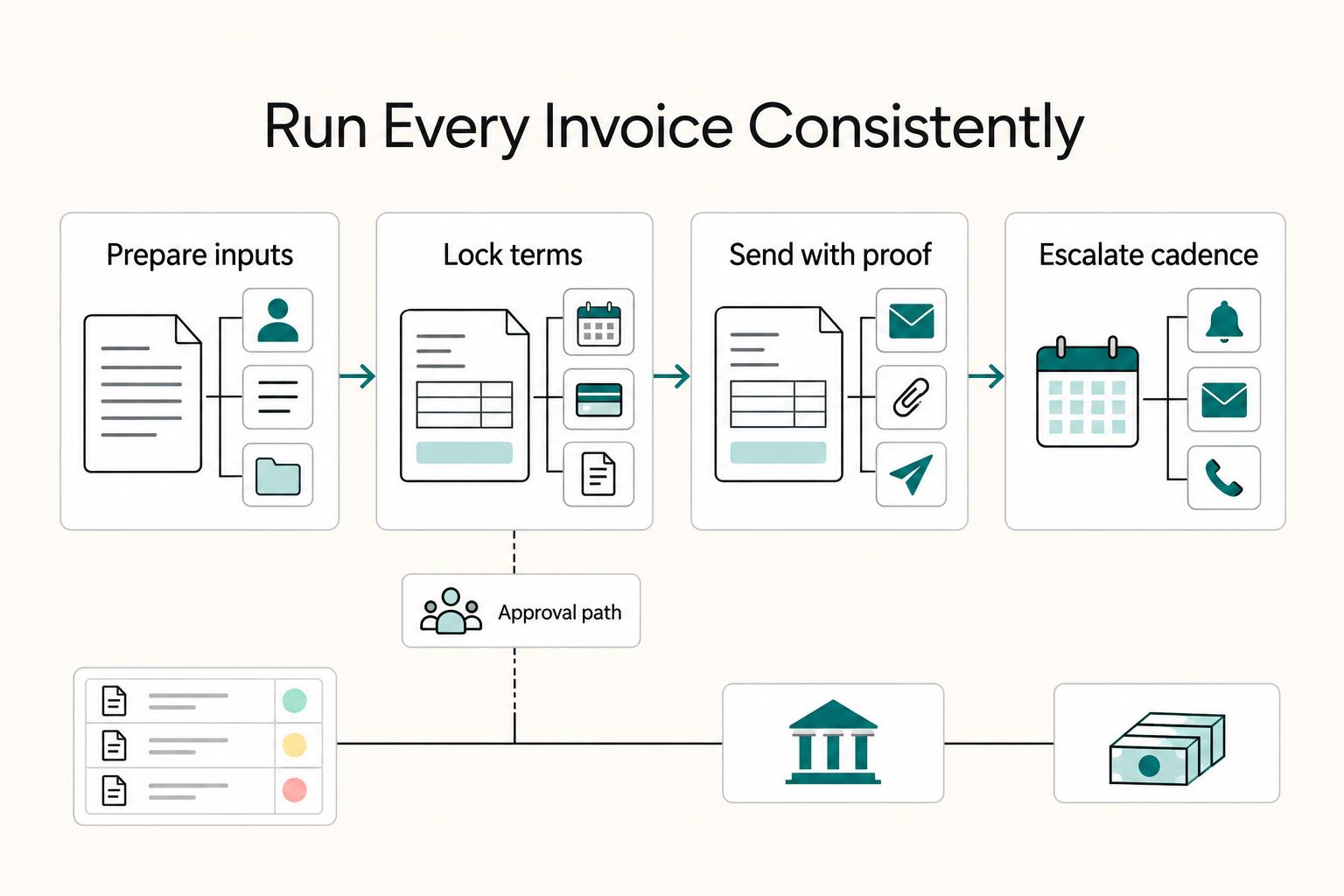
How to Invoice as a Freelancer Without Chasing Late Payments
Set one standard from the start: every freelance invoice should identify the client, itemize the work, state agreed terms, and be tracked until funds settle. That habit helps prevent avoidable payment delays and keeps cash flow more predictable.

The Freelance Payment Penalty: A Modeled Audit of Platform Fees, FX Spreads, and Payout Delays
The money rarely disappears through a single, easy-to-spot fee. The real loss is stacked. A marketplace takes its commission, a processor adds a charge for international cards, a bank or payment company converts the currency at a spread, a platform holds the funds before release, and a wire sheds a little to intermediaries on the way in. Each layer looks defensible on its own, but the worker feels the combined result as a smaller deposit and a later payday.

How to Respond to a Subpoena for Business Records
Move fast, but do not produce records on instinct. If you need to **respond to a subpoena for business records**, your immediate job is to control deadlines, preserve records, and make any later production defensible.