

Quick Answer
US expats in Europe can reduce medical cash-flow shock by verifying, in writing, whether local providers can bill their insurer directly, whether the policy fits their actual residence and work travel, and what reimbursement rules apply. If direct billing is not confirmed, treat the setup as reimbursement-first, plan for upfront payment risk, and keep a complete evidence file.
Why Your US Health Insurance is a Liability in Europe#
Your core liability is unverified coverage. If you cannot confirm network access, billing acceptance, and reimbursement limits in writing for your actual residence and travel pattern, you are making care decisions under financial uncertainty. The problem is not only whether a policy mentions overseas care. It is whether the policy can actually function where you live, where you receive care, and how providers expect to be paid.
1. Define the coverage gap before you need care#
Use this as a required verification workflow, not an assumption about how every policy works:
| Check | What to verify |
|---|---|
| Network access | Which local providers you can use under your policy terms |
| Billing acceptance | Whether those providers can bill your insurer directly or you must pay first |
| Reimbursement limits | What is repayable, which documents are required, and how the claim is processed |
If any of those answers is unclear, your policy is not yet operationally reliable for this use case.
Do not stop at a generic customer-service answer such as "you're covered abroad" or "claims can be submitted internationally." That does not resolve the real issue. You need to know whether a clinic or hospital you could realistically use will recognize the policy workflow in practice. You also need to know whether the insurer will support that workflow, and what happens if care starts before an authorization dispute is settled.
A useful way to test it is to run the sequence in order:
- Identify the country where you actually live.
- Identify the places you regularly travel for work.
- Ask the insurer how care is handled in each place.
- Ask likely providers how they handle that insurer or foreign policies generally.
- Get the answer in writing and save it in your file.
If the insurer says direct billing is available but the provider says it is not, treat that as unresolved until the payment path is clearly confirmed. If the provider will see you but only on a pay-first basis, then your real coverage model is reimbursement-first, not direct-payment care access, and you should evaluate it that way.
2. Treat reimbursement risk as a cash-flow risk#
If direct billing is not confirmed, the practical risk is cash-flow pressure. You may pay, submit a cross-border claim, and then wait for an outcome you cannot treat as guaranteed in advance. For self-employed operators, that timing uncertainty can affect operating cash when you need it most.
This often shows up as a sequencing problem. You may need to choose a provider quickly and agree to payment terms quickly. Then you may have to gather claim documents while recovering and spend follow-up time resolving missing paperwork, coding mismatches, or questions about medical necessity, authorization, or territorial scope. Even when a claim is eventually paid, the process can still cost time, attention, and working cash.
Think about the operational burden, not just the premium. If your likely path is "pay first, document everything, claim later," ask yourself:
- how much you may need to pre-fund on short notice
- how quickly you can access that cash without harming business operations
- who will organize claim documents if you are not in a position to handle them yourself
- how long unresolved reimbursement would be tolerable for your business
That is why reimbursement-first coverage can be a liability even when some overseas benefits exist. The issue is not only whether the policy may pay. It is whether the payment sequence works for your life.
3. Compare decision criteria, not healthcare ideology#
The useful comparison is not public versus private in the abstract. It is whether each path works for your billing, residency, and care-access reality.
| Decision point | What to verify with your US policy | What to verify locally |
|---|---|---|
| Who can bill whom | Whether direct billing is available outside the US | Whether the clinic/hospital accepts that billing path |
| Country-of-residence fit | Whether terms are written for ongoing residence abroad or only short travel | Whether your residency/care access setup needs additional enrollment or proof |
| Referral and authorization | Whether preapproval/referral rules apply outside the US | Whether the provider requires referral, authorization, or upfront payment |
| Payment timing | Whether you must pay at service and claim later | When payment is due and what invoice format is issued |
This comparison forces you to test the process from both sides. An insurer can describe a benefit one way, while a local provider may apply a different payment rule in practice. Your job is to close that gap before you rely on the policy.
One separate source-authority check matters here. When you validate public EU material, confirm the source is on the europa.eu domain. The official EU VAT e-Commerce One Stop Shop guides page includes an Explanatory Notes PDF dated 30 JULY 2021 (1.83 MB, 22 other languages). That helps with source-authority checks, but it does not cover healthcare insurance rules.
Keep that distinction clean. Official EU-domain material can help you identify whether a source is authoritative for the topic it actually covers. It does not answer your healthcare-access question by itself. For healthcare decisions, rely on your policy wording, written insurer confirmation, and local provider or authority confirmation tied to your actual residence setup.
4. Where your US policy may still help#
Your policy may still provide limited overseas support in some scenarios, but that scope is not defined here. Treat it as a possible supplement only after written confirmation, not as your primary Europe care strategy.
That means your U.S. policy may still be worth keeping if it fills a defined role you can verify. But do not let a possible secondary benefit substitute for a primary care-access plan that actually matches residence abroad.
Before selecting any plan in the next section, verify:
- direct billing capability with providers you could realistically use
- fit for your country of residence, not only short-term travel
- coverage across the places you actually travel for work
If you cannot verify all three, do not call the setup solved. Call it partially confirmed, then keep working the gaps. For a country-specific example, see How to Get Health Insurance in Portugal as a Digital Nomad.
Build Your Setup in Three Tiers: Scope, Route, References#
Once you have defined the gap, build your setup in layers. Treat each layer as unconfirmed until you have written proof. In this framework, Tier 1 is scope-fit, Tier 2 is filing route, and Tier 3 is reference alignment.
Before you compare options, keep source authority straight. Official EU materials cover VAT documents, not healthcare rules. These include the CBR public info notice dated 19 APRIL 2024 (124.87 KB) and the VAT e-Commerce Explanatory Notes dated 30 JULY 2021 with 22 other language versions. Use that as a reminder to validate official domains and keep non-VAT decisions in separately verified documentation.
The point of the framework is not complexity for its own sake. It is to keep you from solving the wrong problem first.
1. Confirm CBR scope first in Tier 1#
Your Tier 1 decision is whether your issue fits the CBR mechanism. CBR is presented as an advance-ruling path for complex cross-border VAT transactions.
Before you move on, do the following:
- Write the exact cross-border VAT treatment question you need resolved.
- Confirm the transaction facts are consistent across parties.
- Mark assumptions clearly until they are validated in writing.
This tier is about deciding whether CBR is the right path before drafting a request.
2. Route the request correctly in Tier 2#
You introduce a CBR request in the participating EU country where you are registered for VAT purposes. If multiple companies are involved, one company should submit the request on behalf of the others.
| Decision criterion | What to verify | Choose this when... |
|---|---|---|
| Filing country | Whether the country is listed as participating and matches VAT registration | The request can be introduced in the correct participating country |
| Multi-company setup | Which company will act on behalf of the others | One entity can submit a single coordinated request |
| Process reference | Availability of the public CBR info notice | Your internal process aligns to published guidance |
Tier 2 is about routing accuracy and ownership clarity before submission.
3. Align published guidance in Tier 3#
Do not treat unrelated materials as support for VAT conclusions. Use a document-first check:
| Source document | What to verify in writing | Use-case decision |
|---|---|---|
| CBR info notice | Public notice artifact date (19 APRIL 2024) and listed PDF size (124.87 KB) | Use as procedural reference for CBR handling |
| VAT e-Commerce Explanatory Notes | Entry date (30 JULY 2021) and multilingual availability (22 other languages) | Use as guidance context where relevant |
If you need healthcare or insurance conclusions, treat those as out of scope for this evidence pack and verify them separately.
4. Build your implementation file now#
A compact file saves time when process questions arise. Keep one file with:
- CBR public info notice and current request draft
- VAT registration details for the submitting entity
- Multi-company representation note (who files on behalf of whom)
- Dated confirmation log (open questions, answers received, unresolved items)
This file reduces process drift and keeps execution consistent.
If you want a deeper dive, read The Crypto Cautionary Tale: Why Freelancers Should Be Wary of Crypto Payments.
After you map your three-tier process, run a quick cash-flow check with the payment fee comparison tool to keep transfer costs visible in your operating budget.
Compliance Checkpoint: Is Your Insurance a Tax-Deductible Business Expense?#
It may be deductible, but only if you pass the IRS tests in sequence and substantiate each step. In this context, the self-employed health insurance deduction is figured on Form 7206 and reported on Schedule 1 (Form 1040), line 17 as an adjustment to income (above-the-line deduction), not an itemized deduction.
| Step | What to confirm | Key detail |
|---|---|---|
| Eligibility path | That you have one qualifying income path for the year | Net profit from Schedule C or Schedule F, partner net earnings from self-employment on Schedule K-1 (Form 1065), box 14, code A, or W-2 wages from an S corporation where you are a more-than-2% shareholder |
| Employer-plan test | Each month separately | If you were eligible for a subsidized employer health plan for any month, or part of a month, do not include premiums for that month even if you did not enroll |
| Plan setup and payment alignment | That the plan is established under your business | Confirm the policyholder, payer, coverage period, and business connection match your filing position |
| Substantiation file | That records are organized during the year | Keep premium payment proof, policy terms and effective dates, named insured and coverage details, business records, payroll or entity tax records when needed, and month-by-month employer-plan notes |
- Confirm your eligibility path first
You generally need one qualifying income path for the year: net profit from Schedule C or Schedule F, partner net earnings from self-employment on Schedule K-1 (Form 1065), box 14, code A, or W-2 wages from an S corporation where you are a more-than-2% shareholder. If none of these apply, stop here and treat the deduction as unavailable until a tax professional confirms otherwise.
- Apply the month-by-month employer-plan test
Check each month separately. If you were eligible for a subsidized employer health plan for any month, or part of a month, do not include premiums for that month in your deduction calculation, even if you did not enroll.
- Verify plan setup and payment alignment
This step matters. The plan must be established under your business, and the deduction is based on amounts paid during the tax year for qualifying coverage. Confirm the policyholder, payer, coverage period, and business connection all match your filing position. Coverage can include a child under age 27 at year-end, even if that child is not your dependent.
| Entity setup | Operational workflow | What to verify before filing |
|---|---|---|
| Sole proprietor or single-member LLC | A one-owner LLC is generally disregarded for income tax, so activity usually flows through the owner's individual return schedules | Verify the current form and reporting requirement for your setup before filing |
| S corporation | Premiums paid or reimbursed by the S corp for eligible owners are handled through W-2 wage reporting | Verify the current form and reporting requirement for your setup before filing |
- Build a substantiation file now (not at filing deadline)
Do this as you go, not when you are closing the year. For each tax year, keep one organized folder with:
- premium payment proof
- full policy terms and effective dates
- named insured and coverage details
- business records supporting qualifying profit/earnings path
- payroll/entity tax records when your setup uses wage reporting
- dated notes and a short month-by-month exclusion memo for employer-plan eligibility calls
The sequencing matters. Eligibility path, employer-plan test, plan setup, and substantiation should be checked in that order. If you skip ahead to "can I deduct this?" without confirming the earlier steps, you can end up with a number that looks reasonable but does not survive review.
A practical way to handle this is to maintain a simple year file as months pass rather than reconstructing it later. Save payment proof when the premium is paid. Save the policy version that applied during that period. If employer-plan eligibility changes during the year, note the month and keep the reason. If your entity setup affects how premiums are paid or reimbursed, keep the matching records together rather than trying to reconcile them at filing time.
The IRS requires you to prove expense elements, and employment-tax records should be retained for at least four years where payroll rules apply.
This section is educational, not tax advice. Confirm U.S. return treatment, state-level interactions, and country-of-residence implications with a qualified cross-border tax professional before filing.
You might also find this useful: Best Medical Evacuation Insurance for Remote Travelers.
Conclusion: Build Your Shield, Protect Your Autonomy#
Treat your health setup as a business continuity system, not a side purchase. The goal is simple: limit upfront cash exposure, reduce reimbursement friction, and keep care access fast enough that health issues do not disrupt client work.
| Layer | Purpose | What to verify |
|---|---|---|
| Major-risk protection | Coverage for large hospital events | Direct hospital payment, exclusions, and renewal terms |
| Routine-care access | Day-to-day path for GP visits, prescriptions, follow-ups, and routine tests | Your host-country route before relying on it; for cross-border care, reimbursement follows the rules and rates of the country where treatment is received |
| Travel-area coverage | Protection when work takes you outside your base country | Geographic scope, any trip-length limits, and medical evacuation wording |
The three-layer logic is simple:
- Major-risk protection: Your first layer is coverage for large hospital events. Prioritize contract language on direct hospital payment, exclusions, and renewal terms so you are less likely to front costs and wait on reimbursement.
- Routine-care access: Your second layer is your day-to-day path for GP visits, prescriptions, follow-ups, and routine tests. In EU countries, entitlement depends on your economic status and place of residence, and rules vary by country, so verify your host-country route before relying on it. For cross-border care, reimbursement follows the rules and rates of the country where treatment is received.
- Travel-area coverage: Your third layer protects you when work takes you outside your base country. Check geographic scope, any trip-length limits in the policy, and medical evacuation wording, since emergency transport to a higher-capability hospital could cost more than $100,000.
Before you buy or renew, run a simple filter. Can the insurer pay hospitals directly, or will you likely pay out of pocket first? How heavy is the reimbursement process? How much cash can your business float without strain? If coverage is reimbursement-first, assume a formal claims process and no reimbursement guarantee.
| Setup | Cash outlay | Admin burden | Care access speed | Business interruption risk |
|---|---|---|---|---|
| Reactive setup | Higher upfront payment risk | Higher, claim-heavy | More variable | Higher |
| Resilient setup | Lower when direct payment works | Lower, fewer reimbursement bottlenecks | Potentially faster when direct-payment channels are available | Lower |
The practical goal is not to find a product that sounds complete. It is to build a system you can actually operate: a clear payment path for major events, a workable routine-care path, and travel rules that match where you really go. If any of those remain unverified, the setup is still fragile.
Implement in this order:
- verify host-country enrollment rules against official destination guidance and the local authority or EU National Contact Point
- compare policy wording for direct payment and evacuation
- build an evidence file with policy wording and payment records
- confirm tax treatment using current Form 7206 instructions, if applicable
Before you finalize the setup or renew, confirm the destination-specific enrollment steps, waiting periods, deductibles, and reimbursement rules.
If you want a simpler way to invoice international clients and keep payment records organized while living abroad, explore Gruv for freelancers.
Frequently Asked Questions
How do you choose between travel insurance and international health insurance?
There is no universal rule in this article for choosing between travel insurance and international health insurance. Decide from the exact contract wording and written confirmation from the insurer or broker. Verify residency and stay-length terms, included and excluded benefits, evacuation wording, and policy duration, renewal, and waiting periods. If the wording does not match how you live and travel, treat it as a no-go until clarified.
Can you use the public health system in your country of residence?
This article does not answer public-system eligibility for your country of residence. Verify it with the local authority before you rely on private-coverage decisions. Confirm whether your status is eligible, whether registration or contributions are required, and whether access starts immediately or after any waiting period.
Is your policy tax-deductible on your U.S. return?
It may be deductible, but only if you pass the IRS tests and the plan is established under your business. The self-employed health insurance deduction is figured on Form 7206 and reported on Schedule 1 (Form 1040), line 17 as an adjustment to income. Check eligibility path, month-by-month employer-plan limits, plan setup, and substantiation, and confirm the final treatment with a qualified cross-border tax advisor.
Do you need evacuation coverage?
This article does not define standard evacuation coverage terms. Rely on the contract language for the specific transport risk you care about. Confirm the trigger event, approval requirements, allowed destinations, and included or excluded costs in writing before you rely on the policy.
If your business is cross-border inside the EU, what else should you verify besides insurance?
Keep insurance checks separate from VAT administration checks. For the EU cross-border SME scheme, verify your Member State of establishment process, EX number status, the EUR 100 000 Union turnover cap, and the single quarterly report covering turnover across all 27 Member States. Scheme access requires one prior notification in your Member State of establishment. If VAT treatment is complex, you can request a VAT Cross-border Ruling in the participating EU country where you are VAT-registered, and SME-scheme registration should usually finish within 35 working days unless anti-evasion checks extend it.
Try a related tool
Researched and edited by the Gruv editorial team. Gruv builds cross-border billing, payouts, and finance-operations software for global businesses.
Sources
Educational content only. Not legal, tax, or financial advice.
Related Posts
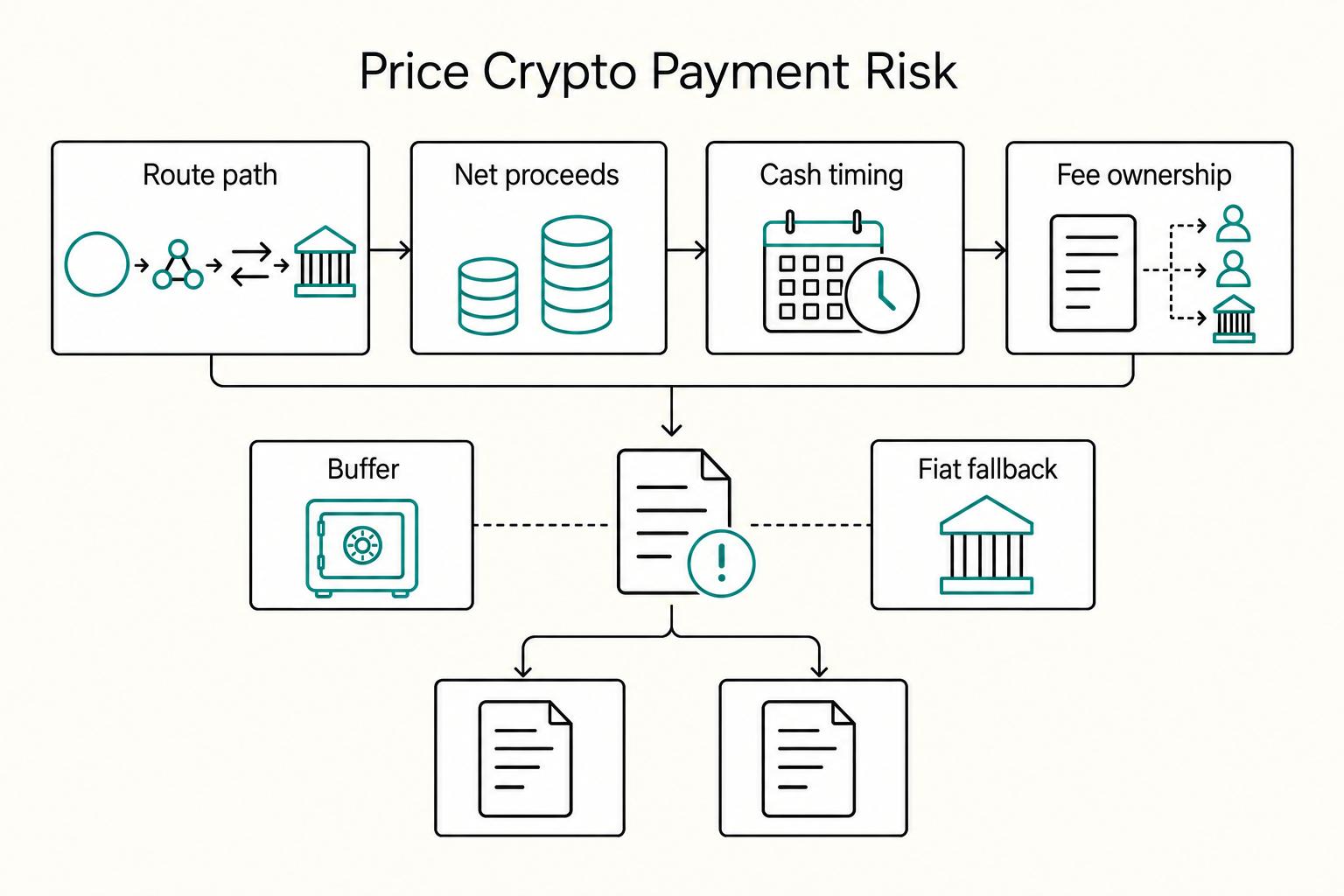
Freelance Crypto Payments That Protect Cashflow and Reduce Disputes
Crypto payments make sense only when they improve how reliably you get paid after you plan conversion, compliance, and recordkeeping up front. They can reduce friction in some international setups where traditional platforms add fees, restrictions, or extra steps. They also move risk onto conversion timing, exchange-fee exposure, and documentation quality, so use a simple acceptance test before you agree:

Beneficial Ownership Reporting in 2026 for FinCEN BOI Decisions
Use this as an execution guide, not a legal memo. Your job is to make a current BOI decision, document why you made it, and avoid cleanup later. The outcome is straightforward: confirm whether your entity is in scope, prepare what you need if it is, and keep dated proof of the basis you used.
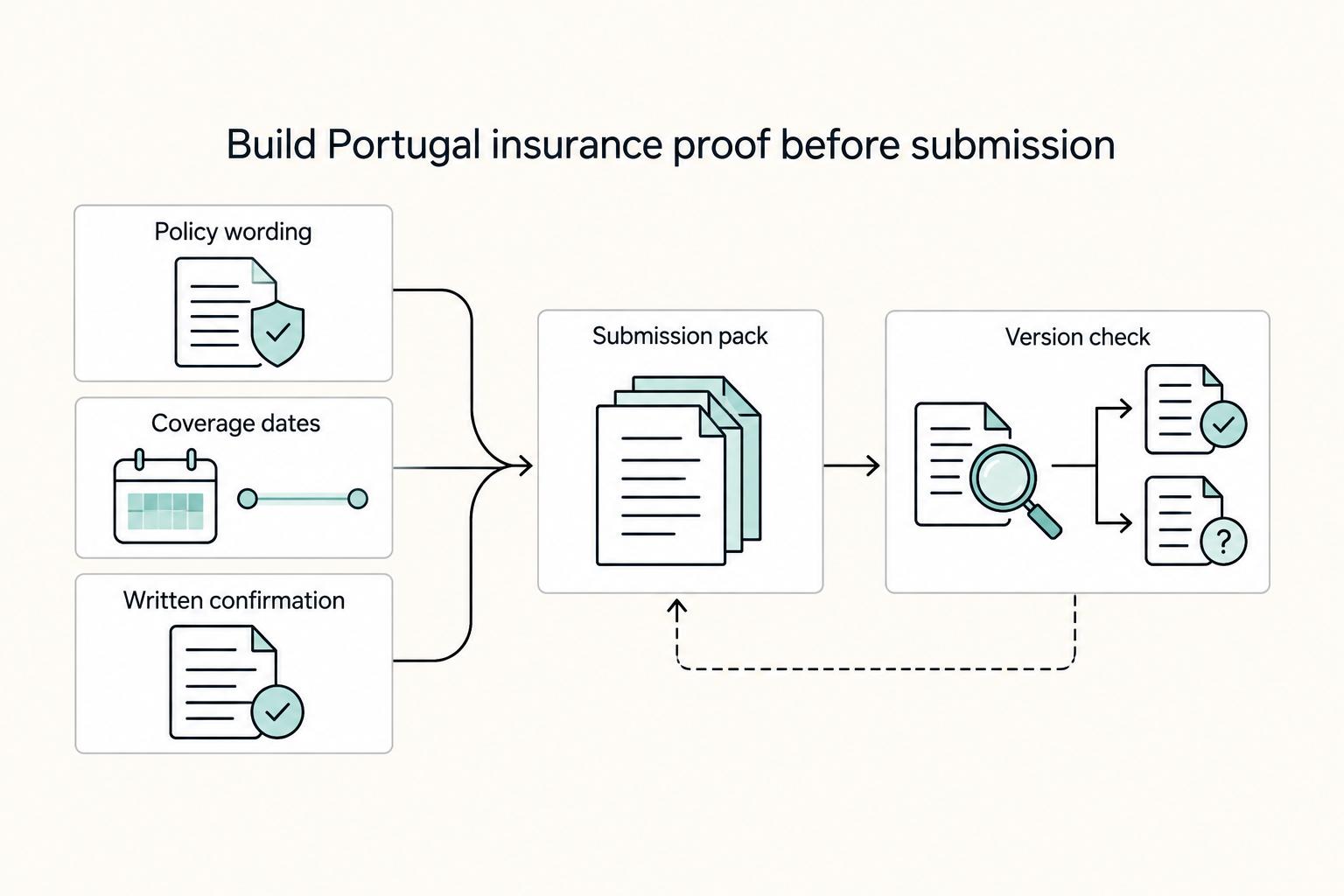
How to Get Health Insurance in Portugal as a Digital Nomad
If you are searching for health insurance portugal nomad options, treat the decision as part of your visa file before you treat it as a product search. The policy matters, but timing, wording, and document quality often determine whether your file moves cleanly or turns into a clarification request.