
Quick Answer
The best saas localization services are the ones that pass your compliance and workflow gates before they win on features. Start by choosing your model platform-first, managed-service-first, or hybrid then score vendors with fixed weights for compliance, integration, QA, pricing, and implementation risk. Finish with a pilot that validates real release behavior and closes unknowns before full rollout.
Pick a localization partner you can defend in a stakeholder meeting#
A defensible way to choose from SaaS localization services is to rank vendors only after they clear compliance and workflow gates. You need global-ready internationalization, but you also need clean controls. Add random tools or opaque translation services now, and you create procurement friction, brittle handoffs, and risk you will pay for later.
If you're the CEO of a business-of-one, you are also the person who has to explain this vendor choice clearly. Finance, legal, and engineering will ask, "why this one?"
Use a compliance-aware shortlist method for the first pass: pass-fail gates plus a weighted scorecard. Carry anything unresolved into a pilot instead of guessing. Treat supplier due diligence as a minimum step, not an optional extra.
- Compliance floor: Require documented data-processing terms, a clear GDPR posture, and current control evidence before feature scoring. Smartling publicly states compliance with PCI, SOC 2, HIPAA, and GDPR standards, and Lokalise publicly states SOC 2 Type 2 certification. This removes weak options before internal debates start.
- Workflow reality: Check how each Translation Management System fits product and ops ownership, then validate integrations in your real release path. Phrase publicly advertises native GitHub, GitLab, and Bitbucket integrations. This forces you to test handoffs where failures actually happen.
- Scoring discipline: Set relative weights before you compare vendors, then document what you verified versus what still needs a pilot. This gives you a decision you can defend under scrutiny.
Scenario: you are shipping a multilingual onboarding update and an engineer asks who owns glossary changes, rollback approval, and webhook failures. This framework gives you a direct answer because you assign owners before you sign.
Use this standard to keep trust high. State what you can verify today, label unknowns explicitly, and do not treat compliance badges as proof of operational fit. That means fewer surprises in procurement, cleaner cross-functional handoffs, and a safer default for scaling.
If you need to tighten your compliance baseline first, read What is a Data Processing Agreement (DPA) and When Do You Need One?.
Who is this list for and when should you skip it#
Use this list when you need a repeatable localization system across product, engineering, and content; if you only need occasional translation help, a full shortlist is usually more than you need right now. You already have red-flag gates; now apply a fit filter before you compare SaaS localization services. This keeps the process lean and prevents tool sprawl when your need does not justify a full internationalization workflow.
If you are choosing among options like Smartling, Phrase, or broader translation services, decide your operating model first. A shortlist only helps when your team can actually run the workflow it introduces.
Run this fit check first#
| Profile | Use when | Main focus |
|---|---|---|
| Fit profile | You need a Translation Management System (TMS) that centralizes recurring localization work across teams and releases | "We ship constantly and localization keeps breaking at handoffs" |
| Skip profile | You only translate ad hoc copy and do not plan to use repository automation or deeper integrations | If you will not use native GitHub, GitLab, Bitbucket integrations or TMS API workflows, you may add complexity you will not operate |
| Control profile | You cannot run minimum procurement hygiene yet | Start with DPA review against GDPR Article 28(3) contract requirements and processor guarantee checks, then verify SOC 2 and GDPR claims |
| Outcome profile | You must defend auditability, pricing logic, and workflow ownership in stakeholder review | Use a scorecard-led process and record what you verified versus what still needs a pilot |
- Fit profile: Use this guide if you need a Translation Management System (TMS) to centralize recurring localization work across teams and releases. This is the "we ship constantly and localization keeps breaking at handoffs" profile.
- Skip profile: This guide is usually overkill for now if you only translate ad hoc copy and do not plan to use repository automation or deeper integrations. Phrase publishes native GitHub, GitLab, and Bitbucket integrations plus TMS API workflows. If you will not use that capability, you may add complexity you will not operate.
- Control profile: Pause vendor selection if you cannot run minimum procurement hygiene yet. Start with DPA review against GDPR Article 28(3) contract requirements and processor guarantee checks, then verify the SOC 2 and GDPR claims vendors publish during screening. Do not stop at badges alone.
- Outcome profile: Use this framework when you must defend auditability, pricing logic, and workflow ownership in stakeholder review. A scorecard-led process gives each owner a clear role and a clear record of what you verified versus what still needs a pilot.
Scenario: an engineer pushes new strings from GitHub while a content lead updates copy in design files. This fit check helps you assign ownership, prevent release drift, and keep procurement aligned with delivery reality.
If your team needs a tighter operating baseline before vendor scoring, read A Guide to Internationalizing and Localizing Your SaaS Product.
Should you choose a platform first or managed service first?#
A practical default: lean platform first when your team can own QA and release operations, and lean managed service first when faster outsourced execution and broad language coverage matter more than internal control. Before you score vendors, pick your operating lane. If you skip this step, you will overvalue demos and undervalue what it takes to run localization week after week.
| Lane | Examples | Ownership model | Main upside |
|---|---|---|---|
| Platform first | Phrase, Lokalise, Smartling | You keep workflow ownership inside your stack | More control, auditability, and tighter integration with your product lifecycle |
| Managed service first | BLEND, TransPerfect | You outsource more execution so your internal team can stay focused on roadmap delivery | Faster execution with less internal coordination |
| Hybrid model | TMS core plus external linguists | You keep a platform backbone while external specialists handle volume or specific language needs | A balance of control and delivery capacity |
A Translation Management System (TMS) centralizes localization work and automates repetitive tasks. A managed localization service outsources delivery to an external team that runs translation operations for you.
- Platform first (Phrase, Lokalise, Smartling): You keep workflow ownership inside your stack, which fits teams with release discipline already in place. Phrase publishes API-first localization capabilities for scale, which supports automation-heavy internationalization programs. The upside can be more control, auditability, and tighter integration with your product lifecycle.
- Managed service first (BLEND, TransPerfect): You outsource more execution so your internal team can stay focused on roadmap delivery. TransPerfect presents more than 30 years as a translation services company, and BLEND promotes a model that combines human experts with machine translation plus broad language coverage claims (for example, 120 target languages). The upside can be faster execution with less internal coordination, but you still have to validate service depth and handoff quality in your real workflow.
- Hybrid model (TMS core plus external linguists): You keep a platform backbone while external specialists handle volume or specific language needs. Smartling publicly presents both a translation management system and localization services, which shows that both lanes can coexist in one stack. Webhooks support event-driven workflow updates, and Translation Memory reuses approved strings to improve consistency and turnaround. The upside is a balance of control and delivery capacity when you cannot staff every function internally.
Use this lens before you commit. Platform-first can lower process ambiguity but demands stronger internal discipline. Managed-service-first can speed execution, but it can raise vendor lock-in risk if switching costs grow.
Scenario: you ship weekly product updates and suddenly need multi-market support coverage. A hybrid start can give you momentum while you build internal ownership. If you want a deeper operating blueprint, read A Guide to Internationalizing and Localizing Your SaaS Product.
What must pass before any feature comparison#
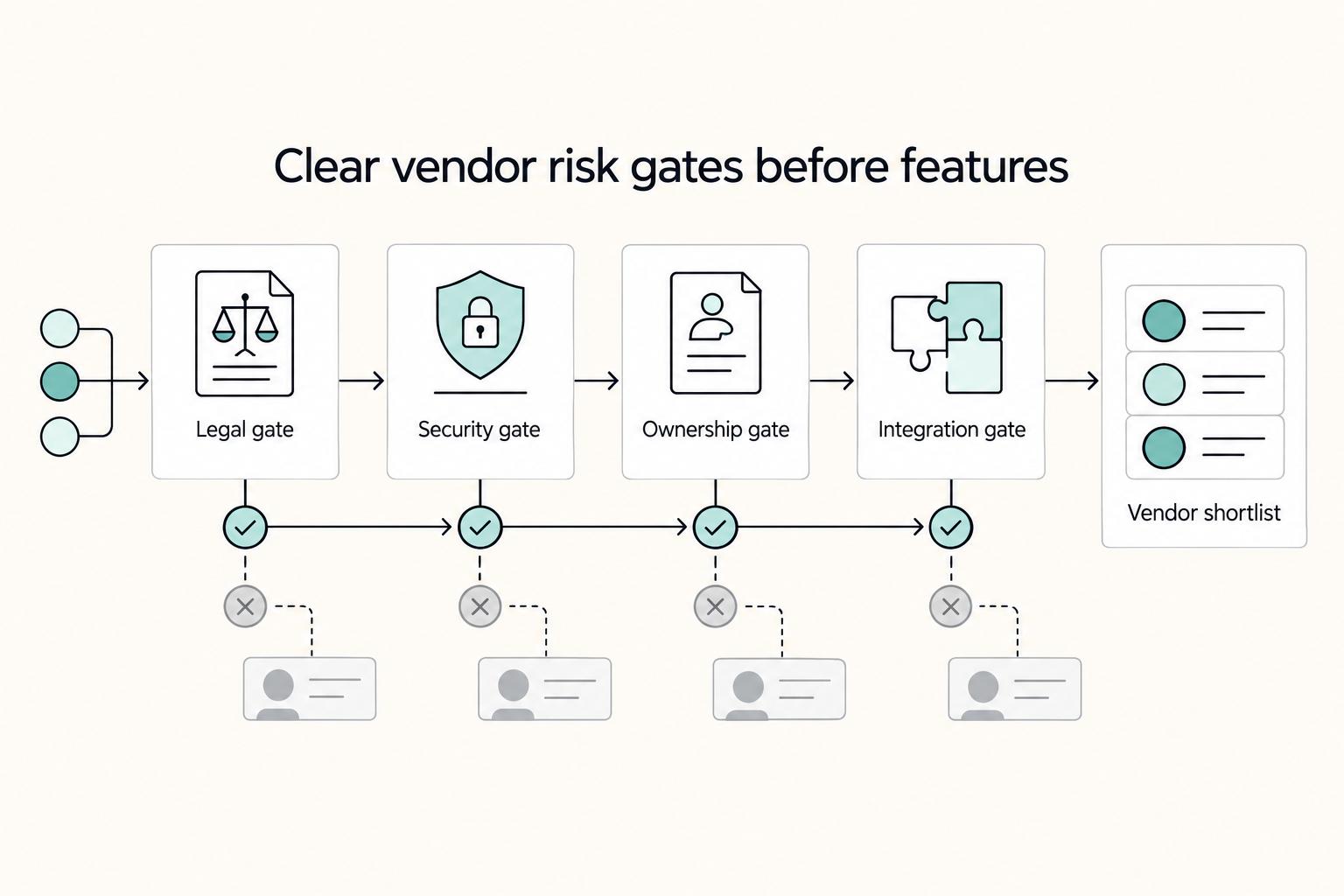
Pass legal, security, ownership, and integration gates before you score features, or your shortlist can fail in production. Lock your pass-fail criteria before polished UI or AI messaging skews judgment. This is where disciplined buyers separate real internationalization capability from sales momentum.
Use one gate sheet across shortlisted platforms and managed translation services. Track two evidence states for every claim: verified now and not yet verified.
| Gate | What to check now | Evidence to collect | Key differentiator |
|---|---|---|---|
| Compliance gate | Confirm signed DPA terms and clear GDPR Article 28 processor contract language before feature scoring. Review SOC 2 scope across security, availability, processing integrity, confidentiality, and privacy. | Executed DPA version, legal owner signoff, and SOC 2 report scope with report period dates. If contract dates differ, verify which DPA version applies. | You block legal risk early instead of negotiating around it later. |
| Ownership gate | Name owners for release approvals and rollback decisions, and set required reviewers in deployment workflows. | RACI table, escalation path, and environment approval rules. | You prevent handoff confusion during release pressure. |
| Integration gate | Validate REST API depth and webhook behavior in a small paid pilot, not a demo. | Pilot test log with API calls, webhook event outcomes, and failure-handling steps. | You measure operating fit where failures actually happen. |
| Unknowns gate | Keep turnaround, QA accuracy, support SLAs, and incident response quality in a not yet verified column until pilot evidence closes them. | Explicit risk register with owner, due date, and exit criteria. | You stop soft assumptions from driving procurement. |
Scenario: you choose a vendor because the dashboard looks clean, then your first release misses a rollback owner when webhook events fail. This gate model blocks that failure mode by forcing accountability before contract signature.
Decision rule: if any red-flag gate fails, pause feature comparison. If gates pass, move to weighted scoring with confidence.
For DPA basics before legal review, use What is a Data Processing Agreement (DPA) and When Do You Need One?.
How to score vendors in under an hour#
Build a weighted scorecard first, then rank vendors by verified evidence instead of polished demos. Once your gates are defined, you can compare vendors quickly without losing procurement discipline. This step gives you a defensible way to evaluate localization vendors across platforms and managed providers.
Use five weighted buckets and lock them before scoring: compliance readiness, workflow fit, integration depth, pricing predictability, and implementation risk. Include price or cost as a scored factor in every final decision.
| Vendor | Best for | Pricing unit | Key integration surfaces (REST API, GitHub) | QA controls (Translation Memory) | Known limitations | Unknowns to verify | Evidence status |
|---|---|---|---|---|---|---|---|
| Phrase | API-led TMS teams running continuous internationalization | Not yet verified in this pass | Documented TMS API workflow coverage; verify GitHub behavior in pilot | API coverage includes TM workflow surfaces; verify quality thresholds | Configuration depth can increase setup effort | Real throughput, support SLA, total landed cost | Partially verified |
| Lokalise | Product teams that want repo-centered localization loops | Not yet verified in this pass | GitHub flow supports pull request loop; verify API scope in pilot | Verify TM governance and QA policy in pilot | Process fit depends on release discipline | Failure handling, rollback speed, support quality | Partially verified |
| Smartling | Teams that need mature developer workflow integration | Not yet verified in this pass | GitHub Connector documented; verify API depth for your use case | Verify TM quality controls and reviewer workflow | Scope may exceed needs for smaller teams | Escalation response and implementation overhead | Partially verified |
| LILT | Teams evaluating localization workflow options | Not yet verified in this pass | Not yet verified in this pass | Not yet verified in this pass | Evidence set incomplete at this stage | Integration depth, QA performance, SLA terms | Unknown |
| BLEND (managed) | Teams prioritizing outsourced execution with broad connector coverage | Not yet verified in this pass | Vendor states 200+ connectors and APIs; validate priority systems in pilot | Verify TM handling and handoff controls | Higher dependency risk if process ownership stays external | Change-order risk, incident response, exit path | Partially verified |
Conflict-of-interest rule: separate objective checks from vendor-authored claims, then keep each row marked verified, partially verified, or unknown until pilots close the gaps.
Scenario: engineering prefers Phrase for API control while ops wants BLEND for speed. Score both with your weights, rank your shortlist with a backup option, then write one sentence per choice that ties directly to the weighted result.
For pricing normalization before final ranking, review Value-Based Pricing: A Freelancer's Guide.
The best SaaS localization options by operating model#
Match the vendor to your operating model first, then use your weighted scorecard to choose the right SaaS localization service. This is the practical shortlist view. It connects procurement logic to day-to-day internationalization execution, so you choose the option your team can actually run without constant escalation.
| Option | Best for | Workflow evidence | Key differentiator |
|---|---|---|---|
| Lokalise | Product-led SaaS teams that need fast collaboration across product, engineering, and content | Publicly documents both GitHub integration and Figma design localization workflows | Strong cross-functional workflow fit in one platform |
| Smartling | Teams that prioritize governance and structured rollout controls | Publicly states PCI, SOC 2, HIPAA, and GDPR compliance posture, and documents a GitHub connector | Compliance-first positioning with developer integration support |
| Phrase | Teams balancing developer control with localization operations | Documents API automation across projects, jobs, Translation Memory, and delivery, and provides CLI support | Deep automation coverage for engineering-led teams |
| LILT | Teams optimizing AI-assisted throughput while keeping human verification in the loop | Positions its workflow as AI automation combined with expert human review | Human-in-the-loop model built into AI translation flow |
| BLEND or TransPerfect | Managed-service-first buyers with limited internal localization ops capacity | BLEND presents a managed model with broad connector and API coverage plus a large network of experts across many languages; TransPerfect positions GlobalLink as a translation management system with more than three decades of enterprise use | Outsourced execution breadth with platform support |
- Lokalise. Best for product-led SaaS teams that need fast collaboration across product, engineering, and content. Lokalise publicly documents both GitHub integration and Figma design localization workflows, which can tighten release handoffs. Use case: shipping multilingual app updates from design through repository sync. Key differentiator: Strong cross-functional workflow fit in one platform.
- Smartling. Best for teams that prioritize governance and structured rollout controls. Smartling publicly states PCI, SOC 2, HIPAA, and GDPR compliance posture, and it also documents a GitHub connector for developer workflows. Use case: regulated expansion where compliance evidence must clear before launch. Key differentiator: Compliance-first positioning with developer integration support.
- Phrase. Best for teams balancing developer control with localization operations. Phrase documents API automation across projects, jobs, Translation Memory, and delivery, and it provides CLI support for operational workflows. Use case: API-driven release localization with API, CLI, and Translation Memory. Key differentiator: Deep automation coverage for engineering-led teams.
- LILT. Best for teams optimizing AI-assisted throughput while keeping human verification in the loop. LILT positions its workflow as AI automation combined with expert human review. Use case: high velocity content updates where you enforce explicit QA gates before release. Key differentiator: Human-in-the-loop model built into AI translation flow.
- BLEND or TransPerfect. Best for managed-service-first buyers with limited internal localization ops capacity. BLEND presents a managed model with broad connector and API coverage, plus a large network of experts across many languages. TransPerfect positions GlobalLink as a translation management system with more than three decades of enterprise use. Use case: rapid multi-market launch with clear governance owners. Key differentiator: Outsourced execution breadth with platform support.
Scenario: you need new market coverage fast while engineering protects sprint focus. Run one platform-first option and one managed option through the scorecard, then keep one backup ready.
For rollout planning details, read A Guide to Internationalizing and Localizing Your SaaS Product.
How do you run a low risk 30 60 90 rollout#
Run a gated 30 60 90 plan that proves legal readiness, integration reliability, and clear ownership before you scale localization scope. Once you have a shortlist, stop debating and start proving. This rollout plan keeps internationalization controlled across product, engineering, and ops.
Use phase gates with explicit pass criteria#
| Rollout window | Scope | Pass criteria | Key differentiator |
|---|---|---|---|
| Days 1 to 30 | Pilot one product area and one core workflow in your Translation Management System (TMS) tied to webhook delivery. | Complete contract gating under GDPR Article 28, verify processor safeguards, and confirm webhook handling returns 2XX within 10 seconds with a tested redelivery path. | Exposes legal and integration risk early, before broad rollout. |
| Days 31 to 60 | Productionize controls with named owners for glossary policy, Translation Memory hygiene, and release approvals. | Every release shows owner accountability, approval records, and repeatable checkpoints across TM and glossary controls. | Replaces heroics with repeatable operating discipline. |
| Days 61 to 90 | Harden governance with regular scorecard reviews, unknowns closure tracking, and fallback paths for reliability drops. | Team documents and rehearses fallback execution so delivery can continue during vendor instability. | Protects continuity when platform conditions change. |
A SaaS localization program manager at Lyft captured the operating standard:
"We leveraged Smartling to make sure we had automation for all of our content: no matter if it was web, app, help center."
Apply that principle across your localization stack.
Scenario: you localize onboarding first and webhooks start failing after release. Pause expansion, redeliver missed events, and run your fallback path until reliability returns.
Keep governance evidence from day one#
Finance and procurement need a clean trail, not reconstructed memory. Keep these records current:
- Maintain audit-ready change logs for scope changes, QA exceptions, and control updates.
- Share planned-versus-delivered rollout status and open unknowns in a recurring report.
- Store traceable approval history for legal, product, and release decisions.
- Tie renewal recommendations to scorecard movement and unresolved risk, not vendor narrative alone.
If your team still debates processor terms, align on What is a Data Processing Agreement (DPA) and When Do You Need One?. Do it before renewal planning.
Choose the safest default then scale with proof#
Pick your lane first, pass red-flag gates next, and scale only when pilot evidence confirms your choice. Move from analysis to execution discipline. This sequence turns a vendor shortlist into a defensible operating plan for internationalization, whether you are comparing Lokalise, Smartling, Phrase, or managed translation services.
- Step 1: pick your lane. Choose platform-first if your team can own workflow controls inside a Translation Management System (TMS), or choose managed-service-first if you need outside execution capacity quickly. Key differentiator: you reduce rework because your staffing model matches your tool model before contract work starts.
- Step 2: clear legal and assurance gates. When a processor handles personal data, put a written controller-processor contract in place, require processing only on documented instructions, and include audit and inspection rights. Review SOC 2 evidence as a controls report for security and related trust criteria, then decide if residual risk fits your context. Key differentiator: you avoid procurement drift and keep compliance decisions explicit.
- Step 3: rank with a transparent scorecard. Weight compliance readiness, workflow fit, integration depth, pricing predictability, and implementation risk. Treat unknowns as open risks you must close in pilot, not assumptions you can ignore. Key differentiator: stakeholders can challenge your conclusion and still reproduce your decision.
- Step 4: run a constrained pilot. Use a pilot with clear success and failure criteria and a defined timeframe before full rollout. Test integration handoffs, API behavior, webhook responsiveness, and translation quality in a real release path. Key differentiator: evidence replaces demo confidence.
- Step 5: document and scale. Keep accountability records, approval history, and change logs so you can defend renewal and expansion decisions. If your first pilot between Smartling and Phrase shows workflow interference, pause scale, close the gap, and keep your backup option active. Key differentiator: you protect continuity while improving confidence.
Start with a small shortlist and one backup option, complete the pilot, and publish a one-page decision memo. For deeper rollout mechanics, use A Guide to Internationalizing and Localizing Your SaaS Product next.
Frequently Asked Questions
What is the difference between a localization platform and a localization service company for SaaS?
A localization platform gives your team a Translation Management System (TMS) that automates and coordinates translation workflows. A localization service company acts as a managed partner that can run end to end translation services for you. Platform-first teams keep more process control, while service-first teams buy execution capacity.
How do I choose localization support when my team is small and has limited operational bandwidth?
Start with owner capacity, not brand preference. If no one can own workflow policy, QA signoff, and release approvals, managed support is the honest starting point. If you can assign those owners and keep them accountable, platform-first can work well. If you want internal control of core workflows but still need help with volume, run a hybrid model and make the handoffs explicit in your RACI.
Which should I prioritize first: integration quality, QA controls, security posture, or price?
Do not force one universal order for every SaaS team. Define minimum security and compliance gates, then weight integration quality, QA controls, and price based on your operating model and risk tolerance. The practical rule is simple: gates keep you safe, weights help you choose.
How do I compare pricing models across word, string, seat, and language counts without bad assumptions?
Normalize all vendor quotes into one common usage scenario before you compare costs. Do not compare packaging labels directly. Instead, write down the workflow you will run (how work enters the system, who approves it, what gets automated, and what gets billed) and map each vendor’s pricing units to that scenario. If you skip normalization, you end up choosing based on how plans are packaged instead of how your operations will actually spend.
What is the minimum due diligence checklist before signing any localization vendor?
Use a short checklist: technical integration depth, security and compliance posture, and clear workflow ownership. Ask direct questions about integration behavior in production (for example GitHub, REST API, CLI, and webhooks), then confirm in a pilot. If legal requirements apply, confirm DPA and GDPR obligations early, and align stakeholders with What is a Data Processing Agreement (DPA) and When Do You Need One?.
How do I avoid choosing a tool that demos well but fails in real release operations?
Run a constrained pilot in your real CI/CD path, with your own repositories and approval flow. Test the automation surfaces you will depend on, especially webhooks and repository handoffs, because they expose weak integration quickly. Judge results by workflow interference, handoff clarity, and release reliability, not by demo polish.
When should I run a hybrid model with a TMS plus external linguists instead of fully managed services?
Choose hybrid when you need platform governance but cannot staff full language operations internally. A TMS that lets internal teams and external translators collaborate in one system supports that model with more control than fully outsourced delivery. This approach often fits teams evaluating SaaS localization options across both platform and service models.
Try a related tool
Researched and edited by the Gruv editorial team. Gruv builds cross-border billing, payouts, and finance-operations software for global businesses.
Sources
- assets.publishing.service.gov.uk/media/60a388398fa8f56a3a295910/Testing_and_p...trusted
- commission.europa.eu/publications/standard-contractual-clauses-co...trusted
- csrc.nist.gov/pubs/sp/1326/ipdtrusted
- legislation.gov.uk/eudr/2014/24/article/67trusted
- procurementpathway.civilservice.gov.uk/documents/best-practice/testing-and-piloting...trusted
Educational content only. Not legal, tax, or financial advice.
Related Posts
Value-Based Pricing for Freelancers Under Real Payment Risk
Value-based pricing works when you and the client can name the business result before kickoff and agree on how progress will be judged. If that link is weak, use a tighter model first. This is not about defending one pricing philosophy over another. It is about avoiding surprises by keeping pricing, scope, delivery, and payment aligned from day one.

SaaS Internationalization for Teams That Need Launch Control
**You do not get orderly global growth by translating strings faster. You get it by treating saas internationalization as an operating discipline with named owners, launch gates, and documented stop conditions.** This tends to become true once you move past 1-2 languages or start shipping weekly updates across multiple markets. At that point, localization behaves more like infrastructure: invisible when it works and expensive when you ignore it.

When Freelancers Need a Data Processing Agreement and What to Redline First
Start with one decision before kickoff: if you will touch client personal data on client instructions, settle the DPA before anyone gets live access.