
Quick Answer
Start with three channels in sequence: use `r/digitalnomad` to pressure-test city assumptions, switch to destination groups for local constraints, then keep Nomads.com or DailyRemote only if they produce a scheduled next step. Require proof you can verify, like recent housing or internet details, a named contact, or a booked meetup. If advice stays generic for two weeks, replace the channel instead of adding more communities.
How to Choose a Community Before and After You Move#
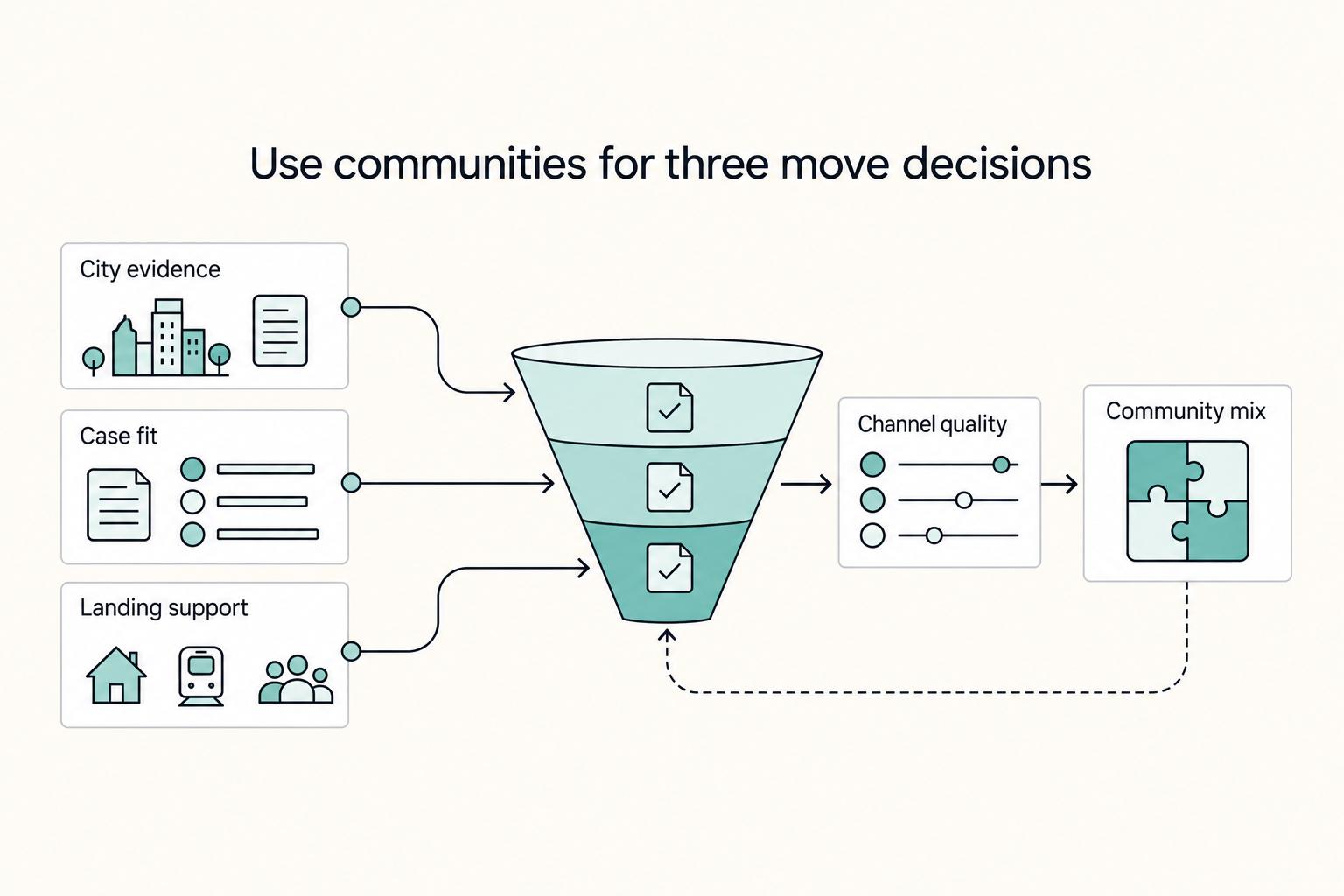
If your move date is real, use communities to answer three decisions in order: which city stays on your list, whether your case actually fits, and whether your landing week is covered. Judge every channel by outcomes, not activity. If it does not give you evidence you can use, stop giving it time.
Start with readiness, because destination browsing gets expensive fast. Before you book a one-way move, secure consistent remote income and make sure you have enough cash buffer to absorb mistakes. A practical benchmark from recent nomad guidance is 3 to 6 months of living expenses saved. If you plan to stay longer than a typical 60 or 90 day short stay, assume visa research is part of the move. Filter first for places that offer an official digital nomad visa or remote-work residence permit instead of assuming a visa run will work.
1. Shortlist cities with evidence, not vibes#
Start with two channel types per city for a short test period: one broad forum and one local city or expat group. Before you rely on either, check that it is active now, newcomer questions are still welcome, and recent posts are not mostly ads or recycled recommendations. At this stage, your only job is deciding which cities deserve deeper work.
A city should pass only if it gives you a small evidence pack. Look for recent posts or discussions that help you answer the same five issues every time: housing friction, internet reliability, admin friction, signs of overcrowding or housing pressure, and whether people with your work style seem to cope well there. Save links and date stamps. Fail the city if the useful information is old, contradictory with no way to resolve it, or too generic to apply to your setup.
Repetition matters most. One glowing post is noise. Repeated reports about patchy connectivity, rising rents, or local backlash are decision signals.
2. Validate your fit against real constraints#
Once you have 2 or 3 candidates left, stop lurking and ask narrow questions. Include your move month, expected stay length, work hours, income setup, and the one constraint that changes the answer. That could be daily video calls, late-night client work, or a need for legal stay beyond a tourist window. Broad prompts get broad replies.
A channel passes here only when the answers are concrete enough to verify. Look for multiple replies with checkable details, and confirm the visa side with an official source, not just a comment thread. If someone tells you to rely on a visa run, treat that as unresolved risk until you confirm the local rules. That fallback is not available everywhere. If people quote income thresholds for a digital nomad visa, note them exactly and verify them against current official guidance. One 2026 guide puts many such programs in the $1,500 to $4,000 per month range, but that is only a reference point, not a universal rule.
3. Set up landing support before you arrive#
In the final weeks before departure, stop collecting ideas and start locking support. Keep only the channels that produce a booked action, a named contact, or a verified answer. If a group stays in opinion mode for two weeks, drop it.
| Area | Confirm | Note |
|---|---|---|
| Visa and documents | Route identified | Official page saved; missing documents listed; submission timing noted |
| Housing | First nights covered | Deposit questions answered; neighborhood concerns checked |
| Internet | Recent reports during working hours | Recurring outage complaints noted; backup option identified |
| Payment and tax admin | How you will get paid | What local payment friction to expect; tax questions flagged for official review |
| First week anchors | SIM or eSIM plan | Grocery and pharmacy basics; one place to work; one social commitment |
Your pass test here is operational. You should have at least one first-week anchor in place, such as a coworking day, meetup, or coffee already scheduled, plus one local contact or host who can sanity check your assumptions. The failure mode is easy to spot: lots of friendly chatter, no fixed plans, and advice pushed into private messages where you cannot compare it against public discussion.
Keep one simple note as you compare communities: confirmed facts, unresolved risks, source to verify, owner, next action. That makes it easier to judge communities by signal quality, not just activity. For destination context, see The Best Digital Nomad Cities in Eastern Europe.
Who This List Is For and How We Judge Communities#
This section is for you if you are planning a move or long stay and need decisions you can verify, not more scrolling. Keep a community only if it helps you choose faster, prepare better, and land with fewer avoidable delays.
- Best fit: you need relocation decisions, not lifestyle content.
If your questions are practical, you are in the right place: where to live, what to confirm before arrival, and who can validate local realities. If you mainly want inspiration or identity discussion, many active groups will still be low value for your move.
- Rubric: score usefulness before activity.
| Check | What passes |
|---|---|
| Relevance to your destination and timing | Current discussions tied to your city and move window |
| Response quality | Specific replies, not generic encouragement |
| Verifiability | Advice you can cross-check in public threads or official sources |
| Offline next step | A concrete action (for example, a meetup or direct local contact) |
- Signal vs noise: treat proof as the filter.
Usable signal includes concrete details you can test: dates, neighborhoods, process friction, and actions you can take now. Low signal includes recycled rankings, affiliate-heavy recommendations, and advice that jumps to private messages before anything is clarified publicly.
A large open forum can still be useful if you verify it correctly. A peer-reviewed analysis of 66,601 posts from the DigitalNomad subreddit found practical "knowing-how" discussion as the dominant pattern, so r/digitalnomad can work as a problem-solving archive, not a final authority. Save links, note recency, and verify high-stakes claims before you act.
- Pick format by constraint: budget, time, and goal.
Open forums are usually better for broad research and quick comparison. Structured communities can be better for repeated interaction and deeper networking, but they usually require more commitment. Use the same test for r/digitalnomad, Nomads.com, and Digital Nomad World: can this channel give you a concrete answer, let you verify it, and turn it into an offline next step (for example, Nomads.com actions like "Attend meetup" or "Host meetup")?
Switch when a community stops producing outcomes. The right mix should shorten decisions, clean up prep, and reduce avoidable delays.
If you want a deeper dive on building real relationships while traveling, read How to Make Friends as a Digital Nomad.
Quick Comparison Table Before You Choose#
Use this table to pick your next one or two channels for your current stage, not to build a long list. Judge each option by fit, recency, and checkable evidence, not popularity.
Status legend:
- Verified: a concrete artifact is visible now.
- Partially verified: one useful signal is visible, but you still need a second check.
- Needs verification: do not rely on this claim yet.
| Community | Best for | Speed to first useful connection | Local meetup strength | Job lead value | Major downside | Use this when | Skip if |
|---|---|---|---|---|---|---|---|
| Nomads.com | Arrival support and local networking when you can confirm destination activity | Partially verified. Could be faster if your city has active Chat and recent meetup actions | Verified. On-platform actions include Host meetup and Attend meetup | Partially verified. It links to a separate Remote jobs property, so leads may sit outside the core community flow | Features alone do not confirm current activity in your city | You are near arrival and want to check Members map, chat, and meetup options before landing | You cannot find recent activity for your destination, or your only goal is job hunting |
| r/digitalnomad | Early research and assumption testing | Needs verification | Needs verification | Needs verification | Useful threads can stay too broad for city-level execution | You are still comparing locations and pressure-testing plans | You need named local contacts or immediate arrival support |
| WiFi Tribe | Structured networking depth, subject to direct validation | Needs verification | Needs verification | Needs verification | You can overcommit before confirming fit for your dates and city | You want repeated interaction and will verify current format, dates, and price directly | You are still in basic city research |
| Hacker Paradise | Structured community experience, subject to direct validation | Needs verification | Needs verification | Needs verification | This evidence pack is not enough for a fair cost/format decision | You are testing whether a cohort-style model fits your move | You need evidence-backed details from this section alone before paying |
| JoinMyTrip | Social travel overlap, with relocation fit to be checked directly | Needs verification | Needs verification | Needs verification | Travel-oriented structure may miss visa, housing, and admin realities | You want to test whether trip structure supports a longer-stay decision | Your move depends on reliable first-month local admin guidance |
| DailyRemote | Work pipeline support when income continuity is the immediate issue | Needs verification | Needs verification | Needs verification | A work-focused channel may not solve arrival or local integration needs | You already chose a destination and now need leads, clients, or roles | You still need destination research or local support first |
Pick a minimal stack: one research channel + one arrival-support channel + one goal-specific channel only if needed. Pause paid options until you directly confirm current price, current format, and date/city fit; if a comparison source mixes years on one page, treat it as a recency warning and re-check before acting.
For the visa side of planning a stay in Japan, see A Comparison of Japan's New Digital Nomad Visa vs. the Business Manager Visa.
Best Communities for Pre-Move Research and Destination Shortlisting#
Use communities in a strict sequence: discover options, pressure-test assumptions, then narrow to a defensible shortlist. If a channel increases excitement but does not improve your decision on legal stay path, living-cost reality, housing friction, internet reliability, tax and insurance admin, and day-to-day fit, drop it.
- Nomads.com and Nomad List (discovery pass)
Use these for first-pass discovery, not final judgment. Their job is to help you compare candidate cities with one consistent lens: legal stay, financial viability, and quality of life. With more than 50 countries offering digital nomad visas, often for one to two years, your bottleneck is filtering, not finding options. Keep a city only if you can already see a plausible legal stay route, realistic cost questions to validate, and signs that daily life could match your work rhythm.
- r/digitalnomad and destination Facebook groups (pressure test)
After a city survives discovery, ask targeted questions tied to your move constraints. Focus on monthly housing friction, internet reliability during work hours, insurance handling, and admin tasks people did not expect. Treat broad threads as starting points, not decisions. A dated but useful warning still applies here: vacation-rental platforms are often designed for short leisure stays, so confirm monthly-stay fit before you rely on them.
- Supplementary communities (cross-check only)
Use a third source only to confirm or challenge patterns from the first two channels. This can include other forums, newsletters, or structured community options listed in roundup posts. If advice conflicts, do not average it. Pause booking steps and verify the disputed point through a primary source before promoting a city from shortlist to final choice.
Use one decision doc per city:
| Field | What to record |
|---|---|
| Claim | [City] has a legal stay path that fits my move window. |
| Confidence level | Verified / Partially verified / Needs verification |
| Verification source | Official permit page, insurer terms, tax authority page, landlord terms, or dated community thread |
| Unresolved risk | Income-proof requirement, health-insurance requirement, criminal-record requirement, unstable housing options, unclear internet reliability |
| Next action | Confirm current permit or long-stay option and document list or Collect two recent monthly-housing examples |
Exit this stage only when communities sharpen tradeoffs and disputed claims are verified through primary sources. Leave communities that add noise without improving decision quality. Related: The Best Digital Nomad Cities for Affordable Living.
Best Communities for Your First 30 Days After Arrival#
In your first 30 days, use communities to build routine, not keep browsing: activate local channels, turn replies into scheduled meetups, and lock a few weekly anchors you can repeat.
| Option | Use it for | Verify or do now | Count as progress |
|---|---|---|---|
| Nomads.com | Member lookup and meetup conversion | Use Members map, Chat, and Host meetup / Attend meetup; send short local messages with your area, work hours, and one concrete ask | A time, place, or follow-up on your calendar |
| Destination-focused groups | Local validation and first-week troubleshooting | Ask what works during real work hours and what backup people use; verify the operational detail on the provider or official page before you act | A clear next step, local referral, or a scheduled follow-up |
| Structured programs | Built-in cadence if you want recurring structure | Confirm the current format and feature details from the official program source before relying on them | A clear next step, local referral, or a scheduled follow-up |
- Nomads.com for member lookup and meetup conversion
Use Nomads.com as an action hub when you land: Members map, Chat, and Host meetup / Attend meetup make it easier to move from discovery to a real plan. It also presents itself as active since 2014. Send short local messages with your area, work hours, and one concrete ask. Count progress only when you get a time, place, or follow-up on your calendar.
- Destination-focused groups for local validation and first-week troubleshooting
Use city-specific channels to validate what is true right now in your location. First-month friction is usually operational, like housing, connectivity, admin confusion, and missing community support, so ask follow-ups that test usability, not general opinion. For example, when someone suggests a coworking spot, neighborhood, carrier, or bank option, ask what works during real work hours and what backup they use. Then verify the operational detail on the provider or official page before you act.
- Structured programs if you want built-in cadence
If you do better with recurring structure, an optional program can help you create consistency faster. Use it to support local routine, not replace local relationship-building. Confirm the program's current format and feature details from the official source before relying on it.
Treat interaction quality as the metric. A message counts only if it leads to a clear next step, a local referral, or a scheduled follow-up.
Use that rule to secure four first-month anchors:
- one reliable contact for first-week troubleshooting
- one coworking trial plus a backup connectivity option
- one neighborhood fit check in person (walk or coffee)
- one useful thread for SIM, banking, or admin pointers, followed by your own verification
If broad groups generate conversation but no in-person momentum, shift time toward destination-focused channels and direct follow-up until your local support system is working. For regional context, see The Best Digital Nomad Cities in Southeast Asia.
Best Communities for Structured Networking and Deeper Relationships#
If you want deeper relationships, prioritize formats that create repeated contact over time. The core tradeoff is straightforward: more flexibility often means less continuity, so choose the structure level that matches how you actually build trust.
| Community type | Relationship depth potential | Flexibility | Risk and fit checks |
|---|---|---|---|
| Remote Year | High when you want organized repeat contact | Lower | Recheck current pricing, stay length, activity format, and terms before committing |
| Coliving communities | Medium to high when shared routines suit you | Medium | Confirm current resident mix, event cadence, and host quality for your dates |
| WiFi Tribe / Hacker Paradise (unverified here) | Unknown until you verify current format | Unknown | Do not rely on old reviews; confirm structure, expectations, and inclusions directly |
- Remote Year
Best fit: you want a built-in professional peer network instead of rebuilding your circle every week. Interaction format: structured work-and-travel with coworking and organized activities. Commitment level: higher structure, with less flexibility if the group is not a fit. Verify before joining: one cited price point starts around $2,000 per month for shorter stays, but you should confirm current pricing, calendar, accommodation setup, and cancellation terms on the provider page.
- Coliving communities
Best fit: you build relationships through repeated day-to-day contact. Interaction format: shared living plus recurring coworking, events, and workshops. Commitment level: medium, with depth potential tied to who is there during your stay. Verify before joining: ask for the current weekly schedule and resident profile for your dates, since experience quality can vary by season, host, and community mix.
- WiFi Tribe and Hacker Paradise
Best fit: keep them as options only after direct verification. Interaction format: unverified in this section. Commitment level: unverified in this section. Verify before joining: if the current page does not clearly show trip structure, community expectations, and what is included, pause and confirm before paying.
Your next step: choose one structured option and one free local channel, run a short trial, and keep only what produces follow-through outcomes such as repeated conversations, a scheduled second meetup, or a useful work referral. If you see message volume without continuity, switch quickly.
Best Communities for Job Leads, Collaborators, and Client Pipeline#
When paid work is the goal, split your effort on purpose: use one channel for opportunity flow and one for relationship memory. Treat a channel as pipeline only when it produces four outcomes: clear role fit, a scoped ask, strong response quality, and a committed next step.
Do not limit your market to your current location. Search where your buyers are, then keep only the communities that repeatedly move conversations toward real work.
| Channel | Lead speed | Collaboration potential | Effort required | Follow-through reliability |
|---|---|---|---|---|
| Underdog | Can move quickly only when your profile matches a vetted opening and an approved employer shows interest | Better for defined role matching than open-ended collaboration | Low initial setup (profile stated at about 60 seconds), then quality depends on positioning | Real only when interest turns into a defined interview/process step |
| Targeted LinkedIn outreach | Varies by list quality and message fit | Strong when outreach is tied to a specific problem or deliverable | High, because targeting and personalization drive results | Strong only when replies commit to a clear next action |
| Noma Collective and similar remote work community spaces | Usually depends on repeated participation, not one post | Useful for collaborator discovery and referral memory | Medium and ongoing | Real only when conversations become intros or project discussions |
| Public forums such as r/digitalnomad | Timing-sensitive and uneven | Useful when your public answers make your expertise obvious | Medium and ongoing | Real only when public exchange moves to DM, a brief, or a call |
- Underdog
Best use case: a curated marketplace when you want vetted employer intros instead of broad open-board noise. Good signal: a tight profile with exact role, level, and company fit; confidentiality and employer interest flow are clear. Common misuse: treating it like a generic application dump with vague positioning. Downgrade or exit: if you cannot clearly state your fit, or the channel does not produce qualified interest.
- Targeted LinkedIn outreach
Best use case: client pipeline building and focused business development. Good signal: replies that reference a specific problem, market, or deliverable after targeted searches (for example, ideal customers in New York, London, or Singapore). Common misuse: broad "available for work" outreach with no scoped ask. Downgrade or exit: if replies stay polite but never commit to a brief call, intro, or scoped next step.
- Noma Collective and similar remote work community spaces
Best use case: collaborator search and referral memory through repeated interaction. Good signal: people can repeat what you do, tag you for relevant needs, or introduce you to someone with a live brief. Common misuse: substituting social activity for business development, including events where nobody needs your service. Downgrade or exit: if continued participation produces no intros, no project conversations, and no concrete asks.
- r/digitalnomad
Best use case: public proof of competence through useful, specific replies. Good signal: someone asks to continue in DM or on a call after you solve a concrete problem in-thread. Common misuse: posting vague requests for work and waiting for visibility to convert on its own. Downgrade or exit: if public activity does not turn into private, scoped next steps.
Use a weekly outcome checklist: save qualified openings, send targeted outreach, post one useful public answer, and review results. Count only fit, response quality, scoped ask, and next-step commitment. When a conversation becomes real, hand it off to a written brief or proposal using How to Write a Scope of Work for a Web Development Project. If a channel stays active but produces no movement after two weeks, demote it.
For a step-by-step walkthrough, see The Best Digital Nomad Cities in Latin America in 2026.
Red Flags That Mean You Should Leave a Community#
Treat this as a time-allocation decision, not a loyalty test: if a community is not helping your move, work, or first-month setup with verifiable next steps, downgrade it or leave.
| Pattern | What it looks like | Immediate action |
|---|---|---|
| Low-signal pattern | You ask a specific question and get opinions without usable detail | Ask one sharper follow-up, then stay only if you get a checkable answer with context |
| Mismatch pattern | The group is active, but not for your actual objective | Move it to low-priority reading and shift core time to a goal-fit group |
| Sales-first pattern | It is easier to find something to buy than to find credible outcomes | Do not buy; require recent member outcomes and clear written terms first |
| Weak-vetting pattern | Offers look easy to join, but expectations and outcomes stay vague | Ask for proof of outcomes, then exit if it remains unclear |
| Context-blind pattern | Advice treats cities like disposable hotspots and ignores local impact | Leave communities that never discuss tradeoffs, local impact, or real work constraints |
| Checkpoint | Active but useful | Active but draining |
|---|---|---|
| Signal quality | Replies include concrete places, timelines, costs, or firsthand examples you can verify | Advice stays generic, recycled, or not checkable |
| Goal fit | Discussion matches your current goal (arrival logistics, work pipeline, networking) | The feed is busy but centered on lifestyle fantasy or general chatter |
| Follow-through | Conversations move to a DM, intro, call, or saved proof link | Interest stays in-thread and dies without a next step |
| Transparency | Limits, costs, and tradeoffs are stated clearly | Hype, urgency, or payment appears before clear evidence |
- Low-signal pattern
You ask a specific question and get opinions without usable detail. That slows decisions when your real costs can include short-term housing, visa fees, coworking, storage, and ongoing travel. Immediate action: Ask one sharper follow-up, then stay only if you get a checkable answer with context.
- Mismatch pattern
The group is active, but not for your actual objective. If you need visa planning or client conversations and keep getting vacation framing, you are spending time in the wrong channel. Immediate action: Move it to low-priority reading and shift core time to a goal-fit group.
- Sales-first pattern
It is easier to find something to buy than to find credible outcomes. This is where empty-promise course funnels tend to show up. Immediate action: Do not buy; require recent member outcomes and clear written terms first.
- Weak-vetting pattern
Offers look easy to join, but expectations and outcomes stay vague. If nobody can show what members actually received, vagueness is the product. Immediate action: Ask for proof of outcomes, then exit if it remains unclear.
- Context-blind pattern
Advice treats cities like disposable hotspots and ignores local impact. That can push choices that add rental pressure or overlook local strain. Immediate action: Leave communities that never discuss tradeoffs, local impact, or real work constraints.
Use this quick review in your weekly log:
- Did this channel produce one verified answer, one real intro, or one scheduled next step?
- Did the advice include evidence you could save, compare, and act on?
- Did it improve a real decision, not just keep you scrolling?
If the answers are no, exit cleanly, keep any useful contact, reassign that time to a better-fit channel, and reassess only by documented next-step progress.
For Malaysia-specific visa details, see A Guide to the Malaysian Digital Nomad Visa (DE Rantau).
Choose Your Mix and Start This Week#
Use a three-lane mix, keep each lane to one job, and replace weak channels quickly.
- Research lane:
Nomad ListorNomads.com
Use this lane to narrow your shortlist, not to browse endlessly. Pick your target region first, then filter candidate cities by cost preferences and save the same notes for each place: rent range, reliable Wi-Fi risk, and any visa or admin points you still need to verify. If you still only have a long ranked list and no clearer city decision, switch.
- Local signal lane:
Facebook groupsor Reddit
Use this lane to test whether a place is workable right now. Quality check: recent replies with specific details like neighborhoods, work-friendly cafes or coworking options, and practical internet issues that could disrupt calls. If replies stay generic, tighten your post or switch to a smaller destination-focused group.
- Goal-specific lane:
DailyRemoteor a paid cohort
Use this lane to fill one immediate gap: job leads, structure, or repeated networking. Validate before you commit by checking current terms, recent member experience for paid programs, and whether the next step is concrete enough to act on. If interest does not turn into a defined next action, replace the lane.
This week, run the sequence in order: validate options before you commit, post one specific ask before arrival with your month and constraints, then keep only channels that produce a real next step after arrival. Review weekly using outcomes, not activity: saved proof links, useful introductions, a meetup you can attend, or a clearer city choice. If you need country- or program-specific verification before you spend or book, use /contact.
| Lane | Purpose | Strongest outcome type | Common failure mode |
|---|---|---|---|
| Research | Shortlist cities | Clearer destination decision | Endless ranked-list browsing |
| Local signal | Check current ground reality | Usable place-specific answer | Generic replies with no proof |
| Goal-specific | Fill one work or networking gap | Defined next step | Activity that never turns concrete |
For a city-specific example, read Barcelona, Spain: Digital Nomad Guide (2026).
Frequently Asked Questions
What are digital nomad communities, and how are they different from general travel groups?
A digital nomad is someone who earns income online while choosing different locations instead of one fixed workplace. Communities in this category usually focus on making daily work possible, with questions about Wi-Fi, routines, and practical logistics, not just where to eat or what to see. If you need help making a place workable for paid work, start there and ignore travel-first groups until your move basics are covered.
Which should you use right now: `r/digitalnomad`, `Nomads.com`, or a paid cohort?
Choose the channel that matches your next decision, not the brand name. Use this quick check before you post or pay: | Option | Best use case | What to validate first | |---|---|---| | r/digitalnomad | Testing one concrete question in public and seeing a range of views | Treat replies as leads, then confirm with current firsthand details | | Nomads.com | Testing whether this option helps with your specific destination or situation | Keep it only if replies are relevant enough to change a real decision | | Paid cohorts | Getting repeated interaction and more structure than an open forum | Confirm written terms, recent member experience, and what happens after onboarding | If you still are not sure, post one concrete question in the free option first, then keep only the channel that gives you a usable next step.
How many communities should you join at once?
Keep the count low enough that you can actually post, follow up, and save proof. Once you are skimming so many feeds that none of them changes your housing, work, or arrival plan, you have passed the useful limit. Start with a small mix, then add another only if you can name the exact gap it fills.
When should you join before you move?
Join once you have a shortlist and your major decisions are still flexible. Too early, and you collect vague advice you may never use. Too late, and you are asking for rescue after flights or housing are already locked. Enter when an answer could still change a real choice on your calendar.
How can you tell whether a community is actually active in your destination?
Do not judge by message volume alone. Check for recent posts with place-specific detail such as neighborhoods, internet reliability, housing friction, or current routines. Then watch whether anyone follows through with a second reply, DM, intro, or proof link you can save. Run one test post with your month, area, and question, and treat vague activity as background reading only.
Are paid programs worth it?
They may be worth a look if your main problem is continuity, because frequent mobility can disrupt conventional relationship-building paths and many people respond by creating repeated social touchpoints. But this is where you should stay strict: if the provider cannot show recent member experience, written terms, and what the actual cadence looks like, you do not have enough to judge fit. If one conversation turns into real project work, move it into a defined next step with How to Write a Scope of Work for a Web Development Project.
What should you do if you joined groups but still feel isolated after arriving?
That can happen, and it is not a personal mistake. Research on nomad life found a real tradeoff: freedom and flexibility often come with weaker continuity, and people cope by staying longer, returning to familiar places, and connecting through shared hobbies and routines. If social integration is now the blocker, stop browsing and set one repeated touchpoint this week. Then use The Best Ways to Overcome Loneliness as a Digital Nomad as your next move.
Try a related tool
Researched and edited by the Gruv editorial team. Gruv builds cross-border billing, payouts, and finance-operations software for global businesses.
Sources
Includes 4 external sources outside the trusted-domain allowlist.
- cecc.gov/publications/annual-reports/2012-annual-reporttrusted
- elon.edu/u/academics/communications/journal/archive/f...trusted
- ler.la.psu.edu/wp-content/uploads/sites/26/2026/02/zikic-et...trusted
- tile.loc.gov/storage-services/master/gdc/gdcebookspublic/...trusted
- citizenremote.com/blog/the-best-countries-for-digital-nomads-i...external
- digitalnomadlifestyle.com/best-digital-nomad-communities-2025-connect-...external
- forbes.com/sites/jodiecook/2025/03/19/how-to-get-client...external
- globalcitizensolutions.com/best-countries-for-digital-nomadsexternal
Educational content only. Not legal, tax, or financial advice.
Related Posts
The Best Ways to Overcome Loneliness as a Digital Nomad
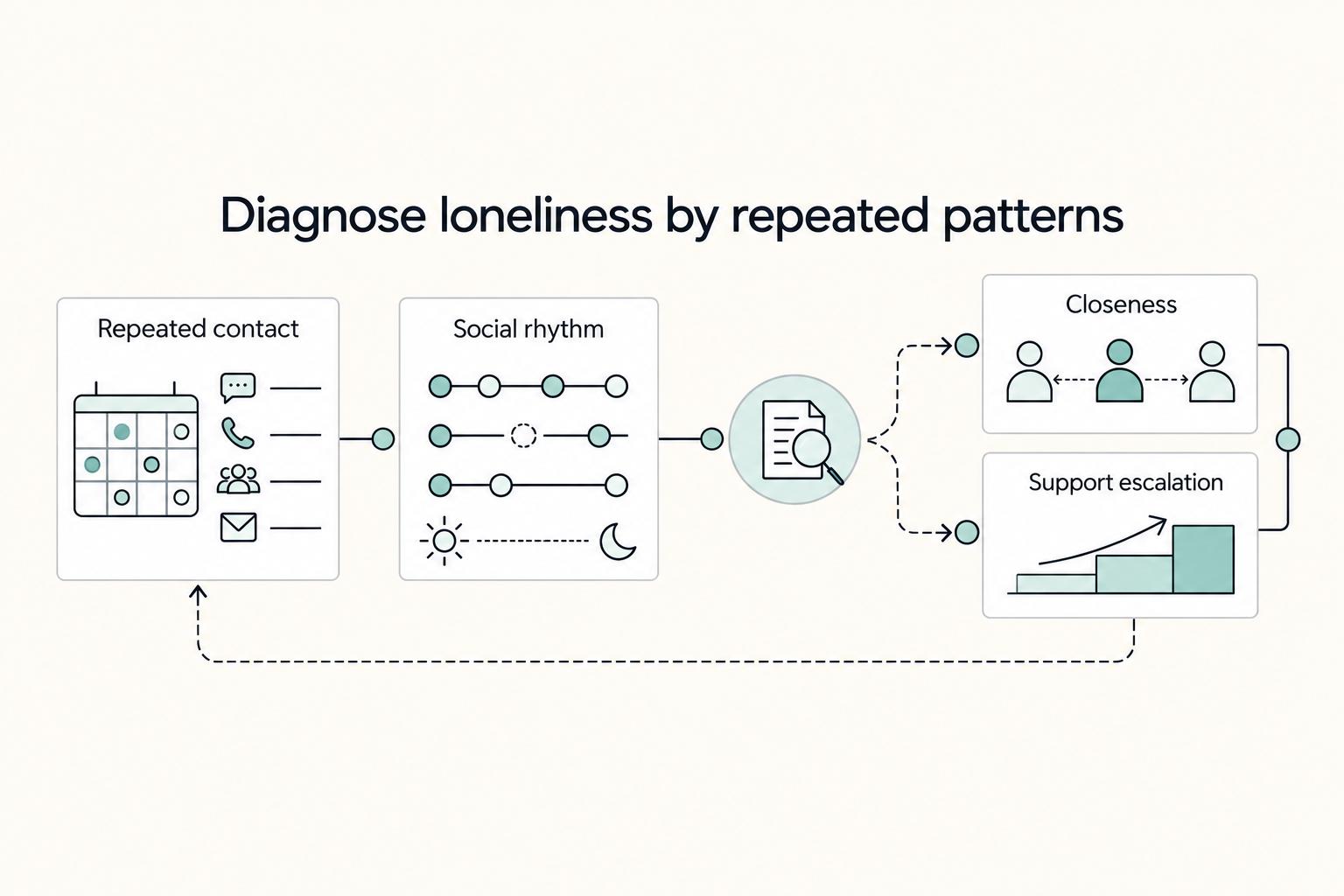
If you run a business of one while moving city to city, treat connection as an operating issue, not a personality verdict. You do not need to become louder, more social, or permanently available. You need a repeatable way to move from unknown faces to familiar ones.
Writing a Web Development Scope of Work That Prevents Scope Drift
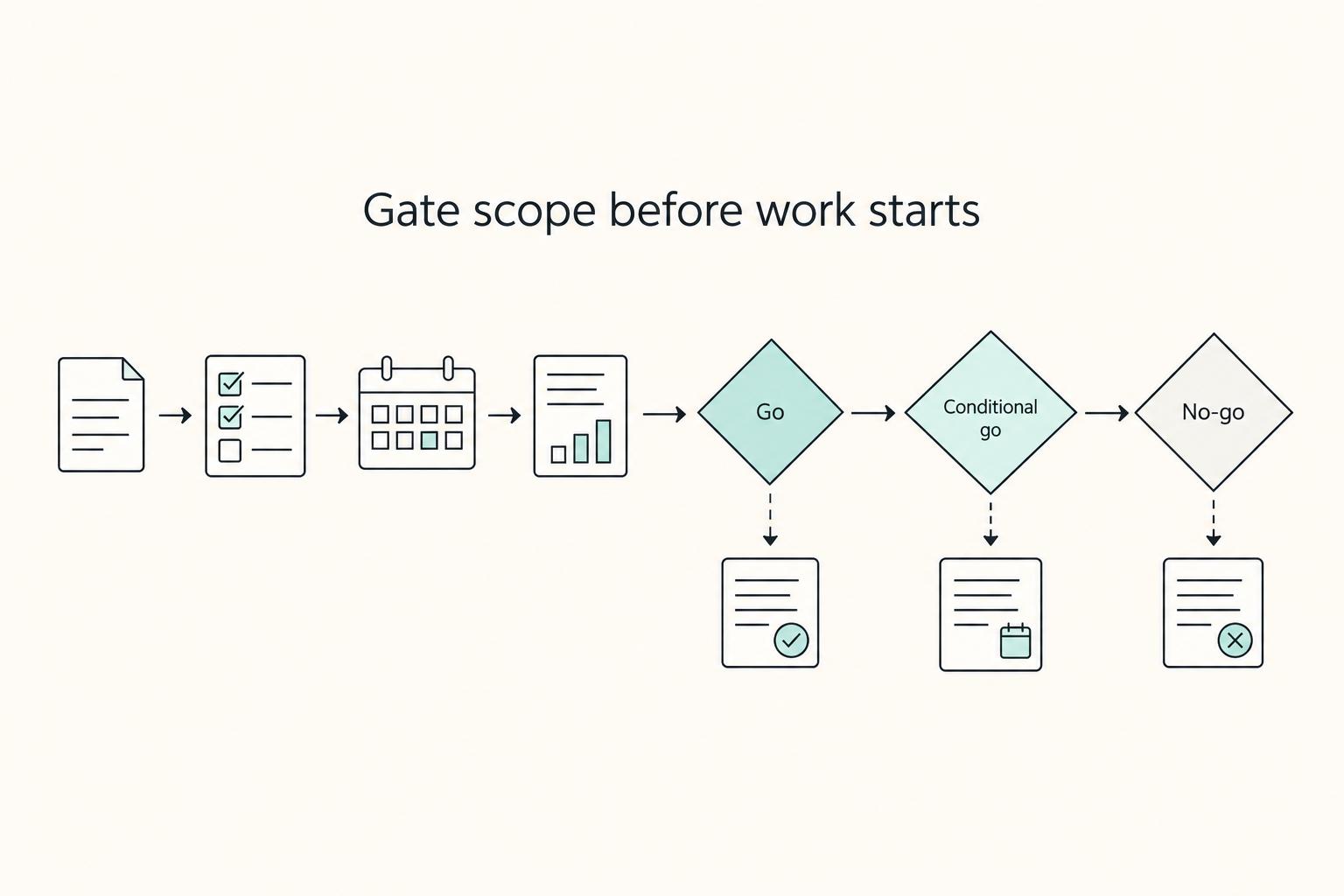
Use your SOW as a pre-work control document, not a project diary. Before work starts, make sure the key project documents describe the same deliverables, responsibilities, and timing.

The Freelance Payment Penalty: A Modeled Audit of Platform Fees, FX Spreads, and Payout Delays
The money rarely disappears through a single, easy-to-spot fee. The real loss is stacked. A marketplace takes its commission, a processor adds a charge for international cards, a bank or payment company converts the currency at a spread, a platform holds the funds before release, and a wire sheds a little to intermediaries on the way in. Each layer looks defensible on its own, but the worker feels the combined result as a smaller deposit and a later payday.