
Quick Answer
Use a pass-fail screen, not a popularity list. For the best nomad cities for tech, keep only cities where legal stay requirements are clear, apartment-level internet is tested, and one fallback place to work is confirmed before booking. The article suggests assigning three roles to your shortlist: primary, backup, and stretch. Then run a 90/60/30 countdown so each city must clear document, housing, and connectivity checks before you commit.
Start Here if You Want a Tech-Nomad City You Can Actually Move To#
The right city is the one you can enter legally, get set up fast, and work from without drama on day one. Everything else is secondary. If your legal path is uncertain, or your first-week setup is still guesswork, that city is not ready yet.
That frame keeps the choice practical. Choosing where to live and work is not a personality test, and it is not something a pretty neighborhood, a popular thread, or a polished social feed can solve for you. If you cannot clear the paperwork, stabilize your internet, and deliver work in week one, the city is still a concept, not a plan.
In practice, the expensive mistakes usually come from checking the right things in the wrong order. People lock housing because it feels concrete. Then they discover a document gap, weak upload speed in that exact building, or no usable backup workspace within easy reach. The city itself may still be fine. The move was sequenced backward.
Use one filter across every option: legal feasibility and work reliability need to be clear on the same timeline. If one side is still fuzzy, move that city down your list until it is verified. This one rule cuts through most of the noise.
A practical way to start is to build three city profiles with different risk levels:
- Chiang Mai for a familiar baseline that many remote workers already understand. Keep it only if the exact area you want has stable internet and at least one dependable backup place to work.
- Buenos Aires for a newer favorite that can work well when you verify apartment-level connectivity and backup work locations before you commit.
- One wildcard from your own shortlist so you do not overfit to public rankings. Keep this slot focused on legal clarity and day-one execution, not branding.
Hold the same non-negotiables across all three profiles. You need reliable internet, a work-ready setup, and one tested fallback workspace you can use immediately if your primary setup fails. For developers and other technical operators, that is not a nice-to-have. It is basic risk control.
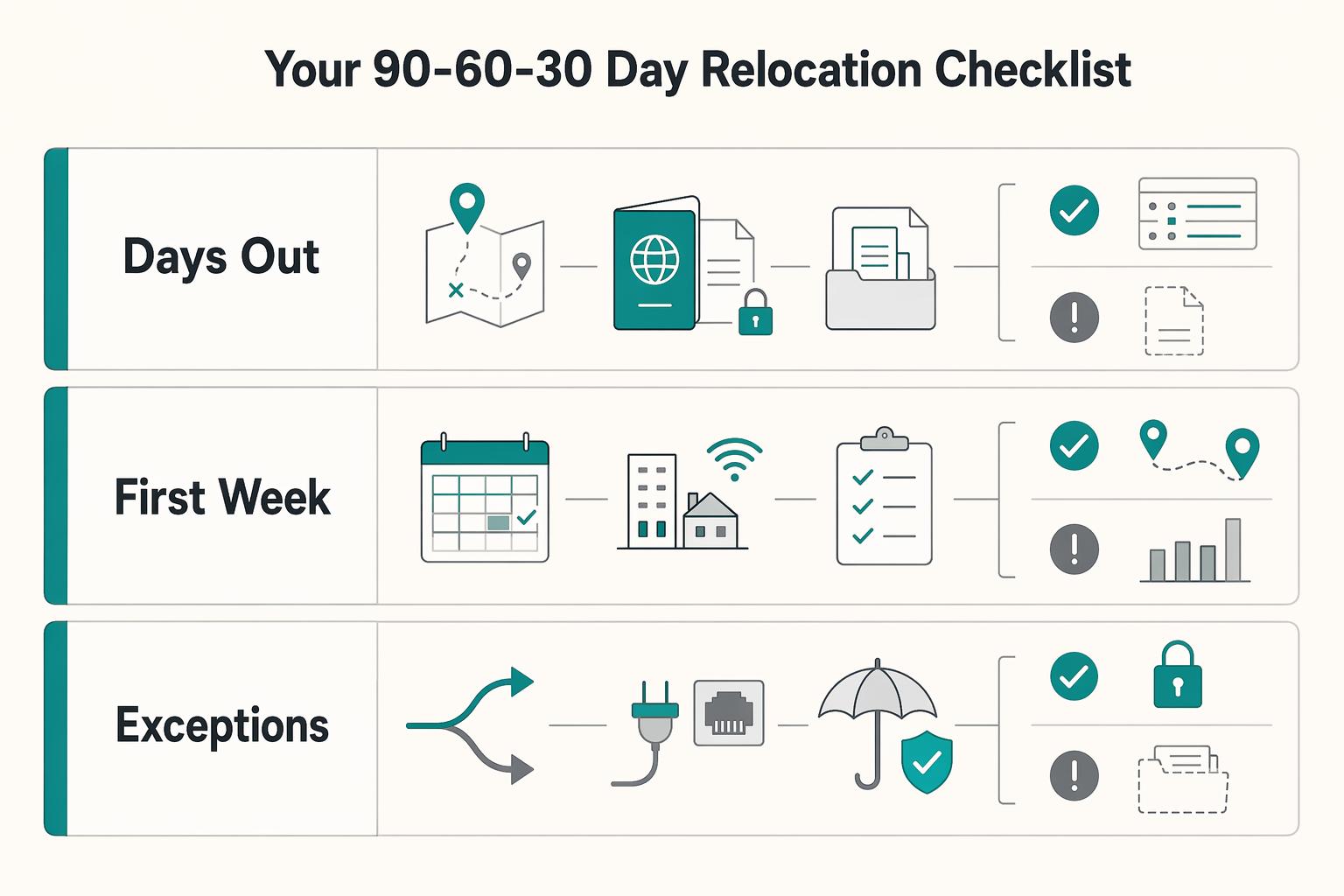
Then run a strict 90-60-30 decision cadence before any non-refundable spend:
- 90 days out: Confirm visa or work-permit requirements and gather core documents.
- 60 days out: Pressure-test neighborhoods, internet reality, and backup workspace options.
- 30 days out: Confirm day-one connectivity, housing terms, and fallback options in writing.
Public city lists are useful for scanning possibilities, especially now that 2026 roundups still mix long-standing names with newer favorites. But those lists do not know your legal path, your meeting schedule, or your tolerance for uncertainty. Your shortlist has to answer a narrower and more useful question: can you land, log in, and work without scrambling?
If you want a financial planning companion while you decide, read SEP IRA vs. Solo 401(k): Which is Better for You?.
Who This List Is For and How to Choose Cities#
This list is for remote professionals planning a real move, not a short holiday. If your plan includes client delivery, product deadlines, or team commitments, your city has to hold up under ordinary work pressure from day one. You are not just choosing a place you like. You are choosing a place that can carry your routine without constant fixes.
| Filter | What to check |
|---|---|
| Legal stay path | A digital nomad visa or another long-stay route you can actually complete |
| Internet reliability | Connection quality where you expect to live, not generic city reputation |
| Reliable places to work | A realistic primary setup plus at least one backup |
| Safety | A level that supports your daily routine and late-hour work needs |
| Month-to-month cost resilience | A burn rate you can sustain without constant stress |
The fastest way to narrow the list is to identify the risk most likely to break your plan. That single step keeps you from getting pulled into city hype and gives you a defensible order for comparing options. A city that looks perfect on paper can still be the wrong first move if the main risk in your case is legal uncertainty, budget strain, or fragile daily setup.
Keep the same five filters in play for every city:
- Legal stay path: A digital nomad visa or another long-stay route you can actually complete.
- Internet reliability: Not generic city reputation, but connection quality where you expect to live.
- Reliable places to work: A realistic primary setup plus at least one backup.
- Safety: A level that supports your daily routine and late-hour work needs.
- Month-to-month cost resilience: A burn rate you can sustain without constant stress.
These filters only help if you treat them as gates, not discussion points. If two cities are close, weight legal viability and internet reliability higher on the first pass. Cost and community still matter, but they are usually easier to improve after arrival than unresolved legal or infrastructure risk. A strong apartment search cannot rescue a weak entry path. Cheap rent cannot rescue a bad connection during meetings.
It is also worth resisting one common shortcut: do not drop a filter just because a city is popular. City selection is a multi-factor decision, and weak legal or infrastructure fundamentals usually create more pain than high rent alone. One widely cited city study looked across 237 cities using inputs like visa access, internet, cost, and safety. That is useful for broad discovery. It is still just a starting map.
Once your main risk is clear, assign each shortlist city a role:
- Primary: Most executable now, with legal path and setup basics already passing.
- Backup: A city you can switch to quickly if paperwork, housing, or connectivity slips.
- Stretch: Higher upside with more friction, promoted only after additional checks clear.
This role-based shortlist does two things. First, it protects momentum when one plan stalls. Second, it stops you from getting emotionally overcommitted to a city that still has unresolved basics. Many remote workers now rotate between two or three cities each year, so it helps to build for repeatable execution rather than novelty.
How you weight the filters should match the risk in front of you. If legal clarity is the blocker, start with country-level requirements and delay neighborhood deep dives until that is stable. If budget runway is the blocker, test monthly burn and workspace fallback before you compare lifestyle perks. If routine stability is the blocker, prioritize cities where you can verify housing, internet, and backup workspace with minimal guesswork.
If Portugal is on your shortlist, keep Portugal Digital Nomad (D8) Visa: A Complete Guide nearby while you screen options. If you want immediate planning support after this pass, browse Gruv tools.
With those roles in place, the next table helps eliminate weak fits early, before you lose hours to apartment tabs and neighborhood rabbit holes.
Compare the Top Tech-Nomad Cities at a Glance#
Use this as a screening table, not a final ranking. It is here to surface uncertainty quickly so you do not mistake visibility for readiness.
| City | Best for | Visa friction | Tech network depth | Coworking density | Cost pressure | First-30-day setup risk |
|---|---|---|---|---|---|---|
| Lisbon | EU candidate to validate | Country-level mobility framing only; city-level unknown | unknown | unknown | unknown | Medium until legal path, reliable internet, and backup workspace are confirmed |
| Tallinn | EU candidate to validate | Country-level mobility framing only; city-level unknown | unknown | unknown | unknown | Medium until legal path, reliable internet, and backup workspace are confirmed |
| Berlin | EU candidate to validate | Country-level mobility framing only; city-level unknown | unknown | unknown | unknown | Medium until legal path, reliable internet, and backup workspace are confirmed |
| Bangkok | Cost-focused candidate to validate | Country-level mobility framing only; city-level unknown | unknown | unknown | unknown | Medium until legal path, reliable internet, and backup workspace are confirmed |
| Da Nang | Cost-focused candidate to validate | Country-level mobility framing only; city-level unknown | unknown | unknown | unknown | Medium until legal path, reliable internet, and backup workspace are confirmed |
| Chiang Mai | Cost-focused candidate to validate | Country-level mobility framing only; city-level unknown | unknown | unknown | unknown | Medium until legal path, reliable internet, and backup workspace are confirmed |
| Mexico City | Americas candidate to validate | Country-level mobility framing only; city-level unknown | unknown | unknown | unknown | Medium until legal path, reliable internet, and backup workspace are confirmed |
| Buenos Aires | Americas candidate to validate | Country-level mobility framing only; city-level unknown | unknown | unknown | unknown | Medium until legal path, reliable internet, and backup workspace are confirmed |
| Melbourne | Long-stay candidate to validate | Country-level mobility framing only; city-level unknown | unknown | unknown | unknown | Medium until legal path, reliable internet, and backup workspace are confirmed |
| Austin | US hub candidate to validate | Work-authorization context applies; city-level unknown | unknown | unknown | unknown | Medium until legal path, reliable internet, and backup workspace are confirmed |
| New York City | US hub candidate to validate | Work-authorization context applies; city-level unknown | unknown | unknown | unknown | Medium until legal path, reliable internet, and backup workspace are confirmed |
| Seattle | US hub candidate to validate | Work-authorization context applies; city-level unknown | unknown | unknown | unknown | Medium until legal path, reliable internet, and backup workspace are confirmed |
Run a quick triage pass in one sitting: mark each city pass, pending, or fail for legal path and work reliability. Any city with two pending items stays out of primary status until both are resolved. That keeps the table useful. Without a hard triage rule, it becomes another way to keep browsing without deciding.
Those repeated unknown fields are deliberate, not a flaw. They are a warning label against fake precision. Signals from Nomads.com and Nomad List, country-level mobility framing from Forbes, and US hub context from Industrious can all help build an initial shortlist. They do not use one shared methodology, and they are not substitutes for your own verification.
Use one hard checkpoint before any city moves from stretch to primary: legal feasibility and work-infrastructure reliability must both pass. If legal entry, reliable internet, or backup workspace coverage is still unresolved at 30 days out, demote that city and promote the one you can verify. That is the discipline that turns a useful list into a move you can actually execute.
The next sections apply the same checkpoint logic across each city cluster so the decision stays consistent as the tradeoffs change.
Lisbon, Tallinn, and Berlin for Builders Who Want EU Depth#
If you want EU depth, start with paperwork reality, not lifestyle preference. That order matters more here than in almost any other cluster because a city can look ideal socially and still be the wrong choice if the legal route or early admin load does not fit your timeline.
Keep one distinction clear while comparing Lisbon, Tallinn, and Berlin: visa status and VAT administration are separate tracks. Visa status determines legal stay and work status. VAT tooling matters when your business activity creates registration or cross-border filing obligations. When people blur those together too early, they usually make the choice feel more confusing than it needs to be.
Based on the evidence here, Lisbon often earns the strongest first pass when you want EU depth with concrete administrative anchors. Portugal appears in the EU VAT Cross-border Rulings participating-country set, and OSS has been in expanded form since 1 July 2021 for covered cross-border sales filed through one Member State. That does not replace visa verification or tell you anything apartment-specific. It does give Lisbon a clearer administrative frame than a city judged mainly by reputation.
Tallinn tends to fit people who prefer to clear document risk before they get emotionally attached to location details. Estonia also appears in the CBR participating-country set, and the cross-border SME scheme requires one prior notification in the Member State of establishment with a stated processing timeline of up to 35 working days. If your planning style is admin-first and neighborhood-second, Tallinn often lines up more naturally with that approach.
Berlin warrants more caution based on the evidence here, even if it stays attractive on paper. That does not disqualify Berlin or make it a poor option. It does mean you should avoid giving it primary status based on confidence you cannot document yet.
For a 6 to 12 month plan, keep the ranking rule simple: assign primary, backup, and stretch based on legal clarity and first-month setup confidence, then revisit only after new verification comes in. That keeps the process grounded. Neighborhood excitement is useful only after the administrative path is sturdy enough to support it.
Before you sign anything, run this sequence in order:
- Confirm current country-level visa requirements.
- Validate district fit against your actual work hours.
- Confirm apartment timing and day-one connection setup.
- Lock one coworking or backup workspace option you can use immediately.
That order sounds obvious, but it is where a lot of EU planning breaks down. People research areas first because it is more tangible. Then they discover the move still depends on documents, timing, or setup details they have not pressure-tested. In practice, the city that wins is usually the one that clears these checks earliest, not the one that looks best in a browser.
If visa status is still unclear at day 30, switch to your backup and protect your timeline. If the first 60 days of expected admin already looks heavier than you want, the lower-commitment Asia set in the next section is often the better starting point.
Bangkok, Da Nang, and Chiang Mai for Cost-Efficient Execution#
If your goal is to test international life with lower commitment, this cluster is usually the cleanest 3 to 6 month starting point. The upside here is not just lower spend. It is the ability to learn quickly without locking yourself into a heavy first move.
The key tradeoff is straightforward: low cost only helps if your work stays reliable. Cheap housing does not offset dropped calls, missed deploy windows, or a backup plan that exists only in theory. In this group more than any other, apartment-level internet quality and backup workspace access determine whether the move feels efficient or fragile.
Use one operating rule across all three cities: internet reliability comes before everything else. A common failure mode is signing a unit based on price, then learning too late that upload performance is weak and backup options are inconvenient. By the time that problem shows up in your calendar, the rent you saved no longer feels cheap.
Bangkok is the strongest first pass when you want a larger-city base for building routine quickly. It is explicitly listed in a digital nomad city guide from 2015. That supports long-standing visibility, not present-day conditions. It is still useful. A city that has been on the radar for that long gives you a reference point, but you should treat it as directional context and still verify apartment-level connectivity and practical fallback options yourself.
Da Nang can be a strong budget candidate, but information here is thinner. What's available includes a community Q&A prompt, and one source shows a page error. That makes Da Nang the highest-unknown option here until you validate details directly. The practical response is simple: keep your risk low and avoid non-refundable commitments until unit internet and fallback work locations are confirmed.
Chiang Mai remains a practical baseline for a first relocation test. Like Bangkok, it is explicitly listed in the same 2015 guide, so use that as visibility context rather than proof of current reality. Its planning advantage is familiarity. Many remote workers know what to check, which helps you compare it more cleanly against other options instead of guessing at every variable.
A useful decision split looks like this:
- If budget runway is tight, start with Da Nang or Chiang Mai and require proof of unit internet plus one coworking fallback before you commit.
- If you want a denser city environment for faster routine-building, start with Bangkok.
- If uncertainty stays high after direct checks, keep all three in backup or stretch and avoid long contracts.
Then run one first-week verification cycle everywhere:
- Test upload performance from your unit during your normal meeting hours.
- Test one backup workspace as if your home setup failed.
- Keep a low-penalty housing exit option active until both tests pass.
That first week matters because it turns assumptions into evidence while change is still cheap. If the apartment fails, you want to know before month two. If the backup workspace is too far, too crowded, or too unreliable, you want to learn that before a client emergency teaches it to you.
If your priority starts shifting from minimum spend toward longer-term routine fit, move to the next cluster. That is usually where the decision becomes less about entry cost and more about stability over time.
Mexico City, Buenos Aires, and Melbourne for Long-Stay Tradeoffs#
Choose this group when you care more about sustaining a long stay than minimizing the first month. The value here is steadier execution over time, not winning a short-term budget comparison and then spending the next few months fixing avoidable friction.
That shift changes how you should use rankings. Discovery lists can still help, but they are only an entry point. One widely used method started with cities above 400,000 population, then narrowed to 57 by keeping one top-scoring city per country. That is useful for scanning the map, but it does not tell you how each place will hold up under your actual schedule, collaboration needs, or appetite for uncertainty.
Mexico City is often the strongest option when you want a clear first-month neighborhood plan without giving up flexibility. The practical sequence is simple: choose an initial area, validate unit connection quality in week one, test a backup workspace, then extend only if both pass. That keeps the move reversible until the basics are proven.
Buenos Aires can work very well for long stays when you treat housing resilience as a core requirement rather than a nice backup. Keep a written housing fallback and a second work location ready before arrival. That way, one weak apartment setup does not derail the month or force you into rushed decisions under pressure. The city can still be a strong fit, but it rewards people who prepare for one layer of failure instead of assuming the first rental will carry everything.
Melbourne can also be a strong long-stay option, but it asks for tighter budget discipline before dates are locked. During peak summer periods, flights and accommodation can rise sharply, and some nomads report spending two to three times more than in other seasons. If Melbourne stays on your shortlist, those seasonal guardrails need to sit inside your base budget, not in a best-case scenario tab you hope becomes true.
A useful way to compare these three is to ask what kind of stress you are most willing to manage. If you want flexibility in the first month, Mexico City is easier to structure around that. If you are willing to do more resilience planning up front, Buenos Aires can reward the extra prep. If your budget can absorb seasonal swings and you value long-stay stability enough to plan around them, Melbourne can stay in the conversation.
If overlap with a US-based team is non-negotiable, run a two-week calendar simulation in local time before final selection between Mexico City and Melbourne. That one test catches collaboration strain early, while changes are still cheap and mostly administrative.
Across all three cities, one red flag should trigger caution: do not commit past month one until your chosen neighborhood passes three checks at the same time: reliable Wi-Fi performance, a dependable backup workspace, and a usable housing exit option. If cross-border admin remains your dominant risk even after that validation, a US hub can be the cleaner operating choice.
When a US Tech Hub Is the Right Answer#
A US hub is often the right move when paperwork risk is your biggest blocker and you can already work legally in the US. In that case, domestic relocation usually buys you faster setup, simpler admin continuity, and fewer ways for the first month to go sideways.
That tradeoff should be explicit, not apologetic. You usually gain predictability and operating reliability, but you may give up some geo-arbitrage upside compared with lower-cost international options like Bangkok or Da Nang. That does not make a US move a fallback. It makes it a peer option when execution speed and risk control matter more than location arbitrage.
US domestic nomading also gets less attention than it deserves, even though the scale is substantial. One 2025 estimate put the US digital nomad population at about 18.1 million, up 4.7% year over year. At the city level, the basic pattern is consistent across common guides: stable internet, reliable power, and broad coworking or community access tend to be core strengths, while monthly cost pressure is the main downside.
Once you accept that tradeoff, city fit becomes a matching exercise rather than a prestige contest. Austin suits builders who want dense tech activity and regular in-person product conversations without cross-border admin. New York City fits work that depends on a high volume of client, partner, or investor meetings. Seattle tends to work best when your network is concentrated around larger engineering and platform ecosystems.
Second-tier US hubs can still be strong operating choices. Denver is useful when you want a major node while balancing network access against monthly burn. Atlanta can be practical when domestic travel convenience and regular client access matter weekly. Miami can fit teams that need steady Americas overlap and more frequent in-person collaboration.
The mistake to avoid here is assuming domestic means automatic. It is still worth scoring the city you choose the same way you would score an international move. You can absolutely make a poor domestic choice if monthly burn, housing quality, or day-to-day network fit are off. The difference is that, for many people, the legal and infrastructure layers are less likely to break at the same time.
Before you choose domestic or international, run one consistent scorecard across both sets. Compare Austin, New York City, and Seattle against Lisbon and Tallinn using the same two measures: total monthly burn and expected network ROI. A shared scoring method removes some of the emotional bias and makes the final call easier to defend to yourself and your team.
Once primary and backup are set, more browsing usually adds less value than stronger preparation. That is where the 90-60-30 checklist becomes the most useful part of this plan.
Your 90-60-30 Day Relocation Checklist#
Treat this 90-60-30 plan as a pass-fail gate, not a motivational checklist. Each stage should clear before you spend more money or commit more deeply. That sequencing is what keeps a manageable move from turning into expensive improvisation.
| Stage | Focus | Checks |
|---|---|---|
| 90 days out | Lock direction and document control | Choose one primary city and one backup; confirm your visa path first; gather core records; confirm passport basics: at least 6 months validity beyond your stay and 2 to 3 blank pages |
| 60 days out | Confirm operating fit | Secure an initial housing window and shortlist coworking backups; check timezone overlap, budget durability, safety and comfort, setup speed, and practical community access |
| 30 days out | Remove ambiguity in writing | Finalize visa status, housing terms, day-one internet plan, and fallback workspace options with written confirmation; keep contingency funds available for flight rebooking, short-term housing adjustments, or temporary workspace if something slips |
| First week on the ground | Validate reality fast | Activate a local SIM; test home internet during your actual meeting windows; work one full session from your backup workspace; complete local admin tasks tied to your stay |
| Escalation trigger | Decide early when something slips | Keep a written escalation path with deadlines, required documents, and a hard decision date to stay, reroute, or return |
90 days out: lock direction and document control. Choose one primary city and one backup before you book anything non-refundable. This is not the stage for endless comparison. It is the stage to commit to a decision path while leaving yourself one controlled reroute. Confirm your visa path first, then gather core records in one folder so you can respond quickly if requirements shift. Missing paperwork is one of the most common causes of avoidable delay, and it usually hurts more because people realize it late. Confirm passport basics early: at least 6 months validity beyond your stay and 2 to 3 blank pages. Keep identity, income, and travel records organized by version so you do not lose time recreating documents under deadline pressure. If Portugal is in scope, keep Portugal Digital Nomad (D8) Visa: A Complete Guide in your prep set.
A simple discipline helps here: if a document matters, it should have one current version, one obvious filename, and one place where you know it lives. The point is not elegance. It is speed and clarity when a form, appointment, or application suddenly depends on a file you thought you had already handled.
60 days out: confirm operating fit, not just destination appeal. Secure an initial housing window and shortlist coworking backups before flights are finalized. Pick your first base for execution quality, not social momentum. The checks that matter now are timezone overlap, budget durability, safety and comfort, setup speed, and practical community access. This is also the stage to test neighborhoods directly instead of treating the city as one uniform environment. A city can pass broadly while one block fails your work needs.
This is when city-level enthusiasm should give way to apartment-level skepticism. If the building, block, or local routine does not support your work, the city name will not save it. Look for the specific combination you actually need: a place you can work from, a backup nearby, and a daily pattern you can sustain without burning decision energy every week.
30 days out: remove ambiguity in writing. Finalize visa status, housing terms, day-one internet plan, and fallback workspace options with written confirmation. Keep contingency funds available for flight rebooking, short-term housing adjustments, or temporary workspace if something slips. If an item is still fuzzy at this stage, treat it as a risk signal, not a detail that will fix itself. Uncertainty gets more expensive close to departure.
The practical test is simple: could someone else read your confirmations and understand exactly where you are staying, how you will connect on day one, and what you will do if the first setup fails? If not, you are still carrying more ambiguity than you think.
First week on the ground: validate reality fast. Activate a local SIM, test home internet during your actual meeting windows, and work one full session from your backup workspace. Complete local admin tasks tied to your stay while your schedule is still flexible. The purpose of this week is to expose weak points early, when you can still change housing or shift your plan without major sunk cost.
This is also when optimism has to give way to evidence. Do not let a decent first impression delay the hard checks. If the connection drops during your normal hours, if the backup workspace is weaker than expected, or if your housing setup creates avoidable friction, you want to know immediately. Month one should be a validation period, not a waiting period.
Escalation trigger: decide early when something slips. If paperwork or housing begins to slide, do not improvise endlessly. Permit mistakes can carry serious penalties, so keep a written escalation path with deadlines, required documents, and a hard decision date to stay, reroute, or return. A fixed decision date is what keeps a manageable delay from turning into rushed spending.
That escalation path does not need to be elaborate. It just has to be real. If a requirement is late, who are you waiting on, what proof is still missing, and when do you stop hoping the issue will sort itself out? Writing that down is often enough to keep a minor delay from expanding into a full relocation failure.
Keep a one-page status sheet with each checkpoint, due date, and supporting proof link. This keeps drift visible and makes it easier to escalate before delays compound. It also makes the move easier to manage if you are doing this while still carrying normal work obligations.
Use one non-negotiable rule across every timeline: if visa status, housing reliability, or internet readiness is still unverified 30 days before departure, delay the move and switch to your backup. Delaying a weak plan is usually cheaper than repairing a broken first month.
With these checkpoints in place, the remaining questions are usually real tradeoffs between strong options, not rescue work after preventable misses.
Pick the City You Can Execute, Not Just Admire#
The city that wins is the one you can enter legally, operate from reliably on day one, and sustain financially without constant stress. That standard sounds strict, but it is what protects output and preserves flexibility when plans change.
More options can create false confidence, so keep your shortlist tight. If legal status is unresolved, if internet reliability is unproven, or if backup workspace is still theoretical, that city is not ready for primary status. Keep it in backup or stretch until verification is complete.
Your final three should each have a clear job:
- Primary city: Clearest legal path with the strongest month-one operating confidence.
- Backup city: Fastest reroute if paperwork, housing, or connectivity slips.
- Stretch city: Higher upside that only moves up after the same checks pass.
Many remote workers now rotate between two or three cities per year instead of moving constantly. That can work well, but only when each stop is execution-ready before departure rather than repaired after arrival.
The next step is straightforward. Lock your top three, run the 90-60-30 checklist, and commit only when legal and setup checkpoints pass together. For money movement and payout planning, confirm destination-market coverage before relying on a single provider.
Related: Can Digital Nomads Claim the Home Office Deduction?. For country- or program-specific support, Talk to Gruv.
Frequently Asked Questions
What makes a city genuinely good for tech nomads beyond low cost?
Start with legal viability, then test work reliability, then affordability. A durable setup combines visa accessibility, dependable internet, and a community you can join quickly.
How should I choose between Lisbon, Berlin, and Tallinn for a long stay?
Choose at the country level first, then the city level. Confirm your legal path and document readiness, then compare affordability, connectivity reliability, infrastructure, and community fit for your first months.
Is Bangkok or Da Nang better for a first international move in tech?
There is no universal winner from this evidence alone. Use one scorecard for both: legal path clarity, internet during your real meeting hours, coworking fallback, and total monthly burn.
Should I evaluate city options first or country visa options first?
Country first, city second. If legal status is unclear, even a strong city fit can fail in practice.
What paperwork should I prepare 90, 60, and 30 days before moving?
Use a 90/60/30 countdown instead of a last-minute scramble. At 90 days, shortlist countries and gather core documents; at 60, align visa paperwork with housing and arrival logistics; at 30, re-check application status, booking terms, and fallback options.
What are the most common mistakes that delay relocation plans?
Choosing on cost alone is a major one. Two others are treating city roundups as strict rankings and skipping basic verification of connectivity and workspace backup before committing.
When is a US city like Austin or Seattle a better choice than moving abroad?
A US option can be useful when you want to benchmark against cities with established remote-work infrastructure. Treat US city metrics as directional input, not universal rankings, and compare them against your top international options using the same criteria.
Try a related tool
Researched and edited by the Gruv editorial team. Gruv builds cross-border billing, payouts, and finance-operations software for global businesses.
Sources
Educational content only. Not legal, tax, or financial advice.
Related Posts

Portugal Digital Nomad Visa Decisions That Prevent D8 Delays
Start with verification, not paperwork. In this research set, some material is useful only as EU VAT context, not as D8 instruction, and mixing those categories is one of the fastest ways to build the wrong plan. We use the same separation rule in [Global Digital Nomad Visa Index](/blog/global-digital-nomad-visa-index) comparisons.

SEP IRA vs Solo 401(k) for Freelancers With Uneven Cash Flow
Pick the plan you can keep funding in weak months, not the one that looks best in a strong quarter. That is the real decision.

Can Digital Nomads Claim the Home Office Deduction?
Claim the deduction only when your facts and records can carry it. With the home office deduction for digital nomads, the real decision is usually a three-way call: claim it, do not claim it, or pause and get help because your file is not ready.