
Quick Answer
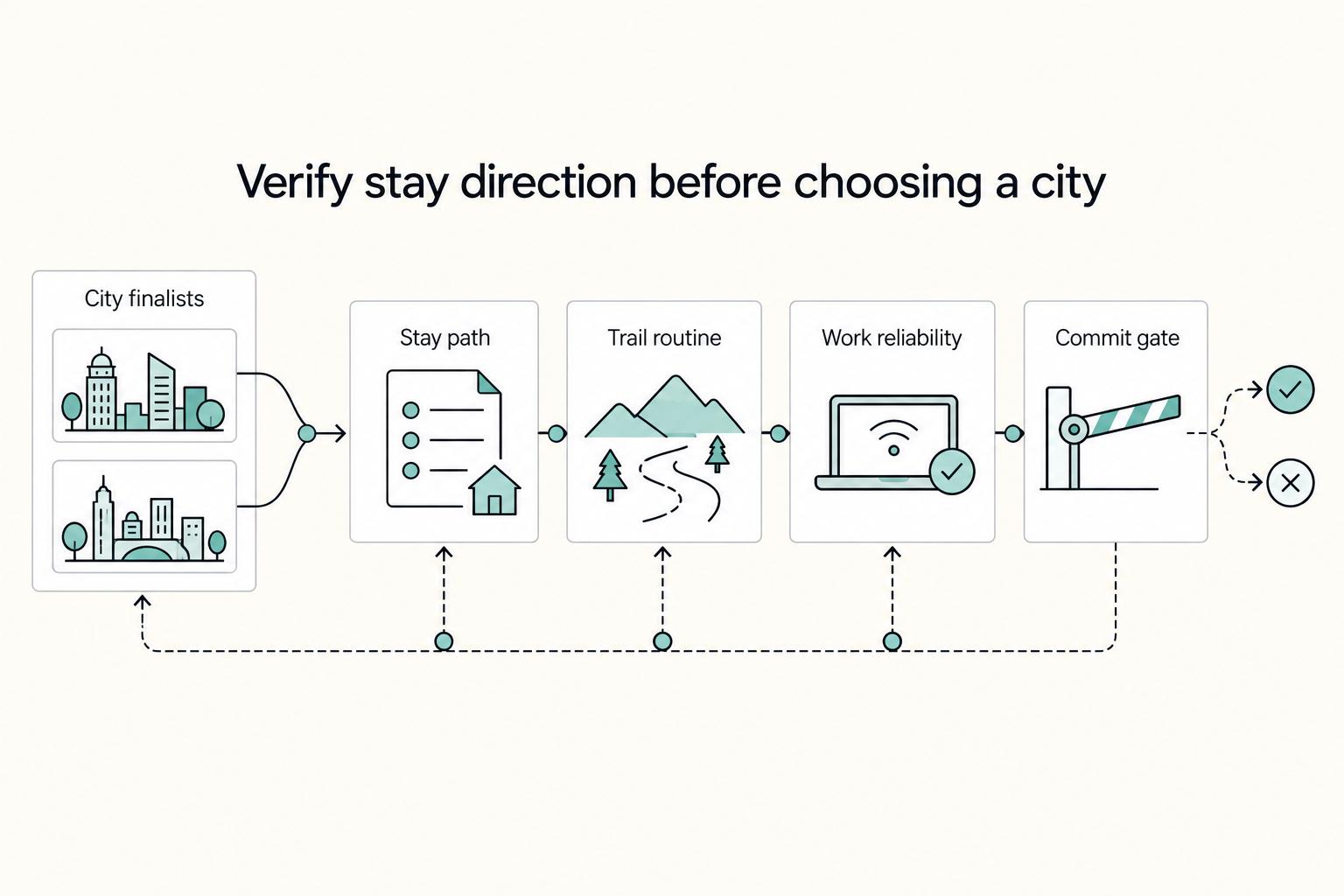
Use a two-city shortlist and score each option as clear yes, risky yes, or unknown before paying any non-refundable costs. The best choice is the city where legal stay, health insurance setup, reliable internet, and weekly hiking all remain workable after arrival. If key checks stay unknown, keep that location in research mode and move forward with your backup. Then confirm visa direction, prepare documents in order, and run a day-30 reality test before extending.
Start Here if You Want Trails Without Relocation Surprises#
Treat this choice like an operating decision, not a travel mood. The right base is the one where your workweek and your trail routine can both hold without constant exceptions, catch-up days, or admin spillover.
Most city roundups are useful, but they miss the same things over and over. Some reflect one person's setup. Some are built for clicks. Some mix practical filters with personal taste and present them as equally important. Read them as inputs, then pressure-test them against your actual constraints.
Use this page to come away with three concrete outputs:
- A shortlist you can defend with practical criteria.
- A document checklist in the right order.
- A move sequence you can follow without improvising every week.
Decision order matters. Confirm legal stay direction and work reliability first, then optimize for trail quality inside that narrower list. Reverse that order and you can end up with a city that looks great on paper but breaks as soon as real life starts.
Before you trust any recommendation, run a quick quality check. Check how recent it is, identify the author's angle, and make sure it covers internet reliability and month-one cost, not just scenery and ideal weekends.
A common failure mode is choosing based on weekend trail photos, then losing actual hiking time to setup friction and admin debt. If two cities look equal on trail quality, pick the one with lower first-month friction.
Before you spend money, ask one pass-or-fail question for each city: could you run your normal workweek there next month without changing client commitments, meeting cadence, or output expectations? If the answer is unclear, keep that city in research mode.
That filter leads directly to the next step: score cities by what can block the move, not just by what makes them attractive.
Who This List Is For and How to Choose Your City#
This list is for people choosing a real base, not just a destination for a few impressive weekends. If you are comparing places like Vancouver, Cape Town, and Tbilisi and you need both legal stay clarity and repeatable hiking, this is the frame that matters. If either part is still fuzzy, you do not have a decision yet.
Before you pay any non-refundable cost, use a simple 7-factor scorecard. Destination fit is personal, month-one spend can rise faster than expected, and the practical basics can decide whether your first month feels steady or messy.
| Factor | What to check | Why it matters |
|---|---|---|
| Digital nomad visa path | Is there a realistic legal route for your work pattern? | Legal viability is the baseline for a sustainable stay. |
| Health insurance setup | Can you arrange acceptable coverage without last-minute scrambling? | Simpler setup lowers pre-move friction. |
| Internet reliability | Can you identify dependable work locations before arrival? | Reliable connection protects income continuity. |
| Trail access model | Can you hike weekly without multi-leg weekend transfers? | Lower transit load usually means more real trail time. |
| Seasonality | Do weather windows match your likely stay months? | Better timing keeps plans usable, not aspirational. |
| Cost | What does month one actually cost, including local transport? | Budget realism keeps the move executable. |
| Admin complexity | How many setup tasks must be done quickly after arrival? | Fewer urgent tasks reduce first-month stress. |
Score every row as clear yes, risky yes, or unknown. Treat unknown as no booking yet. Treat risky yes as a conditional green light, and keep a backup city active until the early setup checks are stable.
Do not weight every factor equally. Legal stay direction, internet reliability, and admin complexity are the main gates because any one of them can derail the whole plan, even if the trails are excellent. Trail quality, seasonality, and cost are where you optimize after those gates are green enough.
When hiking quality is close, break ties with the cleaner stay path and simpler insurance setup. In practice, that is often where longer stays either settle in or start to wobble. A city with slightly less dramatic weekend upside can still give you more hiking if the rest of the move works cleanly.
This list is not aimed at travelers optimizing only for iconic treks in New Zealand or Georgia without the long-stay remote-work constraint. It is for people who need a place that supports work, paperwork, and a repeatable outdoor rhythm at the same time.
Once you have scored the basics, the city comparison gets much more useful because you are comparing real options, not aspirational ones.
Quick Comparison of Hiking Cities You Can Actually Live and Work In#
Read this table as a booking gate, not a winner list. A city is only ready when legal stay, work setup, and early admin are clear enough to act on. If any of those are still unclear, keep the city in not ready, no matter how strong the hiking looks.
| City | Best-for profile | Visa friction | Hiking access model | Seasonality risk | First-month admin load |
|---|---|---|---|---|---|
| Madeira | Strong candidate if you want an island-base rhythm with repeatable weekend hikes | Unknown until you confirm your route and document burden | Validate whether your plan depends on urban-near trail starts around Funchal | Confirm weather patterns for your exact stay window | List every arrival task and deadline before booking |
| Catalonia | Strong candidate if you want big-city living plus mountain weekends | Unknown until you confirm route and renewal effort | Validate whether your plan depends on transfer-heavy Pyrenees weekends from Barcelona | Check high and low season constraints for your months | Split pre-arrival and post-arrival tasks with owners |
| Slovenia | Strong candidate if you want a city-and-mountain routine | Unknown until you confirm route complexity | Test whether weekday work and weekend hiking are both sustainable | Verify trail season timing for your stay window | Map week-one must-dos versus later setup items |
| Vancouver | Strong candidate if you want a work-first city with regular outdoor time | Unknown until legal path is confirmed | Test real weekly commute-to-hike patterns, not ideal examples | Check month-by-month weather and daylight fit for your routine | Track what requires in-person setup and waiting |
| Cape Town | Strong candidate if you want an urban base with varied weekend terrain | Unknown until legal route and document lead time are confirmed | Validate a repeatable weekly transport pattern | Check seasonal swings against your work calendar | Identify service dependencies that can delay setup |
| Tbilisi | Strong candidate if you want a long-stay base with regular mountain-trip planning | Unknown until status and extension practicality are confirmed | Validate access assumptions with real schedules | Confirm weather windows for intended routes | Document first-month registration and setup order |
A practical way to use the table is to sort each city into one of three states: ready to test, still research, or park for now. That keeps momentum up and stops you from over-investing in places that still have a major blocker.
This also helps you match a city to the hiking pattern you can actually sustain. If you need a steadier weekly routine, favor a coastal repeatability pattern like Rota Vicentina-style planning. If your schedule can absorb tighter weather windows and transfer constraints, elevation-focused weekends like Pico Ruivo-style trips can make sense.
The point is not to predict a perfect stay. It is to rule out the cities that depend on too many things going right at once. After that, your shortlist is strong enough for a city-by-city comparison.
The Best Digital Nomad Cities for Hiking With Real Tradeoffs#
There is no permanent winner here. The right choice is the city that still works when delays, admin friction, and imperfect weekends show up.
Madeira: Keep it on the shortlist, but only after you model a realistic week with workdays, admin tasks, and one weekend hiking plan. If that week breaks, the issue is execution fit, not motivation.
Catalonia: Treat it as a serious candidate, not a default. Validate the exact week you would run from your base, including transfer time and recovery time, so mountain weekends do not quietly eat into your work capacity.
Southern Portugal: Judge it by repeatability, not by the first set of photos you see. If your workweek and weekend plan are not easy to repeat, move it down even if the early appeal is strong.
Slovenia and Tbilisi/Georgia: Keep both in play and stress-test them the same way. Use one scoring method and one set of assumptions, or you will end up favoring the place you already wanted.
Vancouver and Cape Town: Evaluate both with conservative assumptions, then keep the one that still works in a disrupted week. A city that only works in perfect conditions is fragile by definition.
When you get down to two finalists, run two versions of each: one smooth week and one delayed week. Choose the city that still protects income continuity and hiking consistency in the delayed version. That usually tells you more than headline trail quality alone.
Once the shortlist is real, the next decision is obvious: do not commit to any city until the stay path is concrete enough to execute. If you want a deeper visa example before deciding, read Indonesia's B211A Visa: The De Facto Nomad Visa for Bali.
Choose Visa Direction Before You Commit to a City#
Only lock in your city choice once your stay path is concrete enough to execute. Keep two finalists, then verify a practical long-stay route before signing housing or paying non-refundable costs. That order protects you from turning a good idea into an expensive scramble.
A simple two-branch check is enough here:
- Branch A: You can document an extended-stay option, and renewal looks feasible for your plan.
- Branch B: Rules are unclear, details look stale, or your plan depends on assumptions.
Branch A means you can move into document preparation with confidence. Branch B means you should pause commitments, keep optionality, and compare the alternatives you are already tracking, including the B211A visa and DE Rantau-style nomad programs.
Run the checks in this order:
- Confirm intended stay type and duration for each finalist.
- Build a document checklist from current official program requirements.
- Confirm submission timing aligns with your planned start date.
- Lock non-refundable costs only after those checks pass.
The sequence matters because the failure modes are usually boring, not dramatic. Entry-status mismatch, incomplete evidence, and optimistic timing assumptions are the problems that burn time and money. Before you put down any deposit, use two checkpoints: confirm current program status and confirm your evidence pack is ready to submit.
If two cities are still tied after hiking and cost scoring, choose the one with fewer unresolved visa questions. Fewer unknowns early usually means fewer expensive surprises later, and it keeps your move focused on work and daily life instead of chasing missing requirements.
This is also the point where document prep stops being abstract. Once the stay route is real, your paperwork needs to follow a clean order. For another route example, see Malaysia's DE Rantau Nomad Pass: A Guide for Applicants.
Build Your Document Pack in the Right Order#
Once your stay direction is clear, sequence your documents instead of collecting everything at once. The right order cuts rework, makes corrections faster, and helps you see quickly whether one missing item will hold up the whole plan.
Keep document prep separate from gear prep. When deadlines tighten, you want identity records, insurance proof, income evidence, and accommodation details easy to retrieve and verify, not buried in a broader packing list.
Start with the pieces that other steps depend on:
- Passport validity: Verify status early and keep clear scans of key identity pages.
- Health insurance: Store policy proof in an easy-to-retrieve file with identity details that match your other records.
- Proof of funds or income: Keep current evidence together in one place.
- Accommodation proof: Keep initial stay confirmation plus host or booking details together.
- Backup copies: Maintain retrievable digital copies and a second backup you can access if your main device fails.
For Madeira/Portugal and Tbilisi/Georgia, add a short admin note for items to confirm locally, including registration timing and acceptable proof format. It does not need to be elaborate. It just needs to keep location-specific follow-up visible so it does not get lost in general prep.
Then split the pack into two phases:
- Must-have before departure: identity records, insurance proof, funds or income evidence, first accommodation record, and tested backups.
- Can finish after arrival: location-dependent admin tasks and documents that require your final local setup.
Use consistent file names, keep identity details aligned across files, and maintain a simple index that states what each document proves. When you replace a file, log the change so dependent records stay aligned. That one habit prevents duplicate versions, stale attachments, and last-minute confusion.
With the document pack under control, the move itself gets easier to schedule because you are no longer guessing what still needs to happen.
Follow a Practical 8-Week Move Timeline#
A simple timeline is often the difference between a clean move and a first month full of avoidable course correction. Use this 8-week sequence as your planning structure, then validate your assumptions again after arrival.
| Period | Focus | Key actions |
|---|---|---|
| Weeks 8-6 | Narrow to two options based on fit | Compare hub-style and smaller-town options against reliable work setup, outdoor access, budget, and daily friction; keep only places you would realistically stay in for at least a month; document what is confirmed versus assumed |
| Weeks 5-4 | Choose a primary base and keep a backup | Pick one lead option and one fallback; keep arrival logistics flexible so delays or new information do not force a full reset |
| Weeks 3-2 | Set your first-month operating plan | Finalize your first neighborhood and map your first few weekends with real transfer times; if routes look high friction, simplify now instead of hoping conditions improve later |
| Arrival week and first 30 days | Validate and adjust | Test internet quality, practical outdoor access, and local support for daily life; at day 30, decide whether to stay, switch neighborhoods, or activate your backup city |
- Weeks 8-6: Narrow to two options based on fit
Compare both hub-style and smaller-town options against your actual needs: reliable work setup, outdoor access, budget, and daily friction. Keep only places you would realistically stay in for at least a month, and document what is confirmed versus assumed for each one.
- Weeks 5-4: Choose a primary base and keep a backup
Pick one lead option and one fallback. Keep arrival logistics flexible so delays or new information do not force a full reset. The backup is not indecision. It is risk control while key items are still moving.
- Weeks 3-2: Set your first-month operating plan
Finalize your first neighborhood and map your first few weekends with real transfer times. If routes look high friction, simplify now instead of hoping conditions improve later.
- Arrival week and first 30 days: Validate and adjust
Test internet quality, practical outdoor access, and local support for daily life. At day 30, decide whether to stay, switch neighborhoods, or activate your backup city based on what actually worked.
The point of the timeline is not to make the move rigid. It is to surface the uncertain parts early enough that you still have options. That matters even more when a city looks strong online but depends on a fragile weekly routine.
Avoid the Mistakes That Make "Great Hiking Bases" Fail#
Trails alone do not make a base sustainable. Your weekday logistics decide whether the plan survives real life.
The John Muir Trail at 210 miles is a major objective, not a default weekend rhythm. If your plan depends on rare, high-effort outings, consistency is usually the first thing to break when work pressure rises.
Transfer friction is a real cost, and it is easy to underestimate from a distance. If your first four weekends would require multi-step transit, fixed timing, and long return legs, downgrade that base and prioritize cities with simpler nearby options. A hiking base should give you access you will actually use, not just access that sounds possible.
Use this first-month red-flag check:
- Your stay path is still unclear.
- You do not have a reliable backup for getting work done.
- Daily setup for workspace, transport, and routine is still unstable.
Close each week with a practical review of meetings, deep-work blocks, recovery time, and transfer windows. If your hiking plan cannot survive that schedule, the city may be excellent for a trip but wrong for this move.
Those are the patterns that matter most in practice. The questions below turn the same advice into quick decision checkpoints.
Choose the City You Can Sustain, Not Just the One That Looks Best Online#
Pick the city you can sustain in real life, not the one that wins on social feeds. The right choice is where the stay path, work reliability, and trail routine keep working week after week.
Use one final checkpoint before you commit:
- Choose one primary city and one backup city.
- Execute your timeline and document steps in order.
- Keep the backup active until first-month checks are stable.
Then move from research to execution. Finalize the document pack, confirm your stay direction, and test the plan against your real work calendar. If it still holds under normal pressure, you have your base.
Frequently Asked Questions
How do I pick the best nomad city for hiking without guessing?
Use a simple scorecard and force tradeoffs early across visa options, reliable wifi, trail access pattern, and first-month setup friction. Then run a month-or-more test before you commit. If any core row is still unknown, delay booking.
What documents do I need before moving to a hiking-friendly nomad city?
Requirements vary by destination and visa type, so start with identity files and the visa paperwork for your chosen path. Keep supporting records (such as accommodation and financial documents) in one retrievable structure, and verify access from more than one device. If retrieval is slow, clean up naming and indexing before departure.
How early should I start digital nomad visa planning?
Start when your shortlist drops to two cities, not after booking fixed travel. Many digital nomad visas are temporary, often around 6 to 12 months, so timing and renewal assumptions matter early. Early planning also lowers the chance of rushed document changes.
Should I prioritize better trails or an easier visa process?
If hiking quality is close, prioritize the cleaner legal path. A harder visa path can erase the benefit of stronger trails through delays, rework, or forced changes. Use trail quality as the tie-breaker only when legal and admin risk are already controlled.
Can I choose a hiking city first and sort the visa later?
You can shortlist by trail appeal first, but do not commit housing or rigid dates until stay options are validated. Keep one backup city active until your primary path is confirmed. That backup protects momentum if requirements change.
How long should I test a hiking city before committing to a long stay?
Use the first month as a live test. Check weekday wifi reliability, weekend trail access from your real neighborhood, and local support practicalities. If those hold at day 30, extend.
Try a related tool
Researched and edited by the Gruv editorial team. Gruv builds cross-border billing, payouts, and finance-operations software for global businesses.
Sources
Includes 5 external sources outside the trusted-domain allowlist.
- dealsfor.me/Blog/digital-nomad-hotspots-5-best-cities-to...external
- intentionaltravelers.com/off-the-beaten-path-small-town-digital-nomad...external
- nomads.com/im-looking-for-a-european-city-with-a-great-...external
- theroamingrenegades.com/digital-nomad-packing-list-travelexternal
- whatmegdidnext.com/best-digital-nomad-locations-that-ive-actual...external
Educational content only. Not legal, tax, or financial advice.
Related Posts
Indonesia B211A Visa for Bali Remote Professionals in 2026
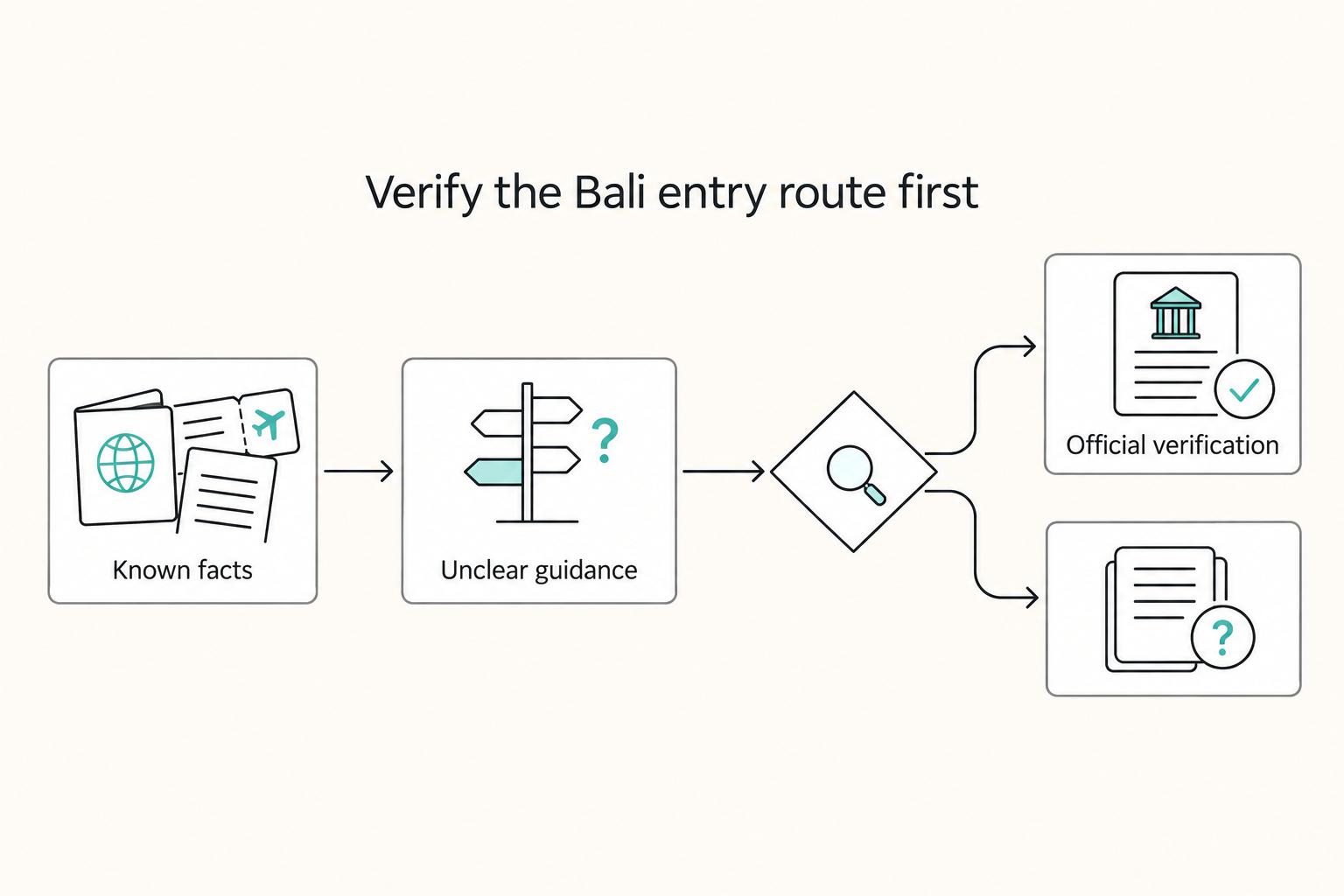
Get the route right before you book anything expensive. Your entry path sets the document load, sponsor coordination, extension pressure, and how much timing risk you carry into the move.

Malaysia DE Rantau Nomad Pass Application Playbook
Low risk starts with one rule: separate what third-party and community sources say from what you have personally verified on the live official application path. This guide follows that rule so you can plan your move without treating summaries or walkthrough videos as policy.
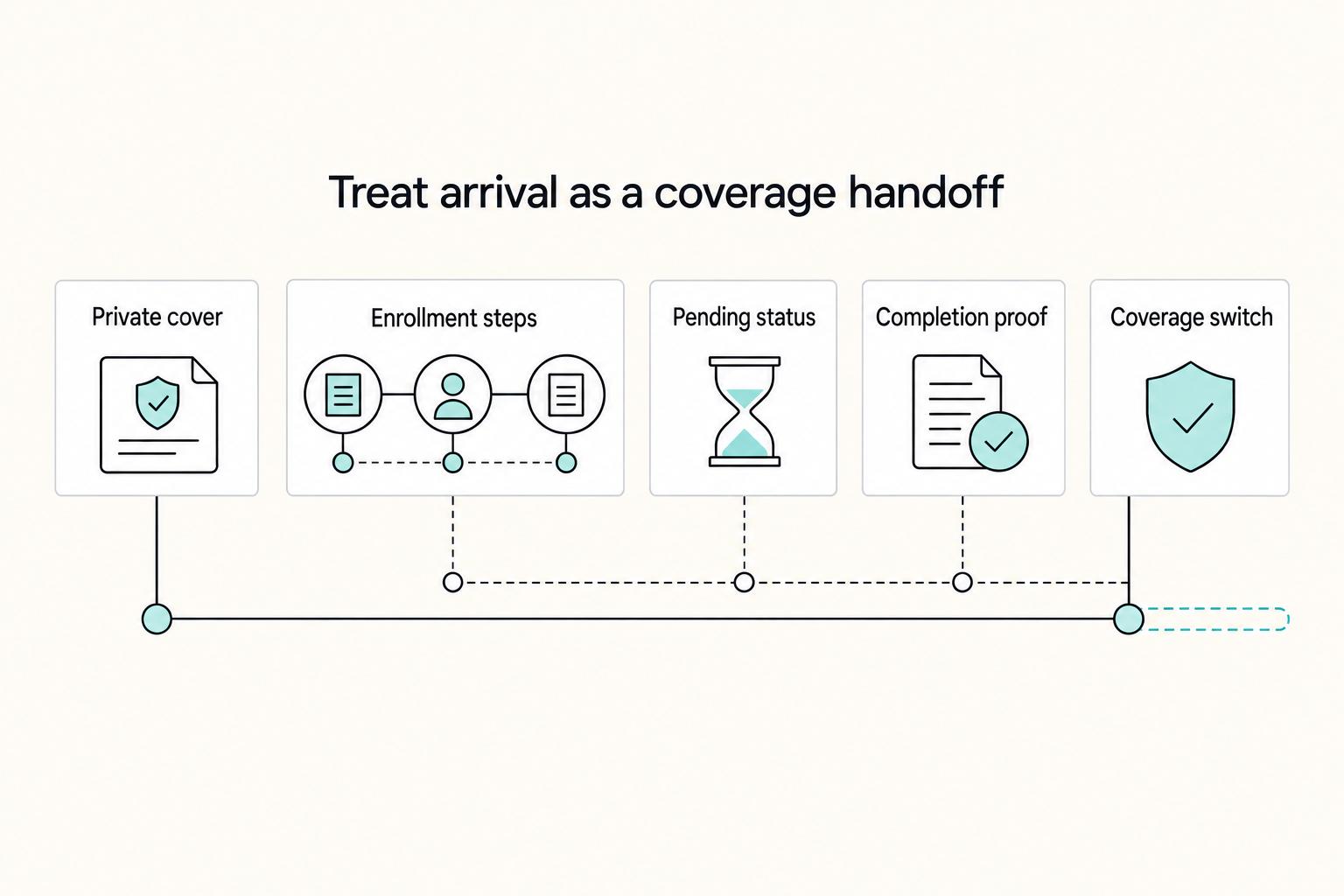
How to Get Health Insurance in Spain as a Digital Nomad
Insurance can move your case forward or stall it, so treat it as an opening task, not an end-of-process purchase. If the policy wording or supporting documents do not match what the reviewing office expects, you raise the chances of delays, follow-up requests, or refusal. This article stays focused on the insurance side of Spain's Digital Nomad Visa and does not replace full immigration guidance.