
Quick Answer
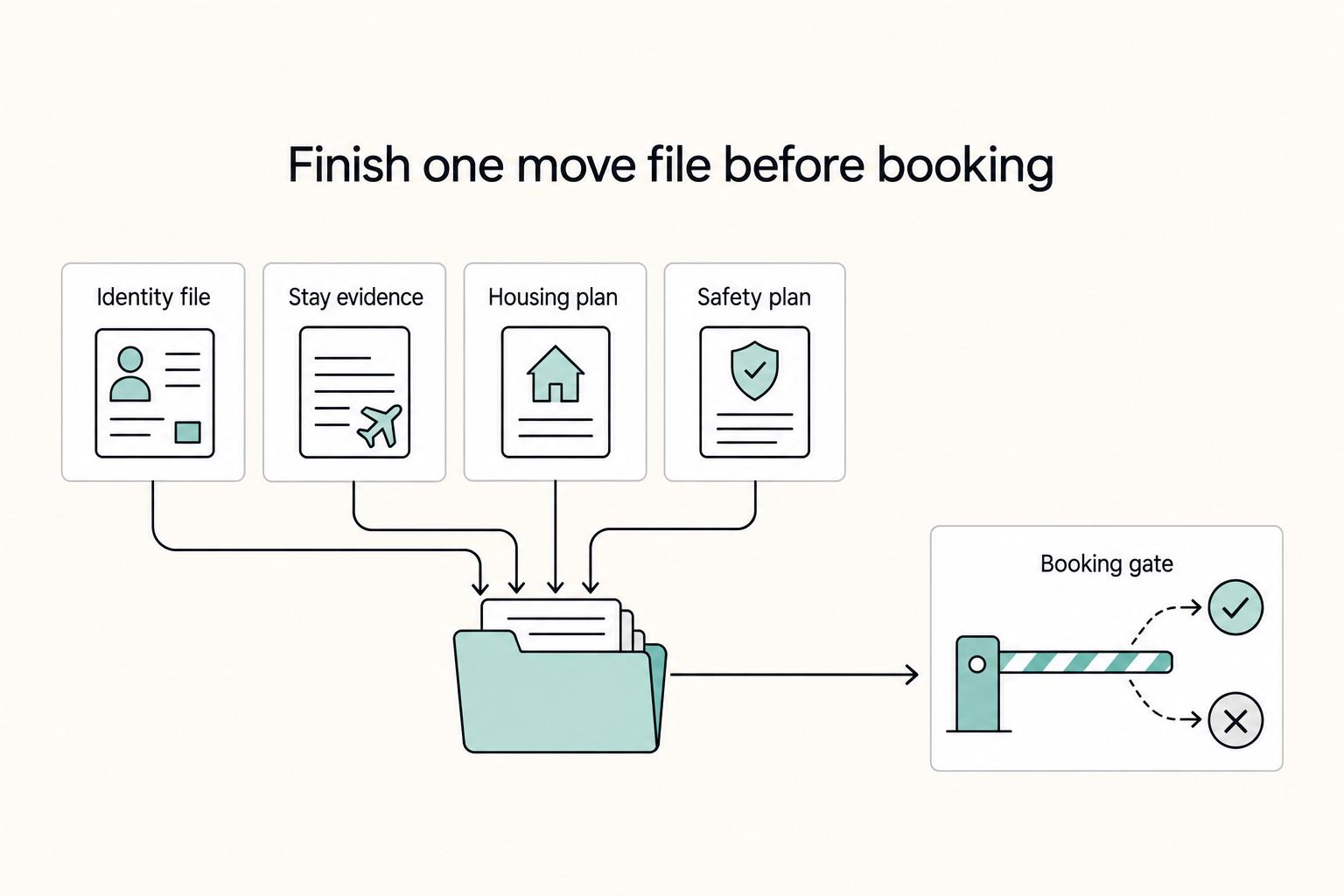
Shortlist cities first, then commit only after relocation checks clear. For the best nomad cities for women, this article treats places like Taipei, Valencia, and Porto as candidates until core evidence is in hand. Verify legal stay route, accommodation proof, banking access, and long-term phone setup, then mark each city ready, pending, or blocked. Keep one primary option and one backup active, and do not pay non-refundable costs until both city files are decision-ready.
Start Here Before You Pick a City#
Treat this as a safety-first relocation guide, not a popularity contest. If you are looking for the best nomad cities for women, use rankings and roundup posts as an opening filter. The real work starts when you test each option against paperwork, housing, and how safe your everyday routine is likely to feel.
Safety signals matter, but they do not carry a city on their own. Some of the inputs behind these lists rely on traveler comfort reports. That can be useful context, especially on a first pass, but it is still not a substitute for checking neighborhoods, transport habits, and the routines you will actually keep. Interest in digital nomad visa queries reached an all-time high at the beginning of 2025, which means more people are making relocation decisions from mixed-quality advice. You will also run into opinion-led city picks and small qualitative studies, including one with 27 participants, so broad claims still need a second layer of verification.
A good move follows a simple order: cut to a shortlist, test feasibility, then commit money and dates. That sequence sounds obvious, but it is where many avoidable mistakes happen in practice.
Use this path in order:
- Build your shortlist: Start with safety confidence for solo routines, then cut to 2 or 3 cities. Use women-focused safety signals as a filter, not a final verdict.
- Run feasibility checks: For each city, verify the visa route, minimum stay rules, housing fit, and document burden. If the legal path is unclear or unstable, remove that city even if cost and lifestyle look attractive.
- Commit with a move timeline: Pick one primary city and one backup, then set document-ready dates before you pay non-refundable travel costs. Let paperwork milestones, not flight deals, drive the schedule.
Use this checkpoint early to prevent expensive course corrections later: build one evidence pack with passport validity, income or work proof, accommodation proof, insurance, and onward or return documentation. Mark each item as ready, pending, or blocked. That makes weak points visible before they turn into rushed decisions.
If two core checks fail for a city, especially visa continuity and safe daily mobility, do not try to rescue the choice with weather, nightlife, or social media enthusiasm. A city only works when you can enter it cleanly, settle in without friction, and get through ordinary days without improvising every step.
By the end of this guide, you should have one primary city, one backup, and a document timeline you can actually execute. If Portugal is already on your shortlist, review the Portugal Digital Nomad (D8) Visa: A Complete Guide early so your city choice and visa path stay aligned.
How This List Was Built and Who It Fits#
This list is built for decision-making, not entertainment. The goal is not to crown a universal winner but to narrow the field to places that may hold up for a multi-month stay once you account for safety signals, remote work basics, and administrative reality.
The filtering happened in three passes.
- Safety signals first: Sources such as NomadList were used as directional inputs, including its
safe for womenfilter. No single filter is treated as sufficient on its own. - Relocation practicality second: Cities stayed in the mix only when the basics of a multi-month remote setup looked workable, especially stable internet and a work-friendly environment.
- Evidence confidence check: Inputs with limited transparency were treated cautiously. Some sources are based on personal lived experience, include affiliate monetization, or omit whole regions, so it should not be mistaken for neutral scoring data.
That matters because most city lists flatten very different questions into one answer. Personal safety, legal stay, housing proof, and daily workability are related, but they are not interchangeable. A city can sound ideal in traveler content and still fail your move because the paperwork path is vague or the housing proof is harder than it looked. This list tries to separate those layers so you can make a cleaner call.
Who this fits: remote professionals planning a multi-month move, especially first-time solo movers comparing places like Taipei, Valencia, or Porto and willing to do visa and document checks before they book.
Who this does not fit: short holiday planning or readers who only want nightlife and cost rankings without doing any paperwork planning at all.
Use this practical rule throughout the article: when a source recommends a city but does not explain its scoring method, treat it as a prompt to verify, not a verdict to trust. Keep options that still look good after both safety and day-to-day setup checks. Drop options where the visa path, housing proof, or document burden is still muddy.
If you want a fast next step for pressure-testing your shortlist, Browse Gruv tools.
Quick Comparison Table for First-Pass Shortlisting#
For a first pass, treat every city below as pending. Available information leans heavily on anecdote, so uncertainty is normal here, not a flaw in your process. What matters is whether each option survives the same four checks: visa path, lease viability, banking access, and long-term phone setup.
| City | Best for | Safety confidence | Long-stay practicality | Digital nomad visa fit | Main tradeoff | Ideal stay profile |
|---|---|---|---|---|---|---|
| Taipei | Structured-city shortlist testing | Unclear in current pack, verify by neighborhood and routine | Verify setup directly | Unknown in current pack, confirm before booking | Can feel decision-ready before admin checks are done | Multi-month planner who verifies documents first |
| Chiang Rai | Slower-pace shortlist option | Unclear in current pack | Verify internet and housing yourself | Unknown in current pack, confirm entry and extension rules | Easy pace can hide unresolved paperwork steps | Flexible mover with a backup city |
| Montevideo | Steady-rhythm shortlist option | Unclear in current pack | Local verification required | Unknown in current pack | Verify with local sources | Longer stay only after pre-checks clear |
| Venice | Culture-led shortlist option | Unclear in current pack | Not established for remote routine execution | Unknown in current pack | Lifestyle pull can outrun practical fit checks | Only proceed when admin path is already clear |
| Penang | Routine-first shortlist option | Unclear in current pack | Verify work setup and lease terms | Unknown in current pack | Fast shortlisting, slower verification | Planner who keeps a fallback option active |
| Valencia | Balanced lifestyle shortlist option | Unclear in current pack | Verify documents and housing early | Unknown in current pack | Momentum can build before evidence does | Timeline-based planner with buffer for admin |
| Kaohsiung | Lower-intensity shortlist option | Unclear in current pack | Verify basics directly | Unknown in current pack | Thin evidence can create false certainty | Test stay before full relocation |
| Porto | Paperwork-first shortlist option | Unclear in current pack | Depends on document readiness; confirm directly | Unknown in current pack, verify route details | Attractive option can distract from sequence discipline | Move after visa and admin file are complete |
| Lisbon | Consider if your priority is broader expat infrastructure | Unclear in current pack | Verify current conditions | Unknown in current pack | Higher demand pressure can tighten timelines | Planner who can absorb delays |
| Reykjavik | Consider if your priority is smaller-scale, orderly living | Unclear in current pack | Evidence is thin; verify independently | Unknown in current pack | Limited evidence for first-pass certainty | Backup candidate until checks are complete |
Before you pay any deposit, label each city ready, pending, or blocked across visa path, lease viability, banking access, and long-term phone setup. In this research set, one anecdotal account links day-to-day stability to residence documentation, including easier leasing and banking after status is sorted. The practical takeaway is simple: if two or more of those checks are still pending, stop pushing that city forward and move your backup up the list.
The table is for cutting the list. The next section is about fit: who each city is best for once you look at it through paperwork and routine instead of hype.
The Best Nomad Cities for Women and Who Each One Is Best For#
No city in this section should be treated as a verified women-specific winner from this evidence pack alone. The useful move here is more limited: identify which places deserve a real second look, then keep going only when your admin file is genuinely ready.
If you may base in the EU and bill cross-border, sort out tax handling before you lock in housing or flights. Confirm whether OSS registration applies, whether the EU-wide EUR 10,000 threshold is relevant, and whether Union turnover stays under EUR 100,000 for cross-border SME treatment. If needed, leave room for processing time that can run up to 35 working days after prior notification. That step can feel separate from the city choice, but it is not. It changes what is actually workable.
Taipei: Keep Taipei in play if you plan in a structured way and are willing to verify the important pieces yourself. It works best as a compare-against option, not a pre-approved choice. There is no supported women-specific safety ranking or visa-fit detail readily available, so the value of Taipei is not certainty. It is the discipline it forces. Proceed only when your legal-stay path is clear, your file is complete, and you are not mistaking momentum for readiness.
Kaohsiung: Kaohsiung makes the most sense as a lower-intensity side-by-side option while you keep a primary and backup plan active. It can stay in the conversation, but only on the same terms as Taipei: a women-specific safety score is not readily available, and immigration fit requires your own verification. Treat it as a backup candidate until your checks are fully cleared. If the evidence stays thin, do not promote it just because the shortlist is narrowing.
Valencia: Valencia is strongest for people making an EU-based decision and willing to work through the administrative side early. You can evaluate it with the same EU admin checklist you would use elsewhere in the bloc, which makes it a solid option for a paperwork-first decision process. At the same time, a women-specific safety ranking for the city is not readily available, and broader lifestyle claims warrant independent verification. Move forward only after the relevant registration steps are clear.
Porto: Porto belongs on a paperwork-first shortlist if Portugal is already in scope and you are willing to verify the route officially before you commit. It can be assessed with the same EU admin lens as Valencia, but Portugal D8 eligibility claims and city safety scores require independent verification. That is the main tradeoff. Porto can look attractive early and still be the wrong move if you let that attraction outrun sequence. Keep it active only after you have reviewed the official criteria and finished the core file.
Chiang Rai: Chiang Rai is better treated as an option for flexible planners than as a locked-in pick. It can help preserve optionality in your compare set, especially if you are deliberately keeping one backup alive. A women-specific safety ranking and reliable visa-fit detail are not readily available, so the city stays in the maybe column until the legal-stay side is clear. If you test it, do so with flexible dates and a documented fallback rather than with one-way confidence.
Penang: Penang suits a routine-first planner who is willing to verify the basics before getting attached to the idea. It remains useful because it keeps optionality open, but the gaps matter. Housing-fit and legal-stay claims for Penang require your own verification, and a women-specific safety ranking is not readily available. Keep it on the list only if legality and housing checks can be verified first. If those points stay fuzzy, the right move is to pause, not to hope.
Montevideo: Montevideo makes the most sense for someone comparing carefully before committing and willing to accept that direct evidence is thin. It can function as a deliberate backup candidate, particularly for a longer stay, but only after document timing and legal-stay planning are confirmed. As with several other cities here, a women-specific safety ranking and visa-fit fact base require independent verification. That does not make it a bad option. It means the burden of verification stays with you.
Venice: Venice is a culture-led option that only makes sense once the administrative side is already under control. Like Valencia and Porto, it can be run through the same EU checklist, and that makes it easier to evaluate consistently. What is missing here is a supported women-specific safety ranking and evidence for practical remote-work fit. That gap matters because Venice can become a vibe-first decision very quickly. Move forward only when your admin file is ready, not merely close.
The pattern across all eight cities is consistent. None of them should advance because they feel right in theory. They should move forward only when legal stay, document timing, and ordinary daily use all become clear at the same time.
Decision Rules That Prevent a Bad City Choice#
Most bad city choices are sequence problems, not city problems. People optimize for lifestyle first, then try to patch over legal uncertainty, weak housing options, or safety doubts after money is already committed.
Even cities widely described as safe can still come with scams, and every city can include riskier areas. So use safety lists as a starting signal from lived experience, then test your own routine at neighborhood level. The right city is the one that stays workable after that closer look.
Use these rules in order:
- If paperwork clarity is your main constraint, shortlist only cities where the document path is already clear. Save lifestyle comparisons for later. Until the required file is ready, that city is still speculative.
- If personal safety confidence is your main constraint, keep two comfort-fit options active and stress-test your daily routine. Check the housing area, late-evening routes, and regular transport before you decide.
- If monthly burn is your main constraint, compare cost only after legal-stay clarity is confirmed. If continuity is still unclear, mark that city
blockedno matter how attractive the budget looks. - Use a hard stop-go gate before booking. If a city fails both core checks, legal-stay clarity and safe daily mobility, stop there and move to your backup.
A simple scoring pass helps here. Rate each finalist as ready, pending, or blocked across document readiness, legal-stay clarity, neighborhood confidence, and scam-readiness. Keep the scam plan concrete: decide in advance how you will verify local prices and payment terms before you commit to anything. That is the kind of small discipline that keeps a good city from turning into a messy first month.
Document Checklist You Should Finish Before Booking#
Most relocation stress comes from scattered paperwork, not the destination itself. Before you book, build one pre-departure evidence pack and keep it in one folder so you can see the whole move at a glance.
| Track | What to include | Key note |
|---|---|---|
| Identity and travel file | Passport copy; onward or return plan; accommodation confirmation; work or income proof; travel insurance details | Build one pre-departure evidence pack and keep it in one folder before you book |
| Visa research track | One notes page per option; label each point as confirmed or unclear | Start with the Portugal Digital Nomad (D8) Visa guide, then decide whether a South Korea route should stay active as a backup |
| Departure-risk file | Employment contract; rental agreement | Some roles require two to four weeks' notice, and breaking a lease early can trigger a fee |
| Arrival-week admin kit | Local SIM options; a backup payment method; emergency contacts; a work gear inventory | Prepare this for your first week in places like Taipei, Valencia, or Porto |
That does two things: it shows what is actually done, and it stops you from treating a nearly complete plan as a complete one. In practice, that difference matters most right before you are tempted to pay for flights or longer housing.
Your pack should cover four tracks:
- Identity and travel file: Passport copy, onward or return plan, accommodation confirmation, work or income proof, and travel insurance details.
- Visa research track: If a digital nomad visa route is in scope, keep one notes page per option and label each point as confirmed or unclear. Start early with the Portugal Digital Nomad (D8) Visa: A Complete Guide, then decide whether a South Korea route should stay active as a backup.
- Departure-risk file: Review your employment contract and rental agreement early. Some roles require two to four weeks' notice, and breaking a lease early can trigger a fee.
- Arrival-week admin kit: Prepare local SIM options, a backup payment method, emergency contacts, and a work gear inventory for your first week in places like Taipei, Valencia, or Porto.
For every item, assign one of three labels: ready, pending, or blocked. Then pair each pending item with a fallback action. That second part is what keeps the checklist useful. If accommodation proof is still pending, pause non-refundable tickets. If banking access is uncertain, add a backup card before departure. If lease terms are unclear, get written confirmation before giving notice.
Use this checkpoint before you sign or pay for anything larger than a routine travel cost: can you enter, fund, and work from the city on day one? If the answer is not clearly yes, the move is not ready yet, no matter how promising the city looks on paper.
Timeline From Decision to Arrival Without Last-Minute Panic#
The cleanest moves are usually the least dramatic ones. Keep a primary and a backup city active until one is fully usable, lock in arrival-night safety before you leave, and follow one fallback order when something slips.
| Timing | Focus | What to do |
|---|---|---|
| 8-12 weeks out | Keep two city options live and set housing checks | Choose a primary and backup city; apply the same housing filters to both: late check-in, cancellation terms, and safe after-dark transport; verify your entry route at a planning level |
| 4-6 weeks out | Close blockers and finish digital safety setup | Submit available paperwork; label each critical item as ready, pending, or blocked, with one fallback action for every pending item; confirm your relocation cash buffer; finish pre-trip digital prep |
| 2-3 weeks out | Finalize travel and protect arrival night | Confirm your first stay and your work setup, then book flights; if you are arriving late, pre-book airport transport and add buffer hotel nights |
| Arrival week | Run a short settle-in sprint | Validate transport routes in daylight; secure document storage across cloud and offline copies; test backup payments; test your work setup; write a simple recovery plan for a lost phone, wallet, or bag |
| If plans break | Follow one order | Pause non-refundable bookings first, switch to backup housing second, and only then activate your backup city |
Here is the sequence:
- 8-12 weeks out: keep two city options live and set housing checks. Choose a primary and backup city, then apply the same housing filters to both: late check-in, cancellation terms, and safe after-dark transport. Verify your entry route at a planning level so you can see what is still unclear.
- 4-6 weeks out: close blockers and finish digital safety setup. Submit available paperwork, then label each critical item as
ready,pending, orblocked, with one fallback action for everypendingitem. Confirm your relocation cash buffer, then finish pre-trip digital prep so safety apps and tracking are configured before connectivity becomes unreliable. - 2-3 weeks out: finalize travel and protect arrival night. Confirm your first stay and your work setup, then book flights. If you are arriving late, pre-book airport transport and add buffer hotel nights instead of arranging logistics at midnight.
- Arrival week: run a short settle-in sprint. Validate transport routes in daylight, secure document storage across cloud and offline copies, and test backup payments. Then test your work setup and write a simple recovery plan for a lost phone, wallet, or bag so tracking can turn into action.
- If plans break: follow one order. Pause non-refundable bookings first, switch to backup housing second, and only then activate your backup city.
The point of this timeline is not to make the move feel complicated. It is to keep one problem from becoming three. When dates slip, people often change flights, housing, and city choice at the same time. A fixed order stops that cascade.
Mistakes That Make Good Cities Fail in Real Life#
Good cities usually fail because the move sequence was wrong, not because the destination was fundamentally bad. Early research is a draft. Trouble starts when you treat it like proof and build commitments on top of it.
Four mistakes show up again and again:
- Ranking confidence with no ground check
A strong list position does not tell you much about your actual routine. Before you commit to longer housing, validate at least one daytime route and one late-evening route between your stay, a grocery stop, and your work base. The point is to test your real day, not a city headline. This is a common failure mode for people who rely on broad safety labels without checking how those labels translate into ordinary movement.
- Vibe-first choice before entry and document fit
Low cost of living, amenable visa rules, and decent wifi are useful filters, but they do not make a city usable on their own. If your entry path or document plan is still unclear, keep a second city active and avoid non-refundable commitments. Entry clarity decides whether a place is workable now. Everything else comes after that.
- Ignoring daily friction until after arrival
The social-media version of a city can hide how tiring normal tasks become once you are actually living there. First-person accounts often mention loneliness and frustration once routine admin and daily errands pile up. Test a normal weekday flow before you lock in: one full work block, one backup workspace, and one late return. A city that works on an ordinary Tuesday is usually the stronger long-stay choice.
- Assuming every "safe" label means the same thing
Safety is situational, not a single score. Check it by scenario: neighborhood, time of day, and transport pattern for your solo routine. That is where broad labels often break down. A city can be described as safe in general and still be a poor fit for the routes, hours, and habits you will actually keep.
One more red flag is social momentum without stability. Temporary communities can make a place feel easy very quickly, but they can also come with local friction, including housing pressure when homes shift to higher-cost short-term rentals. If a place feels like a constant party environment during your validation phase, move your backup city forward early rather than trying to force a long-stay decision.
Final Takeaway and Your Next Move#
The right city is not the one with the best internet chatter. It is the one you can enter legally, afford consistently, and work from without routine friction. Safety and long-stay practicality have to hold together.
Use that logic for your next move:
- Decide today: pick one primary city and one backup city.
- Set a document-ready date for both: treat each option as viable only when the required paperwork is ready to use.
- Book in sequence: confirm your entry path and work setup first, then lock in non-refundable flights and longer housing.
Digital nomad visas can allow longer legal stays than a typical tourist visa, and eligibility often includes a minimum monthly income requirement. More location options from remote work only help if you use one repeatable method: compare, verify, then commit.
If Portugal is in scope, read Portugal Digital Nomad (D8) Visa: A Complete Guide. If South Korea is on your shortlist, read South Korea's New Digital Nomad (Workation) Visa: What We Know.
Frequently Asked Questions
Is safety ranking enough to pick the best nomad city for women?
No. At least one female-nomad list rates destinations on safety plus housing cost, transport, food options, internet, and entertainment, so safety is only one input. Use rankings for shortlist creation, then verify your route, housing terms, and entry feasibility.
Which cities appear most consistently in current results for women digital nomads?
Consistency changes by list and filter, so check methodology before trusting order. One source points to a safe-for-women filter for current sorting, while another highlights an 8-city set that includes Chiang Mai as beginner-friendly. Coverage bias matters too. One shortlist notes major absences in Africa and Latin America, which reflects scope, not a universal safety verdict.
What documents should I prepare before relocating for a multi-month stay?
Requirements vary by nationality and destination. In practice, organize identity records, accommodation proof, insurance details, and visa paperwork where required. Keep items in one folder and mark each as ready, pending, or blocked so delays are visible early. Then confirm requirements against official rules for your nationality and destination.
How do I choose between Taipei, Valencia, and Porto if all three look strong?
Use one rule: choose the city where safety routines, housing reliability, and entry path are all clear at the same time. If two remain close, keep a primary and backup until flights and first-week housing are confirmed. If entry paperwork is the swing factor, review official visa requirements before paying non-refundable costs.
What should I do if my visa timeline slips after I already booked travel?
Stop new non-refundable spending first. Then adjust in order: dates, housing, then city, while protecting your cash buffer. For late arrivals, keep flexible transfer and first-night lodging plans so schedule changes do not force rushed decisions.
Are lower-cost cities like Chiang Rai or Penang still good options for long stays?
They can be, but low monthly burn alone is not enough. Cost, legal-stay continuity, and dependable internet all need to hold for your actual plan. Use Chiang Mai-style multi-entry and extension examples as planning references only, then verify current legal terms before relying on them.
Try a related tool
Researched and edited by the Gruv editorial team. Gruv builds cross-border billing, payouts, and finance-operations software for global businesses.
Sources
Educational content only. Not legal, tax, or financial advice.
Related Posts

Portugal Digital Nomad Visa Decisions That Prevent D8 Delays
Start with verification, not paperwork. In this research set, some material is useful only as EU VAT context, not as D8 instruction, and mixing those categories is one of the fastest ways to build the wrong plan. We use the same separation rule in [Global Digital Nomad Visa Index](/blog/global-digital-nomad-visa-index) comparisons.

South Korea Digital Nomad Visa Filing Path and Evidence Plan
Treat this visa as a gate, not a travel detail. The Digital Nomad (Workation) Visa, also called the F-1-D visa, is presented as a route for remote work tied to non-Korean employers or overseas business activity. Practical order matters: confirm fit, build evidence, then choose where to file.
Opening a Business Bank Account for a UAE Free Zone Company
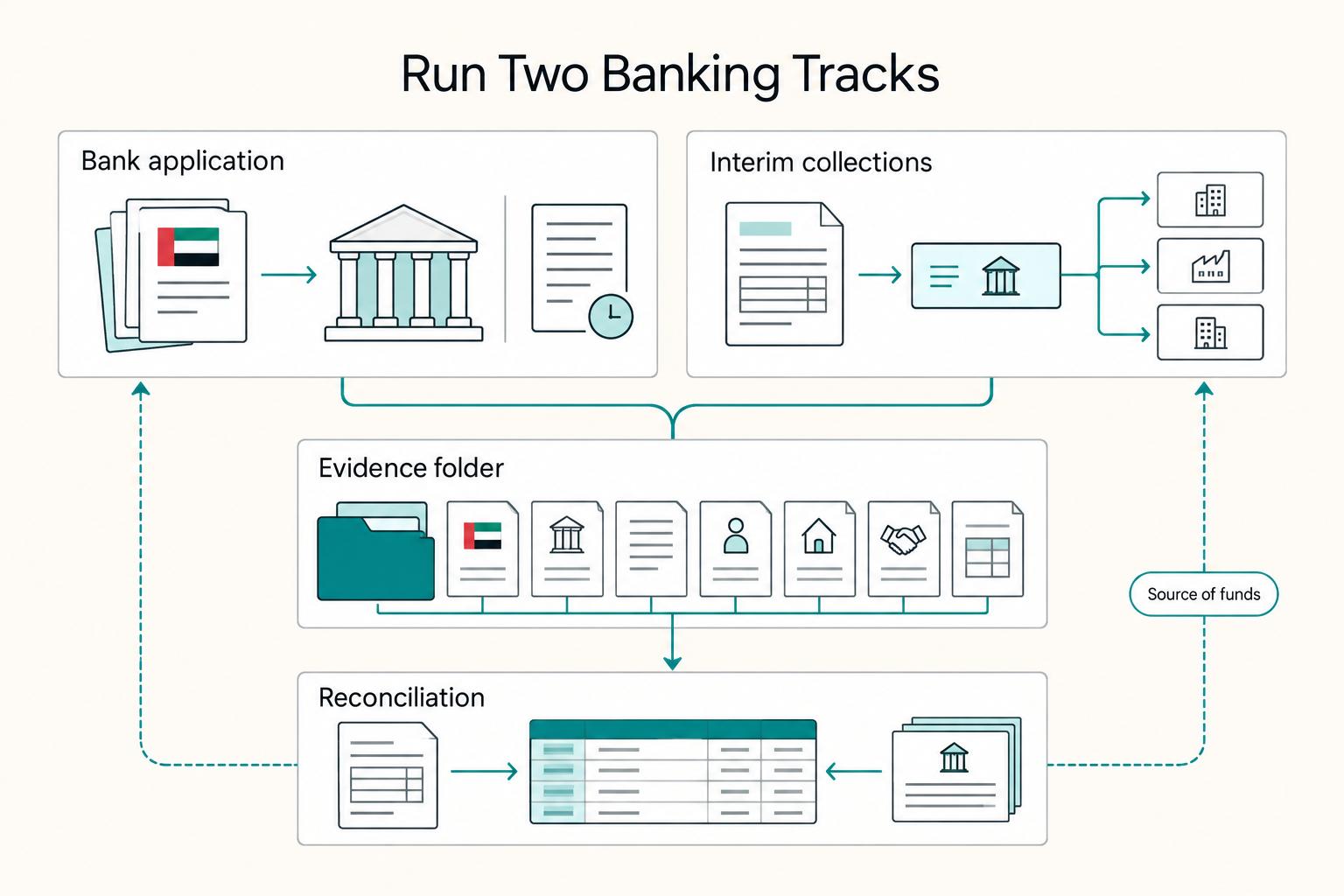
**If you're forming a UAE free zone company, optimize for uninterrupted cashflow, not "getting an account" as a vanity milestone.** You're building a system that gets invoices paid and stays defensible under scrutiny. Treat the bank account as one component in a broader setup that keeps invoicing, reconciliation, and compliance stable even when banking moves slowly.