
Quick Answer
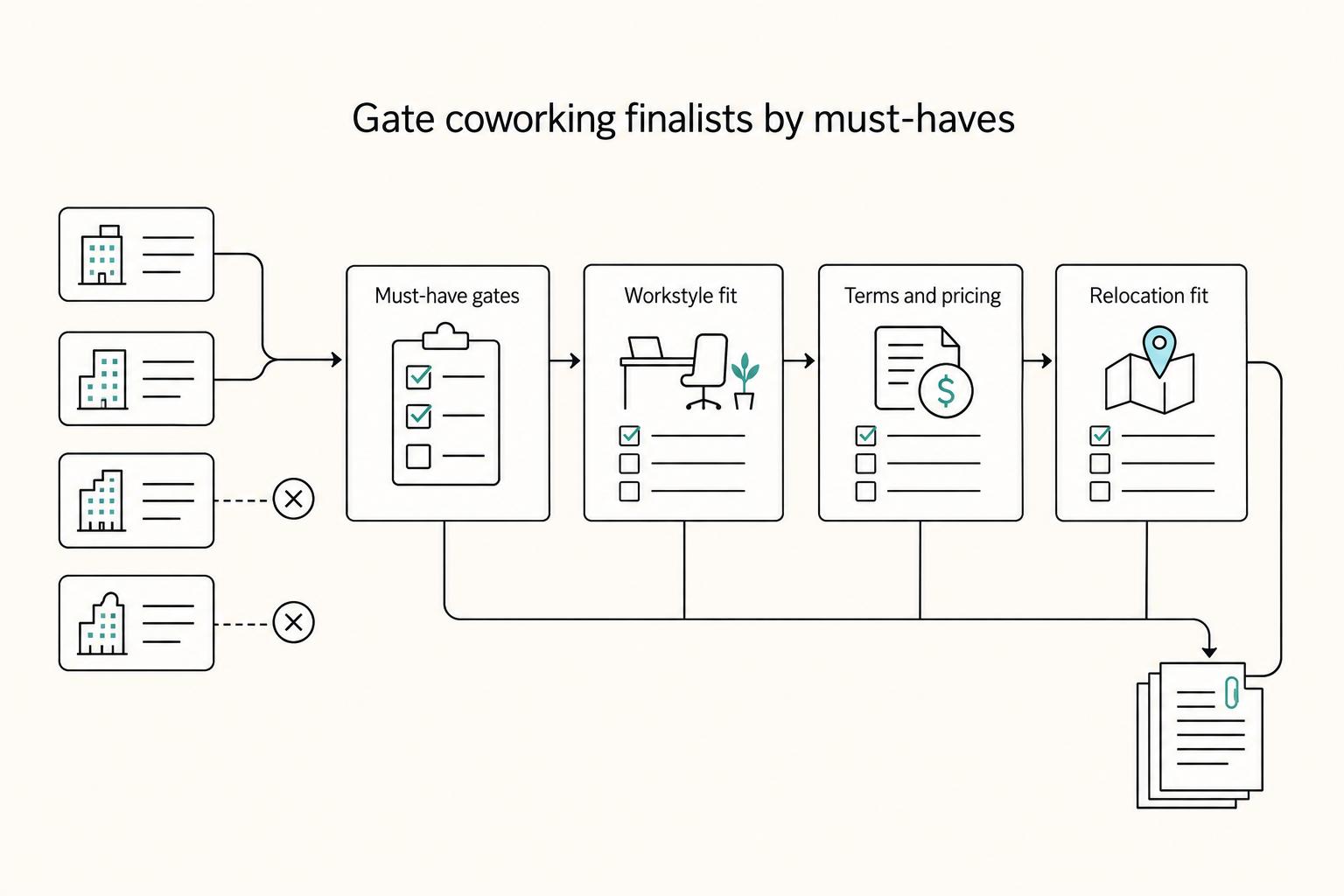
Choose the best coworking spaces for nomads by proving reliability before committing. Use a three-layer stack: must-have gates, community fit, then relocation operations. Start with a day pass or hourly access, run a real call and real upload during your actual work window, and treat listings as discovery only. If written terms are vague or live conditions break your workflow, switch to a backup instead of extending.
Start with infrastructure, then use a simple decision stack#
Start with infrastructure, not aesthetics. If a space cannot support your real work window, client calls, and first week in town, it is not a real option.
Use a simple decision stack and fail fast. The order matters: must-have gates, community fit, then relocation ops. A space only moves to the next layer if it clears the one before it.
| Layer | What you are checking | Pass or fail rule | Validation before you buy |
|---|---|---|---|
| Must-have gates | Can you do focused work and take calls without friction? Think usable hours, reliable setup for your workload, and whether there are quiet areas or soundproof phone booths. | Fail if it puts delivery at risk. If you would need workarounds on day one, cut it. | Test the space during your actual work hours, not at a quiet tour time. Join a real call, upload a real file, and check whether booths or quiet seats are actually available when you need them. |
| Community fit | Does the place feel accessible, open, and work-friendly, or is it mostly noise, cliques, and event energy? Coworking values like accessibility, community, openness, collaboration, and sustainability can make or break culture quality. | Fail if the social setup drains your workday. If it is better for hanging out than shipping work, keep looking or use it for events only. | Stay long enough to watch the room change over a few hours. Notice whether newcomers can plug in easily and whether people are mostly working or just circulating. |
| Relocation ops | Can you start small, extend if it works, and keep a backup if it does not? | Fail if terms stay fuzzy. If access details or what is included are unclear in writing, expect friction later. | Ask for the exact pass details in writing: day access, hourly coworking or drop-in options, what your pass includes, and how to extend. Then map two backup spaces nearby before arrival. |
Your first commitment should be reversible. Traditional coworking often pushes monthly memberships or dedicated desks, but hourly coworking exists for use-as-needed access. In one cited example, a drop-in hot desk was priced at $2 per hour in St. Louis and $4/hour in San Francisco. That is not a market benchmark. It is a useful reminder that if a space offers hourly or day access, buy proof first and commitment second.
Keep your shortlist tight:
- Three options max: one primary, two backups in the same area.
- One real work test before upgrading: do not move from drop-in or day access to a longer pass until you have completed an ordinary workday there.
- One written record: save the message that confirms access details and inclusions.
This choice also supports the move itself. In your first week, the right base can give you a stable place to handle early relocation logistics and client delivery without turning admin days into missed deadlines. For a step-by-step walkthrough, see The Best Coworking Retreats for Digital Nomads.
The scoring system (and who this list is for / not for)#
Use this scorecard if your first week in a new city still needs to run like a normal workweek. If you are fine improvising around noise, policy friction, and trial-and-error, a lighter directory-style approach may be enough.
This framework is for relocation or longer stays where missed calls, unstable internet, or unclear access rules can disrupt real deliverables. Start with pass/fail gates, then score finalists.
Who this helps, and who should skip it#
Use this if one or more of these are true: you need reliable high-speed internet, you cannot miss calls, or you need a base that still works when errands split your day. Start with a day pass so you can test a space before any monthly commitment.
| Situation | Recommendation |
|---|---|
| Need reliable high-speed internet | Use this model |
| Cannot miss calls | Use this model |
| Need a base that still works when errands split your day | Use this model |
| Trip is short | Skip this model |
| Workload is light | Skip this model |
| Comfortable adapting to whatever a venue offers | Skip this model |
Skip this model if your trip is short, your workload is light, or you are comfortable adapting to whatever a venue offers. Some places marketed as coworking are not designed for focused work, which matters more when you need consistent output from day one.
Pass/fail first, then compare finalists#
Do not rank spaces until they clear your non-negotiables.
| Layer | What you evaluate | Pass / good outcome | How to verify in a trial | Mis-pick to avoid |
|---|---|---|---|---|
| 1. Must-have gates | Internet reliability, usable hours, call suitability, policy friction | Pass only if the space supports your real work window and core tasks. | Run a real upload, take a real call, ask to see the quietest area, read the small print, and confirm whether re-entry after lunch is allowed. | You leave midday for an apartment viewing and cannot re-enter without paying again. |
| 2. Workstyle and community fit | Noise level, newcomer friendliness, event load, whether people are actually working | Good means you can focus without fighting the room, with social options available if you want them. | Stay long enough to see the room change and check whether newcomers can plug in easily. | You pick a social-heavy venue during an onboarding week and lose focus time. |
| 3. Terms, pricing, and relocation fit | Trial options, inclusions, day-to-week conversion rules, nearby backups | Good means you can start small, extend cleanly, and compare real cost in the same city. | Ask whether coffee is included, whether a day pass rolls into a weekly plan, and what changes if you stay more than 3 days. | A discount looks good, but hidden rules make total cost worse than nearby alternatives. |
After a space passes Layer 1, weight your shortlist in this order: reliability first, workstyle second, community third, and terms/cost fourth. This keeps brand familiarity or polished photos from overriding operational fit.
Use WeWork, Selina, and Outsite as archetypes (corporate, social-first, stay-plus-work), not endorsements. You still need to verify the specific location.
Treat 2026 city day-pass ranges as comparison baselines, not fixed prices. For example, Lisbon (15 to 30 euros) and Canggu, Bali (8 to 20 USD) are working ranges for same-city checks. If a place is high-priced with no extra value, eliminate it. If you expect to stay more than 3 days in one area, compare weekly pricing; if weekly is less than three day passes, upgrade before you leave.
Community matters, but verify it after reliability is secure, because community claims are easy to market and harder to confirm. If you want to add a social layer later, use The Best Digital Nomad Communities to Join.
Apply this scorecard to three options only: one primary and two backups. Gate them now, list unresolved policy questions, then use the next section to time each check before arrival and during week one. For city context, see The Best Digital Nomad Cities for Co-Living.
How do I choose a coworking space before relocating? (timeline + decision checkpoints)#
Choose your space in phases: shortlist first, verify terms in writing, test in week one, then commit. Keep it simple: 1 primary space, 2 nearby backups, and 1 emergency way to get online.
| Before booking, confirm | What to ask for | Decision cue |
|---|---|---|
| Access hours | Access hours for your actual schedule | If answers stay vague, treat that as a no-go signal |
| Call setup | Private or semi-private options | If answers stay vague, treat that as a no-go signal |
| Re-entry or booking rules | Day-pass re-entry or booking rules | If answers stay vague, treat that as a no-go signal |
| Extension terms | Extension terms if you need more days | If answers stay vague, treat that as a no-go signal |
Before arrival, keep the shortlist to three spaces. Pick a primary that matches your real work window, then choose backups close enough to switch fast if the first option fails.
Treat directories as discovery, not proof. In this scrape, one Phuket coworking directory page returned "Invalid domain for site key," so plan around direct contact with each space, not the directory alone.
Before booking, ask each space for written confirmation on four points: access hours for your actual schedule, call setup (private or semi-private options), day-pass re-entry or booking rules, and extension terms if you need more days. If answers stay vague, treat that as a no-go signal. For long stays, you are already balancing visa and cost planning, often in systems built more for visitors than full-time residents.
| Phase | Deliverable | Quick verification | Go or no-go rule |
|---|---|---|---|
| Pre-arrival research | 1 primary, 2 nearby backups, 1 emergency connectivity fallback | Confirm location, transfer time, and that direct contact channels respond | Go only if all shortlisted spaces are reachable directly |
| Pre-booking verification | Written terms on hours, call setup, re-entry/booking, and extension | Save the written reply or screenshot | No-go if any core term is unclear |
| Arrival-week validation | One full real work block completed at the primary | Take real calls, test your normal workflow, leave and re-enter once, stay through a busier period | No-go if access, noise, or rules force workarounds |
| Commitment | Smallest longer pass that fits proven usage | Compare on-site reality vs written terms | Commit only if they match |
Use this same week-one test to protect both move admin and client continuity. If apartment viewings, registration errands, or visa-related appointments cut into your schedule, your workspace should still keep delivery stable.
Community or infrastructure: which matters more for your work style?#
For most remote professionals, infrastructure should decide first and community should decide second. Keep community in the scoring, but only after a space passes your non-negotiables: reliable internet, usable call conditions, and seating you can handle for 8-hour workdays. Treat "free Wi-Fi" and a friendly tour as a starting point, not proof.
| Work style | Must-pass infrastructure checks | Community signals to validate | If tradeoffs appear, do this |
|---|---|---|---|
| Deep-work week | Run speed tests at different times of day; treat results under the 50-100 Mbps range as a red flag heuristic. Confirm quiet seating and full-day ergonomic comfort. | Onboarding is clear, most members are working, and social areas are not your only workspace option. | Pick the more reliable setup, then add social time outside work hours. |
| Client-facing week | Confirm private or semi-private call space, stable upload performance, WPA2 or higher, and whether redundant lines exist. | Staff can explain call-booking flow and access rules clearly, and call zones stay usable during peak hours. | If calls depend on open seating, treat it as a no-go for now and stay on the smallest reversible pass. |
| Network-building season | Keep the same baseline checks, then test whether you can still work during busy periods without glare, unstable internet, or constant distraction. | There is a visible onboarding path, a real event rhythm, and member interaction outside hosted events. | Split your week: reliability-first days for delivery, community-focused days for intros and events. |
You can usually get a strong read on community quality in one visit. In the first hour, check whether staff introduces new members, points people to a member channel, or explains how people connect. Then watch the room: if the only active area is also the main work zone, you are likely trading focus for noise.
During onboarding-heavy relocation weeks, lean toward infrastructure because day-one connectivity shapes how smoothly your work starts. Once your cadence is stable, give community more weight without risking delivery.
If Bangalore is on your shortlist, see The Best Co-Working Spaces in Bangalore for Tech Freelancers.
Comparison table: quick picks by reliability, community, hours, and "surprise risk"#
Use this table to build a shortlist quickly, then treat every option as unproven until it demonstrates call reliability, quiet access, booking flow, and clear terms in practice.
| Archetype | Potential fit to test | Must validate before you pay beyond a trial | Surprise risk | Go/no-go cue |
|---|---|---|---|---|
| Large coworking chain | You want a structured arrival process and a work-first setup. | Ask to see the live room-booking flow, run a real call from open seating and a bookable room, and confirm access, re-entry, and guest rules in writing. | Listing clarity does not guarantee real-time room availability during your hours. | Trial first for call-heavy weeks. Eliminate if booking is unclear or rooms are not usable when you need them. |
| Hospitality-led coworking / coliving | You want convenience plus social access during week one. | Verify that work areas and social areas are functionally separate, test during busy periods, and confirm access differences in writing. | Social activity can raise noise and reduce predictable quiet blocks. | Use as backup or split-week unless quiet work blocks are proven. No-go if productive desks depend on social-zone conditions. |
| Membership community network | You want built-in networking across locations. | Validate the exact location, not the brand narrative: onboarding flow, quiet-time behavior, and whether booking rules conflict with your call schedule. | Brand-level positioning may not match location-level work conditions. | Trial if networking is a core goal. Downgrade to secondary if work conditions are not clearly demonstrated. |
| Work-forward stay / retreat-style coworking | You want routine and focused peer environment. | Check desk comfort, quiet rules, call booking conflicts, and fallback options if internet or power issues affect the site. | Smaller setups can have fewer internal alternatives when space is busy. | Use as primary only with a nearby external backup. No-go for call-heavy weeks if private space is consistently constrained. |
| Well-known local hub | You want access to an active local scene fast. | Test internet and seating at peak times, confirm room/booth access rules, and verify whether busy periods change usability. | Popularity can increase noise and seat competition at critical hours. | Same-day test candidate. Eliminate if answers stay vague or repeat visits conflict materially. |
| Local boutique coworking | You want a smaller setup with local integration. | Validate quiet seating, call conditions, pass terms, invoice details, and support response; get cancellation/renewal language by email before longer commitments. | Smaller teams can mean variability in process and policy clarity. | Start with the smallest reversible pass. Keep as backup only until it survives a real workday test. |
Treat directories, map listings, and roundup pages as discovery inputs, not proof. If your source is behind a sign-up gate or stuck at security check required, you still need on-site checks and written confirmation before you commit.
Use this validation sequence:
- Shortlist two or three options by archetype.
- Run a real work test during your actual working hours, including at least one call and one quiet block.
- Force one friction step (book a room, exit and re-enter, or request a same-day change).
- Get terms in writing for access, booking, cancellation, and renewal.
If listings, staff explanations, and live experience do not match, treat that as delivery risk. Keep the space as backup at most, then move to your next option.
Related reading: The Best Road Trips for Digital Nomads in the US.
Pick a coworking space you can verify and replace#
Pick the space you can verify and replace, not the one with the best branding. In practice, filter options by repeatability, trialability, and operational reliability before community appeal.
Run a budget screen before you compare spaces. City pressure varies a lot, with examples ranging from about $900 to $3,000 monthly; in the same 2026 cost table, Chiang Mai is listed at $800-$1,200 and Lisbon at $1,500-$2,200. That spread changes what is realistic for your coworking setup.
Then check maturity and tradeoffs at city level. Chiang Mai is described as having a mature coworking scene, while Da Nang is framed as still growing but usable. Mexico City is flagged as a place where basics can stay reasonable but discretionary spending can climb quickly.
Use these inclusion rules in any city:
- Repeatability: the archetype shows a consistent operating pattern you can rely on week to week.
- Trialability: you can start with a short, reversible pass before any longer commitment.
- Operational reliability: the space can demonstrate your required setup during your real work hours.
| Archetype | Best-fit work pattern | Likely tradeoff | First-day validation checks | Fallback trigger |
|---|---|---|---|---|
| Large coworking chain | Structured weeks and call-heavy delivery | Standardized experience may feel rigid | Run a real work block and one live call at your normal hours | What you can book or use in practice does not match what was described |
| Quiet-first local coworking | Deep-focus solo production | Less built-in social momentum | Test during a busier period, not just early quiet hours | Noise or seat pressure changes materially at peak times |
| Community-forward space | Fast social integration after arrival | Community activity can interrupt focus windows | Verify where focused work actually happens during active periods | Productive work areas are not consistently usable when needed |
| Hospitality-led coworking | Soft landing and flexible early week | Work zones can shift with guest traffic | Test one full block during a high-traffic window | Social flow regularly disrupts your planned work blocks |
| Two-space strategy | Longer stays where continuity matters | More setup effort in week one | Validate a primary and a nearby backup with the same three rules | You only have one workable option if conditions change |
Arrival week: run a primary day-pass test, score it with the same three-rule framework, and confirm a backup before any longer commitment. Build the social layer after infrastructure is stable, including via communities like The Best Digital Nomad Communities to Join.
What information is still unknown - and how to de-risk your first week anyway#
Treat unknowns as verification tasks, then commit in layers. Listings, familiar brands, and community chatter can help you shortlist, but they cannot confirm how a space performs during your real work window. In practice, remote delivery fails fast when time-zone pressure meets unreliable Wi-Fi, so assume key details are unproven until you confirm them in writing or by live testing.
| Unknown to verify | What to do now | Decision rule |
|---|---|---|
| Pass terms | Get the exact pass name, start date, renewal timing, and any refund, transfer, guest, or re-entry rules in writing. | If terms are unclear or not confirmed in writing, stay on the smallest reversible pass. |
| Wi-Fi under load | Test during your critical hours with one real call and one real upload/sync task. | If calls break or uploads stall when you actually need them, switch. |
| Call privacy | Use the actual booth/room booking flow and test access at the times you take client calls. | If private call space depends on luck, it is not reliable enough for call-heavy work. |
| Directory accuracy | Use directories to discover options, then verify hours, access, and setup directly with staff or onsite. | If listings and live conditions differ, trust live conditions and move on. |
First-week checklist#
| Week-one step | What to do | Article detail |
|---|---|---|
| Start small | Start with the smallest reversible pass | Keep downside low while you gather proof |
| Test real work | Run a real workload test in high-stakes hours | Validate calls, uploads, and focus during peak traffic, not during a quiet tour slot |
| Set fallbacks | Set fallback options before you need them | Keep one backup coworking option nearby and one emergency one-day setup |
Keep a simple evidence trail: save the terms email, note when your test call happened, and capture room availability if private calls are core to your work. Most failures are not obvious on day one; they show up exactly when delivery pressure is highest.
Protect your delivery system#
Separate coworking risk from income risk. If your first week also includes invoices, proposals, or billing, tighten those operations so a workspace switch does not become a cash-flow issue. If pricing and delivery ops still need cleanup, How to Price Webflow Development Services is a useful secondary resource.
If you're comparing Mumbai, see Best Coworking Spaces in Mumbai for Creative Professionals.
Conclusion: use the scorecard, run the timeline, and commit only after proof#
The right call is simpler than most relocation content makes it sound: choose proof over vibe. Your job is not to find the prettiest room. It is to protect stable delivery first, then add lifestyle fit after the basics hold under real conditions.
That means using the same operator scorecard every time and running it on a critical-path timeline. Start with the three hard constraints that eliminate weak options fast: legal stay length, meeting-schedule tolerance (your "golden hours"), and weekly burn rate. Then run a short validation plan to confirm internet redundancy, payments, and meetup access before you commit.
| Step | Action | Proof to collect | Pass or fail rule |
|---|---|---|---|
| Longlist | Apply the 3 hard constraints first | Each option clears legal stay length, golden-hours fit, and weekly burn rate | If any constraint fails, cut it |
| Verification | Verify visa and entry rules through official portals or consulates | Official requirement details you can reference | If work eligibility is unclear, do not rely on assumptions |
| Trial | Run a short real-world test plan before committing | Evidence that internet redundancy, payments, and meetup access work in practice | If a critical check fails, keep the plan reversible |
| Commitment | Commit only after week-one resilience checks | Backup connectivity, standardized payments, and audit-ready records are in place | If delivery still feels fragile, delay full commitment |
The same rule applies when reality changes after arrival. If critical delivery conditions fail, switch to your backup quickly instead of forcing a weak setup.
Keep first-week records clean: days-in-country logs, invoices, and bank confirmations. Verify visa and entry rules through official channels, and do not assume a tourist stay lets you keep working.
Define your non-negotiables, test them in real work conditions, and commit only after the base proves itself. If you want help thinking through the move or confirming what's supported for your specific country/program, Talk to Gruv.
If you need a mobile-data backup plan, see The Best International SIM Cards and eSIMs for Digital Nomads.
Frequently Asked Questions
What makes a coworking space “best” for your move, beyond aesthetics?
Start with the same gates used throughout this article: reliable internet during your real work window, private call space you can actually book, and practical details staff can confirm clearly. A dedicated coworking environment can help separate work from leisure, but that only matters after the infrastructure checks pass. If one live call or one real upload fails, do not let good design or friendly energy talk you into a longer commitment.
How do you choose a space before relocating to a new country?
Build a shortlist of a few spaces, then verify each one directly instead of trusting listings as final truth. Ask for pass options, access and call or meeting-room rules, and any business services you need, such as printing or conference-room access, before you commit. When you arrive, start with the shortest pass available, test during peak hours, and only upgrade after the space proves itself.
Which matters more for you: community or infrastructure?
If your income depends on calls or deep work, infrastructure is the constraint and community comes second. You can look for people through Facebook groups, coliving spaces, or Reddit, but you cannot patch over a dropped client call with good networking. If a space feels social but cannot protect your work block, keep it as a backup social spot, not your main base.
How do you compare options across cities without slipping into vibe shopping?
Use the same scorecard every time, even when the city changes. Keep the signals fixed: reliability, call privacy, workstyle fit, and terms or access. Test them the same way each time, and if any one of them fails under real conditions, do not make that space your primary base.
Are directory listings enough to decide from?
No. Use listings for discovery only, because even two locations across the street can feel and function very differently. Verify onsite or directly with staff, and trust the live reality over the directory entry. If the listing says one thing and the desk says another, move on.
What information is usually missing online, and how do you fill the gaps fast?
Common gaps are current room-booking rules and whether practical services like printing or conference rooms are actually available when you need them. Send one short message asking for those points clearly, then test the booking process and work setup yourself during your real hours. If staff cannot answer clearly, treat that as a warning about future surprises.
What should you do if the space is a bad fit after you arrive?
Switch early instead of trying to justify the mistake. Use a primary-plus-backup setup from earlier: keep one backup coworking option within easy reach, and confirm internet redundancy and power backup before you rely on either space. If your main space fails a call, stalls an upload, or turns into a social lobby during your critical block, move the next morning and protect your delivery first.
Try a related tool
Researched and edited by the Gruv editorial team. Gruv builds cross-border billing, payouts, and finance-operations software for global businesses.
Sources
Includes 3 external sources outside the trusted-domain allowlist.
- academia.edu/9943052/An_Exploratory_study_of_Relational_C...trusted
- academia.edu/5846192/Thinking_Across_the_African_Past_Int...trusted
- oecd.org/en/publications/oecd-tourism-trends-and-poli...trusted
- oecd.org/content/dam/oecd/en/publications/reports/202...trusted
- wittenberg.edu/sites/default/files/media/registrar/CATALOG2...trusted
- 2727coworking.com/articles/hourly-coworking-business-models-us...external
- citizenremote.com/blog/how-to-choose-the-best-coworking-spaces...external
- digidiamo.com/best-coworking-spaces-digital-nomads-2026external
Educational content only. Not legal, tax, or financial advice.
Related Posts
The Best Digital Nomad Communities to Join
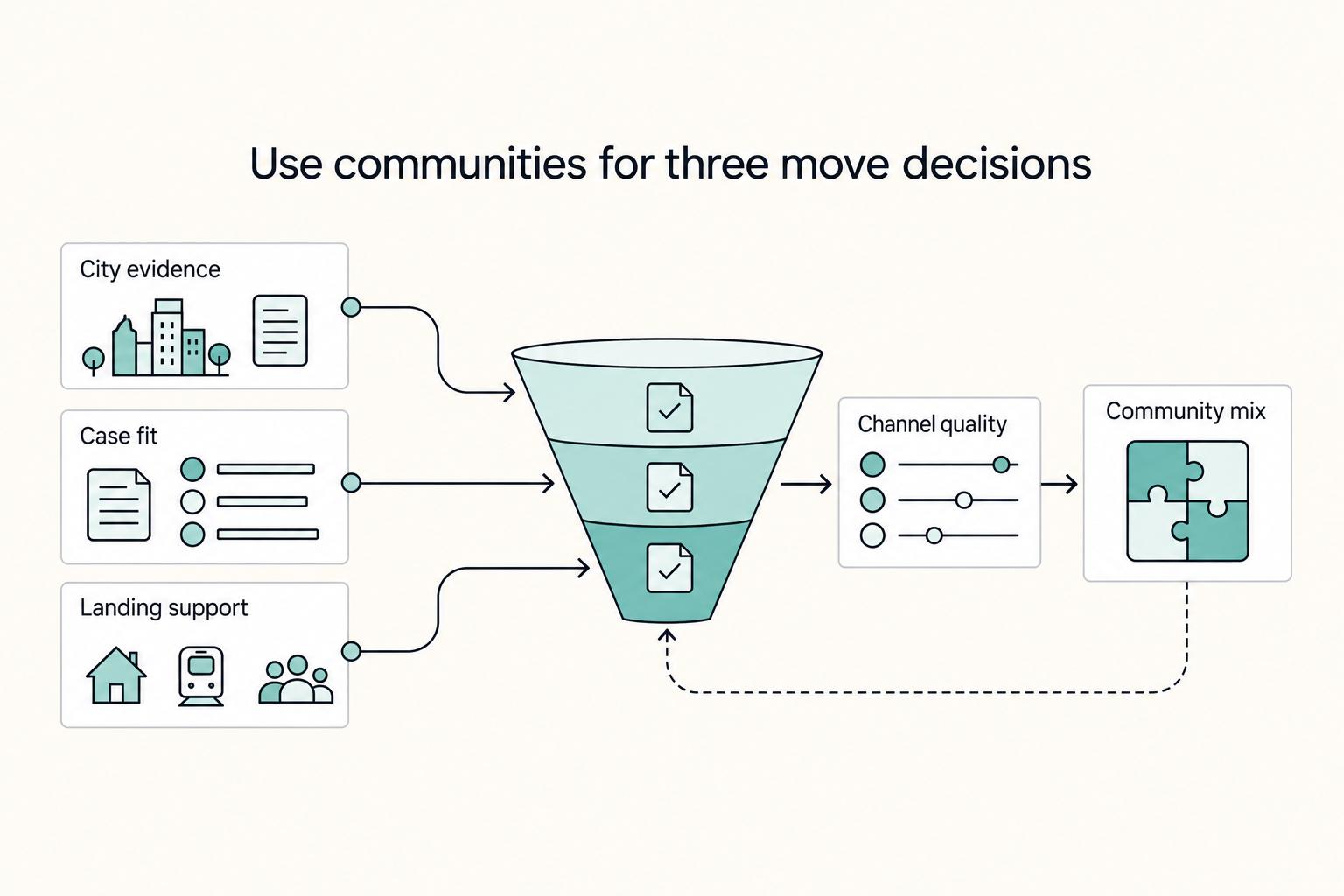
If your move date is real, use communities to answer three decisions in order: which city stays on your list, whether your case actually fits, and whether your landing week is covered. Judge every channel by outcomes, not activity. If it does not give you evidence you can use, stop giving it time.

How to Price Webflow Development Services
If you want to price Webflow development without leaking margin, treat pricing as an operating model, not a number you pull from memory. Separate platform costs from service work so the client can see what they are buying.

The Freelance Payment Penalty: A Modeled Audit of Platform Fees, FX Spreads, and Payout Delays
The money rarely disappears through a single, easy-to-spot fee. The real loss is stacked. A marketplace takes its commission, a processor adds a charge for international cards, a bank or payment company converts the currency at a spread, a platform holds the funds before release, and a wire sheds a little to intermediaries on the way in. Each layer looks defensible on its own, but the worker feels the combined result as a smaller deposit and a later payday.