
Quick Answer
The best cloud hosting for saas is the option your current team can run reliably under incident and compliance pressure, not the one with the largest feature catalog. Start by choosing your hosting model, then score AWS, Microsoft Azure, and managed alternatives on reliability, security ownership, cost discipline, and compliance readiness. Validate with proof workloads, restore drills, and API/webhook traceability before signing.
Pick Your Hosting Stack Without Expensive Rework#
Pick your cloud hosting by minimizing risk first, then tuning for features.
You are not picking a logo. You are choosing how much uptime risk, cost volatility, and weekly ops load your team can carry while shipping across markets. The fastest way to avoid expensive rework is to pick a stack your current team can operate, then optimize it once you have real traffic.
Skip feature-grid debates. Ground the decision in operating evidence across six dimensions that drive delivery pressure: operational excellence, security, reliability, performance efficiency, cost optimization, and sustainability.
Keep one rule in view: the cloud never removes your accountability for security and compliance. Managed layers can reduce work, but your team still owns critical controls.
Run this decision framework with your current team#
| Decision asset | What to do now | Key differentiator |
|---|---|---|
| Shortlist | Start with AWS, Microsoft Azure, and a managed-first alternative you can actually operate. | Forces a real tradeoff instead of endless comparison. |
| Scoring system | Use a scorecard across reliability, cost control, operational load, security and compliance ownership, performance fit, and cross-border data residency fit. | Converts opinions into a clear rank order. |
| Implementation playbook | Assign clear owners for incident response, backup and restore checks, and compliance workflow mapping before final selection. | Prevents handoff gaps during launch. |
If your team is small and you serve customers in multiple geographies, test location fit early. Azure reports many announced regions, but each geography still sets a data residency boundary. Confirm where regulated data can live before you commit. For global architecture, treat AWS partition isolation as a design input, not an afterthought.
Set a deadline. Pick your final candidates, run the same workload on each, score them with the table above, and lock the decision date.
When you validate reliability signals, pair your stack choice with The Best Tools for Monitoring Application Performance (APM). Your final pick should rest on measurable behavior, not sales language.
Who This List Is For and How to Score Providers#
Use a weighted evidence scorecard so your team can pick the safest provider for your actual operating constraints.
With a shortlist in hand, turn it into a decision you can defend. Score providers on delivery risk, money-flow risk, and execution load, not brand familiarity.
This framework fits independent operators and lean global SaaS teams that need clear defaults and fast alignment. If you already run dedicated platform, security, and tax functions, use this as a baseline and layer your internal controls on top. Reviews often stop at features, but production outcomes also depend on what your team can operate week after week.
Score providers with seven weighted items#
| Name | Brief description | Key differentiator | Weight |
|---|---|---|---|
| Performance | Measure latency stability and workload fit under normal and peak demand. | Confirms speed under load, not just benchmark claims. | 15 |
| Reliability | Verify backup recovery through restore testing, not backup checkboxes. | Proves you can recover when failure hits. | 20 |
| Security | Confirm clear ownership of security controls between your team and the provider. | Prevents false assumptions about who handles critical security tasks. | 15 |
| Support quality | Test escalation paths and response behavior before production pressure. | Reduces outage chaos when the team feels stretched. | 10 |
| Cost discipline | Check pricing clarity, metering visibility, and alerting controls. | Limits margin drift as usage grows. | 15 |
| Compliance readiness | Map KYC and AML steps and confirm VAT logic by customer location in the EU digital services context. | Keeps compliance work tied to real jurisdiction rules. | 15 |
| Payment ops readiness | Validate API and webhook handling for asynchronous finance events through an HTTPS webhook endpoint that receives JSON event payloads. | Aligns product events with finance reconciliation. | 10 |
Set safe defaults before you rank#
Run a red-flag gate first, then score. Require evidence for incident response effectiveness across detection, response, and recovery. Require backup restore test output, not policy text.
| Area | Evidence to require | Context |
|---|---|---|
| Incident response | Evidence across detection, response, and recovery | Run a red-flag gate first |
| Backup recovery | Backup restore test output, not policy text | Restore testing, not backup checkboxes |
| AML / CIP | Support AML program requirements such as CIP where applicable | If your business touches regulated rails |
| Tax documents | W-8 and W-9 workflow support | When counterparties request it |
| Payout events | Webhook traceability on payout events | Missing webhook traceability on payout events can erode trust quickly |
If you touch regulated rails, confirm your identity verification flow can support AML program requirements such as CIP where applicable. Require tax document workflow support for W-8 and W-9 when counterparties ask for it. In cross-border SaaS, missing webhook traceability on payout events can erode trust quickly.
Which Hosting Model Fits Your Stage Right Now?#
Choose the hosting model your current team can operate under real compliance pressure each week, then pick the provider.
Provider choice is not the first decision. Your hosting model sets the operating load your team carries, so pick the model first, then compare vendors inside it.
Start with the core architecture drivers: regulatory pressure, competitive pressure, strategic goals, cost efficiency, and market reality. Team needs change by stage, and that should shape your model before any AWS versus Microsoft Azure debate.
Match stage to model before brand selection#
| Name | Brief description | Key differentiator |
|---|---|---|
| Hyperscaler build mode | Use AWS or Microsoft Azure when you need broad cloud options. Amazon EC2 provides secure, resizable compute, and serverless paths let you run code without provisioning or managing servers. Azure can also support both Windows- and Linux-based app stacks. | You can choose VM, container, and serverless patterns based on application requirements and team preferences. |
| Team operated container mode | Use this path when your team can run platform operations every week and your app requirements justify container control. Let application requirements and team preferences guide your container choice. | You gain control over runtime behavior, but your team must own operational discipline continuously. |
| Managed Private Cloud mode | Use this path when you need single-tenant infrastructure with third-party operations. Managed Private Cloud gives a single-tenant environment that a third party manages. | You get stronger tenancy boundaries while shifting day-to-day platform management to a provider. |
Run a compliance gate before go live#
Treat compliance complexity as a model selector. If your revenue flow depends on payouts, KYC requirements can gate account capability, and missing tax status details can pause payouts. Map KYC and related verification checks directly to your product and finance events before launch.
If one option performs well in testing but your team cannot reliably run verification and operational workflows each week, reject it. Pick the model your team can operate cleanly under pressure, then scale from that safe base.
Compare the Shortlist in One Scan Before You Go Deep#
Run one apples-to-apples comparison, then eliminate providers that fail your compliance and incident gates.
With a hosting model chosen, compare providers inside that model. Keep architecture decisions separate from vendor decisions or you will confuse service breadth with operational fit.
Use this one-screen table before deep evaluation#
| Provider | Best for | Key pros | Key cons | Compliance and ops fit check |
|---|---|---|---|---|
| AWS | Fast-moving product teams that need broad optionality | Very broad service depth and mature support-plan structure | Cost and operational sprawl can grow fast without strict ownership | Validate API and webhook paths for KYC-related status events. Confirm incident ownership and support response expectations by severity. |
| Microsoft Azure | Teams with Microsoft-heavy stacks | Strong fit for Microsoft environments and the ability to run app workloads on both Windows and Linux | Complex plan and configuration choices can slow lean teams without platform ownership | Confirm tax and compliance workflow handling, including W-8BEN or W-9 collection when payers request those forms. |
| Concourse Cloud | Teams that prioritize managed consistency for sensitive B2B workloads | Public positioning emphasizes managed private-cloud and security services for mission-critical Windows and SQL environments | A focused managed scope may constrain teams that need rapid service experimentation | Check audit-trail coverage, beneficial-owner verification support for legal-entity onboarding, and named escalation ownership before launch. |
| Ionos | Cost-conscious teams that need practical infrastructure foundations | Cloud API supports programmatic IaaS management, and SLA terms form part of the customer contract | Teams must validate higher-level managed-service depth against future roadmap needs | Verify API-driven reconciliation and payout event handling under real failure scenarios before committing. |
After scoring, run a hard red-flag pass. Remove any option that cannot show clear controls for KYC, beneficial-owner verification for legal entities, and tax-document handling. Treat it as revenue protection. Payouts can be paused when tax status data is missing, so tax workflow readiness directly affects cash flow.
A common failure mode is picking the cheapest option before testing webhook delivery, tax-form collection, or incident escalation. Payout exceptions stack up, finance cannot reconcile events quickly, and support burns trust. Keep only providers with explicit SLA accountability and clear response targets for production incidents.
If you also need to support global customers end to end, see The Best Translation and Localization Services for SaaS.
The Best Cloud Hosting Providers for SaaS Startups in 2026#
Choose the provider that fits your current operating model and risk tolerance, then optimize as you grow.
By now you should have (1) a hosting model your team can run and (2) a shortlist that survived your incident and compliance gates. This section turns that work into a practical choice you can make this month.
Provider picks in one scan#
| Provider | Brief description | Key differentiator | Best-fit use case | Main tradeoff |
|---|---|---|---|---|
| AWS | Broad platform with Amazon EC2 and a large catalog of managed services. | Maximum flexibility when roadmap and workload shape can change quickly. | Launching an API product on Amazon EC2 plus managed services. | Governance overhead can rise if you do not enforce strong ownership. |
| Microsoft Azure | Strong fit for Microsoft-centric teams, with hosting guidance tied to meeting SLAs and SLOs. | Commercial and technical alignment for Windows Server and SQL Server workloads, including discounted-rate positioning via Azure Hybrid Benefit. | SaaS teams with Microsoft tooling already in place and explicit SLA/SLO targets. | Clear platform accountability is needed so operations stay manageable for lean teams. |
| Concourse Cloud | Managed private-cloud positioning for mission-critical Windows and SQL environments, with company messaging centered on end-to-end managed services. | Consistent managed posture for teams that prioritize operational predictability over service sprawl. | Stable workload hosting where stricter control and managed operations matter more than rapid experimentation. | Service breadth may be narrower than hyperscaler catalogs. |
| IONOS | Compute Engine emphasizes flexibility with no minimum contract and includes 24/7 expert support. | Practical baseline for teams that need low-friction entry and clear support access. | Early-stage SaaS validating demand before heavier architecture commitments. | Advanced architecture needs may outpace the baseline faster than expected. |
Make the final call without overthinking#
If two options still look close, use a simple tie-breaker.
| Tie-breaker | Guidance | Timing |
|---|---|---|
| Operability | Pick the option your team can run weekly with clean incident ownership | Weekly operation |
| Release fit | Prioritize the provider that supports your next release cycle, not a hypothetical future stack | Next release cycle |
| Migration readiness | Lock migration triggers before launch so you can move without panic | Before launch |
In practice:
- If incident ownership is clear on one option and fuzzy on the other, pick the clearer one.
- Choose for the next release cycle you actually have, not the future stack you might build.
- Write migration triggers before launch so a later move stays controlled.
Example: a lean team shipping a new cross-border API product picks AWS for immediate breadth. They assign strict governance owners on day one and set a written checkpoint to reassess if operational load starts slowing delivery.
If you want a deeper dive on adjacent ops choices, read The Best Community Platforms for SaaS Businesses.
How Do You Reduce Cross Border Compliance and Payment Risk While Choosing Hosting?#
Reduce cross-border risk by designing hosting, payment flows, and compliance controls as one system from day one.
Hosting problems usually show up as money problems. If payout continuity, audit traceability, and tax-profile gates are weak, you will feel it in support load and cash flow, even if the app is fast.
This is the proof step. You are not just asking, "Will it run?" You are asking, "Will we be able to reconcile, support, and defend this in production?"
Build one control map before launch#
| Control area | Brief description | Key differentiator | Evidence to require now |
|---|---|---|---|
| MoR and money flow design | Define whether you use your own entity or a Merchant of Record (MoR), then map account structures, payouts, and settlement ownership across product and finance systems. | An MoR model can shift who carries payment and tax liabilities, including sales tax and PCI duties. | A written ownership matrix for payment liability, refund handling, and tax operations. |
| API and Webhooks traceability | Require API request logs and Webhooks event capture for payout and settlement state changes. | Webhooks handle asynchronous events, and request logs create a verifiable timeline for reconciliation. | Linked records from webhook events, API logs, and cloud audit logs for the same transaction lifecycle. |
| Identity and risk gates | Define KYC, KYB, and AML checkpoints across onboarding and payout states by market. | Legal-entity due diligence can require beneficial-owner identification and verification in regulated contexts. | Explicit block and release rules for accounts with missing verification requirements. |
| Tax profile gates | Set market-specific checks for VAT, required tax-form collection paths, and U.S. cross-border reporting where applicable. | You prevent payout interruptions caused by missing tax information and unclear filing ownership. | A jurisdiction matrix with owner, trigger, and system of record for each tax control. |
Run a market reality check#
This is where teams either get disciplined or get surprised. Apply numeric triggers only where they actually apply to your business model.
| Topic | When it applies | Detail |
|---|---|---|
| FBAR review | Aggregate foreign account value exceeds $10,000 during the year | U.S. tax contexts |
| Form 8938 | Threshold-based, not universal | U.S. tax contexts |
| FEIE (2025) | Tax-year specific and inflation-adjusted | Published maximum: $130,000 |
| FEIE (2026) | Tax-year specific and inflation-adjusted | Published maximum: $132,900 |
| OSS planning | Use as part of the go-live path | EU cross-border VAT operations |
If you add a new market without event-level logging and tax gates, payout exceptions appear. Finance cannot reconcile quickly, and support burns time on manual backtracking. Build the control map first, then scale traffic.
Run a Four Week Decision Sprint Before You Commit to a Provider#
Run a four-week decision sprint that pressure-tests constraints, operations, compliance, and rollback safety before you commit.
Turn the scorecards and control map into execution. The goal is not more research. It is to prove within 30 days that you can run the stack under load and that it holds up under incident pressure and compliance friction.
| Week | Name | Brief description | Key differentiator |
|---|---|---|---|
| Week 1 | Constraint lock | Define non-negotiables across your top providers (for example, AWS and Microsoft Azure): data location boundaries, incident ownership, and API plus webhook integration patterns. Treat incident design as a people, process, and tools system, and plan for a 24x7 SaaS operating posture. | You prevent late-stage surprises by rejecting options that cannot support your operating model before testing starts. |
| Week 2 | Proof workload and recovery drill | Run a production-like workload on your top two candidates. Execute backup and restore drills tied to customer-impact scenarios, not lab-only checks. | You validate recovery integrity early by proving you can restore data and service behavior, not just store backups. |
| Week 3 | Finance and compliance simulation | Simulate onboarding and payout paths with KYC, KYB, and AML gates, including beneficial ownership checks for legal entities where required. Use webhooks for near real-time event capture, and test VAT handling by country plus W-8BEN or W-9 collection where each flow actually needs it. Keep IRS form guidance current. | You catch payout blockers and tax-document gaps before launch, when fixes are still cheap. |
| Week 4 | Go-live decision and safety rails | Make the final call with a written scorecard, migration triggers, and rollback conditions. Define audit-ready records from day one across API requests, webhook events, and operator actions. | You avoid lock-in panic because you define exit conditions before you scale traffic. |
Example: your team opens a new market and an entity fails beneficial owner verification during onboarding. Your Week 3 flow should pause payout release based on your policy, route the case to review, and keep the event trail intact so finance and support can act fast.
Use this go-live script before signing:
- Approve only providers that pass all four weeks without unresolved red flags.
- Delay launch if restore drills or webhook event handling shows reconciliation gaps.
- Re-run Week 3 when you add a new country or tax profile.
- Pair Week 2 observability checks with The Best Tools for Monitoring Application Performance (APM).
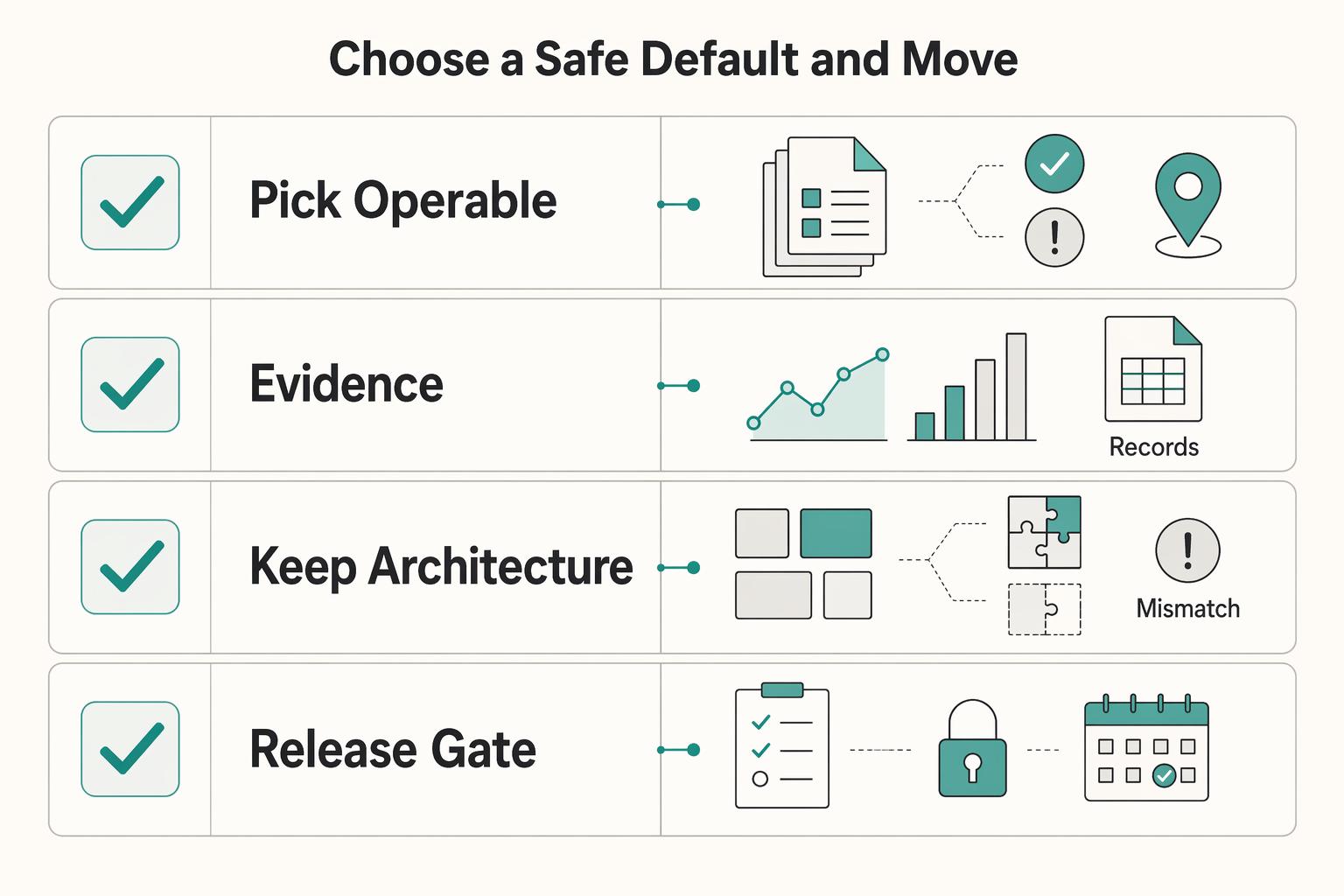
Choose a Safe Default and Move#
Choose the platform your current team can operate reliably, then scale only when your own evidence shows the next step lowers risk.
You have the framework. Now commit. Reviews can narrow options, but the right choice comes from operating proof, not feature volume.
| Decision move | Brief description | Key differentiator |
|---|---|---|
| Pick the operable default | Compare AWS, Microsoft Azure, and a managed/private fallback with a simple decision matrix. Use clear criteria tied to your requirements, and involve business, development, and operations owners before you lock the choice. | You choose what your team can run weekly, not what looks strongest in a sales deck. |
| Capture decision evidence | Start an ADR at workload kickoff and maintain it through the workload lifespan. Record why you chose the current platform and list rejected alternatives so future migrations start with context, not memory. | You replace reactive re-platforming with controlled, auditable decisions. |
| Keep architecture modular | Use loose coupling so one component can change without destabilizing the rest of your stack. For example, keep core app services separate from payment and compliance workflows so a compute-layer change does not force a full-system rewrite. | You lower blast radius when requirements shift. |
| Gate by market reality | Verify region and country constraints before launch. Azure reports 70+ announced regions, and services vary by region type. AWS regional service availability changes over time. Payment verification and some features can vary by country and region. | You avoid late launch blockers caused by assumptions about coverage. |
Example: you expand to a new country and discover a verification requirement that differs from your current flow. If you already isolated hosting, compliance, and money movement boundaries, your team can patch one path quickly and keep customer-facing operations stable.
Use this closeout checklist before you sign:
- Pick one default platform and one fallback path.
- Freeze the decision matrix in your ADR.
- Define migration triggers tied to operability, cost outcomes, and market coverage.
- Revalidate region and country gates before each launch wave.
- Pair runtime visibility with The Best Tools for Monitoring Application Performance (APM).
Want to confirm what is supported for your specific country or program and see how it applies to your setup? Talk to Gruv.
Frequently Asked Questions
Which cloud hosting is best for a SaaS startup?
No single provider wins for every startup. For the best cloud hosting for saas, score each option against the NIST cloud model of 5 essential characteristics, 3 service models, and 4 deployment models. Then test whether your team can run 24x7x365 operations. Treat product reviews as shortlist input, not final proof.
AWS or Microsoft Azure for a first SaaS product?
Start with compliance and operating constraints, then pick the platform. If data residency drives the decision, map target markets to Azure geographies (each geography is designed to meet specific residency and compliance requirements). Then compare that fit with your AWS design. In both cases, keep a shared responsibility checklist because provider audits do not remove your legal obligations.
When does Managed Private Cloud beat hyperscalers?
Managed Private Cloud can be the better fit when exclusive-use infrastructure is the top requirement. NIST defines private cloud as infrastructure reserved for one organization. From there, choose based on your compliance and operating needs rather than a fixed rule.
What should I evaluate before signing with any hosting provider?
Ask for independent third-party audit attestations and map each artifact to your controls. Confirm incident readiness for continuous SaaS operations, not business-hours support. Require a written matrix that shows which compliance tasks the provider handles and which tasks your team owns.
How do I control COGS and margin risk when traffic is unpredictable?
Run cloud unit economics, not just total bill tracking. Tie cloud spend to business units that reflect value creation so you can see gross profit impact and intervene early. Keep workloads cost optimized by meeting functional outcomes at the lowest practical price point.
How do cross-border teams handle KYC, AML, and VAT requirements without slowing launches?
Build market-specific onboarding gates and automate checks at account creation instead of adding manual review late, because requirements vary by jurisdiction and business type. AML programs can require beneficial-owner identification and verification procedures for legal-entity customers, so define that path early. Treat VAT as a consumption tax in customer pricing and invoicing. When U.S. payer workflows apply, collect Form W-9 so payers receive the correct TIN details.
What is the safest migration trigger from one hosting model to another?
Use evidence-based triggers you define before scale, not fixed industry thresholds. Migrate when your current model repeatedly misses incident, compliance, or unit-economics targets after remediation. For example, if your team cannot maintain 24x7x365 response quality and margin guardrails at the same time, move to the model your operators can run reliably.
Try a related tool
Researched and edited by the Gruv editorial team. Gruv builds cross-border billing, payouts, and finance-operations software for global businesses.
Sources
Educational content only. Not legal, tax, or financial advice.
Related Posts
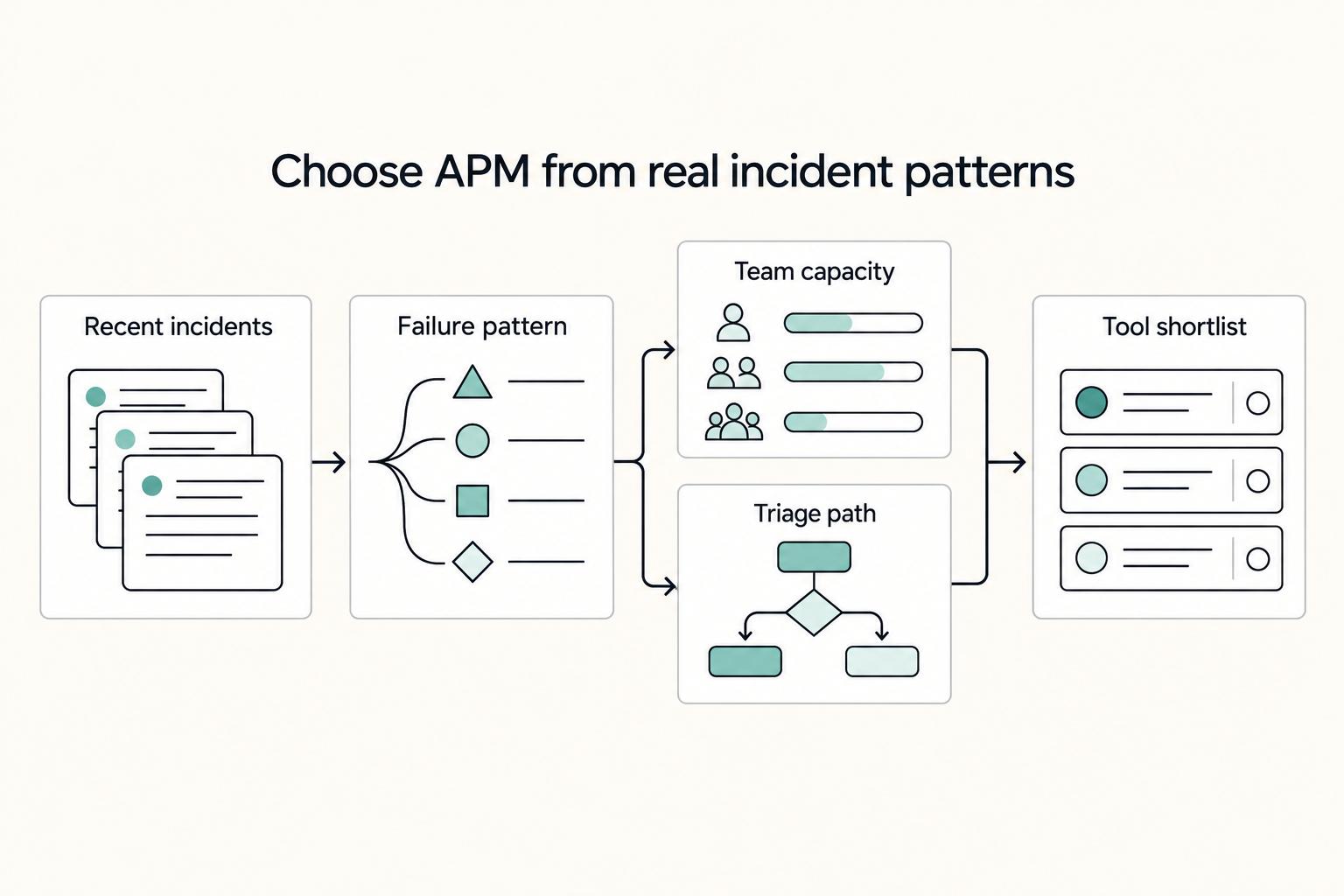
Best APM Tools for Small Teams That Need Reliable Incident Triage
If you are comparing the **best apm tools**, pause the generic rankings and ask a harder question: what can you operate cleanly with the time and attention you actually have? The right choice depends less on who won a roundup and more on your incident pattern, your operator bandwidth, the onboarding effort you can absorb, and how costs behave as telemetry grows.
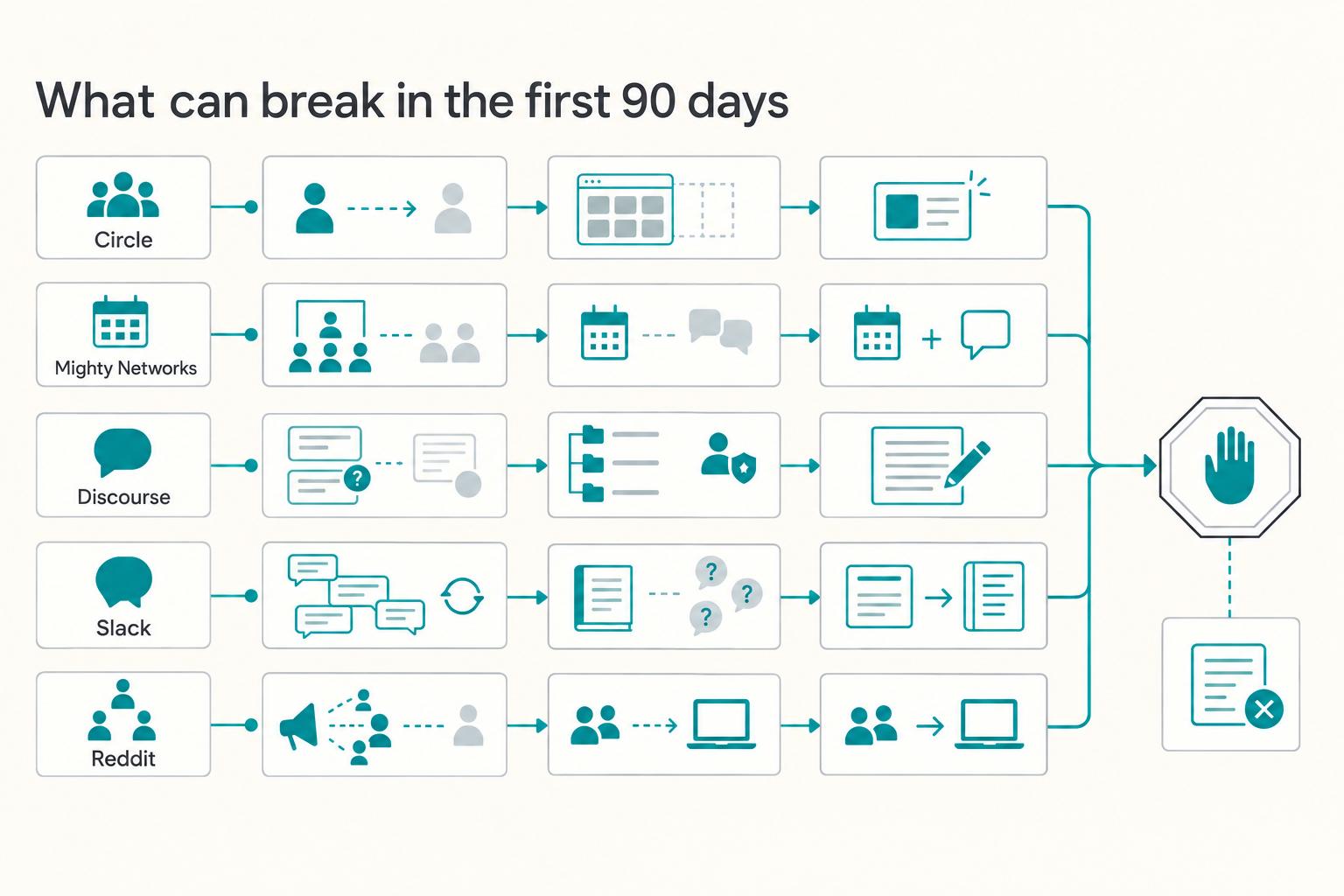
The Best Community Platforms for SaaS Businesses
Start by classifying the job. If you want access to other people's audience, ideas, or conversations, you are choosing a community to join. If you want a place your customers or members use under your brand, with your rules and structure, you are choosing software you will need to operate every week.
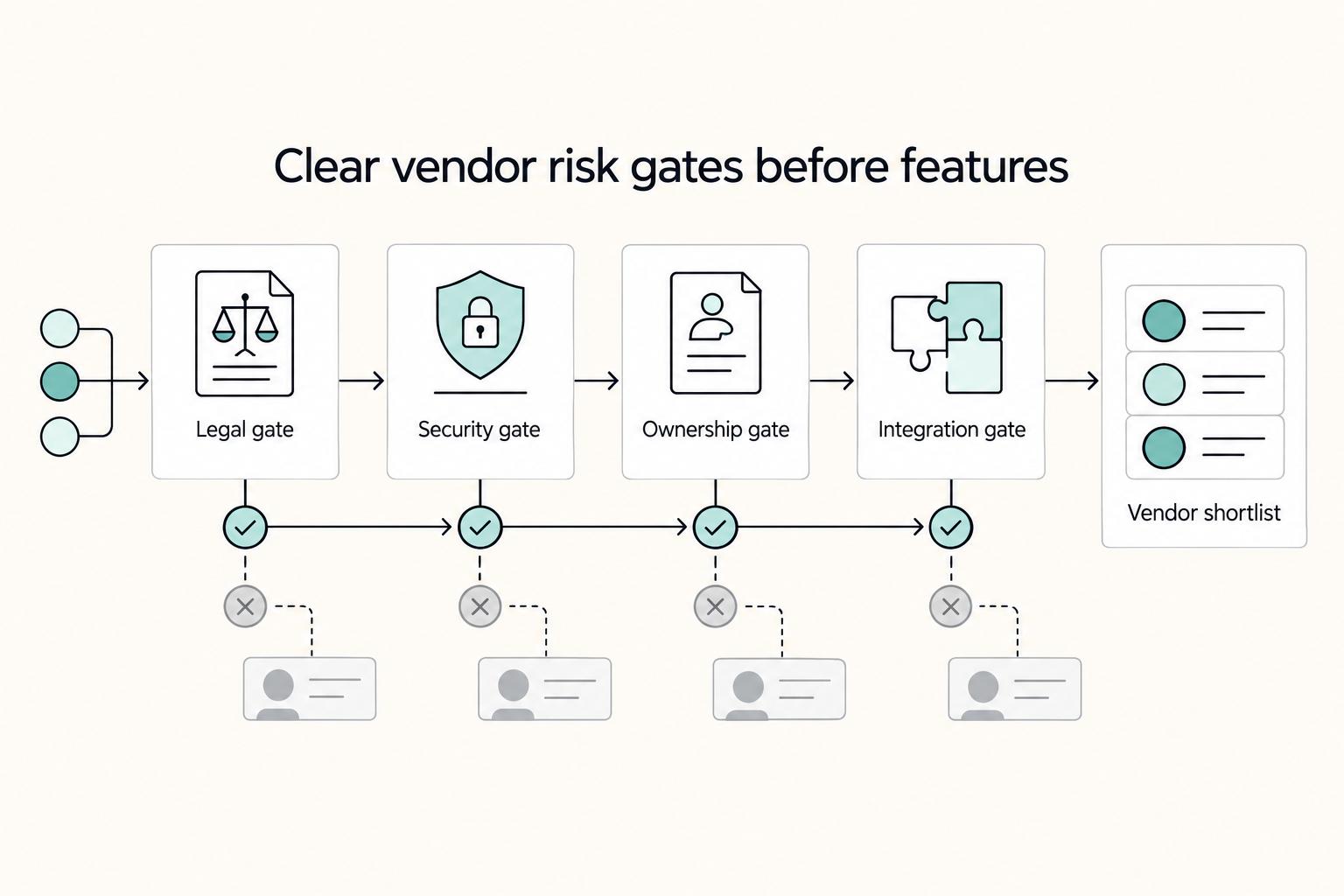
The Best Translation and Localization Services for SaaS
**A defensible way to choose from SaaS localization services is to rank vendors only after they clear compliance and workflow gates.** You need global-ready internationalization, but you also need clean controls. Add random tools or opaque translation services now, and you create procurement friction, brittle handoffs, and risk you will pay for later.