
Quick Answer
Choose the program that matches your single objective, then verify current rules before spending. For caribbean citizenship by investment, the article’s framework is to rank practical mobility, family fit, all-in costs, and process certainty, then run one household-specific scenario instead of relying on headline figures. It also stresses execution discipline: confirm route details with an authorized representative, build a traceable source-of-funds file, and treat approval and passport issuance as separate planning checkpoints.
Acquiring a second citizenship is not a luxury purchase. It is one of the most consequential strategic decisions a global professional can make. Yet most market comparisons push you into a consumer mindset, ranking programs by passport scores or headline donation amounts. That is the wrong frame.
The better frame is simple. You are not buying a product. You are acquiring a strategic asset. The best Caribbean citizenship by investment program is the one that most efficiently serves your primary goal. This playbook follows that decision process in three phases: define the strategy, compare the options, and execute the application cleanly.
Phase 1: Define Your Primary Strategic Objective#
The right Caribbean citizenship by investment choice becomes much clearer once you define the job you need it to do. Start with clean terms, because most bad decisions begin when people mix them together.
Citizenship and tax residency are separate concepts. For planning, tax residency is often tied to physical presence under local rules. One common reference point is spending more than 183 days in-country, but that is not a universal rule. Visa access is where your passport may let you enter without prior visa processing.
That distinction matters because citizenship and taxation are not the same thing. A passport can expand your options, but it does not automatically change where you owe tax or where you can legally settle long term. This section is about strategy only. It does not replace legal, tax, or immigration advice. Confirm jurisdiction-specific rules with licensed counsel.
| Reader profile | Best-fit objective | Evaluation criteria that matter most | What to verify before you shortlist |
|---|---|---|---|
| Solo founder | Specific market or residence access | Whether nationality unlocks a target business or residence route; physical presence burden; renewals and compliance friction | Confirm the current nationality-linked eligibility detail from the official program source |
| Family planner | Family security and inclusion | Who can be included now or later; evidence burden for dependents; future flexibility if family facts change | Confirm the current dependent eligibility detail from the official program source |
| Mobility-first traveler | Travel access and optionality | Practical entry access to your usual regions; consistency of access over time; whether any stay obligations reduce flexibility | Confirm the current access detail from the official program source |
| Tax-structured investor | Tax positioning | What changes only with citizenship versus what requires tax residency; day-count rules; proof needed to support residency status | Verify current tax residency rules, certificates, and local filing obligations |
- Objective A: Mobility first.
This is the right frame if your main problem is border friction. You care less about relocation and more about getting to client meetings, conferences, or family commitments without repeated visa administration. The outcome is travel optionality. The tradeoff is that a stronger travel document does not solve residence, banking, or tax questions, so do not choose on passport marketing alone. If your weekly life depends on reliable entry to a short list of regions, build your comparison around those actual routes; current access detail should stay pending until official program verification is complete.
- Objective B: A specific onward access outcome.
This fits founders, operators, and investors who need one precise door opened, not generic prestige. The outcome is eligibility for a named business, residence, or investment path in another country. The tradeoff is concentration risk. If that one route changes, your whole thesis weakens quickly. Treat any program example as illustrative, not absolute. If you are looking at a nationality-linked benefit through a particular Caribbean passport, treat it as a hypothesis until the current eligibility detail is verified through official program sources.
- Objective C: Family security.
This fits households thinking in decades, not quarters. The outcome is a wider fallback set of rights for a spouse, children, or other dependents if education, health, or political conditions change. The tradeoff is paperwork and future-proofing. Family outcomes can depend on documentation quality and current dependent criteria. A common failure mode is assuming eligibility too early, then discovering verification gaps late in the process. Keep current family eligibility detail pending until official program verification is complete.
- Objective D: Tax positioning.
This fits you if the passport is only one part of a broader relocation and wealth plan. The outcome is optionality around where you become tax resident, but the tradeoff is complexity. One 2025 industry report says the five main Caribbean CIP countries impose no personal income tax on foreign-sourced income, while also warning that becoming tax resident there is not straightforward.
It also reports a proposal that new citizens may need to spend one month in-country within five years to establish genuine links, and says Antigua and Barbuda tax residency may involve 30 days of physical presence plus a flat annual tax of 20,000 USD. Do not build your model on those points as if they were settled facts. Treat them as items to verify. If tax is your main driver, do not move forward until you know the exact day-count, registration, filing, and evidence pack you would need.
If you want a deeper dive, read The 2026 Global Digital Nomad Visa Index for 50+ Countries.
Phase 2: The Decision Matrix: A Side-by-Side Analysis of the Core 5#
Use this matrix to choose by fit, not headlines. Compare four vectors: practical mobility, family fit, all-in cost stack, and process certainty.
Read the vectors correctly#
- Practical mobility (not "passport strength"): the specific routes you actually need, with current entry rules verified country by country.
- Family fit: who you can include now and later under current dependent rules.
- All-in cost stack (not sticker price): base route amount plus all required add-on fees.
- Process certainty (not the speed headline): likelihood of staying on track from document collection through final decision.
Published timelines are usually authority-side windows after submission. End-to-end completion also includes document collection, agent preparation, due diligence, interview scheduling where required, and possible further processing. One concrete baseline for this section is that the five MOA signatories are Antigua and Barbuda, Dominica, Grenada, St. Kitts and Nevis, and Saint Lucia, and they agreed that from July 01, 2024 the minimum price for any CBI option shall be US$200,000.
| Program | Published minimum qualifying amount to verify | Where it tends to fit | Process and diligence signal |
|---|---|---|---|
| Antigua and Barbuda | US$230,000 National Development Fund per application | Relevant for families that need broader dependent inclusion (including financially dependent children up to age 30) | Four investment options; all options are subject to government processing and due diligence fees; real estate starts at US$300,000 and has a 5-year resale restriction |
| Dominica | US$200,000 EDF for a single applicant | Useful baseline for donation-route comparisons | Due diligence is third-party; applicants aged 16+ require a mandatory interview; published fees include US$7,500 (main applicant), US$4,000 (dependant 16+), and US$1,000 per interview |
| Grenada | US$235,000 minimum contribution | Relevant if your plan includes a possible U.S. treaty-country path; confirm against the current State Department treaty list | Published processing time is three to four months; applications must go through licensed agents; files can be delayed for further processing after review |
| St. Kitts and Nevis | US$250,000 SISC for main applicant or family up to four | Often evaluated in mobility-led shortlists, subject to route-by-route verification | Published due-diligence fees are US$10,000 (main applicant) and US$7,500 (each dependant 16+); dependants 16+ may be required to interview if deemed necessary |
| Saint Lucia | US$240,000 for an applicant with up to three qualifying dependants under SI No. 106 of 2024 | Relevant when household size matches this schedule | Updated schedule is effective from the 1st day of July, 2024; interview principles are in place, but scope should be confirmed for your case |
Compare all-in costs, not sticker prices#
Price the same household through the same route in each country. Use this like-for-like stack:
| Cost component | Article detail |
|---|---|
| Base amount | Base contribution or approved real-estate amount |
| Government fees | Government processing or administration fees |
| Due diligence | Due-diligence fees, often different for applicants aged 16+ |
| Interview fees | Interview fees where separately charged |
| Dependent add-ons | Dependent add-on fees by age/relationship |
| Professional fees | Authorised agent and legal advisory fees |
Antigua states that additional fees are payable for each family member beyond the selected option. Dominica separately states the contribution and additional mandatory fees. If your household includes teenagers or adult dependants, request a line-by-line quote, not a headline number.
Speed is not certainty#
Treat published speed as one input, not the decision. Grenada publishes a three-to-four-month window, and also states that an application can be delayed for further processing after due diligence review. Dominica's 2025 process guide shows why end-to-end planning matters: document collection alone can take 2 to 6 weeks depending on circumstances.
| Timing factor | Article detail |
|---|---|
| Grenada published window | Published processing time is three to four months, and an application can be delayed for further processing after due diligence review |
| Dominica document collection | Document collection alone can take 2 to 6 weeks depending on circumstances |
| Applicants aged 16+ | Interview and due-diligence requirements can materially change cost and pacing |
| Antigua route choice | Real-estate processing can take longer depending on the property |
Two checks usually move timelines the most:
- Count applicants aged 16+ early, because interview and due-diligence requirements can materially change cost and pacing.
- Choose route early (donation vs real estate), because Antigua explicitly notes that real-estate processing can take longer depending on the property.
Use the matrix this way:
- Rank the four vectors from 1 to 4 before comparing countries: practical mobility, family fit, all-in cost stack, process certainty.
- Build one scenario for your actual household, not a generic single-applicant case if dependants are involved.
- Ask each authorised agent for the same outputs: itemised fees, current interview scope, and expected end-to-end timeline including document collection.
- Carry your ranked vectors into the next phase so execution choices do not undo a strong shortlist.
For a step-by-step walkthrough, see Turkey Citizenship by Investment Without the Guesswork.
A Deeper Dive: Real Estate as an Asset vs. a Sunk Cost#
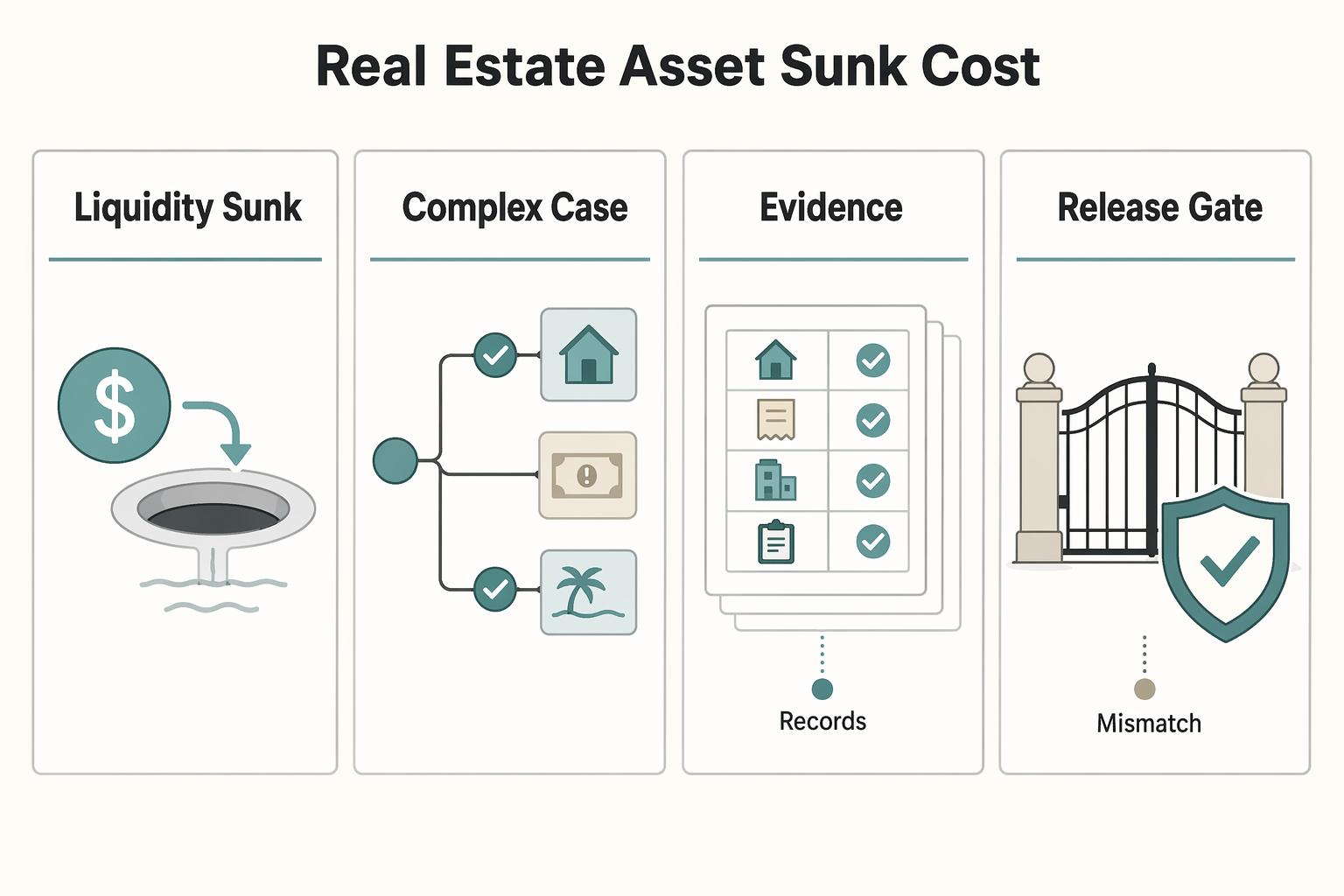
If Phase 2 leaves both routes open, treat this as a capital-allocation decision, not a rebate decision. A donation route is a non-recoverable economic contribution. A qualifying real estate route is a property purchase that meets program rules. A holding period is the minimum period you must keep the qualifying asset before an allowed exit under the rules you use. Exit risk is the chance your resale timing, buyer demand, or price does not match plan.
| Decision factor | Donation route | Real estate route |
|---|---|---|
| Liquidity | Sunk cost is known at entry | Recovery is possible only under a scenario-based resale outcome |
| Complexity | Primarily your personal file and due diligence | Personal file plus property transaction workflow and program compliance checks |
| Timeline risk | Mostly document readiness and authority review timing | Authority timing plus property-side dependencies |
| Documentation burden | Source-of-funds and personal due diligence file | Same base file, plus property contract set, payment proofs, project/eligibility evidence, and current fee-item detail confirmed from the official program source |
| Ongoing management effort | Minimal after approval | Ongoing if the property is operated, maintained, or managed remotely |
Before you choose property, run a plain underwriting checklist: acquisition costs, carrying costs, occupancy assumptions, management friction, resale constraints, and FX exposure. Request the full contract and operations pack early (purchase terms, payment mechanics, management terms, insurance/tax items, and resale restriction language). If you receive marketing upside without a complete cost stack, pause and verify.
Use an exit-scenario checklist before committing:
- Best case: resale window and buyer demand align with your plan.
- Base case: resale takes longer and holding costs run longer than expected.
- Stressed case: demand is thin, terms deteriorate, or you need to sell at a discount.
Keep projections explicitly scenario-based and avoid treating any return path as guaranteed. Confirm legal, tax, and investment implications with licensed advisors before committing capital. Related: How to Write a Professional Bio That Attracts Clients.
Beyond the Brochure: A Sober Look at Risks#
Treat risk in two buckets: external risks you monitor, and file/compliance risks you control. This split keeps the decision practical and avoids false certainty.
| Risk | What it is | What you control |
|---|---|---|
| Geopolitical access risk | Mobility value of your passport can change when another country updates entry policy, screening, or waiver terms | Your monitoring cadence |
| Legal status risk | Your citizenship or passport position can be challenged if your file has errors, omissions, or non-matching records | Disclosure consistency and document integrity |
| Reputational risk | Extra questions from banks, counterparties, clients, or platforms about your second passport and acquisition route | Your explanation quality |
| Regulatory change risk | Rules can shift while you are preparing or filing, which can affect cost, timing, and document depth | How early you verify live requirements and how often you re-check them before submission |
- Geopolitical access risk
What it is: the mobility value of your passport can change when another country updates entry policy, screening, or waiver terms. What you control: your monitoring cadence. Track official government notices, consular updates, airline document-check rules, and written updates from your advisor. If a source only shows a generic capture, a render timestamp like 2026-03-30T00:29:28.060Z, or an access gate such as Institution Login, treat it as a verification checkpoint, not confirmation of current travel rights. Action: Keep current policy status pending official verification before relying on it.
- Legal status risk
What it is: your citizenship or passport position can be challenged if your file has errors, omissions, or non-matching records. What you control: disclosure consistency and document integrity. Before filing, reconcile names, address history, employment dates, source-of-funds explanations, and prior immigration answers across all forms and attachments. After approval, keep your full submission set, payment proofs, approval letters, and any stated obligations together in one file. Action: Assume no absolute guarantees; reduce risk through clean, consistent records from day one.
- Reputational risk
What it is: extra questions from banks, counterparties, clients, or platforms about your second passport and acquisition route. What you control: your explanation quality. Use one calm, consistent summary: why you obtained it, when approval occurred, and how funds were documented. Keep a matching evidence pack for KYC, onboarding, and client diligence so you are not improvising different versions in different settings. Action: Prepare your positioning language in advance, and keep it consistent everywhere.
- Regulatory change risk
What it is: rules can shift while you are preparing or filing, which can affect cost, timing, and document depth. What you control: how early you verify live requirements and how often you re-check them before submission.
| Possible change to verify | Likely effect on applicants | What to do before filing |
|---|---|---|
| Contribution or investment threshold update | Total cost changes; affordability may shift | Confirm the current threshold from the official program source; refresh your budget after confirmation |
| Added due diligence or information-sharing rules | Deeper source-of-funds review; more records required | Expand bank records, tax records, and business income support early |
| Standardized filing or processing rules | Process may become more predictable, with less edge-case flexibility | Request the current checklist in writing and date-stamp it |
Short mitigation playbook: verify facts early, document source of funds clearly, and run an annual rules review. That turns Phase 3 into execution, not cleanup.
You might also find this useful: The Pros and Cons of Second Citizenship for US Nationals.
Phase 3: Run a Controlled Timeline From Pre-File Controls to Post-Submission#
Treat this phase as a controlled timeline: pre-file controls first, then file prep, then submission, then post-submission response handling. That keeps the file readable for reviewers and reduces avoidable rework.
- Pre-file: vet the intermediary and lock accountability
Before you start collecting documents, confirm who is accountable for quality control and post-submission follow-up. If responsibilities are unclear in writing, pause and clarify scope before moving forward.
| Checkpoint | What to ask for | Why it matters |
|---|---|---|
| Authority check | Written proof of authorization; confirm the current authority-check step from the official source | Avoid relying on verbal assurances or outdated marketing pages |
| Conflict check | Written disclosure of referral fees, developer ties, and representation boundaries | Helps you spot advice bias early |
| Engagement scope | Itemized fees, review responsibilities, translation/certification handling, and post-submission support | Prevents scope disputes mid-process |
| Escalation path | Named escalation owner and expected response times for clarification notices | Reduces delay risk once the file is live |
- File prep: build a document-control pack, not a loose bundle
Set up one controlled evidence pack with four folders: identity pack, civil records, compliance declarations, and financial evidence. Maintain one master control sheet for name spellings, date formats, address history, employment dates, and document IDs, then use that sheet to check every form before finalization.
Run a consistency pass across all materials before submission. Check that names, dates, addresses, roles, and family relationships match exactly across forms, declarations, and supporting records.
- Submission prep: map source of funds as a traceable chain
For each funding source, link origin evidence to account movement evidence so the path can be followed end to end.
- Salary/consulting income: contracts, invoices, pay records, tax filings, and matching bank credits.
- Business distributions or sale proceeds: corporate records, transaction agreements, closing records, and matching inflows.
- Savings used for transfer: statements showing accumulation history, not only current balance.
- Gaps or unusual deposits: written explanation plus support; confirm the current document standard from the official source.
- Submission and post-submission: apply a quality gate and response protocol
Before filing, run a three-part gate: truthfulness, completeness, and coherence across the full pack. After filing, keep the exact submission set, payment proofs, and all acknowledgments in a dated folder, then answer any clarification request using the same control sheet and evidence pack to avoid contradictory follow-ups.
We covered this in detail in Malta Citizenship After the Golden Passport Ended.
Conclusion: From Strategy to Action#
You are ready to move only when the decision is narrow, the risk is named, and the file can survive scrutiny. For most readers, the cleanest next step is simple: pick the objective, test the route, then start document prep only after current rules have been rechecked with a qualified adviser and any relevant legal or tax adviser.
- Lock the objective
Write one sentence that states whether this is about immediate relocation or long-term optionality. That distinction matters because second citizenship is often used as "long-term insurance," not an instant move, and it changes what good value looks like. A real objective cuts comparison noise and stops you from buying on marketing or broad travel claims.
- Run a pathway fit check
Before you assume investment is the answer, test the three actual routes: descent, naturalization, or investment. Naturalization can mean five to ten years of physical residence plus language, integration, and fees, so if your timeline or lifestyle cannot absorb that, you have your answer quickly. This prevents a bad route choice before you spend significant time or money.
- Launch document prep, but verify first
Documentation readiness means your core records and timeline are consistent before filing. Adviser quality means the person guiding you pressure-tests assumptions and confirms current eligibility terms instead of repeating stale assumptions. Rules can tighten with little notice, and 2025 already saw several countries propose or adopt stricter citizenship access rules, so stale eligibility assumptions are a real failure mode.
| Action | Why it matters | Owner | Status |
|---|---|---|---|
| Finalize your primary objective in writing | Keeps the decision tied to one use case, not vague upside | You | Not started / In progress / Done |
| Compare descent, naturalization, and investment against your matrix | Confirms the route fits your timeline and constraints | You + adviser | Not started / In progress / Done |
| Start a verification-first document checklist | Reduces clarification rounds and catches eligibility issues early | You + adviser | Not started / In progress / Done |
This pairs well with our guide on How to Prepare for the US Citizenship Test (Naturalization Test).
Frequently Asked Questions
What is the difference between citizenship approval and passport issuance?
Do not assume a specific sequence or timing between citizenship approval and passport issuance. For planning, treat them as separate checkpoints until an Authorised Representative and current official rules confirm the post-approval steps, fees, and documents for your case.
What does due diligence mean here, and why does it matter so much?
Due diligence is the background review tied to your application, and the guidance here says those fees are required at submission and are nonrefundable. If an application is rejected, government application and due diligence fees are stated as nonrefundable, and agent fees may also be lost. Verify who reviews your file before CIU submission and keep proof of payment for each fee.
Which program is the right fit if I care about US access?
Some programs are marketed for that use case, but the current support pack here does not confirm the exact US access mechanism or current eligibility rules. Do not choose a program based on a sales claim alone. Verify the current official basis for any US-related benefit, plus whether your nationality and profile affect eligibility.
Can citizenship be revoked?
This guide does not provide verified details on revocation grounds, rates, or enforcement outcomes. Verify current official program rules directly before relying on any claim about revocation risk.
Is real estate better than a contribution option?
The better fit depends on your goal and risk tolerance. Total cost, in turn, depends on country, investment type, and number of dependants. Before deciding, verify the current purchase terms, holding conditions, fees, and exit restrictions for your chosen route.
Can I add dependents later, and who counts as a qualifying dependent?
A qualifying dependent is an eligible family member under a program’s current rules, and those criteria need current official verification. Antigua and Barbuda and St. Kitts and Nevis are noted as allowing post-grant dependent additions, with possible extra fees depending on age and the original investment type. Verify the current eligibility criteria, post-approval process, and fee schedule before you file.
How long does processing take?
One private FAQ cites normal citizenship by investment processing at 4 to 6 months, but you should not treat that as a current program-specific promise. Use that only for rough planning, and verify whether any estimate covers approval only, passport issuance, or both. | Question | Why it matters | What to verify now | Typical evidence/documents | |---|---|---|---| | Approval vs passport | Planning depends on the actual post-approval sequence | Post-approval steps, fees, issuance sequence | Official program guidance, application records, payment receipts | | Due diligence | Some fees may be lost if a file fails | Nonrefundable items, pre-submission review owner | Engagement letter, fee schedule, proof of payment | | Dependents | Family scope can change total cost and route | Current dependent eligibility criteria, post-approval process, fee schedule | Birth certificates, marriage records, support evidence | | Processing time | Affects relocation and banking plans | Current processing window and whether it covers approval, passport issuance, or both | Submission receipt, CIU acknowledgment, agent update log |
Try a related tool
Researched and edited by the Gruv editorial team. Gruv builds cross-border billing, payouts, and finance-operations software for global businesses.
Sources
Includes 3 external sources outside the trusted-domain allowlist.
- gao.gov/assets/a266285.htmltrusted
- pmc.ncbi.nlm.nih.gov/articles/PMC11669327trusted
- travel.state.gov/content/travel/en/us-visas/employment/treaty...trusted
- caribbeangoldenpassport.com/blog/citizenship-by-real-estate-investmentexternal
- discusholdings.com/news/2025/07/09/comparing-tax-residency-adva...external
- globalresidenceindex.com/caribbean-citizenship-by-investmentexternal
Educational content only. Not legal, tax, or financial advice.
Related Posts

The 2026 Global Digital Nomad Visa Index for 50+ Countries
Start with legal fit, not lifestyle filters. The practical order is simple: choose a route you can actually document, then decide where you want to live. That single change cuts a lot of wasted comparison work and stops you from falling in love with places that were never a real filing option.
How to Write a Professional Bio That Attracts Clients
If you want to know **how to write a freelance bio** that is client-focused, write for scan speed, not autobiography. Clients often read your headline before they open your portfolio, and first impressions can form in less than seven seconds. Your opening should show fit, proof, and a clear next step fast.
Second Citizenship for U.S. Citizens: Routes, Tradeoffs, and Ongoing Compliance
Pick one primary objective before you compare countries. For most people considering a second citizenship as a U.S. citizen, the first decision is not where to apply, but what that citizenship needs to do for you.