
Quick Answer
The best budgeting methods for irregular income are the ones that keep spending stable in weak months: a Baseline Income system, a two-account flow, and a bills-first funding waterfall. For most invoice-based earners, start by routing all payments into holding, transfer a fixed “salary” on schedule, automate tax set-asides, and keep an emergency buffer. Then layer methods like pay-yourself-first, zero-based budgeting, or rolling 3-month planning based on volatility.
Your irregular income doesn't need "better discipline" - it needs a cashflow operating system#
Budgeting with irregular income works better when you separate "money arriving" from "money you're allowed to spend," then run the same transfer routine each cycle.
If you run a business-of-one, you are the CEO. Your job is to build a system that keeps payroll (your life) steady even when revenue is lumpy. The fix is operational: treat cash flow like ops, not like vibes.
What's actually breaking (and why most budgets feel "fine" until they don't)#
Most irregular-income budgets break at the timing layer, not the math layer. You can plan a perfect month on paper, then real life shows up: money lands unevenly, and the calendar does not match your spreadsheet.
The other failure mode shows up after a strong month. You spend like the new pace is permanent, then the next month pays for last month's optimism. The core rule is simple: do not let "revenue" directly drive "lifestyle." Let a controlled transfer drive lifestyle. (You will build that transfer system next.)
Use this quick mental model to spot the failure and the fix:
| If this happens... | Your budget needs to do this... |
|---|---|
| Income arrives in chunks | Smooth spending with scheduled transfers |
| A slower-than-expected stretch hits | Keep bills safe without panicking or borrowing |
| A "great month" hits | Quarantine surplus so it cannot leak into spending |
| Tracking gets messy | Keep the workflow simple enough to run consistently |
Who this is for, and how to choose methods without guesswork#
This is for freelancers, creators, consultants, and small teams who want a stable personal "salary" while keeping the business protected. It is not for W-2 employees with fixed paychecks. It is also not for anyone hunting for one perfect app instead of a repeatable workflow.
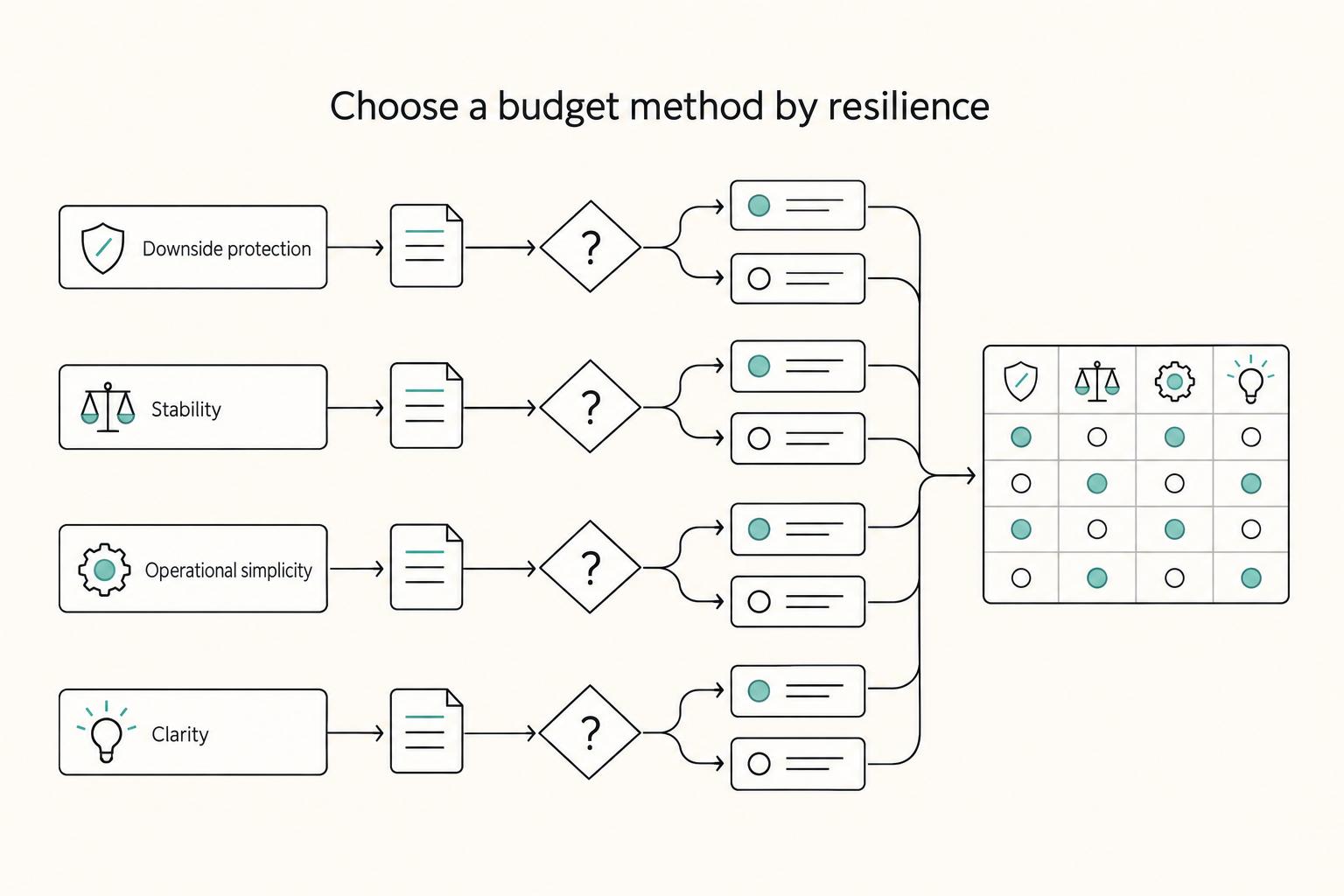
Use these criteria to evaluate any method (pay-yourself-first, zero-based budgeting, or any other approach):
- Downside protection: Stress-test the plan for weaker months, not just good ones.
- Stability: Set spending from what you can reliably support, not from the last big deposit.
- Operational simplicity: Use clear "buckets" (accounts or categories) and a calendar-driven routine you will actually follow.
- Clarity: Make it easy to see what's available to spend versus what needs to stay put.
Hypothetical: a slower month hits. Your system still pays you a steady "salary" from what you've already set aside, while the rest of your cash stays organized and protected. That's the win. Related: Should Your Freelance Business Accept Credit Cards?.
The 30-minute setup that converts volatile invoices into a stable monthly "salary"#
You can smooth irregular invoices into stable spending by separating cash received from cash you plan to spend, then funding priorities in a consistent order. The goal is boring consistency: clients can pay late and your spending plan still runs on schedule because spending only leaves the system through controlled transfers.
A simple, repeatable setup (5 moves)#
- Start with a two-bucket flow (simple income smoothing). One common approach is to use two accounts: route all client payments into an "Income Holding" account, then transfer a fixed "salary" into an "Expenses/Spending" account on a schedule you can actually honor (weekly or twice-monthly can both work). This helps isolate timing risk so one delayed invoice does not instantly hit rent.
| Move | Action | Key detail |
|---|---|---|
| Two-bucket flow | Route client payments into an "Income Holding" account | Transfer a fixed "salary" into an "Expenses/Spending" account on a schedule you can actually honor |
| Baseline Income | Define the amount you can pay yourself consistently without relying on your best months | Track a baseline and a target; treat everything above baseline as variable surplus until you fund taxes and buffers |
| Emergency Fund | Build an Emergency Fund that covers your must-pay bills | Keep it outside the Spending account and run it as a 2-stage plan |
| Tax set-aside | Move a set-aside into a dedicated tax bucket each time money hits the Holding account | Do it before you transfer "salary" |
| Funding order | Define a category funding order | Fund lower-priority categories only after you fully fund the higher tiers |
-
Pick a Baseline Income (conservative, not "average"). Define Baseline Income as the amount you can pay yourself consistently without relying on your best months. You can track two numbers: a baseline (what you can defend in a low month) and a target (what you pay yourself only after the baseline proves stable). Treat everything above baseline as variable surplus until you fund taxes and buffers.
-
Install a buffer before you optimize (two-stage). Build an Emergency Fund that covers your must-pay bills. Keep it outside the Spending account so you do not "accidentally spend your safety." Run it as a 2-stage plan: first create a starter buffer that stops panic, then grow it as your volatility and client concentration increase.
-
Make taxes non-optional (separate and early). Taxes function like a bill with a harsh late fee. Each time money hits the Holding account, move a set-aside into a dedicated tax bucket before you transfer "salary." This helps prevent "borrowing from taxes" in a low month, which can become a future crisis.
-
Define your funding order (a waterfall) to prevent surplus leaks. Fund lower-priority categories only after you fully fund the higher tiers, based on your reality.
Hypothetical: a big invoice lands. Your system pays the same "salary" transfer as usual, tops up your safety reserves, and keeps the rest quarantined until you intentionally allocate it.
Category waterfall template (edit to fit your reality)#
| Tier (fund first) | What belongs here (examples) | Why it matters |
|---|---|---|
| Tier 1 (must-pay) | Housing, essential utilities, insurance, minimum debt payments | Keeps you solvent even when cash flow dips |
| Tier 2 (government + true costs) | Tax set-asides, medical, annual renewals | Prevents predictable "surprises" |
| Tier 3 (operations) | Tools/subscriptions, work expenses, contractor payouts | Protects delivery and client retention |
| Tier 4 (lifestyle) | Discretionary spending | Only after the system stays stable |
If you get paid via multiple rails or currencies, clean up your bookkeeping early so transfers reconcile cleanly later. When you're ready, use How to Connect Wise to QuickBooks for Automatic Reconciliation to help keep reconciliation straightforward without adding much extra admin.
Want a quick next step? Try the free invoice generator.
Which budgeting method should you choose for your volatility level (and late-payment risk)?#
Choose the method that survives your worst month and your slowest payer, not the one that only works when everything goes right. With the two-account flow and stable transfers in place, choosing a budgeting method becomes an operating decision. Match the method to your volatility and payment timing risk, then run it consistently.
Decision matrix you can run in 3 minutes#
Start with three inputs, then make a conservative pick:
- Income volatility (how wide your swings run):
- High volatility: consider a Baseline Income Budget or a Rolling 3-Month Plan. * Lower volatility: Pay Yourself First or a Percentage Split (adapted) can work, especially once you've defined a baseline you can actually sustain.
- Client payment reliability (how often payments arrive late or get held):
- Unreliable payers: lean toward methods that assume delays and keep cash quarantined in the Holding account (Baseline, Waterfall, Rolling 3-Month). * Reliable payers: you can usually tolerate simpler splits, but the two-account architecture still helps.
- Invoicing cadence (retainers vs milestones):
- Weekly or monthly retainers: Pay Yourself First or a Priority Waterfall can keep admin low. * Milestone projects: a Rolling 3-Month Plan can help you model timing risk more explicitly.
Whatever you pick, build in a buffer. If your method starts with "average month" math and hopes invoices land on time, it tends to break the first time a client's AP process drags.
Default account architecture: a one-checking setup can get messy fast. Run your system through an Income Holding Account (cash received) and an Expenses/Spending Account (cash cleared for spending). Add buckets only when they reduce risk, like a dedicated tax bucket.
Tooling reality: pick what you can close monthly without chaos in your accounting. If you get paid internationally, make transfers easy to trace (provider statements matter). Wise, for example, says "You only pay for what you use, no subscriptions or plans," and it says it uses "the mid-market rate." Fees vary by currency and country page (Wise lists "From 0.48%" on its Canada pricing page and "From 0.54%" on its Vietnam pricing page). If you send large volumes, Wise says you unlock a discount after 35,000 CAD (or equivalent) and that it resets on the first, which can affect how you schedule transfers.
Hypothetical: you run milestone work and one client pays late. A Rolling 3-Month Plan can help keep your "salary" steadier because you only fund spending from cleared cash in Holding, not from expected receivables.
Comparison table for quick scanning (use this to pick fast)#
| Method | Common fit | If late invoices are common | Admin load | Core accounts | "Failure mode" to watch |
|---|---|---|---|---|---|
| Baseline Income Budget | Highly variable months | Often | Low | Income Holding + Spending | Baseline set too high |
| Pay Yourself First | Creators who overspend on good months | Sometimes | Low | Holding + Spending + "Tax" | Underfunding true expenses |
| Zero-Based Budgeting | Tight margins / debt payoff | Sometimes | High | Any (best with 2 accounts) | Burnout from too much tracking |
| Priority Waterfall (Bills-first buckets) | Small teams, recurring tools | Often | Medium | Holding + buckets | Subscriptions creep |
| Rolling 3-Month Plan | Project-based freelancers | Often | Medium | Holding + projections | Ignoring pipeline risk |
| Percentage Split (adapted) | Newer freelancers | Sometimes | Low | Any | Too generic without baseline |
If you want a deeper dive, read Hiring Your First Subcontractor: Legal and Financial Steps.
The best budgeting methods for people with irregular income (ranked for invoice-based work)#
Start with a Baseline Income transfer system, then choose the method that keeps spending stable when invoices arrive late. With your accounts and funding order defined, this is the day-to-day playbook for invoice-based work, ranked by downside protection and operational simplicity.
| Method | How it works | Key differentiator |
|---|---|---|
| Baseline Income Budget | Run cash flow off a conservative Baseline Income and transfer a fixed "salary" from Holding to Spending on two calendar dates | Prevents good-month overspending by design |
| Pay Yourself First | On every deposit into Holding, route money to taxes first, then the Emergency Fund, then the spending transfer | Blocks lifestyle inflation with automation |
| Zero-Based Budgeting | Budget only money that already landed in the Expenses/Spending Account and assign every dollar to a job | Exposes waste fast, but demands a cadence |
| Priority Waterfall Budget | Fund categories in a strict order so the bottom tiers do not get funded in a low month | Makes "must-pay" unbreakable |
| Rolling 3-Month Budget | Forecast the next 90 days using only confirmed invoices plus conservative timing assumptions | Forces you to model late payments instead of hoping |
| Percentage Split | Use a simple split only after baseline is set, then review and adjust on a regular schedule | Low friction, but it breaks if you treat it as "set and forget" |
- Baseline Income Budget (the foundation method) Run your whole cash flow off a conservative Baseline Income and treat everything above it as optional surplus. Route all client payments into an Income Holding Account, then transfer a fixed "salary" into your Expenses/Spending Account on two calendar dates (for example, the 1st and 15th).
Key differentiator: It prevents good-month overspending by design.
Operator rules:
- Set a "no exceptions" policy: if Holding cannot cover the next transfer, you cut discretionary categories first, not rent.
- Keep surplus parked until you fund taxes and buffers.
- Pay Yourself First (with a tax-first twist) Use this when you keep having big months and still feel broke. On every deposit into Holding, route money to taxes first, then your Emergency Fund, then your spending transfer.
Key differentiator: It blocks lifestyle inflation with automation.
Operational setup: write three rules and follow them in order (taxes, buffer, salary). Track your tax set-asides on a regular cadence appropriate to your tax authority (rules vary by jurisdiction) so you do not "discover" a problem at filing time.
- Zero-Based Budgeting (ZBB) for irregular income, run it from baseline, not hope Use zero-based budget discipline when margins feel tight or you carry debt. Budget only the money that already landed in the Expenses/Spending Account, then assign every dollar to a job.
Key differentiator: It exposes waste fast, but demands a cadence.
Cadence that sticks: assign weekly, reconcile monthly (especially if you use accounting software).
- Priority Waterfall Budget (bills-first buckets that scale up/down) If you juggle fixed bills plus variable tools, contractors, or travel, fund categories in a strict order. In a low month, the bottom tiers simply do not get funded.
Key differentiator: It makes "must-pay" unbreakable.
Practical move: pick your top 5 non-negotiables, fund them first, then layer optional spend.
- Rolling 3-Month Budget (project-based forecasting without fantasy math) For milestone work, forecast the next 90 days using only confirmed invoices plus conservative timing assumptions. Then set a safe transfer amount from Holding.
Key differentiator: It forces you to model late payments instead of hoping.
If you take cross-border payments with Wise, note that Wise says registering is Free and it uses the mid-market rate. Fees vary by currency (Wise lists sending money from 0.48% on its Canada pricing page), so track net deposits, not just invoice totals.
- Percentage Split (only after baseline is set) Use a simple split only as training wheels after you stabilize transfers. Divide each transfer into needs, true expenses, taxes (if you did not already), and savings or debt, then review and adjust on a regular schedule (for example, quarterly).
Key differentiator: Low friction, but it breaks if you treat it as "set and forget."
Hypothetical: you land a large project payment and feel tempted to upgrade gear. With Baseline plus a waterfall, you fund taxes and the buffer first, then decide from surplus with a clear head.
How do you stop overspending in good months without feeling deprived?#
Stop overspending by separating "income arrived" from "income safe to spend," then pre-approving discretionary spending in advance. This keeps good months from quietly committing you to expenses your next lower month cannot support.
1) Put surplus behind a speed bump (quarantine, not punishment)#
Start with a simple rule: treat surplus as "pending" until you complete at least one full review cycle. Park extra cash somewhere you will not casually spend it (for example, a separate account), and only move what you intentionally plan to spend on schedule. You do not need a magic number of days. You need a consistent gate.
Use a decision table so you stop negotiating with yourself in the moment:
| If this is true... | Then do this with surplus | Why it works |
|---|---|---|
| You have not reviewed recent actual spend | Keep surplus parked | Stops "I think we're fine" spending |
| Your buffer feels thin | Route surplus toward your emergency fund | Buys time when timing gets weird |
| You are prioritizing savings or debt repayment | Keep that priority ahead of lifestyle upgrades | Reduces lifestyle inflation |
| You are trying a categories-based budget | Only budget money you already have | Prevents budgeting imaginary money |
Hypothetical: a big invoice hits and you want to upgrade your workspace. You park the surplus, run your check-in, confirm your upcoming bills and subscriptions, then decide from a calm place instead of a dopamine spike.
2) Run check-ins that use data, not vibes#
Build a cadence you can sustain. Money Fit frames budgets as flexible and revisitable ("check in weekly or monthly, update for life changes"), and Monarch recommends using real data and reviewing your actual spending over the past 3 months instead of guessing.
Operator checklist for avoiding overspending without a daily guilt spiral:
- Weekly or monthly: review recent transactions and scan the next set of bills and renewals. Do not guesstimate.
- Set a pre-approved fun cap: keep discretionary spending stable even when revenue spikes. (A simple reference point many people use is the 50/30/20 framing of needs, wants, savings or debt.)
- Plan for irregular expenses on purpose: an annual subscription renewal can throw everything off if you ignore it.
What do you do when clients pay late (or payments fail) and your budget is about to break?#
Protect your budget by treating "getting paid" as an operational system (terms, follow-ups, reconciliation), not as wishful thinking inside a spreadsheet. You already have the spending side under control. This section builds the reliability layer so a late payer does not force you into panic decisions.
Build a "get-paid reliability" layer (so freelance budgeting stops depending on luck)#
This setup breaks fastest when you only manage spending. Add a lightweight accounts receivable layer that feeds your cash flow decisions:
- Maintain a simple receivables list: invoice date, due date, amount, status, and payment method.
- Only "count" money when it clears into your Income Holding Account. Everything else stays "expected," not spendable.
- Tie your transfer schedule (Baseline Income, pay-yourself-first, or a zero-based budget) to cleared cash, not sent invoices.
Hypothetical: a client says "payment processed" but your bank still shows nothing. You still run your normal baseline transfer from cleared cash only, and you delay discretionary categories instead of gambling on timing.
Default contract terms (so you stop negotiating under stress)#
It's hard to budget professionally without clear terms in the client agreement. Use these as practical defaults to define expectations and create options when timing slips:
| Contract term | Default | Detail |
|---|---|---|
| Deposit + milestone billing | Collect earlier | Then bill as you deliver |
| Clear due date and net term | Spell out "due on receipt" or the specific term you use | Avoid ambiguity |
| Late-fee logic | Write the rule if you choose to use it | Do not improvise later |
| "Pause work if past due" clause | Protect the schedule and your capacity | Treat it as a workflow rule, not a threat |
Late-payment playbook (trigger-based, not vibes) Use a simple escalation ladder that your future self can follow:
| Trigger (choose your thresholds) | Do this next | Budget move (safe default) |
|---|---|---|
| Invoice passes due date | Send a short reminder, resend the link, ask who owns AP | Freeze discretionary transfers from Holding |
| No response after follow-up | Confirm payment method, offer an alternate rail if appropriate | Re-check next 2 weeks of bills, fund must-pays first |
| Past-due materially disrupts delivery | Send "work paused per agreement" notice | Reduce Baseline Income transfer until cash clears |
| You reach your final boundary | Send final notice, decide next steps, require prepay next time | Update client risk policy (terms tighten automatically) |
Plan for reversals, holds, and "in transit" funds Some payment flows can unwind or delay. Keep a real Emergency Fund, and avoid spending money that has not fully cleared.
Finally, reconcile like an operator. Match deposits to invoices in your accounting tool (for example, QuickBooks if that's what you use) using transaction references and notes (including Wise transfer details if you use it). Wise lists account registration as free, says it uses the mid-market rate, and shows sending fees that vary by currency (for example, from 0.48% on Wise's Canada pricing page). If you want a tighter workflow, see How to reconcile Wise transfers in QuickBooks.
How much emergency fund do irregular earners actually need (and where should it live)?#
Start by figuring out what you must spend each month, then make sure you have that money available when income timing slips. From there, size and grow your buffer using conservative income assumptions, not generic rules.
Size it using must-pay coverage + conservative income math#
Start by defining must-pay expenses (rent or mortgage, essential utilities, insurance, minimum debt payments, required subscriptions, and groceries). Farber's guidance points in the right direction: determine how much you need to spend each month first, and then make sure you have that money. That "need to spend" number becomes the unit your Emergency Fund protects.
Then set your Baseline Income conservatively. Grant Thornton Debt Solutions suggests you can review your "last few years" of statements and, after calculating annual net income, "divide it by twelve to find your monthly income," then use it like a salary to balance peak and low periods. If your work fluctuates widely, they also suggest choosing your lowest annual income as a safer starting point, so you end up with extra money rather than shortfalls.
Use a simple risk ladder to decide how aggressively to build the buffer:
| Risk signal (cash flow reality) | What it means | What to do with the buffer |
|---|---|---|
| Payment timing varies but stays predictable | Minor timing gaps | Make sure your fund can cover your must-pays through the kinds of delays you actually see |
| Client concentration (one client dominates) | One delay breaks your plan | Build more coverage before you expand optional spending or commitments |
| Income arrives in chunks (not "every two weeks") | Longer gaps between deposits | Prioritize building the buffer faster so your must-pays stay stable between deposits |
Hypothetical: you run a pay-yourself-first system and a client pushes payment out. You keep your Baseline Income transfer steady by drawing from the buffer, then you rebuild the buffer from the next cleared surplus before you increase discretionary spending.
Define what the buffer is for (so you don't raid it by accident)#
Treat your Emergency Fund as money meant to protect must-pay spending when timing slips. The simplest way to keep it intact is to decide (in writing) what counts as "must-pay," what is optional, and that replenishing the buffer comes before discretionary spending after you dip into it.
Tax-ready budgeting for irregular income: keep the IRS out of your stress budget#
Treat taxes like a non-negotiable transfer that happens before you "feel rich" in your Expenses/Spending Account. If you want this to feel stable, taxes have to be part of the system, not an afterthought.
1) Make taxes a first-class category (not a leftover)#
Estimate a conservative set-aside rate for your situation, then route that set-aside directly from your Income Holding Account before discretionary spending touches the Expenses/Spending Account. In pay-yourself-first terms, taxes sit ahead of lifestyle. In zero-based budget terms, you fund taxes before you assign dollars to "wants."
Use this money path as your safe default:
| Moment money arrives | Do this first | Then this | Only then |
|---|---|---|---|
| Client payment hits Holding | Transfer to "Tax" bucket/account | Transfer Baseline Income to Spending | Discretionary categories |
Hypothetical: a chunky payment lands Friday. You immediately sweep your tax set-aside and schedule your baseline transfer. You leave the surplus quarantined until your next review, instead of accidentally spending money that never belonged to you.
2) A regular cadence beats last-minute panic#
You do not need hero math. You need a calendar. Set recurring reminders for a regular review where you (1) scan income received, (2) check your tax set-aside balance, and (3) adjust your estimate if your cash flow reality changed. Store receipts and categorize transactions continuously so you do not reconstruct the year from memory when you file.
3) Cross-border reality: document conversions like an operator#
If you receive multiple currencies, capture the conversion context every time: the original amount, the converted amount, and the transfer reference. Wise says it uses the mid-market rate, and it states sending money fees vary by currency (listed "From 0.48%" on its Canada pricing page). Wise also notes volume discounts can kick in once you send 35,000 CAD (or equivalent) in a month and that the discount period resets on the first. Log the statement and reference so your totals reconcile cleanly across systems, currencies, and months.
The bottom line: pick one method, install the buffer, and run it like an ops loop#
Pick a single budgeting method you can repeat, then protect it with an income buffer and a non-negotiable cadence. The win is not finding the fanciest method. The win is running the same operating loop every cycle so uneven income stops turning into uneven decisions. You do not need "more discipline." Mercury puts it cleanly: "managing irregular income isn't about discipline or 'being better with money.' It's about designing flexible personal financial systems."
A simple default stack (one way to make it work)#
For many invoice-based earners, a simple setup is Baseline Income + an Income Holding Account + an Expenses/Spending Account, then fund spending in a bills-first priority waterfall. Keep a separate Emergency Fund, and consider making tax set-asides automatic before discretionary spending. The idea is simple: income can arrive unpredictably, but spending leaves on your schedule.
Treat your personal setup like a simple business budget, which Cantant defines as "a working plan for how your company expects to earn, spend, and save money." You can plan that budget monthly, quarterly, or annually, and still review it on a tighter cadence if your income is lumpy.
Here's an operator loop that helps keep freelance budgeting stable:
| Cadence | What you do | "Done" looks like |
|---|---|---|
| Weekly | Check holding balance, upcoming must-pays, and transfer schedule | You spot a shortfall early and cut optional spend first |
| Monthly | Reconcile transactions in whatever tool you use, review Baseline Income fit | Your categories match reality, not vibes |
| Quarterly | Review taxes set-asides and client payment reliability | You tighten terms on slow payers and protect cash flow |
Hypothetical scenario: a client payment lands late, but your bills still clear because your holding account already pre-funded your spending transfer. You pause discretionary categories and follow your late-pay playbook, instead of panic-shuffling money between rent and taxes.
Next step: install it, then write the rules#
Do the essentials:
- Open or designate Holding and Spending accounts.
- Choose a method you can repeat (baseline, pay-yourself-first, or a zero-based approach).
- Write late payment rules into your client agreement (reminders, pause-work trigger, payment alternatives), so your budget never becomes hostage to someone else's AP timeline.
Frequently Asked Questions
How do you budget with irregular income without overspending in good months?
Run your month off a conservative Baseline Income, not whatever just hit your account. Send all income to an Income Holding Account first, then “pay yourself” a fixed transfer into your Expenses/Spending Account once a month (or twice monthly). Keep extra cash in holding until your next review, and only release it through your plan (essentials first, then everything else).
What is a baseline income budget, and how do I calculate my Baseline Income?
Baseline income is a budgeting number based on your lowest consistent monthly income (or a conservative estimate), not your highest or average month. Look back at the past 6-12 months of deposits and pick the monthly amount you know you can count on. If your income swings hard, choose the smallest “still realistic” month and treat everything above it as variable surplus you allocate after essentials.
Should I use one account or two accounts for variable income (Income Holding Account vs Expenses/Spending Account)?
Use two accounts as your safe default because it separates “money arriving” from “money you can spend.” The Income Holding Account buffers timing risk so you stop spending deposits as they arrive, and the Expenses/Spending Account stays stable because you fund it like a salary once or twice monthly. | Setup | What happens on payment day | Risk you must manage | |---|---|---| | One account | Income and spending mix immediately | Overspending in good weeks, scrambling in slow weeks | | Two accounts | Income lands in holding, then you transfer a fixed amount | You must follow the transfer schedule consistently |
How much Emergency Fund do irregular earners need before aggressive saving or investing?
Define “enough” operationally: cash that covers must-pay monthly essentials when payments arrive late. Build the buffer first. Then scale saving and investing once your baseline transfers clear consistently without stress. Keep the Emergency Fund separate from daily spending so you do not quietly drain it.
What expenses should be fixed first when income is unpredictable?
Lock in your must-pay monthly essentials first because they are the non-negotiables your system protects. Start with rent or mortgage, utilities, insurance, groceries, transportation, minimum loan payments, and phone or internet. After those are funded, decide what flexes when cash flow tightens (subscriptions, dining out, upgrades).
What budgeting method works best for freelancers paid on invoices?
A Baseline Income approach can work well for invoice-based income because payments can land at uneven times. Pair it with “pay yourself” behavior: income hits holding, you fund essentials first, then you transfer baseline pay to spending. If you want tighter control, add a more detailed spending plan on the spending account only, so you budget money you already transferred, not money you hope clears.
How do I budget when clients pay late (or payments get held or reversed)?
Treat payment timing as a first-class risk in your cash flow system. Build your plan around money that has cleared into the Income Holding Account, not around sent invoices, and only transfer baseline pay on schedule if holding can support it. If a client pays late, cut discretionary categories first, protect must-pays, and avoid pulling from set-asides unless your system can refill them from the next cleared surplus.
Try a related tool
Researched and edited by the Gruv editorial team. Gruv builds cross-border billing, payouts, and finance-operations software for global businesses.
Sources
Includes 2 external sources outside the trusted-domain allowlist.
- extension.psu.edu/budgeting-with-irregular-incometrusted
- extension.psu.edu/budgeting-with-irregular-incometrusted
- ndbf.nebraska.gov/how-budget-effectively-irregular-incometrusted
- oecd.org/content/dam/oecd/en/publications/reports/200...trusted
- comerica.com/insights/personal-finance/how-to-live-on-a-b...external
- timelesstype.co/blog/why-most-freelancers-struggle-with-fina...external
Educational content only. Not legal, tax, or financial advice.
Related Posts

Hiring a Subcontractor for the First Time Without Costly Surprises
**Start with a risk-control sequence, not an ad hoc handoff.** As the Contractor, your goal is simple: deliver cleanly, control scope, and release payment only when the work and file are complete.
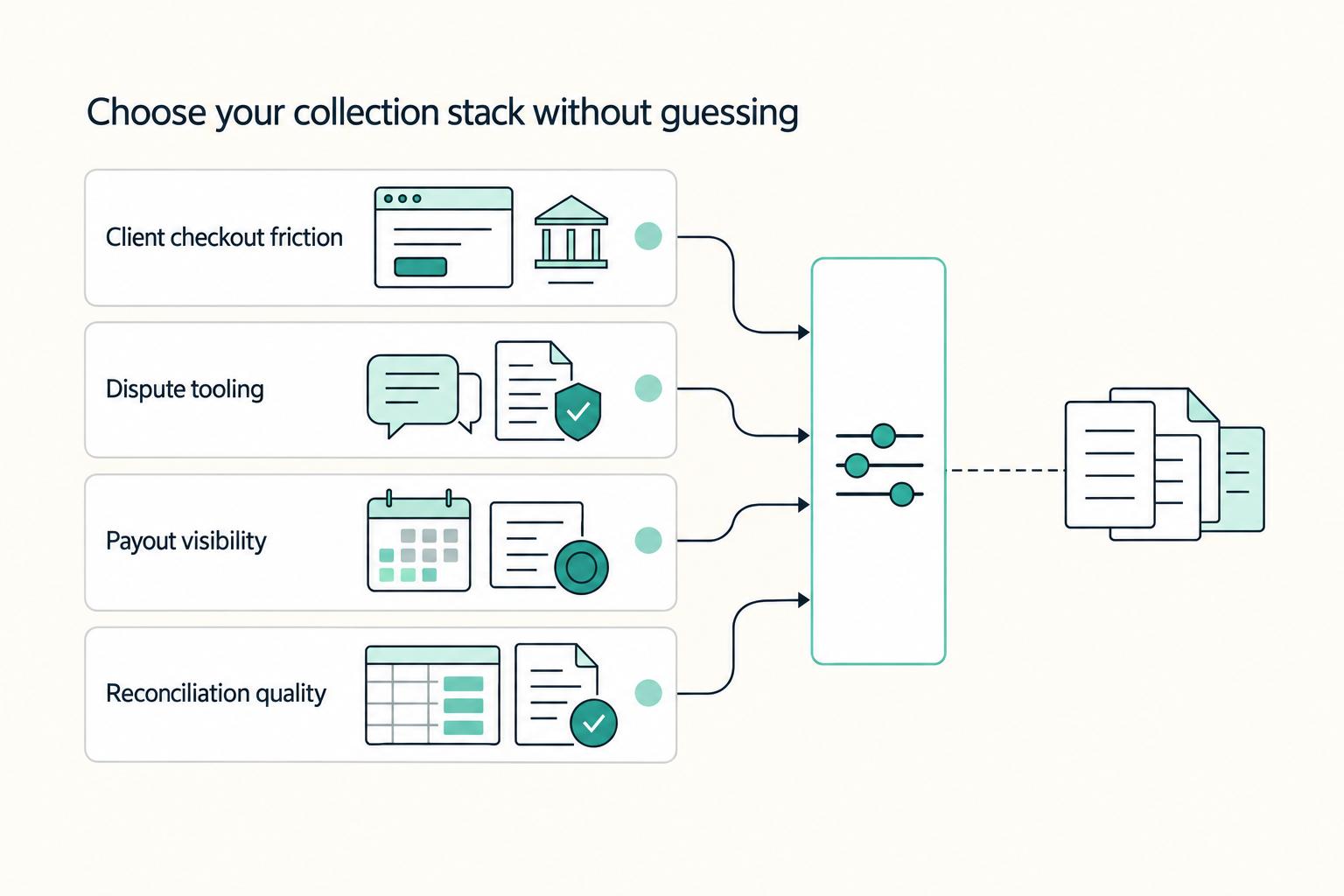
Should Your Freelance Business Accept Credit Cards?
Offer card payments, but stay in control of how money reaches you. The goal is not a smoother checkout screen. It is predictable cash you can use to run the business.
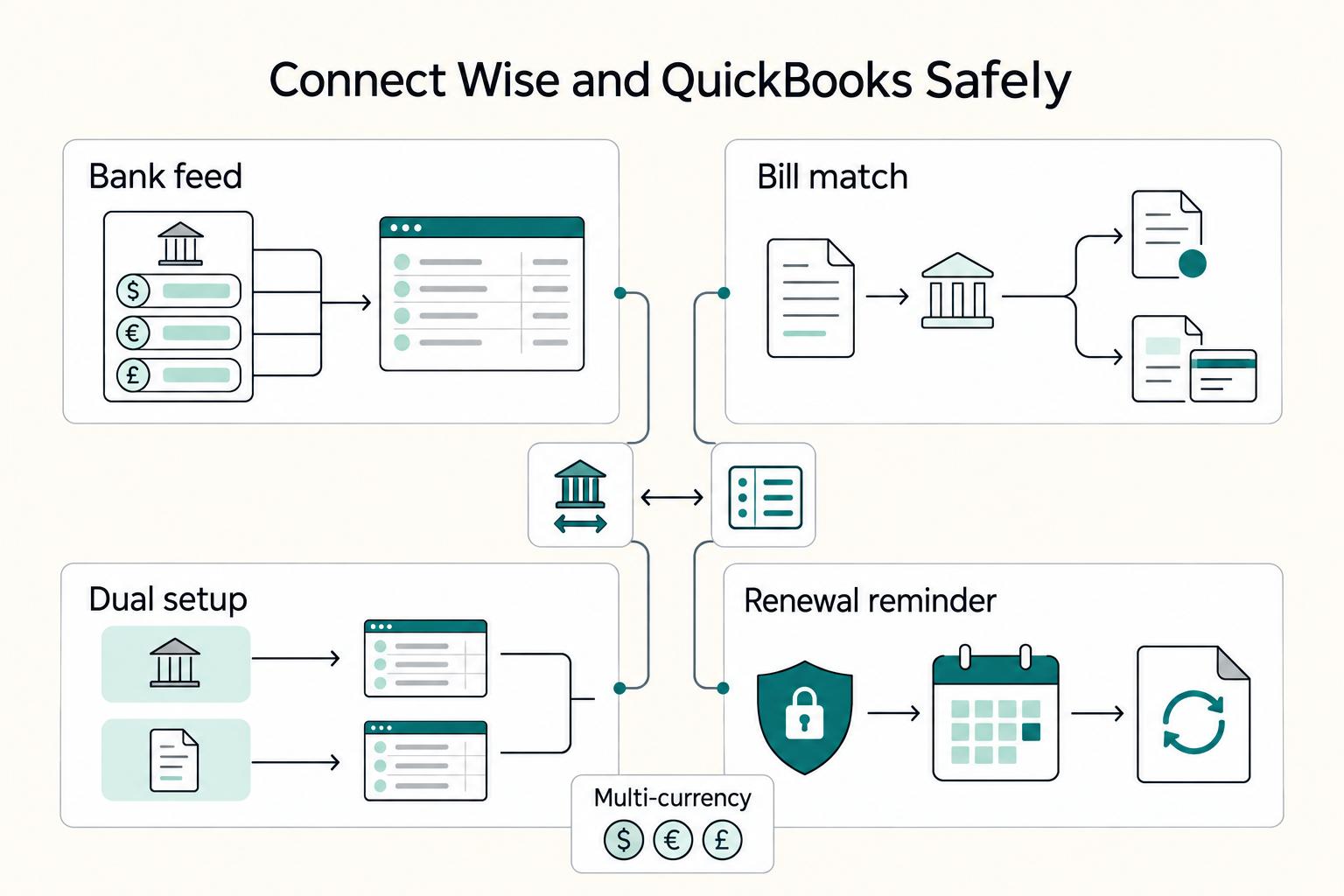
How to Connect Wise to QuickBooks for Automatic Reconciliation
**Use a risk-first Wise to QuickBooks setup to tighten transaction visibility and make reconciliation more predictable.**