

Quick Answer
Choose based on proof, not sticker price. For cheap digital nomad cities, pick the option with a verified stay route, tested internet in the exact apartment, and a reachable backup workspace before you commit longer housing. Use Schengen 90/180 date checks where Europe is involved, and keep early bookings short until your first 30 days show stable work sessions and spend. When two cities look equally affordable, the one with fewer unresolved documents is the safer move.
How to Choose an Affordable Nomad Base That Holds Up#
If you want a low-cost base that still feels affordable after you land, start with friction, not rent. Affordability can break down when work setup and logistics wobble at once. Your best first move is the city you can operate from with the fewest unknowns.
- Price the full operating picture, not the listing screenshot.
Start with five cost buckets: housing, local transport, workspace, admin load, and rework risk. That last bucket matters more than most people expect. A cheap apartment stops being cheap if you spend your first days moving again, paying for backup workspace, or changing plans because your stay route was never solid.
Look beyond rent to everyday costs like transportation and dining, then run your own numbers from there. The useful question is not "What is the rent?" but "What will it cost me to work normally here by week 2 without patching problems every day?"
- Sort cities into friction tiers before you book anything.
Before you compare prices, sort each option into low, medium, or high friction. Use four checks: unresolved stay route, housing reliability, connectivity confidence, and local admin complexity. If two places look close on price, pick the one with fewer open questions.
For most beginners, the real risk is not choosing the wrong city in theory. It is choosing a place that stacks too many friction points at once. A low-friction option usually has straightforward arrival logistics, a believable path to a solid first-month stay, and good reason to expect reliable Wi-Fi, coworking access, and backup options. If housing is hard to validate, Wi-Fi looks spotty, or you cannot tell how you will handle the first admin steps, move that city up a tier.
A simple check helps here: across your beginner-priority checks, do you still feel an honest "I can do this" before booking? Unresolved stay route should outweigh small savings. If that part is still soft, the city is not low friction yet.
- Build a pre-booking evidence pack and treat missing pieces as real risk.
Do not keep entry or stay planning in your head. Build a small evidence pack that shows what is confirmed, what is assumed, and what would break the plan. The point is not to create a perfect application file. It is to stop yourself from paying for a move while the critical parts are still guesses.
Your pack should answer four questions:
- Stay route: What route are you planning to use, which official page or consular source did you verify, and when did you check it? * Required documents: Which identity, income, accommodation, or work records are already in hand, and which still need updating if your route asks for them? * Unresolved items: What is still unclear after checking current rules? * Fallback city: Where do you go if timing shifts or a requirement does not clear?
Keep screenshots or saved PDFs of the rule pages you relied on, plus cloud and offline copies of your core records. If your evidence pack still has blank fields right before booking, use refundable options or delay the commit.
- Treat the first 30 days as a controlled test, then make a stay or exit call.
Once you land, do not drift into "settling in eventually." Use the first month to prove that work continuity survives real life. Test internet and backup options in the first week. By the middle of the month, you should know whether housing is stable, your transport pattern is workable, and your paperwork list is getting shorter instead of longer.
By day 30, decide from evidence, not mood. Stay only if three things are true: your work setup is reliable, your actual weekly spend is tracking close to plan, and your unresolved admin items are shrinking. Exit or shorten the stay if calls keep getting disrupted, spend drift is compounding, or paperwork is still blocking basic setup.
A common failure mode is staying because the city looked cheap on paper even while your real operating cost keeps climbing. The win is not the lowest sticker price. It is getting to a boring, repeatable work routine before the first month is over. Related reading: The Best Digital Nomad Cities for Entrepreneurs and Startups.
How We Select Cheap Digital Nomad Cities#
Start with elimination, not comparison. If you cannot explain how you will operate through the first relocation window, the cheaper option is usually not cheaper in practice.
| Route | Use when | Key note |
|---|---|---|
| OSS | Your activity touches EU cross-border VAT and OSS is relevant to that activity | One Member State of identification; Union/non-Union returns are quarterly and import returns are monthly; if you use a scheme, supplies in that scheme must be declared through OSS; OSS returns are additional and do not replace domestic VAT returns |
| VAT Cross-border Ruling | VAT treatment is still unclear for a complex cross-border transaction | Submit in a participating EU country where you are VAT-registered, and follow that country's national VAT ruling conditions |
That screen helps you remove false bargains before you spend time comparing neighborhoods or headline rents.
- Start with booking gates, not budgets.
Eliminate any city where your stay route or compliance path is still guesswork. At this stage, treat city-cost claims, visa outcomes, and relocation timelines as unconfirmed until you verify them in your own plan. Unresolved basics can create rebooking risk, document scramble, and temporary housing churn.
- Score the full monthly stack in four buckets.
Compare each city on living costs, work continuity, admin burden, and friction type. Split friction into recurring drag (ongoing operational pain) versus one-time setup (a step that closes cleanly). Weight recurring friction higher because it continues after arrival.
- Treat EU compliance routes as EU-only checks.
If your activity touches EU cross-border VAT, confirm whether OSS or a VAT Cross-border Ruling belongs in scope. For OSS, your Member State of identification choice can bind the current calendar year plus two following years, so flexibility can narrow after you choose. Do not carry EU VAT process assumptions into non-EU cities without separate local verification.
- Rank survivors by repeatability, not upside.
After removing obvious risks, rank what is left by one question: can you repeat week 2 without daily patches? Your evidence pack should capture the official page checked, when you checked it, and what remains open.
For a Latin America shortlist, see The Best Digital Nomad Cities in Latin America in 2026.
Quick Comparison Table Before You Pick#
Use this table to eliminate non-viable options before you spend, not to rank a "best" city. Read each row across and make a go/no-go call from four checks: operating cost stack, stay-route clarity, setup friction, and the pre-payment trigger.
| City | Role | Stay-route clarity | Setup friction | Key verification trigger before payment | Failure pattern that makes it expensive in practice |
|---|---|---|---|---|---|
| Ho Chi Minh City | Shortlist candidate | Confirm the current stay-route requirement from the official source | Neighborhood and housing dependent | GO only if: stay route confirmed, exact unit validated as work-ready, and one backup workspace identified | Cheap rent gets erased if you keep moving or repeatedly pay for backup workspace |
| Tbilisi | Shortlist candidate | Confirm the current stay-route requirement from the official source | Rental and admin dependent | GO only if: stay route confirmed for your planned window, housing terms checked, and fallback workspace identified | Rebooking short stays turns a low headline month into a messy one |
| Buenos Aires | Shortlist candidate | Confirm the current stay-route requirement from the official source | Housing choice dependent | GO only if: accommodation confirmed work-friendly, noise risk checked, and backup workspace identified | A photogenic apartment that is noisy or poorly set up pushes you into extra daily spend |
| Belgrade | Shortlist candidate | Confirm the current stay-route requirement from the official source | Case dependent | GO only if: current stay route verified from live sources and deposit terms checked | A city stops being affordable when stay planning stays fuzzy |
| Krakow | Shortlist candidate | Confirm the current stay-route requirement from the official source | Housing and paperwork dependent | GO only if: stay math checked, exact unit validated, and any EU VAT relevance reviewed for your activity | First-month setup costs and unresolved admin can distort the comparison fast |
| Sofia | Shortlist candidate | Confirm the current stay-route requirement from the official source | Apartment quality dependent | GO only if: stay route confirmed, internet for the exact unit validated, and backup workspace identified | Slow or unstable internet creates recurring workarounds and repeat spend |
| Tallinn | Shortlist candidate | Confirm the current stay-route requirement from the official source | Short-term rental dependent | GO only if: short-term supply is workable for your dates and your work setup has a fallback | Apartment churn creates admin drag and burnout |
| Medellin | Shortlist candidate | Confirm the current stay-route requirement from the official source | Building and housing dependent | GO only if: proof of internet setup checked, work-hour noise risk checked, and backup option identified | You pay twice when the apartment works for leisure but not for focused work |
| Bangkok | Shortlist candidate | Confirm the current stay-route requirement from the official source | Lifestyle and neighborhood dependent | GO only if: transport pattern priced realistically and housing supports daily work | Convenience spending can wipe out the budget fast |
| Prague | Shortlist candidate | Confirm the current stay-route requirement from the official source | Housing and first-month cost dependent | GO only if: full first month priced, stay route checked, and EU VAT relevance reviewed if applicable | Sticker rent hides the real operating month |
| Singapore | Non-candidate context anchor | Not scored here | Not scored | Use only as a cost anchor, not a shortlist option | High-cost anchors can normalize overspending elsewhere |
| Oslo | Non-candidate context anchor | Not scored here | Not scored | Use only as a transport-cost contrast point | Route assumptions from cheaper markets can mislead your budget |
| Trondheim | Non-candidate context anchor | Not scored here | Not scored | Keep only as a comparison marker | Market-to-market assumptions travel badly |
Two checks decide most outcomes. First, confirm the stay route from a live official source and save the verification date; if Europe is in scope, run your stay math through the Schengen 90/180 Day Rule before treating any Schengen row as viable.
Second, validate the exact unit as work-ready, not just the neighborhood. Keep a simple evidence pack: one official stay-rule page, one live listing with cancellation terms, one screenshot or written confirmation of internet setup, and one identified backup workspace.
For EU-linked rows, add a VAT checkpoint when your activity touches cross-border VAT. OSS is optional, but if you use it, you register in one single Member State of identification and declare all supplies covered by that scheme through OSS returns. Filing cadence differs by scheme: quarterly for Union and non-Union, monthly for import. If treatment is still unclear, VAT Cross-border Ruling is only available in participating EU countries where you are already VAT-registered.
If Southeast Asia is your fallback path, keep that route separate instead of blending assumptions across countries. For Bali-specific planning, use Indonesia's B211A Visa: The De Facto Nomad Visa for Bali rather than inferring from Bangkok or Ho Chi Minh City rows.
Execution sequence: fill placeholders with current evidence, convert every trigger to yes/no, eliminate unresolved rows, then sort survivors by your primary constraint.
For a stability-first shortlist, see Best Digital Nomad Cities for Safety and Stability in 2026.
Best Cities for First-Time Movers Who Need Low Friction#
For a first move, pick the city you can verify cleanly before payment. If options look similar, choose the one where immigration, housing, and work continuity are all supported by written proof in one pass.
| City | Best fit | Main risk | Checks before booking |
|---|---|---|---|
| Tbilisi | Proceed when your current stay route is verified from an official source and first-month housing is documented | You rely on broad stay claims, then find gaps after arrival | Save the official stay page and check date, confirm cancellation terms, get written internet proof for the exact unit or name a backup workspace |
| Belgrade | Proceed when immigration and housing questions are closed in writing before payment | Open questions spill into arrival week and force rebooking | Confirm the current stay-route condition from the official source, confirm deposit/cancellation terms, keep one fallback workspace or backup stay option |
| Sofia | Proceed when the unit is work-ready and Europe compliance checks are handled early | The apartment looks fine, but connectivity, terms, or compliance gaps appear after arrival | Confirm internet for the exact unit, verify booking terms in writing, review Europe stay-planning and tax obligations before committing |
Tbilisi#
Proceed with Tbilisi only when your stay route is clear for your case and planned window. The go signal is simple: official stay source saved, check date recorded, and a first-month booking with written terms and work-setup details. If internet for the exact unit is unconfirmed, pause.
The common failure mode is treating summaries or forum posts as final. Use a minimum evidence pack before paying: one official stay page, one listing with terms, one written internet confirmation, and one backup workspace. If any item is missing, use a fallback city.
Belgrade#
Belgrade is a go only if you can turn uncertainty into written answers quickly. If entry, stay route, or housing terms still depend on interpretation during booking week, pause. No payment until the current stay-route condition after verification is filled and housing terms are documented.
The red flag is shortlist drift: keeping a city because it might work. Use a hard rule: if immigration and housing checks do not close in the same review cycle, choose a clearer fallback and revisit later.
Sofia#
Sofia is a go when you verify housing and compliance separately, early. First, confirm internet in the exact unit, not just the building. Second, if Europe stay planning is relevant, check dates against the Schengen 90/180 Day Rule before treating the route as settled.
For tax and VAT, validate before booking. OSS is optional, and if you use it, you register in one single Member State of identification. OSS returns are additional and do not replace domestic VAT returns, and filing cadence differs by scheme: quarterly for Union and non-Union, monthly for import. If you are considering a VAT Cross-border Ruling, it is requested in a participating EU country where you are already VAT-registered, under that country's national VAT-ruling conditions. If your tax position is still open, separate that work first, including whether a home office deduction is relevant to your case.
Run this once across all three cities before deciding:
- Immigration: official source saved, check date recorded, current stay-route condition verified.
- Business compliance: tax/VAT obligations noted, with OSS or CBR questions resolved or deferred knowingly.
- Housing: exact unit identified, cancellation and deposit terms saved in writing.
- Work continuity: internet proof for the exact unit plus one backup workspace.
If two cities remain close, choose the one with fewer unresolved documents.
Best Cities for Lowest Burn Rate in Southeast Asia#
Your lowest burn rate usually comes from a stable daily operating loop, not the lowest headline rent. Compare each city on the same four checks before you commit: neighborhood radius, transport drag, workspace fallback depth, and first-day setup reliability.
| City | Best fit | Cost trap | Go/no-go checks |
|---|---|---|---|
| Ho Chi Minh City | Choose only if you can verify the stay route for your case, confirm the exact unit is work-ready, and arrive connected for banking, maps, and work tools on day one. | Teaser rent can hide recurring drag from transport, backup workspace gaps, and compliance assumptions you did not validate first. | Confirm the current neighborhood rent range from current local listings; Confirm the current connectivity baseline for the exact unit; confirm at least one backup workspace inside your normal work radius; verify your stay route from an official source before payment; confirm flight connectivity and long-term accommodation options for your planned window. |
| Bangkok | Strongest when you want deeper workspace fallback options and solid WiFi backups, and you can keep your routine in a tight radius. | Daily transport can break a low-cost plan; reported traffic can run to 45 minutes for 3 km, and air quality can be a performance risk at certain times. | Confirm the current neighborhood rent range from current local listings; Confirm the current connectivity baseline for the exact unit; test route time during your real work hours, not off-peak; map at least two backup workspaces near your base; verify your stay route before booking. |
| Phuket | Use only if you can prove the same operating basics in writing before payment. | Assuming a lower sticker price will hold without verified neighborhood radius, transport pattern, and workspace fallback depth. | Confirm the current neighborhood rent range from current local listings; Confirm the current connectivity baseline for the exact unit; confirm at least one backup workspace in your operating radius; verify stay-route feasibility for your case; confirm flight and accommodation reliability for your dates. |
Ho Chi Minh City#
Best fit: Choose Ho Chi Minh City only if you can verify the stay route for your case, confirm the exact unit is work-ready, and arrive connected for banking, maps, and work tools on day one.
Cost trap: Treating teaser rent as the full budget can hide recurring drag from transport, backup workspace gaps, and compliance assumptions you did not validate first. If tax assumptions are part of your budget math, sanity-check them early with Can Digital Nomads Claim the Home Office Deduction?.
Required checks (go/no-go):
- Confirm the current neighborhood rent range from current local listings.
- Confirm the current connectivity baseline for the exact unit.
- Confirm at least one backup workspace inside your normal work radius.
- Verify your stay route from an official source before payment.
- Confirm flight connectivity and long-term accommodation options for your planned window.
Not ready yet: If any check is unresolved, pause payment and keep this city in backup status.
Bangkok#
Best fit: Bangkok is strongest when you want deeper workspace fallback options and solid WiFi backups, and you can keep your routine in a tight radius.
Cost trap: Daily transport can break a low-cost plan; reported traffic can run to 45 minutes for 3 km, and air quality can be a performance risk at certain times. Also treat claims like "under $1,000/month" or very low meal prices as anecdotal until you verify your own current numbers.
Required checks (go/no-go):
- Confirm the current neighborhood rent range from current local listings.
- Confirm the current connectivity baseline for the exact unit.
- Test route time during your real work hours, not off-peak.
- Map at least two backup workspaces near your base.
- Verify your stay route before booking.
Not ready yet: If your commute pattern or stay route is still uncertain, do not lock a long booking.
Phuket#
Best fit: Use Phuket only if you can prove the same operating basics in writing before payment.
Cost trap: Assuming a lower sticker price will hold without verified neighborhood radius, transport pattern, and workspace fallback depth.
Required checks (go/no-go):
- Confirm the current neighborhood rent range from current local listings.
- Confirm the current connectivity baseline for the exact unit.
- Confirm at least one backup workspace in your operating radius.
- Verify stay-route feasibility for your case.
- Confirm flight and accommodation reliability for your dates.
Not ready yet: If these checks are incomplete, run a fallback plan first, including Bali route review in Indonesia's B211A Visa: The De Facto Nomad Visa for Bali.
If two options are close, choose the one with fewer unresolved setup risks, not the one with the lowest sticker price. For Europe-focused options, see The Best Digital Nomad Cities in Eastern Europe.
Best Cities for Europe and LATAM Under Real Constraints#
If you are choosing between Europe and LATAM, use process certainty as the first filter. Keep Europe in the lead when the VAT path is documented, and treat Buenos Aires and Medellin as conditional until you have local proof in hand.
| City set | Decision status | What is documented now | Proof required before booking |
|---|---|---|---|
| Krakow, Tallinn, Prague | Documented process | EU workflow is documented through OSS, the Cross-border SME scheme, and VAT Cross-border Rulings (CBR) | Confirm which path applies, your Member State of identification if using OSS, and whether CBR is available in the participating EU country where you are VAT-registered |
| Buenos Aires | Locally unverified process | Confirm local invoicing and registration steps with the relevant authority | Written proof of invoicing format, registration path, payment settlement flow, and a backup route before any longer stay |
| Medellin | Locally unverified process | Confirm local invoicing and registration steps with the relevant authority | The same proof pack as Buenos Aires, plus confirmation your payment reconciliation works in practice |
For the Europe set, run the admin check before comparing rent. OSS is optional, but if you use a scheme, you must declare all supplies that fall under that scheme through the OSS return, and OSS returns are additional to domestic VAT returns. For complex cross-border treatment, CBR can provide advance clarity, but requests must be filed in a participating EU country where you are VAT-registered and under that country's national VAT ruling conditions. Keep the Cross-border SME scheme as a verification item until you confirm the current threshold and processing-window condition.
Do not blend city selection with home-country tax assumptions. If tax treatment is part of your budget model, validate it separately in Can Digital Nomads Claim the Home Office Deduction?.
Use this Europe booking gate as strict go/no-go:
- Go only if Schengen stay math is already validated against A Guide to the Schengen 90/180 Day Rule.
- Go only if you have confirmed whether OSS, a Cross-border SME step, or a CBR request is relevant.
- Go only if you have one backup city or route ready.
- No-go on a longer lease if any item above is unresolved.
For a step-by-step walkthrough, see The Best Digital Nomad Cities in Southeast Asia.
The 60-Day Relocation Checklist That Prevents Expensive Mistakes#
Use this as a four-gate spending plan: prove the current phase first, then commit more money.
| Phase | Required proof | Common failure mode | Go or no-go |
|---|---|---|---|
| Pre-departure | Stay-date records, income/ID backups, fallback city, named tax/admin route | Booking on price before stay and compliance routes are identified | Go only when your stay route and admin route are documented in writing |
| Arrival | Real-hours connectivity test, short housing, written answers for open admin items | Extending housing on listing claims or verbal guidance | No-go on longer commitments until connectivity works and open admin items are written and specific |
| Stabilization | Weekly spend log, risk log, first live billing/payment check | Letting hidden costs and tax assumptions carry the plan | Stay only if setup works in practice and budget still holds by day 30 |
| Scale or exit | Filing cadence, document trail, fallback trigger, unresolved-items list | Adding complexity before compliance treatment is operationally clear | Scale only when filings, stay dates, and billing treatment are clear in execution |
- Pre-departure
Build your proof pack before you book non-refundable costs: stay calendar, passport/ID backups, income proof, and a fallback city. For EU-linked activity, decide whether OSS is relevant and identify your Member State of identification before spending further; if you choose OSS, it covers all supplies that fall under that scheme. Keep Cross-border SME threshold and processing-window items in the verification queue until official guidance confirms them. For non-EU locations, prioritize written confirmation of local invoicing, registration, and payment-settlement steps instead of assuming EU logic applies. Decision gate: Proceed only when legal stay and tax/admin routes are both documented in writing.
- Arrival
Protect work continuity first: test primary and backup internet during your real work hours and keep housing short until it passes. If Europe is in scope, validate stay dates against A Guide to the Schengen 90/180 Day Rule before extending plans. Outside the EU, keep focus on local invoicing/registration proof from the party that actually handles the process. Decision gate: Do not extend or prepay beyond short-stay terms until connectivity is reliable and remaining admin questions are reduced to written facts.
- Stabilization
Treat days 14-30 as an operations check, not a rent check: track weekly totals for transport, data, coworking, banking fees, housing changes, and setup spend. Run one live billing/payment test. In EU cases using OSS, set cadence now: non-Union and Union returns are quarterly, import-scheme returns are monthly, and OSS returns are additional to domestic VAT returns. For non-EU cases, confirm one real invoice/payment flow can be issued, paid, and reconciled without ad hoc fixes. If your model depends on home-country tax assumptions, verify that separately with Can Digital Nomads Claim the Home Office Deduction?. Decision gate: Stay past day 30 only if your setup works, weekly spend is still on target, and no unverified tax assumption is propping up the plan.
- Scale or exit
Use days 30-60 to formalize what works or pivot early. In EU cases, use a VAT Cross-border Ruling only for complex cross-border VAT treatment questions; requests are filed in the participating EU country where you are VAT-registered and must follow that country's national VAT-ruling conditions. OSS remains optional, but if used, it requires full-scope reporting for supplies in the chosen scheme, and non-compliance can lead to exclusion by the Member State. In non-EU cases, keep the same discipline in local terms: do not increase client load, billing complexity, or lease length until local invoicing and registration steps are proven in practice. Decision gate: Proceed only when filings, stay dates, and billing treatment are operationally clear; otherwise switch to your fallback city before costs harden.
If shared housing is part of the plan, see The Best Digital Nomad Cities for Co-Living.
Pick the City You Can Operate Smoothly, Not Just the City With the Lowest Sticker Price#
If two finalists look similar on cost, pick the one you can run with fewer execution unknowns. Use a three-pass rule: compare, stress-test, then commit or reject.
- Compare
Run every finalist through the same screen before you pay for longer housing. If your route touches Europe, lock your date plan first with A Guide to the Schengen 90/180 Day Rule. If you have a real EU VAT question, keep it separate from the city choice: OSS is optional, uses one single Member State of identification, and OSS returns are additional to domestic VAT returns.
| Finalist | Legal-stay path | Backup workspace | Unresolved admin blockers | Go or no-go |
|---|---|---|---|---|
| City A | Named path confirmed | Named and reachable | None / list them | Go only if all cells are verified |
| City B | Named path confirmed | Named and reachable | None / list them | Go only if all cells are verified |
| Fallback city | Named path confirmed | Named and reachable | None / list them | Keep ready, not theoretical |
- Stress-test
Price each city two ways: minimum viable and buffered realistic. If a city only wins on the thin version, treat that as a no-go and choose the option with lower continuity risk. Test internet in the actual unit during your work hours and save the result with the listing.
- Commit or reject
Release more money only after each checkpoint clears. Commit only after written stay confirmation, acceptable housing terms, one uninterrupted work session from the unit, and a live fallback. Reject if blockers stay vague, especially where EU cross-border VAT treatment may require a CBR request in the participating country where you are VAT-registered, or where an OSS choice could bind your Member State of identification for the calendar year plus the two following calendar years. If your budget depends on a tax break, verify that separately in Can Digital Nomads Claim the Home Office Deduction?.
For creator-focused tradeoffs, see The Best Digital Nomad Cities for Creatives and Artists.
Frequently Asked Questions
What makes a city affordable in practice, not just on paper?
A city is more likely to stay affordable if your setup still works after arrival, not just if the rent screenshot looks good. Before you commit, verify five things: legal stay, a named compliance path, short-term housing you can exit, internet that works in the actual unit during your work hours, and one fallback city. A common mistake is pricing the move on day 1 and discovering the real costs in week 4.
Is the cheapest option usually the right pick for remote work?
Often not. If two cities are close on monthly cost, choose the one with fewer unknowns around stay dates, payment handling, and housing reliability. Keep your first stay short until you complete one uninterrupted work session, confirm a backup connection, and see that daily logistics do not force extra spending.
Which hidden costs usually break the budget?
Budgets often get strained by repeated fixes, not one big bill. Watch for rebooked short stays, coworking used as emergency internet, transport drag from a weak neighborhood, setup purchases, banking fees, and admin delays that keep you in temporary mode for another month. If your plan depends on a tax break or exemption, treat that as unconfirmed until you verify it separately in the right jurisdiction.
How should I compare cities across Southeast Asia, Europe, and LATAM without fooling myself?
Use the same test everywhere: legal stay, compliance path, housing risk, connectivity, and fallback readiness. In EU-linked cases, keep the VAT check simple: One Stop Shop is optional, it uses one single Member State of identification, and if you use it, the supplies covered by that scheme must go through the OSS return. Outside the EU, do not assume the same route exists, and do not import EU admin logic into a local market without written confirmation.
How do I plan around the Schengen 90/180 Day Rule without constant disruption?
Do not build your route from memory. Map your dates with A Guide to the Schengen 90/180 Day Rule. Then confirm the same dates against official immigration sources before you buy longer housing or non-refundable onward travel. If the stay math is still unsettled, use your fallback city instead of trying to repair the plan after arrival.
When do OSS or a VAT Cross-Border Ruling actually matter?
They are most relevant when your work creates an EU cross-border VAT question. For OSS, check registration, declaration and payment, record keeping, audits, how to leave the scheme, and whether you still have domestic VAT returns because OSS returns are additional, not a replacement. Union and non-Union returns are quarterly, and import returns are monthly. A VAT Cross-Border Ruling is narrower: it is for complex cross-border VAT transactions involving two or more participating Member States, and the request must follow the national VAT ruling conditions where you file it.
What should I prepare before a longer stay in places like Tbilisi, Ho Chi Minh City, or Buenos Aires?
Prepare an evidence pack, not just bookings. Keep passport-validity records, stay dates, accommodation records, income proof, and ID backups in cloud and offline copies, plus written notes on your fallback city. Red flag: if your plan still depends on verbal promises from a host, broker, or forum post, you are not ready for a longer lease.
Try a related tool
Researched and edited by the Gruv editorial team. Gruv builds cross-border billing, payouts, and finance-operations software for global businesses.
Sources
Includes 4 external sources outside the trusted-domain allowlist.
- sec.gov/Archives/edgar/data/1693656/0001104659190394...trusted
- taxation-customs.ec.europa.eu/archives/taxable-persons/vat-cross-border-ru...trusted
- vat-one-stop-shop.ec.europa.eu/one-stop-shop_entrusted
- vat-one-stop-shop.ec.europa.eu/index_entrusted
- asialifestylemagazine.com/best-cities-in-asia-2026-bangkok-baliexternal
- astons.com/blog/easiest-countries-to-immigrate-toexternal
- goatsontheroad.com/digital-nomad-cities-asiaexternal
- jamestravel.com/best-places-in-asia-for-digital-nomadsexternal
Educational content only. Not legal, tax, or financial advice.
Related Posts
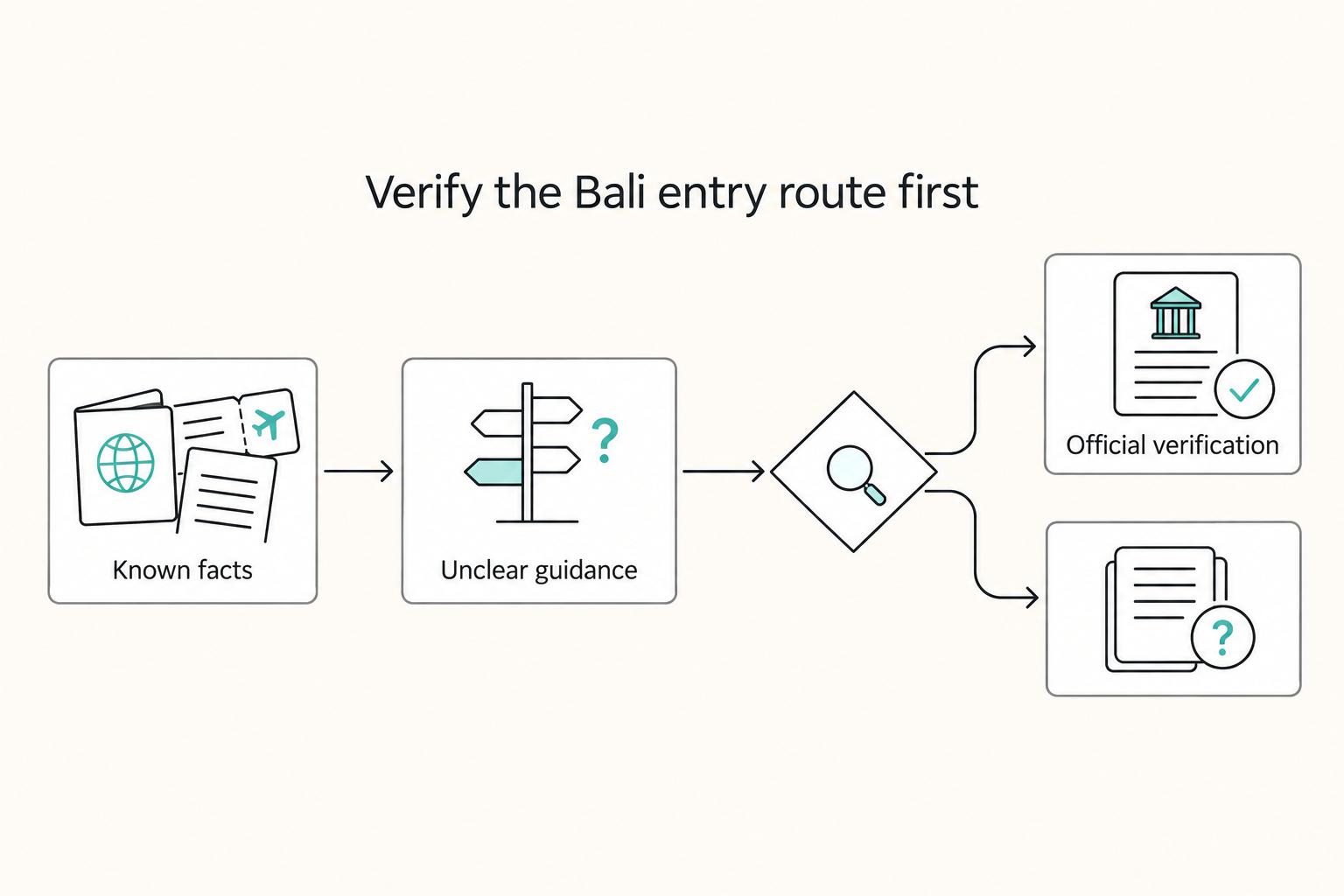
Indonesia B211A Visa for Bali Remote Professionals in 2026
Get the route right before you book anything expensive. Your entry path sets the document load, sponsor coordination, extension pressure, and how much timing risk you carry into the move.

Can Digital Nomads Claim the Home Office Deduction?
Claim the deduction only when your facts and records can carry it. With the home office deduction for digital nomads, the real decision is usually a three-way call: claim it, do not claim it, or pause and get help because your file is not ready.
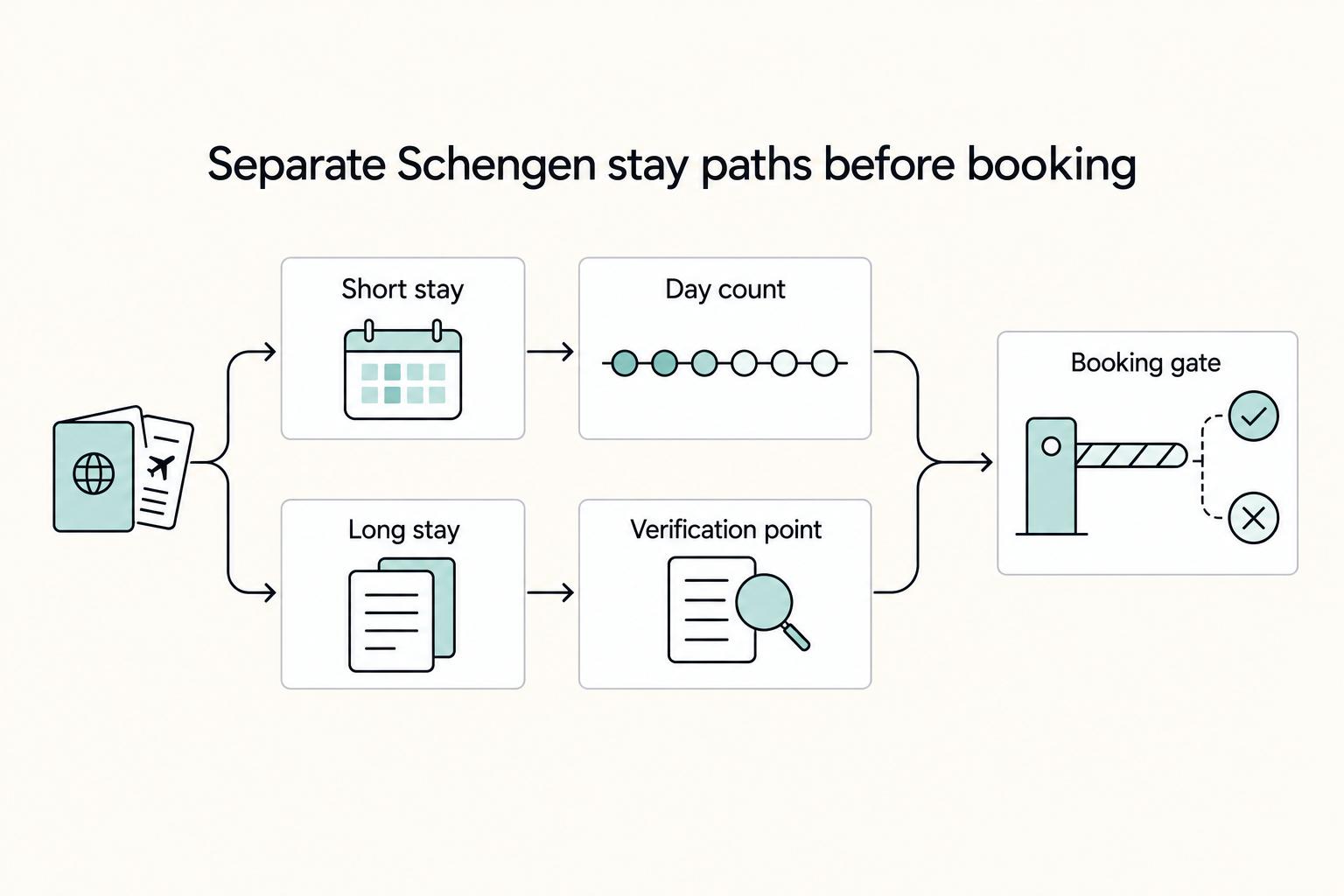
A Guide to the Schengen 90/180 Day Rule
**Treat Schengen short-stay limits as an operating constraint, then run every movement decision through one repeatable system.** If you treat Europe travel like a chain of bookings, you create avoidable risk. Run it like operations, and you protect flexibility, reduce stress, and keep your visa compliance posture clean across the Schengen Area.