
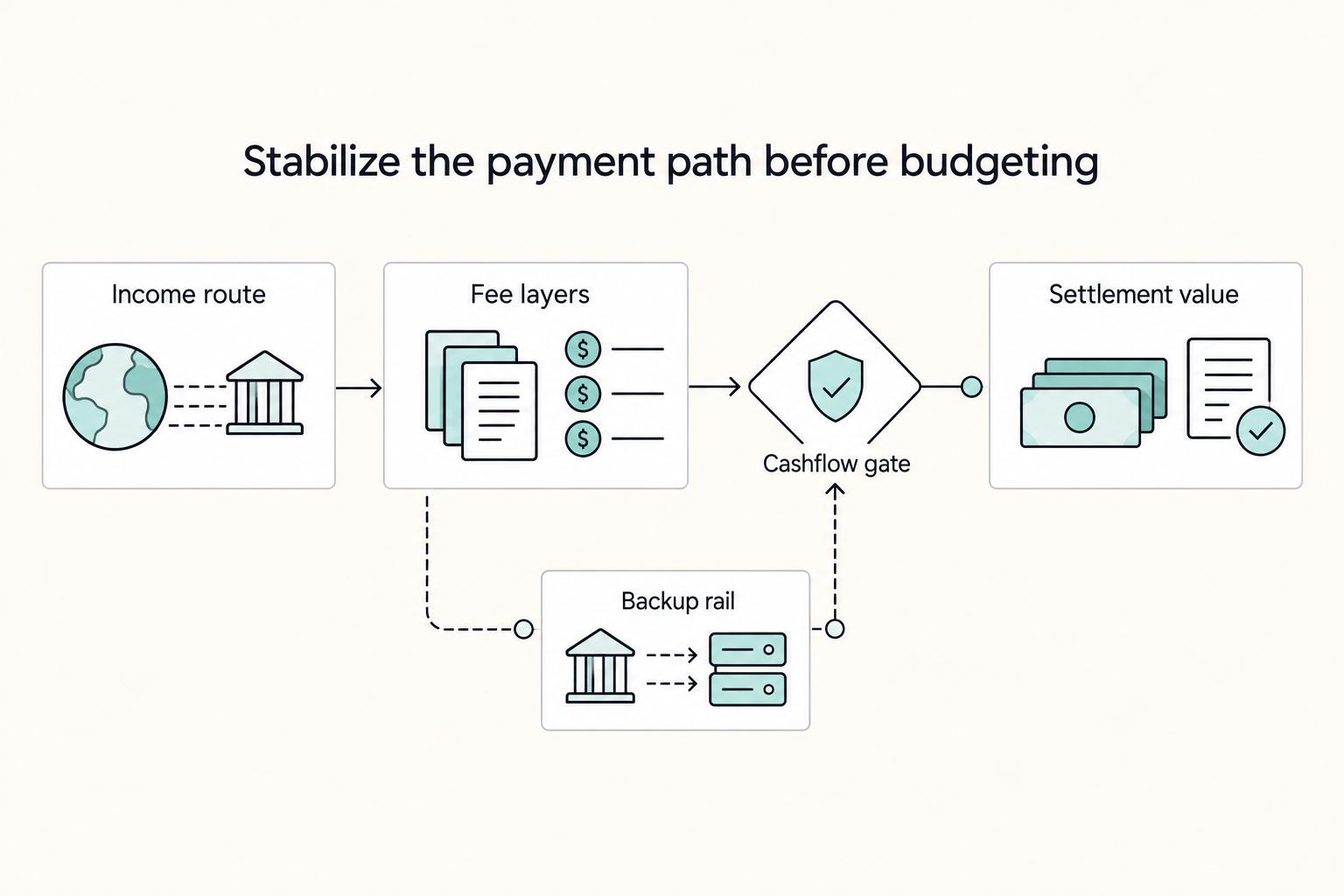
Quick Answer
Map each invoice to the actual receipt, available balance, conversion and withdrawal. Confirm the rules for your income and status before choosing where to hold funds. Fund near-term bills with enough transfer lead time, and keep an eligible, funded backup for independent obligations.
Plan around inflation, currency exposure and access to cash#
For freelancers and small teams spending in Argentina, use current quotes and an accessible payment route to plan the next month. Check whether money arrives when expected, covers the bills in their currencies and remains available when rent, payroll or vendor invoices fall due.
Start by separating three risks that often get mashed together:
- Inflation risk: rising peso prices change the amount needed for local expenses. High inflation and hyperinflation are different descriptions; neither tells you whether a particular payment route works.
- Currency risk: loss of value between getting paid and spending.
- Cashflow risk: delays, holds, or failed payouts that break timing even when revenue exists.
These can hit in the same month, but they are different failures, and they need different controls. A strong quoted rate does not help if funds are held in review. A smooth payout does not help if you leave too much money exposed in the wrong currency right before a bill is due. If you do not separate those risks, you end up fixing the loudest problem instead of the one that can actually make you miss an obligation.
Use a dated price measure rather than a blanket hyperinflation label. INDEC’s national CPI release, published on 10 September 2026, reports a 1.7% monthly increase for August. That index measures a representative household basket, not the USD price of your apartment or your personal spending. A change in peso prices and a change in the exchange rate can pull your dollar budget in different directions.
That distinction matters because exchange-rate chatter can take over planning. A quoted rate can look excellent and still fail in practice if settlement is slow, documentation gets challenged, or access is temporarily restricted. If your income is cross-border, map your cash path in order: invoice, receive, hold, convert, then withdraw. That sequence sounds basic, but it keeps you from reacting to rate headlines when the real problem is a weak transfer route or poor invoice terms. Keep one main route and one backup so a single hold does not turn into a missed obligation.
Before you change providers, terms, or lifestyle assumptions, start with one practical checkpoint. Log a full month of payment events by invoice issue date, client payment timestamp, funds-available timestamp, conversion decision, and withdrawal completion. Pair that with a lean client evidence pack: signed scope, invoice terms, billing currency clause, and proof of payment. If one step lags repeatedly, fix that step first. That is a much better starting point than trying to guess the whole market from someone else's apartment tour or weekly coffee total.
For a city-level companion, read Buenos Aires Digital Nomad Guide for Remote Professionals (2026). For a quick planning step, Try the free invoice generator.
What the current evidence says and what it cannot prove#
The current reporting can frame the market, but on its own it cannot make operational decisions for you. Use it for direction, not certainty.
| Check | Detail |
|---|---|
| Recency | publish date and last update |
| Scope | neighborhood, city, or national |
| Comparability | housing standard, seasonality, and spending category |
| Payment reality | invoice currency, settlement time, fee stack, and withdrawal path |
Build a budget from quotes you can actually use: housing for your dates, utilities, transport, food, insurance and work costs. Record the currency, whether taxes and fees are included, and how long each quote is valid. A national price index helps track broad changes; it cannot replace an available rental quote or the final card charge.
A furnished short-term apartment, a local lease and a hotel can produce different totals in the same neighborhood. Compare the same housing standard, season and payment method. Keep the original quote and the settled charge so you can distinguish a price increase from an FX spread or a provider fee.
Immigration permission, tax residence and FX residence are separate questions. The official digital-nomad residence page describes a stay of up to 180 days, extendable, for eligible foreign nationals working remotely for clients or organizations abroad. It does not establish how your particular income must be reported or received. Before choosing a collection route, confirm your status, the payment’s classification and any required local account or deadline with the receiving bank and an Argentine adviser.
For receipts covered by the resident-to-nonresident service-export rules, BCRA’s consolidated text dated 14 September 2026, sections 2.2.1–2.2.2.1, sets a 20-business-day entry and settlement rule and a conditional exception from conversion for individuals receiving foreign currency into their own local bank accounts. Communication A 8330 removed the former USD 36,000 annual cap. That exception is not permission to leave proceeds abroad indefinitely. Ask the receiving bank to confirm your classification, documents, receipt date and required entry date; FX residence is not simply your visa label.
Before you change invoice terms, payout routes, or conversion habits because of claims on Reddit, Facebook, or YouTube, run this short verification check:
- Confirm recency, including publish date and last update.
- Confirm scope, meaning neighborhood, city, or national.
- Confirm comparability, including housing standard, seasonality, and spending category.
- Confirm payment reality, including invoice currency, settlement time, fee stack, and withdrawal path.
If the date, location, comparable spending basket or payment method is missing, use the claim to frame a question rather than to set your budget. Verify the item that matters: an available housing quote, a current provider quote or a settled transaction. Keep the verification checklist with the cashflow records so a later comparison uses the same assumptions.
Build your cashflow system before you optimize your lifestyle budget#
Start with both your bills and your money path. A lower rent can help, but it does not resolve a payout hold; a reliable payout route does not make an unaffordable budget work. Map the amount and currency needed for upcoming obligations, then check whether your available balances and expected receipts cover them.
Build one ordered cash path before you chase a better rate: contract setup, invoicing path, receiving route, holding currency choice, conversion rule, and withdrawal fallback. Decide in advance how money enters, where it sits, when it converts, and how it becomes spendable. That removes a lot of stress because you are no longer improvising each time a client pays or a bill is due. You are following a plan you have already tested.
Keep two live routes where you can so one failure does not block access to funds. "Live" matters here. A backup you have not verified in weeks is just a theory. Your primary route should handle normal activity with the best balance of speed, traceability, and cost. Your backup should be ready to take over critical obligations if the first route slows down, triggers extra review, or simply behaves differently than expected.
A crypto route adds its own custody, issuer, network, acceptance and conversion risks. A stablecoin balance is not a bank USD balance, and a token transfer is not proof that a landlord or bank has received spendable pesos. If you consider one, confirm that the entire route is lawful and supported for the payment’s purpose, including any service-export requirements. Keep a clear record from invoice through each transfer and final receipt.
Before you rely on any route, run the same three checks. First, confirm capacity limits such as daily card caps, ATM ceilings, and product limits. Second, look at the real cost, meaning the spread versus the mid-market rate, including weekend buffers. Third, map compliance friction, including AML/KYC checks and any required documents. Those are the frictions that tend to surface at the worst time, not the headline fee on a pricing page. In practice, the best-looking route on paper is often the one that breaks under a deadline because the verification burden was ignored.
Store an evidence pack per client as you go: the signed agreement, invoice terms, billing currency, any required tax or export invoice, client payment evidence and your actual receipt. Link later currency conversions and withdrawals to that receipt. Provider review, a short payment and a missing invoice reference require different follow-ups; the file should show which one occurred.
For a practical companion checklist, use How to Get Paid in Multiple Currencies Without Losing Your Shirt. Related: Using Western Union and Crypto to Get Favorable Exchange Rates in Argentina.
Once the collection path is stable, the next control point is the invoice itself, because weak terms can undo an otherwise solid setup.
Set invoice terms that absorb inflation and FX volatility#
Weak invoice language quietly pushes delay risk and FX risk onto you. In high-inflation, policy-uncertain conditions, the invoice is not just a billing form. It is the document that decides who absorbs slippage when payment timing or local pricing moves.
| Term | Detail |
|---|---|
| Billing currency | billing currency and conversion reference point |
| Due date | due date format and timezone |
| Late fee | late-fee trigger and accrual method |
| Proof of payment | reference ID, timestamp, payer entity, and remittance amount |
| Dispute window | a clear objection deadline |
Agree the currency clause before work starts. Name the billing currency and, if another payment currency is allowed, the conversion source, rate timestamp, fee allocation and amount that discharges the invoice. Put the due date and any legally permitted late fee in the agreement. A client’s transfer screenshot shows initiation; your receiving record shows what was credited. Define an objection process without presenting its deadline as a waiver of statutory rights.
Before work starts, lock these five minimum terms:
- Billing currency and conversion reference point.
- Due date format and timezone.
- Late-fee trigger and accrual method.
- Proof of payment fields: reference ID, timestamp, payer entity, and remittance amount.
- Dispute window with a clear objection deadline.
This is less about sounding tough and more about removing gray areas. Most payment disputes in this kind of setup are not dramatic. They are small ambiguities that keep getting reopened: which date controls, which rate applies, whether a screenshot counts as proof, whether the payer entity matches the contract, or whether a short payment is being treated as final. Clear terms stop those questions from eating up time and cashflow.
A shorter payment window or a deposit can reduce exposure, but the client may have an established procurement cycle. Negotiate terms that both parties can execute and reflect them in the agreement and invoice. Changes to fees, currency or payment timing for existing work require the agreed change process; adding text to an invoice does not by itself change the contract.
Good terms reduce ambiguity, but they do not guarantee collection. You still need a receive, hold, convert, and withdraw path that can carry those terms into actual spendable money.
Pick the right receive hold convert withdraw path#
Most failures happen in the seams between steps, not inside one tool. Once the invoice terms are set, execution determines whether cash stays usable when a route stalls. In a high-volatility setting, treat receiving, holding, converting, and withdrawing as separate decisions so no single provider carries all of your rent or payroll exposure.
| Criterion | Detail |
|---|---|
| Speed | time from client payment to spendable funds |
| Total fees | provider charges plus conversion spread against your reference rate |
| Failure handling | process for delayed, returned, or held funds |
| Compliance friction | verification steps before release |
| Audit trail quality | visible status history and exportable records |
Start with coverage, not loyalty. Keep your primary route and a tested backup active at the same time, and decide what each one is for. A local bank transfer might fit one set of obligations. A platform wallet, Western Union, or a crypto route, where supported and compliant, might fit another. What matters is not having the most options on paper. It is knowing which path you trust for each type of payment before a deadline is close. If you only decide under pressure, you are really just discovering the route for the first time when you can least afford surprises.
Evaluate each route the same way so your comparison stays honest:
- Speed: time from client payment to spendable funds.
- Total fees: provider charges plus conversion spread against your reference rate.
- Failure handling: process for delayed, returned, or held funds.
- Compliance friction: verification steps before release.
- Audit trail quality: visible status history and exportable records.
That last point is easy to underrate until something goes wrong. If the status history is vague or hard to export, you feel it immediately when a client says they paid, a provider says they are reviewing, and you are trying to prove which part of the chain is stuck. A route with average pricing and a clean trail can be more valuable than a slightly cheaper route that goes opaque under stress.
Separate the arrival of funds from a discretionary conversion decision, while meeting any mandatory receipt or FX deadline. For income subject to Argentine service-export rules, the relevant clock can start when funds are received abroad, before your local bank credits them. Confirm that clock and the receiving route before planning to hold funds overseas. Once the permitted balance is available, schedule conversions against obligations.
Check account access, beneficiary details, supported payment purpose and limits each week. Use a small legitimate transfer to test a newly configured or changed route when allowed and useful; a weekly transfer through every route adds unnecessary fees. Log initiation and availability times, net proceeds and status flags. Before a critical deadline, leave enough time for review and confirm that the backup has both access and available funding.
Once you trust the path, the conversion question gets simpler, because you are no longer confusing exchange rates with transfer reliability.
Decide when to hold USD and when to convert in Argentina#
A loud exchange rate is not a conversion policy. In Argentina, the better rule is to match conversion timing to upcoming obligations and settlement reliability, not to whichever rate dominates the conversation that day.
Compare the rate for the transaction you can execute, not a blue-dollar headline. Record the destination currency, delivered amount, fees and quote expiry for your authorized bank or provider route. Card settlement, cash withdrawal and an international transfer can have different pricing and availability. An attractive informal quote does not establish a lawful, traceable route for client income.
Use a liability-first rule:
- After required receipt and FX steps, fund near-term peso bills plus a chosen timing buffer. Keep other balances in currencies that match later obligations, subject to your account permissions and risk tolerance.
- If upcoming liabilities are external, account for their currencies and transfer lead times rather than assuming every dollar balance is immediately spendable.
- Review scheduled conversions at fixed checkpoints and when a bill, receipt deadline or route changes.
The local payment calendar and the regulatory calendar both matter. A peso bill due next week may require conversion today because the route takes several days; a service-export receipt may require an earlier local entry even if you do not need pesos yet. Keep those dates separate. A USD client and a digital-nomad label do not, by themselves, determine your FX obligations.
Track each conversion in one log:
- Decision timestamp.
- Upcoming ARS obligations and due dates.
- Planned amount versus settled amount.
- Route used and final credited balance.
- Variance note if settlement or timing differs from plan.
A simple log does more than create paperwork. It lets you spot whether losses are coming from rate choice, timing drift, route friction, or partial settlement. Without that, every bad outcome gets blamed on "Argentina" in general, which is not practical. With the log, you can see whether the real issue was converting too early, too late, in the wrong amount, or through an unreliable path.
Never treat a single "best rate" claim as enough on its own. Confirm the execution path, timing, and settlement reliability first. Once conversion decisions are separated from transfer reliability, the next risk is operational: valid payments getting stuck in review or bouncing back when you least expect it.
Compare net pesos and availability: a worked example#
Suppose a permitted USD 1,000 receipt is available and you need ARS 1,200,000 next week. These are hypothetical quotes, not current market rates. Route A charges USD 10 before conversion, quotes ARS 1,300 per USD and takes a further ARS 5,000 withdrawal fee: (1,000 − 10) × 1,300 − 5,000 = ARS 1,282,000 delivered. Route B charges USD 20, quotes ARS 1,320 and has no additional withdrawal fee: (1,000 − 20) × 1,320 = ARS 1,293,600 delivered.
Route B delivers ARS 11,600 more, but that advantage does not cover a missed bill if it settles after the due date. Record each quote’s expiry, expected availability and whether all fees are included; choose an eligible route that meets the deadline. Match the original USD receipt to the invoice once. The later conversion and withdrawal change where and in what currency the money sits; they are not additional client receipts.
Prevent holds chargebacks and payout breaks before they happen#
Assume valid payments can still be reviewed, delayed, or reversed. The point is not to eliminate every exception. It is to make sure one review request or failed payout does not jam the entire month.
Use accurate legal names and account ownership details, and document valid differences such as an authorized payer or trading name. Do not force every name to match when the underlying parties differ. Keep invoices, payment references and appropriate payout-account documents in the review pack; share sensitive documents only through the provider’s verified channel.
Use these controls each invoice cycle:
- Confirm the agreed billing trigger before invoicing: a deposit, scheduled retainer, milestone or accepted delivery. Retain acceptance evidence where the agreement requires it.
- Archive communication tied to each invoice ID, including approvals, change requests, and delivery confirmation.
- Maintain an exception log for failed, held, or reversed transfers with
owner,next_action,deadline,current_status, andprovider_reference. - Check current status and whether funds have returned before retrying. Follow the provider’s retry/reference rules, link a new attempt to the original, and guard against duplicate payment.
The exception log matters because it turns vague concern into ownership. If a transfer is held, you want to know who is handling it, what the next action is, when it must happen, and which provider reference supports the case. Without that, the same issue gets checked by everyone and advanced by no one. The log also helps you spot patterns. One isolated delay is annoying. Repeated failures on the same route or with the same client are an operational signal.
Be especially careful with retries. Panic retries create confusion fast, and duplicate attempts can leave you unsure which transfer is active, which one was returned, and which proof belongs to which payment. Slow down, confirm the live status, and then act. That small pause usually saves more time than it costs.
Run a weekly exception review. Keep unresolved items open with an owner, next action and dated escalation; mark an item resolved only when there is evidence of the outcome. If a route repeatedly fails, use the backup for separate obligations or future receipts where permitted. Funds already held cannot be moved merely by selecting another provider.
These controls only work if you run them on a schedule. Without a cadence, good habits turn into notes you meant to follow.
Run a weekly operating cadence that keeps you solvent#
A weekly finance review is what turns all of this from theory into protection. Without a fixed cadence, delays and exceptions stay invisible until they collide with rent, payroll, or a vendor deadline.
Use the same short checklist each week:
- Open invoices by aging bucket and payer.
- Failed or held transfers with current status and next action.
- Near-term currency exposure.
- Upcoming obligations by due date, currency, and amount.
- Backup route readiness, including account access and beneficiary details.
That checklist works because it keeps timing, currency, and route risk on one page. You are not looking for elegance. You are checking whether the next two weeks are covered and whether any weak point needs action before it becomes urgent. A short review done consistently beats a perfect review done only after a problem appears.
Match the receipt to its invoice allocation and receiving record, allowing for partial payments, documented fees and authorized payer differences. Verify the available balance separately from the client’s payment notification. Investigate unexplained discrepancies before using the affected funds; an unrelated, reconciled balance can still fund bills. Keep conversion and withdrawal references linked so later account transfers are not counted as new client income.
Treat red flags as decisions, not background noise. Repeated late payment, rising exceptions, or route degradation should trigger term changes or repricing, not just another reminder email. If route quality drops, move critical obligations through the backup until settlement behavior is stable. If a client repeatedly pays in a way that creates friction against your terms, that is not just an admin nuisance. It is part of the risk profile of the account.
Review terms and route performance each month. Propose changes for future work or use the existing agreement’s amendment process. Also check whether a change in your stay, activity or account status affects the receiving route. Record the specific unresolved question, the bank or adviser handling it and its decision date. Resolve required eligibility or receipt questions before using the affected route.
Use the plan in your next invoice cycle#
Mixed signals are normal in this market, so protection comes from rules you can execute every week. You will not solve this with one budget number or one exchange-rate opinion. The durable approach is clear invoice terms, planned conversion windows, backup payout paths, and verification before money moves onward.
Use current official price data for context and the applicable FX rules for the receipt path. Old accounts of recessions, capital controls or cheap-dollar budgets do not determine today’s eligibility or costs. Your operating record should show what is due, where money is available and which unresolved step could prevent payment.
Clear agreed terms help reconcile a short or late payment. A documented receiving route helps answer a provider’s review request. A funded backup can cover an independent bill when one route stalls. Keep these controls tied to actual amounts and dates rather than treating a complete checklist as a guarantee of access.
Next step: build a one-page checklist and use it in your next invoice cycle before you change housing, tax posture, or lifestyle spend.
- Contract checks: payment window, late-fee clause, currency clause.
- Collection checks: invoice aging, overdue follow-ups, dispute status.
- Cash checks: due dates and currencies, available balances, required receipt deadlines and planned conversion amount.
- Transfer checks: primary status, backup readiness, unresolved holds.
- Proof checks: invoice allocation, authorized payer, receipt timestamp, gross and net amounts, fees and transfer references reconciled; valid differences explained.
If a delay repeats, identify the failing step and change future routing or terms through the agreed process. Keep the existing held transfer with its provider case owner until it is released or returned. Start with the next two weeks of bills, then map the receipts and permitted routes that will fund them.
Frequently Asked Questions
Is Argentina still affordable for a digital nomad paid in USD?
Build a budget from current quotes for your dates, neighborhood and housing standard. Record the currency and compare it with what actually settles after FX and payment fees. INDEC’s CPI is a broad price measure, not a nomad’s USD budget. Use your own spending log and available balances to check affordability rather than relying on an unsourced rent range or monthly total.
What payment mistake creates the most avoidable cashflow risk?
Counting a client’s payment notification as spendable cash can leave a bill unfunded. Track initiation, receipt, provider availability, conversion and withdrawal separately. A dated record shows whether the problem is unpaid work, a review hold, fees or a delayed transfer. Keep enough accessible funding for near-term obligations and confirm that any backup is allowed and funded.
How often should I review rates fees and payout routes in Argentina?
Check upcoming bills, open invoices, held transfers and backup access weekly; review route performance and agreed terms monthly. Recheck a route when its fees, limits, eligibility or settlement behavior change. Test a new or materially changed route with a small legitimate transfer where useful, rather than paying for unnecessary weekly test transfers.
Should I hold USD or convert quickly to cover local expenses?
First meet any required receipt and FX steps. Then match available currencies to upcoming bills and transfer lead times, with a timing buffer you can afford. Holding USD abroad is not a universal option: service-export rules may require funds to enter Argentina even when an eligible individual can retain foreign currency locally. Confirm the treatment of your income before setting the conversion schedule.
Do Western Union and crypto solve the same problem or different problems?
They have different eligibility, custody, acceptance and withdrawal requirements. Confirm that a remittance product supports your payment purpose; a personal-transfer service is not automatically a business collection route. Crypto adds issuer or token, custody and network risks and does not remove applicable receipt or reporting duties. Compare the entire permitted route through to spendable funds, including fees, status records and failure handling.
What documents should I keep as proof if a payment is delayed or disputed?
Keep the agreement, applicable acceptance evidence, invoice, client transfer details, actual receiving record and provider references. Link conversion and withdrawal records to the receipt. Record valid payer differences and explain partial payments or fees. Investigate the affected amount or route when evidence is missing; do not automatically freeze unrelated reconciled funds.
Try a related tool
Researched and edited by the Gruv editorial team. Gruv builds cross-border billing, payouts, and finance-operations software for global businesses.
Sources
Educational content only. Not legal, tax, or financial advice.
Related Posts

Buenos Aires Digital Nomad Guide for Remote Professionals (2026)
You can make Buenos Aires work well if you treat the move as a verification phase first, not a lifestyle commitment. How well it works depends less on the city's reputation than on your execution. Confirm your entry path, keep your documents ready, and make sure your money access can survive a bad week.
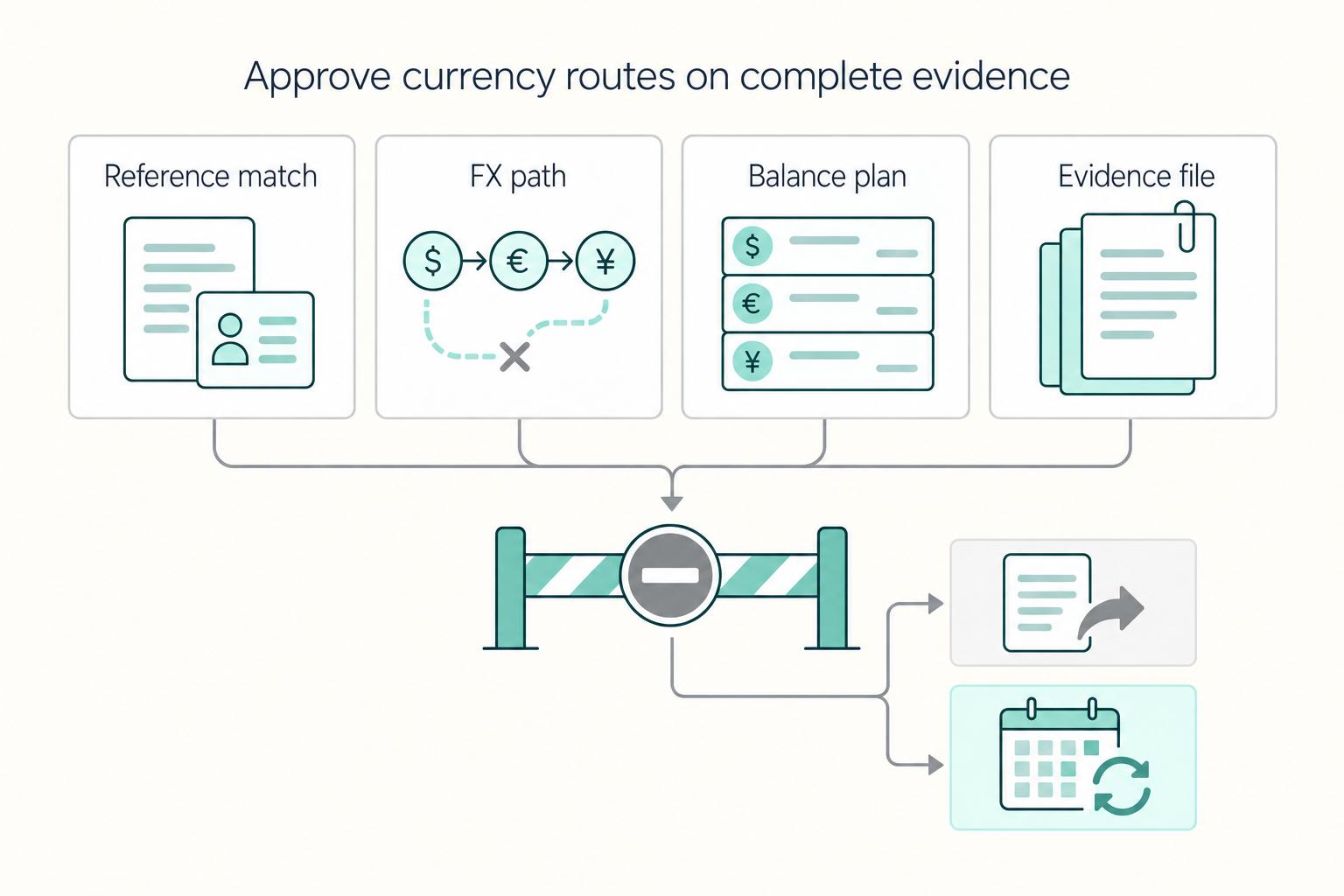
How to Get Paid in Multiple Currencies Without Forced FX
To get paid in multiple currencies, first check whether your account can receive and hold the client’s currency. Where that route is supported, separate receipt from conversion so you can choose when to convert for expenses or home-currency cash needs. Holding currency also exposes you to exchange-rate changes and the account’s protection and access terms.

Using Western Union and Crypto to Get Favorable Exchange Rates in Argentina
For recurring freelance income, compare the pesos you can actually use after fees, the time needed to reach them, and the payment trail. First establish whether you are spending foreign savings as a visitor or collecting service-export income as an Argentine resident. Those are different transactions with different routing obligations.