

Quick Answer
Start with payment purpose and residency. Argentine resident service exporters must follow BCRA entry rules; qualifying individuals may retain proceeds in a local foreign-currency account without compulsory conversion. For permitted routes, compare actual net ARS and access time after every fee. Cards pay merchants, while Western Union and digital-asset payouts require separate eligibility and settlement checks.
Why most Argentina exchange advice breaks for freelancers#
For recurring freelance income, compare the pesos you can actually use after fees, the time needed to reach them, and the payment trail. First establish whether you are spending foreign savings as a visitor or collecting service-export income as an Argentine resident. Those are different transactions with different routing obligations.
That is why so much tourist advice falls short. Tourist tips are usually written for short stays, one-off cash needs, and a simple question: where do I get the best deal today? Freelancer decisions have to survive invoice cycles, rent dates, recurring bills, and reconciliation. A route can show a better quote and still be the wrong choice if payout is delayed, access is blocked, or the paperwork is too thin to defend later.
Bank transfers, remittances, card purchases and digital-asset sales have different failure points: document review, cash availability, merchant acceptance, network selection and withdrawal holds. A better quoted rate can lose its advantage before the funds become spendable.
For residents providing services to nonresidents, BCRA section2.2 generally requires entry and, unless an exception applies, conversion through the foreign-exchange market within20 business days of receipt locally or abroad, including credit to an overseas account. Arrange the bank documentation before collecting; a provider receipt alone does not establish compliance.
Before you move money, use the same sequence every time.
- Classify the funds: visitor savings, family remittance or resident service-export receipt; confirm the permitted route and any deadline.
- Pick one primary rail and one backup rail before you initiate anything.
- Run a small verification transfer first, then measure the actual ARS received.
- Save evidence immediately: timestamp, receipt or reference ID, quoted amount, final amount, and where funds became usable.
Qualifying natural persons can bring service-export proceeds into their own foreign-currency account at an Argentine financial institution without mandatory conversion, subject to the rule’s conditions, including fiscal neutrality. Communication A8330 removed the former USD36000 annual ceiling in September2025. Entry requirements and taxes remain; keeping dollars is separate from later choosing how to fund peso expenses.
For recurring income, a slightly weaker quote is often the better choice if settlement is traceable from start to finish. This guide follows that logic: classify the path, compare the real outcome, choose the route by invoice, execute with checks, and log the result while the details are still fresh. For a deeper inflation-specific lens, read Handling Hyperinflation: A Financial Guide for Nomads in Argentina.
Define the four exchange paths before you choose#
Name the path first, or the comparison goes wrong. Argentina can show multiple exchange rates at the same time, including official and alternative rates, and the result changes depending on how you move the money. If you skip that classification step, you end up comparing things that are solving different jobs.
Use this map to classify options, not to rank them:
| Path | What it is | Risk framing |
|---|---|---|
| 1. Regulated conversion | Authorized bank/exchange route; resident service exports may qualify for entry to a local foreign-currency account | Entry compliance and later peso conversion are separate decisions |
| 2. Card-led spend | Credit cards and debit cards used directly for purchases | Card-based route with a different use case than cash conversion |
| 3. Transfer rail | Western Union sender-to-recipient transfer flow | Confirm corridor, payout method and permitted purpose; not automatic service-export compliance |
| 4. Digital-asset route | Cryptocurrency or stablecoin route into ARS | Verify provider registration, chain, custody and legal treatment of the underlying receipt |
| Separate profile: street cash | Informal in-person cash exchange, including areas like Calle Florida | Separate risk profile, not just another rate line |
The big mistake is treating every quote like it belongs on one simple price list. It does not. Card-led spend solves a different problem than cash conversion. It helps you pay merchants directly and can reduce how much cash you need to carry, but it is not the same thing as converting a larger payment into ARS for broader use. Street cash is not just another rate line either, because it changes both the handoff risk and the quality of the record you keep.
That distinction matters operationally. If you do not separate merchant spending from cash access, or regulated conversion from informal handoff, you will make bad comparisons from the start. A quote that looks strong in a screenshot may still be the wrong tool if the path is slow, hard to document, or exposed to avoidable risk at pickup.
Once the payment purpose and lawful route are settled, compare access, documentation and costs. Save the quote timestamp, payout method and final amount. For holding multiple currencies, see How to Get Paid in Multiple Currencies Without Forced FX.
Compare Western Union, crypto, banks, cards, and street cash on what actually matters#
Compare the same sender outlay and destination need. A card purchase pays a merchant; it does not create a peso balance available for rent or payroll.
Because multiple rate lines and channels can exist in parallel, use the same scorecard each time:
| Channel | Net received in ARS | Time to usable funds | Reversal or hold risk | Documentation quality | Personal safety |
|---|---|---|---|---|---|
| Banks and authorized exchange houses | Compare optional peso conversion separately from foreign-currency entry | Bank document review and credit must complete | Incorrect purpose or missing documents can delay credit | Invoice, transfer advice, entry records and account statement | Use authorized channels |
| Western Union | Use the executable corridor quote with fees and payout method | Track MTCN; confirm cash availability or actual account credit | Verification, limits or payout access can delay use | Sender receipt, MTCN and recipient payout record | Formal agent or supported account payout |
| Credit cards and debit cards | Compare merchant charge outcome to other options | Usually usable at point of sale when accepted | Card-side checks can interrupt a payment | Statements are typically easy to retain | Reduces need to carry cash for routine spend |
| Street cash, including blue dollar areas | Headline quote can differ from final outcome | Timing depends on completing an in-person exchange | Counterparty risk is concentrated in the handoff | Records are often limited | Highest caution needed during in-person exchange |
| Cryptocurrency or stablecoin | Verify the full path into ARS before judging net result | Timing depends on each step in the path | Access can fail at on-ramp or off-ramp points | Record quality depends on platform and your process | Safety depends on where and how conversion completes |
Use the table like a job sheet, not a ranking. A route can be strong on one criterion and weak on another. If a payment needs to cover near-term obligations, time to usable funds matters more than squeezing out a slightly better quote. If a payment might need explaining later, documentation quality moves to the top. If you are trying to reduce personal risk, the handoff itself becomes part of the economics.
Western Union’s Argentine receiving page lists cash, bank-account and Pago Fácil wallet options. Bank payouts require the recipient’s full name, CUIL/CUIT/CDI, bank and CBU, and contact number; wallet payouts use an alias or CVU. Availability depends on the sending corridor. Confirm that the product accepts the actual payment purpose before directing a client to it; never describe work income as family support to fit a remittance form.
For an assumed USD1000 total outlay, compare two permitted quotes: route A deducts USD10 and converts USD990 at ARS1200, yielding ARS1188000; route B deducts USD25 and converts USD975 at ARS1220, yielding ARS1189500. B’s headline rate is higher, but its net advantage is only ARS1500. These are illustrative numbers, not live rates. If B takes longer than your rent deadline, that small difference may not justify using it.
Use decision rules to pick the route for each invoice#
Do not look for one permanent winner. The right route can change with timing, amount, record requirements, and whether you need cash or simply need to spend. What should stay fixed is the way you decide.
| Decision factor | What to check | Default action |
|---|---|---|
| Urgency | Shortest verified time to usable ARS from your own recent transfers | Use the channel with the fastest verified settlement time |
| Amount at risk | Permitted purpose, account eligibility and reliable payout capacity | Choose a compliant documented route; do not split to evade checks or deadlines |
| Record requirement | Whether the payment may be reviewed later | Require a receipt or reference ID before relying on the path |
| Handoff exposure | Authorization, premises, note verification and receipt | Use an authorized counterparty; abandon unclear terms |
| Continuity | Whether one failure would freeze your week | Keep one fallback active, such as card spend plus a secondary cash option |
Predictability should usually outrank headline rate when an invoice has to cover near-term obligations. That does not mean ignoring the quote. It means putting the quote in its proper place, behind settlement certainty and your ability to explain what happened later.
Run this routing check every time:
- Urgency: Use the channel with the shortest verified time to usable ARS from your own recent transfers. Your log is more useful than a posted estimate.
- Amount at risk: Confirm account eligibility and permitted purpose before scaling. Stage operationally only where allowed; do not split transfers to avoid limits, verification or entry obligations.
- Record requirement: If the payment may be reviewed later, require a receipt or reference ID before you rely on that path.
- Handoff exposure: Use an authorized counterparty, confirm the final amount and retain the receipt. Pressure to meet an informal street dealer is a reason to choose another route.
- Continuity: Keep one fallback active, such as card spend plus a secondary cash option, so a single failure does not freeze your week.
The working question is not "what was the posted quote?" It is "did the funds become usable on time, and can I trace the path from start to finish?" That shift sounds small, but it changes behavior. It pushes you to measure actual results instead of trusting public chatter, and it keeps you from scaling a route before you have seen it work under your own conditions.
Log each transfer with the invoice ID, rail, timestamp, expected receive window, actual receive time, and final ARS received. Once you do that for even a short period, the noise starts to clear. Some options that looked strong in theory will reveal slow settlement or weak proof. Others that looked slightly less attractive on rate will prove more dependable cycle after cycle.
For a Western Union cash payout, check the MTCN status and the selected agent’s hours and ability to pay the amount. Ready for pickup is different from cash in hand. For an account payout, reconcile actual credit. Additional verification can depend on amount, transaction type and location; one successful small transfer does not establish an unrestricted limit.
Visa describes a preferential foreign-tourist rate for eligible purchases in Argentina using Visa credit, debit or prepaid cards issued abroad, in force since December2022. Its historical percentage example is not today’s spread. Compare the settled foreign-currency debit and issuer fees against the ARS merchant price; ask for an ARS charge and review any offered dynamic currency conversion separately.
For a resident freelancer, fund urgent peso expenses from already accessible money while the export receipt follows its required route. For a visitor, a supported card can cover accepted merchant purchases while a separately verified cash or account option covers expenses that require pesos.
If a transfer is pending, use existing fallback funds for immediate spending. Do not initiate a replacement for the same receipt until the original’s status is resolved, cancelled or refunded; otherwise both may complete. For invoice inputs, the free invoice generator can help, but it does not replace a required Argentine tax invoice.
These decision rules work much better if you prepare the rails before you arrive. Setup is what turns a good rule into something you can actually use under pressure.
Set up your money flow before you land in Buenos Aires#
Do the setup before you travel. Arrival day is the worst time to discover that a backup card fails, account details do not match, or a provider wants an extra check before releasing access.
Build the chain in order: eligible receiving account, permitted payment purpose, conversion or foreign-currency entry, and a backup spending method. A visitor may lack the Argentine tax identifier or account needed for a domestic account payout; check access before promising that method. Compare an authorized arrival-cash option’s hours and full fees rather than assuming an airport location is always worse.
Use this pre-departure check:
- Confirm the account and corridor accept your actual payment purpose; residents arrange service-export documentation before the receipt starts an entry deadline.
- Verify that account details match across rails, including name, ID, and access.
- Test your backup spend method with a small real transaction.
- Write down one emergency cash option and its access requirements before you fly.
- Save support contacts and recovery steps offline.
Be clear about what each test actually proves. A receive-rail test only shows that the payment can arrive. A backup card test only shows that you can still spend if a transfer slows down. Neither proves the full chain will work. That is why the steps should be tested separately and logged separately. If you only test the first leg, you can still get stuck at the point where you need ARS.
Set your invoice and conversion rules before you send invoices so you are not improvising under pressure. That is especially important when you first land, because fatigue and urgency make people accept weaker evidence, weaker terms, and weaker backup plans than they normally would. A good setup cuts down those forced decisions.
Then use one evidence template for every transfer: confirmation, FX snapshot at decision time, receipt or reference ID, final ARS received, and where funds became usable. That gives you a consistent record from the beginning and makes later reconciliation much easier.
If you do this work before landing in Buenos Aires, physical cash becomes an exception instead of the center of the plan. Related: Buenos Aires Digital Nomad Guide for Remote Professionals (2026).
Execute cash exchange safely when you must use physical currency#
If you have to use physical cash, treat the handoff as the main risk, because it is. A strong informal quote does not help if the amount changes at the last moment, the terms get vague, or you walk away unable to prove what happened.
Use an authorized bank or exchange house for physical-currency conversion. Informal street dealers expose you to counterfeit notes, theft and weak recourse; a handwritten log does not authorize an otherwise impermissible exchange. A hotel’s convenient location does not establish that it is authorized to exchange money.
Use a simple pre-handoff check:
- Confirm the exact amount you will give and receive.
- Recalculate the final ARS total yourself before completing the exchange.
- Verify what you received immediately and log the transaction details.
Small mistakes compound quickly in cash because there is usually less paperwork to fix them later. In practice, the danger point is the moment you stop checking because the quote sounds good. Do the math yourself. Confirm the amount in hand before you leave. Log the result while it is still fresh. If the amount, timing, or terms become vague, stop and use a more trackable channel instead.
Ask an authorized counterparty whether note denominations or condition change its quoted terms, then compare the total. Do not assume that a larger bill automatically earns a better rate or that a hotel matches an informal quote. Keep the transaction receipt and count the money before leaving.
Keep records that survive disputes, taxes, and compliance checks#
Records are part of the conversion, not paperwork you clean up later. If you cannot explain a payment path after the fact, you did not really control it when it happened.
Use linked entries for invoice, receipt, conversion and spending. An invoice can be paid in installments; one receipt can be converted in several parts. Give each event its own reference and allocate amounts back to the invoice rather than forcing every invoice into exactly one conversion row.
Use this minimum record set each time:
- Invoice ID and client name
- Origin currency and amount, for example USD or EUR
- Channel used, for example Western Union, bank, or crypto off-ramp
- Conversion timestamp and the timestamp when funds became usable
- Receipt or reference ID
- Final ARS received
- Short note on where funds landed, for example bank account, cash, or card balance
- Quoted rate and all sender, transfer, network, withdrawal and recipient fees; state their currencies
- For digital assets: token, chain, units, transaction hash, exchange execution and bank withdrawal references
Reconcile gross client receipts, fees, retained foreign currency and peso credits. An assumed USD1000 invoice received in two payments of USD600 and USD400 is fully paid if those are gross credited receipts. If a USD10 freelancer-borne fee is deducted from the first receipt, accessible dollars total USD990; the fee is an expense, not automatically another USD10 owed by the client. Investigate discrepancies promptly while still meeting any statutory entry or filing deadline.
Keep personal and business flows separate from the start, using separate labels, folders, and, where possible, separate destination accounts or wallets. That one habit reduces confusion later more than most people expect. It also makes it easier to answer basic questions from an accountant, a provider, or a client without digging through unrelated personal activity.
For a digital-asset route, check the legal entity against the CNV PSAV register, then verify deposit token and network, trading costs, withdrawal limits and the destination account. Registration is not a guarantee against loss. Stablecoins have issuer and depegging risk; a blockchain transaction hash proves a network transfer, not final pesos in your bank. Obtain transaction-specific advice before using crypto for resident service-export receipts; do not treat an off-ramp as a presumed exception to BCRA entry rules.
That same restraint applies to compliance data. Keep what you need for KYC/AML review and avoid oversharing unrelated personal data. Good records are not the same thing as handing over everything you can think of. The goal is to keep enough proof to show the route, the timing, and the amount, without creating new problems through sloppy document handling.
A hypothetical conversion record might show invoice ARG-014, USD1000 gross receipt, USD10 fee, USD990 retained, USD400 later converted at an assumed ARS1200 per dollar, ARS480000 credited and USD590 still held. Keep the entry and conversion records linked; ARS480000 is cash generated by conversion, not a second client sale. Tax reporting values may use a prescribed rate rather than this cash conversion rate.
Red flags that turn a good rate into a bad outcome#
Bad outcomes rarely start with the rate. They usually start with vagueness, time pressure, or missing proof. By the time the spread looks disappointing, the real mistake has already happened upstream.
A quote is only good if settlement is provable from start to finish. If you cannot show the counterparty, settlement time, reference ID, and final ARS received, treat the result as bad no matter how attractive the spread looked. Use a hard gate: no receipt, no reference ID, no exchange.
Use this screen before converting:
- The quote looks attractive, but the payout path or timing stays vague
- Pickup or access terms are unclear until after funds are handed over
- You are being pushed to decide quickly in Buenos Aires without time to verify
- The quote depends on old blue dollar snapshots instead of executable current terms
- Your ledger cannot tie the invoice amount, conversion event, and final ARS together
A second red flag is repeated ad hoc decision-making. If every payment turns into a fresh guess, you do not have a process, you have exposure. Use tested fallback channels for small urgent needs, and require full documentation before larger conversions. A route can still be useful in a narrow role without becoming your default.
Explain the trail using invoice amount, gross receipt, fee allocation, conversion amount, remaining balance and final destination. If the transfer provider reports completion but the receiving account shows no credit, retrieve the payout reference and trace it with both providers before repeating the transaction.
Build a repeatable system that protects rate and cashflow#
The durable edge here is not chasing every better quote. It is making the same good decision under changing conditions.
Choose a primary permitted receiving route and a tested fallback spending method. Keep resident export entry, optional peso conversion and merchant spending distinct. Fund near-term obligations from cleared balances so a delayed receipt does not force an improvised exchange.
Apply one decision card each payment cycle:
- Objective first: choose the priority for this conversion, speed, net value, or traceability
- Entry check: confirm route availability now, not from old assumptions
- Evidence check: capture the timestamp, quote snapshot, receipt or reference, and final amount received
- Exception rule: if you need a higher-risk path, cap the amount and reconcile the same day
- Recovery rule: investigate missing records or credits and use existing fallback funds; preserve entry/reporting deadlines and resolve the original before any replacement.
Then review the results on a fixed cadence. When markets are noisy and terminology is inconsistent, observed outcomes beat confident claims. A common failure mode is drift: an old default stays in place after conditions changed. Prevent that by comparing planned versus actual time to usable funds, total received, and missing documentation count, and change one variable at a time so cause and effect stay visible.
If you handle multiple clients, standardize invoice intake, conversion logging, and reconciliation templates, then reuse them every cycle. That reduces mental load and makes weak spots easier to spot. If a teammate cannot reconstruct a conversion quickly from your log, simplify the process until they can. If you cannot explain a route clearly to yourself, it is probably too fragile to trust with important money.
The goal is not perfection. It is steady, explainable execution. Once you have that, rate decisions become easier because they sit inside a process that protects both cashflow and proof.
Frequently Asked Questions
Is the blue dollar still worth using in 2026 for freelancers?
Do not make informal blue-dollar exchange the default for freelance receipts. Resident service-export obligations come first, including any eligible foreign-currency entry exception. Visitors should compare authorized conversion, supported remittances and eligible foreign-issued card spending using current executable terms; an old blue quote cannot establish today’s net benefit.
What is the safest option in Argentina between official exchange houses, banks, and street exchange?
Prefer an authorized bank or exchange house over an informal street dealer. Verify the counterparty’s authorization, live quote, fees and receipt. Authorization reduces some counterparty and documentation risks; it does not guarantee a particular exchange rate or immediate access.
Should I choose Western Union or cryptocurrency for faster access to ARS?
There is no universal speed winner. Choose the route with the shortest verified time to usable funds in your own recent logs. Your actual history matters more than someone else's one-time success.
Do larger USD bills usually get better exchange treatment in Buenos Aires?
There is no universal denomination premium. Ask the authorized counterparty for its exact terms for the notes you hold, including condition and denomination, and compare the final ARS total before exchanging.
Can hotels reliably match blue dollar rates?
Do not assume a hotel matches an informal rate or is authorized to exchange currency. Establish authorization first, then ask for the full live quote and a receipt.
When should I use credit cards or debit cards instead of converting more cash?
Use cards for accepted merchant purchases when the settled cost and issuer fees are acceptable. Eligible Visa cards issued abroad have a documented foreign-tourist rate mechanism; this does not make card spending a resident freelancer’s export-entry route or a way to obtain a spendable ARS balance.
What proof should I keep for each conversion to handle compliance or accounting reviews?
Keep linked invoice, gross receipt, fees, transfer references, conversion timestamp/rate/amount, final ARS credit and any remaining foreign-currency or token balance. Add bank entry records and required tax invoices for resident service exports; ARCA’s monotributo guidance requires a type E invoice for qualifying exports.
Try a related tool
Researched and edited by the Gruv editorial team. Gruv builds cross-border billing, payouts, and finance-operations software for global businesses.
Sources
Includes 3 external sources outside the trusted-domain allowlist.
- afip.gob.ar/monotributo/exportacion-serviciostrusted
- argentina.gob.ar/cnv/registro-de-proveedores-de-servicios-de-...trusted
- argentina.gob.ar/node/356934trusted
- bcra.gob.ar/archivos/Pdfs/Texord/t-excbio.pdftrusted
- bcra.gob.ar/archivos/Pdfs/comytexord/A8330.pdftrusted
- visa.com.ar/support/consumer/travel-support/tipo-de-camb...external
- visa.com.ar/viaja-con-visa/dynamic-currency-conversion.htmlexternal
- westernunion.com/ar/es/receive-money.htmlexternal
Educational content only. Not legal, tax, or financial advice.
Related Posts
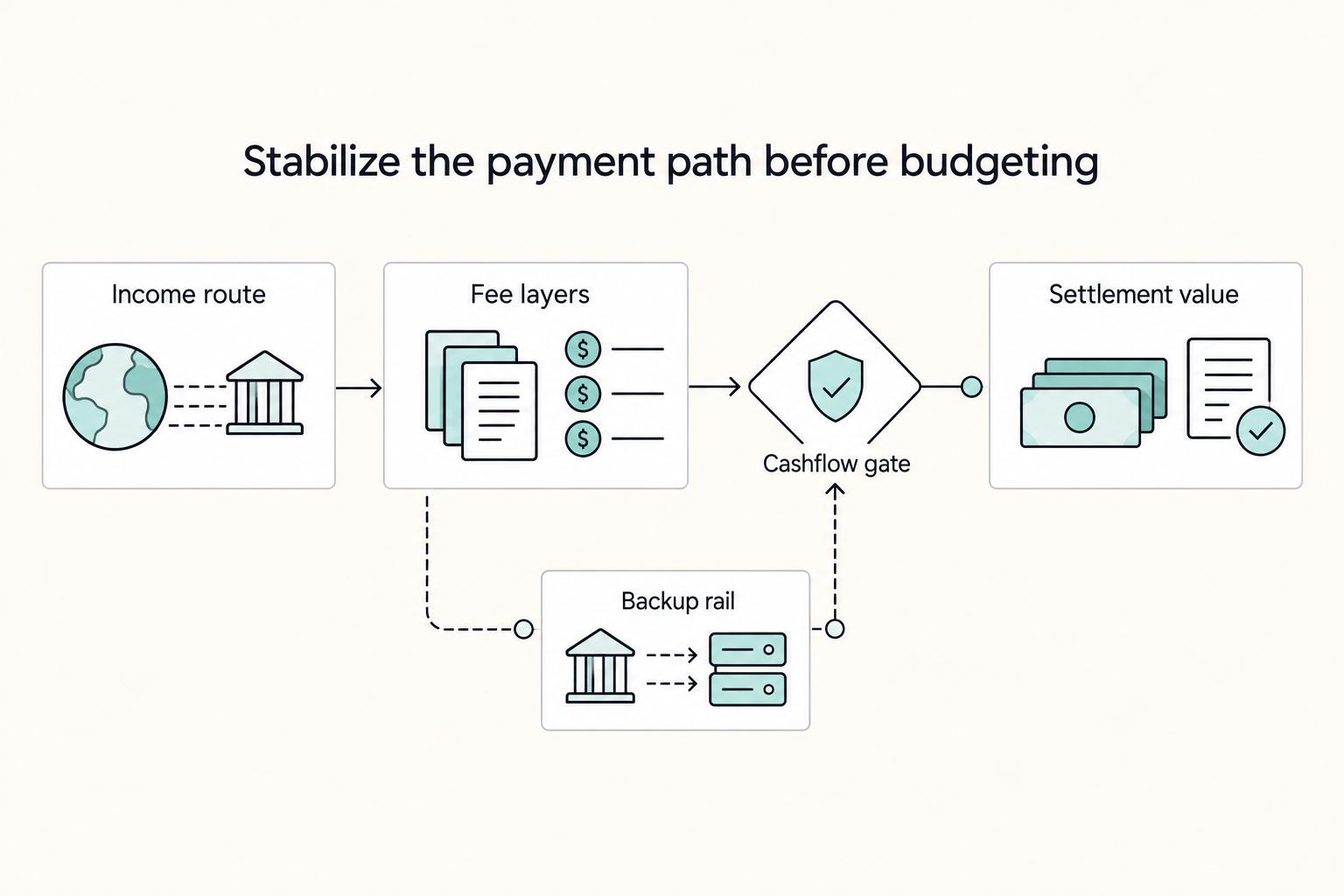
Argentina Inflation: Managing Cross-Border Income and FX
For freelancers and small teams spending in Argentina, use current quotes and an accessible payment route to plan the next month. Check whether money arrives when expected, covers the bills in their currencies and remains available when rent, payroll or vendor invoices fall due.

Buenos Aires Digital Nomad Guide for Remote Professionals (2026)
You can make Buenos Aires work well if you treat the move as a verification phase first, not a lifestyle commitment. How well it works depends less on the city's reputation than on your execution. Confirm your entry path, keep your documents ready, and make sure your money access can survive a bad week.
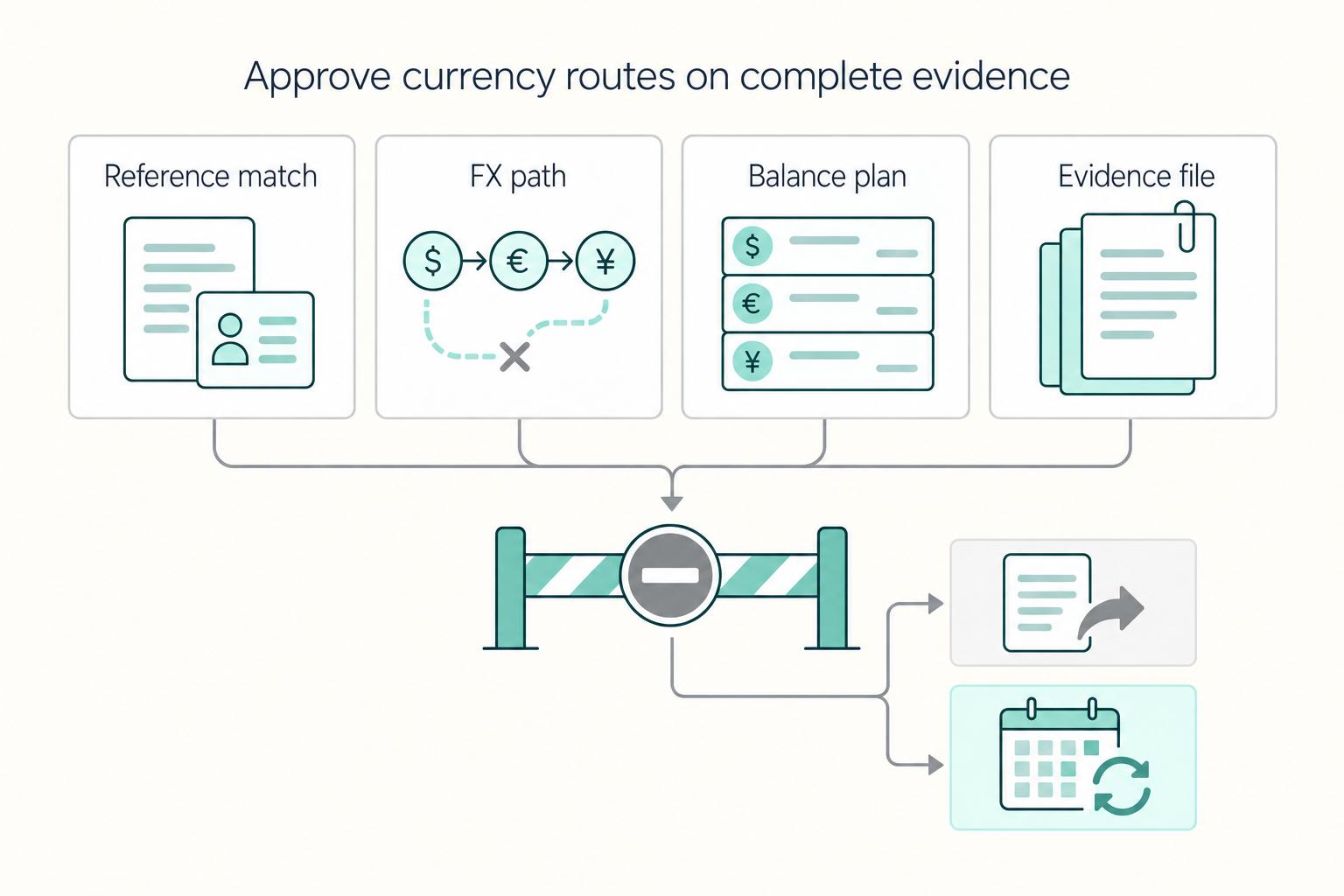
How to Get Paid in Multiple Currencies Without Forced FX
To get paid in multiple currencies, first check whether your account can receive and hold the client’s currency. Where that route is supported, separate receipt from conversion so you can choose when to convert for expenses or home-currency cash needs. Holding currency also exposes you to exchange-rate changes and the account’s protection and access terms.