
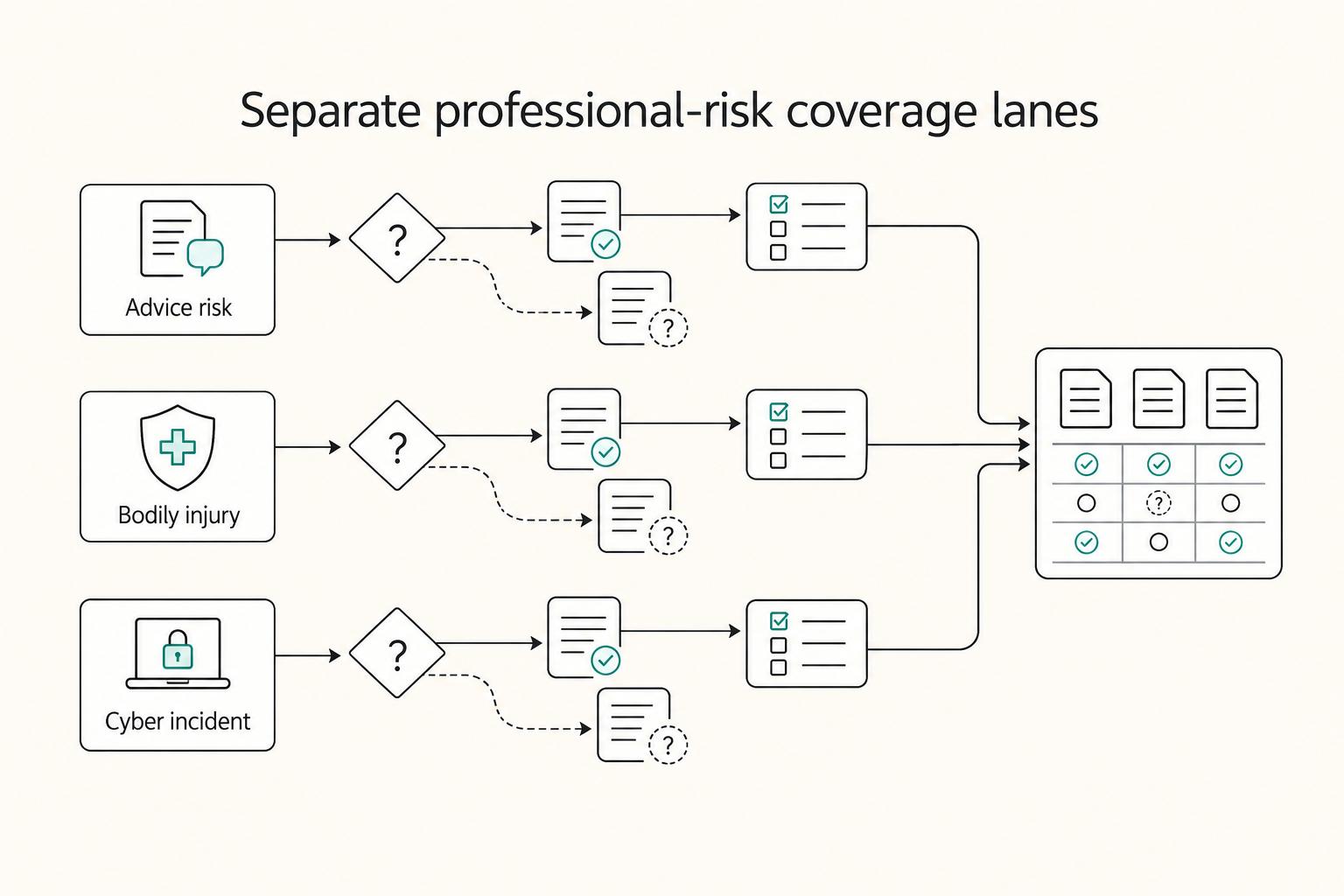
Quick Answer
Start by aligning your contract terms and Statement of Work with the coverage you plan to buy, then evaluate e&o insurance for management consultants using timing and wording checks before price. Confirm claims-made mechanics (policy period, retroactive date, reporting window), compare deductible and exclusion language on like-for-like terms, and make COI readiness a binding condition. Keep dispute records organized in advance so notice, evidence, and client communication can be handled quickly if a claim appears.
Start Here and Read This Like an Operator#
Use this guide to choose and run E&O coverage you can defend under pressure, not just chase the lowest quote. For a management consultant, the right decision needs to hold up when a client dispute appears, legal costs start, or a client asks for proof of insurance.
Errors and Omissions insurance, also called professional liability insurance and sometimes professional indemnity, helps protect a business when lawsuits allege mistakes in professional services. This is a client-facing liability risk, and it remains even when you have strong controls. It is often a low-frequency, high-severity risk, so price alone is usually the wrong place to start.
Optimize for fit before price#
Start with fit. E&O exposure and policy fit vary based on the work you perform, the clients you serve, where the activity happens, and the insurer form or program behind the policy. Treat quotes as non-interchangeable until you confirm that the terms and forms are actually comparable. A lower premium can reflect different coverage, not necessarily better buying.
Use real-world friction as your test#
Test the policy against messy reality, not a perfect claim scenario. E&O can help with court costs or settlements tied to alleged professional-service mistakes. Legal spend can start even if a customer later drops the claim.
Published ranges show why this matters. Attorney fees average $3,000 to $150,000, and settlements or judgments range from a couple thousand to millions of dollars. These figures do not predict your outcome, but they show the scale of potential impact.
One practical checkpoint is proof of insurance. Confirm how quickly you can produce it after binding. Some programs advertise instant proof, which can help when clients request it, but only after you confirm the policy fits your work.
Know the boundary of this guide#
This is practical risk and process guidance, not legal advice. Coverage varies by market, program, and insurer form, so verify obligations directly instead of assuming one label means the same thing everywhere.
What you will leave with#
By the end of this guide, you should have three things:
- A decision sequence for evaluating coverage without getting pulled off course by teaser pricing.
- Coverage-fit checks so insurance choices follow your real engagements.
- A claim-readiness checklist tied to the documents you already manage.
For a step-by-step walkthrough, see A Guide to Errors and Omissions (E&O) Insurance for Software Developers.
Know What E&O Covers Before You Compare Policies#
Treat E&O as professional-service liability, not all-risk business insurance. Errors and Omissions (E&O) insurance covers claims alleging that mistakes in your professional services caused client loss. Professional liability insurance refers to the same coverage type.
| Source of alleged harm | First policy to review | Reason |
|---|---|---|
| Judgment, advice, or deliverable | E&O / professional liability | The article says to review E&O first when the alleged harm comes from your judgment, advice, or deliverable |
| Third-party bodily injury or property damage | General liability | E&O does not replace general liability for these claims |
| Data breach or cyberattack | Cyber liability | E&O does not replace cyber liability for these claims |
For management consulting work, common triggers include allegations tied to your advisory services. For example:
- errors or omissions in analysis and recommendations
- negligence in how services were performed
- misrepresentation or inaccurate advice
- bad advice or missed deadlines
Use the Policy exclusion section as your boundary check. E&O does not replace these other policies:
- general liability for third-party bodily injury or property damage
- cyber liability for data breaches or cyberattacks
Use a quick test. If the alleged harm comes from your judgment, advice, or deliverable, review E&O first. If it comes from bodily injury, property damage, workplace injury, or a data breach, look to other coverage.
Check one more thing early. Confirm whether subcontractors delivering services for you are included, and look at defense response, not just fault outcome. Legal defense can still be costly even when allegations are unfounded.
Why Management Consultants Face a Different Claim Pattern#
Consultant claims often begin as expectation disputes, not immediate proof that your advice was wrong. Clients often expect specific outcomes, so friction can escalate even when your process was careful and the issue is a gap between what was expected and what was delivered.
That matters for Errors and Omissions (E&O) insurance because a claim can start when a client alleges your work was incorrect, incomplete, delayed, or not what was promised. Many disputes come from misunderstandings, missed deadlines, and unclear contracts rather than bad intent.
Outcome expectations create claims#
Expectation drift is a common trigger. A proposal, email, or sales conversation can create a concrete expectation about results, timing, or service level, even when the signed scope is less specific.
A common failure mode is vague scope paired with undocumented verbal promises. Read your proposal language against the policy definition of professional services. That definition helps determine whether the services you actually sell fit the insuring agreement.
Different allegations can lead to different claim dynamics#
Disputes can be framed in different ways. Some focus on advice or outcomes that did not materialize; others focus on work that was allegedly incomplete, delayed, or not delivered as promised.
This is where wording matters. Related matters may be treated as one claim or multiple claims depending on how interrelated wrongful acts is defined and applied. One-claim treatment can help on smaller related matters because you may face one retention or deductible. It can hurt when a larger related exposure is pulled into one claim with a single limit of liability.
The cost starts before fault is resolved#
Do not assess exposure only by the chance of a Settlement or Judgment. Legal defense costs can create real pressure before fault is resolved.
In practice, this is as much a documentation problem as a liability problem. Keep proposals, scope documents, approvals, and delivery records organized so you can show what was promised and what was delivered if a dispute starts. This pairs well with our guide on A Cybersecurity Consultant's Guide to Professional Indemnity Insurance.
Map Contract Risk Before You Shop for Coverage#
Start with your contracts, not the insurance market. Before you shop for coverage, map your obligations from the Statement of Work (SOW), the client contract requirements, and your limitation of liability clause.
A strong SOW usually spells out the work, period of performance, and deliverable schedule, and those details can shape insurance requirements in the contract. If you buy coverage first and check contract terms later, you may need to rework coverage or documentation, and you can still miss a client requirement.
Build the pre-quote file first#
Pull these into one working file before requesting quotes:
- Current SOW or proposal version, including deliverables, timing, and service standards
- The contract section with client insurance requirements, including proof of insurance, certificates, endorsements, or related terms
- The limitation of liability clause
- Any onboarding or procurement checklist that asks for proof of insurance
- A one-line summary of the largest plausible client loss allegation if the engagement fails
Read limits and liability caps together. If liability is capped tightly, high insurance limits may have less practical value for that contract. If liability is broad and the cap is weak or absent, lower limits may not fit the exposure.
Use a hard checkpoint before binding#
Set a firm rule. If contract obligations are stricter than likely policy limit options, renegotiate scope or terms before binding coverage.
At least one insurer cites options up to $2,000,000 and notes that higher limits may be available on request when a contract requires them. Treat that as an example, not a universal standard. If required limits or documentation are not realistically available on acceptable terms, resolve that in the contract before kickoff.
A simple contract-to-coverage map#
| Engagement type | Promised deliverable | Downside exposure | Minimum insurance requirement to request |
|---|---|---|---|
| Strategy advisory retainer | Written recommendations and executive presentation | Client alleges bad advice or missed decision support | Match contract requirements and confirm proof format |
| Transformation project support | Milestones, implementation guidance, status reporting | Delay, disruption, or cost-overrun allegations tied to delivery | Match contract limit requirements and check for added documentation terms |
| Vendor selection or diligence work | Evaluation memo, scoring, recommendation | Client alleges financial loss from reliance on your recommendation | Match contract minimums, then check alignment between liability cap and policy limit |
The common failure mode is buying a base policy, then discovering later that the contract requires different proof, wording, or higher limits. Read the contract first, turn it into a short insurance request, and then shop. Related reading: Liability Insurance for Freelance IT Consultants: Do You Need It?.
Before you request quotes, tighten your scope and deliverables so insurance requirements map to the work you actually sell. Draft a stronger SOW.
Claims-Made Rules That Decide Whether You Are Actually Covered#
For a claims-made policy, timing is usually decisive. Coverage timing generally works only when both checks pass. The claim must be made during the policy period, and the alleged act must happen on or after the retroactive date.
A claims-made form is not just about when the work happened. It asks two timing questions at once. If either answer is no, the same dispute can fall outside coverage.
Read the timing mechanics in the right order#
Start with policy structure. In a claims-made policy, the claim must be made during the policy period. In the example, if the policy period is April 2023 to March 2024, the claim has to be made in that window. Those dates are illustrative, but the timing logic is the key point.
Then check the retroactive date. This is the cutoff for how far back the alleged incident can occur. In the same example, events on or after 1st January 2021 can potentially fit, while anything before that date is excluded even if the claim is filed now.
Use this practical check every time:
- Identify when the claim was made.
- Confirm that date is inside the active policy period.
- Identify when the alleged error or omission occurred.
- Confirm that event date is on or after the retroactive date.
Same incident, different outcome#
Assume you delivered vendor-selection advice in June 2023 and the client later alleges financial loss from that recommendation. If the claim is made during an active policy period and the work date is after the retroactive date, the claim can satisfy the timing trigger. Other terms still matter, but timing is at least aligned.
Now change one fact. The client reports the claim after the policy lapses. Same project, same allegation, different outcome. In a claims-made structure, missing the reporting window can be enough to break coverage. Do not assume any post-lapse grace period unless your policy documents say so.
Late purchase creates a separate gap. If the alleged mistake happened long before you bought coverage, prior work may not be covered. One source example frames this as a mistake made three years ago with coverage purchased only last month.
What to verify at renewal or when switching#
Renewals and carrier switches deserve extra scrutiny because timing terms can change. Verify retroactive-date continuity and reporting terms in writing against both the expiring and new policy documents.
| Field to verify | Why it matters | What to check in writing |
|---|---|---|
| Policy type | Confirms whether timing depends on a claims-made trigger | Declarations page or policy schedule showing claims-made structure |
| Policy period | Determines whether the claim was made during the active window | Exact effective and expiration dates, for example April 2023 to March 2024 |
| Retroactive date | Limits how far back the alleged event can occur | Exact date shown, for example 1st January 2021, and whether it matches prior coverage |
| Prior policy details | Helps test continuity across renewals or switches | Expiring declarations page, prior policy schedule, and renewal comparison |
| Prior-acts and exclusion wording | Form wording can materially change practical coverage | Exact prior-acts language and key exclusions in the issued policy |
Keep the expiring declarations page, renewal or replacement quote, binder, and final issued policy in one working file. If a broker or carrier says prior work remains covered, ask them to point to the exact policy wording. Timing is necessary, but not sufficient. Policies described as tailored can still include exclusions that materially reduce practical protection.
Build Your Coverage Stack With Clear Tradeoffs#
Once timing works, the next question is coverage quality. In practice, that usually comes down to four items you can compare directly: Policy limit, Sub-limit (if any), Deductible, and Policy exclusion wording.
Do not judge a quote by the headline limit alone. A deductible you cannot fund or wording that does not fit your services can reduce real protection.
| Component | What it controls | What to verify in the policy file | Practical tradeoff |
|---|---|---|---|
| Policy limit | Main cap for a covered claim, subject to policy terms | Limit on the declarations page and whether it aligns with client contract requirements | A higher limit helps only if the form still fits your actual services |
| Sub-limit | A lower cap that may apply to a specific coverage part or endorsement | Any sub-limits in schedules and endorsements, not just the quote summary | A large headline limit may matter less if a relevant part is capped lower |
| Deductible | What you pay before insurer payments begin, subject to policy terms | Exact deductible amount and where it applies in the issued form | A higher deductible can change pricing, but only if your cash flow can absorb it |
| Policy exclusion | What is carved out of coverage | Full exclusions, definition of professional services, and any narrowing endorsements | Lower price can come with tighter carve-outs |
Why sub-limits deserve close review#
Covered E&O claims can involve attorney support, defense costs, and potential settlements or judgments. If a policy uses sub-limits for certain coverage parts or endorsements, those terms may materially affect protection for those parts under the issued wording.
Read endorsements and schedules line by line, and ask your broker to identify each sub-limit in writing from the issued wording.
The deductible rule that matters#
Choose a higher Deductible only if you can pay it without disrupting operations. Treat deductible selection as a liquidity decision first and a pricing decision second.
Exclusion red flags to catch early#
For management consulting work, wording around professional services is a core checkpoint. If definitions are unclear or endorsements narrow what you actually do, the policy can look adequate until a claim is filed.
Pause if you see any of these red flags:
- Vague exclusions that are summarized broadly but not clear in full wording
- Unclear professional services definitions that do not match your client-facing scope
- Endorsements that narrow core protections between quote and issued policy
- Reliance on summaries or certificates instead of full issued forms and endorsements
Keep the quote, application, binder, declarations page, and endorsements in one comparison file so the tradeoffs stay visible. In the 2026 market context, ask for alternative forms that improve structure, not just price.
Choose Limits With If-Then Rules Instead of Guessing#
Choose limits with gates, not instinct. Meet real external requirements first, then size for downside severity.
If-then rules to use#
- If a documented client or procurement requirement is higher than your baseline, match that requirement first.
A policy that misses onboarding requirements can delay kickoff, especially when clients require proof of insurance before work begins.
- If the client asks for proof but does not state a limit, size for loss severity, not best-case outcomes.
Management consulting is often low-frequency and high-severity, and a single dispute can reach six-figure legal costs. Claims can end in settlement, court ruling, or trial, so pick a Policy limit that fits the harder path.
- If the engagement carries higher downside exposure, prioritize stronger limits and clearer policy language over the lowest premium.
Price matters, but only after coverage structure fits the work.
- If a quote includes retention language, confirm in the issued policy how retention interacts with available limits.
That interpretation has been disputed, so do not rely on headline numbers alone.
- If someone says coverage is a Licensing requirement, treat it as jurisdiction-specific until verified.
Confirm the exact rule with the relevant authority and keep that record in your insurance file.
Quick self-assessment before binding#
| Checkpoint | Lower-limit signal | Higher-limit signal |
|---|---|---|
| Engagement scope | Narrow scope with lower downside if a dispute occurs | Broad scope with material downside if a dispute occurs |
| Client type | Lighter onboarding requirements | Enterprise or regulated clients with stricter onboarding review |
| Consequence severity | Likely impact is delay or extra analysis | Allegations could involve inaccurate, late, or non-delivered work with significant legal-cost exposure |
Keep your contract language, proof-of-insurance request, quote, declarations page, and endorsements in one file so limit decisions stay auditable if scope or stakes change. We covered this in detail in How Freelancers Choose Professional Liability (E&O) Insurance.
Compare Quotes Like a Procurement Decision#
Compare quotes only after you normalize them to matching terms. Otherwise, you are comparing different products, not value. A lower premium can reflect lower limits, a higher deductible, or other coverage differences.
Build one side-by-side sheet and line up each quote on the same fields before ranking options.
| Field to normalize | What to compare on every quote | Why it changes the decision |
|---|---|---|
| Policy limit | Match limits across quotes before comparing premium | A lower price may reflect less coverage, not better value |
| Premium | Compare pricing only after limits and deductibles are aligned | Headline price alone can hide meaningful coverage tradeoffs |
| Deductible | Compare at the same deductible, then test if you can afford it | A higher deductible may lower premium, but if it is unaffordable, coverage may not pay |
| Insurer rating | Review carrier ratings alongside price and limits | Quote quality is not just premium; carrier strength is part of the decision |
Use this rule. If a quote is cheaper but also changes deductible, limits, or other coverage terms, restate it on matching terms before calling it the better deal. Choosing the cheapest headline number can leave you underinsured and exposed to out-of-pocket loss.
Verification checkpoints that belong in every quote review#
A quote comparison should also include the operating details that matter after purchase:
- Proof-of-insurance requirements: Confirm what proof of insurance you may need to start work with a client.
- Certificate issuance speed: Confirm how quickly proof of insurance can be issued after binding and what information is required.
- Quote assumptions: Confirm that business profile details and coverage assumptions are consistent across quotes.
These checkpoints matter in practice because many clients require proof of insurance before work starts. Fast-COI marketing is not the same as a confirmed turnaround for your file.
Ignore marketing shortcuts that do not survive normalization#
"Starts at" pricing is a marketing signal, not a decision signal. You might see $26.25/month, $88 per month as an average small-business premium, or $350-$650 annually as a typical starting range. Those numbers are not directly comparable unless profile and coverage assumptions match.
Be cautious when entry pricing depends on eligibility conditions, for example being licensed less than 2 years with commission income under $100,000. Keep screenshots or PDFs of quote assumptions, application answers, and final bind terms so you have an audit-ready record of what was quoted and what you actually bought.
Pass Client Onboarding Without Last-Minute Insurance Fire Drills#
After you bind coverage, onboarding can still stall when proof requests are handled without matching the contract record. Treat this as a document-control step: align contract artifacts first, then request issuance.
Use the signed contract as your source document for verifiable fields. In one public consulting contract, onboarding fields include a contractor legal entity name, a vendor ID, and a defined term from September 1, 2025 to August 31, 2030. That shows how exact onboarding records can be. If your proof package uses a different entity name or misaligned dates, it can create avoidable back-and-forth before kickoff.
Use this operating rule: resolve entity, date, deliverable, and timeline mismatches in the governing contract record before submitting proof requests. Apply the same discipline to deliverables and timelines so your ops team can tie the request to the exact governing version.
Handoff checklist for operations#
Send one complete packet to your broker or internal ops owner:
| Packet item | Details to send | Why it matters |
|---|---|---|
| Legal entity name | Exactly as signed | Use the signed contract as the source document |
| Vendor or onboarding identifiers | Identifiers used in the contract record | Onboarding fields can include a vendor ID |
| Contract dates | Contract effective dates plus planned kickoff date | Misaligned dates can create back-and-forth before kickoff |
| Proof-request details | Client-provided proof-request details | Align the proof request to the governing contract record |
| Storage path | Internal path for issued proof, renewals, and replacement certificates | Keeps issued proof and renewals organized |
Do not rely on generic insurance checklists you cannot verify. One referenced third-party insurance guide was unavailable at review time, so treat unverified template requirements as uncertain and use the executed contract and the client's actual proof request as the working evidence set. You might also find this useful: A Financial Planner's Guide to Choosing E&O Insurance.
Prepare for a Claim Before You Need to Defend One#
Claim readiness is mostly document control. When a dispute starts, secure the record first, then communicate carefully.
Your first 48 hours#
Use this as an internal triage sequence, not a universal legal rule:
- Preserve the project record immediately. Lock the executed contract, final Statement of Work (SOW), amendments, versioned deliverables, approvals, and message history. If your file includes sections like Assumptions and Risks or Project Authorization, preserve those too.
- If insurance is involved, follow your policy's notice instructions exactly. Reporting method and timing depend on your specific form and carrier instructions, which are not specified here. If you are unsure whether to report, ask your broker or carrier in writing right away.
- Keep client communication factual and limited. Acknowledge receipt, confirm review, and ask for concerns in writing. Do not make unvetted admissions or commitments before you get qualified advice.
Build the evidence pack now, not after someone asks#
A good claim file should let a third party reconstruct what was agreed, what changed, what was delivered, and what was accepted.
| Record | What to keep | What it shows |
|---|---|---|
| Signed contract and final SOW | Executed agreement and final Statement of Work | What was agreed |
| Amendments and change logs | Amendments, change logs, and scope approvals | What changed |
| Deliverables | Deliverables with submission dates | What was delivered and when |
| Approvals | Email acceptance or formal signoff | What was accepted |
| Correspondence timeline | Key decisions and objections | How the timeline developed |
| Invoices and payment records | Records tied to milestones or accepted work | How billing tracked accepted work |
Public contract packages often separate this record into named exhibits, for example Contractor Agreement and Statement of Work, Rates, and Service Level Agreements. Keep the governed set together, and confirm validity requirements such as required signatures and dates. If documents conflict, check whether your contract has an order of precedence clause. That rule can determine which document controls.
Understand the money path before money is at issue#
Do not assume outcomes or cost handling are automatic. Disputes can create legal and finance workstreams, and outcomes depend on the facts, the contract set, and any applicable policy terms.
At intake, get written handling details: who coordinates the matter, where records go, and how to log spend. Track invoices, vendors, dates, descriptions, and approvals in one matter ledger so finance and claim records stay aligned.
Failure modes that cost you options#
Two avoidable problems narrow your options fast: delayed notice and weak project history. Notice effects vary by policy form, so treat timing as a policy check rather than assuming one universal rule. Missing records make it harder to show scope, assumptions, approvals, and acceptance. For global teams, keep invoices, payment confirmations, milestone approvals, and deliverable signoffs in one audit-ready system with dates and version history intact.
Need the full breakdown? Read Do Freelancers Need Business Insurance Before Client Onboarding?.
Where Rules Vary and How to Confirm Safely#
Do not assume Errors and Omissions (E&O) insurance is a universal legal requirement for consultants. Obligations can come from different places: a client contract, insurer policy conditions, or a jurisdiction-specific legal requirement. Keep those as separate checks, because mixing them creates avoidable risk.
Legal mandates can be profession- and location-specific, not blanket rules. One cited example is E&O being required for real estate agents in Florida and over 10 other states. That does not establish what applies to management consultants, so avoid relying on generalized guidance for compliance decisions.
Verify in this order#
Start with your signed documents, then move outward:
- Review the contract and SOW first. Confirm whether client documents require professional liability coverage and what evidence of coverage is required.
- Confirm insurer or broker requirements in writing. Ask whether policy conditions require written client agreements, documented procedures, retention policies, or specific client communication practices.
- Get local legal input when jurisdiction risk is material. Confirm any local rule or licensing condition before relying on broker confirmation alone.
That middle step is easy to miss. Some policy requirements are operational, not just about having active coverage, and gaps in controls can create problems when a claim happens.
Cross-border work needs an extra check#
For cross-border engagements, country and program differences can break otherwise solid assumptions. What satisfies one market may not satisfy another market's contract terms or local compliance expectations. Keep a compact evidence pack per engagement: signed contract, insurance requirements, broker confirmation, and any local legal note supporting your position.
The red flag here is overconfidence. Coverage can respond to claims, but it does not prevent claims, and it may not by itself prove you met every contractual or legal requirement.
Final Decision Checklist Before You Bind#
Bind in this order: contract fit, policy details, then price. That sequence helps prevent avoidable gaps before coverage starts.
- Confirm contract fit before signing. Verify insurance requirements, required proof, and any promises that could exceed the policy you plan to bind.
- Verify key policy terms in writing. Have your broker or insurer confirm how the policy applies to your current work. On renewal, compare updated forms to your current operations and to the quote so form changes do not create gaps.
- Compare pricing last. A lower premium is not a win if required proof cannot be provided or coverage narrows.
Before binding, run one more control: compare your application and any renewal updates to the actual quote. If service descriptions, operations, or other details are outdated, correct them before you bind.
Treat COI readiness as a bind condition#
Your Certificate of Insurance (COI) is often needed urgently as proof of insurance. Bind only when your COI and other proof of insurance can meet the real onboarding request.
Check before certificate issuance:
- contract and certificate details align
- certificate holder details are correct
- cancellation-notice responsibility, including a requested 30-day notice, is explicitly assigned, not assumed
If COI wording or holder details conflict with the signed contract, resolve that first. Do not rely on disclaimer language alone to protect you.
Keep ongoing controls after binding#
Binding starts administration. Keep these standing controls so you stay insurable as you grow:
- Renewal calendar to review contracts, applications, and updates before renewal
- Coverage comparison log to track form changes year over year
- Claim evidence pack with signed SOWs, change logs, deliverables, approvals, invoices, and correspondence timeline
Missed deadlines, miscommunication, and incomplete documentation are common claim drivers. Clean records make disputes easier to defend if a client alleges your actions or inactions caused financial loss.
After you bind, keep your contracts, invoices, and supporting records organized in one repeatable workflow so renewals and claim response are less chaotic. Explore Gruv operator tools.
Frequently Asked Questions
Is E&O insurance the same as professional liability insurance for management consultants?
Usually, yes. E&O insurance and professional liability insurance commonly refer to the same coverage type for claims tied to mistakes in professional services. Still, terms can vary, so rely on the policy wording, not just the label.
Does E&O cover a failed strategy outcome if the client says the advice caused financial loss?
It can, but not simply because the result was poor. E&O is generally tied to allegations of professional mistakes, including errors, omissions, or miscommunication that led to loss, and it can cover related legal disputes. If the complaint is only about a bad outcome without a covered professional error, do not assume coverage applies.
What does E&O usually cover and what is commonly excluded?
E&O usually covers legal dispute costs tied to professional mistakes, including legal fees, damages, and settlements. Claims can arise when work is late, incomplete, below standard, or affected by communication or document errors. One cited source says common exclusions include property damage, bodily injury, workplace injuries, and data breaches, and some policies may not cover subcontractors if they are sued separately or alongside you.
Do independent management consultants need E&O by law or mostly because of client contracts?
It is often contract-driven rather than a universal legal rule. Do not assume there is one universal answer: E&O is usually not required by law, though some professions do have mandatory requirements, so treat the legal answer as context-specific. For independent consultants, client contract terms can be the practical trigger.
How should a management consultant choose an appropriate policy limit?
If a contract sets a minimum, start there, then pressure-test whether that limit matches your actual risk exposure. The policy aggregate limit is the maximum the policy pays in one policy period, so total exposure across engagements matters. Some programs show $1,000,000 or $2,000,000 individual aggregate options, but those examples are not a universal fit.
What proof do clients usually request before project kickoff?
Clients may ask for proof of insurance, often a Certificate of Insurance. Keep it aligned with the client’s insurance requirements before kickoff. If needed, a certificate copy can be requested through the insurer or program’s certificate request process.
Can you switch insurers without losing protection for past work?
Do not assume past work is automatically protected when you switch insurers. Continuity depends on policy terms, and policies can vary. Confirm treatment of prior work in writing with your broker or insurer before canceling existing coverage.
Try a related tool
Researched and edited by the Gruv editorial team. Gruv builds cross-border billing, payouts, and finance-operations software for global businesses.
Sources
- acquisition.gov/far/8.405-2trusted
- dgs.ca.gov/-/media/Divisions/OLS/Resources/SCM-V1-02-20...trusted
- ftp.costamesaca.gov/costamesaca/council/agenda/2013/2013-07-02/C...trusted
- hcpf.colorado.gov/sites/hcpf/files/Alivia_24-186512_BIDM_PI%20...trusted
- lawfilesext.leg.wa.gov/law/wsr/2024/23/24-23PERM.pdftrusted
- michigan.gov/dtmb/-/media/Project/Websites/dtmb/Procureme...trusted
- michigan.gov/-/media/Project/Websites/dtmb/Procurement/Co...trusted
- santafesprings.gov/11-01-2022%20Agenda%20Packet.pdftrusted
Educational content only. Not legal, tax, or financial advice.
Related Posts
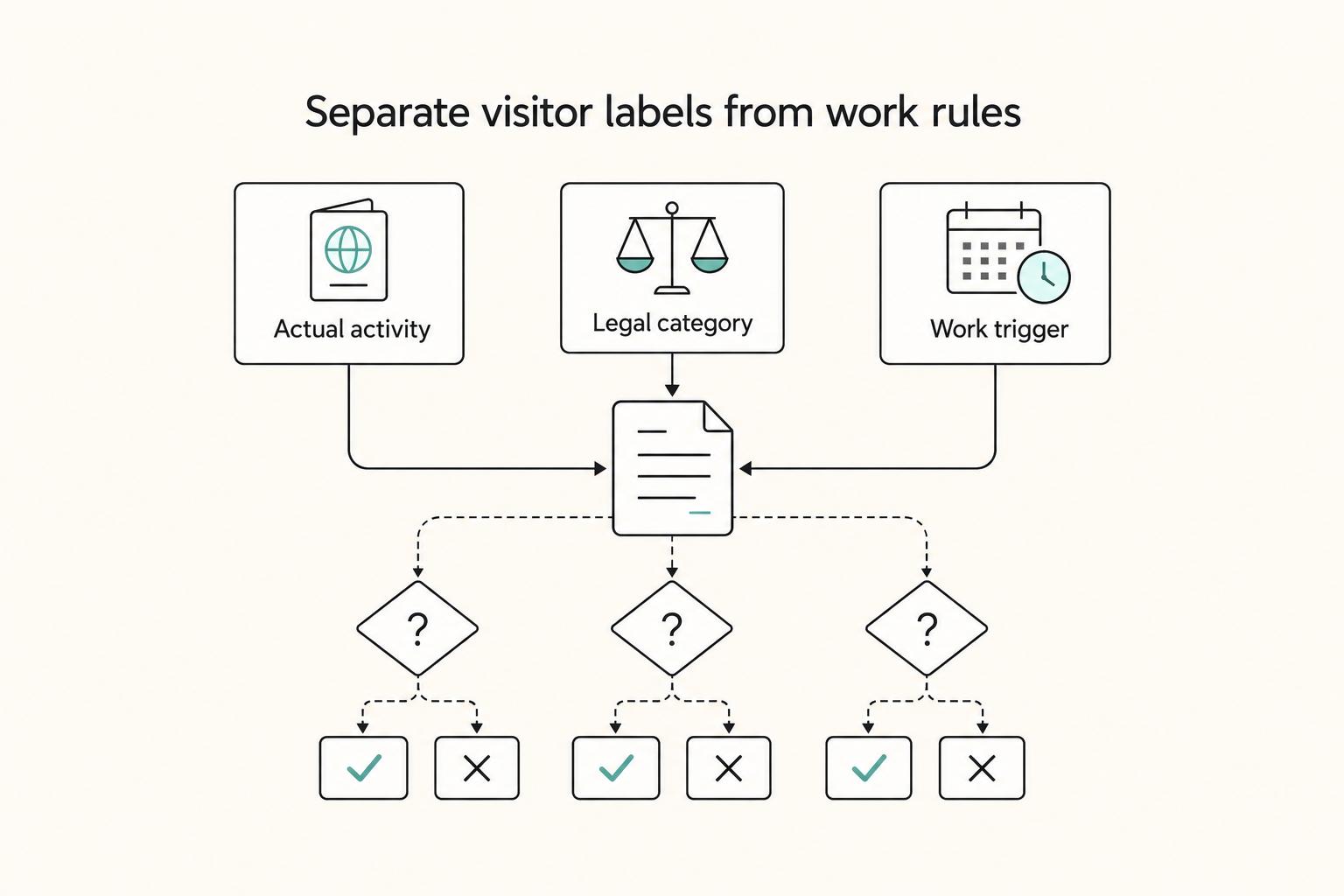
Canada Digital Nomad Visa Planning for Visitor Status and Work Permits
The phrase `canada digital nomad visa` is useful for search, but misleading if you treat it like a legal category. It is shorthand for existing Canadian status options, mainly visitor status and work permit rules, not a standalone visa stream with its own fixed process. That difference is not just technical. It changes how you should plan the trip, describe your purpose at entry, and organize your records before you leave.
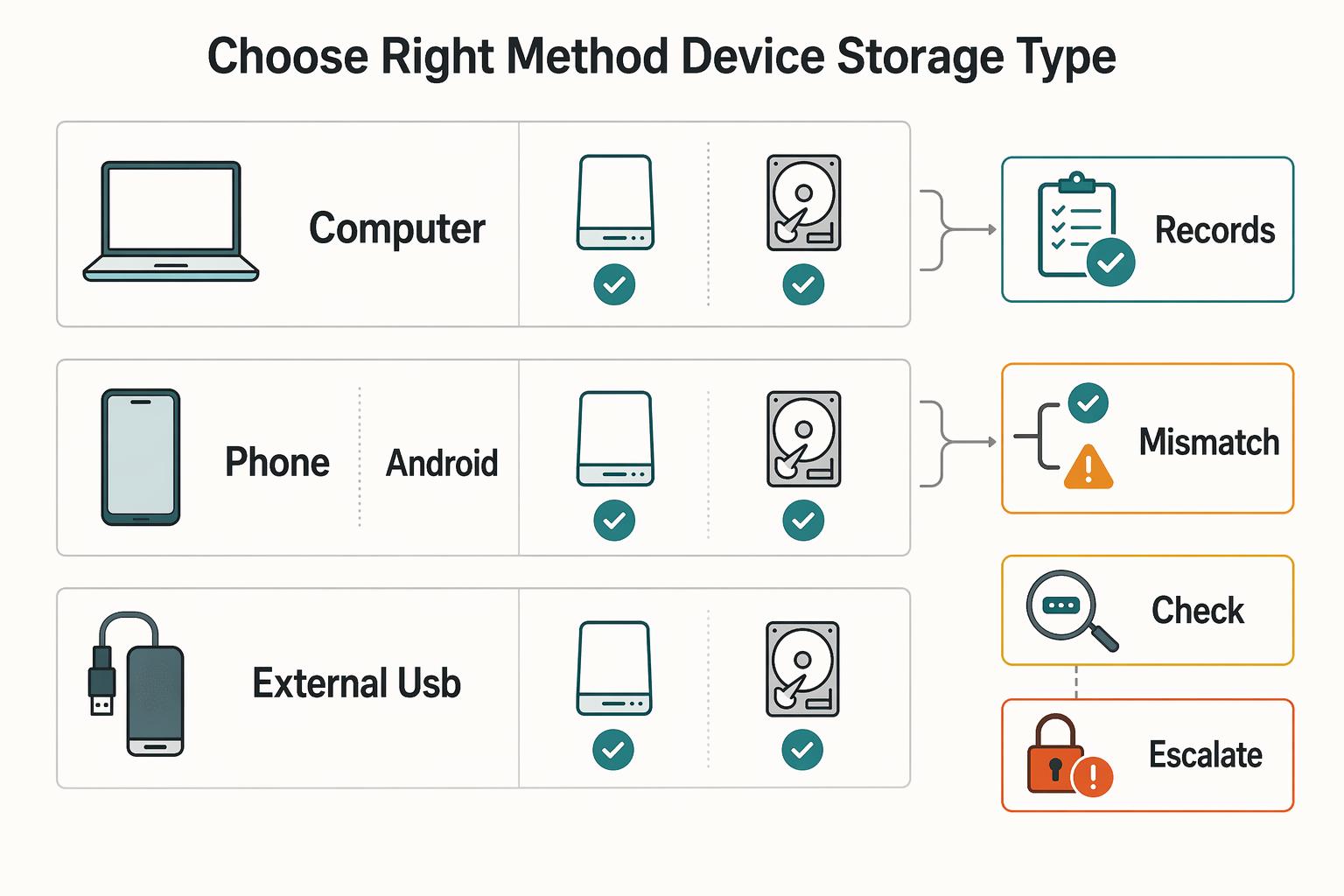
Securely Wipe Devices Before Selling Them With Clear Risk Checks
Make one call before you touch the device: choose a wipe level that matches the risk, then document each step you complete. That keeps your decisions consistent when you are under pressure from a buyer, a trade-in deadline, or a handoff date.

The Freelance Payment Penalty: A Modeled Audit of Platform Fees, FX Spreads, and Payout Delays
The money rarely disappears through a single, easy-to-spot fee. The real loss is stacked. A marketplace takes its commission, a processor adds a charge for international cards, a bank or payment company converts the currency at a spread, a platform holds the funds before release, and a wire sheds a little to intermediaries on the way in. Each layer looks defensible on its own, but the worker feels the combined result as a smaller deposit and a later payday.