
Quick Answer
Use youtube sponsorships as a contract-first revenue channel, not a casual mention deal. Qualify the payer, lock terms in a sponsorship agreement plus statement of work, and tie payment to written approval. For riskier sponsors, ask for partial upfront payment or milestone payment instead of end-loaded terms. Then send the invoice immediately after the agreed trigger and follow a strict collection cadence with documented proof.
YouTube sponsorships are not hard to start but easy to get wrong#
Landing interest is not the same as getting paid. The goal is not a lucky one-off campaign. It is a deal process that helps you manage sponsor work with fewer surprises.
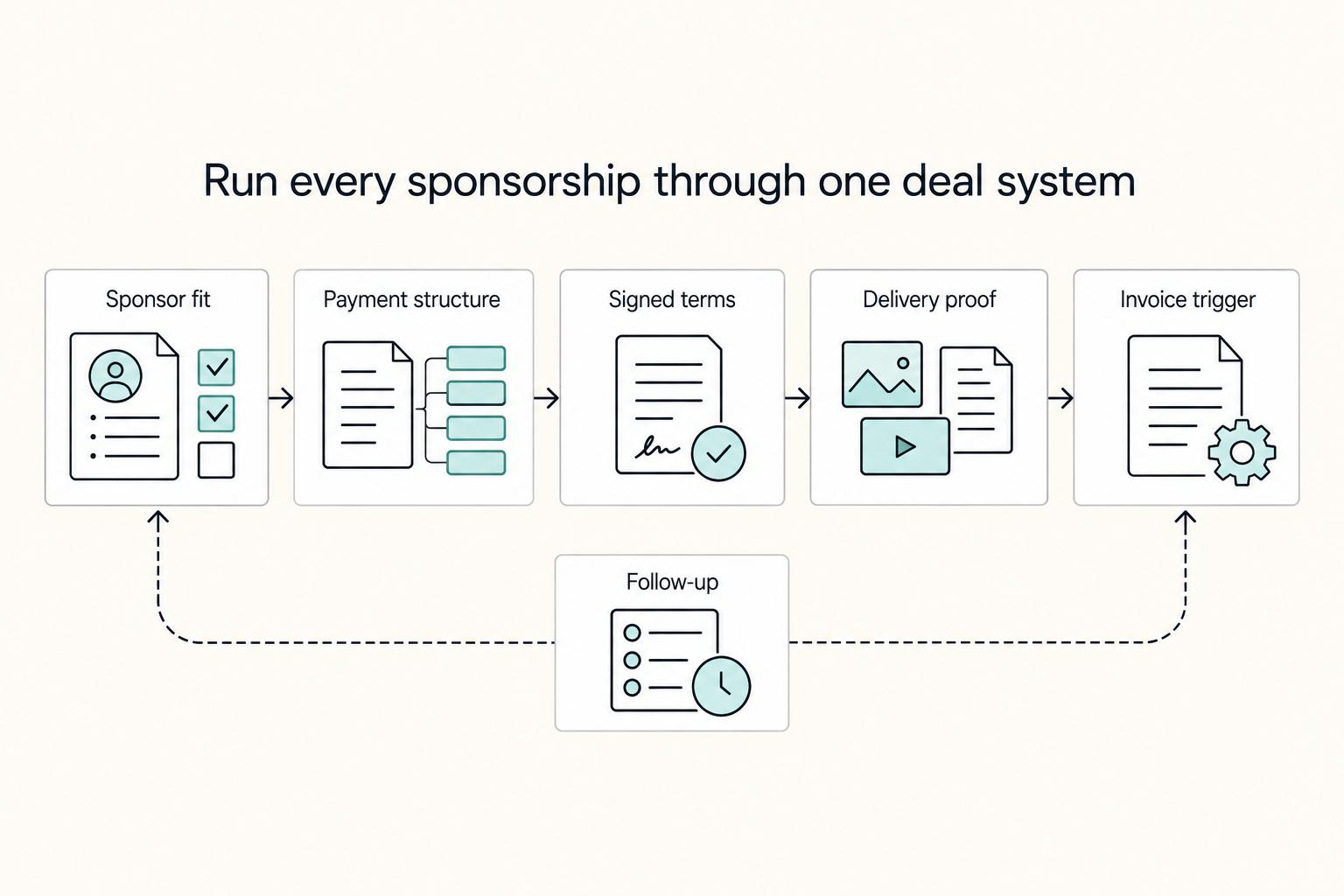
There is no shortage of advice on getting brand deals. One public answer even reduces outreach to "Just ask." That may be enough to start a conversation, but it does not protect you once a brand says yes. The messy part usually starts after the first positive reply: who is paying, what exactly you are delivering, how approval works, when you can invoice, and what happens if the sponsor goes quiet. Treat each deal like client work, not creator luck. In practice, that means moving through the same sequence every time:
- qualify the sponsor and confirm there is a real payer behind the campaign
- negotiate scope, payment terms, and review process before production
- lock those terms in a sponsorship agreement and statement of work
- deliver exactly what was agreed
- send the invoice as soon as the agreed trigger happens
- follow up on a fixed cadence until funds clear
If you skip any of those steps, the failure mode is usually predictable. A vague scope turns into extra unpaid edits. A loose approval process becomes "one more tweak" for weeks. An invoice sent without the right entity name, billing contact, or agreed reference can sit untouched even when the brand intends to pay. If a sponsor will not give you basic clarity on deliverables, approvals, and payment mechanics, treat that as an early red flag, not a later surprise.
Keep the core documents clear and usable. Your sponsorship agreement can name the parties, payment terms, usage expectations, and what happens if the deal changes. The statement of work can pin down the deliverables, deadlines, and what counts as acceptance. Your invoice should match that paperwork exactly, including the sponsor name, deliverable description, and agreed payment trigger. Small mismatches here cause avoidable delays.
One useful habit is to keep an evidence pack for every deal. Save the signed agreement, the final scope, the delivered files, approval messages, invoice copy, and follow-up notes in one place. Your verification checkpoint is simple: before you publish or hand over final assets, confirm the payer entity, billing contact, and invoice trigger in writing. If anything is still fuzzy, pause and fix it before the work gets harder to control.
That is the lens for the rest of this guide: not how to chase random sponsorships, but how to make each new deal safer, cleaner, and easier to collect than the last. You might also find this useful: How to monetize a YouTube Channel. If you need a quick next step, try the free invoice generator.
What YouTube sponsorships are and what they are not#
A YouTube sponsorship is a paid placement or endorsement inside your content. It is not the same as YouTube ad revenue, and it is not a real deal until the work is clearly defined, so treat it as client work from the first yes.
You also need to classify the deal correctly. YouTube says creators "cannot include promotions, sponsorships, or other advertisements for third-party sponsors or advertisers in their videos." It also says creators may include paid product placements or endorsements if they comply with YouTube advertising policies and "any applicable legal and regulatory obligations." Before production, confirm in writing that the deal is a paid product placement or endorsement. If you get this wrong, YouTube says it may disable monetization or remove videos.
On the business side, a brand deal is not an email promise to "mention" a sponsor. It needs a statement of work that defines scope, deliverables, deadlines, and acceptance. Without that, vague asks often turn into extra edits, delayed approvals, and invoice disputes.
Use trend claims as context, not as pricing truth for your channel. If Adopter Media, citing Axios, reports that sponsored YouTube videos grew by more than 50 percent year over year in 2025, treat that as demand context, not a rate benchmark.
For a step-by-step walkthrough, see How to Price a YouTube Sponsorship Deal.
Pick the right sponsors before you pitch anyone#
Qualify the sponsor before you spend time on a pitch. Use the same short screen for every lead, whether it comes from MeetSponsors or direct inbound.
Small and large channels can both win brand deals, so the key filter is sponsor quality, not channel size. Check fit and process first:
- Channel fit: Does the product fit your actual format, not just your niche label?
- Audience overlap: Can they define who they want to reach, and does that match what you can show in your media kit?
- Operational reliability: Can they clearly name the decision-maker, approval path, and basic deal structure?
Early choices around goals, creator selection, and format shape outcomes, so do not skip this screen. Before you share custom ideas, confirm who the payer entity is and who approves deliverables.
On the first real call, ask about payment mechanics: payer entity, preferred payment method, net terms, and whether upfront or milestone payments are possible. If they cannot give you basic clarity, treat that as a risk signal.
Keep one tracker for every conversation so your pipeline stays clean:
- Sponsor name and contact
- Source (MeetSponsors or inbound)
- Current pipeline stage
- Requested media kit assets
- Payer entity and payment terms discussed
- Next action and date
If a sponsor avoids basic contract clarity early, deprioritize them even when the fee looks good. A clear yes with workable terms is usually better than a high-number maybe. Related: How to Build a Media Kit for Your Freelance Business.
Choose a pricing and payment structure that protects cashflow#
In most sponsorship deals, staged payments protect your cashflow better than a single payment at the end. You already carry upfront production costs and operational burden, so payment timing is a risk-control decision, not just a pricing decision.
That is why structure matters: when cash lands, how much risk you hold during revisions, and how much leverage you keep as work moves forward.
| Payment structure | Typical timing | Risk of non-payment | Admin burden | Your leverage |
|---|---|---|---|---|
| Flat fee, paid after delivery | One invoice after final deliverable or approval | Highest, because all work is done before money moves | Low | Lowest after assets are delivered |
| Partial upfront plus final balance | First payment before production, second after delivery or approval | Lower, because some cash arrives before filming and editing | Medium | Strong early, moderate at final delivery |
| Milestone payment across stages | Payments tied to defined stages such as concept approval, draft, and final delivery | Usually lowest when milestones are clear and written | Highest, because you track more triggers and invoices | More balanced across the deal |
Match the structure to the sponsor risk#
Use a simple rule: if this is a first-time sponsor or the approval process is unclear, require partial upfront payment before production starts. That keeps risk shared instead of leaving you to finance the full project.
A flat fee can still work with a sponsor that runs a clear process, but the tradeoff is exposure. If approvals or revisions drag, payment can slip while your time and production costs are already committed.
Milestone payments are usually stronger when the creative is custom or several approvers are involved. Tie each payment trigger to something observable, not vague status language.
Put the payment clock in writing#
Whatever structure you choose, put the net payment terms in writing before work begins. Keep the sponsor, payer entity, invoice contact, payment method, and payment-trigger event in one written agreement or memo.
Before production starts, confirm:
- which deliverable or approval triggers each invoice
- who can formally approve the work
- the billing contact and payer entity match
- the late fee clause is included, not just discussed
A late fee clause helps because it gives you a clearer escalation path if payment is delayed. If a sponsor insists on end-loaded payment, make the due trigger, net terms, and late fee clause explicit before you film.
If you want a deeper dive, read How to Calculate Your Billable Rate as a Freelancer.
Write a sponsorship agreement that prevents scope creep#
Use a sponsorship agreement plus a statement of work (SOW) before production starts, or do not start. Payment terms protect you only when the contract clearly defines what you are being paid to deliver, how approval works, and what triggers payment.
A practical split is simple: the sponsorship agreement covers commercial and risk terms, and the SOW covers operating detail. The SOW should state what you will deliver, where it will run, when it is due, who approves it, and what counts as accepted. That is what keeps a one-video deal from expanding into unpriced extras.
Define scope so approval means something#
Write the SOW so an outside reviewer could understand the job without guessing. Name each deliverable and placement instead of broad labels like "content package." If the campaign includes a YouTube integration, a Short, a pinned comment, a description link, or raw clips, list each item separately.
Set acceptance criteria in writing, not "brand satisfaction." Define what can trigger revisions, who can approve, and which event starts the payment clock. Before you film, confirm the named approver is actually the person giving feedback so you do not restart review late.
Include truthful disclosure expectations. Endorsements should reflect your honest opinion, and material connections should be clearly disclosed. If a sponsor pushes language you cannot stand behind or tries to keep disclosure vague, treat it as a contract and reputation risk.
| Clause | Red flag | Why it matters | Minimum fallback language to ask for |
|---|---|---|---|
| Deliverables and placements | "One content package" | Extra assets get implied later | "Deliverables are limited to the items listed in the SOW; additional placements require written add-on scope." |
| Acceptance criteria | "Final approval at brand discretion" | Approval can drag and payment gets stuck | "Approval follows the written brief and acceptance criteria; revision or acceptance must come through the named approver." |
| Usage rights | Silent on reuse or editing | Content can be reused more broadly than expected | "Usage is limited to listed channels, formats, and purpose; added use or edits require written approval." |
| Revision limit | "Reasonable revisions included" | Endless edits erode margin | "The SOW sets a revision limit; extra rounds require written scope change and added fee." |
| Cancellation and kill fee | No cancellation terms | Reserved production time can be lost with no recovery | "If cancelled after work starts, the agreement states what is owed for completed work and reserved time." |
| Ownership, refunds, chargebacks | Rights transfer on delivery | You can lose control before funds clear | "Ownership or licence transfers after full payment; refund and chargeback handling follows the written policy and delivery records." |
Lock the clauses that carry the real risk#
Set these clauses before production: usage rights, revision limit, cancellation clause, and kill fee. These are the terms that usually decide whether scope changes stay manageable or become unpaid work.
For disputes, keep one operating rule clear: transfer ownership after payment, not before. If the payment rail allows disputes, define refund policy and chargeback handling in writing, and keep records organized: signed agreement, SOW, draft submissions, approvals, delivery links, and invoice trail.
Use a hard walk-away rule#
If the sponsor will not define approvals and payment triggers in writing, walk away. Clear contracts set expectations early and reduce disputes later. Fuzzy scope and fuzzy approval usually create unpaid extra work.
Scope creep in creator deals usually shows up as small additions, extra reviewers, and delayed sign-off. The contract is where you stop that pattern. If those basics are not clear on day one, protect your time and keep capacity for a better deal.
We covered this in more detail in A creator's guide to writing a Media Kit.
Deliver cleanly so approval does not delay payment#
Use a fixed handoff sequence: deliver the agreed asset, request written acceptance, then send the invoice immediately under the statement of work. When completion and approval are not explicitly confirmed, payment can sit in an unresolved state instead of closing cleanly.
Keep the delivery note specific so approval is easy to process:
- Name the exact deliverable from the SOW.
- Include the file or video version and submission date.
- Name the approver expected to sign off.
- Ask one direct question: does this meet the agreed acceptance criteria?
Enforce revision boundaries exactly as agreed. If feedback stays in scope, revise and resubmit. If it becomes new deliverables, extra cutdowns, changed talking points, or reopened approved work, move it to a paid change order with a new fee and timeline.
Keep a clean evidence pack mapped to the sponsorship agreement and SOW: final files, send or upload timestamps, approval messages, revision history, and the post-acceptance invoice. If approval or payment is questioned later, you can point to a clear timeline instead of conflicting memory.
Related reading: How to Write a Pitch Email to a Brand for a Sponsorship.
Invoice and follow up with a strict collection cadence#
Once approval is in writing, send the invoice the same day and keep collection steps fixed. A standard workflow reduces piecemeal back-and-forth and helps prevent avoidable payment delays.
| Timing | Action | Include |
|---|---|---|
| Due date or just after | Send a short reminder | Original invoice and approval record |
| If still unpaid | Send a formal notice | Invoice number, due date, payment method, and approver |
| If overdue under your agreement | Cite the late-fee clause once | Request a payment date in writing |
Make the invoice match your records exactly: reference the sponsorship agreement or SOW, name the approved deliverable as written, include the approval date, restate the payment method, and repeat the agreed net terms. Before you send it, do a line-by-line check against written approval so finance and the approver are looking at the same labels.
Use that cadence consistently instead of sending ad hoc messages. Keep everything in one thread with one evidence pack: approval, deliverable reference, invoice, and prior reminders. If payment continues to stall, pause unpaid extra deliverables and use only contract levers already agreed in writing, such as cancellation terms or usage restrictions tied to payment.
Handle cross-border payment realities before they become problems#
For cross-border sponsorships, lock down the payment route and documentation before production starts, because that is where most avoidable delays begin.
Get payer details in writing: legal entity name, billing country, invoice currency, and actual payment method. Then confirm whether your setup requires identity checks, tax or residency forms, or program-specific compliance review. W-8BEN (or other residency forms) can matter here; this is not universal across countries or payer programs, but when required, submitting the right form can help avoid up to 30% withholding and related delays.
If cross-border payments are regular for you, consider a dedicated multi-currency business account so you can receive currencies like USD or EUR directly and keep business funds separate from personal funds. That separation makes reconciliation cleaner and improves your tax paper trail.
For each deal, run a simple verification checkpoint:
- Confirm payment status against the invoice number and expected currency, not only a remittance email.
- Archive records in one place: invoice, agreement/SOW, payment confirmation, platform statement (if relevant), bank feed entry, and conversion rate used.
- Log exceptions for reconciliation: withholding, short payment, returned transfer, or compliance-related delays.
Keep the caveat explicit: timelines, coverage, and compliance gates can vary by market and program, so do not assume one prior deal sets the rule for the next one. Maintain rigorous records for several years: invoices, platform statements, bank feeds, and conversion rates. Automated multi-currency accounting tools can reduce manual errors, but they do not replace source documents.
This pairs well with our guide on A guide to Affiliate Marketing for creators.
Build a repeatable deal system that pays you on time#
The most reliable way to get paid on time is to run every deal in the same order once interest is confirmed. Use this sequence each time: qualify the sponsor, set payment structure, sign terms, deliver with proof, invoice immediately after the agreed trigger, and follow up until payment is complete.
Start with qualification, not excitement#
Before you spend time on concepts or production, confirm who pays, how they pay, and whether the payment timing works for your risk level. If those basics stay vague, treat that as a workflow risk, not a minor detail to solve later.
Standardize documents and proof#
Use a repeatable document set for every deal so handoffs and payment steps stay clear. Keep your agreement or SOW, approval record, invoice, and payment record together so you can resolve timing or scope disputes quickly.
Use a walk-away rule#
A repeatable system is also a filter: not every inbound deal should move forward. Some creators explicitly turn down brand deals to protect trust, and the same logic applies to payment risk. If a sponsor will not confirm scope, approvals, and payment terms in writing, protect your capacity and walk away.
Need the full breakdown? Read A Practical Guide to YouTube Analytics for Freelance Creators.
Frequently Asked Questions
What is a YouTube sponsorship in plain terms?
A YouTube sponsorship is a direct brand partnership: you bring the audience, and the sponsor brings the budget. In plain terms, it is a paid partnership with agreed deliverables and budget. Treat it as a formal business agreement, with key terms written down before work starts.
How are YouTube sponsorships different from YouTube ad revenue?
Ad revenue runs through YouTube's AdSense program. Sponsorships are different because you work directly with companies and negotiate terms with them. One source describes sponsorships as a more reliable income stream than ad revenue, but outcomes still vary by deal.
How do small creators get sponsorships without an agent?
Do not assume there is a verified subscriber minimum or that an agent is required. Sponsorships are direct company relationships, so creators can negotiate deals themselves. If you pitch directly, focus on clear fit and clear written terms.
What should be inside a sponsorship agreement before I film anything?
Before filming, put core deal terms in writing, especially deliverables, payment terms, and exclusivity. Watch the exclusivity clause closely: one source gives examples where brands open at 90 days and negotiations can land at 30, with some lower-spend categories accepting 14. Those timeframes are deal examples, not universal standards.
Which payment terms best protect creators from late or missed payments?
A practical baseline is to define the payment trigger and payment timeline in writing before production starts. If terms are vague, clarify them before committing work.
What are the most common sponsorship payment risks and red flags?
A key red flag in the excerpts is broad exclusivity that blocks competing deals longer than the fee justifies. One source estimates that unnegotiated restrictive exclusivity can cost about $6,000 to $18,000 per year in blocked competing opportunities.
Try a related tool
Researched and edited by the Gruv editorial team. Gruv builds cross-border billing, payouts, and finance-operations software for global businesses.
Sources
Includes 2 external sources outside the trusted-domain allowlist.
- fec.gov/help-candidates-and-committees/advertising-a...trusted
- ftc.gov/business-guidance/resources/ftcs-endorsement...trusted
- gov.texas.gov/music/page/how_to_make_money_on_youtubetrusted
- tsa.gov/travel/frequently-asked-questionstrusted
- permies.com/t/167022/art/Youtube-sponsorships-ready-dayexternal
- viralnation.com/resources/blog/the-new-rules-of-youtube-spon...external
Educational content only. Not legal, tax, or financial advice.
Related Posts
How to Calculate a Freelance Rate You Can Actually Get Paid On
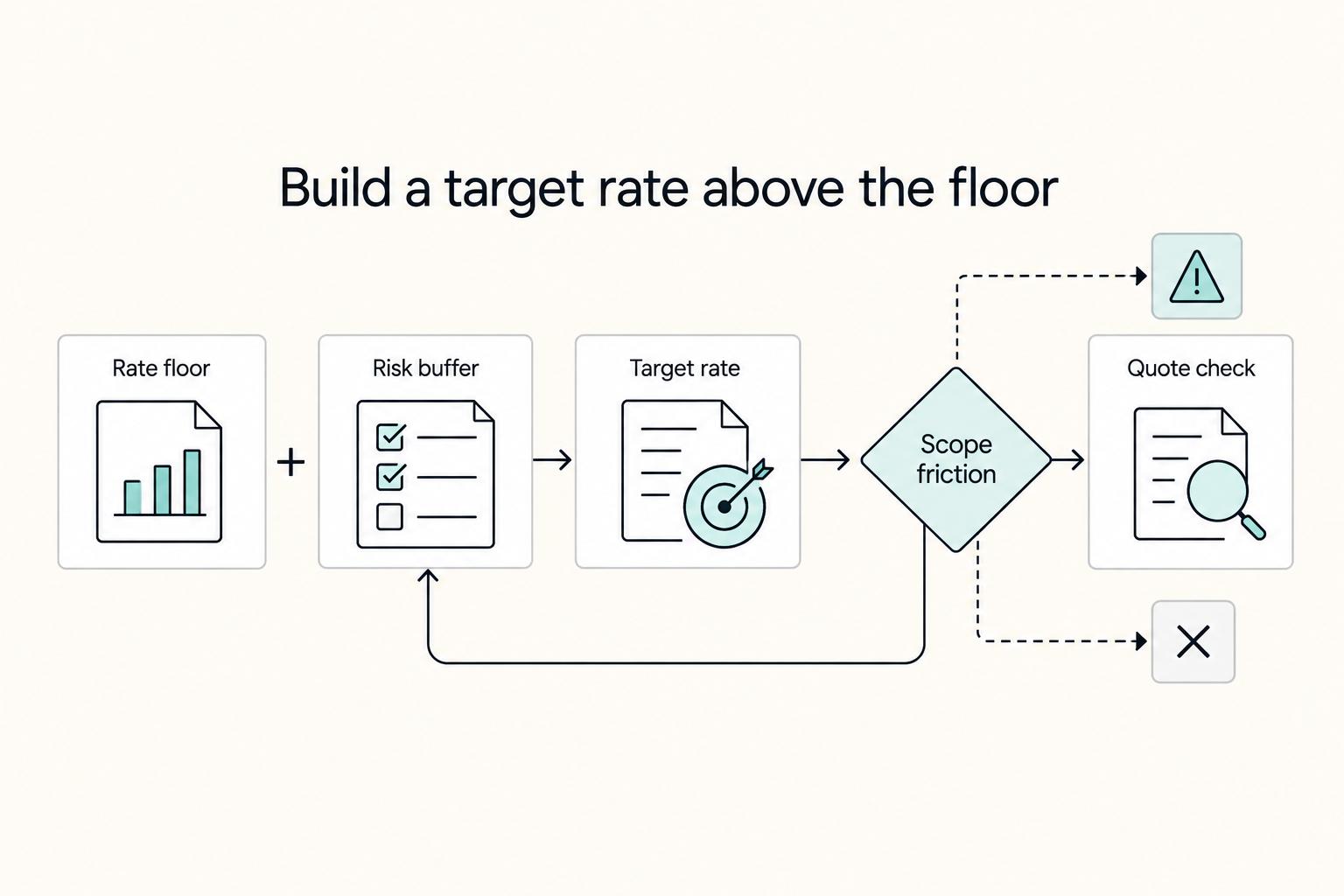
A workable rate is not the neat number a calculator produces. It is the number that still works after you account for real billable capacity, non-client time, scope drift, and the gap between sending an invoice and receiving cleared cash. Start with hourly math even if you do not plan to bill hourly, then turn that number into a quote with clear `payment terms`.
Build a Freelance Media Kit That Reduces Client Friction
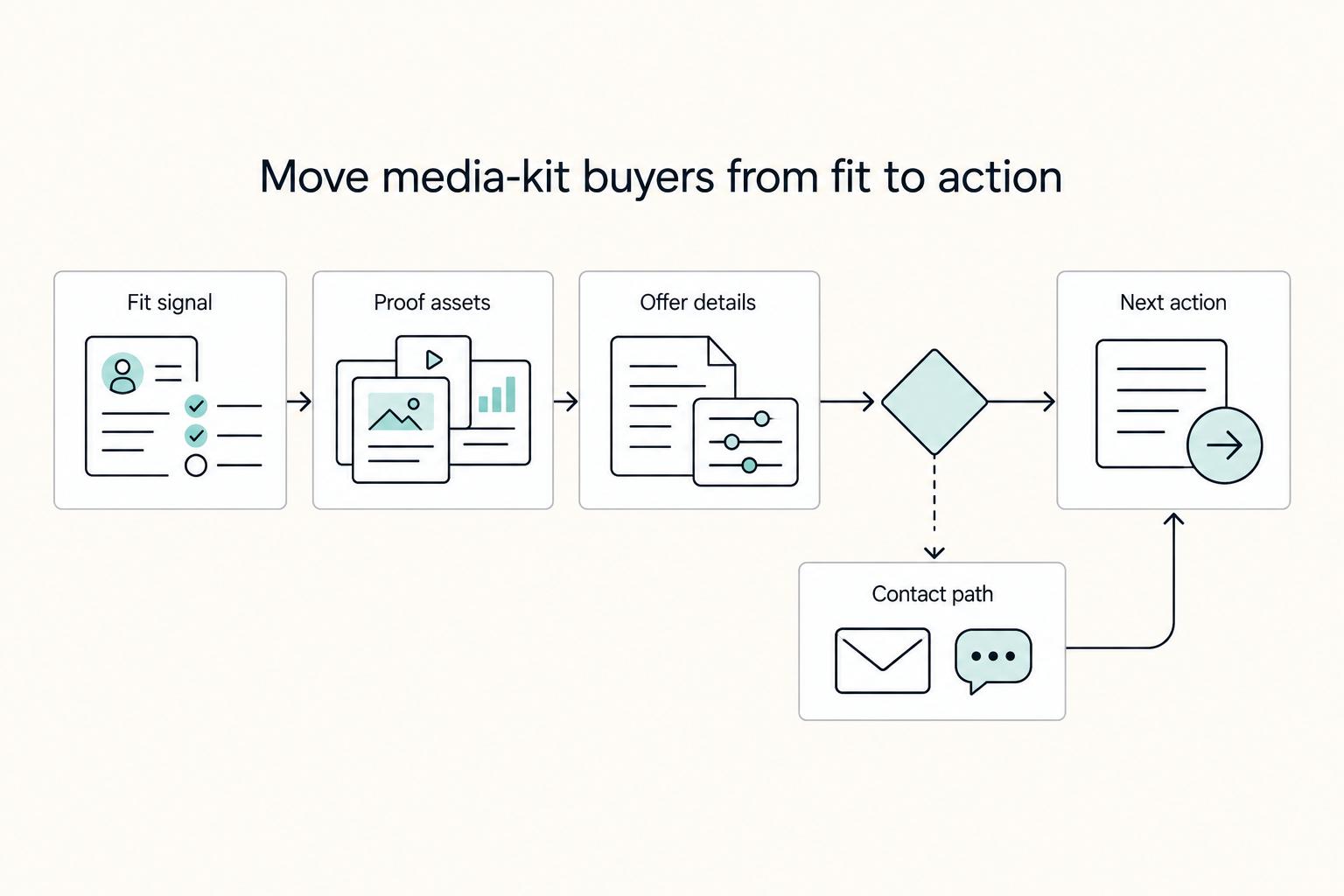
Treat your media kit as a buyer decision tool, not a design exercise. If a prospect can spot fit, proof, and the next action quickly, you cut a lot of avoidable back and forth before a call is scheduled. That is this document's job.
How to Monetize a YouTube Channel for Reliable Cashflow
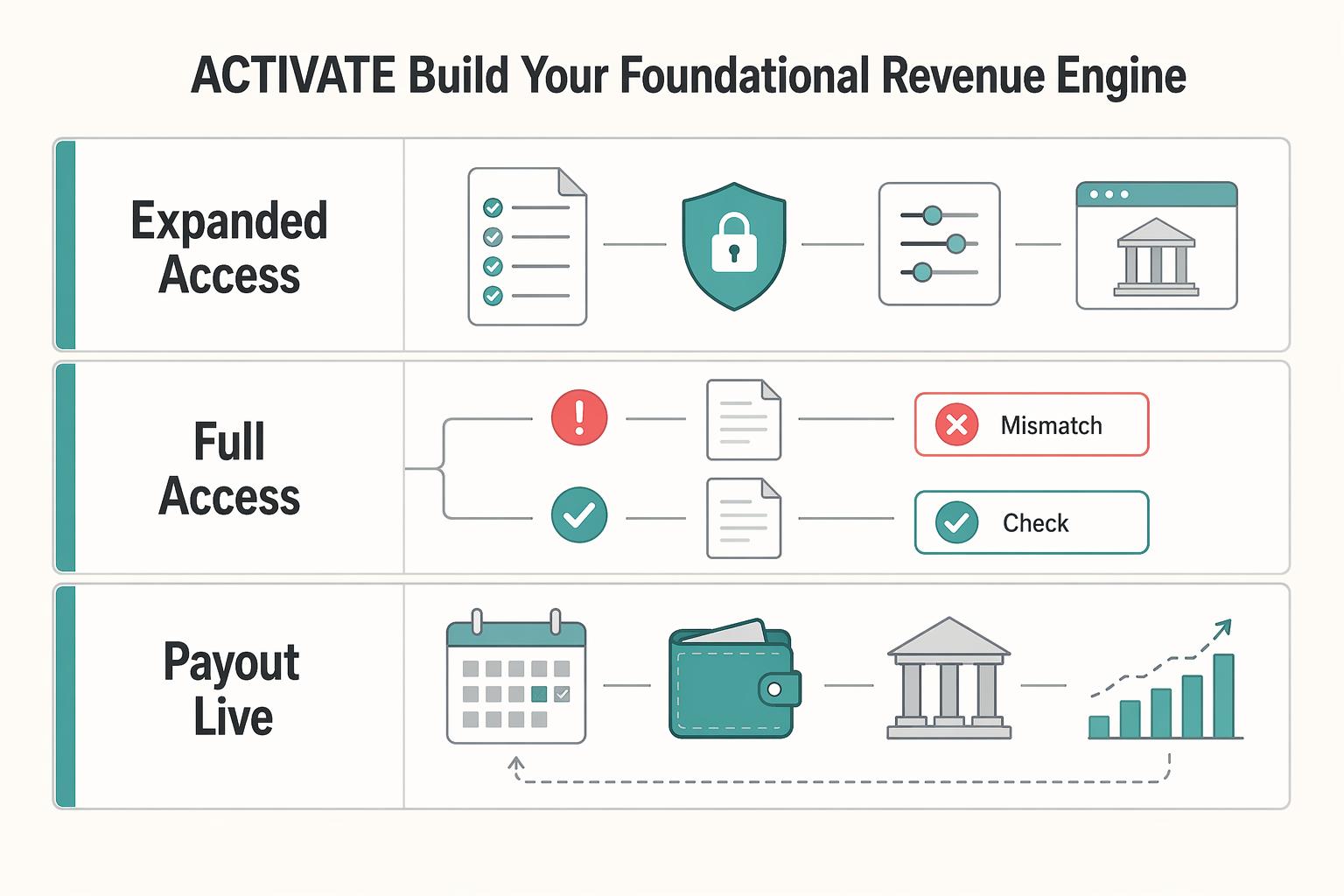
You are not just a content creator. You are running a business of one. That shift matters because most guides stop at feature checklists. They show you how to switch revenue on, but not how to build something resilient, compliant, and easier to manage over time.