
Quick Answer
For fiction writers, world-building works best as a repeatable practice when you build only what the current conflict and scenes need, defer nonessential lore, and keep one structured record of canon. Use a minimum viable world, test rules and power structures for contradictions, and log decisions as you draft so the setting supports story pressure, revision, and future books.
Why Your World-Building Checklist is a Project Risk, Not a Creative Tool#
A checklist becomes a project risk when it keeps demanding more lore than your story can actually use. Checklists are not the problem on their own. A writer's checklist can catch avoidable mistakes before submission. An open-ended lore checklist does something else: it quietly turns drafting time into background research with no clear stop point.
| Check | Prompt | Next action |
|---|---|---|
| Scene checkpoint | Name the exact scene where the new detail changes a choice, raises pressure, or prevents a contradiction | If you cannot point to a scene, it probably is not urgent |
| Narrative ROI | Open your outline in one window and your draft in another | Check line by line whether this lore supports plot progression, character pressure, or a revision decision |
| Opportunity cost | Ask what specific manuscript task you are postponing today | If the honest answer is drafting the confrontation scene or doing the revision pass that makes the book submittable, stop expanding the setting |
A useful self-diagnosis is simple. When you sit down to write, do you reach for the map, timeline, religion notes, naming rules, and trade routes before you can draft the next scene? If yes, your process may be feeding what some writers informally call World-Builder's Disease. That is not a formal diagnosis. It is a plain label for the habit of expanding the setting because the list always offers one more category to fill in.
Before you build anything else, use this checkpoint: name the exact scene where the new detail changes a choice, raises pressure, or prevents a contradiction. If you cannot point to a scene, it probably is not urgent.
Next comes Narrative ROI. Ask whether a world detail earns its place on the page. You do not need a formula, but you do need a test: open your outline in one window and your draft in another, then check line by line whether this lore supports plot progression, character pressure, or a revision decision. For fiction, your outline is the closest thing to a brief.
Then there is opportunity cost. Every hour you spend building material that does not serve the draft is an hour not spent on pages, revision, querying, or the marketing work that arrives after launch. That tradeoff is real.
Publishing pressure is rarely just "finish the book." It can also mean long waits while querying, launch uncertainty, or deadlines tied to bigger commitments like a three-book deal. Before another lore session, ask this: what specific manuscript task are you postponing today? If the honest answer is "drafting the confrontation scene" or "doing the revision pass that makes the book submittable," stop expanding the setting.
| Low-ROI world-building task | Story-critical alternative |
|---|---|
| Detailing a kingdom's full tax code | Write the scene where a tax raid forces your protagonist to act |
| Naming every moon, river, and province before chapter one works | Draft only the places your character must cross under pressure |
| Building a complete magic-school curriculum | Define the one rule that can fail at the worst possible moment |
| Writing pages of ancient history | Mark the two past events that directly shape a current conflict |
| Expanding lore notes before revision | Check the draft against the outline for missing setup, broken logic, or continuity gaps |
If your notes are growing faster than your manuscript, do not build a better checklist. Change the build order. The next move is a conflict-first minimum viable world: only the setting details your story needs to move.
The Minimum Viable World (MVW): Build for Conflict, Not for Completion#
Build the smallest world that can carry your core conflict on the page now. You are not aiming for a complete setting. You are aiming for enough structure to create pressure, block easy solutions, and avoid contradictions in draft.
Use MVW as a decision filter: if a detail is needed for the plotline, keep it; if not, defer it. That keeps attractive but nonessential lore from turning into story detritus.
Step 1. Define the conflict before you define the world#
State your central conflict in one or two plain sentences: what your character must survive, solve, win, escape, or expose.
| Story type | Define first | Also define | Pressure or cost |
|---|---|---|---|
| Fantasy rebellion | How power is enforced | What resistance costs | Why escape is hard |
| Science fiction survival | The failing resource | The hard limit | The cost of delay |
| Crime or political thriller | Who can hide the truth | Why they would | What exposure costs |
| Romance under setting pressure | The rule keeping the pair apart | Who enforces it | What breach risks |
Then ask: what must be true about the world for that conflict to exist? Build those rules first.
If a world detail does not create challenge, constrain choices, or raise stakes, it can wait.
Step 2. Keep only the load-bearing elements#
Review each world idea with one question: is this needed for the plotline, or not?
Tag every kept detail to a scene, chapter, or turning point. If you cannot point to where it changes a decision or prevents a contradiction, park it.
| Story situation | Build now | Park for later |
|---|---|---|
| Fantasy escape from an occupied city | Curfew, guard control points, consequences of capture, one usable route | Full royal genealogy, trade history, festival calendar |
| Science fiction colony failure | Resource bottleneck, technical constraint, decision authority, communication limits | Full planetary ecology, complete device catalogs, distant colony politics |
| Closed-community murder mystery | Access rules, alibi constraints, local power structure, concealment limits | Founding history, side-family backstories, decorative legends |
| Status-driven romance | The barrier rule, enforcement mechanism, concrete cost of breaking it | Full etiquette system, centuries of social history, unrelated customs |
Side plots may still matter, but treat them as optional until the main plot proves you need them.
Step 3. Defer the rest into a controlled backlog#
Keep nonessential ideas in a backlog, not in your active drafting prep. Use a short note: the idea, why it might matter, and what scene would trigger expansion.
This is the iceberg mindset without guesswork: build only the visible, story-critical layer now; leave the submerged layer parked until the manuscript asks for it.
When your MVW can carry the current draft cleanly, move to the next job: stress-test whether those world choices hold up under expansion and long-term continuity. For a related workflow angle, see The best 'writing apps' for authors (Scrivener).
The Scalability Audit: Stress-Testing Your World as a Long-Term IP Asset#
Before you lock canon, run a scalability check so your draft can expand without avoidable contradictions. Focus on three decisions: how power is accepted and contested, what your magic or tech cannot do, and which areas you are intentionally leaving open for later stories.
| Check | Focus | Record now | Verification |
|---|---|---|---|
| Check 1 | Power must have legitimacy and friction | Who holds power; why others accept it; where the internal tension sits | Can you point to a scene where that power structure changes a character decision? |
| Check 2 | Limits and costs must block easy solutions | What it can do; what it cannot do; what it costs; what failure looks like | Do a compatibility pass across your notes and draft so rules do not conflict with each other |
| Check 3 | Leave room on purpose | What characters can verify now; what they only believe; what remains outside current story reach | Keep some areas intentionally open so later books have room to grow without rewriting fixed canon |
| Design area | Closed-world choice | Scalable-world choice |
|---|---|---|
| Factions | One unified authority with no meaningful internal conflict | Competing houses, ministries, sects, or regional blocs inside the same authority |
| Rules | Powers or tech that solve problems on demand | Clear capabilities with explicit limits, costs, and failure states |
| Unexplored zones | Every region, era, and institution fully defined now | Some regions, periods, or groups left lightly defined until the story needs them |
Check 1. Power must have legitimacy and friction#
For each major authority, write three lines: who holds power, why others accept it, and where the internal tension sits. This keeps your system usable in scenes, not just tidy in notes.
Then ask one question: can you point to a scene where that power structure changes a character decision? If not, treat it as decorative and simplify or rework it.
Check 2. Limits and costs must block easy solutions#
For each major magic or tech capability, define what it can do, what it cannot do, what it costs, and what failure looks like. If those limits are unclear, stakes collapse and later fixes create continuity risk.
After that, do a compatibility pass across your notes and draft so rules do not conflict with each other. If you are writing alternate history, confirm your point of divergence actually ripples through later events instead of affecting one moment in isolation. A short milestone timeline (who, what, where, when, how) helps catch breaks early.
Check 3. Leave room on purpose#
Not every blank space is unfinished work. Keep some areas intentionally open so later books have room to grow without rewriting fixed canon.
Use a simple boundary: what characters can verify now, what they only believe, and what remains outside current story reach. This reduces revision friction and lowers the chance of continuity conflicts caused by over-defining too early.
Once this check passes, capture every decision in a single source of truth before you draft further. If you want a deeper workflow angle, read How to Write a Book to Establish Your Freelance Expertise.
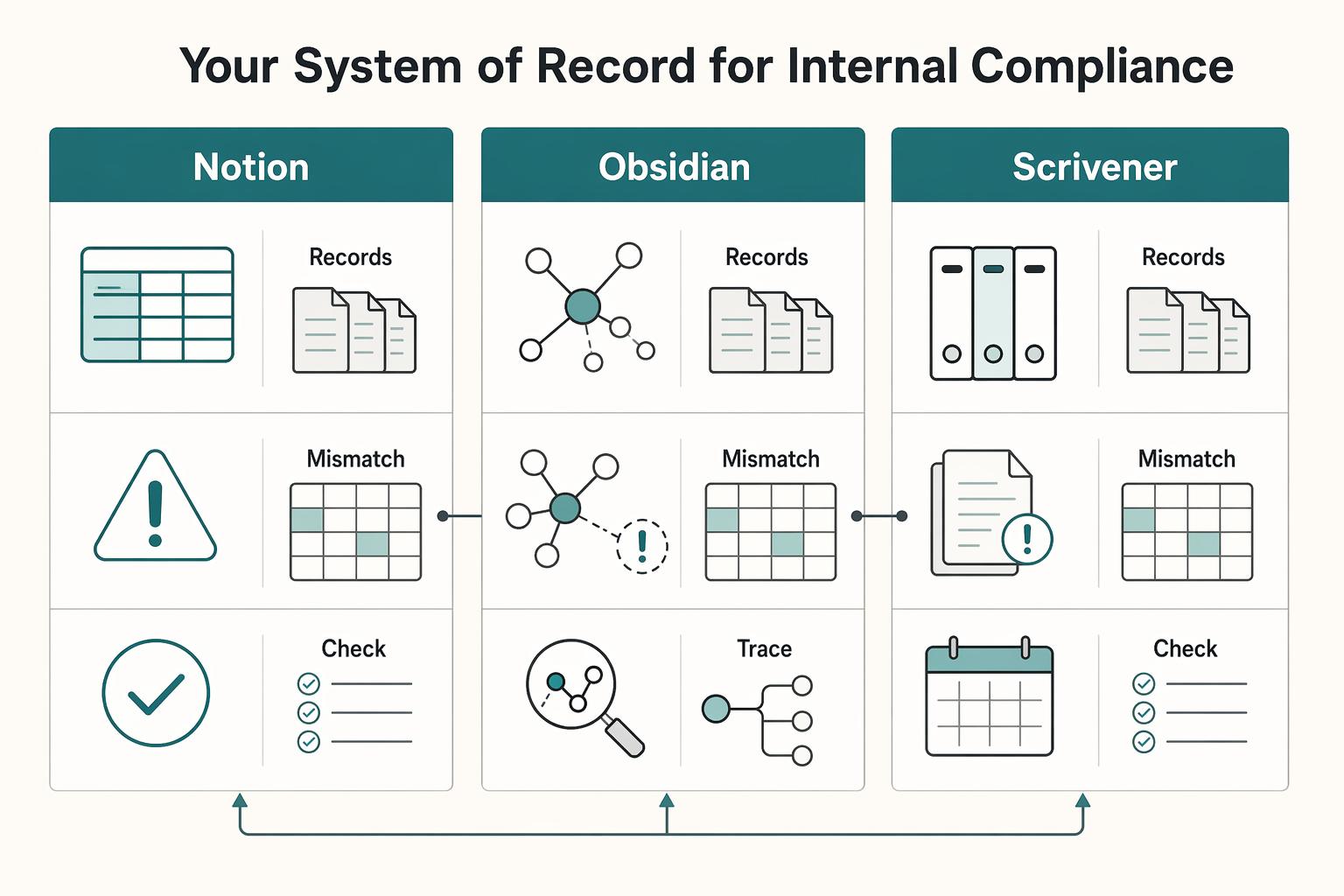
The Project Bible: Your System of Record for Internal Compliance#
Treat your Project Bible as your single source of truth, not a backup for memory. Once revisions begin, a world that felt coherent in your head can still break under scrutiny when canon is scattered.
Set it up in this order so it helps immediately in your draft workflow:
- Pick one home for canon.
- Move scattered notes into a foundational structure.
- Identify obvious gaps before adding more detail.
A complete World Bible can run 10 to 30+ pages depending on scope, but length is secondary. Retrieval matters more: if you cannot quickly find a rule, location, or timeline turning point, your system is not ready.
| Tool | Good fit if you want | Check before you commit |
|---|---|---|
| Notion | Structured records and sortable reference pages | Can you retrieve one rule, one location, and one past revision decision quickly? |
| Obsidian | Dense cross-links between notes | Can you trace cause and effect across rules, places, and timeline events without friction? |
| Scrivener | Research and manuscript side by side | Can you revise draft chapters and canon notes without losing track of what changed first? |
Use one consistent schema with five entry types: world rules, character records, location records, timeline events, and cross-links. Connect each rule to at least one affected character, one location or institution, and one event where that rule matters. If a rule never touches the story, treat it as optional until proven useful.
Keep a rulings page for hard canon decisions with reusable fields: Rule ID, Decision date, Current threshold after verification, Why this ruling exists, Affected entries, Open questions. Add lightweight version control by tagging entries as Canon, Provisional, or Deprecated, and keep a short changelog of what changed, where, and why. That habit helps prevent accidental reversals in sequels and keeps revision passes cleaner.
Done well, this gives you fewer continuity breaks and faster revisions.
Conclusion: From Architect to Asset Manager#
If you treat your setting as something you maintain, not something you finish, your next project gets easier to control. For world-building for fiction writers, the practical shift is simple: build what the current conflict needs, test whether the world can stretch without breaking, and keep one living record of what is true right now.
That posture shows up in ordinary working habits, not big declarations. You log decisions when a draft makes them canon. You keep version history clear enough that you can see what changed and why. You run continuity checks before revision and again before release, especially on returning rules, timelines, and relationships.
The key verification step is specific: check each important fact against where it first appeared and whether you still mean it to stand. If you skip that check, checklist thinking can pull your attention toward isolated parts and away from the balance of the whole story.
A structured record matters for the same reason any repository matters: it turns scattered notes into memory you can reuse, and it makes execution more repeatable. Your world record does that job for your book or series.
| Practice | Immediate benefit | Risk if skipped |
|---|---|---|
| Build only the world details required by scene and conflict needs | You draft sooner and avoid spending hours on unused lore | Scope creep and detail with no story job |
| Stress-test major rules, powers, and institutions for future story pressure | You spot weak points, limits, and pressure points early | Later books force contradictions or dead ends |
| Maintain one structured world record with decision logs and first-appearance notes | You can verify canon fast during drafting and revision | Scattered notes, continuity misses, preventable rework |
For your next project cycle, use this sequence to keep world-building under control:
- Draft one scene, then list the 3 world facts it cannot work without.
- Log every new canon decision the same day you write it.
- Before each revision pass, verify returning facts against first appearance.
- Before release, do one whole-story read focused only on balance, consistency, and unresolved contradictions.
We covered this in detail in A guide to creating a 'character profile' for a novel. If you want more direct help, Talk to Gruv.
Frequently Asked Questions
How much world-building is too much?
It is too much when it does not help your next scene, your next revision pass, or your next continuity check. If a detail will not change a character choice, raise story pressure, or prevent a contradiction, park it and get back to the draft.
What is the fastest way to build a world?
Start with the minimum world your current story needs, not full lore coverage. Write a sketch, sample chapter, or short outline, then list the three world facts that scene cannot work without.
How do you keep your world-building organized?
Keep one world-building document as your system of record and update it while you draft. The useful check is retrieval: you should be able to quickly find the rule, location, and past decision affecting the scene. Log new canon decisions and add them to your change log before you close the file.
What are common world-building mistakes?
The big mistake is treating prompt banks as requirements instead of tools. A list of questions can help you think, but it is a starting point, not a contract you must complete before drafting. Test unanswered questions inside a real scene plan and defer what the story does not need.
Should I start with a map or a story?
Start with the story conflict. Then map only the terrain, borders, distance, or institutions that make the problem harder. A practical move is to outline the obstacle in your opening act and sketch only the geography that creates it.
How do you reveal your world without info-dumping?
Put setting information inside action, dialogue, and consequences where possible. Instead of explaining a law, show your character paying for breaking it. On revision, rewrite explanation paragraphs as something the reader can watch happen.
What if I like using questionnaires and prompt lists?
Use them selectively and out of order. You do not need to answer every question before you start writing, and it is fine to leave some for later. Choose five prompts that directly touch your current chapter, then ignore the rest until the draft asks for more.
How do you keep consistency across installments?
Review your canon decisions and change log before drafting a sequel or companion story. Confirm each returning rule, relationship, and timeline fact against where it first appeared and its current status in your notes. Review your last canon entries and open questions before chapter one so you do not import a contradiction by accident.
Try a related tool
Researched and edited by the Gruv editorial team. Gruv builds cross-border billing, payouts, and finance-operations software for global businesses.
Sources
Includes 4 external sources outside the trusted-domain allowlist.
- catalog.southernct.edu/undergraduate/courses.htmltrusted
- english.as.virginia.edu/coursestrusted
- pmc.ncbi.nlm.nih.gov/articles/PMC3559433trusted
- waketech.edu/programs-courses/non-credit/personal-enrichmenttrusted
- gptzero.me/news/writing-checklistexternal
- graymatteredits.com/fiction/worldbuildingexternal
- mystorydoctor.com/writing-your-story-checklistexternal
- novel-software.com/worldbuilding-questionnaireexternal
Educational content only. Not legal, tax, or financial advice.
Related Posts
Value-Based Pricing for Freelancers Under Real Payment Risk
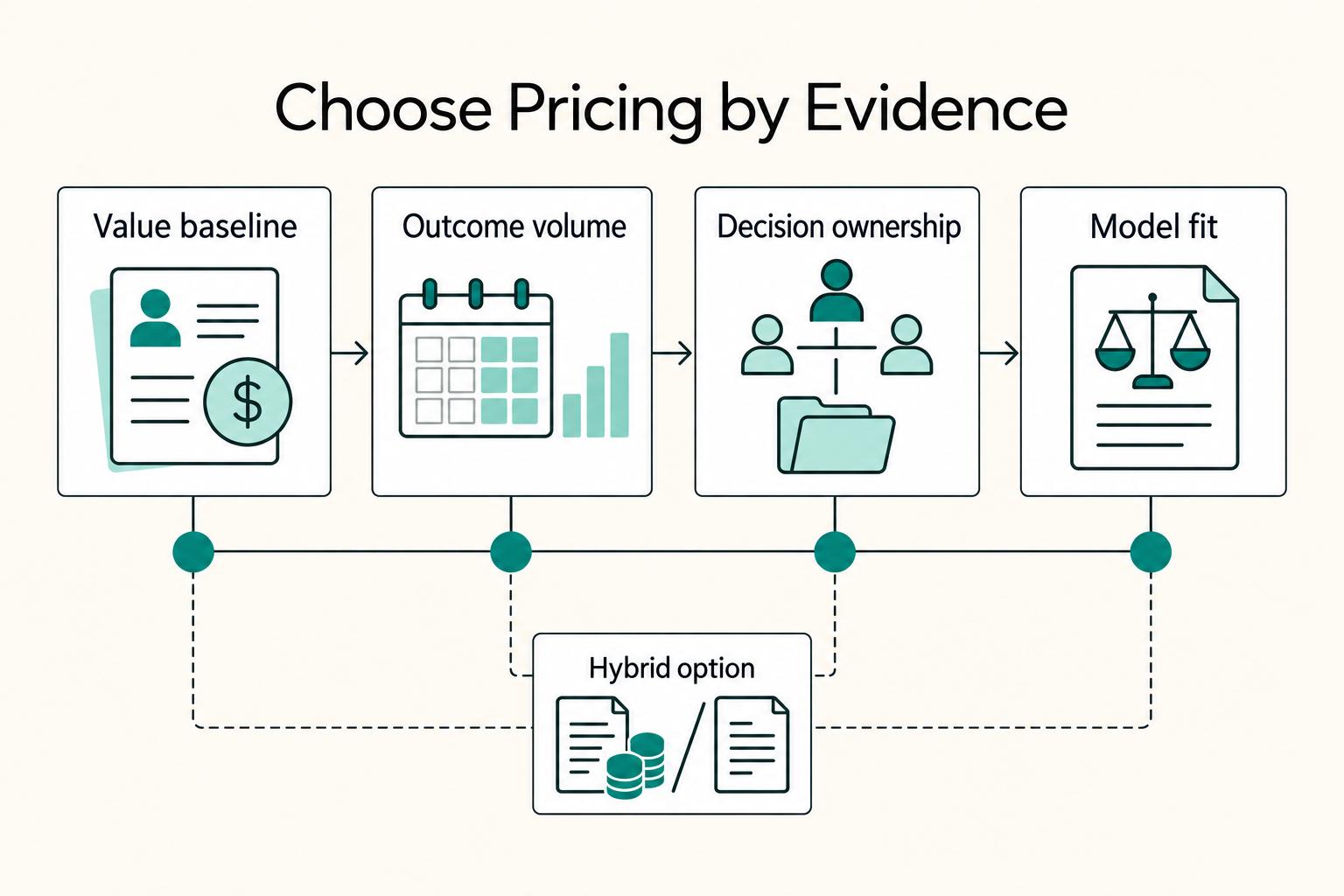
Value-based pricing works when you and the client can name the business result before kickoff and agree on how progress will be judged. If that link is weak, use a tighter model first. This is not about defending one pricing philosophy over another. It is about avoiding surprises by keeping pricing, scope, delivery, and payment aligned from day one.

How to Write a Book as a Freelancer Without Scope Drift
The book needs a defined job and a defined boundary before you draft. In this cycle, give it one job: either support your client book services, or strengthen your own authority book so your niche, offer, and sales conversations become clearer.
Scrivener vs Ulysses for Authors Who Need a Resilient Stack
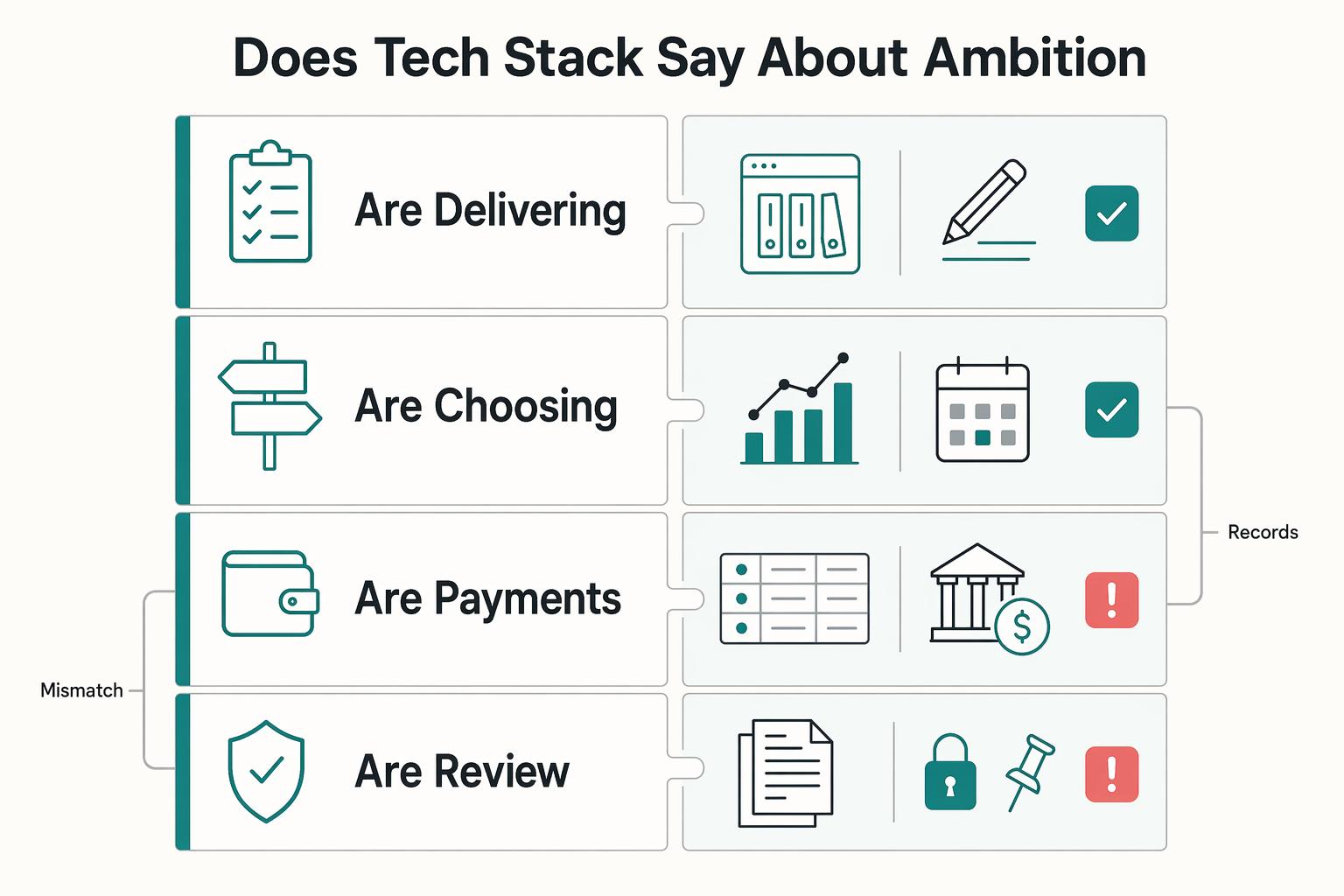
You are not just choosing a writing app. You are deciding how your solo business will handle draft control, file recovery, and the risk of getting stuck mid-project. That is why reviews of author tools should start with operational risk checks, not feature excitement.