
Quick Answer
Busy professionals should use ultralearning as a three-stage business process: pick one skill with verifiable ROI, learn it through direct practice and feedback, then monetize it through a narrowly scoped offer. Choose skills by market demand, durability, and service fit, protect focused learning blocks, and judge success by proof in proposals, pilots, and client work.
Professional stagnation is a quiet form of bankruptcy. The ground keeps shifting, and the half-life of professional skills is now estimated at less than five years. For experienced professionals, continuous learning is not personal enrichment. It is a core business function, the research and development arm of your career.
But a scattered mix of books, tutorials, and good intentions is not enough. To stay sharp, you need a disciplined, efficient way to acquire and monetize new capabilities. This three-stage protocol turns learning into a business process so your time has a clear purpose and a visible return.
Stage 1: The Investment Thesis - Selecting a Skill with Verifiable ROI#
Before you block learning time on your calendar, choose the skill the way you would choose any other business investment. The right choice is not the most interesting topic. It is the one most likely to reduce risk, improve the quality of what you already sell, or make your revenue less exposed if the market shifts.
A practical way to decide is to run each candidate skill through three lenses in order: market demand, skill durability, and service fit. That order matters. If demand is weak, durability may not save it. If the skill will not last, fit alone is often not enough. If it does not strengthen your current offer or open a credible adjacent offer, it may still be worth learning someday, just not in this cycle.
Use the three lenses like a decision flow#
Start with market demand in plain terms. Are real buyers asking for this, or are you projecting your own interest onto the market? Look for signals you can verify, such as recent client requests, lost proposals where this capability would have mattered, conversations with peers, or repeated mentions in your network.
Treat portal-only evidence carefully. A widely discussed hiring thread in July 2024 captured a familiar failure mode: a CV sent through a job portal can end up as "sediment at the bottom of the barrel." That does not prove networks always win, but it is a useful reminder that visible listings are not the same as reachable demand. If job-post volume is your only evidence, get a few direct market signals before you commit.
Next, test durability. Ask a simple question: will this still matter if a tool improves, a platform changes, or client preferences shift? Skills that map to recurring business problems may hold up better than skills tied to one app feature. The point is not to predict the future perfectly. It is to judge replacement risk. If a basic automation tool can absorb most of the task, you need a stronger reason to invest.
Then look at service fit. The best learning projects usually make your current offer easier to sell, easier to retain, or easier to price. If you are a freelance designer, a new skill that helps you explain analytics to clients may strengthen current engagements. If you work in operations, learning a niche your clients already rely on can turn scattered requests into a clearer service line. Write that connection in one sentence. If you cannot, treat that as a red flag.
| Candidate skill | Market demand evidence | Durability check | Service fit check | Rank |
|---|---|---|---|---|
| [Skill A] | Recent asks, lost proposals, referral conversations | Still useful if tools change? | Improves which current offer? | [1/2/3] |
| [Skill B] | Recent asks, lost proposals, referral conversations | Still useful if tools change? | Improves which current offer? | [1/2/3] |
| [Skill C] | Recent asks, lost proposals, referral conversations | Still useful if tools change? | Improves which current offer? | [1/2/3] |
Fill this in side by side, not one skill at a time. Comparison makes weak choices obvious. Pick one priority skill only. Splitting attention across two "pretty good" options usually delays both.
Build a simple payback worksheet#
Do not force a fake-precise ROI model when you do not have one. A short worksheet is enough to show whether the investment is sensible:
| Worksheet item | What to note |
|---|---|
| Learning hours required | [estimate] |
| Direct cash cost | [course, tools, exam, travel, coaching] |
| Income you will defer while learning | [estimate] |
| Total investment for this cycle | [estimate] |
| How the skill should pay back | [higher-value projects, stronger retention, better close rate, lower delivery risk] |
| Earliest likely test case | [client, proposal, portfolio piece, internal process] |
| Recoup window you would consider acceptable | [state it as a working assumption, not a fixed rule] |
One checkpoint matters here. If formal study or certification is part of the path, verify the real cost structure first. Funding options like assistantships, fee waivers, or student loans are mentioned in some education paths, but they are not automatic. Get the written details before you count on them.
Before you move on, pressure-test the choice with a defensive lens. In freelance work, that usually means three things: automation pressure on low-complexity tasks, client stack changes that make yesterday's skill less relevant, and buyer or process requirements that can quietly remove you from consideration.
Your evidence pack should include concrete notes such as client questions, proposal losses, tool changes in active accounts, or procurement asks. If a skill does not clearly strengthen your position against at least one of those threats, it is probably a no-go for now. If it passes all three lenses and you can name a credible first use case, move it to Stage 2.
For a step-by-step walkthrough, see A Guide to Continuing Professional Education (CPE) for CPAs.
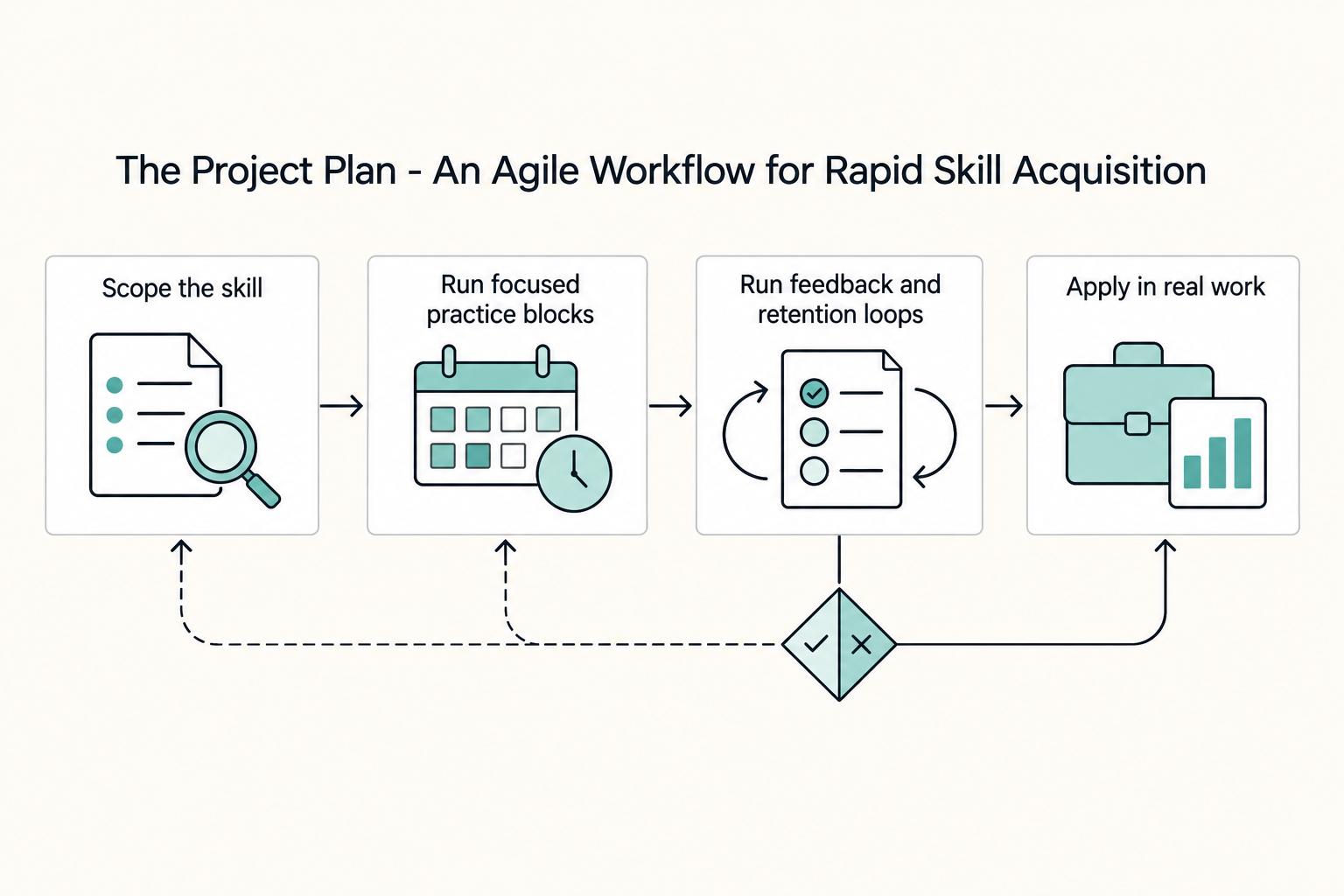
Stage 2: The Project Plan - An Agile Workflow for Rapid Skill Acquisition#
Treat this stage like an execution plan: scope the skill, practice it directly, test retention with feedback, and then use it in real work. The biggest risk is not low effort. It is splitting attention across too many resources and too little direct practice.
Use this four-phase sequence to run the work:
| Phase | Objective | Key actions | Proof of progress | Common failure mode |
|---|---|---|---|---|
| Scope the skill | Reduce overwhelm and define the shortest useful path | Deconstruct the skill into sub-skills, pick the first real use case, and keep only resources tied to that use case | One-page scope, task list, and baseline benchmark | Trying to learn the whole domain at once |
| Run focused practice blocks | Build usable ability through directness | Protect concentrated blocks, practice the actual task, isolate weak components, and drill them repeatedly | You complete a representative task with less prompting each round | Replacing practice with passive reading or watching |
| Run feedback and retention loops | Expose gaps and make learning stick | Use retrieval without notes, run practice tests or flashcards, explain concepts out loud, and log corrections | Error log, revised output, and a readiness gate | Delaying feedback or skipping recall checks |
| Apply in real work | Validate skill under business conditions | Use the skill in a proposal, pilot, internal workflow, or low-risk client task | A client-visible artifact or delivered output tied to the target task | Staying in rehearsal mode and never shipping |
Keep an evidence pack as you move from phase to phase: scope note, benchmark placeholder, practice outputs, retrieval checks, and one client-ready sample. Before you move into real work, ask one gate question: can you perform the representative task without notes at the bar you defined? If not, keep tightening drills.
Use a weekly cadence so the work survives a busy calendar:
- Protect learning blocks before the week fills with meetings.
- Batch admin and follow-up outside those blocks to limit context switching.
- Keep one active learning backlog; park ideas that do not support the current sub-skill.
- End each week with a short review: errors, next drill, and go/no-go for a real use case.
Keep the next step small, testable, and tied to the first market use case you defined in Stage 1.
If you want a deeper dive, read GDPR for Freelancers: A Step-by-Step Compliance Checklist for EU Clients.
Stage 3: The Monetization Roadmap - Deploying Your New Asset for Profit#
Once you can perform the representative task without notes, monetize it through your offer design, not your bio. If buyers cannot see a clearer problem solved, a tighter scope, or stronger proof, the skill stays private and unpaid.
Reposition before you raise price#
Start with one service that already has demand, then rewrite it around the client problem your new capability improves. Update one proposal template first so your test stays narrow and measurable.
| Offer element | Baseline offer | Enhanced offer |
|---|---|---|
| Client outcome | Current result stated in plain terms. | Same core result, with the new capability improving speed, quality, or decision confidence. |
| Delivery scope | Existing deliverables only. | Existing deliverables plus one new diagnostic, implementation, or optimization step tied directly to the new skill. |
| Proof required | Past samples from current work. | Pilot result, before/after sample, or annotated walkthrough showing the new capability in use. |
| Pricing logic | Priced from known scope and effort. | Priced from expanded scope and a stronger outcome case; confirm any premium in market, not by assumption. |
Do not raise your price just because the skill was hard to learn. Raise it only after real proposals and calls validate the repositioned offer.
Package a pilot service you can repeat#
Launch a minimum viable service you can deliver cleanly in a short window. Keep it to one page so scope does not drift.
| Pilot element | Definition |
|---|---|
| Target client profile | one client type you already understand |
| Problem statement | one costly issue they already acknowledge |
| Scoped deliverable | one bounded output, not open-ended advisory support |
| Success signal | one observable result or decision point to check after delivery |
| Feedback loop | one review call or written debrief to capture objections, confusion, and next-step demand |
Add risk controls before scaling#
Treat the first pilot as a limited test, not proof the model is ready at scale. A single successful pass can hide untested branches, so validate your assumptions before you expand.
Before you scale, validate three assumptions: buyers understand the offer quickly, delivery fits the promised scope, and follow-on demand exists. Pause if you keep overservicing, unusual client hand-holding shows up, or outcomes depend on exceptions.
| Decision | When it applies |
|---|---|
| Keep | comprehension is fast, delivery stays in scope, and follow-on demand appears |
| Revise | interest is real but buyers get stuck on framing, proof, or inclusions |
| Sunset | you keep over-explaining, over-delivering, or solving a problem buyers do not rank as urgent |
Keep a simple commit-history-style log: positioning version, proposal copy used, objections heard, pilot scope, result, and follow-on revenue.
Run a focused market rollout#
Start with three channels: publish one case study or portfolio sample, reactivate past clients who match the problem, and update your profile plus proposal language.
Adoption and traction checklist:
- Case study or portfolio sample published.
- Reactivation outreach sent to matched past clients.
- Profile and proposal copy updated.
- Replies and calls booked tracked.
- Pilot sales and early revenue from the new offer tracked.
If those numbers stay flat, your skill may be strong while the offer packaging is still weak. Related: How to Manage Your Time Effectively as a Freelancer.
Your Business is a Product. Keep Releasing New Versions.#
Treat your business like a product release cycle: keep what works, improve what is weak, sunset what no longer earns its place, and launch only when you have proof. If staying ahead depends on continual self-education, your learning only counts when it changes what you sell, how reliably you deliver, or what you stop offering.
Use versioning as an operating tool, not a slogan. Keep your core offer in production while you ship small updates, add one meaningful capability, or retire low-return work. Log why each change happened: demand signal, delivery risk reduced, stronger strategic fit, or better outcome evidence. That written record helps you avoid the common failure mode of rerunning old routines.
| Decision | Client demand signal | Delivery risk | Strategic fit | Evidence of outcomes |
|---|---|---|---|---|
| Keep | Stable, repeat requests | Controlled and predictable | Still supports your main offer | Existing wins still hold up |
| Improve | Demand is present, but execution is slower or weaker than it should be | Moderate, with a clear weak point | Strengthens the current offer | You can show before-and-after improvement |
| Sunset | Demand is fading, price pressure rises, or the work distracts from stronger services | High friction for low return | Weak fit with where you want to compete | Little recent proof worth showing |
| Launch | Clear pull from buyers or adjacent work | Acceptable only after a pilot | Strong fit with your positioning | Pilot, sample, or trial result exists |
Run the same loop each cycle: revisit your Investment Thesis, validate Project Plan execution results, then choose the next release move. If proof is weak, do not launch. If demand is steady but delivery is messy, improve before you expand.
Next-cycle checklist:
- Review current offers against the keep/improve/sunset/launch table.
- Re-read the original reason for your last ultralearning project.
- Gather proof from this cycle: sample, pilot, client feedback, and delivery notes.
- Decide one move for each offer: keep, improve, sunset, or defer launch.
- Define one capability upgrade and the exact task it must improve.
- Set a review cadence after verification.
You might also find this useful: Spaced Repetition for Learning New Skills in Client Work.
Frequently Asked Questions
How do you choose the learning project with the strongest return?
Choose the project with utility, not novelty. Start from repeated client requests or delivery bottlenecks, define one representative task, and learn the hardest part first in protected blocks. The strongest return comes from a skill that helps you do existing work more reliably and gives you proof such as a pilot output, annotated sample, or before-and-after result.
What is a realistic timeline when you already have a full client load?
Set a target window first, then adjust it after verification based on how long it takes to perform the representative task with feedback. Keep preparation light and spend most of your effort doing the actual task you want to sell. Compressed examples are anecdotes, not guarantees.
How do you fit this into a busy week without harming client work?
Protect concrete learning blocks before reactive work fills the week. Use your strongest attention for the hardest sub-skill, and end each session with a visible artifact like a draft, test output, or practice deliverable. If the block keeps getting displaced, reduce scope before you increase ambition.
Ultralearning or a certification: which should you choose?
Choose based on buyer expectations and risk. A credential may matter when target buyers explicitly require it, while a focused learning project may fit better when buyers care more about a sample, pilot, or working trial. If you are unsure, ask recent buyers what they would trust more for that specific service.
How do you stay motivated when the project gets hard?
Do not rely on motivation alone, because this kind of learning is mentally demanding by definition. When progress stalls, check whether the problem is normal difficulty, vague feedback, or poor transfer into real client work. Then make the next move concrete by narrowing the feedback, targeting the weak point directly, or rebuilding practice to match real service conditions.
Try a related tool
Researched and edited by the Gruv editorial team. Gruv builds cross-border billing, payouts, and finance-operations software for global businesses.
Sources
Includes 5 external sources outside the trusted-domain allowlist.
- fmu.edu/wp-content/uploads/2021/08/FMU-Packet-2021Or...trusted
- interactive.cornish.edu/browse/rtCuN4/279057/ultralearning-by_scott-...trusted
- prefeitura.aracaju.se.gov.br/Resources/itX3A4/4AD146/ultralearning__maste...trusted
- barnesandnoble.com/w/ultralearning-scott-h-young/1130636797external
- booksamillion.com/p/Ultralearning/Young-Scott-H/L422681623external
- ebay.com/itm/227205588803external
- feeds.harvardbusiness.org/harvardbusiness/ideacastexternal
- fromthegreennotebook.com/2020/03/07/are-you-an-ultralearnerexternal
Educational content only. Not legal, tax, or financial advice.
Related Posts

GDPR Compliance Checklist for Freelancers Working With EU Clients
Start by separating the decisions you are actually making. For a workable **GDPR setup**, run three distinct tracks and record each one in writing before the first invoice goes out: VAT treatment, GDPR scope and role, and daily privacy operations.
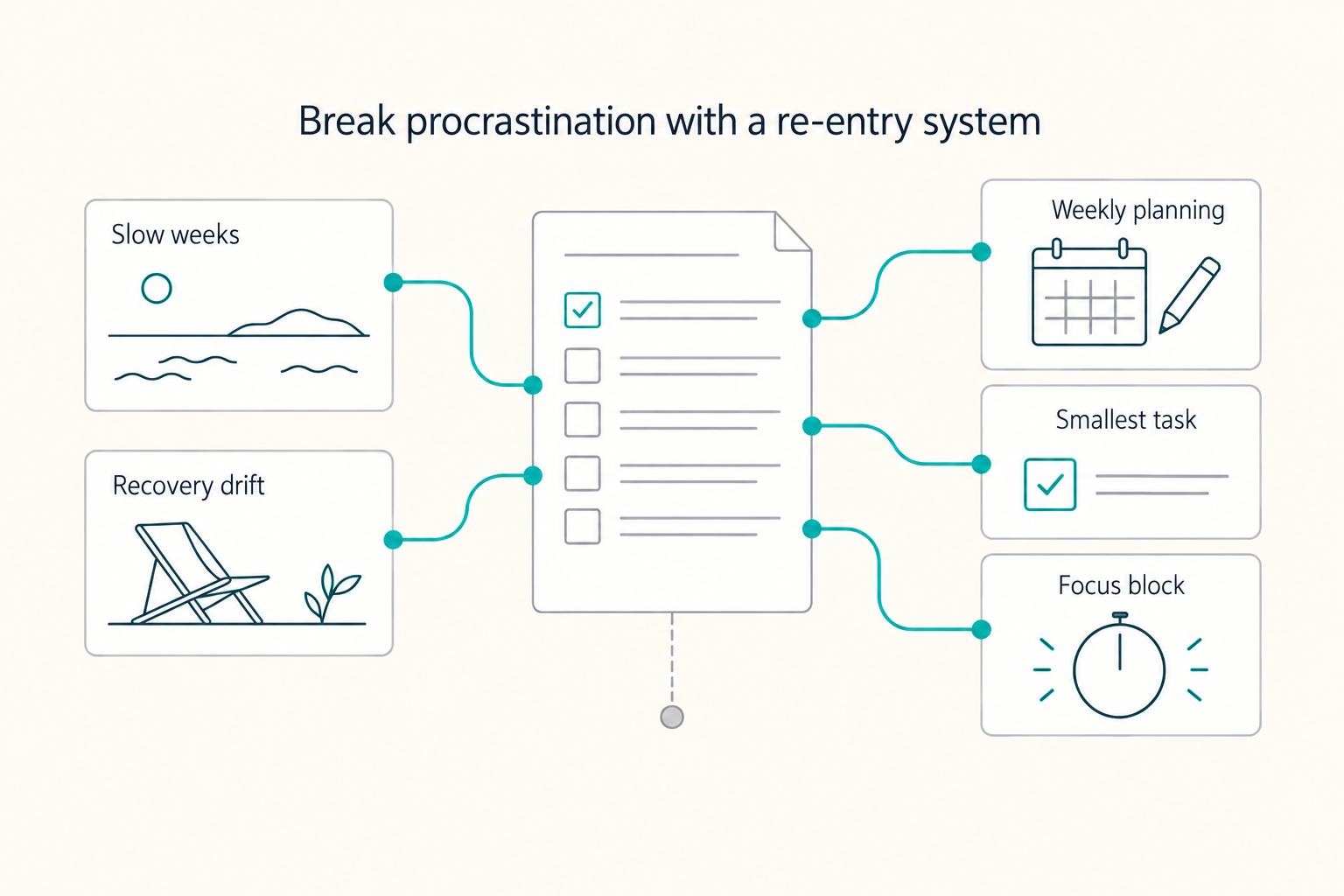
How to Manage Your Time Effectively as a Freelancer
Most freelancers struggle not because they work too few hours, but because they misallocate the hours they have—treating time as an infinite resource rather than a finite business asset with a real cost per unit. The solution is a three-layer operating system: a Time Budget Framework that commits hours to four categories before any client work is booked, a Weekly Operating Template that assigns those categories to specific calendar windows, and a monthly Admin Audit Checklist that reconciles invoicing, bookkeeping, and compliance records. Multi-client orchestration requires a WIP limit, dedicated client windows, and a capacity decision rule run before accepting new engagements. Together, these systems replace reactive decision-making with a repeatable structure that keeps delivery quality consistent, records audit-ready, and the freelance practice operationally durable.
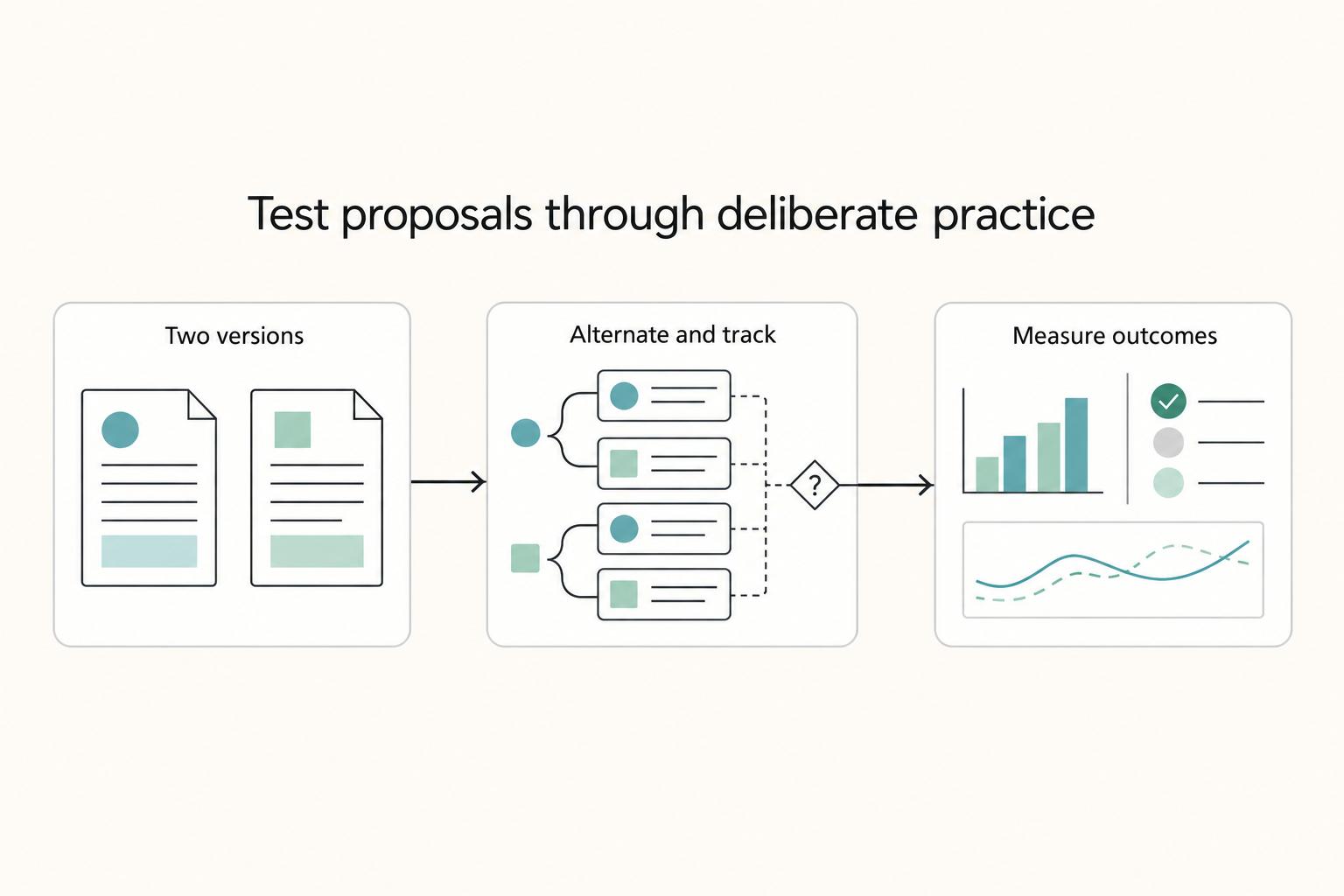
A freelancer's guide to 'Deliberate Practice'
Let's be direct: as a six-figure freelancer, you have already achieved mastery in your craft. Your technical skills are sharp, your portfolio is impressive, and you deliver exceptional work. That expertise got you here. But it is not what will get you to the next level of security and control. The real ceiling on your income, the true source of that low-grade anxiety humming beneath the surface of a successful business, isn't your talent. It's your business acumen.