
Quick Answer
Remote professionals should use State Department Travel Advisories as decision triggers for whether to proceed, adjust plans, or move into exit planning. Start by capturing the destination's level, risk indicators, and date issued, then pressure test safety, insurance, contracts, entry rules, and backup routes. Recheck after STEP alerts or advisory changes, and keep a dated evidence pack of what changed and what you decided.
How to translate government warnings into a strategic framework that protects your business, your finances, and your legal standing.#
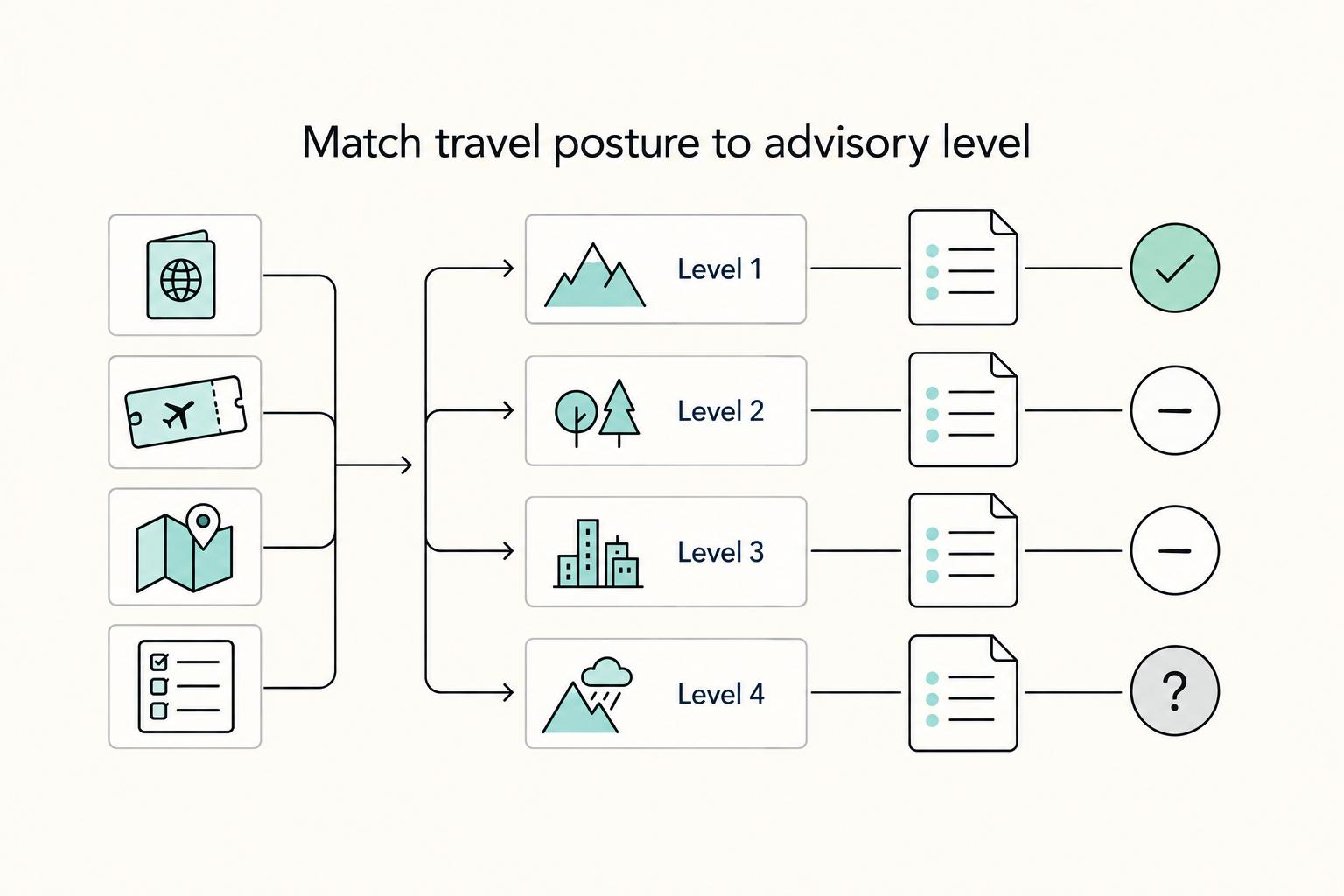
Treat State Department Travel Advisories as operating signals, not travel tips. Before you depart, use the advisory level to set your decision posture. Once you are in country, use updates to decide when to review your plan, tighten controls, or switch to exit planning.
Make checking the Travel Advisory your first planning step. There are 4 levels of increasing risk, conditions can change at any time, and updates do not follow a fixed cycle. Levels 1 and 2 are reviewed every 12 months, and Levels 3 and 4 at least every 6 months. They can also be updated earlier when conditions shift. The advisory map is updated daily, and destination pages combine the advisory with entry and exit requirements, local laws, and U.S. embassy guidance.
What each level should change in your decision posture#
| Advisory level | What it signals | Business exposure areas | What to verify now | Immediate documentation action |
|---|---|---|---|---|
| Level 1 Exercise normal precautions | Baseline operating environment with ordinary international risk | Routine disruption risk, basic service gaps, avoidable compliance mistakes | Entry rules, visa status, local laws, nearest U.S. embassy or consulate details | Save the destination page and log the advisory date in your travel folder |
| Level 2 Exercise increased caution | Elevated risk that requires active due diligence | Mobility disruptions, service reliability issues, client schedule pressure | Transport alternatives, lodging flexibility, work setup resilience, any insurance terms you need clarified | Keep written confirmations for bookings, coverage clarifications, and client timeline changes |
| Level 3 Reconsider travel | Serious risk requiring a documented go or no-go call | Sustained movement limits, reduced service access, continuity risk, compliance friction if plans change fast | Whether your trip purpose still justifies travel, viable backup location, realistic exit options | Record your decision rationale, fallback plan, and copies of flexible reservations |
| Level 4 Do not travel | Highest-risk posture, with possible life-threatening conditions and potentially very limited U.S. assistance during emergencies | Breakdown of travel continuity, major support constraints, severe business interruption risk | Whether to defer, reroute, or leave, and whether trusted contacts can access critical information | Share important documents, logins, and contacts with trusted people before travel |
If you cannot explain why your plan still works at the current level, your plan is not ready. The level sets your posture, but the risk indicators tell you what to pressure test.
Turn risk tags into operating questions#
Advisories also use risk indicators, including U (unrest), C (crime), H (health), K (kidnapping or hostage taking), T (terrorism), D (wrongful detention), and N (natural disaster). Convert each tag into practical operating checks:
| Tag | Meaning |
|---|---|
| U | Unrest |
| C | Crime |
| H | Health |
| K | Kidnapping or hostage taking |
| T | Terrorism |
| D | Wrongful detention |
| N | Natural disaster |
- Mobility disruptions: Can you still enter, move internally, and depart on short notice?
- Service access: Will your critical services stay usable enough for a longer stay?
- Client continuity: Could delivery timelines or payment timing break if local conditions shift?
- Compliance friction: If your route or timeline changes, do your visa dates and documents still hold?
A common mistake is stopping at the safety label and missing the operational knock-on effects.
Use STEP as a live input, not a one-time signup#
STEP works best as a live monitoring channel, not a box to tick once. Enroll when travel becomes likely and keep your profile current, including name, date of birth, passport number, emergency contact information, and your location and duration.
STEP sends email alerts from U.S. embassies and consulates, including security, demonstration, health, weather or natural disaster, and Travel Advisory updates. A newer STEP system launched on September 16, 2024. Prior enrollments did not automatically carry over, so re-enroll if you depended on the older setup. When an alert arrives, treat it as a trigger to review your operating checklist in the next sections.
Related: Canada's Digital Nomad Stream: How to Live and Work in Canada.
Beyond Personal Safety: A 3-Tiered Risk Mitigation Framework#
Once you have the latest updates, sort the risk into three buckets so nothing important gets missed. Use this as a decision table: identify the tier, complete the checks, save proof, and log who you notified.
| Tier | Core risk domain | Early warning signals | Immediate actions | Required documents | Who to notify |
|---|---|---|---|---|---|
| Tier 1 | Your personal safety and logistics | Route changes, unstable lodging, transport disruption, communication gaps, fast-changing local conditions | Confirm a backup route and backup stay, save offline copies of key IDs, set a check-in plan, confirm how you would leave on short notice | Passport copy, visa or entry record, itinerary, lodging confirmations, local emergency contacts | Trusted contact, travel companion, anyone expecting your arrival |
| Tier 2 | Your finances and contracts | Slipping delivery dates, unclear insurer terms, client questions about location or compliance, uncertain payment timing | Get written coverage confirmation from your insurer or broker, review contract language, including force majeure, notice periods, delay rights, and termination, confirm invoice path and backup approver | Insurer reply, policy schedule and exclusions, contract excerpts, scope or timeline change notes, billing contacts | Insurer or broker, client lead, accounts payable or finance contact |
| Tier 3 | Your compliance and residency exposure | Stay extension, route change, expiring permission, legal answer based on a summary page instead of official text | Recalculate date-sensitive rules after verification, re-check filing, registration, and exit duties against your updated dates, verify legal text against official versions before relying on it | Passport stamps, entry records, flight changes, lodging receipts, dated decision log, official PDF copies of legal text used for decisions | Immigration or tax adviser, if used, employer or client compliance contact, trusted contact with your records |
For Tier 2, do not rely on chat summaries or marketing copy. Ask direct written questions about destination, dates, and work activity. Then save the response with your policy and contract extracts.
For Tier 3, verification is mandatory. FederalRegister.gov states that it is not an official legal edition and that legal research should be checked against an official edition. Use the entry's "View printed version (PDF)" checkpoint on govinfo.gov, and remember the eCFR is labeled "authoritative but unofficial."
If alerts are part of your monitoring setup, use each update as a review trigger, not an automatic tier change. Reopen this table, decide whether your tier changed, and add a dated decision note.
You might also find this useful: The Best Power Adapters and Converters for Global Travel.
What to Check, Collect, and Decide at Each Advisory Level#
Use the advisory level as an execution trigger the same day you check it. U.S. Travel Advisories describe risks and recommended precautions for U.S. citizens. Capture the destination's level, risk indicators, and date issued, then decide whether you continue, adjust, or move into exit planning.
Use the level as your decision point#
| Advisory level | Trigger event | Required checks now | Documents to collect | Who you notify | Go or no-go output |
|---|---|---|---|---|---|
| Level 1 | You are planning travel, or doing a routine recheck during a stable stay. | Review the advisory, entry and exit requirements, local laws, and U.S. embassy tips. Enroll in STEP before departure. Confirm offline access to key IDs, itinerary, lodging, and emergency contacts. | Advisory record with level, risk indicators, date issued; passport copy; visa or entry record; itinerary; lodging confirmations; emergency contacts. | Trusted contact, travel companion, anyone expecting your arrival. | Go if baseline files are complete and you have a check-in plan and backup route or stay. |
| Level 2 | Destination is at Level 2, moves to Level 2, or risk indicators change without a level change. | Re-check whether the specific risk indicators affect your route, neighborhood, or work pattern. Request written insurance confirmation for your destination, dates, and work activity. Reconfirm client timelines, backup transport, and payment access. | Updated advisory capture; insurer email; contract notes; alternate route or lodging notes; check-in schedule; backup payment notes. | Client lead, insurer or broker, trusted contact. | Conditional go only if written coverage is confirmed and backups are workable. If not, reroute or delay. |
| Level 3 | Level changes to 3, or conditions materially increase operating risk. | Reassess whether in-person presence is necessary. Re-check embassy guidance, entry and exit rules, insurance in writing, and any date-sensitive entry/exit implications after verification. Get client acknowledgment for scope changes or remote fallback. | Advisory capture; dated decision note; insurer reply; contract excerpts; flight alternatives; passport or visa copies; mobility records, including booking changes and lodging receipts. | Client decision-maker, insurer or broker, trusted contact, immigration adviser if dates may shift. | No-go unless justified. Continue only if presence is necessary, coverage is confirmed, and exit options remain realistic. |
| Level 4 | Level changes to 4, or in-country alerts indicate life-threatening conditions. | Do not begin travel. If already there, check safest exit options, embassy instructions, transport status, communication backups, cash, medication, and ID access. Plan for limited or no U.S. government help during emergencies. Leave as soon as it is safe. | Advisory capture; STEP alerts; embassy messages; cancellation notices; border or transport notices; lodging receipts; dated contact log; copies of key IDs and permissions. | Client, insurer or broker, trusted contact, anyone managing your bookings or operations. | No-go for new travel. If in country, shift from normal delivery to departure planning or short-term shelter in place until safe exit is possible. |
Run it in timeline order#
The simplest way to stay organized is to run the checks in the order travel actually happens. Before departure, start with the advisory, then review entry and exit requirements, local laws, and embassy tips for your destination. Use the official destination record, not a summary, so you do not miss risk indicators or the issue date.
| Trigger or timing | What the article notes | Action |
|---|---|---|
| Before departure | Start with the advisory, then review entry and exit requirements, local laws, and embassy tips | Use the official destination record, not a summary |
| Formal review cadence | Levels 1 and 2 are reviewed every 12 months, and Levels 3 and 4 at least every 6 months | Do not rely only on cadence because conditions can change at any time |
| STEP alert | Security, demonstration, health, weather or natural disaster, and Travel Advisory updates | Reopen the table after each alert, log your dated decision, and update STEP if your itinerary changes |
| Indicator change without a level change | March 12, 2026: Guatemala's level did not change, but a terrorism risk indicator was added | Make and log a fresh decision |
| Level change | March 19, 2026: Venezuela's advisory level decreased to 3 | Make and log a fresh decision |
In country, treat monitoring as event-driven. Formal review cadence is every 12 months for Levels 1 and 2, and at least every 6 months for Levels 3 and 4, but conditions can change at any time.
Use STEP alerts as your recheck trigger. Reopen the table after each alert, log your dated decision, and update STEP if your itinerary changes.
Watch indicator changes, not only level changes. On March 12, 2026, Guatemala's level did not change, but a terrorism risk indicator was added. On March 19, 2026, Venezuela's advisory level decreased to 3. In both cases, you still make and log a fresh decision.
Build an evidence pack that scales by level#
Your documentation should scale with the risk, not stay static. Keep State Department emergency numbers accessible: 1 (888) 407-4747 (U.S. or Canada) and 1 (202) 501-4444 (overseas).
| Level | Evidence pack items |
|---|---|
| Level 1 | Advisory page or PDF with level, risk indicators, and date issued; itinerary; core ID and entry documents |
| Level 2 | Level 1 pack plus written insurer confirmation, contract notes, and backup route or lodging notes |
| Level 3 | Level 2 pack plus a dated decision note, mobility records, and client confirmation for revised scope or remote delivery |
| Level 4 | Disruption file with official alerts, embassy messages, cancellation or closure notices, and a dated contact log |
For a step-by-step walkthrough, see The Best Travel Insurance for Digital Nomads in 2026.
Before you lock flights or housing, map country-by-country stay risk and contingency days in the Tax Residency Tracker.
From Compliant Traveler to Confident Global Professional#
The practical shift is simple: use Travel Advisories as decision triggers, not background reading. When conditions change, re-check before you proceed. Keep the loop simple: review the current advisory level and risk indicators, check destination details and recent alerts, verify insurance terms and entry requirements, and confirm your continuity plan.
The advisory is your start signal, not your full plan. State guidance says to check advisories early and re-check as conditions shift, so keep a dated record of what you reviewed, what changed, and what you decided.
| Risk lens | Reactive traveler behavior | Confident professional behavior |
|---|---|---|
| Safety | Checks the country level once and moves on. | Re-checks the destination page, risk indicators, and recent alerts when planning and whenever conditions shift. |
| Insurance and commercial exposure | Assumes coverage still applies. | Reviews the policy carefully for destination and planned activities, then keeps written confirmation with trip records. |
| Compliance and documents | Focuses on flights and passport only. | Reviews entry and exit requirements and local laws, organizes required travel documents, and keeps dated decision notes. |
| Continuity | Improvises after disruption starts. | Plans for travel disruptions, including possible airspace closures, and keeps backup travel and contact steps ready. |
Avoid two preventable misses: relying on old checks and failing to document changes. For long stays, keep federal responsibilities in scope, including U.S. taxes.
Check the current advisory and alerts. Save your dated evidence, verify insurance and entry rules, confirm STEP enrollment, and record your proceed or pause decision. If risk rises to Level 3 or Level 4, prep backups. For a single execution list, use the digital nomad pre-travel checklist.
If you want a deeper dive, read the 2026 Global Digital Nomad Visa Index.
When you are ready to convert this advisory plan into next steps, use the Visa Cheatsheet for Digital Nomads.
Frequently Asked Questions
Should I cancel a trip if the destination is Level 2?
Not automatically. Treat Level 2 as a pause for due diligence and compare the Destination, Level, Risk Indicators, and Date Issued to your exact route, lodging, and work plan. If your itinerary avoids the flagged risks and your insurer confirms coverage in writing, you can proceed with adjustments. If not, pause and run the Level 2 checklist.
How do Travel Advisories affect my travel insurance?
Travel Advisories do not automatically keep or void coverage because terms are policy specific. Ask your insurer or broker for written confirmation for your destination, dates, and work activity, and save any restrictions after verification. If you cannot get written confirmation, treat that as a pause signal before travel.
Is STEP enough on its own?
No. STEP is a notification channel, not your full decision system. Use it alongside the destination Travel Advisory and country information page, enroll before departure, and keep your city, lodging, and dates current.
What is the difference between a Travel Advisory and an Alert?
A Travel Advisory is the standing country level product with an overall 1 to 4 level, risk information, and recommended precautions for U.S. citizens. An Alert is a specific in-country safety or security notice from a U.S. embassy or consulate and can require same-day adjustments. Use the advisory for your baseline plan and alerts for immediate changes, then log both with dates.
Can I still travel to a Level 4 destination for essential business?
Treat Level 4, Do Not Travel, as a no-go for new travel and an exit-oriented posture if you are already in country. Some country pages also note limits on U.S. emergency-service support, which can change what is realistic in your contingency plan. If you are already there, follow embassy or consulate guidance, document updates, and leave when it is safe.
Does the overall country level tell me everything I need to know?
No. A country can have one overall level while listing specific areas at higher levels, so your real decision depends on your exact city, route, and work location. The article's India example showed overall Level 2 with areas at Levels 3 and 4. Save the current page or PDF before deciding, and if any part of your plan touches a higher-risk area, escalate and run the higher-level checklist.
What should I record each time I check an advisory?
Record the level, risk indicators, and date issued every time, plus what changed and what you decided. Save the page, add a dated decision note, and attach supporting items such as insurer replies, route changes, and lodging backups. Tag each check as proceed, pause, escalate, or exit.
Try a related tool
Researched and edited by the Gruv editorial team. Gruv builds cross-border billing, payouts, and finance-operations software for global businesses.
Sources
- ecfr.gov/current/title-47/chapter-I/subchapter-B/part-64trusted
- federalregister.gov/documents/2025/01/08/2024-31486/preventing-a...trusted
- federalregister.gov/documents/2025/08/07/2025-14992/normalizing-...trusted
- help.cbp.gov/s/article/Article-1385trusted
- hr.usembassy.gov/launch-of-the-new-smart-traveler-enrollment-...trusted
- state.gov/travelerstrusted
- state.gov/reports/to-walk-the-earth-in-safety-2024trusted
- travel.state.gov/en/international-travel/travel-advisories/sm...trusted
Educational content only. Not legal, tax, or financial advice.
Related Posts

The 2026 Global Digital Nomad Visa Index for 50+ Countries
Start with legal fit, not lifestyle filters. The practical order is simple: choose a route you can actually document, then decide where you want to live. That single change cuts a lot of wasted comparison work and stops you from falling in love with places that were never a real filing option.
Canada Digital Nomad Visa Planning for Visitor Status and Work Permits
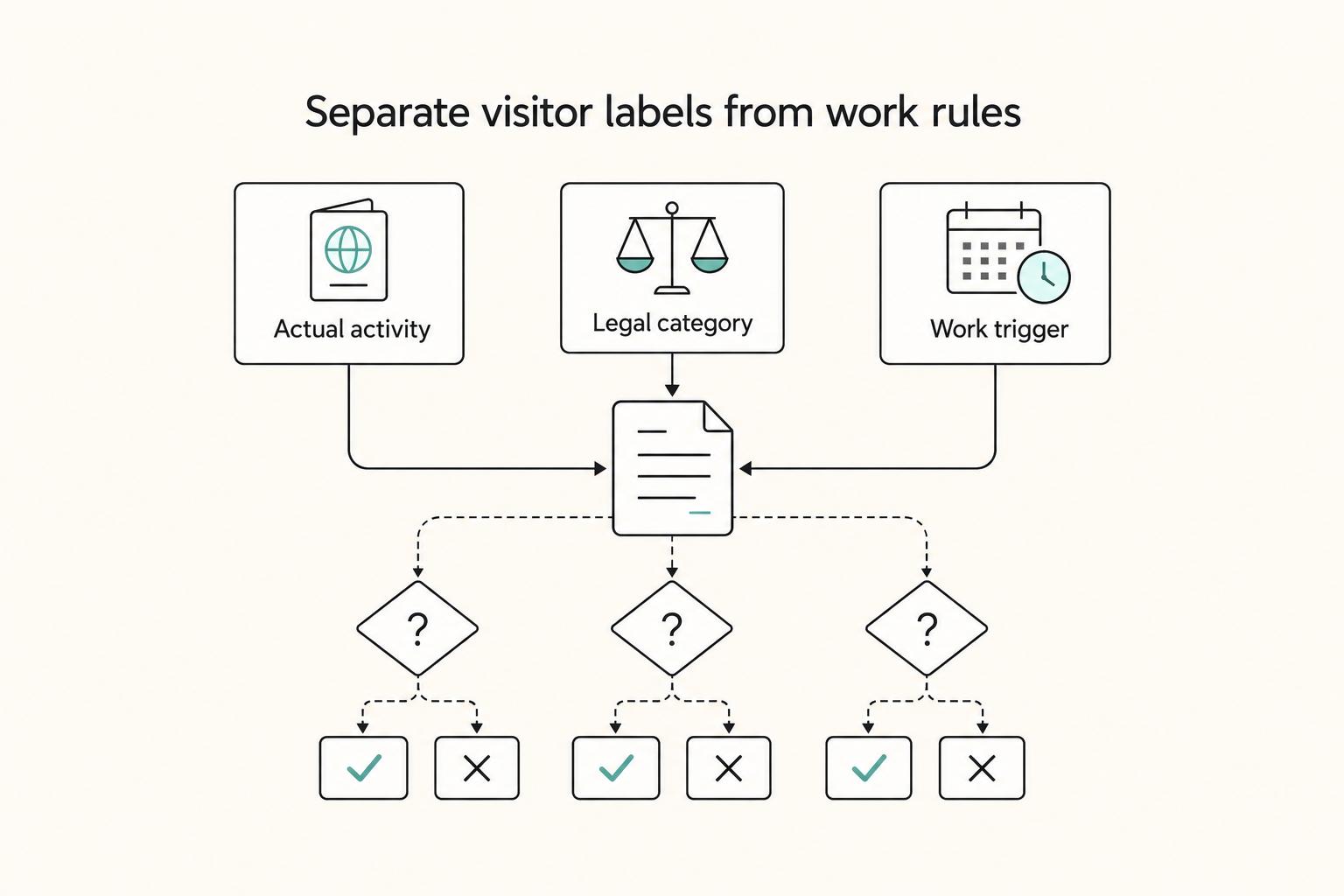
The phrase `canada digital nomad visa` is useful for search, but misleading if you treat it like a legal category. It is shorthand for existing Canadian status options, mainly visitor status and work permit rules, not a standalone visa stream with its own fixed process. That difference is not just technical. It changes how you should plan the trip, describe your purpose at entry, and organize your records before you leave.

Digital Nomad Pre-Travel Checklist for Long-Stay Moves
Set your departure dates first. Long-term travel planning breaks down when timing stays vague. Vague timing usually turns into rushed paperwork, rushed bookings, or unresolved home obligations.