
Quick Answer
Start by confirming your case is in scope, then file a review with SSA or your Federal Benefits Unit using your SSA notice, foreign pension statement, and work-coverage records. WEP no longer applies to benefits payable from January 2024 onward, with December 2023 as the last month under old WEP treatment. After SSA updates your record, match the notice to deposit history before changing retirement timing, portfolio risk, or cross-border tax assumptions.
The WEP Repeal Is Here: Your Guide to Reclaiming Full Social Security#
Short answer: WEP no longer reduces your own Social Security benefit calculation for benefits payable from January 2024 onward. That can matter if you worked in a job tied to a foreign social security system or another pension arrangement where Social Security taxes were not withheld.
This article is for you if you receive or expect to claim U.S. Social Security retirement or disability benefits and want to verify how this change affects your record. It also applies if you receive or expect a foreign pension or other non-covered pension and want to confirm whether a past WEP reduction should no longer apply. If you never had a pension from non-covered work, this is probably not the right guide.
The law behind the change is the Social Security Fairness Act of 2023, signed on January 5, 2025. SSA says the Act ended both WEP and GPO. For WEP specifically, SSA says December 2023 is the last month WEP applies, and for benefits payable for January 2024 and later, WEP no longer applies. Some older SSA pages still use pre-repeal wording, so do not rely on a legacy international WEP page as your final answer.
| Point | Before repeal | After repeal |
|---|---|---|
| Your own Social Security benefit | Could be reduced by WEP | No WEP reduction |
| Foreign pension relevance | Could trigger the reduction if tied to non-covered work | Still relevant for verification, but not for a January 2024+ WEP cut |
| Effective payable period | Reduction rules applied through December 2023 | No WEP for benefits payable for January 2024 and later |
The job now is not to guess the increase. It is to confirm that the change applies to your record, get the right documents in one place, and then check what SSA actually revised. Before you estimate dollars, pull your SSA notice or benefit estimate, your foreign pension statement, and any record showing whether that work was covered by Social Security taxes. In Phase 1, you will secure claim status and documents. Then you can move to the numbers.
If you want a deeper dive, read Digital Nomad Taxes in 2026 With a Defensible Filing Plan. Need a quick next step? Browse Gruv tools.
Phase 1: Secure and Claim Your Benefits#
Start by confirming that your case is in scope and building a complete file. Do not estimate dollars until SSA confirms claim handling.
Do this now#
Place your case in one of three buckets before you submit anything:
| Bucket | When it fits | Details |
|---|---|---|
| Likely in scope | You already receive a U.S. benefit that was reduced because of a non-covered pension, or you expect both a U.S. benefit and a foreign or other non-covered pension | SSA says that if you have not applied yet, your benefit will not be reduced under the old WEP rules, and for benefits payable for January 2024 and later, WEP no longer applies |
| Likely out of scope | You do not receive a pension from non-covered work, or the foreign payment is not treated as a pension tied to non-covered earnings | Example checkpoint: SSA states Japan's National Pension is residency-based and not subject to WEP |
| Needs professional review | Your work history is mixed, or your pension records are partial or unclear | SSA often needs clarification on pension type, start date, and whether the earnings were non-covered |
Prepare this file#
Do not assume every office uses the same document standard. Build a two-tier file so you can answer the first request quickly and handle follow-ups without rework.
| Evidence bucket | Required to start | Helpful if available |
|---|---|---|
| Identity | Passport or other government ID, plus your Social Security number | Proof of current address |
| U.S. benefit record | SSA award notice, benefit estimate, or notice showing a prior reduction | Online statement printout, prior SSA correspondence |
| Foreign pension record | Pension statement or award letter showing plan name, entitlement basis, and start date | Work history records, contribution records, employer letters |
If records are not in English, ask the office handling your case to confirm whether certified translation is required and which format they accept.
Send this request#
Use the channel closest to your existing SSA record first:
| Situation | Primary contact | What to ask |
|---|---|---|
| You already have an SSA claim, notice, or office contact | Start there | Request review under the Social Security Fairness Act |
| You live abroad and normally work through a Federal Benefits Unit | Contact the FBU that serves your country | Ask where pension evidence should be sent |
| The response is delayed, incomplete, or based on older WEP language | Resubmit through the alternate SSA/FBU path | Ask which office owns your case |
Watch for country-specific instructions. In Japan, SSA may request Form SSA-308 and the initial pension award letter, and the U.S. Embassy page warns that sending those documents to FBU Tokyo delays processing.
Run this like an audit trail: keep a submission log, record all dates and case identifiers, store copies of every upload or email, and follow up on a fixed cadence recorded in your file. Move to Phase 2 only after claim confirmation is in place and your file is complete.
You might also find this useful: A Guide to Schedule B (Interest and Ordinary Dividends) for US Expats.
Phase 2: Quantify the Financial Impact#
Do not move into long-term planning until your revised SSA benefit and any one-time payment reconcile against your records. If the numbers do not match, treat that as an active admin issue, not a planning input.
Verify the baseline amount first#
Your anchor is the Primary Insurance Amount (PIA): the baseline amount SSA uses to determine your benefit. In this phase, you are not recalculating PIA. You are verifying that SSA's revised payable amount now aligns with official SSA records after WEP stopped applying for benefits payable from January 2024 onward, with reductions previously applying for December 2023 and earlier.
Use records, not memory:
- Prior SSA notice showing the reduced amount.
- New SSA notice or claim update showing the revised amount.
- Payment history and bank deposits.
- Your
my Social Securityaccount (SSA says your Benefit Statement tax form is available there). - Current bank account on file with SSA (SSA says one-time payments are sent to the bank account on file).
Build your before-and-after comparison#
Use only statement values you can verify.
| Checkpoint | Old SSA record | Revised SSA record | Your note |
|---|---|---|---|
| Benefit type | Add verified benefit type | Add verified benefit type | Retirement or disability |
| Your prior benefit | Add prior monthly amount | From prior notice or payment record | |
| Your revised benefit | Add revised monthly amount | From new notice or updated record | |
| Your monthly delta | Revised benefit minus prior benefit | ||
| Effective month used by SSA | Add verified month | Add verified month | Confirm against SSA correspondence |
If the revised amount appears in a notice but not yet in your deposit history, keep both facts in your file and wait for the payment cycle before updating core assumptions.
For retroactive pay, use this worksheet with placeholders only:
- Add verified start month for increase
- Add verified processing month or first corrected payment month
- Add verified month count
- Estimated retro payment: monthly delta × verified month count
Keep the estimate provisional until claim status, notice, and deposits agree. Pending adjustments or offset corrections can create temporary gaps.
Update your forecast only after reconciliation#
Once the audit checks hold, update your model with this checklist:
- Replace old Social Security line items with the revised monthly benefit and record the verification date.
- Add the one-time payment as separate cash inflow, not recurring income.
- Rework withdrawal assumptions using the higher guaranteed-income floor.
- Add tax estimate placeholders for U.S. and residence-country review.
- Keep scenario notes:
- Conservative: monthly revision confirmed, one-time payment not yet posted. * Baseline: monthly revision and one-time payment both verified.
Before Phase 3, set a hard gate: proceed only when statement values, claim-status updates, and payment records tell the same story. If anything is still off, log the discrepancy and route it to SSA, your FBU contact, or your advisor.
Related: the six-month Japan digital nomad visa runbook.
Phase 3: Reshape Your Long-Term Financial Strategy#
After your revised notice and deposits match, make one explicit choice: keep your current plan and bank the added margin, or update the plan to reflect a higher guaranteed income floor.
| Area | Inputs | Default action | Escalate when |
|---|---|---|---|
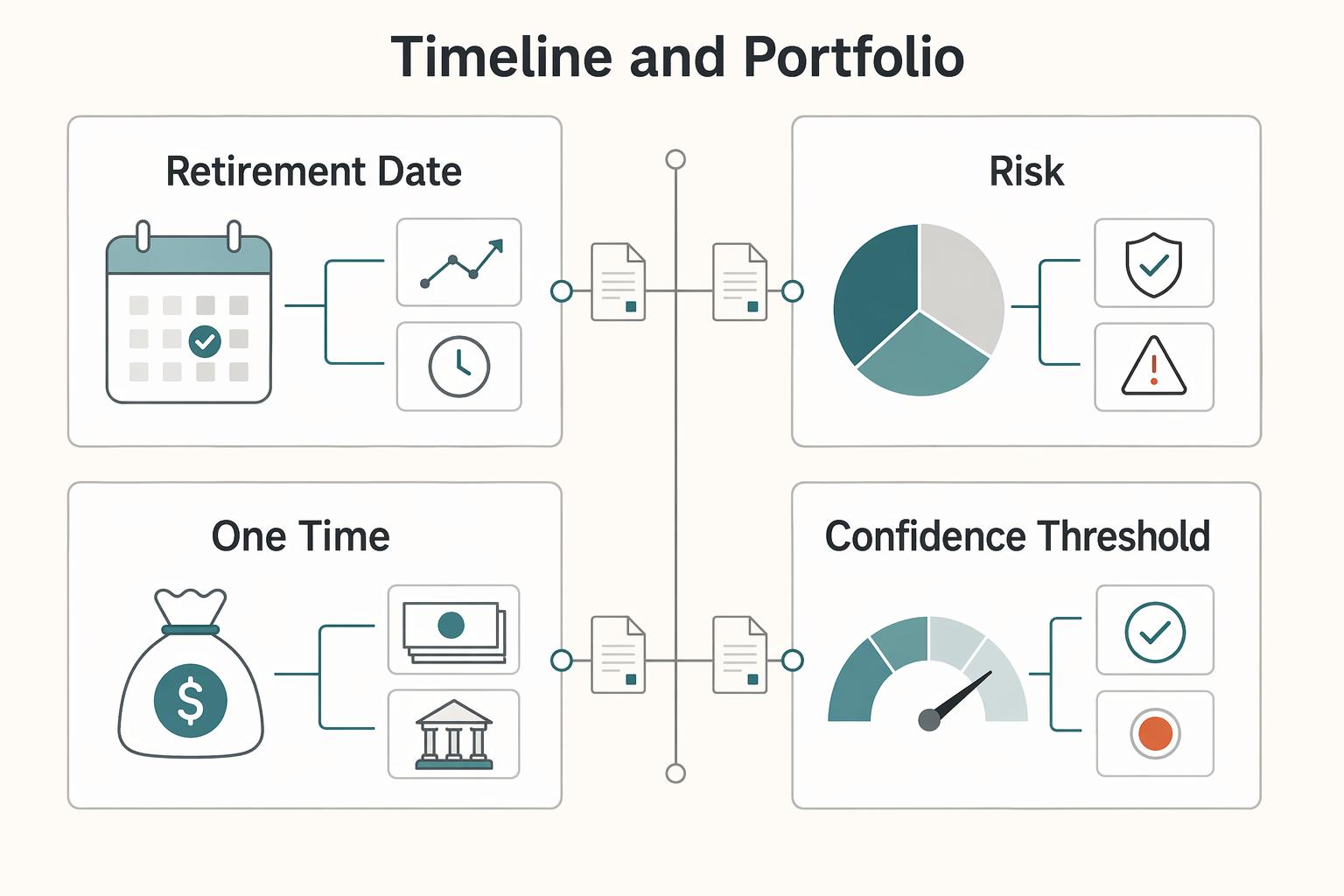
| Timeline and portfolio | Use your verified revised monthly amount, current spending, cash reserve, and the one-time payment as a separate line; notes should also show covered months because SSA ties retroactive adjustments back to January 2024 and says monthly benefit adjustments began on February 25, 2025 | Keep your existing date and allocation for one full review cycle unless your updated model clearly supports a change; record the lower draw need first before changing lifestyle spending | Before retiring earlier, making a material risk shift, or committing the lump sum to debt payoff |
| Tax execution across borders | Check treaty-residency position for the tax year, payment characterization used by your residence-country advisor, and coordination between U.S. and local filings | Keep an evidence pack: SSA notices, deposit records, covered months for retroactive amounts, and your Benefit Statement tax form from your my Social Security account; reserve part of the lump sum until reporting treatment is confirmed in writing | If you cannot clearly state who reports the income, in which year, and with which characterization in each country |
| Estate, beneficiaries, and care funding | Recheck beneficiary designations, your current will or estate summary, survivor-income assumptions, and long-term-care funding notes | Update existing documents and scenario notes using the revised monthly Social Security amount instead of the old reduced amount | If your household setup crosses jurisdictions, depends on survivor-income assumptions, or relies on outdated beneficiary instructions |
Start with one eligibility guardrail. The Social Security Fairness Act ended WEP and GPO, but SSA says increases are not universal. Only people with a pension from work not covered by Social Security may see an increase, including some people whose work was covered by a foreign social security system. If your record still shows no change, pause strategy updates until that point is clarified.
Timeline and portfolio#
Decision to make. Keep your current retirement date and allocation, or adjust one or both because the revised monthly benefit now covers more core spending.
Inputs to review. Use your verified revised monthly amount, current spending, cash reserve, and the one-time payment as a separate line. Keep the retro payment separate from recurring income. Your notes should also show covered months, since SSA ties retroactive adjustments back to January 2024 and says monthly benefit adjustments began on February 25, 2025.
Default-safe action. Keep your existing date and allocation for one full review cycle unless your updated model clearly supports a change. Record the lower draw need first before changing lifestyle spending.
When to escalate to a licensed advisor. Escalate before retiring earlier, making a material risk shift, or committing the lump sum to debt payoff.
| Criteria | Keep current plan | Adjust plan |
|---|---|---|
| Retirement date | Keep current target date | Move only if updated cash flow closes [verify spending gap] and protects [verify cash reserve] |
| Portfolio risk | Keep allocation while revised payments prove stable | Re-risk or de-risk only after modeling [verified monthly delta] and [revised withdrawal need] |
| One-time payment use | Hold as extra liquidity | Assign to a defined use only after tax and reserve review |
| Confidence threshold | Use when notices, deposits, and records already reconcile | Use when long-term cash flow changes, not just one-year cash |
Tax execution across borders#
Decision to make. Decide how much of the higher monthly payment and any lump sum is safely spendable before tax treatment is confirmed.
Inputs to review. Check three items: treaty-residency position for the tax year, payment characterization used by your residence-country advisor, and coordination between U.S. and local filings.
Default-safe action. Keep an evidence pack: SSA notices, deposit records, covered months for retroactive amounts, and your Benefit Statement tax form from your my Social Security account. Reserve part of the lump sum until reporting treatment is confirmed in writing.
When to escalate to a licensed advisor. Escalate if you cannot clearly state who reports the income, in which year, and with which characterization in each country.
Estate, beneficiaries, and care funding#
Decision to make. Update household planning assumptions, not just your personal income line.
Inputs to review. Recheck beneficiary designations, your current will or estate summary, survivor-income assumptions, and long-term-care funding notes.
Default-safe action. Update existing documents and scenario notes using the revised monthly Social Security amount instead of the old reduced amount.
When to escalate to a licensed advisor. Escalate if your household setup crosses jurisdictions, depends on survivor-income assumptions, or relies on outdated beneficiary instructions.
Before you implement changes, close this phase with a documented check:
- Revised monthly benefit is entered in your plan with the verification date.
- One-time payment is tracked separately from recurring income.
- Tax file includes notices, deposits, covered months, and Benefit Statement records.
- Beneficiary, survivor-income, and care-funding notes are updated.
- Open treaty-residency, characterization, sourcing, or estate questions are queued for licensed review before money moves.
For a step-by-step walkthrough, see The 'Physical Presence Test' Waiver: A Guide for US Expats in War Zones or Civil Unrest.
Verify the Record Before You Update Your Plan#
Your safest close-out is to move only on records you can verify, then carry those verified inputs into your plan.
Keep one control rule in place: the House hearing record dated February 26, 2003 (Serial No. 108-12) states that the printed hearing record remains the official version, and that converting files across electronic formats can introduce unintentional errors or omissions. In practice, treat screenshots, OCR files, translated extracts, or copied summaries as working copies until you reconcile them to an official record.
| Phase | Focus | What you do now | Key input | Output before moving on | Escalate when |
|---|---|---|---|---|---|
| 1 | Verify the record | Compare every version and resolve mismatches before making decisions. | Official record plus any electronic or translated copies | One reconciled file with version notes | You cannot confirm which version is controlling |
| 2 | Update your estimate | Recalculate only from reconciled inputs and label open assumptions. | Reconciled file from Phase 1 | One traceable estimate tied to specific records | A single unclear input materially changes the estimate |
| 3 | Apply to your plan | Update your forecast and checklist using only confirmed values and flagged assumptions. | Confirmed estimate and open-issue list | One updated plan with explicit unresolved items | Reporting, tax, or benefit-treatment questions remain unresolved |
The common failure mode is rushing from an electronic summary into a planning change before record quality is settled. Move from this summary into your personalized checklist and forecast updates so each next step is tied to a verified document, a stated assumption, or a clear follow-up question.
We covered this in detail in A Deep Dive into the Foreign Housing Exclusion for US Expats.
Frequently Asked Questions
Does living abroad change how I handle a possible WEP issue?
Living abroad alone does not determine whether WEP may apply. What matters first is whether you receive a pension based on work where U.S. Social Security taxes were not paid. Start with SSA’s WEP Screening Tool for foreign pensions, then compare the result against your pension statement before you make planning changes.
How do I check whether my foreign pension may affect my U.S. benefit?
Start with the SSA international WEP page, the WEP Screening Tool, and the Windfall Elimination Provision Fact Sheet. Use the screening result as an initial checkpoint, then use How to Contact Social Security for case-specific follow-up. If your records are complex, involve a benefits professional before you rely on the result.
What is the difference between WEP and GPO?
WEP and GPO are separate topics. This section is only about WEP, including whether your U.S. retirement or disability benefit may be reduced when you receive a pension from work not covered by U.S. Social Security taxes. If your issue may involve GPO, use GPO-specific guidance such as What is the 'Government Pension Offset' and How Does it Affect Expats?, and do not use the WEP foreign-pension tool as your main check.
What should I do if my SSA record, pension history, or claim status looks inconsistent?
Pause major claiming or planning moves until the mismatch is clarified. Review your SSA record, pension paperwork, and any claim notice for consistency, including whether the work was covered by U.S. Social Security taxes. Then use How to Contact Social Security and send a short timeline of the inconsistency. Escalate to a benefits professional if the records remain unclear.
Should a possible WEP issue change when I claim Social Security?
It can affect your estimate, so confirm your WEP status first. Recheck your latest SSA estimate and pension information, then decide whether your claiming timing still fits your broader retirement plan.
Try a related tool
Researched and edited by the Gruv editorial team. Gruv builds cross-border billing, payouts, and finance-operations software for global businesses.
Sources
Includes 2 external sources outside the trusted-domain allowlist.
- govinfo.gov/content/pkg/CHRG-108hhrg91631/html/CHRG-108h...trusted
- jp.usembassy.gov/services/social-security/weptrusted
- ssa.gov/benefits/retirement/social-security-fairness...trusted
- ssa.gov/policy/docs/program-explainers/windfall-elim...trusted
- kitces.com/blog/social-security-fairness-act-windfall-e...external
- kitces.com/blog/social-security-fairness-act-windfall-e...external
Educational content only. Not legal, tax, or financial advice.
Related Posts

Digital Nomad Taxes in 2026 With a Defensible Filing Plan
With digital nomad taxes, the first move is not optimization. It is figuring out where you may be taxable, where filings may be required, and what proof supports that position.

Japan Digital Nomad Visa 2026: Six-Month Planning Runbook
Treat this as your operating model: identify the right mission first, commit to one route, and keep dated records before you make irreversible plans. That is what keeps the rest of your timeline, paperwork, and decisions coherent.

The Freelance Payment Penalty: A Modeled Audit of Platform Fees, FX Spreads, and Payout Delays
The money rarely disappears through a single, easy-to-spot fee. The real loss is stacked. A marketplace takes its commission, a processor adds a charge for international cards, a bank or payment company converts the currency at a spread, a platform holds the funds before release, and a wire sheds a little to intermediaries on the way in. Each layer looks defensible on its own, but the worker feels the combined result as a smaller deposit and a later payday.