
Quick Answer
Yes. uk eis for investors can work when you qualify for Income Tax relief, secure EIS3 or EIS5, and keep records accurate from subscription through exit. Relief depends on full-risk ordinary shares, connected-person limits including the more-than-30% test, and ongoing compliance after filing. You still carry capital risk, and relief can be reduced or withdrawn if disqualifying events occur, shares are sold too early, or key documents are missing.
What is the UK Enterprise Investment Scheme (EIS) and Why Should You Care?#
The UK Enterprise Investment Scheme (EIS) is a tax relief framework for investing in new shares of smaller, higher-risk trading companies. The practical way to think about it is downside management, not a return guarantee. For UK investors, EIS can reduce part of the downside, but it does not make an investment safe or automatically suitable.
Use EIS when your tax position, risk tolerance, and timeline fit the rules. It is usually a poor fit if your income is too low for income tax relief to be meaningful, if you cannot hold the shares for the period tied to the relief you want, or if you are treating HMRC advance assurance as a quality signal. HMRC is clear that advance assurance is not an endorsement of performance, so you still need to do your own due diligence.
Eligibility is rule-driven. You generally need to subscribe in cash for full-risk ordinary shares in a qualifying company, avoid becoming a connected investor, including the more-than-30% control test, and keep the claim paperwork in order. If you do not have form EIS3 or EIS5, you cannot claim relief for that investment.
Qualification can also change later. Relief can be denied or withdrawn if conditions are not met.
Are you a fit for EIS?#
If you want a quick filter before you invest, use this:
- You have enough UK income tax liability for 30% relief to be useful.
- You can hold shares for at least 3 years when aiming for disposal-related CGT outcomes.
- You accept real downside risk, including losing capital.
- You can handle the admin and compliance needed to preserve eligibility.
| Investor obligation | Potential relief outcome |
|---|---|
| Subscribe in cash for full-risk ordinary shares in a qualifying company | Possible income tax relief at 30%, if eligibility conditions are met |
| Obtain EIS income tax relief and hold shares for at least 3 years | Possible CGT exemption on disposal, if conditions are met |
| Stay below the 30% connected-person threshold | Helps preserve eligibility. Crossing it can block relief |
| Keep EIS3 or EIS5 and file a valid claim | Makes a claim possible. Without the certificate, no claim |
| Verify live company-limit rules for shares issued on or after 6 April 2026 | Eligibility may depend on the in-force thresholds, so verify the live rules before relying on them |
That gives you the basic frame. Next, understand how the reliefs depend on each other, then make sure the documents and facts can support the claim you want to make.
If you want a deeper dive, read A Guide to the UK's Seed Enterprise Investment Scheme (SEIS) for Investors.
The Five EIS Reliefs and How They Depend on One Another#
These five EIS reliefs usually work as a sequence, not as five separate perks. Income tax relief is often the gate. Disposal gain exemption depends on it. Loss relief changes the downside math. Deferral relief changes timing. Inheritance-tax-related relief needs a live-rule check before you rely on it.
If you model one relief in isolation, the expected outcome can break. No valid income tax relief claim means no disposal gain exemption on those shares. Relief can also be withheld or withdrawn if company rules are not met for at least 3 years.
The five reliefs in working terms#
| Relief | What it does | When you can use it | What can invalidate it | Decision it should change |
|---|---|---|---|---|
| Income tax relief | Reduces your UK income tax bill by 30% of the amount claimed. HS341 (2025) states a £2 million annual maximum claim amount, and any amount over £1 million must be in shares issued by one or more knowledge-intensive companies. | After subscribing for qualifying EIS shares and receiving the claim certificate. You may be able to carry back some or all shares to the previous year, subject to conditions. | No EIS3 or EIS5, no claim. Relief can also be withheld or withdrawn if company rules are not met for at least 3 years. | If you do not have enough UK income tax liability, fit is weaker. If you plan to claim above £1 million, verify KIC treatment first. |
| Disposal gain exemption | If due, you do not pay CGT on a gain when you dispose of EIS shares. | When you received EIS income tax relief in full on the whole subscription and held shares for at least 3 years. | No income tax relief means no CGT exemption on those shares. Reduced or withdrawn income tax relief can restrict exemption. Early disposal can break it. | Do not assume exits are automatically CGT-free. Confirm relief was claimed and preserved first. |
| Loss relief via Share Loss Relief | A loss on EIS shares may be set against income under share-loss rules. The allowable capital loss is reduced by income tax relief still attributable to the shares. | On a qualifying loss disposal, after calculating the net allowable loss. | Using gross subscription as the loss base. You must reduce for attributable income tax relief. | Model downside with your own marginal rate. Someone else's example can mislead you. |
| Deferral relief | Defers a gain from another disposal by investing in qualifying EIS shares. It delays CGT rather than removing it. | EIS shares must be issued in the window from 12 months before to 3 years after the other gain accrues. | Deferred gain comes back into charge on a chargeable event, including disposal or deemed disposal of EIS shares. | Use when your core problem is gain timing, not permanent exemption. |
| Inheritance-tax-related relief (Business Relief) | Qualifying unlisted shares can attract 100% Business Relief and may reduce IHT exposure. | The deceased must have owned the asset for at least 2 years before death, and shares must still qualify under live rules. | Outdated rule assumptions. GOV.UK policy papers conflict on the post-6 April 2026 allowance: an older paper states £1 million, an updated paper states £2.5 million for combined 100% BR/APR property. | If estate planning is a key objective, stop and verify the latest enacted position before relying on it. |
Interaction map (sequence and dependencies)#
| Stage | Primary relief lever | Depends on | Main failure point | What to check now |
|---|---|---|---|---|
| Entry | Income tax relief | Qualifying subscription + EIS3/EIS5 | No certificate, or conditions later breached | Confirm claim path and annual limits. Verify any live thresholds before relying on them |
| Entry / timing | Deferral relief | Share issue within 12 months before to 3 years after the gain | Timing window missed | Match gain date to share-issue date before investing |
| Holding period | Disposal gain exemption readiness | Income tax relief received in full and preserved | Relief reduced or withdrawn, or disposal too early | Plan for at least 3 years and monitor qualification risk |
| Exit (gain) | Disposal gain exemption | Prior conditions still intact | Any break in disposal-relief conditions | Recheck conditions before disposal |
| Exit (loss) | Share Loss Relief | Net allowable loss after income-tax-relief reduction | Using wrong loss base | Compute with net figures, not headline subscription |
| Estate context | Business Relief | Qualifying unlisted shares + 2-year ownership condition | Reliance on stale allowance assumptions | Verify live post-2026 BR/APR settings before planning decisions |
Reusable loss model template#
| Input or output | Formula template | Notes |
|---|---|---|
| Subscription amount | S | Amount subscribed for EIS shares |
| Proceeds / negligible value | P | Amount realized (or negligible value basis, if applicable) |
| Income tax relief claimed | R = S × 30% | Subject to claim limits in force |
| Allowable loss for share-loss purposes | L = S - P - R_attributable | R_attributable is income tax relief still attributable to shares disposed of |
| Estimated tax value of loss relief | T = L × M | M = your marginal income tax rate |
| Estimated final net loss | N = S - P - R_recovered - T | Use your own assumptions and verify the rates you apply |
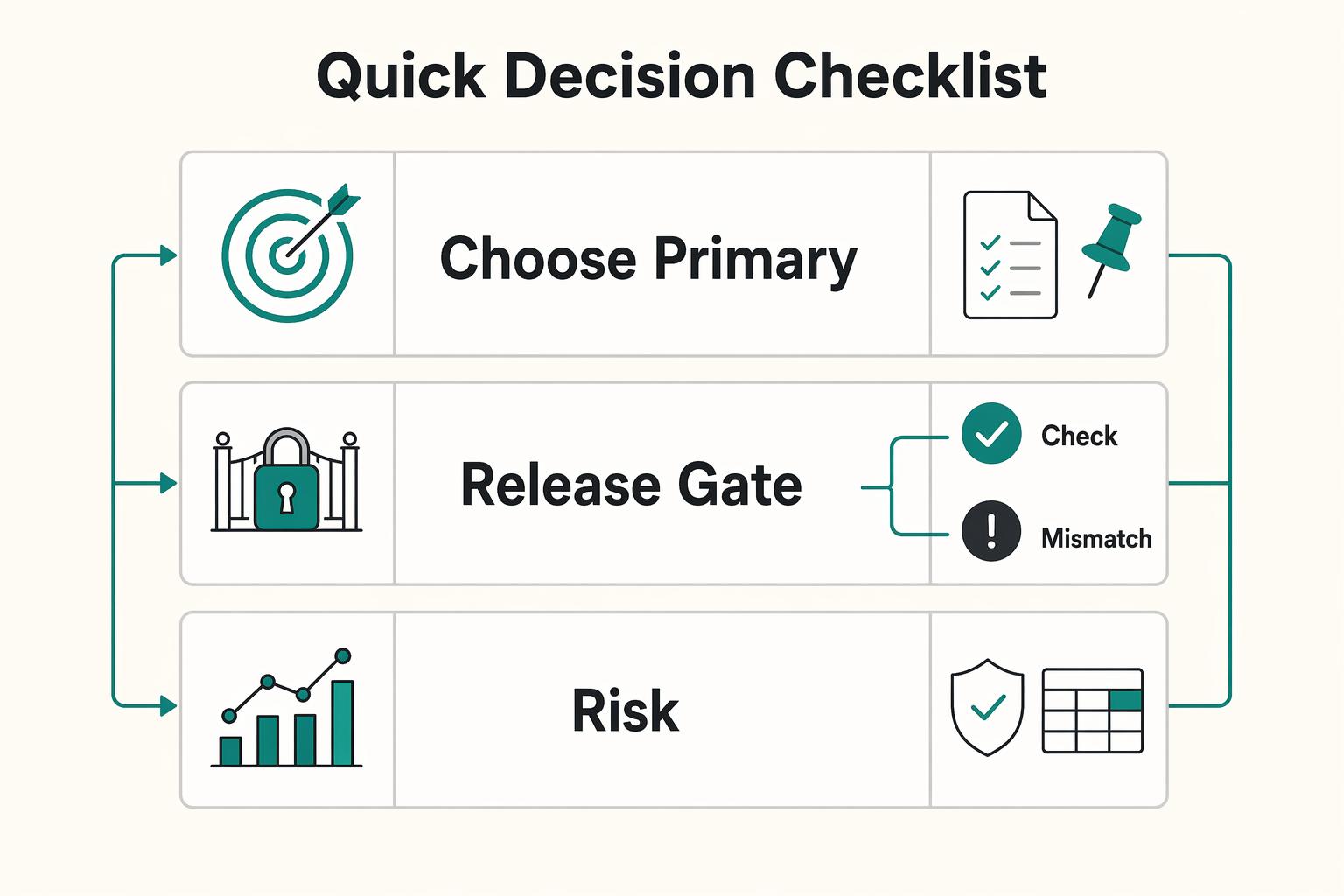
Quick decision checklist#
- Choose your primary objective first. Income tax reduction, CGT-free upside if conditions hold, gain deferral timing, or estate planning.
- Confirm gate conditions before committing. Certificate path (EIS3/EIS5), disposal-relief conditions (full income tax relief and 3-year hold), and deferral timing window where relevant.
- Stop and review if risk flags appear. No certificate, plan to dispose inside 3 years, claim size above £1 million without verified KIC treatment, signs of company non-compliance risk, or reliance on outdated Business Relief guidance.
Once you know which relief matters most, you can run due diligence in the right order instead of trying to fix gaps after the money has gone in.
You might also find this useful: A Guide to Peer-to-Peer (P2P) Lending for Investors.
Stage 1: The Pre-Investment Due Diligence Protocol#
Run this stage in order: eligibility screen, evidence check, structure choice, then a go or no-go decision.
1) Screen for disqualifiers first#
Start with your own position before you assess any pitch. If your tax position does not support an EIS claim under current annual rules, the investment may still be commercially valid, but it is weaker for EIS planning. Current referenced limits are £2 million per tax year, with amounts above £1 million requiring shares in one or more knowledge-intensive companies.
Check connection risk early. Rights over more than 30% of ordinary share capital can create a connected-person issue. If rights, options, side letters, or related holdings make this unclear, pause and verify before committing.
Then screen the company against the risk-to-capital gateway. If the structure looks built around capital preservation or engineered downside protection, treat that as a warning sign and resolve it before proceeding.
2) Check the evidence, including what advance assurance does and does not do#
Advance assurance is useful, but only as a starting point. It is a pre-check that an investment may meet scheme conditions. It is not final approval, and it does not confirm whether you, as a specific investor, qualify.
| Item | Check |
|---|---|
| Advance assurance letter or summary | Pre-check that an investment may meet scheme conditions; not final approval and not confirmation that a specific investor qualifies |
| Business plan | Request and review before moving forward |
| Financial forecasts | Request and review before moving forward |
| Current raise details | Review how much the company plans to raise |
| Proposed share terms | Verify qualifying ordinary-share requirements, including no present or future redemption right; if terms differ from what HMRC reviewed, get a clear explanation before you invest |
Treat it as one piece of evidence, not the end of the analysis. HMRC can disregard earlier assurance if the application information later proves inaccurate, misleading, or incomplete.
Before you move forward, request and review:
- Advance assurance letter or summary, if available
- Business plan
- Financial forecasts
- Current raise details, including how much the company plans to raise
- Proposed share terms
Verify that the share terms align with qualifying ordinary-share requirements, including no present or future redemption right. If the current terms differ from what HMRC reviewed, get a clear explanation before you invest.
Also confirm the certification chain. Advance assurance does not replace formal compliance filing. The company still files EIS1, and you cannot claim relief until you receive EIS3 or EIS5.
3) Choose the structure, direct or fund#
Choose based on control, workload, and the admin reality.
| Criterion | Direct investment | EIS fund |
|---|---|---|
| Control | You choose each company and timing. | Manager chooses investments; shares may be held by the manager as nominee for participants. |
| Diligence burden | You run company, terms, and document checks yourself. | Manager may do first-pass screening, but you still review mandate and documents. |
| Fee drag | You evaluate deal-level costs yourself. | You review manager or fund charges and their net impact. |
| Access quality | Depends on your sourcing and network. | Depends on manager sourcing. HMRC fund approval does not confirm commercial quality. |
| Admin complexity | Multiple subscriptions, records, and certificate tracking. | A centralized manager relationship can reduce admin, but you still keep claim records. |
4) Define diversification and failure-planning rules before deals#
Set your diversification plan before you start reviewing opportunities. Its job is to control concentration risk, not to promise returns.
Write your limits in advance for three things: initial position size, total exposure to one company or one manager, and any follow-on reserve rule. Verify the figures you plan to use before you invest.
If you are using a fund, note that HMRC approved-fund guidelines, minimum four companies and maximum 50% in one company, are fund-design guidelines, not universal personal portfolio rules.
Build failure and delay into the plan from the start. Assume some holdings fail, some exits take longer, and paperwork timing is uneven. If your plan only works when everything goes right for at least 3 years, tighten the risk plan before you invest.
Final pre-commitment stop gate#
Investor-side checklist
| Side | Check |
|---|---|
| Investor | Sufficient UK tax liability for the intended claim |
| Investor | Intended claim fits current annual rules |
| Investor | Connected-person risk checked, including the 30% threshold test |
| Investor | Employment, director, associate, or control questions resolved |
| Investor | No claim is possible before EIS3 or EIS5, and certificate details will be verified |
| Company | Can explain how the investment meets risk-to-capital requirements |
| Company | Advance assurance materials, if any, match the current raise, plan, forecasts, and terms |
| Company | Share terms meet qualifying ordinary-share conditions, including no redemption right |
| Company | Prepared to file EIS1 and maintain required compliance for at least 3 years after investment |
| Company | Company-size, employee, and fundraising thresholds checked against the live rules |
- You have sufficient UK tax liability for the intended claim.
- Your intended claim fits current annual rules.
- Connected-person risk has been checked, including the 30% threshold test.
- Any employment, director, associate, or control questions are resolved.
- You understand no claim is possible before EIS3 or EIS5, and you will verify certificate details.
Company-side checklist
- The company can explain how the investment meets risk-to-capital requirements.
- Advance assurance materials, if any, match the current raise, plan, forecasts, and terms.
- Share terms meet qualifying ordinary-share conditions, including no redemption right.
- The company is prepared to file EIS1 and maintain required compliance for at least 3 years after investment.
- Company-size, employee, and fundraising thresholds are checked against the live rules.
If any item is unclear, stop before transferring funds. In EIS, unclear paperwork can be an early warning that relief may fail later. Related: A Guide to Pro Rata Rights for Startup Investors.
Stage 2: Evidence Control and Filing After You Invest#
Once you invest, the job shifts from screening to evidence control. Your main protection is a clean record and a filing process you can actually complete. If facts are unclear, pause before you file.
1) Lock the record first after investment#
Set up one working folder on day one and keep a dated log of:
- payment proof
- signed subscription documents
- share-issue confirmations
- HMRC correspondence and account updates
Track the document labels you are given, including EIS1 and EIS3, without assuming status from verbal updates. Ask for written status, what document comes next, and the current target date. If timing slips, get the revised date in writing and update your log.
| Document label | What to log now | Your action now | If delayed |
|---|---|---|---|
| EIS1 | Label, version, date, and latest written status | Record expected next step in your log | Request revised date in writing and keep the trail |
| EIS3 | Label, version, date, and latest written status | Check that records match your dated log | Pause filing until dates and versions are clear |
2) Confirm HMRC filing access early#
Do not wait until filing to discover your access is not ready. Confirm your Self Assessment setup works end to end.
- If you need to complete a return for the previous tax year, HMRC says you must tell them by 5 October 2025.
- One stated way to tell HMRC is registering for Self Assessment.
- If you tell HMRC after 5 October 2025, you could get a penalty.
- If you are waiting for a Unique Taxpayer Reference (UTR), check expected HMRC reply timing.
- If you registered before but did not file for 2023 to 2024, you may need to reactivate your Self Assessment account.
- The previous tax year in this context is 6 April 2024 to 5 April 2025.
3) Run QA on your filing pack before submission#
Use this as a pre-submit check to avoid basic admin failures.
| QA item | Check |
|---|---|
| Self Assessment access | Access confirmed and UTR status checked |
| UTR pending | Expected HMRC reply timing logged |
| Earlier registration without a 2023 to 2024 return | Reactivation need checked |
| Key dates | 6 April 2024 to 5 April 2025 and 5 October 2025 logged in your notes |
| Internal evidence trail | Payment proof, emails, and correction history complete |
| Placeholders in notes | Any placeholders replaced with current confirmed details before filing |
- Self Assessment access confirmed and UTR status checked.
- If UTR is pending, expected HMRC reply timing logged.
- If previously registered but no return was filed for 2023 to 2024, reactivation need checked.
- Key dates logged in your notes: 6 April 2024 to 5 April 2025 and 5 October 2025.
- Internal evidence trail complete: payment proof, emails, and correction history.
- Any placeholders in your notes replaced with current confirmed details before filing.
4) Pause when records are unclear#
These are not "file as normal" moments. Treat them as immediate review events.
| Trigger event | Early warning signal | Immediate action |
|---|---|---|
| Missing or inconsistent paperwork | Conflicting references, date mismatches, multiple versions | Request corrected documents and keep a dated correction log |
| Unclear filing-account status | Old login works but filing status is uncertain | Verify current Self Assessment status before filing |
| UTR still pending close to filing steps | No UTR yet and timeline uncertainty | Check expected HMRC reply timing and record follow-up actions |
5) Use an escalation protocol for edge cases#
If records conflict or a key status changes, stop and gather evidence before filing or amending. Build a short evidence pack: latest written updates, versioned documents, payment trail, and a dated timeline. Then get specialist tax advice on the live facts before you proceed.
Before you submit claims, pressure-test your residency assumptions and keep a clean record of what changed using the tax residency tracker.
Stage 3: The Post-Investment Management System#
After filing, the priority is simple: keep monitoring the facts until the termination date, usually the third anniversary of the share issue. If EIS conditions stop being met, relief can be denied or withdrawn even after a claim has been made.
- Qualifying status: the company continues to meet EIS qualifying-company conditions through the relevant period.
- Disqualifying event: an event that should lead to EIS relief being withdrawn or reduced.
- Clawback: HMRC withdraws or reduces relief you already received.
- Negligible value claim: you can treat shares as disposed of for loss purposes even if you still own them.
Ongoing compliance#
Use trigger-based monitoring rather than passive waiting. If company activity, capital structure, or your relationship to the company changes, stop and re-check your EIS position before any further filing or action.
| Trigger/event | Why it matters for EIS status | What you should do now | What records to keep |
|---|---|---|---|
| Company changes trade or use of funds | Relief depends on money being used in a qualifying business activity | Request a dated written explanation. If unclear, verify against current HMRC guidance | Board/shareholder updates, company emails, dated change summary |
| Company comes under another company's control in the relevant period | Control changes can break qualifying status | Escalate to a tax adviser and verify HMRC guidance before filing | Cap table before/after, transaction summary, resolutions |
| Capital restructure, redemption/repurchase, or options over shares | Relief can be reduced, and put or call options before termination date are a direct no-relief trigger | Pause and review documents before agreeing or signing. Escalate if terms changed | Revised articles, option documents, shareholder resolutions, legal notices |
| Your role/rights/economic position changes | You may cease to be a qualifying investor | Re-check eligibility immediately. Escalate if control, rights, or benefits changed | Employment/consultancy terms, option grants, updated cap table |
| You dispose of shares or receive value | Can trigger withdrawal or reduction of relief | Check timing and facts against HMRC guidance before action | Sale docs, bank evidence, company correspondence |
If you become aware of a disqualifying event, treat the 60-day HMRC notification window as mandatory.
If the investment goes wrong#
When a holding fails, start with the evidence, then choose the claim route.
- Confirm the loss facts. Collect dated proof that the shares were disposed of or became worthless/negligible in value.
- Confirm the claim route. For a negligible value claim or income-tax loss claim on qualifying shares, verify the current HMRC process in HS286 and current Self Assessment guidance before filing.
- Build a retention pack. Keep EIS3, subscription documents, payment proof, and disposal or negligible-value evidence. HMRC may ask to see the EIS certificate.
- Log the timeline. Record share issue date, loss-event date, awareness date, and claim or election submission date.
Exit planning#
Every exit route should be checked through the same EIS lens before you sign. Whether the exit is a sale, buyout, or listing, timing and disqualifying events still matter.
| Exit path | Commercial reality | EIS status checks before signing |
|---|---|---|
| Sale | Third-party transfer of shares | Confirm 3-year hold test, confirm income tax relief was obtained and not withdrawn or reduced, check for disqualifying events |
| Buyout | Company or party-led acquisition route | Run the same status checks and review any value-received or restructuring effects before completion |
| Listing | Shares become quoted | Run the same status checks and confirm there were no arrangements for quotation in place when shares were issued |
Before any exit, confirm:
- You have passed the termination date, usually the third anniversary of share issue.
- EIS income tax relief was obtained and has not been withdrawn or reduced.
- No unaddressed disqualifying event exists, including options or value received.
- For listing routes, no quotation arrangements existed at issue.
For a step-by-step walkthrough, use the earlier stage checklists in this guide.
Conclusion: EIS as a Strategic Protocol, Not a Lottery Ticket#
EIS works best as a disciplined process, not a speculation plan. Screen risk before you subscribe, claim relief only when your documents support it, and protect eligibility for at least 3 years after the investment.
Stage 1 is the filter. Do your own due diligence, treat Advance Assurance as a pre-check rather than a performance endorsement, and stop if the round documents are inconsistent or incomplete.
Stage 2 is about execution. You cannot claim until you receive EIS3 or EIS5, so the practical goal is a complete file: certificate, subscription documents, payment evidence, and filing records.
Stage 3 is about protection. Re-check before you act if disposal timing or other key facts change, because relief can be withdrawn if conditions are broken. Disposal treatment also depends on meeting the relevant criteria, including the 3-year holding condition and whether Income Tax relief was obtained.
EIS is often most usable when you have UK Income Tax liability you can actually use, reliable compliance evidence, and the capacity to monitor the position after closing. Pause when your tax exposure is too low to use relief, paperwork is missing or mixed, or you cannot monitor post-investment changes. The value is tax efficiency with exposure to early-stage company risk, not protection from downside.
- Verify eligibility: confirm current HMRC conditions against your tax position.
- Confirm documentation: check
EIS3/EIS5, subscription papers, payment proof, and filing records. - Set a monitoring cadence: schedule checks through at least the 3-year post-investment period.
- Get advice where facts are unclear: especially for disposal timing, uncertain eligibility, or mixed scheme paperwork.
This pairs well with our guide on A Freelancer's Guide to Angel Investing and Venture Capital.
If you want a compliance-first setup for invoicing, money movement, and audit-ready payment records while you execute this plan, review Gruv docs.
Frequently Asked Questions
How do you actually claim EIS relief?
The Self Assessment checkpoint flow applies: HMRC says to check whether you need to send a tax return before registering, and the referenced page states a notification deadline of 5 October 2025 for the previous tax year ending 5 April 2025, with possible penalties if you tell HMRC late. If you registered before but did not need to send a return for tax year 2023 to 2024, you may need to reactivate your account. If you are waiting for your UTR, HMRC provides a way to check expected reply timing.
When does EIS fit better than SEIS, and when should you pause?
If labels conflict, or the position is mixed or unclear, pause and get tax advice.
What should you do if a company says it has Advance Assurance?
Treat it as a re-check point and get tax advice before relying on it.
What if your role, rights, or relationship to the company changes after you invest?
Treat any material change as a re-check trigger and get tax advice if the impact is unclear.
Can relief be clawed back after you claim it?
Get tax advice before relying on a claim.
What if you sell the shares before the normal hold period ends?
Treat an early sale as a stop point until current rules are confirmed with tax advice.
What if the investment fails and you want to claim a loss?
If you think a loss claim may apply, confirm the current HMRC process and get tax advice before filing.
Can you use EIS if you are not UK resident, or if your residence changed?
First confirm your current Self Assessment position with HMRC, then get tax advice on residence-specific eligibility. The Statutory Residence Test guide can help you frame the residence facts.
Try a related tool
Researched and edited by the Gruv editorial team. Gruv builds cross-border billing, payouts, and finance-operations software for global businesses.
Sources
Includes 2 external sources outside the trusted-domain allowlist.
Educational content only. Not legal, tax, or financial advice.
Related Posts

Understanding the UK's Statutory Residence Test (SRT)
Treat SRT like ops, not folklore. You want a repeatable workflow you can run monthly so your tax-year answer is boring, documented, and easy to defend.
UK SEIS for Investors: Eligibility, Claims, and Risk Checks
Treat UK SEIS investing as an operations workflow, not a one-time tax form. Your practical sequence is simple: verify the deal identity before money moves, build a claim-ready evidence file after share issue, then monitor changes through your filing window.

The Freelance Payment Penalty: A Modeled Audit of Platform Fees, FX Spreads, and Payout Delays
The money rarely disappears through a single, easy-to-spot fee. The real loss is stacked. A marketplace takes its commission, a processor adds a charge for international cards, a bank or payment company converts the currency at a spread, a platform holds the funds before release, and a wire sheds a little to intermediaries on the way in. Each layer looks defensible on its own, but the worker feels the combined result as a smaller deposit and a later payday.