
Quick Answer
Yes. Use a right of first refusal when you need a real chance to match a third-party offer before shares, licensed rights, or a JV position changes hands. It works only when the clause is specific: define a bona fide offer, require written notice with material terms, and state what counts as a valid match. Add a no-better-terms rule if you decline. If you need first negotiation before market outreach, ROFO may fit better; if you need unilateral purchase control, an option is stronger.
The Professional's Moat: Using a Right of First Refusal for Strategic Control#
Use a right of first refusal (ROFR) when you need control over who can buy into an asset tied to your work. It gives you a contractual chance to match a third-party offer before the transfer closes.
This comes up in ordinary deal situations, not just edge cases. A co-owner may want to sell to someone you do not know. A licensee may want to transfer rights onward. A joint venture partner may want out. The protection is only as strong as the clause. If the trigger and process are loose, the right is easier to sidestep or fight over.
How the clause actually runs#
A workable ROFR follows a clear sequence. Much of the drafting risk sits in two points: whether the outside offer is bona fide and whether notice gives you enough detail to match it.
- Trigger event: the seller receives a bona fide third-party offer (as defined in the contract, often with stated terms).
- Notice: the seller sends you the offer terms you must match.
- Decision window: you accept and match, or decline, or let the window expire.
- Outcome: if you match, you step into the buyer's position. If you decline, the seller can proceed with the third-party sale.
Two drafting gaps can create trouble:
- If "bona fide" is vague, parties can end up fighting over whether the offer was real enough to trigger the right.
- If notice does not include enough terms, you cannot make a reliable match decision.
If you decline, add a no-better-terms guardrail so the seller cannot close with the outsider on terms more favorable than the ones you were offered.
It also helps to keep expectations realistic. In some sale processes, the clause works more like a last look than a clean first look.
ROFR and ROFO are not the same decision#
Both are pre-emptive transfer rights, but they solve different problems. A ROFR lets you match a market-tested outside offer. A ROFO gives you the first negotiation before the seller goes to market.
| Point | ROFR | ROFO |
|---|---|---|
| Trigger | Seller receives a bona fide third-party offer before closing | Seller decides to sell before third-party marketing or offers |
| Price certainty | Higher, because you see a market-tested offer | Lower, because price starts in direct negotiation |
| Your leverage | Strong on matching exact terms, weaker on shaping the initial deal | Better chance to shape terms early, no guaranteed market benchmark |
| Execution risk | Can slow deals and discourage some outside buyers | Depends heavily on how the insider negotiation process is drafted |
| Common seller pushback | "This may chill bids or delay closing." | "This may delay market outreach." |
| Drafting implication | Define trigger, notice content, matching standard, and no-better-terms rule | Define offer process, negotiation period, and what happens if no deal is reached |
If your priority is blocking an unwanted entrant at a market-tested price, a ROFR is often the better fit. If your priority is getting first negotiation rights before market outreach, a ROFO may fit better.
Where this matters for you#
You will usually see this in equity transfers, IP or license transfers, and joint venture exits:
| Use case | Context | Control aim |
|---|---|---|
| Equity transfers | In shareholder agreements | Control who can acquire shares |
| IP or license transfers | If a party wants to transfer them | Help control where rights end up |
| Joint venture exits | In JV agreements | Control who can step into the venture |
In each setting, the practical takeaway is the same. The clause works best when the contract clearly defines the trigger, the matching standard, and the notice mechanics. If those are soft, your control right can turn into a dispute right.
You might also find this useful: A Guide to 'Statute of Frauds' for Freelance Agreements.
Securing Your Equity: How a ROFR Protects Your Partnerships#
If you care who can enter your cap table, lock that down in your core equity documents before anyone tries to sell. This clause gives you the right, not the obligation, to match a bona fide third-party offer, typically on substantially the same terms.
That matters when an existing holder wants to transfer their stake and you want a real chance to step in. Scope depends on what your agreement says, so do not assume every transfer scenario is covered.
In practice, buyer certainty is lower for the outside buyer because the right holder can match, seller friction is higher because outside sales can be delayed, and your leverage is strongest once a bona fide offer is received and you are informed.
Your equity protection lives or dies on mechanics. Define the trigger as receipt of a bona fide third-party offer. Require the selling owner to inform you when offers are received and present the third-party terms to be matched. Set the matching standard as substantially the same terms.
Before you waive, confirm the offer is bona fide and that the terms presented for matching are substantially the same as the outside offer.
For a step-by-step walkthrough, see When a Severability Clause Helps or Hurts a Freelance Contract.
Controlling Your Creations: How a ROFR Safeguards Your Intellectual Property#
If your IP is central to your business, a ROFR can help you keep control when transfer pressure shows up later in the deal. It is most useful when the other side may assign the license, expand a sublicense chain, include your rights in a portfolio sale, or change control of the licensee.
Common failure points in real IP deals include:
- An outbound license is assigned.
- Sublicensing expands beyond what you intended.
- A portfolio sale bundles your rights with other assets.
- The licensee changes hands.
Some agreements are explicitly non-transferable and non-sublicenseable. Others allow transfer, including merger or control-transfer scenarios, without prior consent. You cannot rely on the word "license" by itself; the transfer clauses have to do the work.
| Tool | Stronger when | Where it can fail |
|---|---|---|
| ROFR | You want a chance to match a bona fide third-party offer for a covered transfer | It only activates after a bona fide offer exists, and only for events your contract defines as triggers |
| Approval or consent right | You want to stop third-party use or assignment before it happens | Exceptions for affiliates, mergers, or change-of-control can narrow protection |
| Reversion or buyback clause | You want rights to return after defined contractual triggers | It may not stop an immediate sale, and U.S. statutory termination timelines are long and do not apply to works made for hire |
Draft the trigger like you expect an end run#
The main drafting risk in IP deals is under-defining the transfer. Define covered transfers explicitly. For IP, that often means assignment, sublicensing beyond named affiliates, transfers of all or substantially all assets that include the licensed rights, and defined change-of-control events at the licensee. If control changes matter to you, say so and define the threshold.
Do not assume "assignment" alone is enough. Some contracts allow merger or control-transfer pathways without prior consent unless you close that gap. If you allow affiliate or internal restructuring carve-outs, require the affiliate to stay bound by the same use limits, confidentiality terms, and onward-transfer restrictions.
Make notice and matching terms usable in real life#
Notice needs to be complete enough for a real decision. Require written notice and specify what it must include: the third-party offer, buyer identity, covered rights, territory, field of use, exclusivity, sublicense scope, and economic terms. If the offer is part of a larger asset package, define how value is allocated or how the price for covered rights is determined.
Set clear timelines in the clause. Market examples include short notice deadlines, such as five business days after receipt of a better offer, and exercise windows, such as thirty calendar days after written notice. Those are drafting choices, not universal legal defaults. Before you waive, confirm the offer is written, specific, and actually covers the rights protected by your clause.
Fit it into the rest of your IP control stack#
A ROFR supports control, but it does not replace ownership basics. Under U.S. copyright law, in a work-made-for-hire arrangement, the hiring party is treated as the author. Assignment is different: it transfers ownership, and the transfer is not valid unless it is in writing and signed by the rights owner. For that distinction, see Work for Hire vs. Assignment of Rights: A Freelancer's Guide to Owning Your IP.
Use layered protections. Set use restrictions for how rights are exploited, assignment and sublicensing limits for who can hold them, and a ROFR for your chance to step in on permitted transfers. Then keep enforceable remedies if a transfer bypasses your rights, including null-and-void language for unauthorized transfers and equitable relief, including specific performance, where available. Without remedies, you may prove breach after closing but still lose practical control.
The ROFR Pre-Mortem: A Checklist for De-Risking Your Deals#
Use this checklist before you sign. If you cannot identify the trigger, validate the outside offer, and walk through exactly how you would match it, your ROFR is weaker than it looks.
A usable ROFR lets you match the exact terms of an existing third-party offer. A risky clause leaves enough ambiguity for a later fight over whether the right triggered, what counted as the offer, or whether your response was valid.
| Component | Well-drafted | High-risk wording |
|---|---|---|
| Trigger event | Activates when the owner receives a bona fide third-party offer | Activates on intent, desire, or plan to sell |
| Offer standard | Tied to a real outside offer | Uses "any offer" or vague language that can include informal interest |
| Notice | Requires delivery of the exact offer terms you are asked to match | Promises only "relevant details" or a summary |
| Match mechanics | States what you must match and gives a defined response window | Uses "similar terms" or "promptly" without detail |
| Carve-outs | Clearly lists permitted transfers and any control-change treatment that applies | Broad or undefined exceptions with no limits |
Audit the clause in order#
Start with the trigger. You want the right to arise when the owner receives a bona fide third-party offer, not when they are only testing interest. Then verify the offer is real enough to rely on. You should be matching a bona fide outside offer, not reacting to informal signals that force a rushed decision.
Next, check the notice contents. Make sure the clause requires the exact terms you are expected to match. Then test the match mechanics against a realistic scenario. Run a stress case, such as a package transaction or control shift, and confirm you can tell what you must pay, sign, and assume.
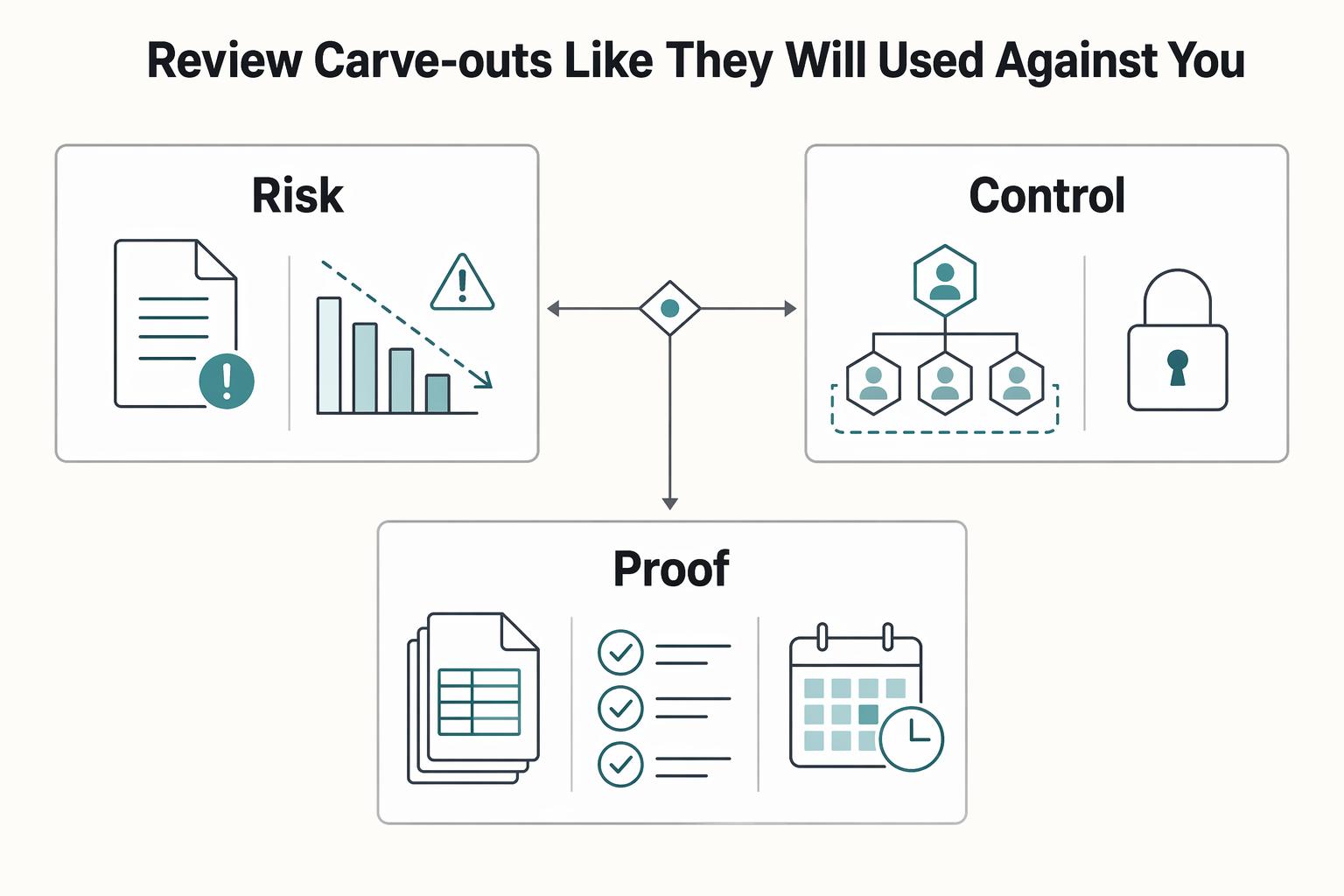
Review carve-outs like they will be used against you#
Carve-outs are where a lot of practical protection disappears. Read every carve-out and confirm how permitted transfers and control-change scenarios are handled in this specific contract. If control thresholds matter, verify the threshold in the specific contract and any official or legal source context that governs the transaction before using the clause.
Set timing based on execution reality, not a default number. Your response window should reflect financing readiness and likely diligence load, including contracts, IP, privacy, and customer concentration, while still limiting buyer friction. If the third-party offer changes after notice, do not assume reset mechanics; state the fallback explicitly in the contract.
Before accepting a tight window, make sure your records are in order. If equity or entity transfer is part of the transaction path, have your minute book, option plans, and key agreements ready to reduce process friction and timeline risk.
Pre-sign check with counsel#
Before you sign, have counsel confirm the following:
| Review area | What to confirm |
|---|---|
| Definitions | Trigger, bona fide offer, covered transfer, control-change concept |
| Evidence package | What must be delivered to present the offer and its exact terms |
| Election procedure | How you accept, when acceptance is effective, what "match" requires |
| Breach remedies | What the contract says happens if a sale bypasses your right |
| Governing law and forum | Whether dispute path aligns with enforcement priorities and speed in relevant jurisdictions |
We covered this in detail in A deep dive into the 'Waiver of Jury Trial' clause in contracts.
Before you send redlines, draft the clause in a structured template. That lets you pressure-test trigger events, notice flow, and matching terms: Use the freelance contract generator.
Conclusion: Turning a Legal Clause into a Competitive Advantage#
Use a right of first refusal when control risk is the issue, not by default in every contract. If the asset is replaceable, the deal depends on speed, or you cannot run a reliable response process, the clause can add friction without giving you much real protection.
That same logic applies across the main use cases. For partnership equity, it helps you avoid an outside buyer stepping into a co-owner role before you get your chance to match. For IP licensing, it gives you a priority chance to match a real outside offer before rights or licensing opportunities move elsewhere. If the ownership language is already messy, fix that first with work for hire vs. assignment of rights. For other multi-party structures, use the same approach only if your agreement clearly defines which transfer or asset triggers the right.
The clause works only when the process is precise. A bona fide outside offer triggers notice of the same terms, and you decide within the contract's stated response window. This remains a priority option, not a purchase obligation. If you decline or miss the window, the owner can proceed with the third-party sale.
In practice, a common failure mode is manual deadline tracking. Treat notice proof, receipt logs, and election records as part of the legal process, because one missed deadline can create a dispute or let an unintended sale close. To tighten the process, do the following:
- Review clause scope: confirm the exact shares, rights, license, or transfer interest covered.
- Verify trigger and notice mechanics: require a bona fide offer trigger and delivery of the full offer terms.
- Align negotiation fallback: if broad control is resisted, trade for clearer notice and matching mechanics.
- Document enforcement steps now: keep notice evidence, election records, and side-by-side offer comparisons.
A ROFR preserves your option to act, but the outcome still depends on drafting quality, process discipline, and jurisdiction-specific legal review.
Related: A Deep Dive into the 'Assignment' Clause in a Freelance Contract.
If you want your contract terms and payment operations to stay aligned as you scale, talk to Gruv about your setup.
Frequently Asked Questions
What clauses matter most in a right of first refusal?
Start with six points: trigger event, notice method and contents, exercise window, matching scope, bona fide offer standard, and waiver mechanics. Tie the trigger to receipt of a bona fide written third-party offer, not general intent to sell. Require written notice of material terms, require your election in writing, and state whether you must match price only or all material terms.
How do you negotiate it without slowing the deal?
Ask for precision, not broad leverage. Propose a defined notice method, a verified exercise window, and explicit acceptance mechanics tied to a real third-party offer. Confirm the notice window in the specific contract and any official or legal source context before use. If speed is the concern, trade for a cleaner process: full offer package at notice, and a fresh notice plus a new election opportunity if terms change.
Is this bad for the seller or transferor?
It can add process steps because the right holder gets a chance to match third-party terms. A workable trade is tighter timelines with strict notice rules, as long as the process is clear. If you hold the right, accept tighter timing only when the clause confirms the owner may proceed only if you do not timely exercise.
Should you use a ROFR, ROFO, or option instead?
These tools are not interchangeable, so choose based on how much unilateral control you need versus how much flexibility the owner wants. Use this quick comparison in negotiation: | Tool | Trigger | Your control | Seller flexibility | Best fit | | --- | --- | --- | --- | --- | | ROFR | After owner receives an acceptable third-party offer | Moderate to strong (you match actual terms) | Moderate (seller can test market first) | You want market-tested terms before deciding | | ROFO | When owner decides to sell or market before outside outreach | Lower (you negotiate before market check) | Higher | You want first look, seller wants more room | | Option / call option | During option period, typically at stated price or formula | Highest (you can exercise unilaterally in period) | Lowest | You need firm timing and price control | If you cannot get an option, a well-drafted ROFR can offer stronger protection than a ROFO when your priority is matching a concrete offer.
What counts as a bona fide offer?
Do not leave this undefined in your contract. Define it as a written offer with material terms from an offeror that is ready, willing, and able. In practice, request enough documentation to verify what you would actually need to match, including price, payment structure, and key conditions.
How should notice and timing work?
Use a delivery method you can prove later under the contract notice clause. Do not assume one universal method, because private contracts vary and some statutory models use certified mail. There is also no universal timeline, so verify the notice window in the specific contract and any official or legal source context before use, then test that window against financing and diligence reality. Grounded examples vary across practice, including five (5) business days, 30 days, and 45-day advance notice references.
Can you waive it?
Yes, but treat waiver as a formal written step, not an informal conversation. If your contract requires written waiver, amendment, or consent mechanics, follow those requirements exactly. Limit the waiver to the specific noticed transaction and state that material term changes require new notice.
What should you do if the clause is breached?
Use a fixed sequence: document facts, send prompt written breach notice, preserve evidence, involve counsel, and then pursue only the remedies your agreement supports. First compare the closed deal against the notice you received and capture proof of changed terms, missing notice, or a bypassed election window. If the matter is cross-border, verify enforceability before escalating, because court-judgment enforcement is not automatic across countries. The Hague Judgments Convention applies between Contracting States and excludes some subjects including intellectual property, while arbitration awards follow a separate enforcement path under the New York Convention.
Try a related tool
Researched and edited by the Gruv editorial team. Gruv builds cross-border billing, payouts, and finance-operations software for global businesses.
Sources
Includes 1 external source outside the trusted-domain allowlist.
- copyright.gov/docs/203.htmltrusted
- investor.gov/introduction-investing/general-resources/new...trusted
- nlr.gov/docs/libraries/working-with-us/license-agree...trusted
- pon.harvard.edu/daily/business-negotiations/right-first-refu...trusted
- scholarship.law.bu.edu/context/faculty_scholarship/article/1734/vie...trusted
- sec.gov/Archives/edgar/data/2093375/0002093375260000...trusted
- sec.gov/Archives/edgar/data/1305168/0000950134070045...trusted
- gruv.ai/blog/a-guide-to-the-right-of-first-refusal-i...external
Educational content only. Not legal, tax, or financial advice.
Related Posts

Work for Hire vs Assignment of Rights for Freelancers
A freelance agreement is not just about price and scope. It decides who controls the rights in the work. If the ownership language is loose, rights can move earlier than you expect, cutting down your control once the work is delivered or used.

Germany Freelance Visa Application Path for Freiberufler and Gewerbe
Choose your track before you collect documents. That first decision determines what your file needs to prove and which label should appear everywhere: `Freiberufler` for liberal-profession services, or `Selbständiger/Gewerbetreibender` for business and trade activity.

The Freelance Payment Penalty: A Modeled Audit of Platform Fees, FX Spreads, and Payout Delays
The money rarely disappears through a single, easy-to-spot fee. The real loss is stacked. A marketplace takes its commission, a processor adds a charge for international cards, a bank or payment company converts the currency at a spread, a platform holds the funds before release, and a wire sheds a little to intermediaries on the way in. Each layer looks defensible on its own, but the worker feels the combined result as a smaller deposit and a later payday.