
Quick Answer
Use a library of congress control number when your self-published book is an eligible forthcoming U.S. print monograph and you want clean library-facing discoverability. Run it through the Preassigned Control Number path in PrePub Book Link, submit from one locked metadata record, and keep identifier roles separate from ISBN workflows. After assignment, confirm placement on the copyright page and document your follow-up tasks, because assignment does not promise catalog appearance or collection placement.
For the leader of a Business-of-One, every publishing choice has to earn its keep. A Library of Congress Control Number, or LCCN, matters when you want your book to function as a serious professional asset, not just a product listing.
It is not a basic compliance step. It is a library and institutional metadata step that helps acquisitions teams recognize, trust, and handle your book correctly.
Think of it as your book's permanent address#
The simplest way to understand an LCCN is as the permanent address for your book's catalog record within the Library of Congress. Strictly speaking, the number applies to the bibliographic record for the work, not the physical book itself.
That creates a formal, verifiable record librarians and acquisitions staff can use to locate your book in national databases. For an author-entrepreneur, it is one of the early moves that turns a manuscript into a durable professional asset.
LCCN vs. ISBN in practice#
Most confusion starts here, and the distinction is practical. An International Standard Book Number, or ISBN, supports commerce. An LCCN supports credibility and institutional access.
An ISBN is assigned to each specific format of a book. Hardcover, paperback, and audiobook each need their own ISBN. The LCCN points to the library record for the work rather than acting as a separate sales identifier for each format.
| Identifier | Primary Purpose | Key Audience | Strategic Outcome |
|---|---|---|---|
| ISBN | Commerce and sales | Retailers, distributors, wholesalers | Enables the book to be sold and tracked in the global marketplace |
| LCCN | Credibility and access | Libraries, academic institutions, archives | Signals professionalism and makes the book easier for institutions to acquire and catalog |
The Tangible Return on Institutional Credibility#
Even a free step needs a reason. It matters when institutional credibility is part of the goal. It signals that you understand professional publishing standards, and it can make your book easier for libraries to evaluate for purchase.
Librarians work under time and resource constraints. Books that fit cleanly into their systems are easier to handle, and the LCCN helps your book fit that environment.
Do you need an LCCN?#
Use this as a direct screen. If you answer "yes" to any of these, getting one is likely the right move.
| Publishing situation | Likely action |
|---|---|
| Publishing a non-fiction book to establish expertise or thought leadership | Get an LCCN |
| Book intended for academic, research, or professional training settings | Get an LCCN |
| Publishing a work of biography, genealogy, or local history | Get an LCCN |
| Target audience likely to seek out the book through library systems | Get an LCCN |
| Want to build a long-term author brand on par with traditional houses | Get an LCCN |
If your project is a journal, a workbook, or a digital-only ebook, this is generally outside scope. If you are in scope, the rest is mostly execution: keep your metadata clean and follow the current process.
Securing Your LCCN: A Professional Workflow#
Once you decide the book is worth the institutional path, the rest is controlled execution. Treat the request as a gated print-metadata task through the Preassigned Control Number program, not as a general publishing admin item.
Prepare#
Do the prep work before you open PrePub Book Link. Freeze one approved metadata record for the exact forthcoming print monograph you plan to submit. That means your title, subtitle, contributor names, publisher name, and publication details should match across the title page, copyright page, cover-facing metadata, and your internal master sheet. Use this prep check as your control sheet:
| Owner | Artifact | Internal control |
|---|---|---|
| Author or publishing lead | Master metadata sheet for the print edition | One approved record only, with no draft variants in circulation |
| Production editor or file owner | Title page and copyright page draft | Fields match the master sheet exactly |
| Author or rights/admin owner | Eligibility note | Confirm the book is forthcoming, not already published, and not electronic-only |
| Operations owner | Submission tracker | Named owner for submission, corrections, and post-publication follow-up |
If any eligibility field is uncertain, stop and verify before you submit. The Library of Congress pages can read differently on who is eligible, so if your author, publisher, or U.S. status is unclear, pause and confirm against current PCN guidance before you file.
Apply#
Use the right lane. Self-publishers and authors should use an Author PCN account in PPBL, not CIP. The CIP program says self-publishers and authors are ineligible there. PCN guidance says they can create an account in PrePub Book Link and begin submitting requests without waiting for staff approval. Work the sequence in this order:
| Item | Use | Avoid |
|---|---|---|
| Program/account | Author PCN account in PPBL | CIP |
| Scope | Forthcoming U.S. monograph | Already published or electronic-only |
| Submission source | Frozen metadata sheet | Retailer dashboards or cover proofs |
| Changes after submission | LCCN Change Request in PPBL | Emailing change requests to a Publisher Liaison |
- Check the scope page first: forthcoming U.S. monograph, not already published, not electronic-only.
- Submit from your frozen metadata sheet, not from retailer dashboards or cover proofs.
- If something changes after submission, file an LCCN Change Request in PPBL.
- Do not email change requests to a Publisher Liaison.
A common failure mode is trying to fix a title, contributor order, or publication detail informally after submission. Use the correction path inside PPBL so the record trail stays clean.
Finalize#
Once the number is assigned, shift from submission to handoff. Save four things together: the PPBL submission record, the assignment evidence, the final print file owner, and a post-publication follow-up note. That last item matters because assignment confirms the control number was issued in advance of publication, not that the Library of Congress will create preliminary or final cataloging in its catalog.
Your production check is straightforward: confirm the number appears on the back of the title page (the copyright page) in the final print file before release. If you also maintain library-facing metadata exports, verify that the control number stays in the correct library field context, such as MARC 010. Do not let it get mixed into ISBN records. If your print setup is still moving, Best Print-on-Demand for Books Starts With Control, Not Print Specs will help you keep that last handoff tight.
Related: How to Find a Book Editor for Your Manuscript Stage.
Integrating Your LCCN into a Modern Publishing Strategy#
After assignment, the biggest risk is metadata drift. Run one canonical metadata record for the print edition, keep each identifier in its own role, and avoid cross-channel field reuse.
An LCCN identifies a Library of Congress catalog record. It is not a retail product code, not an ISBN, and not proof of copyright registration, mandatory deposit completion, or final catalog visibility. Treating it like a general-purpose ID creates avoidable cleanup across print files, dashboards, and library-facing exports.
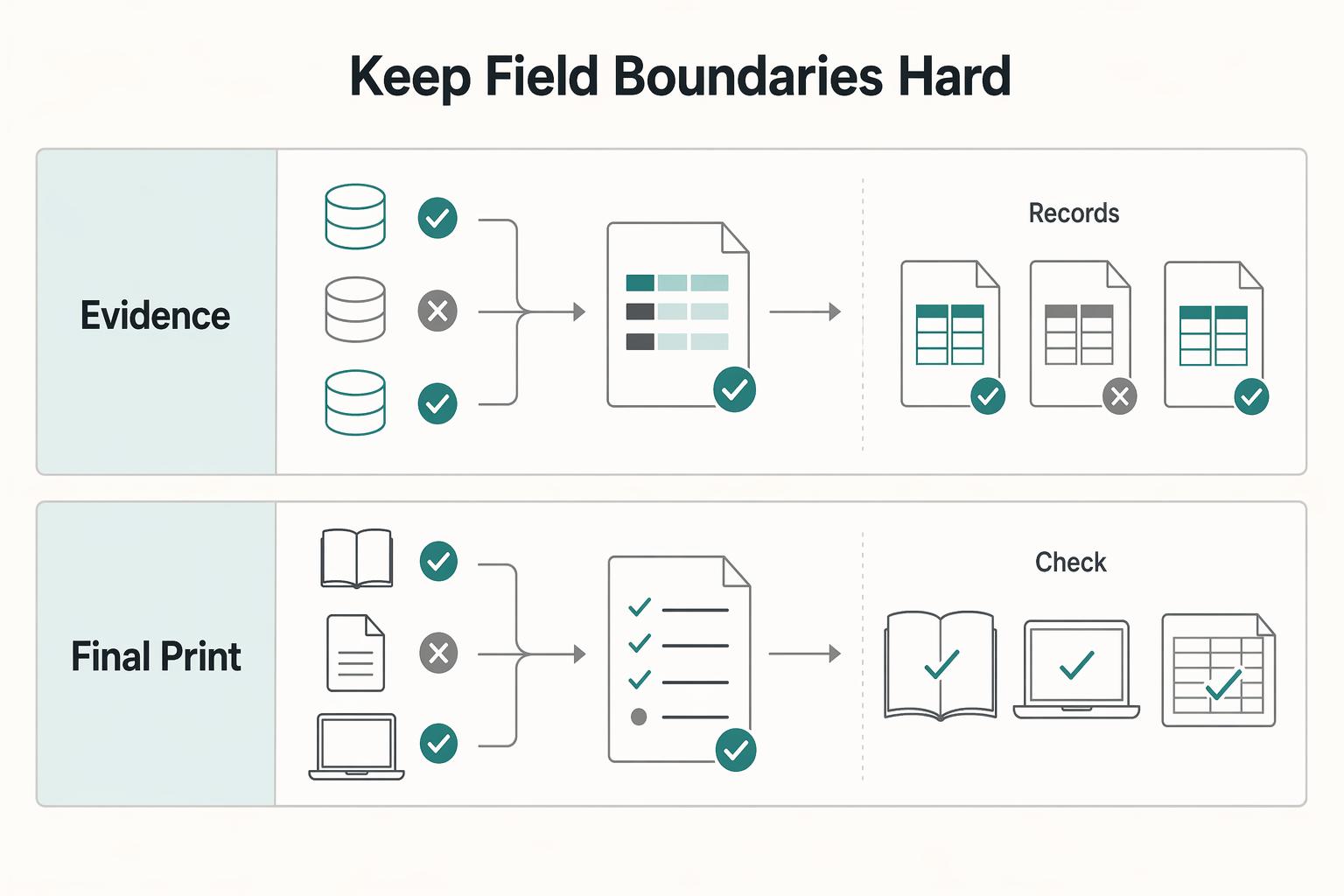
Keep field boundaries hard#
The most common failure is copying one identifier into every system because records look similar. That breaks as soon as formats split or downstream systems rewrite fields. MARC 001 is the classic trap: LC-distributed records can carry the LC control number there, but local organizations can replace 001 with their own control number. Keep your internal master sheet authoritative.
| Record context | Where it goes | Put this there | What to avoid |
|---|---|---|---|
| Library-facing MARC bibliographic record | MARC 010$a | Assigned control number | Do not place it in ISBN fields or generic product-ID slots |
| LC-distributed MARC copy or library exchange record | Field 001 in LC-distributed records; confirm current field guidance with the Library of Congress | Use with awareness that local systems may overwrite 001 | Do not treat 001 as your universal cross-channel source |
| Format-specific product or distribution record | MARC 020 or platform product-identifier area | The ISBN for that specific manifestation or channel record | Do not reuse the control number as a retail, distributor, or store identifier |
| Final print interior | Copyright page (back of the title page) | Assigned number after final proof approval | Do not assume dashboard metadata is enough if the print PDF is wrong |
Use one verification routine: compare the canonical metadata sheet against the final copyright page and the exact dashboard or export you are releasing. If the title, subtitle, contributor order, or imprint changed after submission, file an LCCN Change Request in PPBL.
Separate shared metadata from format records#
Keep one locked core record, then separate format records for print, ebook, and audio. The shared layer should hold only fields that truly match across formats. The format layer should hold manifestation-specific identifiers and format-specific labels.
This matters because ISBNs are product-specific, and MARC 020 can repeat for different manifestations. For a clean ISBN workflow, see How to get an 'ISBN' for your self-published book. Keep the LCCN tied to the eligible print workflow instead of copying it into every product listing.
Edge cases still need verification: ebook-only titles are out of PCN scope, and items under 50 pages are excluded with stated exceptions. For unusual formats or mixed-edition scenarios, keep the eligibility call pending Library of Congress verification before extending print logic.
Sign off once, then close out cleanly#
Assign one metadata owner for release. Then run one signoff workflow with three parts:
- Owner: one approver for final print-release metadata.
- Checks: compare the canonical sheet to the PPBL request, final print PDF, copyright page, POD dashboard, and any library-facing export; confirm LCCN placement and format-correct ISBN usage.
- Evidence: store the PPBL assignment record, any PPBL change-request confirmation, the approved print file, and dated screenshots or exports of released metadata.
For POD handoff, freeze the approved print PDF first, then sync dashboards from that same approved record. After publication, open a tracker with LC copy-submission destination, timing, and confirmation rules marked as pending official verification. Keep mandatory deposit as a separate workflow with its own owner and deadline.
Final reminder: assignment is not catalog appearance. A valid assigned LCCN may not resolve to an LC catalog record, and LC is under no obligation to provide preliminary or final cataloging in its catalog. Success here is controlled integration plus documented follow-through.
If you want a deeper strategy lens, read How to Write a Book to Establish Your Freelance Expertise.
Your LCCN: The Final Checkpoint in Professional Publishing#
Treat this as a hard release gate. Launch readiness is complete only when all three blocks are complete: catalog-interface confirmation, final print-file confirmation, and verified post-publication follow-up.
| Checklist block | Owner | Evidence |
|---|---|---|
| Catalog confirmation | Owner pending assignment | Saved permalink, dated screenshot, and a note stating what catalog evidence does not prove |
| Final print file confirmation | Owner pending assignment | Final print PDF checked after proof signoff, with number placement and metadata match confirmed |
| Post-publication follow-up | Owner pending assignment | Confirm the current submission requirement and destination with the Library of Congress, plus shipment proof once sent |
Start with the catalog check, but keep its limits clear. Your strongest evidence is an LCCN Permalink check, because it retrieves and displays records from the LC Catalog and LC Authorities. Save the permalink and a dated capture in your launch folder. If no record appears, do not assume the number is invalid; not all assigned numbers resolve to an LC record.
| Catalog evidence | What it can validate | What it cannot validate |
|---|---|---|
| LCCN Permalink resolves to a bibliographic record | A catalog-facing record checkpoint tied to that number | Copyright registration, rights clearance, sales demand, or collection placement |
| No permalink result yet | That you may need follow-up before relying on catalog display | That the number was never assigned |
| Catalog record notes or warnings | Useful context about the record as displayed | Business compliance outside that catalog record |
Next, run the production check from the final print-ready PDF, not dashboard fields alone. The source of truth is the file that will actually print. Confirm the number appears on the copyright page (the back of the title page), and confirm the title, subtitle, author name, and publisher details still match your approved metadata. If anything changed, submit an LCCN Change Request in PrePub Book Link before release.
Before launch, close all three checklist blocks:
- Catalog confirmation
Owner: pending assignment. Evidence: saved permalink, dated screenshot, and a note stating what catalog evidence does not prove.
- Final print file confirmation
Owner: pending assignment. Evidence: final print PDF checked after proof signoff, with number placement and metadata match confirmed.
- Post-publication follow-up
Owner: pending assignment. Evidence: confirm the current submission requirement and destination with the Library of Congress, plus shipment proof once sent.
If your identifier workflow is still crossing wires, review How to get an 'ISBN' for your self-published book. If a correction or edge case stalls, use the official PrePub Book Link contact web form first, then Talk to Gruv as an escalation path. If any checklist block is incomplete, launch readiness is incomplete.
Frequently Asked Questions
How much does a library of congress control number cost?
Do not rely on an old forum post or course screenshot for this. Check the current PCN FAQ for the official cost answer right before you apply. Then save a dated screenshot or note in your publishing folder so everyone is working from the same version.
Can you apply if you are self-published?
Yes, if your book fits PCN scope: a forthcoming monograph that will be published in the United States. Authors and self-publishers can create a PrePub Book Link account and start submitting requests without waiting for staff approval. Ebook-only titles are listed as ineligible. If you are mixing formats, confirm that the print edition is the one you are applying for.
Is this the same as copyright registration?
No. PCN, copyright registration under Section 408, and mandatory deposit are separate tasks, so track them separately and do not mark one complete because another one moved forward. For published works, mandatory deposit can require two complete copies of the best edition within 3 months after publication. Optional registration can satisfy that requirement, so verify before you send duplicates.
When do you use LCCN versus ISBN?
Use the control number for library-facing catalog control, and use the ISBN for supply-chain identification of a specific title, edition, and format. The Library of Congress does not issue ISBNs, and U.S. ISBN help goes through Bowker. If that split is still fuzzy, review How to get an 'ISBN' for your self-published book. | Item | Use it for | Not this | | --- | --- | --- | | LCCN | Library-facing bibliographic control tied to an LC catalog record | A retail or distributor product ID | | ISBN | Supply-chain ID for a specific edition and format | Proof of copyright or LC cataloging | | Copyright registration | Legal registration record with related benefits | A substitute for either identifier |
What do you have to send after publication?
If you received a preassigned number, put post-publication follow-up on your checklist as its own task. For any required copy submission, keep the destination marked as pending official Library of Congress verification until you confirm it. Keep proof of shipment and a record of the exact edition you sent.
How long does assignment or cataloging take?
Do not plan your launch around assumed cataloging speed. Authors and self-publishers can open a PrePub Book Link account and begin submitting requests right away. Keep the remaining timeline marked as current processing guidance pending official verification. The practical move is to apply early and leave room for metadata corrections before final print files are frozen.
Does getting one guarantee cataloging or placement in the Library’s collection?
No. The Library states it is under no obligation to provide preliminary or final cataloging information in its catalog, and final selection decisions are made by selection librarians and recommending officers. Treat assignment as metadata control for an eligible print book, not as a promise of catalog visibility or collection placement.
Try a related tool
Researched and edited by the Gruv editorial team. Gruv builds cross-border billing, payouts, and finance-operations software for global businesses.
Sources
Includes 1 external source outside the trusted-domain allowlist.
- ask.loc.gov/faq/299738trusted
- catalog.loc.govtrusted
- copyright.gov/help/faq/mandatory_deposit.htmltrusted
- copyright.gov/title37/202/37cfr202-19.htmltrusted
- lccn.loc.govtrusted
- loc.gov/programs/preassigned-control-number/about-th...trusted
- loc.gov/programs/preassigned-control-number/about-th...trusted
- isbn-international.org/content/what-isbn/10external
Educational content only. Not legal, tax, or financial advice.
Related Posts
Value-Based Pricing for Freelancers Under Real Payment Risk
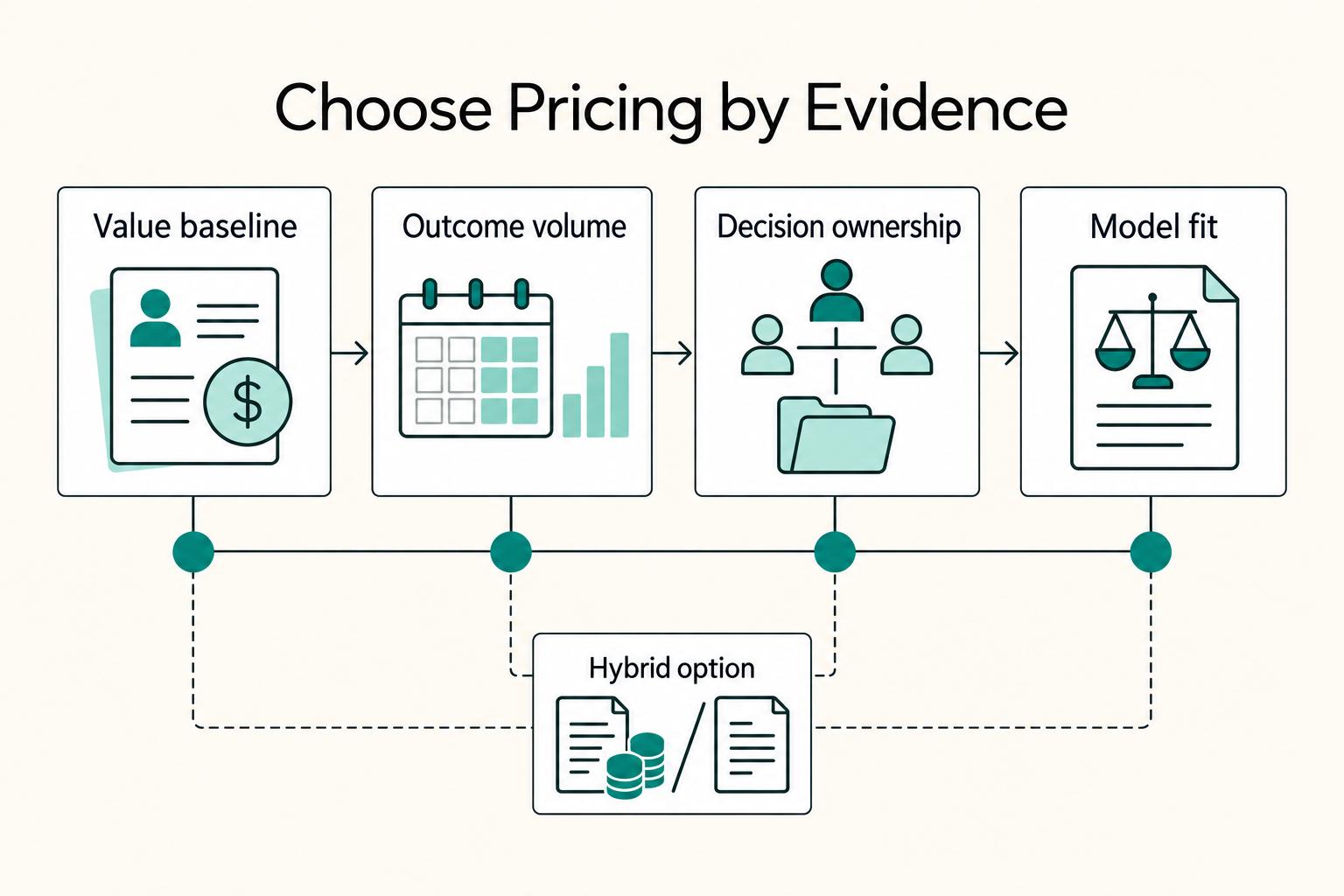
Value-based pricing works when you and the client can name the business result before kickoff and agree on how progress will be judged. If that link is weak, use a tighter model first. This is not about defending one pricing philosophy over another. It is about avoiding surprises by keeping pricing, scope, delivery, and payment aligned from day one.

How to Write a Book as a Freelancer Without Scope Drift
The book needs a defined job and a defined boundary before you draft. In this cycle, give it one job: either support your client book services, or strengthen your own authority book so your niche, offer, and sales conversations become clearer.
How to get an 'ISBN' for your self-published book
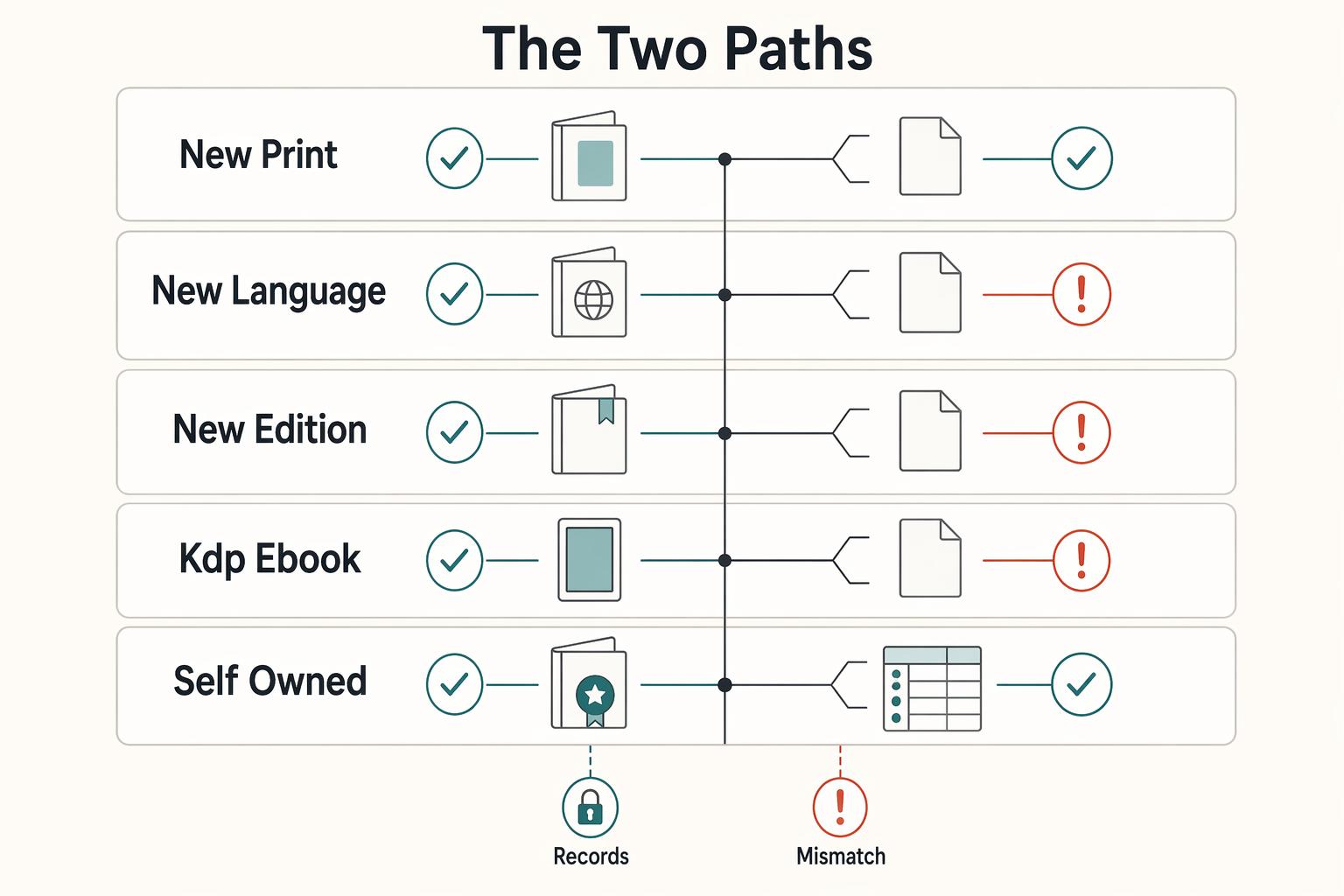
When you're deciding how to handle identifiers for a self-published book, make one decision first: which workflow you'll use and where you'll verify the current rules. Detailed ISBN rule guidance isn't settled here, so treat old assumptions as unverified until you confirm them in live documentation.