
Quick Answer
Yes. Section 280A(g) can let you exclude rent when your home is rented to a separate entity for fewer than 15 days and the event is genuinely business-related. Your file should tie a supportable rate to dated evidence, then keep the agreement, invoice, payment proof, and bookkeeping entry aligned. If the day limit is crossed, reporting changes. If entity status, residence, or property jurisdiction shifted during the year, get preparer guidance before payment.
What Exactly Is the Augusta Rule (and Why Should You Care)?#
Section 280A(g), often called the Augusta Rule, can let you exclude rent from income when you rent a home you also use as a residence for less than 15 days in the tax year. In a common setup, you rent your home to a separate business entity for a real business event at a supportable fair rate. The entity may treat the payment as a business expense, and you may exclude the rent personally if the requirements are met.
This works or fails on execution, not on clever framing. You need a legitimate business purpose. The rent amount must be fair under the facts and circumstances. You also need clean separation between you and the paying entity, plus records that show what happened, why it was business-related, and how you set the rate.
Start with a quick self-screen before you start the paperwork. If you run an S corporation or other corporation, entity separation is often easier to document. If you are a sole proprietor, or you use a single-member LLC that is still disregarded for federal income tax, the dual-benefit result is less straightforward unless you elected corporate treatment, for example with Form 8832.
| Compliant use pattern | High-risk pattern |
|---|---|
| Real business meeting at your residence with clear agenda and attendees | No real event, or a vague "strategy day" with no support |
| Fair rental amount supported by local meeting-space comparisons | Rate chosen to hit a tax target |
| Payment documented by a separate entity as a business expense | Sole-prop-style self-payment or mixed personal/business funds |
| Fewer than 15 rental days for the year | You exceed the day limit or cannot prove the count |
| No rental-use deduction for home costs tied to those days | You try to double dip on rental-use deductions |
If you clear that screen, the rest is a three-step process: document the decision, execute the transaction cleanly, and make sure reporting matches the file. Related: A Guide to the Qualified Business Income (QBI) Deduction for Freelancers.
Step 1: Justify & Document - Building Your Audit-Proof Foundation#
Do Step 1 before any payment. Build a file that documents three things: there was a real business event, the rent was supportable as fair market rent, and the company formally approved the expense. If any one of those is weak, fix it now before moving to Step 2.
Your file should answer three questions:
- Why did the business need this event?
- How did you set the rent?
- Who approved it as a business expense?
Apply a real business-purpose test#
A real business purpose is more than calling something a "meeting." Put the event, the business reason, and the expected output in writing before it happens.
Use a simple test: would a third party understand why the event happened, why your residence was used, and what decision or deliverable came out of it? If not, your rationale is too vague.
Write a short rationale memo with the event name, date, location, attendees, business need, and expected output. Tie the event to a concrete result, such as approved decisions or a planning deliverable for the next 12-24 months, and create the rationale before payment.
Build a fair-market-rent file, not a guessed number#
Support the amount with documentation showing it reflects fair market rent, and keep a dated note explaining how you arrived at the rate. Comparables can help, but this guidance does not require a specific number of comparables or one mandatory valuation method.
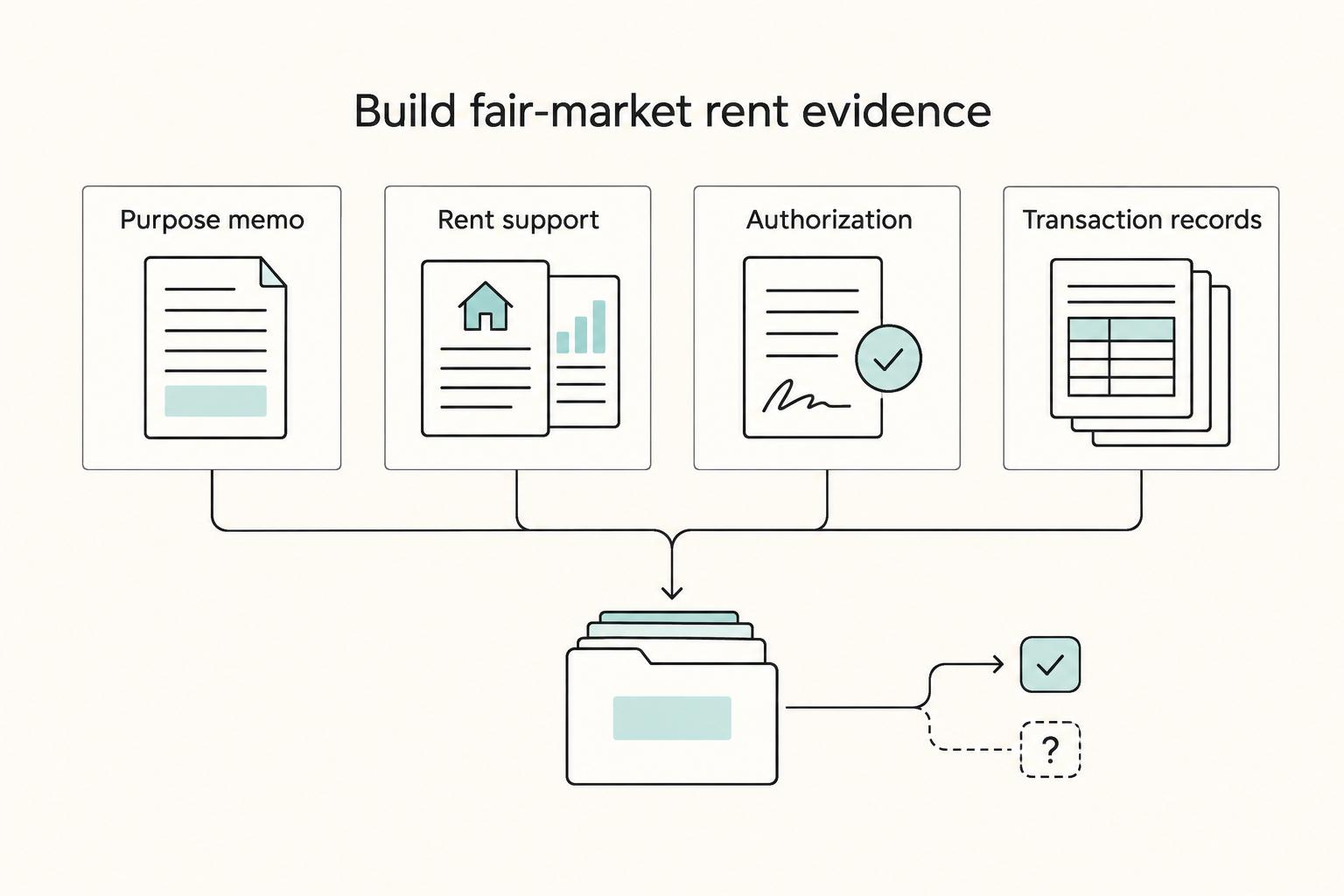
| Document | What it should show | Adjustment notes | Evidence to retain |
|---|---|---|---|
| Business-purpose memo | Real business need and expected output | Written before payment | Dated memo and related event records |
| Rent-support note | Why the amount is fair market rent | Explain assumptions and limits | Dated support file and working notes |
| Authorization record | Formal approval of the event and amount | Use your normal minutes or authorization format | Minutes or equivalent approval record |
| Transaction records | Arm's-length execution | Keep records consistent across documents | Agreement, invoice, and payment record |
Do not choose a number first and backfill support later. If you plan multiple rental days, track the total so you do not drift into 15 days, where rental income becomes taxable.
Approve it like a real company decision#
Once the purpose and rent support are documented, record approval in meeting minutes or a similar authorization record. This shows an arm's-length transaction that the business approved as an ordinary and necessary expense.
| Authorization detail | Maps to |
|---|---|
| Event date and location | Agreement and invoice |
| Approved amount | Payment record |
| Business purpose | Event records and output |
Your authorization record can include:
- Meeting date and attendees
- Specific event being approved
- Event date and property location
- Approved rental amount and how you set it
- Business-purpose summary
- Approval outcome, for example motion, second, and result if that is your format
Each field should map cleanly to the documents you create next.
If personal and business use is hard to separate or your documentation is weak, bring in a tax professional before you transact. You might also find this useful: A Guide to the Lifetime Learning Credit for Freelancers.
Step 2: Execute & Transact - Creating an Unimpeachable Paper Trail#
This is the control point. Your records should read like a normal third-party rental, with clear proof of who was paid, how much, when, and for what business use.
Use the same sequence every time: agreement -> invoice -> payment -> event proof. Keep the event name, date, property, and rent amount consistent across every document. Make sure those details match Step 1.
Start with the agreement#
Put the agreement in place before the event so the transaction holds together from the start. The IRS does not prescribe one required lease format for every Section 280A(g) self-rental, but documentary support is still required.
Practical fields checklist:
- legal names of homeowner and business
- property address
- rental date or date range
- event name and business purpose
- rental amount
- payment terms
- signature lines for both sides
- date signed
If Step 1 approval says one event and one amount, the agreement should say exactly the same. Keep the rent support reasonable in the same way you would if paying an unrelated party.
Keep invoice hygiene boring and consistent#
Issue an event-specific invoice that ties back to the agreement. Boring is good here. Use consistent naming and wording so the transaction lines up in accounting and in your support file.
| Invoice field | What to include |
|---|---|
| Payee | Identify the payee |
| Amount | Identify the amount |
| Date incurred | Identify the date incurred |
| Service description | Tie it to the event and point back to the signed agreement |
| Naming and wording | Keep them consistent across accounting and your support file |
A strong description is specific, not generic, and should point back to the signed agreement. Record the transaction promptly in your ledger or journal, and keep naming consistent across files.
Move the money cleanly#
Use a traceable payment method and keep proof of payment with the invoice. Your file should show the payee, amount, and payment date, with support such as a canceled check, transfer confirmation, deposit slip, or receipt. Electronic records are fine, but they need to be just as complete as paper records.
| Transaction point | Compliant flow | High-risk shortcut | Corrective action |
|---|---|---|---|
| Agreement | Signed before event; matches approved event, date, and amount | Missing agreement or drafted after payment | Complete and align documents before money moves |
| Invoice | Event-specific invoice linked to agreement | Generic invoice or no invoice | Reissue invoice with exact event details and agreement link |
| Payment | Traceable payment matching invoice amount and date | Undocumented transfer or missing payment proof | Reprocess through a documented payment trail and retain proof |
| Event records | Same-day records showing event occurred | No contemporaneous business records supporting the event | Capture and store contemporaneous event evidence |
Capture the proof bundle#
There is no IRS-mandated Section 280A(g) "meeting packet," but keeping a tight proof bundle makes the file easier to defend.
Consider keeping:
- agenda or meeting outline
- attendee record, or calendar invite list
- work output, such as slides, notes, or a decision memo
- agreement, invoice, and payment proof in one folder
Store files in one location with a consistent naming pattern, and record transactions daily where practical. Retain records through at least the general 3-year assessment window, and track rental days so you stay within the fewer than 15 days rule. For a step-by-step walkthrough, see How to Choose the Right Business Structure for Your Freelance Business.
Step 3: Comply & Report - Making Your Records Agree Before Filing#
At this stage, sloppy or inconsistent execution is a major audit risk. Your books, return-prep notes, and support file should tell one clear story: a real business rental, a market-based rate, a legitimate business purpose, and no more than 14 rental days for the year.
Reporting checklist#
Run this checklist before filing:
| Area | What to confirm before filing |
|---|---|
| Business return | Record the payment as an ordinary and necessary business expense tied to the specific event. Use the same event name, date, property, and amount shown in your agreement and invoice. |
| Personal return | If the facts qualify, do not report the rental income on your personal return. If your rental use reaches day 15, do not assume the same treatment still applies. |
| Preparer confirmation | Ask your tax preparer to confirm two points in plain language: how the business expense is classified, and how qualifying personal-side treatment is handled on the return. |
Audit file map#
Use this map so each claim has clear proof and each proof item addresses a known review risk.
| Document | Exact claim it supports | Risk it helps mitigate |
|---|---|---|
| Fair market rent support | The amount charged was comparable to similar properties | Inflated pricing or disguised owner benefit |
| Signed agreement | You set date, property, event, and amount for the rental | Backdated or non-arm's-length setup |
| Invoice | The business was billed for that specific event at the agreed amount | Generic, unsupported, or duplicated charge |
| Payment proof | The business paid the homeowner with a traceable amount and date | Cash, commingled funds, or missing transfer trail |
| Agenda, attendee record, and work output | The event had a legitimate business purpose and occurred | Personal use presented as a business meeting |
| Bookkeeping entry | Your books reflect the same transaction as source documents | Return-to-books mismatch |
Reconcile before filing#
Before you send anything to your preparer, do one reconciliation pass. Match these four fields across the agreement, invoice, payment record, and bookkeeping entry: event name, date, amount, and property. If any field does not match, correct it or add a short memo that explains why.
Then confirm your day count. The treatment described here depends on staying at 14 days or less for the year, so crossing into day 15 creates a different reporting fact pattern.
When to bring in a pro#
Get targeted tax help if any of these apply:
- your entity changed during the year, ownership changed, or the payer entity does not match the agreement
- your facts are mixed-use or close to qualification limits, including personal-use questions
- your records are inconsistent, late-created, or missing core items, for example payment proof or market-rent support
- you are unclear how to classify the business expense or how qualifying personal-side treatment should be handled on the return
For related context, see How to Make the 'Section 962 Election' for Individual CFC Shareholders.
Before you finalize your file, compare your event-based Section 280A treatment against your regular workspace write-offs with the Home Office Deduction Calculator.
From Tax Loophole to Strategic Tool: Final Thoughts#
A conservative way to approach Section 280A(g) is to treat it as a records-first tax position, not a shortcut. If you cannot show why the event happened, how you set the rate, and how payment and reporting align, pause and resolve the gaps before proceeding.
Keep the same three-step approach every time:
- Justify and document before money moves.
- Execute with clean, traceable records.
- Report only what your file can still support later.
| Step | Weak file | Defensible file | Example evidence retained |
|---|---|---|---|
| Justify & document | Business purpose is vague; rate is chosen for convenience | Business purpose and rate are documented before payment | Dated rate support, event records, short rationale memo |
| Execute & transact | Payment trail is informal; records are mixed | Transaction is traceable and records stay separated | Bank proof, matching bookkeeping entries, contemporaneous notes |
| Comply & report | Filing position is set first and support is built later | Filing position is reviewed against the full file before filing | Year-end reconciliation, return workpapers, review notes |
Use a cautious default before treating results as final. Federal Section 280A mechanics, a required documentation set, and multi-state/cross-border outcomes are not established. At the state/local level, Virginia's Title 58.1, Subtitle III covers local taxes, and county taxes may be set as late as a regular or called meeting in June. If local law affects your position, keep a copy of what you relied on, including a saved statute page or a portal-generated PDF report.
Escalate to a tax professional before payment if your entity setup changed during the year, your pricing support is thin, or your filing posture spans multiple states, localities, or countries.
If you want a deeper dive, read Do I Have to Pay State Taxes While Living Abroad as a Digital Nomad?.
If your setup spans entities or jurisdictions, use Contact Gruv to confirm which compliance and recordkeeping workflows are enabled for your program.
Frequently Asked Questions
How do you determine fair market rent?
Set your rate based on what an unrelated person would pay for a comparable local property, then document how you got there. If your rate is substantially lower than similar local rents, it is harder to support as a fair rental price. Keep dated comps, underlying quotes or screenshots, and a short rationale for why each comp is actually comparable. If your comps vary, use a conservative method by choosing a supportable rate near the lower end of the reasonable range and memo that decision. | Source | What to collect | Why it helps | |---|---|---| | Commercial venue comps | Hotel meeting room quotes, local event space pricing, coworking conference room rates | Shows what a business would pay for professional meeting space | | Residential comps | Comparable home rental listings for similar properties, dates, and features | Shows what the property itself could command in the local market | | Final documented rate | Your selected daily rate plus a short written rationale | Ties the evidence to the amount actually charged |
What is a legitimate business purpose for renting your own home?
Use this for a bona fide business purpose tied to the rental, not ordinary personal use. Keep records that show the purpose and activity, such as an agenda, attendee list, calendar invite, and meeting output. If the file does not clearly show a distinct business use, tighten the documentation before you rely on the treatment.
What specific documents should you keep to prove compliance?
Keep a complete support file: rent analysis, agreement or written authorization, invoice, payment proof, event records, and a matching bookkeeping entry. Maintain a year-to-date rental day log, because the special rule applies when a dwelling unit is used as a residence and rental use is fewer than 15 days. At 15 days or more, rental income is included in income. If you reach that point, get preparer guidance on reporting, including whether Schedule E applies.
Is this an audit red flag?
The rule itself is not the issue. Weak substantiation is. Risk usually comes from unsupported pricing, unclear business purpose, a missing payment trail, or mismatched records across the agreement, invoice, payment, and books. Keep records long enough to prove the return position because the burden of proof is on you.
Can you use this if you also claim a home office?
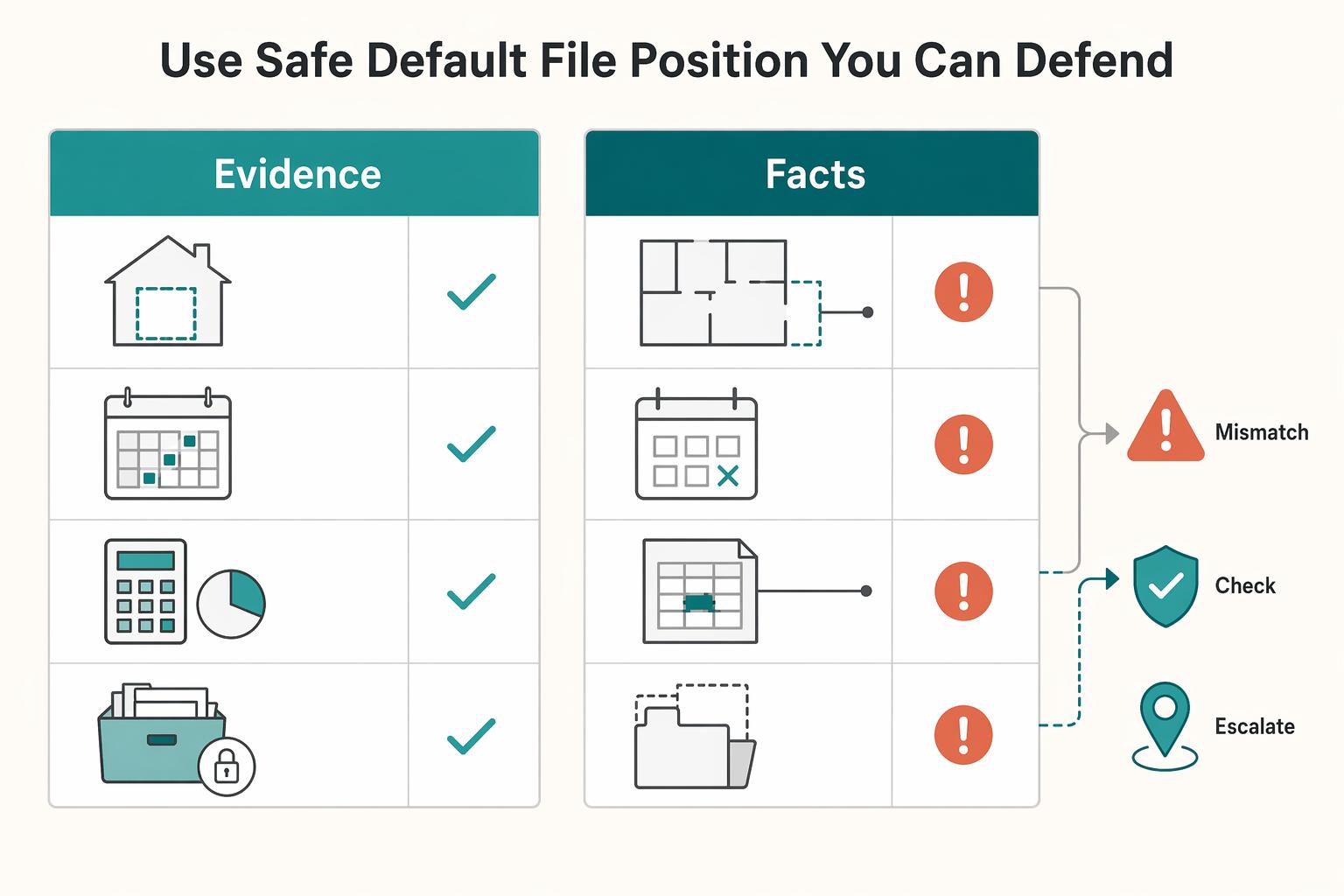
You may be able to, but treat them as separate frameworks with different standards and files. Home-office treatment is based on exclusive, regular business use, and mixed personal/business use of the same area can fail that standard. Event-based rental treatment is tied to a specific rental use and fair-rent support. Do not assume the same room and the same days cleanly support both without review. | Item | Ongoing workspace deduction | Event-based rental treatment | |---|---|---| | Core standard | Exclusive, regular business use | Specific rental use with business purpose and fair-rent support | | Typical proof | Floor plan, usage facts, expense allocation records | Agreement, invoice, payment proof, event records, rent analysis | | Main failure mode | Mixed personal and business use of the same area | Recasting ordinary home working time as a rental use | If you need a refresher on the workspace side, see How to Write Off a Home Office as a Renter.
What if you live abroad, move between states, or use an LLC formed somewhere else?
Do not assume federal treatment automatically resolves state, local, or cross-border treatment. LLC rules vary by state, and foreign LLCs have special rules. Keep entity formation records, residence timeline, property location details, and any local tax advice memo in the file. Escalate to a tax professional before payment if your property location, entity jurisdiction, or country or state of residence changed during the year, or if those locations do not clearly align.
Try a related tool
Researched and edited by the Gruv editorial team. Gruv builds cross-border billing, payouts, and finance-operations software for global businesses.
Sources
Includes 1 external source outside the trusted-domain allowlist.
- augustaga.gov/Archive/ViewFile/Item/18725trusted
- govinfo.gov/content/pkg/USCODE-2023-title26/pdf/USCODE-2...trusted
- irs.gov/businesses/small-businesses-self-employed/bu...trusted
- irs.gov/newsroom/small-business-rent-expenses-may-be...trusted
- law.lis.virginia.gov/vacodefull/title58.1/subtitleIIItrusted
- uscode.house.gov/view.xhtmltrusted
- gruv.ai/blog/a-guide-to-the-augusta-rule-section-280...external
Educational content only. Not legal, tax, or financial advice.
Related Posts

Do I Have to Pay State Taxes While Living Abroad as a Digital Nomad?
Living abroad does not end `state income tax` exposure by itself. The first decision is practical: choose a filing position your facts can support, then build records that support the same story all year.
How to Write Off a Home Office as a Renter
A renter can claim the home office deduction when IRS eligibility tests are met and the business use of the home is clear to document. You are the CEO of a business-of-one, so run this like an operating decision: qualify first, document second, then calculate. If you want a low-friction approach, start with compliance, not aggressive tax savings.

The Freelance Payment Penalty: A Modeled Audit of Platform Fees, FX Spreads, and Payout Delays
The money rarely disappears through a single, easy-to-spot fee. The real loss is stacked. A marketplace takes its commission, a processor adds a charge for international cards, a bank or payment company converts the currency at a spread, a platform holds the funds before release, and a wire sheds a little to intermediaries on the way in. Each layer looks defensible on its own, but the worker feels the combined result as a smaller deposit and a later payday.