
Quick Answer
Start with a three-phase audit, then negotiate. For severance pay international employees, first verify what is legally owed, then bargain only on true discretionary terms, and finally validate execution details like payer entity, payroll location, and withholding by payment line. Keep termination date and last working day distinct in your file, and pause any signature request until the written calculation basis and release language are clear.
A Guide to Severance Pay for International Professionals#
Your first move is verification, not negotiation. Before you ask for more money, sort the offer into five terms. Contractual entitlement is pay owed under your contract or employer plan. Statutory minimum is the legal floor. Discretionary severance is anything offered by agreement. Termination date is the legal end of employment. Last working day is the day you actually stop working. Those dates can differ, and that difference can affect notice, payroll, and immigration timing.
| Term | Meaning | Note |
|---|---|---|
| Contractual entitlement | Pay owed under your contract or employer plan | Verify first |
| Statutory minimum | The legal floor | Verify first |
| Discretionary severance | Anything offered by agreement | Separate from owed amounts |
| Termination date | The legal end of employment | May differ from the last working day |
| Last working day | The day you actually stop working | Difference can affect notice, payroll, and immigration timing |
Step 1 Start with the legal baseline in the governing jurisdiction#
Start with the legal baseline in the jurisdiction that actually governs the employment relationship, then send the file to the right reviewers.
| Jurisdiction | What to verify first | Why it matters | Who must verify |
|---|---|---|---|
| U.S. federal | FLSA does not require severance; check contract, plan, and whether WARN could apply to covered plant closings or mass layoffs (for employers with 100 or more employees and 60 calendar days' notice obligations) | Separates true entitlement from negotiable extras | Employment counsel; immigration counsel if status depends on the job; tax advisor |
| UK | Statutory redundancy may apply after 2 years of service; contract can improve notice but not undercut the statutory minimum | Distinguishes the legal floor from enhanced or contractual top-ups | Employment counsel; tax advisor |
| Host country | Confirm the current host-country rule from the official legal text | Local dismissal rules are highly jurisdiction-specific | Employment counsel; tax advisor; immigration counsel if relevant |
Step 2 Gather contract, payroll, and status records in one file#
Build one intake file in a single pass. Gather legal baseline documents first: employment contract, amendments, handbook or severance plan, termination letter, and any notice or redundancy paperwork. Add payroll evidence next: recent payslips, bonus or commission statements, unused leave balance, equity documents, and any written calculation basis. Finish with status and immigration records: visa approval, work authorization, sponsorship notices, and any filing deadlines tied to the end of employment.
Step 3 Do not sign anything that waives rights#
Do not sign anything that waives rights or locks in unclear facts. If you need to acknowledge receipt or attendance, keep it administrative until the legal terms are reviewed. Ask for clarification first if the draft does not show the calculation basis, labels all payments as one lump sum, or leaves the termination date and last working day inconsistent. Stop before signature if immigration status may change quickly, if the release waives claims before you know the legal floor, or if no one has checked withholding, since severance is taxable in the U.S.
That gives you the sequence for the rest of the process: confirm the floor, negotiate the real upside, and protect the payout mechanics before you accept terms.
Phase 1: Secure Your Foundation - How to Audit Any Severance Offer#
Do not negotiate yet. First confirm what is already owed, then isolate what is truly negotiable. Most severance errors happen when contractual pay, statutory minimums, and discretionary extras are blended into one headline number.
Step 1 Classify every line item before you discuss value#
Classify every line item before you discuss value. Use three buckets:
- Contractual entitlements: amounts owed under signed terms and incorporated plans.
- Statutory minimums: legal floor under the governing rules.
- Discretionary items: anything above those floors (cash top-ups, timing changes, benefits extensions, reference terms).
Start with the primary text: employment agreement, amendments, operative offer terms, incorporated handbook or severance plan terms, and equity documents. Employer summaries are useful, but they do not replace the clause language.
For statutory minimums, verify against current legal text or official government guidance, then confirm with counsel where dismissal type, governing-law conflict, or non-U.S./UK local rules affect outcomes. In the U.S., the FLSA does not require severance, so agreement terms often control. In the UK, statutory redundancy may apply only after 2 years continuous service, and enhanced/contractual redundancy is separate from that statutory floor.
| Jurisdiction or source | Verify from primary text | Employer records that support check | Status |
|---|---|---|---|
| U.S. federal | FLSA severance baseline; whether WARN could apply for covered events with 100 or more employees and 60 calendar days notice | Termination letter, layoff notice, separation schedule, payroll history | Pending / Verified |
| UK | Statutory redundancy eligibility and current limits; notice and redundancy treatment | Written calculation statement, redundancy notice, payslips, service dates | Pending / Verified |
| Host country | Confirm the current host-country rule from the official legal text | Local HR letter, contract appendix, payroll records | Pending / Verified |
| Contract-governing law (if different) | Confirm the current governing-law rule from the official legal text | Choice-of-law clause, counsel memo | Pending / Verified |
Step 2 Build one evidence file that matches your audit buckets#
Build one evidence file that matches your audit buckets. Label folders so counsel can review without rework:
- Contract terms: employment agreement, amendments, termination and notice clauses.
- Policy terms: handbook, severance/redundancy policy, bonus policy.
- Payroll records: recent payslips, bonus/commission records, leave balance, salary-change notices.
- Equity terms: grant notices, plan rules, vesting schedule, exercise deadlines.
- Immigration and status: visa approval, sponsorship notices, work authorization, employer immigration contact.
Then recalculate the offer yourself from the employer's written calculation basis, not just the total. In UK redundancy context, the employee can request a written statement of the amount and how it was calculated, which makes mismatch checks easier.
| Calculation line | Record this exactly | Status |
|---|---|---|
| Service dates | Start date, termination date, last working day | Open / Matched / Mismatch |
| Salary rate | Base pay used | Open / Matched / Mismatch |
| Bonus or commission | Included, excluded, or prorated | Open / Matched / Mismatch |
| Notice pay or PILON | Included, excluded, and classification for tax review | Open / Matched / Mismatch |
| Unused leave | Days or amount included | Open / Matched / Mismatch |
| Equity treatment | Vesting, forfeiture, exercise window | Open / Matched / Mismatch |
| Statutory amount | Confirm the current statutory calculation rule with local counsel | Open / Verified |
| Contractual amount | Clause or plan basis | Open / Verified |
| Discretionary add-ons | Extra cash, benefits, outplacement, reference | Open / Verified |
Step 3 Review release terms before you price the deal#
Review release terms before you price the deal. If payment is conditioned on a release, treat it as a separate exchange: confirm what is already owed first, then assess whether the discretionary value justifies the waiver.
Redline early when the draft:
- bundles all payments into one unlabeled amount,
- shows inconsistent termination date vs last working day,
- uses broad waiver wording without clear claim scope.
In the UK, settlement agreements require advice from a relevant independent adviser, and wording like "in full and final settlement of all claims" is not valid as a blanket formula. In the U.S., if there is an age-discrimination waiver, check statutory timing rules: at least 21 days to consider in an individual case, 45 days in certain group programs, and 7 days revocation after signing.
Finish by confirming separation timing in writing. That timing can affect notice, payroll cutoff, WARN analysis where relevant, and immigration status. Under the cited U.S. rule, some nonimmigrant workers may have a grace period of up to 60 consecutive days or until status validity ends, whichever is shorter. If that timing could affect you, route the draft to employment, immigration, and tax counsel before signing.
Phase 2: Maximize Your Total Value - How to Negotiate the Full Exit Package#
Start from your Phase 1 verified baseline, then negotiate clause by clause instead of debating one headline number. Your leverage is what you can document: business impact, continuity risk, transfer burden, and the employer's need for a signed release.
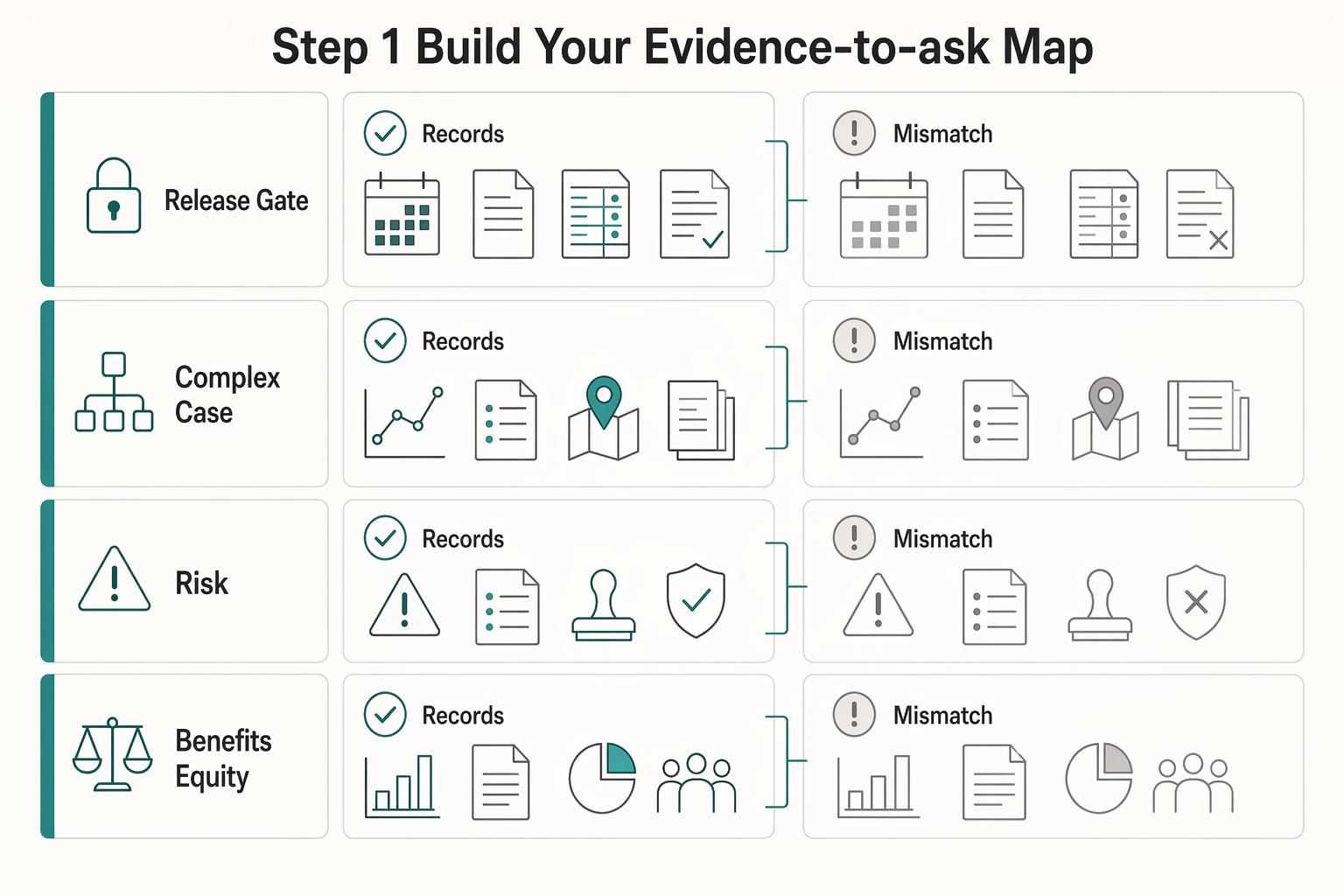
Step 1 Build your evidence-to-ask map#
Make each ask trace to specific evidence. If an ask is not supported by records, treat it as a weak preference, not a primary negotiation point.
| Evidence you have | What it supports asking for | Why this is leverage (not opinion) |
|---|---|---|
| Delivery outcomes, approvals, customer feedback, revenue/cost impact | Higher discretionary cash | Ties payout to documented value already delivered |
| Transition plan, handoff complexity, dependency on your knowledge | Better timing terms, hybrid structure, paid cooperation period | Shows measurable continuity risk if exit is rushed |
| Draft release scope and risk areas | Extra value for broader release language | The employer receives clearer dispute closure |
| Benefits/equity admin burden and timing needs | Continued benefits window, clearer equity handling | Reduces post-exit friction for both sides |
Keep the file short and reviewable: project names, dates, approvals, performance notes, key handoff items. If someone can scan it in five minutes and map evidence to asks, you are ready.
If you are negotiating in the U.S., keep the baseline clear: severance is generally a matter of agreement, and the FLSA does not require severance pay. That usually makes contract/policy rights and release value more important than arguing for a federal severance formula.
Step 2 Choose payout structure before you argue amount#
Decide structure first, because structure controls risk. Use this order: total cash, payment timing, payment conditions, benefits/leave treatment, then equity treatment.
| Condition | Ask or verify |
|---|---|
| They insist on continuation | Ask for a hybrid with fixed upfront cash |
| They propose offsets | Require explicit offset language instead of implied discretion |
| UK notice-related pay is involved | Separate PENP in the draft |
| A U.S. layoff could implicate WARN | Verify the baseline before trading away notice-related value in a generic enhancement |
Ask the employer to label each line as statutory, contractual, or discretionary. If they do not, pause and request a written breakdown before trading terms.
| Structure | When to push for it | Best evidence to support the ask | What to confirm in draft language |
|---|---|---|---|
| Lump sum | You need certainty or immediate transition funds | Immediate transition burden, signed handoff plan, release value | Gross amount, exact pay date, release trigger, remedy if payroll misses date |
| Salary continuation | Continuity of payroll/benefits matters more than speed | Ongoing cooperation scope, staged handover, continuity risk | Pay cadence, benefits status, offset terms, end triggers |
| Hybrid | Employer resists full upfront payment but accepts staged compromise | Documented impact plus real transfer burden over time | Non-refundable upfront amount, dated follow-on payments, default consequences, compliance conditions |
Step 3 Red-line control clauses and close the paper trail#
Treat non-financial clauses as risk controls. Do not trade them away for speed.
Use these red-flag tests in your redline:
- Release scope: If draft language tries to settle claims in overly broad general terms, narrow it to identified claims and periods.
- Future-rights waiver: If waiver wording reaches future rights, strike that language.
- ADEA timing (when applicable): If an age-discrimination waiver is included, confirm whether the 21-day or 45-day consideration period and 7-day revocation period apply, and make timing explicit.
- Restrictive covenants: If duration, geography, or activity scope is broad, narrow each element and state what payment, if any, is tied to the covenant.
- Confidentiality/non-disparagement: If one-sided, ask for reciprocity where possible; in UK settlement context, ensure wording does not block whistleblowing or crime reporting.
- References: Attach exact reference text and identify who may provide it.
- IP terms: Add explicit carve-outs for pre-existing works or personal materials where factually true, and flag jurisdiction-specific formality checks.
Before signing, run this execution checklist:
- Get the revised draft, tracked changes, and written confirmation of agreed terms.
- Convert unresolved points into written follow-up with owner and date.
- Confirm calculation schedule line by line: dates, triggers, benefits, and any separate notice/covenant/release-linked amounts.
- Route the final package to employment, immigration, and tax counsel.
- If the draft blurs employee and contractor language, compare issues with How to Handle Termination of an International Contractor.
Phase 3: Protect Your Payout - A Framework for Navigating Cross-Border Tax Compliance#
Do not sign until each payment line is tax-labeled, withholding-modeled, and filing-ready. Your main risk is not just overpaying tax, but signing language that is too vague to model before money moves.
Step 1: Build a line-item tax position file before signature. Use one working sheet that clearly separates what is confirmed now, what is assumed, and what only your advisor can conclude.
| Line-item field | What you record now | Status label | Supporting documents |
|---|---|---|---|
| Payment component | Severance cash, salary continuation, unused leave, bonus, equity-related payment, covenant payment, reimbursement | Confirmed Fact only if the draft states it clearly | Agreement draft, employer calculation |
| Payer details | Exact paying entity, payroll location, or other withholding agent | Confirmed Fact | Draft agreement, payroll note |
| Residency and work context | Where you worked during the earning period and where you expect to be resident when paid | Working Assumption until verified | Travel timeline, contract, visa records |
| Withholding treatment | Draft withholding method and your current treatment assumption | Working Assumption unless advisor confirms | Payroll email, prior payslips, advisor memo |
| Treaty and disclosure outcome | Treaty article, LOB result, treaty-based return position, Form 8833 need | Advisor Conclusion | Advisor memo, treaty text notes |
If one draft number bundles multiple components, treat it as an open risk. Every agreement line should map to one model line.
Step 2: Run treaty review as a decision tracker, not a guess. Start with current treaty status in IRS Publication 901, then track unresolved treaty-position, Limitation on Benefits, and article-analysis items as pending until advisors verify them. If you expect reduced withholding, the payor (withholding agent) needs your documentation before payment. If payer entity, payment labels, service-location facts, or residency dates change, pause and have legal and tax advisors align before you sign.
Step 3: Treat bundled labels as fix-before-sign issues. IRS settlement guidance allows multiple allocated elements and generally respects allocations that match claim substance. So labels like "total separation payment" are not enough when amounts mix wage-like severance, unused leave, covenant consideration, or equity treatment. Require each amount to show component label, payment date, and withholding basis in the draft.
Step 4: Build a home-country filing module (U.S. example). Model from current IRS rules, not net guesses. IRS says severance is taxable, and withholding may be insufficient. For U.S. payroll-style modeling, Publication 15 includes severance in supplemental wages, with 22% and 37% reference withholding rates depending on annual totals; wage-classified amounts can also interact with 6.2% Social Security (up to the 2026 wage base of $184,500) and 1.45% Medicare. If the same income may be taxed abroad and in the U.S., flag a Foreign Tax Credit check. If you plan to take a treaty-based return position, flag Form 8833 review, and keep state treatment as a separate check because state treaty conformity can differ. Keep the filing threshold pending until a tax advisor verifies it for your filing year and profile.
Before signing, run this execution checklist:
- Model at least two payout scenarios: employer draft and your negotiated draft.
- Record withholding assumptions for each line item, not just the total.
- Set a reserve plan if withholding may be short.
- Mark treaty and residency items as verified, assumed, or advisor-only.
- Reconcile the final agreement against your model line by line before signature.
Conclusion: Run the same three phases before you sign#
Signing is not the end of the process. It is your final audit. Use the same three phases from this guide, in order, and do not let urgency turn a termination agreement into a routine admin form.
Step 1 is to confirm your legal baseline. Put your employment contract, amendments, severance plan or policy, termination letter, recent payslips, and any country-specific advice in one file. The check is simple: can you point to the document that supports each amount and condition in the offer? If not, pause and ask your advisor to verify the local rule, because severance, notice, and dismissal protections still vary by country.
Step 2 is to reconcile the negotiated deal to the paper you will actually sign. Compare the final draft against your notes line by line: cash amount, notice treatment, unused leave, bonus or commission, benefits end date, equity treatment, reference language, release scope, and any post-termination restrictions. A key risk is that the headline number stays the same while a payment date slips, a release expands, or a benefit becomes discretionary in the drafting.
| If you skip this | What to verify now |
|---|---|
| Legal baseline | Contract, policy, termination letter, and local advice support the offer terms |
| Negotiated terms | Final draft matches your last agreed numbers, dates, conditions, and redlines |
| Payout and tax execution | Payer entity, currency, payroll location, payment date, and withholding by payment component are stated clearly |
Step 3 is to confirm execution before signature. Ask for the written calculation basis and a clean breakdown of each payment line, because different components can be taxed differently and any applicable tax treaty may need review. For current treaty treatment, check official national tax-authority guidance. Then send the full evidence pack to your employment and tax advisors before you sign. Keep that pack and reuse this same three-phase check the next time an exit starts moving faster than your documents do.
Frequently Asked Questions
How is severance pay taxed?
Start by separating the payment into components in your draft. Severance cash, notice pay, unused leave, bonus, equity, and any covenant payment do not always share the same tax treatment. Ask the employer to confirm in writing which entity will pay each amount, the payroll location, and the withholding method for each line item. In the U.S., wage-classified supplemental amounts may be withheld at 22% or 37% over $1 million under IRS Publication 15. Escalate to tax counsel if the agreement uses one bundled label or if your local rule is still pending jurisdiction-specific verification.
How do I negotiate an international severance package?
Start with documents, not arguments. Pull your contract, amendments, plan terms, policy language, termination letter, and recent payslips so you can separate contractual entitlement from a discretionary offer. Ask the employer to show the calculation basis in writing, including service dates, salary rate, notice treatment, benefits end date, and whether any amount is enhanced or contractual rather than statutory. Escalate to employment counsel when the offer mixes notice pay, severance, and local redundancy rights under one number.
What should be included in a fair international severance package?
Make the employer break the package into parts you can verify: severance, notice pay or PILON, unused leave, bonus or commission treatment, benefits continuation, equity treatment, and reference language. Do not treat notice pay as the same thing as severance. In the UK redundancy context, notice-period pay and statutory redundancy pay are distinct, and enhanced redundancy pay can sit above the statutory floor. Escalate if the draft omits payment dates, conditions, or if the country-specific rule is still pending local counsel verification.
Does receiving severance pay affect my visa status?
Treat immigration as a parallel decision, because payment timing and employment end date are not the same question. Verify the official termination date, last working day, payroll end date, and any employer reporting step, then ask the employer to confirm those dates in writing before you sign. Escalate to immigration counsel immediately if your status depends on sponsorship, since some U.S. categories may allow up to 60 consecutive calendar days after employment ends and some UK sponsored workers can face a 60-day limit in sponsor-licence-loss scenarios, but there is no universal grace period.
When is severance pay typically paid out?
Check the agreement and any employer plan for the exact trigger: lump sum, salary continuation, or payment on the next payroll cycle are very different outcomes. Ask for written confirmation of the payment date, currency, payer entity, and any condition tied to signing or waiting periods; keep the local timing rule marked pending until counsel has checked it. Escalate when the employer will not state a date certain or when cross-border payroll is involved.
Are companies legally required to offer severance?
Do not assume yes or no from the headline label. In the U.S., the Fair Labor Standards Act does not require severance pay, and it is generally a matter of agreement, but other rights such as notice or group-layoff protections can still matter, including WARN in qualifying cases. If your paperwork says “contractor” but the facts point to employee status, pause and review What to Do If You've Been Misclassified as an Independent Contractor, then escalate because status drives rights and employer duties.
Can I receive severance if I resign?
Read the actual trigger language first, because “resignation,” “mutual separation,” and “redundancy” are not interchangeable. Verify your contract, plan terms, and any settlement draft for resignation exclusions, good-reason language, and notice obligations, then ask the employer to confirm in writing whether your exit is being treated as a resignation or employer-initiated termination. Escalate before you resign if your entitlement depends on local law or if the rule for your jurisdiction is still pending local counsel verification.
Try a related tool
Researched and edited by the Gruv editorial team. Gruv builds cross-border billing, payouts, and finance-operations software for global businesses.
Sources
- dol.gov/general/topic/wages/severancepaytrusted
- dol.gov/general/topic/termination/plantclosingstrusted
- ecfr.gov/current/title-20/chapter-V/part-639trusted
- ecfr.gov/current/title-29/subtitle-B/chapter-XIV/part...trusted
- ftc.gov/legal-library/browse/rules/noncompete-ruletrusted
- irs.gov/individuals/international-taxpayers/claiming...trusted
- irs.gov/individuals/international-taxpayers/federal-...trusted
- uscis.gov/archive/options-for-nonimmigrant-workers-fol...trusted
Educational content only. Not legal, tax, or financial advice.
Related Posts

Germany Freelance Visa Application Path for Freiberufler and Gewerbe
Choose your track before you collect documents. That first decision determines what your file needs to prove and which label should appear everywhere: `Freiberufler` for liberal-profession services, or `Selbständiger/Gewerbetreibender` for business and trade activity.

What to Do If You've Been Misclassified as an Independent Contractor
Treat this as a protection problem first, not a label debate. If your work was treated as an independent contractor arrangement even though the relationship functioned differently, your first goal is to protect pay, rights, and records while you choose the least risky escalation path. You can do that without making accusations on day one, which often keeps communication open while you document what happened.
How to Handle Termination of an International Contractor
When you terminate an international contractor, treat it as a controlled legal and operational event, not a one-off conversation. A messy exit can trigger five risks at once: