
Quick Answer
Yes, sailing digital nomad life is workable if you prove reliability before a full move. Run a limited onboard test, then proceed only when your legal and financial setup is documented, your connection and power systems support normal client delivery, and your compliance routine stays consistent while moving. If outages, admin drift, or repeated schedule misses appear during testing, pause and redesign first.
When a floating HQ makes sense as an operating change#
A floating HQ may make sense only if you treat it as an operating change, not a reward for wanting more freedom. You are not just changing where you work. You are taking on more of the continuity burden yourself, with more autonomy on one side and more logistics and disruption exposure on the other.
This can fit work that can absorb movement, delay, and occasional uncertainty without damaging trust. Think project-based work, async collaboration, and clients who care more about outcomes than instant availability. It can be a poor fit if your income depends on fixed-hour delivery, live service windows, or a low tolerance for admin friction and changing conditions.
A quick filter helps. If two or more answers below are "no," pause before you go deeper:
- Is most of your income stable enough that one disrupted week does not put you in trouble?
- Can your workflow shift between deep work, offline work, and delayed communication without breaking delivery?
- Do your clients already accept clear response windows instead of constant reachability?
- Are you willing to keep handling the boring parts yourself: planning, records, checklists, and repeated problem-solving?
- If a travel day, weather change, or equipment issue throws off your week, do you have a way to recover without missing critical work?
Use your last 60 to 90 days as the checkpoint, not your ideal future self. Review your calendar, delivery dates, and client messages. If your business already runs close to the edge, boat life can expose that faster, not fix it.
That caution is not abstract. Even shore-based maritime training is described as a four-week immersion in teamwork and vessel anatomy. Race coverage has described crews as "blistered and bleary-eyed," with one team expecting to be "tired, scared, unnerved, and confused." That is not a proxy for everyday work afloat, but it is a useful reminder: the environment adds strain, and strain exposes weak operations.
You might also find this useful: A Guide to Dating as a Digital Nomad.
The Strategic Go/No-Go Decision#
Use a go/no-go gate before you spend on legal setup, long-term boat commitments, or major gear. Proceed only when conditions, people, and platform are all ready at the same time.
Start with your operating reality, not your ideal plan. If your delivery depends on constant live availability, this shift is high risk until you redesign how you work.
Run the self-audit first#
Use recent, real work data and check these in order:
- Work cadence
Can you keep delivering when work is split across shorter windows, offline blocks, and delayed communication?
- Client communication demand
Do your clients accept defined response windows, or do they expect near-immediate replies?
- Interruption and stress tolerance
Can your week absorb disruptions such as weather changes, seasickness, anchoring problems, engine issues, or charging-system issues?
- Admin capacity and fallback planning
Can you handle route planning, provisioning, weather reports, tide charts, and current charts while still protecting delivery? Do you have a fallback rule for when you stop moving and work from port?
| Workflow pattern | Async friendliness | Uptime sensitivity | Interruption tolerance | Fit signal |
|---|---|---|---|---|
| Deliverables-first (writing, coding, editing, planning docs) | Higher | Moderate | Moderate to higher | Often easier to pilot |
| Mixed delivery (project work + regular live calls) | Mixed | Moderate to high | Mixed | Viable with tighter scheduling |
| Live-session-heavy (real-time service windows) | Lower | Higher | Lower | Redesign first, then retest |
| Ops-heavy exception handling | Mixed | Higher during incidents | Lower during spikes | Needs stronger backup coverage |
Treat this as a screen, not a verdict. The question is whether your workflow holds under maritime disruption.
Run a validation sprint before committing#
Test in real conditions (charter, borrow, or marina-based trial) and collect evidence, not impressions:
- On-time vs delayed deliverables
- Client-response delays and outcomes
- Connectivity drop periods
- Fatigue and motion effects on output
- Whether your fallback plan worked when conditions changed
Decision rule:
- Proceed: delivery stayed reliable, client trust held, and admin load was sustainable.
- Revise: core work held, but scheduling, meeting load, or workspace setup needs adjustment.
- Pause: repeated disruptions or single-point failures kept breaking delivery.
Keep vessel choice in scope here only as an operational fit check: workspace stability, maintenance complexity, access constraints, and operating overhead. For long-term liveaboard use, some guides point to displacement boats when interior volume is a priority, but that is not universal. Also plan for scaling down from shore-based living.
Before moving into legal and financial setup, carry forward this checklist:
- Intended home base or governing jurisdiction: confirm current requirements with the official source or a qualified advisor
- Business entity and tax-residency assumptions: confirm current rules with a qualified tax advisor for the relevant jurisdiction
- Insurance, mooring, and local liveaboard rule questions: confirm current requirements with local authorities and your insurer
- Validation evidence pack: delivery log, response-time log, outage notes, and fatigue/motion notes
If you want a deeper dive, read How to Pack Light for Long-Term Travel (One Bag Guide).
Work through legal and financial setup in sequence#
If your trial period proved the work is viable afloat, treat legal and financial setup as a sequence: choose your entity, align vessel registration, document your tax-residency position, then lock in banking and insurance rails.
Choose the entity before you move the boat#
Start with records, not theory. Your company file should clearly show its legal home (the equivalent of "state or other jurisdiction of incorporation or organization") and a reliable legal contact (the equivalent of an "agent for service"). Core identifiers should be easy to produce from your records. If they are not, fix that before you add cross-border vessel operations.
Use this decision table as a practical screen:
| Structure path | Liability separation | Admin burden | Banking compatibility |
|---|---|---|---|
| Keep your existing home-country company | Often strongest when already established and documented | Usually moderate because your process already exists | Often easiest if your current banking relationship is stable |
| Form a new foreign company | Can be strong if formation records and legal contacts stay current | Usually higher at setup and ongoing review | Approval varies by bank and provider |
| Operate as sole trader or equivalent | Usually weakest separation of business and personal assets | Often lowest at first, but can be harder when issues arise | Can work, though some providers prefer incorporated entities |
If your current structure already supports compliant records, payment continuity, and service contacts, changing it during a move can add avoidable risk.
Align the flag state and tax records#
Treat flag choice as an operational decision. It affects renewal workflow, ownership paperwork, and how much friction you face in day-to-day port or marina formalities. Do not assume any flag is low-friction in every cruising area.
Before registering or re-registering, ask your insurer and operators in your intended cruising areas for written requirements. Confirm documentation expectations, beneficial-ownership disclosures where applicable, and renewal process details before you commit.
For tax residency, keep a clean evidence trail:
- Maintain a movement log with dates, ports, and overnight location.
- Retain tie-break evidence (for example: lease end records, home-base documents, utility closures, marina contracts, and visa paperwork).
- Schedule a qualified advisor review before major route, home-base, or visa changes.
If you rely on a remote-work visa, plan around continuity. Digital nomad visas are framed as temporary-stay tools, and policy can change quickly, so optionality matters.
Build the money and insurance rails#
Keep this simple: you can either keep getting paid and stay insured while moving, or you cannot.
Must-have
- Two banking rails at separate institutions, with at least one tested for incoming client payments
- A billing-address and document trail your banks and payment providers already accept
- Vessel insurance aligned with your real use case and intended cruising area
- Liability, health, and business-cover review, confirming any required limits with the official source or a qualified advisor
- Offline copies of policy schedules, declarations, ownership papers, IDs, and company records
Nice-to-have
- A reserve card stored separately from your main wallet
- A second payment processor for continuity
- Separate accounts for tax reserves, boat operations, and personal spending
- A contact list for claims, broker support, and emergency payment access
The key insurance risk is a mismatch between declared use and actual use. Confirm details in writing before departure.
Once this base is defensible, move to the next constraint: keeping power and connectivity reliable in real conditions. Related: How to Get Reliable Internet for Van Life.
Build for workable uptime at anchor and underway#
Your command center is ready only if you can keep client delivery moving when connectivity, power, or port formalities go sideways. The target is workable uptime at anchor and underway, not perfect always-on internet.
Treat the boat as a system: layered communications, clear handoff rules, and repeated testing in real conditions. Do not assume military outcomes transfer neatly to civilian sailing, but do use the same discipline of reliability testing over long endurance use.
Build the connection stack around roles, not brands#
Assign each channel a role before you depart, then define exactly when you switch.
| Channel | Role in your stack | Expected failure mode | Power impact | Handoff trigger |
|---|---|---|---|---|
| Coastal cellular router or hotspot | Primary near shore and in populated anchorages | Service degradation from coverage, congestion, local signal limits, or provider constraints | Low to medium | Use if a reboot, local antenna check, and one retest still fail stable work tasks; confirm signal and packet-loss thresholds for your route. |
| Satellite broadband terminal | Primary offshore, backup at anchor | Service degradation from obstruction, motion, weather, or provider constraints | Medium to high | Use if real-time work fails twice, or continuous use breaks your power budget; confirm current plan limits with the provider. |
| Low-bandwidth satellite messaging or voice/data path | Emergency path only | Insufficient for normal client workloads | Low | Use when both normal paths are unavailable and you only need essential status or safety communications. |
Keep the stack simple enough to troubleshoot under pressure. A highly reconfigurable mobile network can still fail when antennas are too closely spaced and counterpoise behavior shifts with conditions. More gear can reduce resilience if diagnosis becomes slow.
Validation is non-negotiable: run a full workday at anchor and a long transit test, then log what failed first and why.
Use this failover playbook:
- Detect the issue: confirm whether failure is local network, antenna setup, device load, or upstream service.
- Switch channel: move to the next path instead of repeatedly retrying the first.
- Downgrade workload: pause video, large sync, and nonessential cloud activity.
- Communicate availability: send a short client update with revised response and delivery windows.
Protect power for work first#
Work continuity usually breaks from overlapping loads, not one dramatic outage. Build your routine to protect communications and delivery tasks first.
- Use a generation mix suited to your route and season, rather than one source.
- Prioritize storage for comms, laptops, navigation, and safety loads before comfort loads.
- Check charge state and draw at fixed times daily, especially before calls, passages, and low-generation periods.
- Enforce device discipline: pre-download files, schedule charging, reduce unnecessary load, and shift to local work when bandwidth or power is tight.
If you cannot complete a normal client day off shore power with margin, your setup is not ready.
Run arrivals like an operating procedure#
Arrival workflow is part of uptime because clearance friction can consume workdays.
- Pre-arrival prep: confirm entry point, office sequence, operating hours, berth instructions, and any advance notice process before signal degrades.
- Entry protocol: follow local sequence exactly and present records in a consistent order.
- Document pack: keep one printed and offline pack with identity, vessel, insurance, crew, and prior-clearance records.
- Post-clearance actions: update movement logs, archive new paperwork, verify local data options, and reset your work calendar to actual clearance time.
Readiness gate before budget planning: one anchored work block completed, one transit test completed, one clean failover executed, and one arrival processed without breaking client delivery. Related: the Barcelona digital nomad guide for 2026.
Build a budget that keeps you operating through hard months#
Your budget works only if it funds continuity, not just the boat. The real test is whether you can keep operating through the hard months when compliance tasks, repairs, and route changes hit at the same time.
Keep two budgets from day one:
- One-time setup: initial fitout, backup devices, document prep, advisor onboarding, and pre-departure work-critical replacements.
- Recurring operations: insurance, maintenance reserve, connectivity, compliance, marina or haul-out events, and equipment replacement.
If you blend those together, you usually understate monthly burn and overstate runway.
Separate baseline spend from spike risk#
Use a planning table to map where costs are stable versus where they can jump. Add live numbers only after you verify them with your insurer, yards, connectivity providers, and advisors.
| Cost bucket | Fixed or variable | Payment cadence | Volatility risk | Trigger events that can spike spend |
|---|---|---|---|---|
| Insurance | Mostly fixed | Annual or semiannual | Medium | Route changes, offshore use, claims history, coverage changes. |
| Maintenance reserve | Variable but planned | Weekly or monthly transfer | High | Wear discovered during inspection, failed systems, unplanned parts replacement, haul-out findings. |
| Connectivity | Mixed | Monthly | Medium to high | Route shifts, higher data use, equipment failure, moving farther offshore. |
| Compliance | Variable | Event-driven plus annual reviews | High | New jurisdiction, tax advice, filings, permits, document corrections, more assertive tax collection. |
| Marina and haul-out | Variable | Seasonal or event-driven | High | Weather avoidance, mandatory maintenance windows, clearance delays, waiting for repairs. |
| Equipment replacement | Variable | Irregular | Medium | Laptop death, router failure, antenna damage, battery degradation. |
Treat compliance as a core cost center, not a side note. Mobility planning has to account for local rules, tax compliance, and the admin load that comes with moving across jurisdictions. If you are the owner-operator, assume exposure monitoring starts with you, and plan for places where tax collection is more assertive.
Fund maintenance like a habit, not a hope#
Set a fixed transfer into a separate maintenance reserve every week or month. Run three planning bands in parallel: low use, expected use, and high use.
After each transit, anchorage-heavy month, or repair event, update your next 90 days using observed wear, not assumptions. Keep one review file with renewal dates, service records, clearance papers, invoices, and movement logs so you can quickly trace whether cost spikes came from route choice, deferred maintenance, or compliance exposure.
Stress test the plan before departure#
Use this quick check:
- If your route changes fast, can you absorb higher compliance, marina, or connectivity spend without missing delivery commitments?
- If a critical device fails, do you have both replacement cash and time margin?
- If a jurisdiction asks harder tax or admin questions, do you already have the documents ready?
- If clearance, weather, or repairs cost you two workdays, does the plan still support normal life aboard?
A resilient budget should protect both operational continuity and quality of life, not just minimum uptime. This pairs well with our guide on Japan Digital Nomad Visa: A Guide to the New 2026 Program.
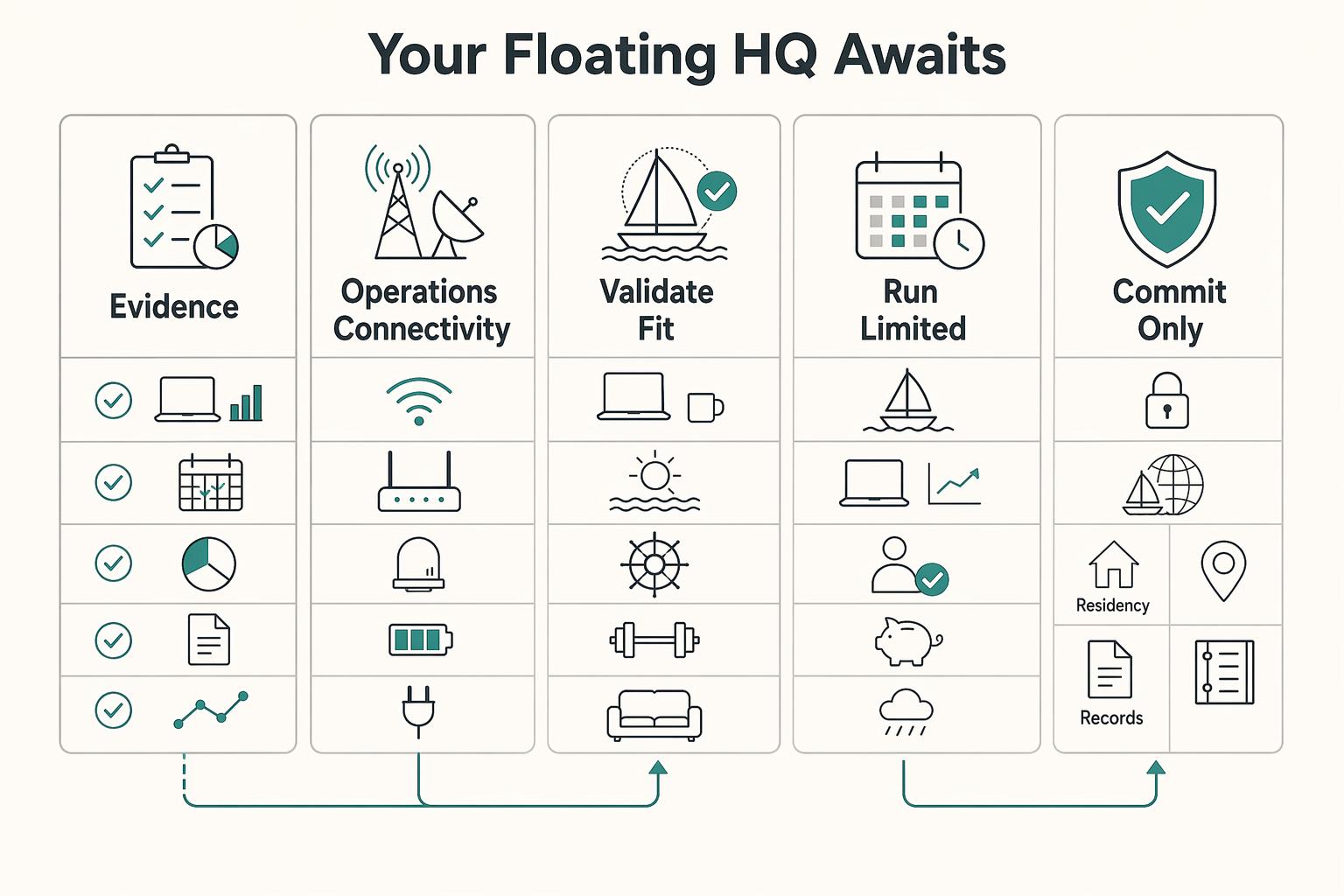
Your Floating HQ Awaits#
The decision is straightforward: commit only if you can run your work and life consistently while moving. This is an operational commitment, not a spontaneous switch.
Use this final go/no-go checklist:
- Legal and financial setup: your role is truly remote-ready, your required travel documents are in hand, your health coverage plan works abroad, and your cash plan can absorb disruption.
- Operations and connectivity reliability: your real workload stays on track with the internet and power conditions you expect to have.
- Logistics and compliance execution: you can keep documents and records organized, stay on top of deadlines, and handle admin steps as you move.
Treat visible instability as a stop signal: unreliable internet, weak routine discipline, thin backup planning, or no plan to build social connection while away from your usual support system.
What to do next:
- Validate fit. Confirm your work setup supports travel, narrow likely destinations, and use our digital nomad visa index for 50+ countries to compare options.
- Run a limited trial. Work through normal deadlines from aboard for a short test period and check upload reliability, meeting quality, and how often logistics interrupt delivery.
- Commit only after proof. Move into a full setup afloat only if the trial confirms stable output, workable paperwork, and a routine you can sustain.
For a step-by-step walkthrough, see A Guide to the Malaysian Digital Nomad Visa (DE Rantau).
Try a related tool
Researched and edited by the Gruv editorial team. Gruv builds cross-border billing, payouts, and finance-operations software for global businesses.
Sources
Includes 3 external sources outside the trusted-domain allowlist.
- online.ucpress.edu/gp/article/3/1/35734/182326/Sailing-around-t...trusted
- sec.gov/Archives/edgar/data/1933762/0001829126240003...trusted
- navsea.navy.mil/Media/News/Article-View/Article/2953947/stra...external
- nwmaritime.org/wa360-2025-teams/team-changes-in-daditudesexternal
- nwmaritime.org/youth-programs/from-messing-about-in-boats-t...external
Educational content only. Not legal, tax, or financial advice.
Related Posts

The 2026 Global Digital Nomad Visa Index for 50+ Countries
Start with legal fit, not lifestyle filters. The practical order is simple: choose a route you can actually document, then decide where you want to live. That single change cuts a lot of wasted comparison work and stops you from falling in love with places that were never a real filing option.
How to Pack Light for Long-Term Travel Without Work Disruptions
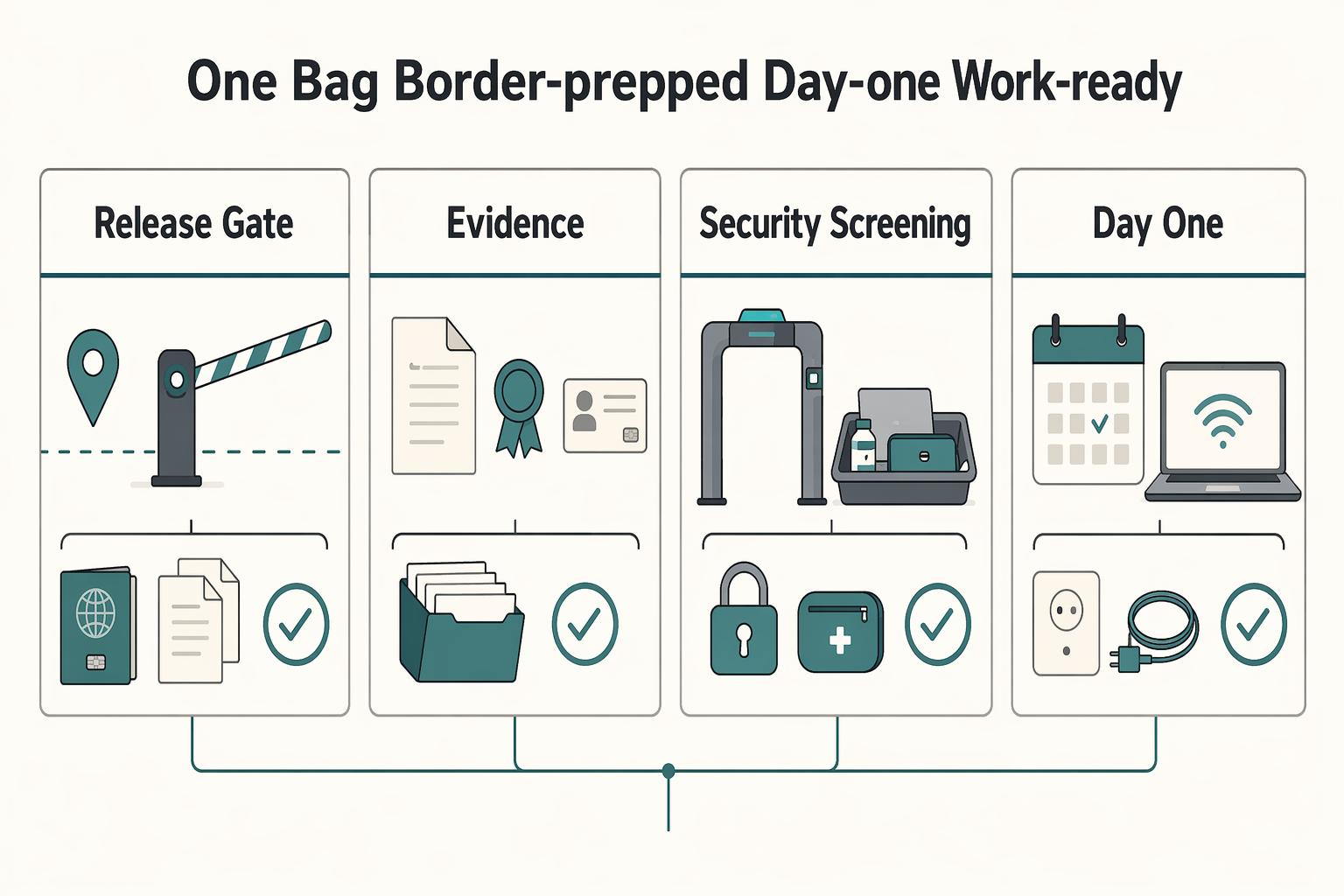
The rule is simple: pack light only if losing your main bag would not break identity, payments, health essentials, or your first work session. If those four still work from your personal item, you can travel much lighter without turning arrival day into a recovery exercise.
How to Get Reliable Internet for Van Life
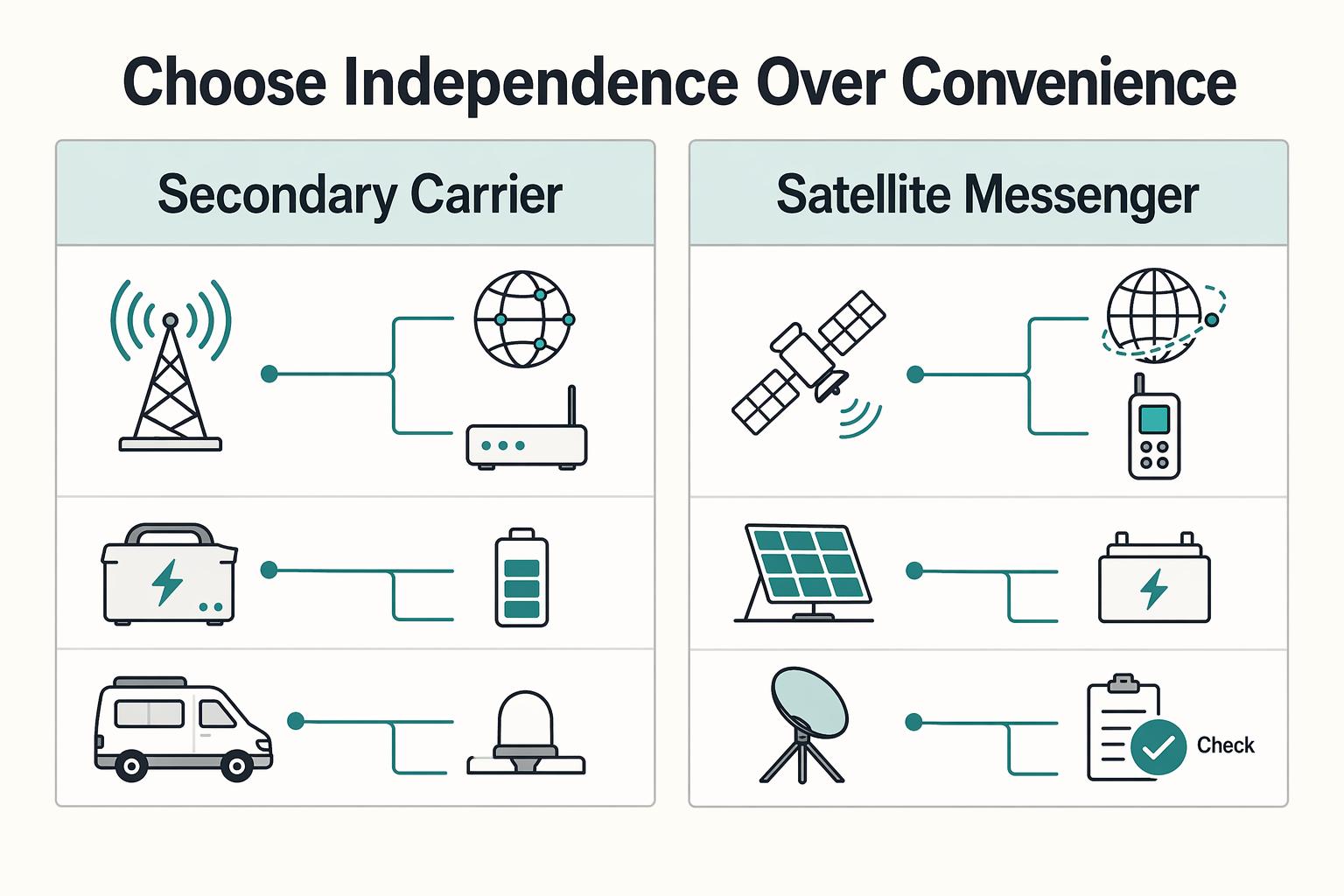
If you earn through your connection, "good enough" is not just a budget choice. It's a business continuity decision. Treat your road internet the same way you treat invoicing, backups, or contracts. If it fails at the wrong moment, the damage can be larger than the monthly bill.