

Quick Answer
Choose revocable when you need ongoing control and easier amendments; move toward irrevocable only if stronger separation is worth giving up access and flexibility. In this revocable vs irrevocable trust decision, Virginia’s default rule allows amendment or revocation unless the document says otherwise, so the trust text matters more than the label. Before funding assets, verify trustee powers, governing law, and whether Form 3520 or Form 3520-A could apply.
For a global professional, choosing between a revocable and an irrevocable trust is not just another estate planning task. It is a practical decision about how you want to hold wealth and business interests now: with maximum flexibility or with more separation from personal risk.
This guide stays focused on that tradeoff. It explains the two core trust structures and how they work in day-to-day life. It also shows how to think about them when your business, accounts, or beneficiaries span more than one jurisdiction.
The real choice is control versus separation#
For most people comparing revocable vs irrevocable trust, the real choice is control versus separation. Choose revocable if you need to keep day-to-day control while alive. Evaluate irrevocable when stronger separation from your personal balance sheet is the priority. The legal details are state-specific because trust rules are governed by state law, not one universal national rule.
Start with the roles that actually matter#
You are the grantor (settlor) when you create the trust. The trustee holds legal title to trust assets and administers them. The beneficiary is the person entitled to receive trust benefits.
| Role | What it does |
|---|---|
| Grantor (settlor) | Creates the trust |
| Trustee | Holds legal title to trust assets and administers them |
| Beneficiary | Is the person entitled to receive trust benefits |
Those roles determine who can move assets, approve distributions, sign documents, and change terms. In many revocable structures, you keep substantial control. In irrevocable structures, you give up meaningful control by design, because keeping too much control can weaken the separation you are trying to create.
Before you sign, confirm the amendment and revocation language in the trust instrument. Under Virginia's default rule, a settlor may revoke or amend unless the trust terms expressly make the trust irrevocable. If your goal is to lock assets down, verify the operative clause, not just the label.
Side by side#
| Decision point | Revocable trust | Irrevocable trust |
|---|---|---|
| Control while you are alive | Usually high. In Virginia, while the trust is revocable, beneficiary rights are subject to your control and trustee duties are owed exclusively to you as settlor. | Usually lower. The trustee administers under trust terms, and retained powers require careful drafting. |
| Can you change it? | Often yes. In Virginia, you can revoke or amend unless the trust terms say otherwise. | Not freely. But "irrevocable" is not always permanent. Virginia allows court-approved modification or termination with required consents. |
| Creditor exposure | Weak shield for your own lifetime liabilities. In Virginia, revocable trust property is subject to your creditors during life. | Can be stronger only with real separation. In Virginia, a settlor's creditor may still reach the maximum amount distributable to or for the settlor's benefit. |
| Federal tax context | If you keep revocation or revesting power, IRC §676 can treat you as owner for income tax purposes. | May be grantor or non-grantor depending on retained powers. Irrevocable does not automatically mean separate tax treatment. |
| Estate tax context | Retained power to alter, amend, revoke, or terminate is a key inclusion trigger under IRC §2038. | May reduce estate inclusion only if you actually gave up the relevant powers. Verify the current IRS threshold for the year of death. IRS lists the 2026 basic exclusion amount at $15,000,000 for calendar year 2026. |
| Best fit | You want control and continuity in administration. | You are prioritizing asset protection or transfer-tax planning and can accept tighter limits on access and future changes. |
The practical takeaway is simple. A revocable trust is mainly an administration and control tool, not a lifetime creditor shield. An irrevocable trust can support protection or tax planning, but only if you are willing to give up meaningful rights.
What this looks like in day-to-day operation#
If your work and personal situation changes often, a revocable structure usually fits better. You can often amend terms and, when the trust terms and state law allow, revoke the arrangement.
If your main concern is liability or transfer planning, a revocable structure is usually the wrong tool. That is when an irrevocable structure becomes worth evaluating, with the tradeoff of less direct access, more trustee control, and less flexibility later.
A common mistake is trying to keep broad access while expecting full protection. Virginia's rule is explicit. For an irrevocable trust, a settlor's creditor may reach the maximum amount distributable to or for the settlor's benefit. Ask counsel to explain exactly what can still flow back to you and how that affects protection.
The crossover at death#
A revocable trust changes function at death because you can no longer amend or revoke it.
It does not automatically remove estate liabilities. In Virginia, property in a trust that was revocable at the settlor's death can still be subject to creditor claims. Certain proceedings against those trust assets must be brought within two years after death. So the post-death advantage is controlled administration under trust terms, not automatic claim elimination.
If your priority is control and continuity, revocable is usually the better fit. If your priority is protection, irrevocable is the better path only when you are prepared to surrender enough control for that protection to hold.
Related: A Guide to Estate Planning for Digital Nomads.
Where the trust fits around your LLC in a solo business#
If you run a solo business, give each trust type a clear job. Use revocable for continuity with flexibility. Use irrevocable when you are evaluating stronger separation goals and can accept tighter control limits with jurisdiction-sensitive outcomes.
Your LLC still does the operating work of separating business debts from personal savings. The trust decision is about ownership of the LLC interest, including how legal ownership (trustee) and beneficial ownership are split, who can act if you cannot, and how continuity is handled when claims arise.
Match the trust to the job#
If your priority is continuity without giving up day-to-day control, a revocable structure is often the better fit. It is built to stay flexible as circumstances change, and a designated successor trustee can help reduce delays that may tie up business interests during estate settlement.
If your priority is asset-protection planning, an irrevocable structure is the one to evaluate. It is fixed once established, and outcomes are jurisdiction-sensitive rather than automatic.
| Decision point | LLC in your own name | LLC owned by revocable trust | LLC owned by irrevocable trust |
|---|---|---|---|
| Operational control | Direct member control | Often retains day-to-day control, subject to trust terms | More authority can sit with the trustee |
| Succession continuity | Depends on entity docs and estate process | Can improve continuity when successor trustee authority is clear | Can support continuity, but with less flexibility once set |
| Litigation exposure pathways | Operational separation comes from the LLC structure | Not a lifetime shield for your own liabilities; continuity tool first | May improve separation, but depends on jurisdiction and drafting |
| Administrative burden | Varies with entity complexity | Varies; trust, entity, and account records must stay aligned | Varies; setup precision and ongoing administration matter |
| Best-fit scenario | You want simple operations and accept weaker continuity planning | You want continuity for incapacity/death while keeping flexibility | You prioritize stronger separation and accept tighter limits and heavier review |
Where solo operators get tripped up#
A common failure point is document mismatch. If your trust terms, LLC records, and financial account authority do not align, the person meant to step in can still be blocked.
Run a practical verification pass. Confirm your operating agreement supports the intended ownership structure. Confirm the membership interest assignment is actually completed. Also confirm the designated trustee or manager can prove authority to banks, payment platforms, and key counterparties. Without that alignment, incapacity can leave assets unmanaged and vulnerable to claimants.
Verify cross-border issues instead of assuming#
When income, accounts, contractors, or beneficiaries cross borders, treat trust administration and reporting as jurisdiction-sensitive. Do not import rules from another state, another country, or another year.
If thresholds, filing deadlines, withholding, or disclosure rules apply in your jurisdictions, verify the current requirements before relying on them.
These checks affect real operations, including trustee selection, record location, and distribution administration.
Before you implement#
Before you fund anything, make sure the paper trail and the authority chain match the structure you want.
| Check | What to confirm |
|---|---|
| Entity documents and trust terms | Confirm alignment, including operating agreement, ownership records, and membership-interest assignment |
| Beneficiary residency | Review implications for each relevant jurisdiction |
| Trustee powers | Confirm coverage for contract signing, banking access, manager appointment, and incapacity continuity |
| Legal-tax review | Get coordinated review before funding any multi-jurisdiction structure |
If your goal is control plus continuity, revocable is usually the cleaner fit. If your goal is stronger separation, irrevocable can be the better path when you accept meaningful control limits and execute the structure carefully.
You might also find this useful: A Guide to Superannuation for Australian Freelancers.
Choose the structure with a clear decision rule#
Once your business documents and trust documents are lined up, the next step is choosing the structure in a disciplined way. Use this decision rule. Choose revocable when continuity and probate planning are the priority. Evaluate irrevocable when stronger separation is the priority and you can accept tighter control.
Step 1. Screen your liability and cross-border exposure#
Start by screening your risk, not by picking a label. Ask yourself four questions. Do you have professional-liability exposure (errors, negligence, malpractice)? Do you rely on personal guarantees? Is your wealth concentrated in one asset cluster? Do your assets or beneficiaries span borders?
| Screening item | What to check |
|---|---|
| Professional-liability exposure | Errors, negligence, malpractice |
| Personal guarantees | Whether you rely on personal guarantees |
| Wealth concentration | Whether your wealth is concentrated in one asset cluster |
| Cross-border scope | Whether your assets or beneficiaries span borders |
| SBA-backed lending | Holders of at least 20 percent ownership interest generally must provide a guarantee |
| Foreign financial accounts | If accounts exceed $10,000 in aggregate at any point in the year, FBAR reporting can apply; due April 15, with an automatic extension to October 15 |
Run two concrete checks right away. If you use SBA-backed lending, holders of at least 20 percent ownership interest generally must provide a guarantee. If your foreign financial accounts exceed $10,000 in aggregate at any point in the year, FBAR reporting can apply (due April 15, with an automatic extension to October 15). For any other legal trigger, verify the current threshold before you rely on it.
Step 2. Decide how much control you will give up#
The next question is not what sounds better, but how much control you are actually willing to give up. In a living trust, you can usually amend or revoke terms and keep using the property during your lifetime. That supports flexibility but does not automatically shield assets from your creditors.
For an irrevocable setup, focus on operating control. Who can amend terms? Who controls distributions? How much trustee discretion governs access? If distributions are discretionary, creditors generally cannot compel payouts, which can support separation goals but reduce flexibility for access to funds.
Step 3. Match your goal, then verify before signing#
Match your goal to a likely direction, then verify execution details before signing.
| Your primary goal | Likely direction | What to verify |
|---|---|---|
| Incapacity continuity and probate planning | Revocable | Trust is funded; successor trustee powers are clear |
| Potentially stronger separation from future claims | Irrevocable (case-specific) | Local law, drafting quality, retained powers, trustee independence |
| Tax-sensitive or cross-border planning | Case-specific | Form 3520, Form 3520-A, and grantor-trust treatment under Sections 671 through 679 |
Your final fit depends on local law and drafting quality, not the trust label alone.
Before execution, prepare the trust draft, asset schedule, account-title instructions, and authority forms needed to fund the trust and document trustee authority. Coordinate legal and tax review together. Then confirm three points: the trust is funded, the acting trustee can prove authority, and your calendar covers any FBAR and Form 3520/3520-A obligations.
If you want a deeper dive, read A Guide to Setting Up a Trust for Asset Protection.
Before you lock in your trust structure, test your cross-border reporting scenario with the FBAR Calculator so your decision checklist matches real compliance work.
Conclusion: Building a Resilient Global Enterprise#
Your decision comes down to one tradeoff: control versus separation. Pick the structure that matches your primary goal, not the one with the strongest label.
If you want ongoing control, easier amendments, and a common probate-avoidance path, a revocable living trust is often the better fit. If your priority is stronger separation tied to creditor-shielding or estate-tax goals, an irrevocable trust may be the better fit. That only works if you accept that it generally cannot be easily changed or ended.
Before you finalize anything, confirm three points in writing: whether you can revoke or amend, whether the trust can be changed after creation, and which law governs the trust (or, if none is chosen, which law is most closely connected). In cross-border setups, that governing-law clause matters because it helps determine which jurisdiction's rules will apply.
Also treat compliance as part of setup, not an afterthought. If your arrangement involves a foreign trust and U.S. ownership, U.S. beneficiaries, or reportable foreign-trust transactions, have your legal and tax advisors confirm whether Form 3520 or Form 3520-A applies and set your filing calendar early.
- Clarify your priority: control, protection, or succession.
- Match fit: revocable for flexibility and probate avoidance, irrevocable for stronger separation with less control.
- Validate the plan with qualified legal and tax advisors in each relevant jurisdiction, especially where governing law or reporting obligations could change the outcome.
Then run your plan back through the comparison checklist before you implement it. For a step-by-step walkthrough, see How to Fund a Trust.
As you put your plan into operation, review Gruv Docs to keep money movement and records traceable as your business grows.
Frequently Asked Questions
Which trust is better for a business owner or consultant?
Use a revocable trust when your main goal is continuity, incapacity planning, and probate planning through proper funding. Consider an irrevocable trust when stronger separation from future claims is your priority and you can accept less control. Before signing, have your estate-planning attorney review the trust document alongside your entity documents and asset-title instructions.
Will a revocable trust protect you from a client lawsuit?
No, a revocable trust is generally not the right tool for shielding assets from your creditors. If you keep the power to amend, revoke, or terminate, creditor reach remains a core risk. Ask counsel to confirm whether your retained powers and trust structure match your protection goal under your jurisdiction’s rules.
Can you include international bank accounts in a U.S. trust?
This section’s grounding does not support a one-size-fits-all rule. Cross-border treatment depends on local law, account terms, and trust structure. Before any transfer, confirm that the bank can retitle the account and have counsel verify any filing obligations.
What is the main advantage of an irrevocable trust for a high-earning professional?
The core advantage is potentially stronger separation, not automatic or universal protection. By contrast, assets in a revocable trust are still part of your taxable estate. Your implementation check is to verify who can change terms and whether local law supports the result your drafting is targeting.
As a digital nomad, how should you decide which trust law matters?
Identify the jurisdiction that governs the trust and tie your plan to current enacted law there; your temporary location may not control the outcome by itself. Trust-law frameworks can change over time, so your answer needs to be tied to current law where your plan is anchored. Have local counsel confirm the current statute and do not treat an automated legislative comparison document as final legal text.
If revocable trusts avoid probate, is that automatic once you sign one?
No, probate planning outcomes usually depend on funding the trust correctly. You need to transfer ownership by retitling assets into the trust, not just sign the document. Confirm each intended asset is actually retitled into the trust.
Are trusts private by default?
Not uniformly, because privacy outcomes depend on local filing practices. In some jurisdictions, trust documents or terms can still become obtainable through related tax or court processes. Before relying on privacy as a deciding factor, ask counsel which records are filed and what may later become accessible.
What happens if you need money from an irrevocable trust later?
Access is governed by the trust’s written terms and the authority structure, not by on-demand personal control. Because an irrevocable trust is usually not freely changeable without extra approvals, flexibility can be limited when your cash needs change. Before signing, review distribution terms with your attorney and tax advisor and stress-test your working-capital needs.
Try a related tool
Researched and edited by the Gruv editorial team. Gruv builds cross-border billing, payouts, and finance-operations software for global businesses.
Sources
- codes.ohio.gov/ohio-revised-code/chapter-5806trusted
- ecfr.gov/current/title-13/chapter-I/part-120/subpart-...trusted
- fhwa.dot.gov/download/module5.pdftrusted
- govinfo.gov/content/pkg/FR-1999-02-02/html/99-1083.htmtrusted
- irs.gov/businesses/small-businesses-self-employed/ab...trusted
- irs.gov/businesses/small-businesses-self-employed/re...trusted
- law.lis.virginia.gov/vacode/title64.2/chapter7/section64.2-747trusted
- law.lis.virginia.gov/vacodefull/title64.2/chapter7/article6trusted
Educational content only. Not legal, tax, or financial advice.
Related Posts
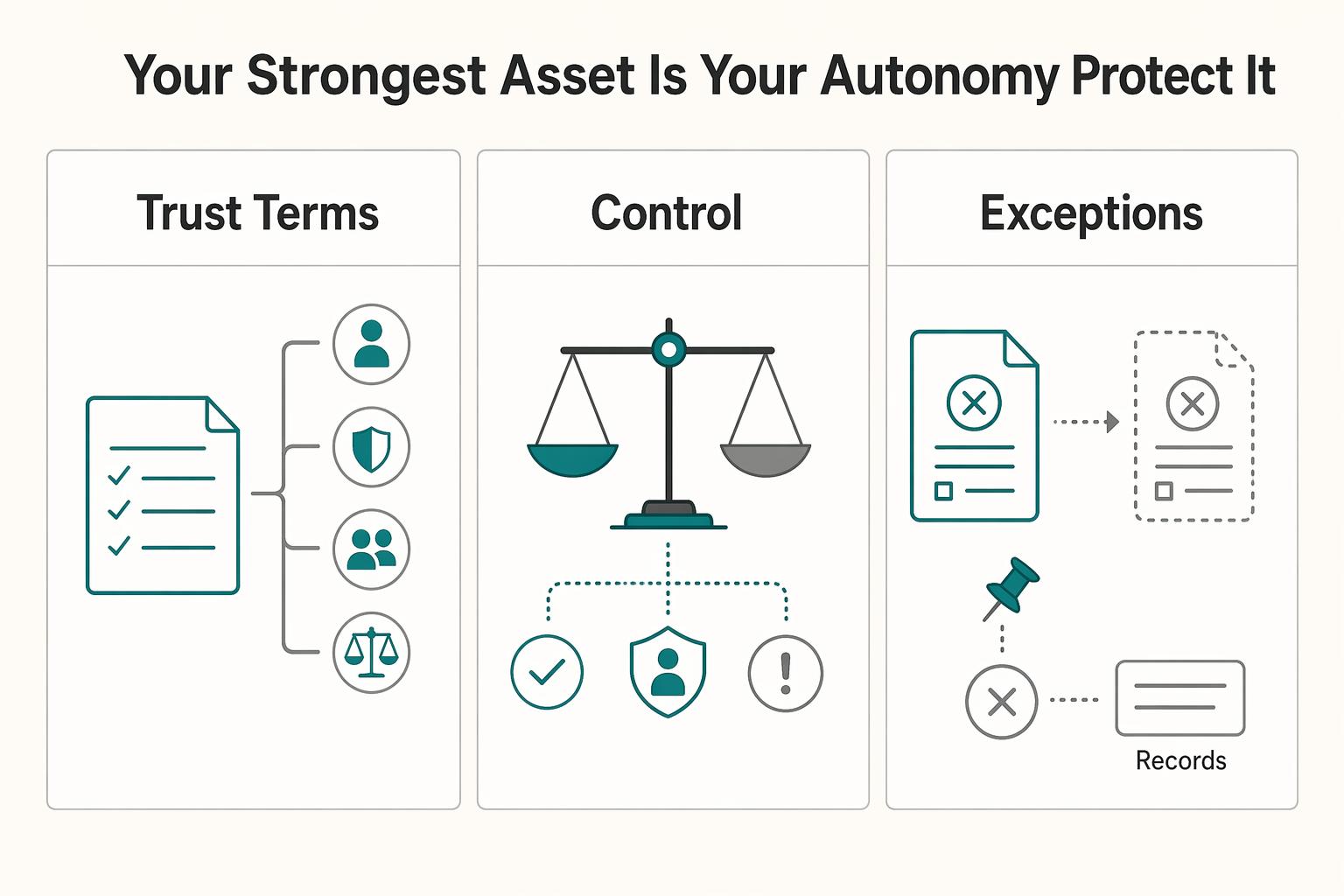
When a Trust for Asset Protection Makes Sense for Your Business
Use a trust only after your core liability setup is solid. A trust for asset protection is an escalation layer, not a substitute for entity separation, insurance, or clean operations.
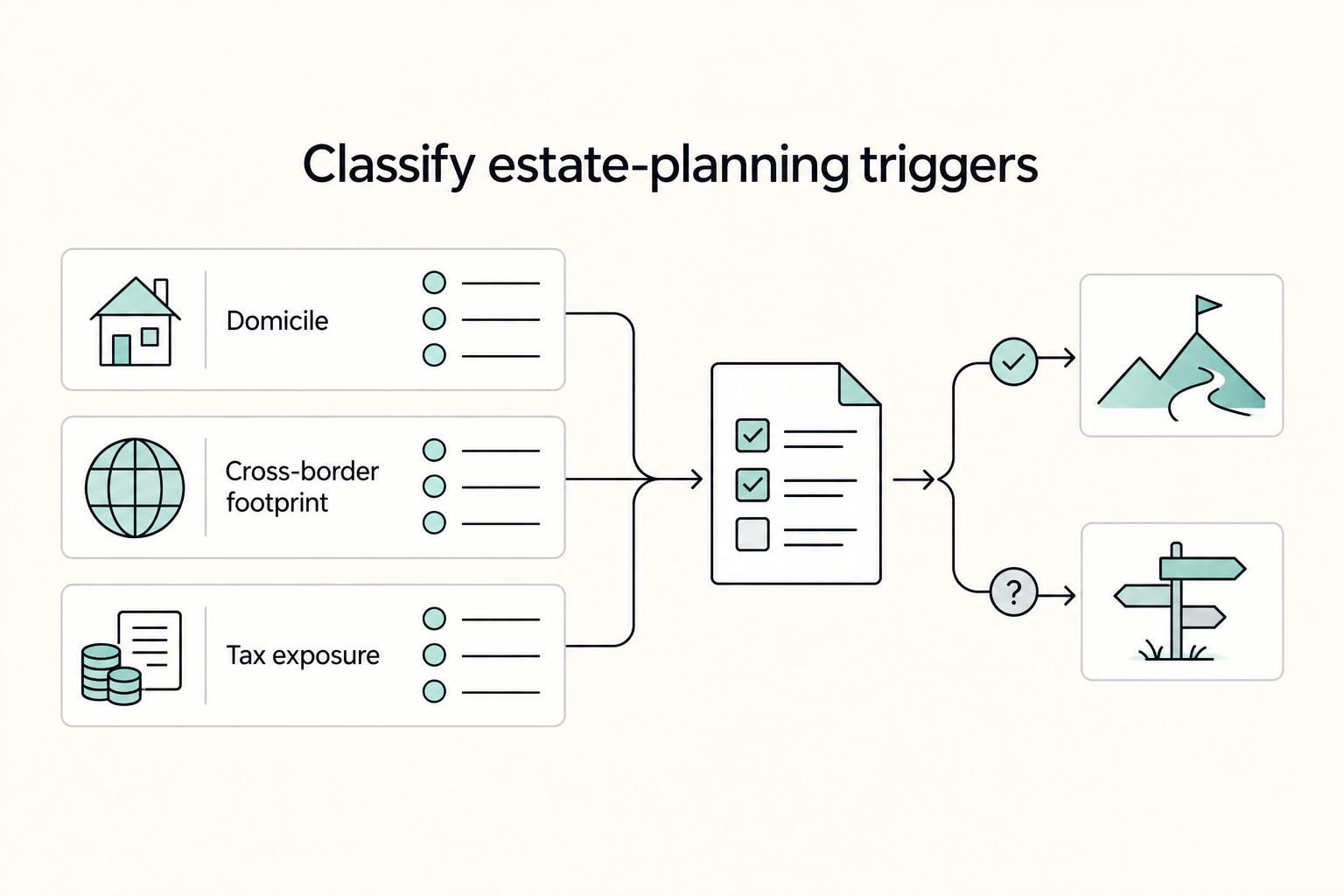
Estate Planning for Digital Nomads: Legal Intent and Cashflow Continuity
Treat estate planning for digital nomads as a two-part continuity system: legal intent plus operational execution, so your business keeps moving when you cannot. The common trap is thinking, "I have a will, so I'm covered." If you run a business-of-one, cashflow, logins, and process often live in your head until you deliberately externalize them.

A Guide to Superannuation for Australian Freelancers
**Treat superannuation for freelancers australia as a repeatable operating decision, not a guess you make under invoice pressure.** As the CEO of a business-of-one, your job is to turn fuzzy compliance questions into a simple system you can run on demand. Freelance income moves, contract terms shift, and one wrong super call can squeeze cashflow or create a compliance problem you only notice later.