
Quick Answer
To rent an apartment in Berlin without delays, build your dossier before you start applying, send outreach only when your file is ready, and slow down at contract review. A strong application packet usually includes identity documents, income proof, and a current SCHUFA check, with clear explanations for non-standard income. If the apartment will be your main home, confirm Anmeldung support early.
Build the dossier first, then search, then review the contract#
Treat renting an apartment in Berlin as a managed process, not a scramble. Berlin is a tight, highly contested market, but the process is more predictable than it looks if you handle it in the right order. If you do three things in sequence, you improve your odds: build your dossier first, search with a ready file second, and slow down at contract review last. Most decisions turn on clarity and trust, not just income level.
Your first job is not browsing listings. It is building a dossier that answers what landlords and agents commonly screen for: your financial background and your rent-payment reliability. A standard application packet usually includes income proof and a current SCHUFA check. If your income comes from freelancing, foreign employers, multiple clients, or a mix of sources, present it clearly so it is easier to assess.
Use this article like a checklist with three decision points:
- Dossier first: gather income proof, SCHUFA, and other core application documents before you apply anywhere.
- Search second: send outreach only when your packet is ready to share quickly.
- Contract last: slow down at the lease stage, because missing one clause matters more than missing one listing.
One early checkpoint is administrative, not just competitive. If this will be your sole or primary residence, Berlin requires Anmeldung within 14 days of moving in. Renters need the Einzugsbestätigung des Wohnungsgebers/Vermietenden for the registration flow. If you are registered abroad and staying in Berlin for up to 3 months, that registration requirement does not apply.
A common failure mode is applying too early with a half-built file. You look interested, but not ready. The next section shows what to gather and how to present it. Related: A Guide to Renting an Apartment in Europe as a Foreigner.
Phase 1: Assemble Your Compliance-Grade Dossier#
Build one clean, ready-to-send dossier before you apply. The goal is simple: make your file fast to review, easy to trust, and hard to reject for avoidable admin gaps.
Use this section as a practical packaging workflow rather than a legal checklist. Listing requirements vary, and source quality varies too, so avoid copying document lists from unrelated markets.
Build the pack in five parts#
Prepare one bundle in this order:
| Pack part | What to prepare | Key note |
|---|---|---|
| Identity and residency documents | Passport or national ID; any residency/visa paperwork you already have | Keep names and addresses consistent across documents, or add a one-line note where they differ |
| Income evidence | Proof matched to how you are paid | Salaried: recent salary proof plus contract; freelance/contract: short income summary, supporting invoices/tax records, and matching bank credits; foreign-employed: contract plus salary proof and a short employer note confirming role and continuity |
| Credit-risk documents and substitutes | SCHUFA, Kaution, and Bürgschaft may appear in requests | Confirm what the landlord or agent accepts for that listing and save that confirmation |
| Rental-history proof | If asked for Mietschuldenfreiheitsbescheinigung, confirm what format they want | Provide a consistent proof trail with reference letters, payment history, tenancy dates, and addresses that line up |
| One-page application summary | Who you are, what you do, income range, move date, household size, and context for a non-standard file | If a Steuerberater prepared or reviewed part of your financial summary, state that clearly |
- Identity and residency documents
Start with your passport or national ID, then add any residency/visa paperwork you already have. Keep names and addresses consistent across documents, or add a one-line note where they differ.
- Income evidence
Match proof to how you are paid. Salaried: recent salary proof plus contract. Freelance/contract: short income summary, supporting invoices or tax records, and matching bank credits. Foreign-employed: contract plus salary proof and a short employer note confirming role and continuity.
- Credit-risk documents and substitutes
You may see terms such as SCHUFA, Kaution, and Bürgschaft in requests. Treat these as listing-specific risk checks. Confirm what the landlord or agent accepts for that listing, and save that confirmation so you send the right file set on the first try.
- Rental-history proof
If asked for Mietschuldenfreiheitsbescheinigung, confirm what format they want and provide a consistent proof trail: reference letters, payment history, tenancy dates, and addresses that line up.
- One-page application summary
Add a short overview: who you are, what you do, income range, move date, household size, and any context that explains a non-standard file. If a Steuerberater prepared or reviewed part of your financial summary, say so clearly.
Match proof to your employment type#
| Employment profile | Core proof set to prepare | Fallback documents if asked for more |
|---|---|---|
| Salaried | ID, employment contract, recent salary statements, bank entries showing salary credits | Employer confirmation letter, probation-status note (if relevant), savings summary |
| Freelance or self-employed | ID, recent tax material (if available), invoices, bank entries matching client payments, short income summary | Letter from accountant or Steuerberater, client reference, business registration/equivalent |
| Foreign-employed | ID, employment contract, recent salary statements, bank credits, brief employer letter on remote arrangement | Translation set, euro-denominated compensation summary, continuity/renewal evidence |
Package quality checks that reduce friction#
- If a document is not in German, attach the original plus a clear translation or summary page.
- Keep originals and translations together. If wording differs, treat the original as controlling text.
- Use predictable filenames, for example
01_ID_Name.pdf,02_Income_Name.pdf,03_RentalHistory_Name.pdf. - Keep one merged, ready-to-send PDF plus a folder of originals.
Self-audit before you send#
Check for these common rejection triggers:
- Missing translation or missing original
- Mismatched details (name spelling, address, employer naming)
- Incomplete proof chain (isolated screenshots without a clear story)
If your income is split across clients, currencies, or countries, add one page that maps each proof item to the matching bank credit. That usually helps more than sending extra pages. For a step-by-step walkthrough, see Berlin Digital Nomad Guide for 2026 Relocation Decisions.
Phase 2: Systematize Your Search & Outreach#
Use a tiered search plan from day one: start with mainstream listings, then shift quickly to fallback housing if viewings do not materialize. The goal is to keep momentum without drifting into low-quality or risky leads.
Start with ImmoScout24 for your first application wave, then add WG-Gesucht and Zwischenmiete options if responses are thin. ImmoScout24's own rental-application guidance highlights core items like a cover letter, income proof, and a current SCHUFA-BonitätsCheck, and it advertises Suchen+ contact advantages including some offers shown up to 24 hours earlier. WG-Gesucht covers both shared and whole-home rentals (short- or long-term), which makes it useful as a bridge while you keep pursuing a longer lease.
| Platform type | Best fit | Listing speed | Scam risk signals to watch | Typical document expectation | Best use case if you need Anmeldung |
|---|---|---|---|---|---|
| ImmoScout24 | Broad apartment search and standard lease workflow | Fast-moving; some listings are marketed earlier to Suchen+ users | Do not over-share personal data early; portal listings still require verification | Cover letter, income proof, often SCHUFA-BonitätsCheck, plus your dossier | Strong option when you can submit a complete file quickly |
| WG-Gesucht | Shared flats, co-living, and also full apartments | High volume and frequent turnover | Unrealistically cheap listings with high-end furnishing are a key warning sign | Listing-dependent; often staged, then full docs after interest | Useful for short bridge periods or flexible entry while searching on the ground |
| Zwischenmiete listings | Temporary housing when timing is tight | Fastest fallback lane | Never prepay before you have seen the apartment | Varies by listing and contract | Practical stopgap, but confirm registration support before committing |
If your first home must support Anmeldung, check that before spending time on back-and-forth. In Berlin, registration is required within 14 days of move-in, and you need valid ID plus a Wohnungsgeberbestätigung; the landlord is required to issue that confirmation within two weeks after move-in.
Run one tracker so you can spot bottlenecks early. Capture: listing URL, district, rent, contact, platform, Anmeldung confirmation, outreach date, reply date, viewing date, docs sent, status, and a 1-3 priority score.
Use a simple workflow:
- Capture every lead in the tracker immediately.
- Score priority based on listing realism, clear contact identity, concrete viewing logistics, and fit with your contract needs.
- Send first outreach the same day for priority leads.
- Follow up once on unanswered priority leads, then reallocate effort.
- Mark each lead clearly (
new,contacted,viewing booked,rejected,no response,offer,closed) so you can see where conversion is stalling.
For German-language outreach, personalize the opening lines and standardize the rest. Tailor the greeting, listing reference, move-in timing, and one sentence on fit. Keep the rest standardized: role, net income range, household size, and that your Mieterselbstauskunft plus supporting documents are ready.
Screen out weak leads early:
- Price is far below comparable listings, especially with unusually high-end furnishing.
- You are asked to prepay before viewing.
- Owner or agent identity is vague or unverifiable.
- Contract terms, move-in timing, or registration-document answers are unclear.
Phase 3: Secure the Asset: Viewings & Contract Review#
Speed helps you get viewings, but verification is what protects you from a bad Mietvertrag or a predatory listing. In this phase, your goal is simple: confirm the unit, confirm the person offering it, and confirm payment terms before you commit.
Run the viewing as a checklist, not a casual tour#
Bring your printed dossier, your ID, your phone, and a short question list. Then work in this order:
| Check | What to verify |
|---|---|
| Unit matches the listing | Address, layout, furnishings, and visible condition |
| Identity and role | Who is showing the flat and whether they are the owner or authorized to rent it out |
| Right to rent | If they are not the owner, what gives them authority to offer the unit |
| Included items | Furniture, appliances, storage, internet, parking, and any other item that affected your decision |
| Core documents | Whether the Energieausweis is available and when you will receive the draft Mietvertrag |
| Lease constraints | Whether a Mindestmietdauer applies |
If identity or authority is unclear, treat that as a stop signal. Right after the viewing, send a short follow-up that reattaches your dossier, confirms your move-in timing, and asks for the draft contract plus written confirmation of rent components and included items.
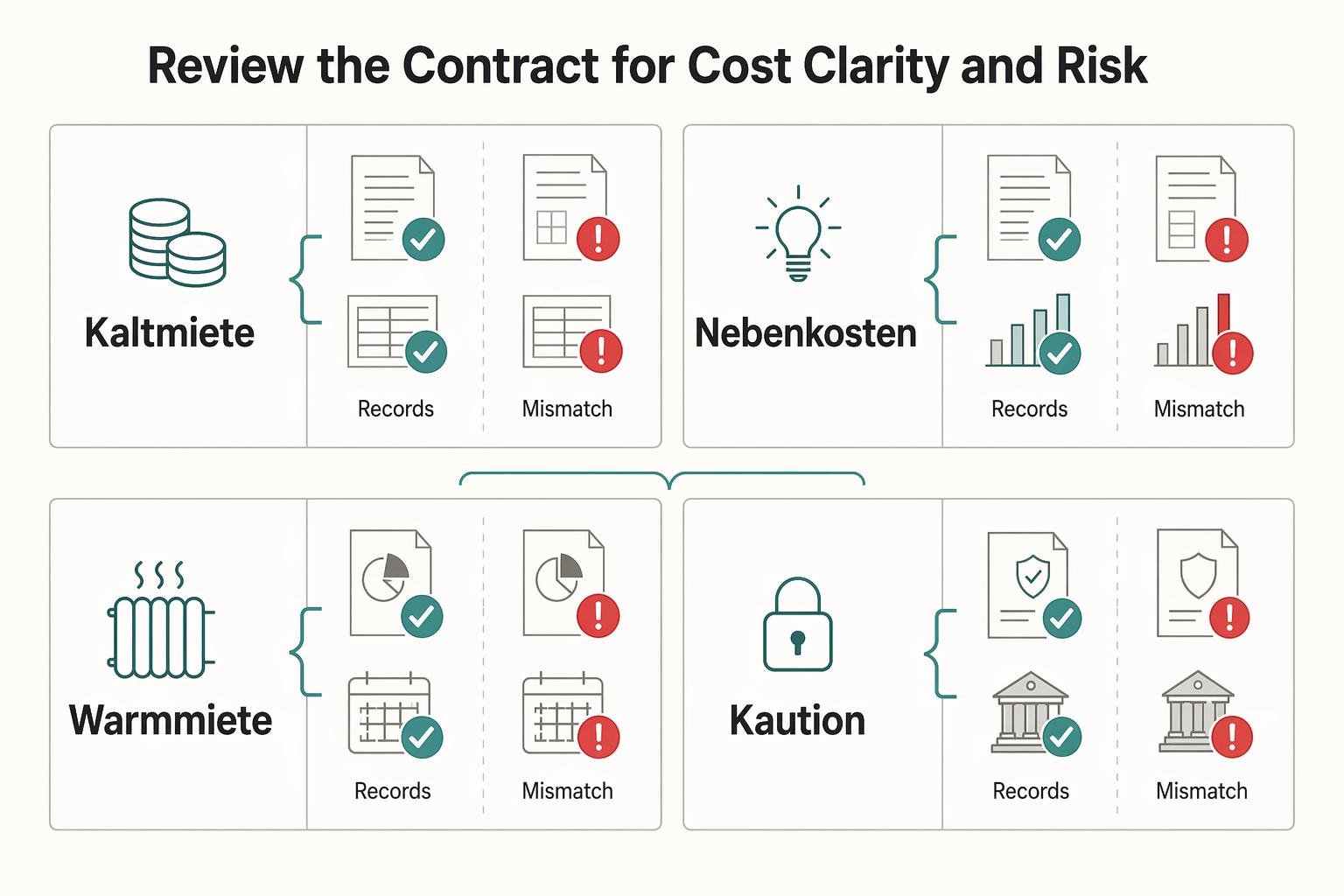
Review the contract for cost clarity and risk#
Read the Mietvertrag line by line against the listing and your viewing notes. Do not rely on verbal promises when money is involved.
| Lease item | What to confirm in plain language | Charge type | Main risk if unclear | Settlement timing to confirm |
|---|---|---|---|---|
| Kaltmiete | Base monthly rent amount in the signed contract | Recurring | Listing price and contract price differ | Monthly due date |
| Nebenkosten | Which operating costs are included and which may vary | Recurring (can be variable) | You cannot tell what may be adjusted later | Ask if reconciliation applies and when |
| Warmmiete | Total monthly amount you should budget for | Recurring | Total monthly outflow is higher than expected | Monthly due date |
| Kaution | Deposit amount, recipient, and return conditions | One-time | Large upfront exposure or early-payment pressure | Due date and payment timing after verification |
Use a red-flag screen before signing:
- Schönheitsreparaturen wording is vague, broad, or hard to interpret.
- Mindestmietdauer is longer than your realistic stay.
- Any fee or condition is mentioned verbally but missing from the written contract.
- Handover condition is not documented in writing.
- Included items are not confirmed in writing.
- Payment is requested before you complete contract and payment-risk checks.
Make your decision with a simple rule:
- Sign when identity and right to rent are clear, the unit matches the listing, contract terms are understandable, and costs plus included items are confirmed in writing.
- Negotiate when the apartment works but specific terms need written clarification.
- Walk away when authority is unclear, documents are incomplete, or payment pressure comes before verification.
Conclusion: Act early and keep every claim easy to verify#
If you're looking for an apartment in Berlin, the useful mindset is simple: act early, keep your file consistent, and make each next step easy for the other side to review. You are not trying to impress anyone with volume. You are trying to remove doubt.
The sequence is your real advantage. First make your documents coherent, then run the search with discipline, then slow down again at contract stage. That matters because landlords or their representatives may screen for reliability, and a weak file often looks weak because it is hard to verify, not because the applicant is unqualified.
Before you send anything, check the basics one more time: consistent details, no missing pages, and no contradictions between your summary and the underlying proof.
If you are still searching remotely, keep one practical risk in view. Some rentals may still involve face-to-face interaction or signed paperwork before a deal is finalized. Do not assume remote approval is impossible, but do plan for the possibility that you may need temporary accommodation while you attend viewings and finish paperwork in person. Also treat public online advice as anecdotal and potentially dated, and confirm current expectations directly with the listing party.
What to do now:
- Documents: finalize one clean application pack and verify that every claim can be backed up quickly.
- Search execution: track responses, follow up quickly, and be ready to attend viewings or handle in-person steps if asked.
- Contract review: read every clause, confirm what is included in the rent, and pause on anything you do not understand.
If you have no offers yet, tighten the file before sending more applications. If you received an offer, confirm the paperwork and review the contract before paying anything. If the contract is unclear, ask written questions and wait for clear answers. That is how you reduce delays, lower your risk, and make landlord review easier with complete, verifiable documentation.
Frequently Asked Questions
What should different renter profiles start with?
Start with the exact documents the provider requires for that listing. Salaried employees should prepare core identity and income documents, freelancers should ask which income period and document types will be reviewed, and students should provide ID and proof of study. For Home in Berlin student residences, the article says to include a certificate from the educational institution.
How can a freelancer prove income for a Berlin apartment?
Ask the provider which income period and documents they accept for that specific listing. Then submit a clear proof chain with consistent names and dates across your file. The article does not set a Berlin-wide freelancer standard.
How do I rent without a SCHUFA report?
The article does not say SCHUFA is always mandatory, waived, or replaceable across Berlin. Submit what the listing asks for and ask the provider in writing what they will review for that application before paying anything.
What can I use instead of a Mietschuldenfreiheitsbescheinigung?
Ask first whether the listing requires a Mietschuldenfreiheitsbescheinigung at all. Then confirm what format or alternatives, if any, the provider will accept. The article does not say it is always required.
Is a foreign work contract valid for renting in Germany?
The article does not give a universal rule for foreign work contracts. Ask the provider whether they accept your contract format and whether a translation is needed. It also advises comparing the rent line carefully, since net cold rent and gross warm rent are not the same.
What are the essential documents for my application?
Essential documents depend on the provider's rules. The article highlights identity documents, income proof, and listing-specific forms, and says Home in Berlin provides tenancy forms in its download center. For student residences there, a certificate from the educational institution is required, and residents are instructed to register at the Bürgeramt within 14 days after moving in.
Try a related tool
Researched and edited by the Gruv editorial team. Gruv builds cross-border billing, payouts, and finance-operations software for global businesses.
Sources
Includes 2 external sources outside the trusted-domain allowlist.
- assets.eurofound.europa.eu/f/279033/e1394873e4/ef1461en.pdftrusted
- documents.ucr.edu/registrar/UCR%20Catalog%202025-2026.pdftrusted
- oag.maryland.gov/resources-info/Documents/pdfs/Opinions/1969/...trusted
- oecd.org/content/dam/oecd/en/publications/reports/202...trusted
- pmc.ncbi.nlm.nih.gov/articles/PMC11960022trusted
- sec.gov/Archives/edgar/data/2035832/0001193125260014...trusted
- berlin.de/sen/wohnen/wissen-fuer-mieter/berliner-mietr...external
- bmi.bund.de/EN/topics/administrative-reform/registration...external
Educational content only. Not legal, tax, or financial advice.
Related Posts

Can Digital Nomads Claim the Home Office Deduction?
Claim the deduction only when your facts and records can carry it. With the home office deduction for digital nomads, the real decision is usually a three-way call: claim it, do not claim it, or pause and get help because your file is not ready.
Renting in Europe as a Foreigner on a 90-Day Timeline
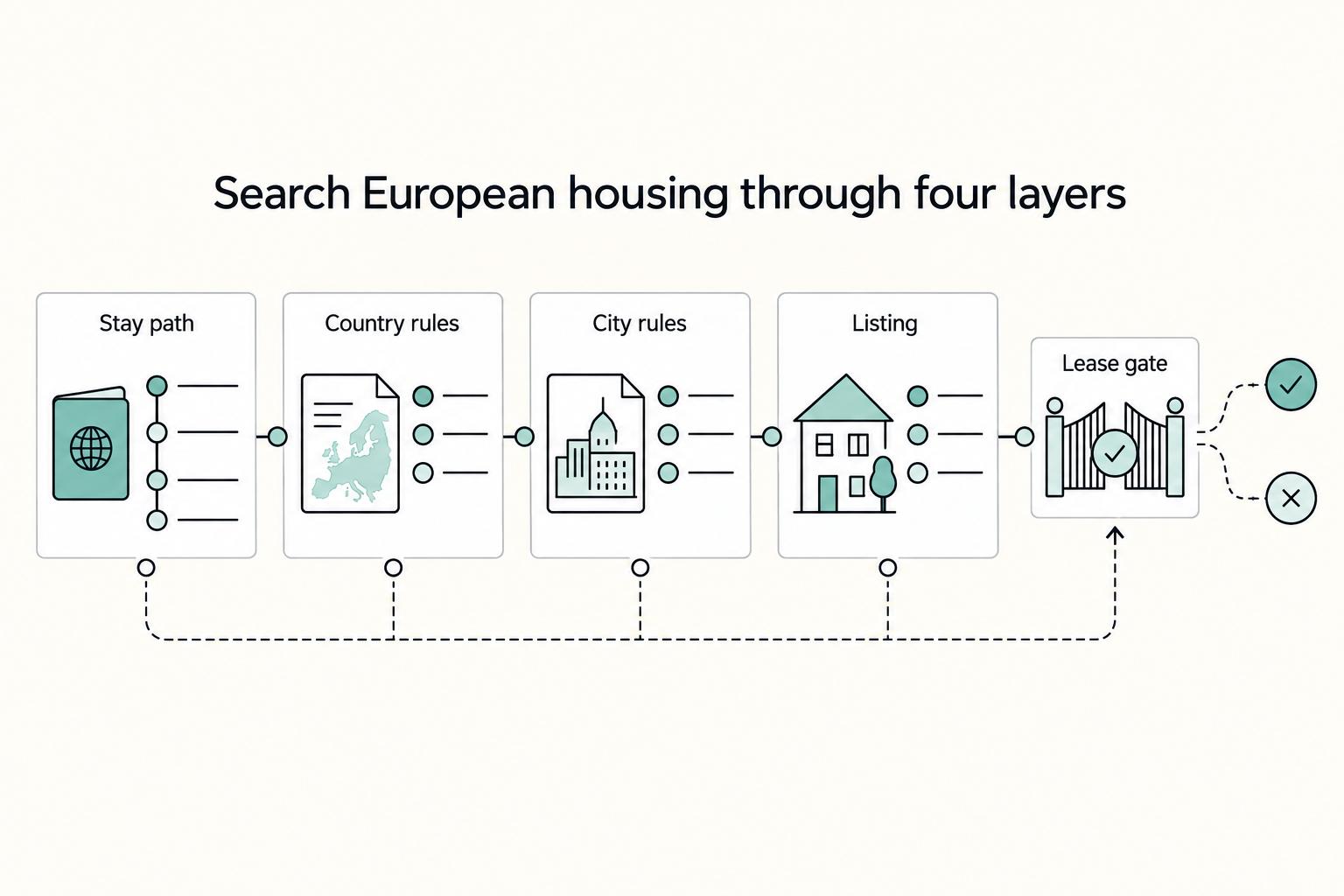
If you're **renting in Europe as a foreigner**, treat the move as a staged long-term housing plan, not a booking sprint. Your first decision is not which listing looks best. It is which city you're targeting, which legal stay track applies there, and when you'll be ready to sign without guessing.
Renting a Condo in Bangkok for Remote Work
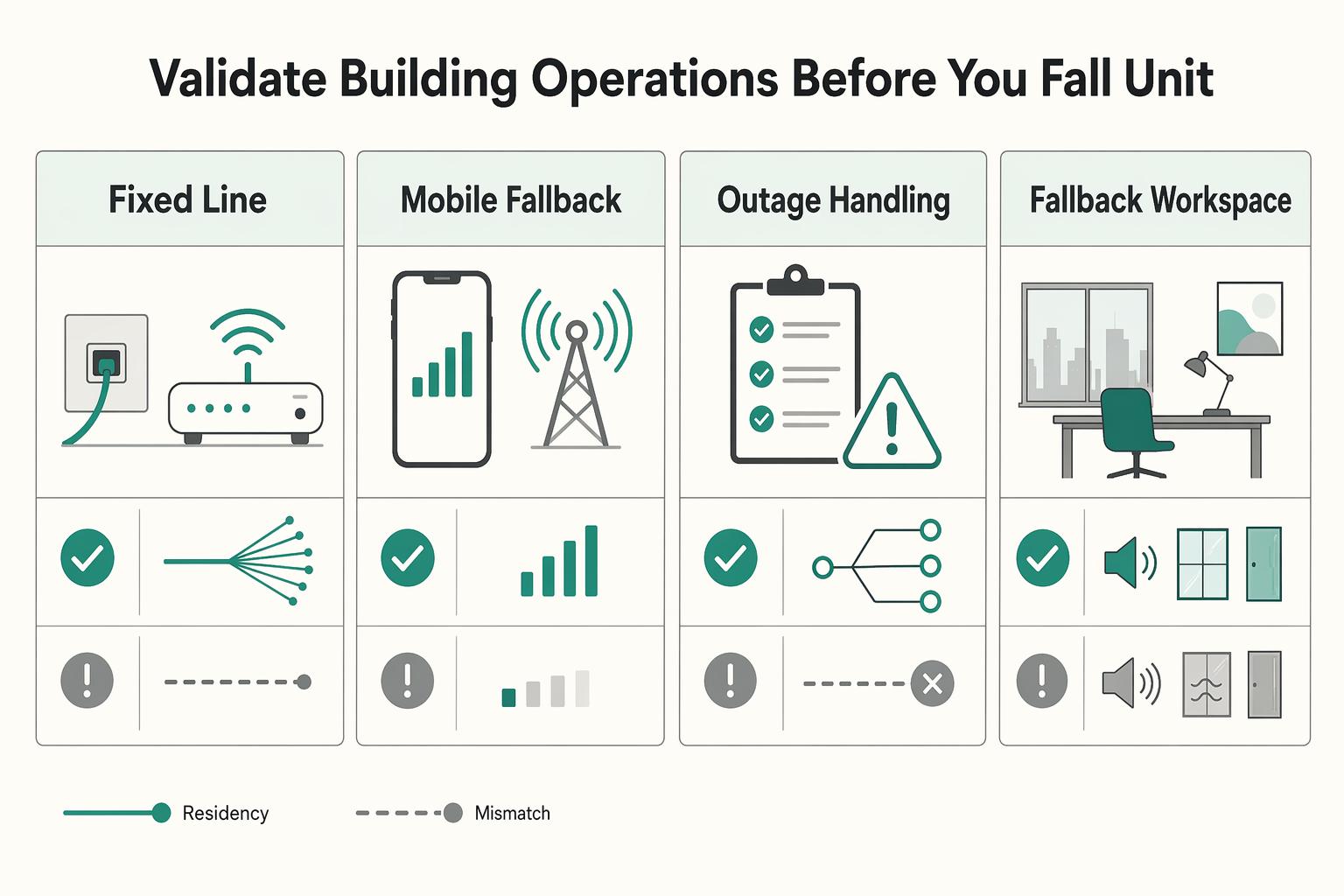
Start by narrowing the decision before you book viewings. If you're renting a condo in Bangkok, the useful order is simple: define what matters, screen districts, validate building operations, then shortlist listings.