
Quick Answer
Yes: treat airbnb rental arbitrage as a gated decision, not a listing tactic. Clear city or county STR rules, then building documents like CC&Rs or bylaws, then get signed lease language or an addendum that permits subletting. Underwrite one unit with rent, utilities, cleaning, supplies, fees, insurance, and downside occupancy before launch. Move to expansion only after cash timing, reserves, and unit-level NOI stay stable in live operation.
Airbnb rental arbitrage can work, but only if you treat it like a real operating business from day one. The mistake usually is not bad math alone. It is doing the math before you know whether the market, the building, and the lease will even allow the model.
This is not a quick-cash playbook. It is a practical sequence for screening markets, documenting permission, underwriting one unit conservatively, and setting up operations so the asset does not turn into a second job. Keep that order. You will make clearer decisions and avoid the failure mode that catches most operators early: committing to a unit before you have cleared the legal and operational gates.
Stage 1: Will This Market Let You Win? The Compliance-First Due Diligence Framework#
If you cannot clear the legal gates in order, walk away. The fastest way to lose money is to start with a property, furniture budget, or revenue guess before you confirm the market actually allows the model.
Clear the three gates in order#
Use a hard stop at each layer, and do not move to the next one until the prior gate is documented.
- City and county rules
Start on the official city or county website, not a blog post or host forum. You are looking for the current short-term rental ordinance, registration or permit rules, zoning limits, tax obligations, and any owner-occupancy restriction. A common pattern in high-STR-density locations is owner-occupied operation plus registration. That can stop a non-owner operator before you ever speak to a landlord. If the rules ban your use case, require owner occupancy, or create a permit path you cannot satisfy, reject the market.
- Building, HOA, or condo rules
If the jurisdiction looks workable, get the governing documents for the actual building: CC&Rs, bylaws, house rules, or any leasing policy. Ask management or the owner for the current version in writing. If those documents prohibit transient use, cap lease terms in a way that blocks short stays, or ban subletting, reject the unit even if the city is permissive.
- Lease permission
Last, confirm the lease itself explicitly permits short-term subletting. That permission needs to live in signed lease language or an addendum, not in a text message from a leasing agent. If the owner will not sign clear written permission, stop there.
Keep a deal file for each target market and unit so you can prove what you checked and when you checked it. Save the ordinance URL, PDF or screenshot, date checked, any staff email response, the building documents, and the draft lease or addendum. Your notes should also track the permit requirement and local tax treatment, marked pending until each source is verified. That paper trail matters when rules change or a dispute starts with "we thought it was allowed."
Build the coverage stack before you market the unit#
| Coverage layer | What to verify now | Hard rule |
|---|---|---|
| Lease-required coverage | Confirm what the lease requires and whether your planned STR use is disclosed in writing | Do not list until lease-required coverage is clear |
| Dedicated STR coverage (if used) | Confirm the policy is written for short-term rental activity and names the correct operator | Keep operator details consistent across lease and policy records |
| Platform protection | Read current host protection terms and claims process | Treat platform protection as supplemental, not your only protection |
Once legality and coverage look workable, validate demand with current data, not old screenshots or peak-season anecdotes. Check comparable listings, seasonality across the year, and the total fee load you will actually carry. Do not ignore enforcement risk. Legal scholarship points to stronger regulation pressure where STR supply collides with housing affordability. Weak enforcement is its own trap when jurisdictions move to block illegal operators.
Use your KPIs as decision triggers, not vanity metrics:
- Occupancy, especially low-season occupancy: If your downside case does not cover fixed rent, renegotiate the rent or reject the deal. You owe full rent whether bookings perform or not.
- RevPAR: If projected RevPAR does not comfortably cover rent, cleaning, supplies, platform fees, utilities, and insurance, reject it.
- Seasonality spread: If most revenue comes from a short peak window, proceed only if you have cash reserves and the lease terms still work year-round.
If a market only works when you assume loose enforcement, missing permits, or verbal permission, that is not an edge. It is a no-go.
Stage 2: Can You Actually Make Money? Professional-Grade Financial Modeling#
Most compliant units fail when fixed rent outpaces real bookings. Build this part of your model in sequence so you can decide fast: assumptions, startup budget, operating model, then scenario testing.
1) Set assumptions before you project revenue#
Start with inputs you can defend and date in your deal file: nightly rate, occupancy assumption, stay mix, and core costs. Where verification is still pending, label platform fee assumptions and utility assumptions as unverified instead of filling them with guesses.
Use the example numbers as a logic check, not a promise: $2,000/month rent, $150/night, and 60% occupancy gives $4,500/month, leaving $2,500 after rent for utilities, cleaning, supplies, platform-related costs, insurance, and profit. That spread only matters if it still holds after your full cost stack, because rent is still due when bookings underperform.
2) Split startup budget into launch costs vs pre-funded reserves#
Do not use one blended startup number. Separate what you spend once from the cash you need on hand before listing.
| Bucket | What goes here | Validation status |
|---|---|---|
| One-time launch costs | Lease signing costs/deposits, first month rent, furnishing before listing, initial setup items, business setup, insurance binding, lease/addendum review | Pending: final vendor and lease figures still need verification |
| Pre-funded reserves | Cash buffer for early shortfalls, damage replacement, refund events, and payout-to-rent timing gaps under a one-year lease | Pending: reserve amount still needs verification |
3) Build unit economics before full P&L#
Check night-level economics first, then scale to monthly.
- Contribution per booked night = nightly rate minus variable costs allocated per night.
- Booked nights needed to cover fixed costs = monthly fixed costs divided by contribution per booked night.
- Cash-conversion check: map expected payout timing against rent due dates so you can see timing risk before launch.
Use this cost map to see what compresses margin fastest:
| Cost type | Volatility | How to track it | Margin risk |
|---|---|---|---|
| Rent | Low month to month | Lease schedule + payment ledger | Highest fixed-risk cost because it is owed regardless of bookings |
| Cleaning/turnover | Medium to high | Per-stay invoices tied to reservations | Rises quickly when stays are shorter or turnover frequency increases |
| Utilities/supplies | Medium | Monthly bills + restock receipts | Gradual creep that weakens spread over time |
| Platform/payment deductions | Medium | Reservation-level reconciliation | Quiet compression when assumptions are stale |
| Insurance/software | Low to medium | Policy/subscription calendar | Usually stable, but damaging when omitted in underwriting |
4) Stress test named failure modes and apply one decision rule#
Test the model against clear downside scenarios: demand drop, price compression, and policy disruption. Then use a hard decision rule:
- Proceed: fixed costs are covered and reserves remain intact.
- Renegotiate lease terms: model is close but fragile under downside conditions.
- Reject the unit: it only works under optimistic occupancy or pricing.
Keep the conclusion grounded: this model can unravel when markets soften or rules change, and unlike ownership, it does not build equity or capture appreciation.
Stage 3: How Do You Secure the Asset? The Professional Acquisition Strategy#
A strong model is not enough. Move forward only when the true decision maker is open to this use and willing to give explicit written lease clauses allowing subletting. Without that, the deal is a no-go.
Qualify the owner before you pitch#
Screen first, pitch second. Your goal is to confirm there is a real approval path in writing.
- Decision maker: Confirm the exact person who can approve nonstandard lease language. If authority is unclear, stop.
- Risk tolerance: Identify the real concern early: property wear, complaints, rent reliability, or liability.
- Existing constraints: Ask what in their standard lease, management process, or ownership policy could block subletting.
- Property-level restrictions already cleared: Only proceed if Stage 1 compliance checks are already clear; local rules are a viability gate, not a later fix.
Checkpoint: you should have a clear path to "yes, with written lease language." Verbal comfort without written permission is not approval.
Show proof that answers the owner's risk questions#
Present this as an evidence pack, not a hype deck. The owner is judging execution reliability, not your upside story.
| What to show | Why the owner cares |
|---|---|
| Business entity formation documents | Clarifies who is legally responsible under the lease |
| Operating SOP summary (booking monitoring, access control, turnover cleaning, after-hours escalation) | Shows this will be run as a manager-level operation, not ad hoc hosting |
| Payment reliability plan (rent due date, payment account, fallback if booking payouts lag) | Reduces missed-rent risk |
| Reserve and setup budget snapshot | Demonstrates you can absorb startup and early volatility |
| Insurance confirmation status and any pending coverage review | Confirms risk controls are being documented before signing |
| Responsibility summary (guest messaging, cleaning coordination, damage follow-up handled by your business) | Sets clear operating accountability |
If you include benchmark capital ranges, label them as outside estimates, not verified costs for your unit. A range such as $10,000-$25,000 per property for first month, deposit, and furnishings is context only; use your actual numbers for underwriting.
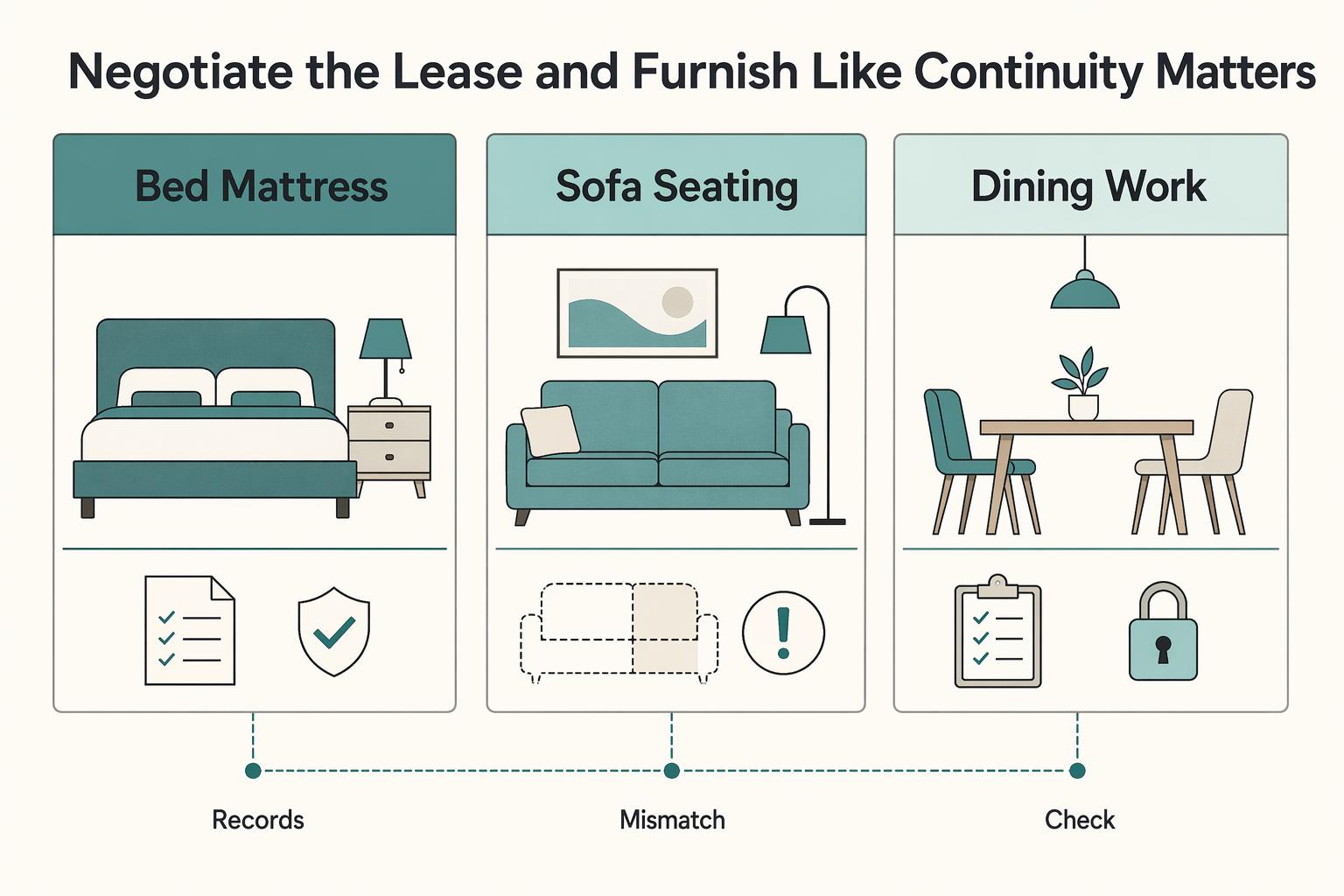
Negotiate the lease and furnish like continuity matters#
Use a written checklist and prioritize clarity over speed.
- Secure explicit written lease clauses allowing subletting.
- Reconcile draft lease terms with what was actually approved in conversations.
- Write operational conditions clearly, for example documentation and process expectations, so there is less ambiguity later.
- If full permission is rejected, test fallback paths (conditional terms or a limited trial period draft reviewed by counsel).
- If written permission still does not happen, walk away.
Choose furnishings for lifecycle stability, not the cheapest launch cost.
| Asset area | Durable path | Low-cost path | Lifecycle and payout impact |
|---|---|---|---|
| Bed + mattress setup | Strong frame, protector, warranty support | Budget frame, basic mattress | Lower failure/disruption risk vs. faster replacement and refund pressure |
| Sofa + seating | Cleanable fabric, sturdier build | Cheaper upholstery, weaker structure | Better stain recovery and service life vs. higher complaint and swap frequency |
| Dining/work surfaces | Scratch-resistant, solid construction | Light particleboard | Fewer visible failures vs. quicker wear that can hurt guest experience |
Before signing, run a hard readiness gate: written subletting language drafted, insurance confirmations in progress, SOP documented, furnishing plan funded, and Stage 2 reserve assumptions still acceptable if bookings start slowly. If any core control is still "figure out later," do not sign yet.
Related: How to Invest in Real Estate as a Digital Nomad.
Stage 4: Run daily operations from SOPs, tools, and named roles#
You have a business when daily operations can run from your SOPs, dashboards, and handoff rules instead of your personal inbox. If a recurring task still depends on your memory, it is not systemized yet.
Use your stack to make pricing, access, communication, and follow-up repeatable from day one.
| Core function | Failure risk if missing | Integration dependency | When to implement |
|---|---|---|---|
| PMS | Fragmented reservations, missed tasks, and inconsistent guest records | Accurate listing and reservation data; platform capability to verify before launch | Before first unit goes live |
| Pricing workflow | Overpricing can leave nights unbooked; underpricing gives away revenue | Current market inputs + property data; pricing model fit to verify before launch | At launch, then review every month |
| Access control | Lockouts, unsafe key handling, and late manual interventions | Reservation timing + turnover timing | Before self check-in is offered |
| Messaging automation | Slow replies, repeated questions, and inconsistent guest communication | Reservation status + stay timeline data | Before first guest arrival |
Treat pricing as a recurring operating process, not a one-time setup. A grounded checkpoint is to pull current market data every month and rerun your analytical model. Keep the model local to your operating area; even the grounded calculator example is scoped to a specific ZIP code (45202), not a broad market average.
Build a local team that can absorb disruption#
Define named roles up front: primary cleaner, backup cleaner, maintenance contact, and one escalation owner. Then document onboarding SOPs for turnover photos, restocking, damage flags, lock checks, and what gets escalated now versus next day.
Use a screening process, not gut feel, for people who access the unit or keys. One STR fraud example reported a four-month pattern and $20,000 in losses, reinforcing that gut-feel screening can fail under newer fraud conditions. Verify identity, references, payout details, and who will physically show up.
For continuity, set backup coverage as a rule, not an exception. If your primary cleaner or maintenance contact is unavailable, your backup path should already be documented and assigned.
Automate the guest journey with quality checkpoints#
Build a simple service blueprint and audit each handoff:
- Pre-stay: confirmation, house rules, check-in instructions, arrival confirmation.
- In-stay: first-night check, issue triage, clear urgent vs non-urgent path.
- Post-stay: checkout reminder, turnover trigger, inspection photos, review request.
Add quality control between steps so you catch failures early: confirm key messages were sent, confirm access worked, confirm turnover evidence was uploaded, and review exceptions weekly. Track KPIs that reflect real performance; net rental revenue can be more decision-useful than total revenue when you are deciding what to fix next.
Stage 5: Are You Winning? Optimization and Scaling Your Portfolio#
Your job now is portfolio management: review each unit on a fixed cadence, decide hold or fix, and only then decide whether to add another lease. Expand only when margin and controls are repeatable, not after a few strong weekends.
Use a recurring review rhythm:
- Weekly: exceptions only (guest issues, missed cleans, access failures, cancellations)
- Monthly: KPI diagnosis against forecast
- Quarterly: pass/fail decision on adding capital or another unit
| KPI | Review question | Decision trigger | Likely cause |
|---|---|---|---|
| Occupancy rate | Are nights booked in line with your dated benchmark range and your forecast? | Below plan for 2 review cycles | Pricing issue, weak demand, listing conversion issue |
| ADR | Are you holding rate without harming occupancy? | ADR falls while occupancy stays strong | Underpricing, poor minimum-stay rules, weak channel mix |
| RevPAR | Is revenue per available night improving or slipping? | RevPAR down versus plan | Combined pricing and conversion problem, seasonality shift |
| NOI | Is the unit producing cash after operating costs? | NOI misses forecast for 2 months | Turnover-cost issue, maintenance creep, utilities, fee creep |
| Listing conversion | Are views turning into bookings? | Traffic steady but bookings soften | Photos, copy, review quality, rule friction |
| Cancellation and payout reliability | Are bookings sticking, and is cash arriving when expected? | More exceptions or cash-timing stress | Calendar errors, maintenance outages, weak reserves |
Use this as a diagnosis tool, not a scorecard. If occupancy softens while ADR stays high, fix pricing before changing the unit. If revenue looks fine but NOI slips, audit cleaning, supplies, and maintenance before blaming market demand.
Build a performance loop, not a badge strategy#
Treat performance as a loop you can verify each month. Better cleaning and faster communication improve review quality, stronger reviews and listing clarity improve conversion, better conversion supports healthier pricing, fewer cancellations protect calendar stability, and steadier payouts protect reserves.
Track proof, not memory. Keep a monthly evidence pack with payout statements, cancellation logs, turnover photos, guest complaint notes, and your latest pricing update. Missing evidence means you are managing by guesswork.
Pass or fail before unit two#
Scale only if all three gates pass:
- Cash reserves: your first unit has a dedicated reserve sized from verified operating needs, and you can cover next-unit setup costs (estimated here at $5,000-$15,000 per unit) without draining operating cash.
- Operational stability: guest communication, cleaning, and maintenance run consistently without recurring manual rescues.
- Compliance continuity: you still have explicit written landlord permission, and you re-check local short-term-rental rules before bookings and before signing another lease.
Run this expansion-risk checklist before unit two:
- Concentration risk: No-go if one unit or one channel drives most of your cashflow and baseline NOI is unstable.
- Landlord dependency: No-go if one landlord decision can materially disrupt your current operation.
- Operational fragility: No-go if one cleaner, one maintenance contact, or one person (you) is still a single point of failure.
Keep market selection strict. Profitability is market-dependent, not universal, so replicate only where margin logic still holds. A 50%+ STR premium is the minimum worth targeting before entry, and 100%+ is materially stronger. Also account for competition pressure: demand grew 6.0% in 2025, but supply also expanded to 1.76 million active U.S. listings by mid-2025.
You might also find this useful: The Pros and Cons of Short-Term vs. Long-Term Rentals.
Conclusion: You've Built a Compliant, Cash-Flowing Asset#
If your first unit passed the Stage 5 gate, you are no longer guessing. You now have a repeatable way to evaluate, launch, and manage this model in the right order: compliance first, economics second, agreements third, operations fourth.
That order matters because the weak version is easy to spot. It starts with a promising unit, assumes revenue will show up, and treats permission checks as paperwork to clean up later. The stronger version asks for proof before commitment: written landlord permission to sublet, local short-term rental rule checks, seasonality review, and unit economics built from evidence rather than optimism. If you rely on seller or agent historical financials, treat them as inputs to verify, not as audited truth.
| Criteria | Speculative side hustle approach | Compliance-first business approach |
|---|---|---|
| Risk exposure | High, because permissions and rules get checked late | Usually lower, because permissions and local-law research happen before launch |
| Decision quality | Driven by headline revenue and hope | Driven by demand checks, seasonality, and documented permissions |
| Scalability | Fragile, because each new unit creates new surprises | More repeatable, because each unit follows the same screening and setup steps |
| Owner workload | Reactive and interruption-heavy | More consistent, because operations are formalized before growth |
Your next move should stay simple and sequential:
- Validate the market and check whether demand holds across seasons.
- Verify permissions, especially landlord approval to sublet and local compliance requirements.
- Model one unit conservatively before you sign anything.
- Formalize the agreement in writing and keep the approval trail.
- Standardize operations before adding another lease.
That is a workable operating model, not a hope trade. Keep reviewing platform rules, local requirements, and your own performance evidence, because the model stays strong only when your checks stay current. This pairs well with our guide on How to Calculate Cap Rate for a Rental Property.
Frequently Asked Questions
Do you need an entity for this business?
Usually, the better question is whether your lease, insurance, banking, and tax setup all match the actual operator. Ask a local lawyer and tax professional which entity fits your jurisdiction and lease plan, and go in with your expected ownership, banking, and contract setup. Do not treat an LLC, or any entity, as an automatic shield if your lease permission, insurance, or local compliance is weak.
How do you get valid lease permission to sublet?
You need signed lease language or a signed addendum before you list the unit. The lease should explicitly permit subletting, and you still need to confirm municipal short-term-rental rules before first booking. Bring the exact listing use, building rules, and signed permission language, and do not operate first and fix paperwork later. | Permission approach | What to check | Main risk | | --- | --- | --- | | Verbal or informal approval | Whether it matches the signed lease | Easy to dispute later | | Generic template language | Whether it actually fits your lease and local rules | Gaps or vague terms | | Signed, lease-specific addendum | Whether it clearly states permitted STR use | More upfront legal/compliance work |
Is platform protection enough for insurance?
No, not by itself. Check whether your own policy or policies specifically respond to short-term-rental activity. Bring the lease, occupancy pattern, and listing details into an insurance review, and do not assume platform protection is the same as dedicated STR coverage.
How should you pitch a landlord?
Start with permission and compliance, not revenue promises. First confirm the owner is open to subletting and short-term-rental use, then confirm local rules and lease restrictions. Show the operating systems you will use for guest communication, cleaning, and maintenance.
Is there a reliable profitability calculator for airbnb rental arbitrage?
Only if the inputs are real. Your model needs rent, utilities, cleaning, supplies, platform fees, insurance, and underperformance risk, plus realistic occupancy and rate assumptions. If the model ignores that you owe full rent even when bookings miss, the calculator stops being useful.
What hidden costs catch new operators?
Usually it is not one surprise bill. It is a stack of misses the original model never carried, including setup spend, ongoing supplies, platform fees, insurance, and maintenance, plus the day-to-day operating load. Keep a unit-level record of recurring costs and maintenance history, and do not call this passive income while guest communication, cleaning, and maintenance still need active control.
Try a related tool
Researched and edited by the Gruv editorial team. Gruv builds cross-border billing, payouts, and finance-operations software for global businesses.
Sources
Includes 1 external source outside the trusted-domain allowlist.
- business.uc.edu/programs-degrees/graduate/specialized-master...trusted
- community.lawschool.cornell.edu/wp-content/uploads/2025/04/White-Thor-final.pdftrusted
- digitalcommons.pepperdine.edu/cgi/viewcontent.cgitrusted
- finance.senate.gov/download/censorship-as-a-non-tariff-barrier-...trusted
- finance.wharton.upenn.edu/~mrrobert/resources/FDM/fdm-20230823.pdftrusted
- scholarlycommons.law.emory.edu/cgi/viewcontent.cgitrusted
- udspace.udel.edu/bitstreams/41ab9d2e-beb3-41ed-8f7e-39dfca1be...trusted
- awning.com/post/airbnb-profit-margin-benchmarks-2026-wh...external
Educational content only. Not legal, tax, or financial advice.
Related Posts
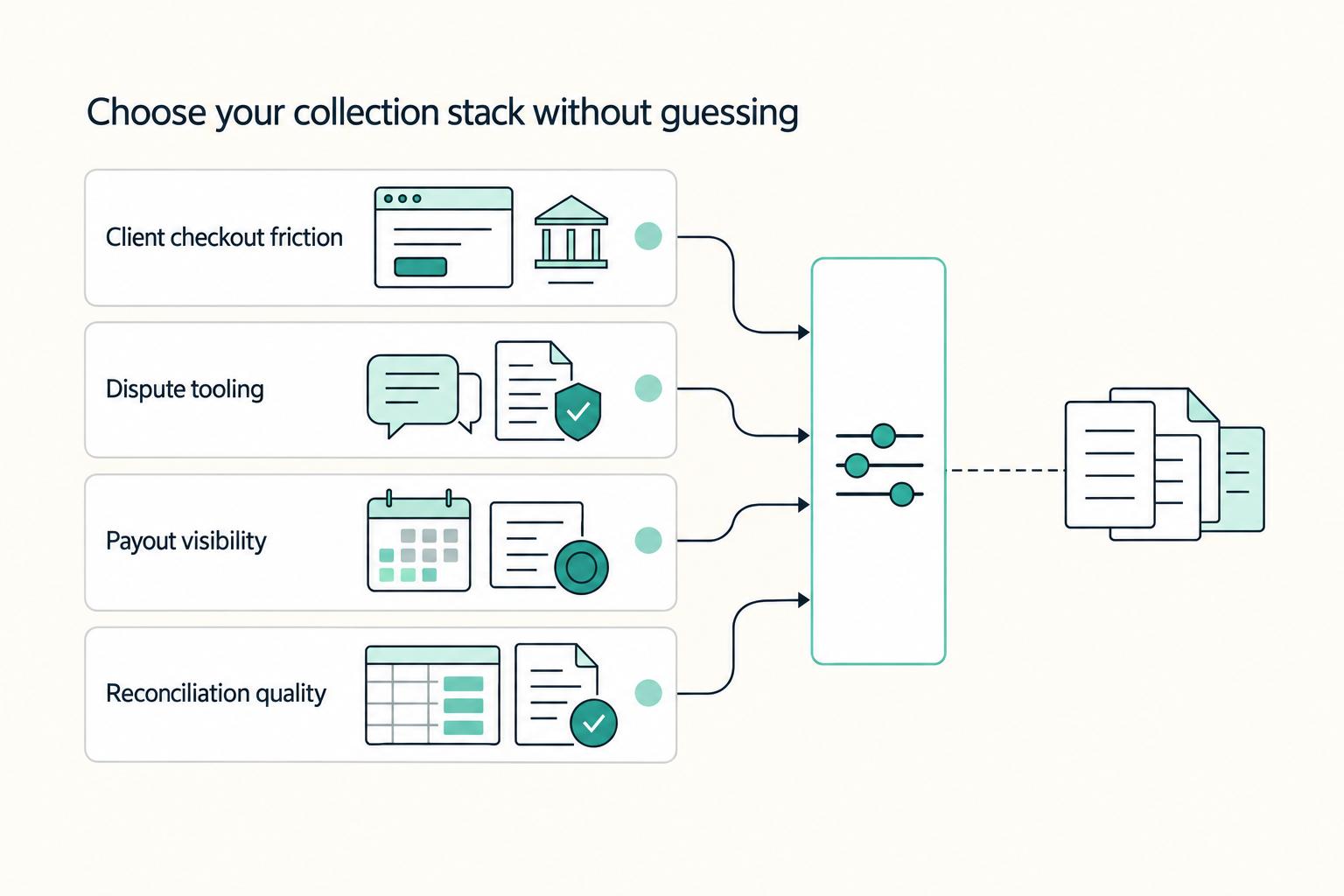
Should Your Freelance Business Accept Credit Cards?
Offer card payments, but stay in control of how money reaches you. The goal is not a smoother checkout screen. It is predictable cash you can use to run the business.
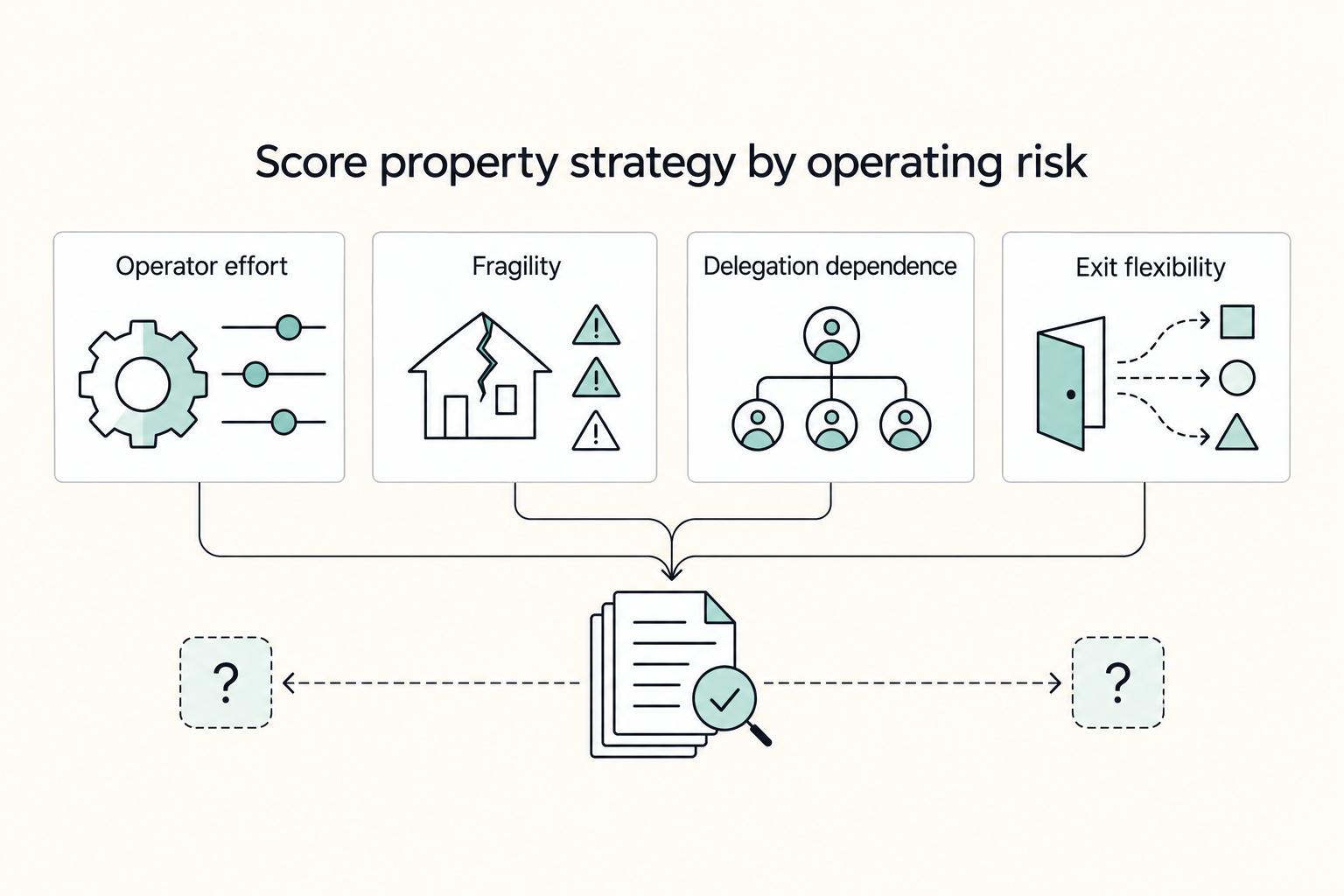
How to Invest in Real Estate as a Digital Nomad
**Run anything with money and moving parts like an operations system (cash, docs, delegation, and controls), not a "passive income" vibe.** Real life stress-tests weak spots. You change time zones, a client pays late, and something breaks at the worst moment. As the CEO of a business-of-one, your job is to build a setup that keeps working when you are not available on demand.
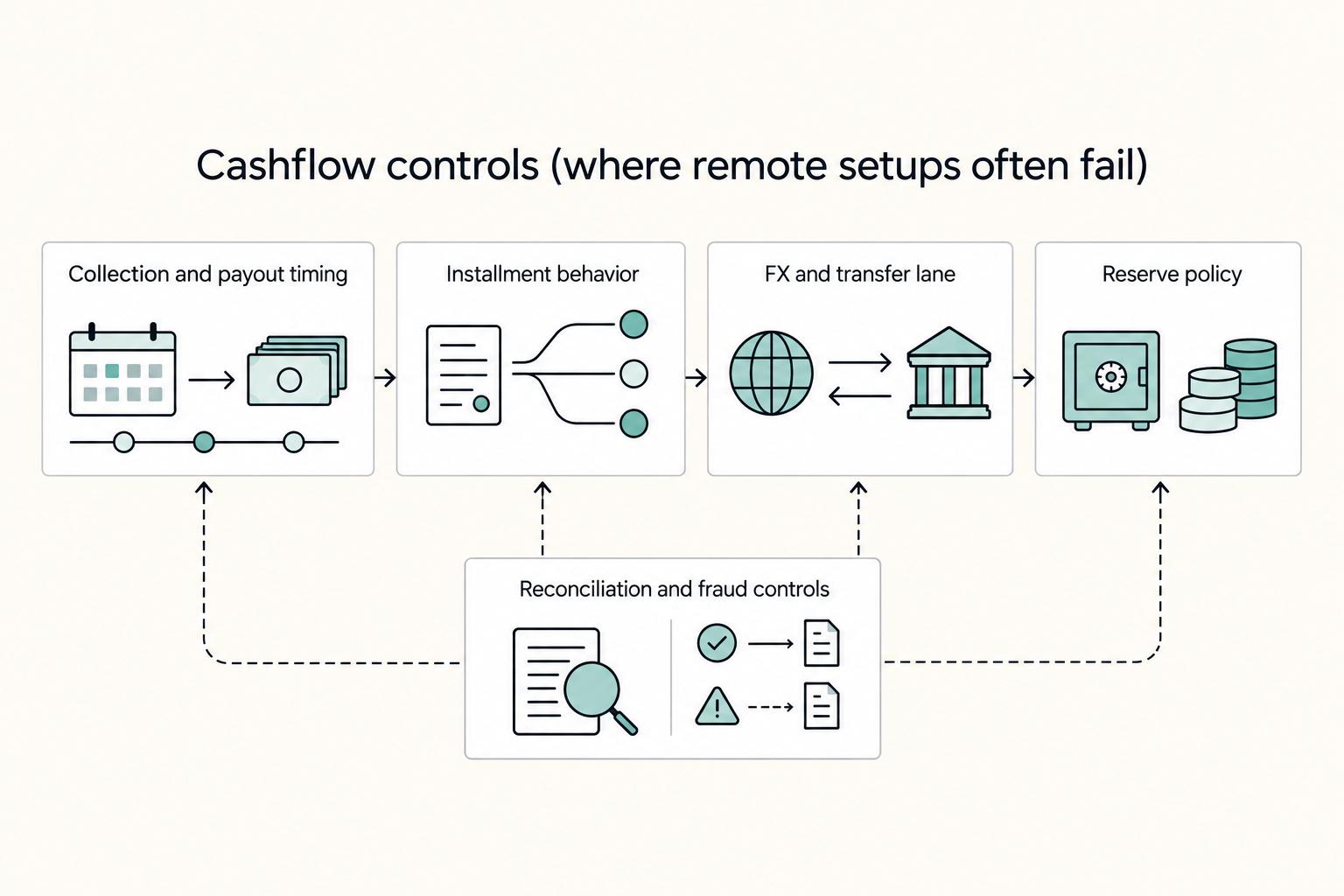
The Pros and Cons of Short-Term vs. Long-Term Rentals
You are probably not chasing the biggest headline revenue number. You want rent that arrives, stays collected, and does not turn into a second job or a cross-border tax headache. For an owner living internationally, the real choice between a short stay and a long-term lease is about risk first. Which model gives you lower compliance exposure, less remote operating drag, and more cash left after fees, taxes, and reporting?