
Quick Answer
Start with sequence, not guesswork: decide airport coverage, pick a pass that matches your stay, and buy through a channel where you can retrieve proof later. For Berlin arrivals, check zone validity for BER before paying, since city-only assumptions can fail at the airport. Paper tickets need validation, while app tickets must be active before travel. If you plan to stay longer, the Deutschlandticket can simplify routine travel, but confirm live subscription terms and cancellation rules in the provider you use.
How to Sequence Your Berlin Transit Decisions#
If you want to use public transport in Berlin without wasting time or buying the wrong ticket in your first week, make your decisions in this order: how you will leave the airport, how long you are staying, which purchase channel will hold your receipts, and what follow-up checks your pass requires. That sequence keeps you from solving each trip one by one instead of thinking about the network as one system.
Start with timeline, not the line map. If your stay is short, focus on arrival coverage, fare fit, and low admin. If you expect a longer stay, jump earlier to the recurring-pass section, then verify the live subscription terms before you commit. Service reliability can change what feels convenient on the ground.
Use the rest of this guide like a checklist:
- Arrival decision: confirm the applicable fare coverage and valid ticket type for your first trip before boarding. Verify airport-trip rules on the current official page rather than assuming they match your later inner-city routine.
- Stay-length pass choice: pick your pass only after you know whether your Berlin time is measured in days, weeks, or months.
- App and receipt workflow: choose one official buying path and save every receipt in the same place from day one. If you expense travel, this is much easier to fix early than retroactively.
- Subscription checkpoint: before buying any recurring product, verify renewal, cancellation, billing, and proof-of-purchase terms on the current official page.
Where live details can change, this guide flags that directly: current fare and policy details must be verified from official BVG, VBB, or transport-provider records before use. Related: The Best Debit Cards for International Travel.
Part 1: The First 60 Minutes - Airport to City Protocol#
Start with validity, then speed. In your first hour, buy a ticket that covers BER and your destination, validate it if it is paper, then take the first practical rail option shown on live boards.
For current planning, treat BER as the active airport reference point. If a guide still frames Tegel or Schonefeld as current airport choices, use it for background only, not for live fare or routing decisions.
Arrival checklist#
When you reach the rail station area, use this order:
| Step | Action | Key detail |
|---|---|---|
| 1 | Buy before boarding | Use ticket machines or official sales points before you go to the platform |
| 2 | Confirm coverage before paying | Make sure your ticket includes BER and your destination |
| 3 | Validate paper tickets before you board | If you buy digitally, confirm the ticket is active and visible on your phone |
| 4 | Use the electronic departure boards | Pick the first sensible connection instead of waiting for one specific train |
| 5 | Keep proof of purchase ready | Keep the paper ticket accessible or the digital ticket open until the trip ends |
- Buy before boarding. Berlin uses an integrated network, so one valid ticket can cover multiple transport modes within fare rules. Use ticket machines or official sales points before you go to the platform. Confirm current airport fare and policy details from the official source.
- Confirm coverage before paying. Make sure your ticket includes BER and your destination. Airport travel can differ from your later inner-city routine.
- Validate paper tickets before you board. Payment alone is not the final step for paper tickets. If you buy digitally, confirm the ticket is active and visible on your phone.
- Use the electronic departure boards. They show next trains and estimated arrivals. Pick the first sensible connection instead of waiting for one specific train.
- Keep proof of purchase ready. Keep the paper ticket accessible or the digital ticket open until the trip ends.
If you transfer later to the U-Bahn, follow the illuminated U signs at station entrances.
Which rail option to take#
Choose the option that gets you moving soonest with the least friction. Express services usually trade stop coverage for speed; local services are slower but useful when you miss an express or need a closer stop.
| Rail option | What to expect | When to choose |
|---|---|---|
| Express airport rail | Fewer stops, faster run toward major city stations | Choose this when it is leaving soon and your destination is near a main station |
| Regional rail | Often a practical middle ground with central access | Choose this when it stops closer to your hotel or meeting point than the next express |
| Local stopping rail | More stops, slower trip, broader local coverage | Choose this if you missed an express, want a simpler next departure, or need a nearer local stop |
Rule of thumb: if an express is leaving soon, take it. If not, compare the next regional and local options on the board and pick the one with the best arrival fit and shortest wait.
Mistake-proofing#
| Issue | What to do | Note |
|---|---|---|
| Wrong coverage | Fix it before continuing | Do not continue if your ticket does not cover BER or your destination |
| Paper ticket not validated | Validate before boarding | Do not assume payment alone is enough |
| Boarded before purchase | Get off as soon as you can do so safely and buy a valid ticket | Do not continue without a valid ticket |
- Wrong coverage: If your ticket does not cover BER or your destination, fix it before you continue.
- Paper ticket not validated: Validate before boarding. If you notice late, do not assume payment alone is enough. Confirm the current penalty amount for invalid or missing validation from the official source.
- Boarded before purchase: Get off as soon as you can do so safely and buy a valid ticket instead of continuing without one.
In the first hour, your goal is simple: valid ticket first, then the next workable rail connection.
Related reading: A Guide to Colombia's Digital Nomad Visa and Tax Implications.
Part 2: The Campaign Strategy - Choosing the Right Pass for Your Project#
Choose your pass based on how you will actually move, not on what sounds simplest. The right choice balances trip frequency, coverage area, flexibility on irregular days, and whether your airport trip is included.
If your travel days are light or unpredictable, start with single rides. If you expect many rides in one day, compare a 24-hour pass against single tickets using current fare and break-even details verified from official BVG, VBB, or transport-provider records. If your travel repeats across a week, compare a 7-day option to your real number of travel days, not your full calendar week. If your stay is month-scale, compare monthly products and subscription-style options side by side, then use the next section to evaluate the Deutschlandticket specifics before you commit.
| Option to compare | Ideal stay pattern | What it includes | Likely tradeoff | Choose this when |
|---|---|---|---|---|
| Single ticket | Light, irregular travel | One paid journey under the product rules | Can become expensive if rides add up quickly | Your travel is occasional and hard to predict |
| 24-hour pass | One high-mobility day | Multiple trips during its validity window | Easy to overbuy on a mostly static day | Your plan clearly exceeds the current break-even trip count after official verification |
| 7-day pass | Repeated movement across one week | Travel during the 7-day validity period | Weak value if several days are low-use | You expect frequent trips on most days that week |
| Monthly or subscription product | Ongoing travel over a longer stay | Extended coverage under that product's terms | More commitment and potential admin overhead | You need regular mobility and will use it consistently |
Before you pay, confirm three things on the purchase screen or receipt: the validity window, the covered fare area, and whether BER travel is included or needs a separate choice. If your schedule is uneven, a mixed approach can be more cost-effective than forcing one pass to cover every day.
For a step-by-step walkthrough, see Berlin vs Munich for Expats Who Need a Real Move Plan.
Part 3: The Power Play - Why the Deutschlandticket is Your Default#
For month-plus stays with frequent travel, the Deutschlandticket is usually the first option to check. It is often less about finding the absolute lowest fare and more about avoiding repeated ticket decisions across regular city and regional movement. If your pattern is daily or near-daily rides, this can be the practical default; if your pattern is light or short, Part 2 logic still wins.
What you are really buying#
Treat it as a monthly product described for regional bus and rail services, not as a blanket pass for every transport service. In practice, many people use it as an all-month mobility base for Berlin plus regional trips, so they are not re-buying each ride.
Coverage check: do not assume all services are included. Confirm current inclusion and exclusion details with the transport provider.
Treat the price as time-sensitive too. A March 5, 2023 headline described it at EUR49/month, which is useful context, but you should confirm the live checkout price before purchase.
When it beats shorter passes#
Use this as your default when you want one monthly setup instead of combining 24-hour, 7-day, and occasional regional tickets. It is usually stronger when your month includes repeated commuting, apartment logistics, coworking, and regional travel days.
Skip it when usage is lumpy. If you are mostly stationary, traveling heavily only for a few days, or leaving before monthly use compounds, shorter products from Part 2 may be the better fit.
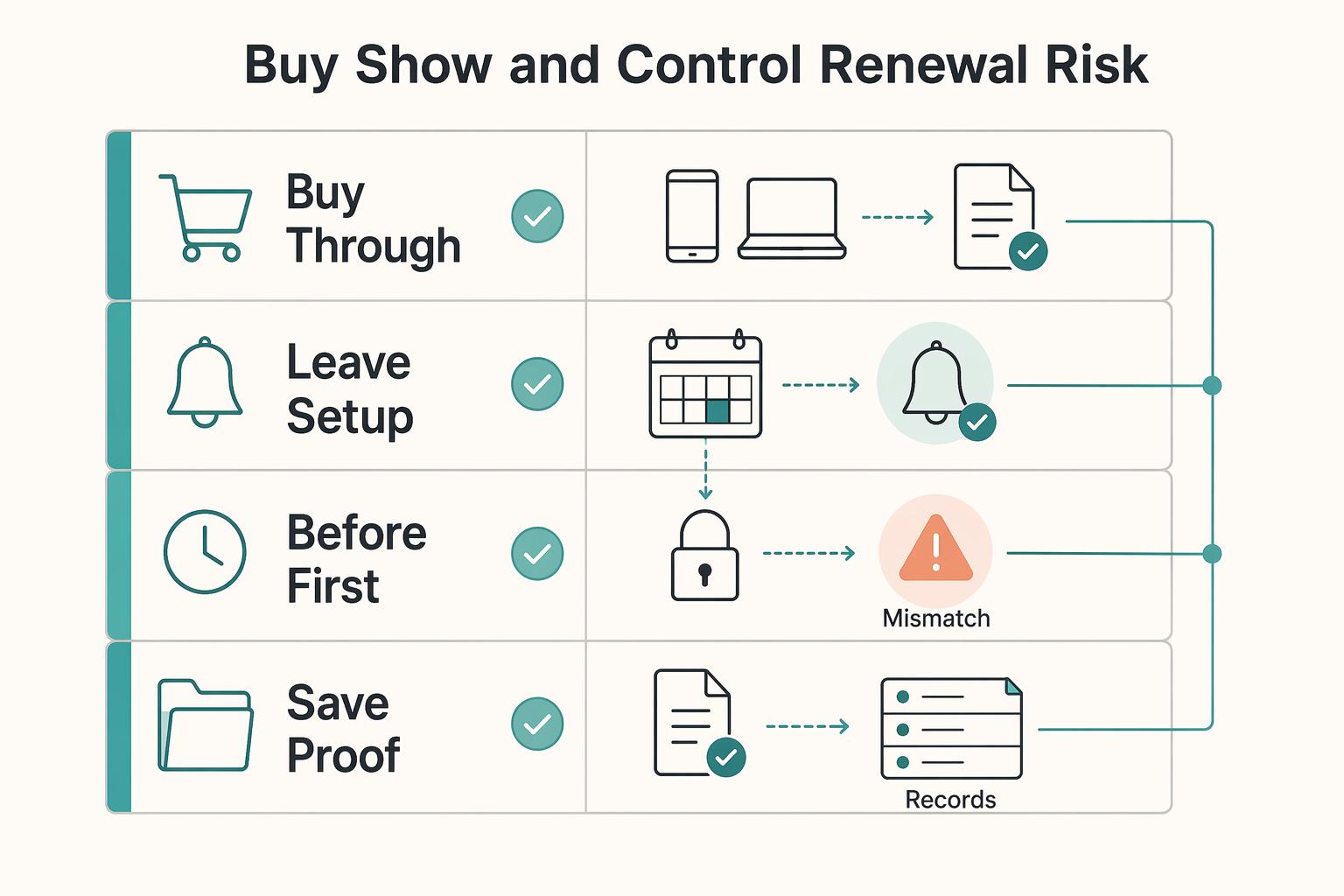
Buy, show, and control renewal risk#
Use a checklist so admin details do not create avoidable friction:
| Checkpoint | What to verify | Why it matters |
|---|---|---|
| Buying channel | Use a current provider app or website | Provider flows can differ |
| Onboarding and payment | Leave setup time for onboarding and payment variation | Reports mention issues like credit-card-only checkout and third-party ID verification |
| Inspection view | Confirm where your active digital ticket is shown before first travel | You need to know where to display it during inspection |
| Proof of purchase | Save the confirmation email, in-app receipt, invoice, or booking screenshot immediately | This helps with expense records |
| Renewal control | Verify current provider cancellation terms directly and set reminders right after purchase | Terms can vary by provider and old cutoff advice may be outdated |
- Buy through a current provider app or website; provider flows can differ.
- Leave setup time for onboarding and payment variation. Reports mention issues like credit-card-only checkout and third-party ID verification.
- Before first travel, confirm where your active digital ticket is shown during inspection in that provider flow.
- Save proof of purchase immediately: confirmation email, in-app receipt, invoice, or booking screenshot.
Renewal control is the key risk step. Terms can vary by provider, so verify the current provider cancellation cutoff directly and do not rely on old cutoff advice. Set reminders right after purchase.
We covered this in detail in The Best Day Trips from Berlin.
Part 4: From Transit to Productivity - Turning Your Commute into an Asset#
Your commute helps productivity only when you plan for variability. Use ride time for low-friction tasks, and keep deep-focus work for places where you control noise, seating, and interruptions.
Set one rule: if a task fails when you lose signal, stand for part of the ride, or reroute mid-trip, it is not a transit task. Good commute defaults are inbox triage, note review, calendar prep, and short draft edits you can pause quickly.
Choose access over map distance#
When you compare flats or coworking options, optimize for interchange access and predictable transfers, not just distance. Ringbahn access can be useful if it reduces fragile handoffs in your actual day, but treat that as a decision rule to verify, not an automatic win.
Test routes before you commit. Check your real departure windows, count transfers, and confirm at least one fallback path if a leg is delayed. Save those route checks with your housing notes so the decision is based on repeatable trips, not memory. For housing decisions, pair this with A Guide to Renting an Apartment in Berlin.
A practical caution: simple commute metrics can look precise but predict less than you might expect in real outcomes, so do not let a short listed travel time outweigh transfer quality and recovery options.
Match the mode to the task#
Do not ask which mode is "best." Ask what kind of ride your task can tolerate.
| Mode | Choose it when | Watch out for |
|---|---|---|
| U-Bahn | You need a straightforward city trip with minimal planning overhead | Frequent interruptions can break focus, so keep tasks short |
| S-Bahn | You need cross-city movement and can accept transfer dependency | One disrupted handoff can erase time savings |
| Regional rail | You have a direct segment and want fewer decision points during the ride | Missed connections can create larger recovery time |
Germany reached 94% of 2019 ridership in 2024 in one cross-country comparison, but that does not guarantee a smooth weekday on your route. Plan for consistency, not best-case timing. Route-specific corridor examples should be verified from official transport-provider records before use.
Commute setup checklist#
- Keep one offline backup: downloaded map area, saved screenshots, or a written fallback route.
- Turn on delay or disruption alerts in the transit tool you actually use, if available.
- Pre-pick 2 to 3 tasks you can start and stop in under 10 minutes.
This also supports cleaner weekly planning in Build a Public Roadmap in Notion That Keeps Client Scope Under Control.
Part 5: Run One Receipt Protocol for Every Ticket Purchase#
For expensing, start with one non-negotiable: keep a retrievable receipt at purchase time. In German bookkeeping conversations, that receipt is often called a Beleg.
Use one repeatable protocol every time so month-end review stays simple:
- Buy the ticket.
- Collect proof immediately (receipt, confirmation, or other purchase record).
- Store it in your transport folder right away.
- Label it while context is fresh.
- Reconcile it against your payment statement at month end.
Before you leave the platform or close the app, run one quick check: can you retrieve that proof again without searching multiple places?
| Purchase method | Receipt format for expensing | Retrieval reliability | Admin effort | Common failure point |
|---|---|---|---|---|
| App purchase | Digital proof (for example, in-app or email) | Higher if you save or export immediately | Lower after setup | Assuming it is saved when it is not |
| Ticket machine | Paper proof | Lower if paper is misplaced | Higher because you must scan or photo and file it | Keeping the ticket but losing the receipt record |
| Recurring pass (for example, Deutschlandticket) | Repeating monthly proof | Higher if each month is filed together | Lower after you set a routine | Mixing monthly proof with one-off rides |
Capture metadata on each receipt so accounting review is faster: purchase date, seller, amount, payment method, trip purpose, and whether it is one-off or recurring. For VAT, keep this verification-safe note in your records: "Transport VAT category and current rate pending official verification."
A practical filing pattern is enough: Transport/2026/01 January, with tags such as client-meeting, airport-transfer, local-transport, and Deutschlandticket. Keep recurring-pass proof in its own monthly subfolder to avoid duplicate entries and missing-month confusion.
You might also find this useful: Berlin Digital Nomad Guide for 2026 Relocation Decisions.
Part 6: Split Your Transit Apps by Route, Proof, and Passes#
Use a small app stack by function: route choice first, fare proof second, and subscription oversight in its own place. That keeps day-to-day travel decisions separate from month-end admin.
| App | Open it first when | Best role in your stack | Expensing and admin check | Limitation and handoff |
|---|---|---|---|---|
| BVG Jelbi | You want to complete a local trip purchase in the same flow you use most often. | Use it as a purchase option for one-off rides when you want fewer steps. | Run a test purchase and confirm where the Beleg lives, how you retrieve it later, and whether seller details are clear for reconciliation. | If route choice is still unclear, plan first in your routing app, then return to the app or account where receipt recovery is reliable. |
| Citymapper | Your first problem is choosing a route for a meeting, transfer-heavy trip, or unfamiliar start and end point. | Use it as a planning layer, then hand off purchase to your receipt-reliable app or account. | Do not treat it as your receipt archive unless you have verified the full purchase and retrieval flow yourself. | Keep planning and proof separate: once the route is set, buy where your records stay recoverable. |
| Deutschlandticket app | You already depend on a recurring Deutschlandticket and need monthly pass oversight. | Use it as your subscription-management home for recurring travel records. | Confirm where each month's confirmation appears, how you export or save it, and verify the current cutoff rule from official provider records. | Keep one-off ride purchases and recurring-pass admin in separate workflows so records do not get mixed. |
Your default stack#
For repeat commutes, open the app or account that already gives you dependable purchase or pass records. For unfamiliar trips, odd-hour travel, or multi-stop days, choose the route first, then buy in the system where proof is easiest to recover.
- Route first: open your planning app when the path is unclear.
- Proof first: purchase where receipt retrieval is consistent.
- Subscription first: manage recurring passes in the dedicated pass app, separate from one-off tickets.
If one journey combines multiple modes or providers, check immediately whether you now have multiple sellers and separate proofs to file.
If you want a deeper dive, read Can Digital Nomads Claim the Home Office Deduction?.
Conclusion: From Passenger to Operator#
Remember four things and you will make far fewer mistakes on Berlin transit: check official ticket terms before you buy, confirm any activation or validation steps before your first trip, keep your purchase records in one place, and plan to board quickly without blocking doors.
The shift is simple. Stop treating the ride, the ticket, and the admin trail as separate chores. Treat them as one connected routine. That means checking seller terms before you buy, knowing what proof of purchase you can retrieve later, and not leaving ticket decisions to the platform or bus stop. Keep confirmations and receipts together so they are easy to find if something goes wrong.
A small operator habit also makes the trip smoother. Berlin research on boarding and alighting shows that passengers standing in door areas slow the process on buses and subways, and first-door bus boarding is associated with higher boarding time per passenger. So if you are taking the bus, expect boarding to move more slowly, be ready before the vehicle arrives, and move away from the doors once you are on.
Use this checklist in your first days:
- Review official ticket terms before buying, then choose the option that fits your plan.
- Before your first trip, confirm whether any activation or validation is required.
- Store the receipt and booking confirmation in one folder.
- On buses and subways, avoid standing in door areas and move inward after boarding.
Set that up first, and the rest of your Berlin transport routine becomes much easier to run. Need the full breakdown? Read How to Find and Secure Public Speaking Gigs as a Freelancer.
Frequently Asked Questions
How much is a monthly transport ticket in Berlin?
This guide does not list a current monthly price. Check the seller's current checkout page before you buy, and avoid relying on old screenshots, articles, or forum posts.
Do I need to validate my ticket in Berlin?
Yes, if you bought a paper ticket, you need to stamp it at a yellow or red validator before you travel. If you bought a digital ticket, check the app state carefully: BVG says app tickets must be activated before the journey begins if activation did not already happen at purchase. The mistake to avoid is assuming that buying and being valid are always the same thing.
What is the best app for getting around Berlin?
BVG points riders to the BVG Fahrinfo app or BVG Jelbi app for connection search, and Jelbi can also be used to rent third-party mobility options. Problems usually start when you force one app to do everything without checking where activation happens.
Can you use a credit card on the U-Bahn in Berlin?
Do not assume one payment method works everywhere, because there is no blanket guarantee about card or wallet acceptance across all sales points. If payment certainty matters, verify accepted methods before you need the ticket. The mistake is waiting until the last minute on the platform and trying to solve payment after you should already have a valid, active ticket.
How do you get from BER airport to the city center?
Start with a connection search on the BVG site or in an app, then buy for the correct fare zone before you travel. BVG states that Zone C includes BER airport, and central Berlin uses AB, so an airport trip into central Berlin typically means ABC. The usual mistake is buying only AB because your destination is in the city, while forgetting that your trip starts in Zone C.
Is the Deutschlandticket a one-time purchase or a subscription?
This guide does not confirm current Deutschlandticket purchase terms. Verify the seller's current terms before you buy, especially if cancellation timing affects your plans. The mistake is assuming old guidance still applies.
How do I avoid buying the wrong fare zone for Berlin transport?
Check the zone first, not after you choose the route. Berlin has three fare zones, A, B, and C; AB covers central Berlin, while trips that extend to places such as Potsdam or the airport edge in Zone C require ABC. The mistake is focusing only on the vehicle type, because in Berlin transit the zone you selected controls whether the ticket is valid across the trip.
Try a related tool
Researched and edited by the Gruv editorial team. Gruv builds cross-border billing, payouts, and finance-operations software for global businesses.
Sources
- dhhs.nh.gov/sites/g/files/ehbemt476/files/documents2/nh-...trusted
- dspace.mit.edu/bitstream/handle/1721.1/158951/gruetter-grue...trusted
- eit.europa.eu/sites/default/files/guideline_of_best_practi...trusted
- eml.berkeley.edu/~train/papers/foundations.pdftrusted
- lewis.ucla.edu/wp-content/uploads/sites/2/2015/03/Pucher-19...trusted
- oecd.org/content/dam/oecd/en/publications/reports/200...trusted
- oecd.org/content/dam/oecd/en/publications/reports/198...trusted
- pmc.ncbi.nlm.nih.gov/articles/PMC9306558trusted
Educational content only. Not legal, tax, or financial advice.
Related Posts

Can Digital Nomads Claim the Home Office Deduction?
Claim the deduction only when your facts and records can carry it. With the home office deduction for digital nomads, the real decision is usually a three-way call: claim it, do not claim it, or pause and get help because your file is not ready.

The Best Debit Cards for International Travel
If reliable cash access is the priority, do not evaluate this like a perks list. Treat it like continuity planning. Give one card the everyday ATM job, fund a second card for disruptions, and decide that split before you leave.
Renting an Apartment in Berlin: Dossier First, Search Second, Contract Last
**Treat renting an apartment in Berlin as a managed process, not a scramble.** Berlin is a tight, highly contested market, but the process is more predictable than it looks if you handle it in the right order. If you do three things in sequence, you improve your odds: build your dossier first, search with a ready file second, and slow down at contract review last. Most decisions turn on clarity and trust, not just income level.