
Quick Answer
Start with a route-first execution plan for pet relocation for nomads: confirm the destination rule path, complete the right documents in order, then secure written carrier acceptance before travel. For EU entry from outside the EU, use the required animal health certificate issued within the allowed arrival window. Keep one verified packet in print and digital form, and run a final consistency check across pet details, traveler details, and itinerary before departure.
Treat the Pet Move Like a Regulated Project#
Treat this move like a regulated project, not a travel booking. Success is not just getting your pet from one place to another. It means arriving on the planned date, on a route the carrier accepts, with documents that match the destination's current rules, while protecting your pet's welfare throughout.
| Destination or system | Key requirement |
|---|---|
| Great Britain | Pets must travel on approved routes with an authorised carrier |
| EU | Animal health certificate for entry from outside the EU, issued not more than 10 days before arrival |
| U.S. dog entry or return | CDC Dog Import Form receipt is central, and the port of entry must match the one on the receipt |
If you're handling the move yourself, assign decision owners early. Usually that means you, your veterinarian, and, if relevant, a relocation company or the airline cargo desk. Use this lens from day one:
- Compliance risk: every country has its own pet entry rules, and they can change.
- Timeline dependencies: some moves need long lead times, including country-specific waiting periods and testing windows.
- Document integrity: health certificates must be legible, accurate, and complete.
- Pet welfare: routing, connection time, and handling conditions can affect outcomes as much as paperwork.
- Handoff points: vet to government endorsement, owner to carrier, carrier to border inspection.
Start with the destination government's pet import rules, backed by your USDA-accredited veterinarian for documentation. Then verify the carrier side separately with the airline, because airline procedures are not uniform. Treat that second check as a required step before booking.
The rule anchors are simple but unforgiving: Great Britain requires pets to travel on approved routes with an authorised carrier. The EU requires an animal health certificate for entry from outside the EU, issued not more than 10 days before arrival. For U.S. dog entry or return, the CDC Dog Import Form receipt is central, and the port of entry must match the one on the receipt.
Common failure modes include a mismatched form, a rabies-rule timing mistake, or carrier-side documentation or routing issues. Those failures can lead to denied boarding, denied entry, quarantine, or re-export. From there, choose the right operating model, budget for disruption, and map the compliance timeline without guessing.
For broader nomad travel planning context, see The Best Road Trips for Digital Nomads in the US.
The Strategic Decision: Should You DIY or Outsource This Project? (An ROI Analysis)#
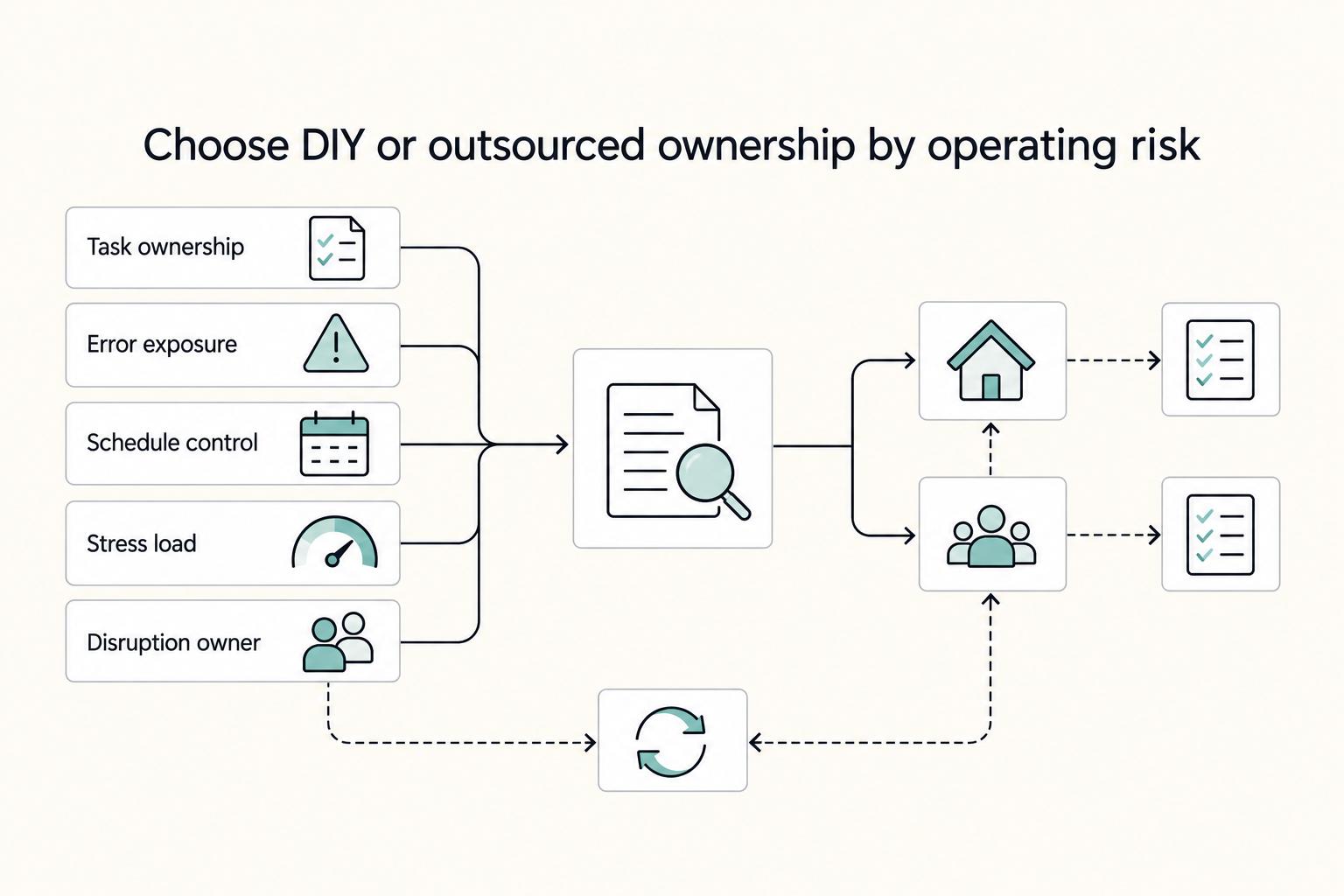
Choose the path with the lowest failure risk for your route, pet profile, and timeline, not the one that feels simpler at first. In practice, this is a shared-control decision: what you will own directly, what you will delegate, and how you will take control back if something changes.
DIY works when you can manage every step with clear visibility and fallback plans. Outsourcing is usually stronger when complexity is higher, timelines are tighter, or the consequences of a preventable process error are too costly for you to absorb alone.
| Decision factor | DIY | Relocation service |
|---|---|---|
| Ownership of tasks | You own research, document flow, booking checks, follow-ups, and escalation | Ownership is shared; the provider handles only what is explicitly in scope |
| Error exposure | You absorb mistakes and rework directly | Some operational risk shifts to the provider, but only for contracted tasks |
| Schedule control | Full day-to-day control, with full execution burden | Less direct control, potentially stronger coordination support |
| Stress load | Higher, especially during handoffs and change events | Lower when status updates, owners, and escalation paths are explicit |
| Who absorbs disruption | You handle replanning and knock-on effects | Provider may absorb part of disruption handling if the contract says so |
ROI is broader than price alone. Compare your time cost (your hourly value x your estimated project hours), then weigh documentation burden, consequence severity, and operational resilience.
Risk transfer means moving specific responsibilities to the provider in writing, not assuming they are covered. That can include coordination tasks, escalation support, disruption handling, and insurance-related steps where offered. If an item is not documented in scope, treat it as your responsibility.
How to choose fast#
Treat this move as a custom project, not a reusable template. If you cannot map ownership, handoffs, and fallback for each step, outsourcing may be the safer choice.
| Before signing | What to confirm |
|---|---|
| Route-specific experience | Your exact route and pet profile |
| Written scope | Clear inclusions and exclusions |
| Named owners | A documented handoff plan |
| Auditable process records | Document versions, approvals, and booking/status evidence |
Get those four points in writing before you sign.
Prioritize transparency and fallback over promises. If ownership, escalation, and change-handling are vague, you are taking on ambiguity instead of resilience.
You might also find this useful: The Best International Moving Companies for Digital Nomads.
The Financial & Risk Mitigation Plan: How to Budget for Success and Prepare for Failure#
Budget for failure modes, not just expected fees. Use this sequence: build your baseline budget, stress-test it against disruption, then lock a protected contingency reserve before you book your own travel.
Your baseline must cover both destination entry rules and carrier live-animal rules. Meeting only one side is not enough. Build line items for the accredited veterinarian workflow, the correct certificate, government endorsement where required, the airline live-animal desk process, crate compliance, and destination customs clearance support when your route needs it.
| Budget bucket | Line item | Planning note |
|---|---|---|
| Mandatory compliance | Accredited veterinarian exam, required vaccinations/tests, export health certificate or EU animal health certificate, government endorsement where required | Confirm the current route-specific cost range with official destination-country sources. For EU entry, the EU animal health certificate must be issued not more than 10 days before arrival. |
| Mandatory transport | Airline pet fee or cargo booking, live-animal desk registration, compliant crate | Confirm the current route- and carrier-specific cost range with the carrier. Capacity is limited on some carriers, and registration lead times can differ (for example, at least 48 hours or at least 72 hours, depending on carrier workflow). |
| Variable by route | Import permit, customs inspection, customs broker or clearance support, quarantine-related charges where applicable | Confirm the current route-specific cost range with official destination-country sources. Customs and quarantine costs can be separate charges, and first-time importers may benefit from licensed customs broker support. |
| Contingency reserve | Rebooking, document reissue, extra boarding, emergency vet care, unexpected clearance or quarantine costs | Keep this reserve ring-fenced from flights and housing. Size it to your route risk and timeline. |
Before you finalize bookings, build a simple risk register:
| Risk | Trigger | Impact | Early warning signal | Owner | Mitigation |
|---|---|---|---|---|---|
| Denial of entry | Wrong certificate format, missing required endorsement, or missed document timing window | Refused entry; return to origin can be required in some jurisdictions | Conflicting rule summaries, unresolved document version changes, no final written checks | You (unless provider scope explicitly assigns this) | Re-verify destination rules from the official government source close to departure and complete a full document cross-check with vet, airline, and any clearance support |
| Quarantine | Incomplete compliance or arrival inspection concern | Separation and owner-paid costs; some destinations can impose long quarantine periods | Pending lab/permit items, unclear route-specific controls, no confirmed arrival process | You + destination-side support (if engaged) | Confirm route-specific quarantine pathways early; if your route has special import pathways, lock any required care-facility or quarantine reservations before travel |
| In-transit health event | Delay, missed connection, or stress event during transport | Urgent treatment, delayed clearance, rebooking and boarding costs | Long layovers, schedule changes, no named pickup contact | You + arrival-side contact | Keep a 24/7 emergency vet contact near arrival, confirm pickup authority, and document the escalation chain |
Before departure, run this verification checklist and assign sign-off:
| Item | Who verifies | What must be confirmed |
|---|---|---|
| Destination import requirements | You | Current rule set from the official government source for your exact route and pet type |
| Health certificate package | Accredited veterinarian | Correct certificate format, complete fields, and valid timing window |
| Government endorsement (if required) | Endorsing authority | Endorsement completed and document set accepted |
| Airline live-animal acceptance | Airline live-animal desk | Booking acceptance, deadline compliance, and crate compliance |
If any critical item is still only verbal the day before travel, escalate immediately: call the airline live-animal desk, your vet clinic, and destination clearance support or provider contacts in sequence, log each action and owner, and do not assume the issue will resolve on its own. Related: Digital Nomad Pre-Travel Checklist for Long-Stay Moves.
The Global Compliance Project Plan: Your 6-Month Countdown to a Seamless Move#
Treat this as a sequence, not a fixed calendar: verify the rule path first, then complete documents in order, then lock airline acceptance, then finalize arrival handoff.
For U.S.-bound dogs, the requirements cited from August 1, 2024 are split by origin risk path, so your first step is always to confirm the current rules on the official destination authority site before you book appointments or assume a document set.
Start with the rule path, then execute in sequence#
| U.S. entry scenario | Required items | Notes |
|---|---|---|
| Low-risk or rabies-free path | CDC dog import form | Dog must be at least 6 months old; the form is valid for 6 months and reusable during that period |
| High-risk scenarios with dogs vaccinated abroad | Foreign rabies certification; rabies serology titer report from a CDC-approved lab; recent photo showing the dog's face and body | Applies to dogs vaccinated abroad |
| Titer report unavailable | Dog must be quarantined and tested at a CDC-registered animal care facility | Reservation must be made before arrival |
- Verify the current destination rules on the official government site.
- Confirm which entry path applies to your dog.
- Confirm the vet and lab steps required for that exact path.
- Complete documents in sequence, including any government endorsement only if your route requires it.
- Get written airline acceptance for the dog and crate.
- Hand off the final arrival packet and pickup or escalation contacts.
For U.S. entry, a low-risk or rabies-free path may require only the CDC dog import form, so completing it early helps reduce delay risk. The same source states that the form is valid for 6 months and reusable during that period. It also states that for this path a rabies vaccination certificate or USDA health certificate is no longer needed, and that the dog must be at least 6 months old.
For high-risk scenarios with dogs vaccinated abroad, the required set includes foreign rabies certification, a rabies serology titer report from a CDC-approved lab, and a recent photo showing the dog's face and body. If the titer report is unavailable, the dog must be quarantined and tested at a CDC-registered animal care facility, and the reservation must be made before arrival.
Phase checklist (keep this live)#
| Phase | Task owner | Required document | Verification source | Status | Failure impact |
|---|---|---|---|---|---|
| Rule-path verification | You | Path decision record (low-risk/rabies-free vs high-risk) | Official destination government site | Not started / Verified; confirm current lead time with the official destination source | Wrong path can invalidate downstream paperwork |
| Vet/lab sequence | You + accredited veterinarian | CDC dog import form and any path-specific vet/lab items | Official rule page + written vet confirmation | Pending / Complete; confirm current lead time with the official rule page and your vet | Missing or mis-sequenced items can trigger entry delay or quarantine handling |
| Government step (if required) | You or provider | Government endorsement documents (route-dependent) | Official authority instructions | Pending / Complete; confirm current lead time with the official authority | Border or carrier may reject packet |
| Airline + arrival handoff | You + airline + arrival contact | Airline acceptance confirmation, document packet copies, pickup/escalation sheet, CDC facility reservation if fallback applies | Airline written confirmation + arrival contact acknowledgment | Pending / Complete; confirm current lead time with the carrier and arrival contact | Handoff failure at airport and delayed clearance |
Travel-week controls#
Confirm the airline's current live-animal check-in, crate, and labeling instructions in writing, then make sure your dog is comfortable with the crate before departure. Prepare three identical document sets: one for airline handoff, one digital backup, and one for the arrival contact. Keep an escalation list ready with the airline animal desk, your vet, endorsement contact (if used), arrival contact, and the CDC-registered facility if your route depends on that fallback.
If you want a deeper dive, read our digital nomad visa index for 50+ countries.
Focus on Execution Through Verification Before Departure#
Now focus on execution through verification, not more research. Use your compliance checklist, document packet, budget buffer, carrier booking, and arrival-day logistics as one connected system: if one item changes, recheck the rest.
Keep one clean packet in print and digital form, then review it against the latest official source and your confirmed itinerary before departure.
Your final execution sequence:
- Confirm current requirements from the official destination source and your carrier.
- Recheck paperwork consistency across traveler details, pet details, and route details.
- Confirm transport logistics, including booking status, handoff points, and arrival pickup.
- Prepare emergency contacts for your veterinarian, carrier, lodging, and local backup support.
- Run one full pre-departure review of the entire plan.
If requirements change, instructions conflict, or any document mismatch appears, pause and escalate immediately to a relocation service or your veterinarian before you proceed. You stay in control by verifying each step and keeping contingencies ready.
For a step-by-step walkthrough, see A Guide to Travel Vaccinations for Digital Nomads.
Frequently Asked Questions
What is a realistic budget for pet relocation for nomads?
Start with your exact route, not a blog average. Total cost changes by origin country, destination country, pet type, crate size, and carrier policy, and airline requirements can differ from destination-country rules. Build your estimate with current quotes, and verify each route-specific range against carrier, destination-country, and provider records before you use it. | Area | Usually fixed by rule or policy | Usually variable | Often overlooked | |---|---|---|---| | Destination compliance | Whether your route needs a country-specific health certificate, permit, test, or form | Which documents apply based on origin, species, and destination | There is no single health certificate valid for all countries | | Airline acceptance | Carrier pet category, route rules, and crate standards under the IATA Live Animals Regulations | Space availability and documentation checks | Capacity can be limited and some airlines manage acceptance first come, first served | | Timing | Minimum wait periods tied to vaccinations or treatments on some routes | Appointment lead times and airport handling windows | Rechecking the airline directly before departure, even when the government side is complete |
How long should you plan for?
Use the official destination rule as your anchor, then work backward with your veterinarian and airline. APHIS says prep can take a few weeks to many months, and the CDC Yellow Book notes that some countries, including Australia, can require up to 6 months of planning. If you are moving a dog to Great Britain, you also need an approved route. For Great Britain dog entry, you also need at least 21 full days after the first rabies vaccination, plus a tapeworm treatment window of 24 hours to 5 days before arrival.
Is there one health certificate or pet passport that works everywhere?
No. USDA APHIS states there is not one standard health certificate, and each country sets requirements by animal type. If you are entering or moving within parts of Europe, an EU pet passport can stay valid for life as long as the health information remains in date, including rabies vaccination. It is not a universal substitute for destination-specific paperwork.
What matters most for U.S. dog entry right now?
Start with the CDC Dog Import Form, because it is required for each dog. The rule path depends on where the dog was vaccinated and what countries the dog has been in during the previous 6 months, so do not assume another dog's paperwork applies to yours. The CDC updated the form web system on February 5, 2026, so use the current version.
When is DIY realistic, and when should you get specialist help?
DIY is realistic when you have one pet, one straightforward route, enough lead time, and you are willing to verify everything with the destination authority, your veterinarian, and the airline yourself. Get specialist help if your route has tight timing, approved-routing requirements like Great Britain, country-specific testing or permits, or any high-risk consequence if a document is wrong. A common failure mode is assuming government approval is enough, then learning at check-in that the carrier has separate boarding rules.
What does "risk transfer" from a relocation service actually mean?
Treat that phrase as contract scope, not reassurance. You want the agreement to say exactly who handles document preparation, airline coordination, crate compliance checks against current IATA LAR standards, booking changes, and day-of-travel escalation. You also want exclusions spelled out in writing. If cancellation costs, quarantine fees, rebooking, or extra vet visits are not listed, do not assume they are covered.
How do you vet a relocation provider without guessing?
Use IPATA membership as a starting filter, not the finish line. Active members must agree to IPATA's Code of Ethics and keep licenses, permits, and insurance current. You should still ask for recent experience on your exact route, the last date they handled it, written exclusions, cancellation terms, and what happens if airline acceptance fails late. If they cannot show a current route checklist or clarify what they do not cover, move on.
How do you secure pet-friendly housing without getting burned?
Assume pet approval is property-level, not platform-level. On Airbnb, you should not bring a pet into a listing marked "no pets" in the house rules, while service animals are treated differently and are not categorized as pets on-platform. Before you pay, get written confirmation covering animal type, size, breed limits, number of pets, fees, cleaning terms, and any building documents you must provide at check-in.
Try a related tool
Researched and edited by the Gruv editorial team. Gruv builds cross-border billing, payouts, and finance-operations software for global businesses.
Sources
- cbp.gov/border-security/protecting-agriculture/bring...trusted
- cdc.gov/yellow-book/hcp/family-travel/traveling-with...trusted
- cdc.gov/importation/dogs/index.htmltrusted
- direct.aphis.usda.gov/pet-travel/pet-travel-process-overviewtrusted
- direct.aphis.usda.gov/pet-travel/accredited-veterinarians/faqstrusted
- dlcp.dc.gov/sites/default/files/dc/sites/DLCP/publicatio...trusted
- ecfr.gov/current/title-9/chapter-I/subchapter-F/part-130trusted
- europa.eu/youreurope/citizens/travel/carry/pets-and-ot...trusted
Educational content only. Not legal, tax, or financial advice.
Related Posts

The 2026 Global Digital Nomad Visa Index for 50+ Countries
Start with legal fit, not lifestyle filters. The practical order is simple: choose a route you can actually document, then decide where you want to live. That single change cuts a lot of wasted comparison work and stops you from falling in love with places that were never a real filing option.

Digital Nomad Pre-Travel Checklist for Long-Stay Moves
Set your departure dates first. Long-term travel planning breaks down when timing stays vague. Vague timing usually turns into rushed paperwork, rushed bookings, or unresolved home obligations.

The Best International Moving Companies for Digital Nomads
Treat this as an execution decision, not a brand popularity contest. You are not picking from a generic pool of movers. You are testing whether a provider can explain your route, show who owns the risky steps, and put that in writing before you commit.