
Quick Answer
Choose one primary route first: HSBC if local bank credentials matter for client onboarding, or Wise if FX transparency and multi-currency handling are the bigger pressure. Confirm channel eligibility in the live flow, because remote opening can still require the HSBC HK App, GPS permission, or an in-person branch step. Prepare photo ID, proof of address, and tax-residence details with matching name fields, then keep a backup route ready. Before sending major invoices, run a low-risk inbound test and verify posting.
Why route and eligibility matter before you apply#
Opening a Hong Kong account as a foreigner is possible in some cases, but success usually comes down to eligibility and routing, not form filling. Access, document checks, and whether you can start remotely all depend on the provider you choose.
If your cash flow depends on invoice timing, this matters early. Approval or setup delays can disrupt when clients pay you, so the practical first move is to choose the right route before you apply.
The language around this can blur expectations. Some sources use "foreigner" and "non-resident" loosely, while one advisory source says they are not legally identical and defines a non-resident as someone who does not live in Hong Kong. So there is no single universal rule in blog-level guidance. One guide says opening can be possible if you meet eligibility criteria, while another says a non-resident cannot open a personal Hong Kong bank account. In practice, provider policy is the real gate, and for most people the choice comes down to this:
- Traditional bank route: usually stricter requirements and more due diligence checks
- Online non-bank route: often faster and more flexible onboarding
Treat remote onboarding as conditional, not guaranteed. Many banks still require an in-person branch visit even if you start from abroad, so confirm that before you submit anything.
Your core document pack is usually straightforward: a valid passport copy and proof of residential address, with one guide noting at least six months of passport validity remaining. Delays usually come from follow-up checks, because due diligence varies by institution and risk profile.
This guide helps you choose one workable route, prepare a clean document pack, and set a fallback before client payments depend on it. By the end, you will have a clear decision path, a checklist, and a submission sequence you can reuse.
How non-resident banking works in Hong Kong#
Non-resident access is possible in Hong Kong, but it is provider-specific and gated by eligibility. In practice, your first job is to confirm that a provider will consider your profile before you spend time on forms.
HSBC, for example, says there are different account-opening routes subject to eligibility, and criteria can vary based on where you live. Start with a simple yes-or-no check on residence, age, and document type before you compare features.
Eligibility is the first filter#
Common gates are identity verification and document fit. Providers may ask for passport-based verification, proof of address, and additional documents. On some HSBC app routes, GPS access may be required, and some exit-entry permit applicants may need to upload an exit-entry record.
Remote onboarding is also conditional. Even when online opening is available, many banks may still require an in-person branch visit. If eligibility is unclear for your residence or document type, switch providers early rather than forcing a weak application. HSBC also warns applicants not to use intermediaries to open an account.
Regulatory context helps with risk checks#
Regulatory context helps explain why checks can be strict, but it does not predict approval. The HKMA describes itself as Hong Kong's central banking institution and says its role includes promoting the stability and integrity of the financial system. That explains the environment, but your outcome still depends on the provider's own policy checks.
Use this order#
- Eligibility first: residence, age, ID type, proof of address
- Onboarding channel second: app steps, possible GPS checks, branch-visit requirements, extra uploads
- Account utility third: whether the account fits your day-to-day payment and cash-holding needs
For more context, see Hong Kong's Territorial Tax System: Is It Still a Viable Option?.
Pick the right account route for your cashflow pattern#
Choose your route based on the risk most likely to hit your cash flow first: client acceptance risk or FX cost risk. If client trust in a local Hong Kong banking relationship is the main blocker, start by checking HSBC Hong Kong first. If repeated conversion, cross-border collections, and fee visibility matter more, test Wise first.
Choose by use case, not brand familiarity. A bank route and a non-bank route solve different problems, and a Wise account is not the same thing as a Hong Kong licensed bank account.
Match the route to your real pain point#
For client collections, ask a direct question: will clients delay payment, push back on vendor setup, or require local bank details? If yes, lean toward HSBC Hong Kong first. Then confirm current eligibility and onboarding for your residence and ID type before you invest time.
If frequent FX conversion is the bigger issue, Wise gives you clearer pricing signals upfront. Wise says it uses the live mid-market rate with a separate upfront fee, and it publishes pricing by feature. That matters when you invoice in one currency, convert in another, and pay out in a third.
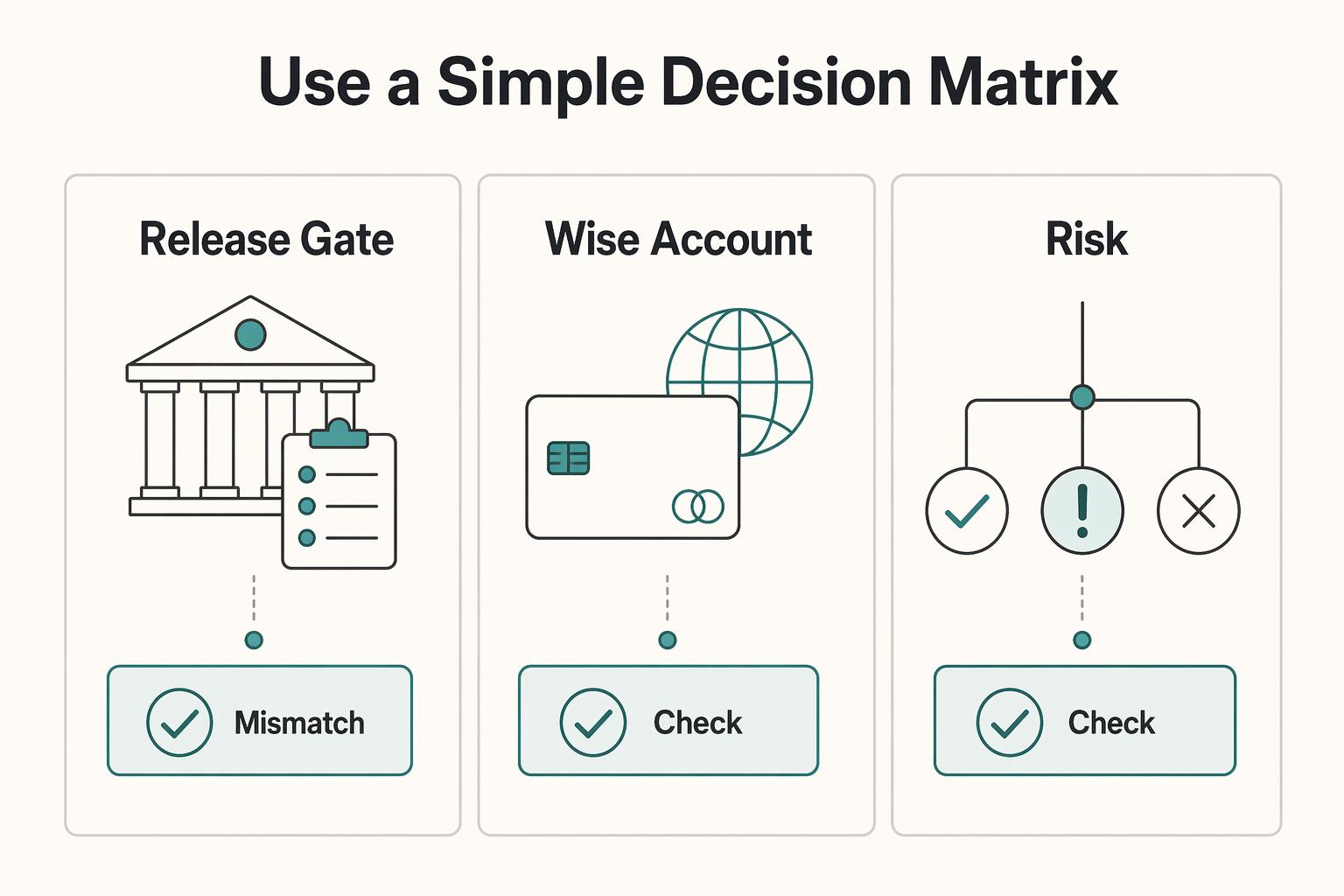
Use a simple decision matrix#
| Route | Onboarding path | Document burden | Remote viability | Conversion control | Operational failure points |
|---|---|---|---|---|---|
| HSBC Hong Kong first | Unknown until you verify the current HSBC route for your residence and ID type | Unknown until confirmed with the bank | Unknown until confirmed; do not assume remote approval | Not established in this section | Committing before confirming eligibility, channel, and fallback |
| Wise account first | Check current Wise requirements directly | Check current Wise requirements directly | Must be checked for your country; do not infer from US pricing pages | Wise says live mid-market rate plus an upfront fee, with feature-level pricing | Costs can drift if you ignore feature-level fees, USD wire/SWIFT receive fees, or ATM usage costs |
| Parallel fallback route | Start the primary route, keep a second option ready if timing is critical | Higher admin load across two providers | Depends on each provider's current rules | Separates collection risk from FX risk | More moving parts, but less exposure if one route stalls |
A common mistake is comparing features before confirming which onboarding path you can actually complete. If one delayed payment would hurt runway, pick the route with fewer unknowns you can verify now and keep a fallback active.
What the Wise side lets you verify now#
Wise gives you a few concrete checkpoints before you commit. It says receiving account details are available in 24 currencies. It also says sending fees start from 0.57%, and transfer-fee discounts start at 25,000 USD monthly volume, with the count resetting on the first of each month.
| Feature | Available detail |
|---|---|
| Receiving account details | 24 currencies |
| Sending fees | Start from 0.57% |
| Transfer-fee discounts | Start at 25,000 USD monthly volume; count resets on the first of each month |
| ATM withdrawals | 2 free withdrawals each month up to 100 USD total; above that, 2% applies; after the two free withdrawals, 1.5 USD per withdrawal |
| USD wire and SWIFT receiving | 6.11 USD fee |
Use feature-level checks for sending, receiving, converting, and card costs, because Wise prices these separately. Reviewing Wise's standardized fee format is a practical way to validate your cost model before choosing a route.
Two tradeoffs matter here. First, these pricing pages are scoped to United States residents, so re-check the version for your own residence before treating any figure as final. Second, ATM-heavy usage can get expensive. Wise says 2 free withdrawals each month apply only up to 100 USD total. Above that, 2% applies. After the two free withdrawals, there is a 1.5 USD fee per withdrawal. Wise also lists a 6.11 USD fee for receiving USD wire and SWIFT payments, so model that if clients pay that way.
A practical rule#
If your priority is looking bank-native to Hong Kong clients, prioritize the bank route and verify HSBC eligibility early. If your bigger exposure is conversion and cross-border movement costs, start with Wise and price the exact features you will use. If runway is tight, run one primary route with one clear fallback before the first invoice goes out.
Decide whether to open remotely or in person#
Treat remote onboarding as a first attempt, not a promised shortcut. Channel access is gated by eligibility, and your ID type plus physical location can change what is available.
Remote access is conditional#
HSBC says account-opening channels differ and are subject to eligibility, so confirm the channel before you give clients payment instructions. If you use HSBC's online route, you need the HSBC HK App. In some app flows, HSBC also asks applicants in Hong Kong to allow GPS access, so the process is not location-agnostic even when it starts remotely.
Your credential changes the route#
| Credential route | What the app path indicates | Key constraints to verify now |
|---|---|---|
| HKID / overseas passport | HSBC shows an app-based route for eligible holders | Eligibility conditions apply, including age criteria (at least 18, with one route shown for 18 to 75) |
| EEP | HSBC shows a separate app-based route | EEP must be valid for at least 6 months; you must be physically in mainland China or Hong Kong when submitting; Hong Kong submissions include uploading an exit-entry record; mainland China submissions require Hong Kong app activation within 90 days |
Treat these as routing rules, not edge cases. In practice, "remote" may still depend on where you are and which credential you hold.
Pre-plan the in-person fallback#
Set your fallback before you start the app flow: identify the in-person channel, prepare your ID and proof of address pack, and decide on an interim client-payment plan if onboarding stalls. Also plan for narrower remote options in some US-linked profiles, since online opening can be unavailable in certain cases. If any channel rule is unclear, book the in-person fallback first.
Build the document pack before you apply#
A clean document pack does more than get you through the first upload screen. Build it for full customer due diligence (CDD), because account-opening time can increase when information or documents are insufficient, and a bank may request additional or alternative documents case by case.
Start with the core documents#
Start with a base pack that includes:
| Item | Requirement | Notes |
|---|---|---|
| Photo ID | Identity proof bearing your photograph | Keep originals accessible in case a provider asks to see them |
| Residential address proof | From the last 3 months and shows your name and address | Accepted issuers include a government authority, public utility company, or regulated bank |
| Tax residence details | Jurisdiction of residence and TIN, or functional equivalent | Part of the base pack |
| Original documents | BOCHK states it requires original documents for account opening | HSBC's integrated account form asks applicants to bring originals and copies of identification documents |
At minimum, keep photo ID, residential address proof, and tax residence details ready.
For address proof, use a document from the last 3 months. It should show your name and address and come from an accepted issuer, such as a government authority, public utility company, or regulated bank.
Treat this as a strong minimum, not a universal checklist for every provider. BOCHK states it requires original documents for account opening. HSBC's integrated account form also asks applicants to bring originals and copies of identification documents. Keep originals accessible in case a provider asks to see them.
Make every detail line up#
Most avoidable review loops start with small inconsistencies. Before you submit, check that your ID, address proof, and tax details match on:
- Name format
- Address spelling and unit formatting
- Country naming
BOCHK also states that, for new securities service applications, address proof must bear the same name shown on the identity proof document, so fix mismatches before you apply.
Build a submission set and a recovery set#
Build two working sets before you start. This is your own method, not a bank requirement, but it makes follow-ups much easier.
- Submission-ready: primary ID, one recent address proof, tax residence/TIN details, and a short note on expected account use
- Recovery: replacement address proof from another accepted issuer, spare ID copies, and alternate supporting documents
BOCHK may ask for expected number of transactions and transaction amount, so prepare a simple estimate in advance.
Assume a follow-up and set your response SLA#
Plan for a possible follow-up request. BOCHK is explicit that extra or alternative documents may be requested, so set a response SLA for yourself so the application does not stall while you look for replacements.
If your address proof is older than 3 months, unclear, or does not match the name on your ID where required, fix it before you apply. Clean documents can still face follow-up requests, but they do reduce avoidable delays. For a similar process, see Open a French Bank Account as a Foreigner Without Payment Delays.
Compare realistic account options foreigners actually use#
Choose on operating fit, not brand familiarity. In this evidence pack, Wise is the only option with clearly visible pricing and FX mechanics. For the listed Hong Kong bank options, key decision details stay unknown until each provider confirms them.
That matters because traditional banks can be stricter, fintech options may be faster and more flexible, and due diligence intensity can vary by bank and risk profile. Treat each option as a live eligibility check, not a brand-level assumption.
| Criteria | HSBC One account | Citibank Citi Plus account | Bank of China HKD Current Account | Standard Chartered HKD Current Account | Wise account | Unknown until confirmed |
|---|---|---|---|---|---|---|
| Account type fit | Traditional bank route. | Traditional bank route. | Traditional bank current-account route. | Traditional bank current-account route. | Route with pay-per-use pricing (no subscription plans stated). | Whether you are eligible for this exact account type. |
| Likely onboarding channel | Confirm directly. | Confirm directly. | Confirm directly. | Confirm directly. | Confirm directly. | Whether your application is currently remote, in-person, or mixed. |
| FX handling style | Verify directly. | Verify directly. | Verify directly. | Verify directly. | Wise says it uses the live mid-market rate; US-resident pricing pages shown here list sending fees from 0.57% (currency-dependent) and say discounts start above 25,000 USD monthly volume (or equivalent). | Which pricing page and fee document apply to your location and account type. |
| Where document friction appears | Proof of address and due-diligence follow-ups can apply. | Same pattern. | Same pattern. | Same pattern. | Eligibility and account-type matching still matter, including which features and fees apply to your version. | Whether your proof-of-address document format is accepted for this specific product flow. |
| Scenario fit | Consider if you specifically want a traditional bank relationship. | Similar bank-first use case. | Similar bank-first use case. | Similar bank-first use case. | Useful when you want transparent FX and fee disclosures, subject to live eligibility. | Current processing times and approval timelines by provider and location. |
Before you commit to any route, confirm four live points for the exact product name. Check account-type eligibility, proof-of-address acceptance, onboarding channel, and the fee document that applies to your residence and account type.
For Wise specifically, keep the pricing context straight. The figures shown are explicitly scoped to US residents, so confirm your own local version before relying on them.
Avoid the red flags that trigger review holds or rejection#
Much of the friction shows up during onboarding execution, not incorporation alone. Approval is driven by each bank's internal risk and compliance review, and tighter AML scrutiny means more detailed due diligence, complex KYC checks, and sometimes longer timelines.
Submit through the provider's official channel and keep one clean document trail. Third-party help does not automatically cause rejection, but extra handoffs can create version drift and follow-up confusion once verification starts.
Keep every identity detail aligned#
Inconsistencies can lead to extra review. Make sure your passport name, address proof, application form, and supporting records match as closely as possible, then do a line-by-line check before submission.
Verify your legal name, date of birth, nationality, residential address, and document expiry dates across all files. Validate proof-of-address requirements early, and keep a replacement document ready if one format is not accepted.
Give a narrower, provable first use case#
Give a clear, provable first-use story rather than a broad "everything account" story. Keep your intended activity consistent and supported by your documents so KYC follow-ups stay focused.
If you apply as a company or small team, prepare documents that support ownership structure, business plan, source of funds, and certified personal ID for directors or shareholders if requested. Incomplete paperwork is an explicit rejection risk, and offshore-entity applications can face intense scrutiny.
Plan your recovery by failure type#
Set a recovery path before you apply so a rejection does not stall you.
| Failure type | What it usually means | Your next move |
|---|---|---|
| Documentation gap | Paperwork is incomplete or does not satisfy source-of-funds or identity checks | Resubmit a complete, corrected set with clearer supporting documents |
| Provider-policy mismatch | Your profile or intended activity does not fit that provider's onboarding standards or risk appetite | Confirm product and provider fit before reapplying |
| Channel mismatch | You planned remote onboarding, but the provider requires in-person completion or extra steps | Switch to the in-person fallback instead of waiting on a stalled remote case |
Some traditional banks may still require in-person completion, so remote-only planning can fail even when documents are strong. Keep the submission direct, the data consistent, and the first use case narrow enough to verify.
Set up your get paid system right after approval#
Approval is only the start. The real job is to set up payment instructions so clients can pay you without back-and-forth. As soon as the account is ready for live use, add your approved receiving details to your invoice template, client onboarding message, and internal payment record.
Lock in one receiving instruction set#
Use one controlled instruction set per client currency. Avoid ad hoc messages like "I'll send details later." Version drift across emails, chats, and old templates can create avoidable payment errors.
If you are using HSBC Hong Kong, confirm the account is fully usable before routing invoices. For the mainland China EEP route, HSBC says activation in Hong Kong via the HSBC HK app is required within 90 days, and no branch visit is required. If activation or first-login steps are still pending, hold client-facing instructions until that is complete.
Before sharing details, run one final line-by-line check on the client-facing template. Account name, currency, and transfer method should match your provider app or portal.
Split receiving, conversion, and payout into separate decisions#
Do not treat this as one bundled process. Receive first, then decide whether to convert, then decide when and where to pay out. This can reduce accidental fee leakage and give you more control over timing.
Wise supports this setup because pricing is feature-based and states you only pay for what you use, with no subscription plan. Wise also states it uses the mid-market rate for conversion. That does not mean it is always cheaper, but it does give you a cleaner basis for comparing conversion only when conversion is actually needed.
For multi-currency inflows, avoid auto-converting by default. Wise offers receiving account details in 24 currencies, so keeping funds in the original currency can make sense when you expect same-currency payouts soon.
Decide where balances should sit#
Where you keep balances should follow the job. Keep funds in a Wise balance when you need currency flexibility or want to choose FX timing later. Move funds into your Hong Kong bank balance when the money has become operating cash for local spend and routine payouts.
Also check the receiving rail, not just FX. Wise separates domestic non-Swift or non-wire receiving from Swift or wire receiving. Fixed Swift or wire receiving fees are listed for some routes, for example 6.11 USD for USD, 2.16 GBP for GBP, and 2.39 EUR for EUR. The better landing path can change by rail and currency.
Add monthly controls before volume grows#
Put a short monthly control cycle in place early, before payment volume scales.
| Control | What to check | Why it matters |
|---|---|---|
| Settlement status | Invoices marked paid by clients but not yet credited | Flags wrong details, missing references, or held payments quickly |
| Failed transfer log | Date, amount, payer, currency, method, failure reason, correction sent | Prevents repeated failures on the same client or route |
| Fee leakage review | Receiving fees, conversion charges, payout costs by currency and route | Shows where margin is eroding quietly |
Track cash access separately if you use the Wise card. Wise lists 2 free withdrawals with a 100 USD monthly amount cap. Then 2% applies over 100 USD, and there is a 1.5 USD fee per withdrawal after the first 2. This is a recurring cost worth reviewing every month.
Verify rules that change by provider and program#
Do not assume one source settles the rules. For any Hong Kong account-opening plan as a foreigner, treat regulator guidance, product pages, and live application flows as separate layers, then verify anything that affects approval or day-to-day use.
DPS context helps you assess institution-level risk, but it does not answer account-level eligibility. DPS was established in 2006 to protect small depositors and support banking stability. Use that as safety-net context, not proof that your exact account type, onboarding channel, or profile will be accepted.
A common failure point is assuming remote onboarding will work. Before you rely on a no-visit route, check whether your application jurisdiction appears on the SFC list of eligible jurisdictions for remote onboarding of overseas individual clients. Then confirm your chosen provider supports that channel for your account type. If a route appears in marketing or an app entry point, treat it as unverified until the institution confirms your country, document set, and account variant are currently eligible.
Keep a verification register#
A simple verification register keeps what you know separate from what you are assuming. Mark each operating assumption in one of these buckets:
- Verified: confirmed in the provider's current application flow, written support reply, or official eligibility page
- Unverified: mentioned in marketing copy, forum posts, or third-party guides, but not confirmed by the institution
- Unknown: depends on compliance review, internal risk assessment, or post-submission checks
This prevents a costly mistake: treating "can apply" as "will be approved." Different provider types use different onboarding standards and risk appetites, and approval can still change after compliance review. One industry guide warns that some non-resident cases may face in-person interview requests or longer compliance checks, so keep fallback timing and cash-access plans separate from assumptions until the provider confirms them.
Use this first month checklist to reduce delays and fee leakage#
Once you have chosen a route, use the first month to prove the setup before large receivables depend on it. Start with clean identity and address evidence, then test payments in controlled steps.
| Week | Focus | Key checks |
|---|---|---|
| Week 1 | Submit through one provider's real onboarding channel | Required uploads include valid ID plus proof of residence; one provider says the application takes 15 to 20 minutes |
| Week 2 | Run one low-risk inbound payment | Confirm beneficiary details, inbound instructions, and posting behavior; keep invoice, sender confirmation, and posted-transaction proof |
| Week 3 | Set written conversion rules and a transfer-hold fallback | Define when you hold funds as received and when you convert; keep a fresh proof-of-address document ready if needed |
| Week 4 | Write a repeatable operating note | Include the onboarding channel, accepted ID and proof-of-address documents, beneficiary details, conversion rule by currency, and fallback steps for identity-verification holds |
Week 1. Submit through one onboarding channel with documents ready#
Submit through one provider's real onboarding channel with documents prepared in advance. In one Hong Kong onboarding flow, required uploads include valid ID plus proof of residence.
For proof of residence, use a document that shows your full name, current home address, and date. One provider states it must be issued within 3 months of application. Examples listed there include a recent utility bill, bank statement, or home mortgage document.
Match identity data exactly to your uploaded records. Enter your full legal name exactly as shown on your passport or ID, and keep address formatting consistent across form fields and documents to reduce avoidable KYC friction.
Apply when you can complete the process in one sitting. One provider says the application takes 15 to 20 minutes and warns that if the session goes idle before credentials are created, you may need to restart with a different email address.
Week 2. Run one low-risk inbound payment first#
Before routing major receivables, run one low-risk inbound payment. The goal is to confirm beneficiary details, inbound instructions, and posting behavior with minimal downside.
Keep a simple evidence pack for that first inbound: invoice, sender confirmation, and posted-transaction proof. If there is an unexpected deduction, delay, or review, one clean test case is usually easier to diagnose than several live client payments.
Week 3. Set written conversion rules for recurring currencies#
Set written conversion rules for recurring currencies so you are not making decisions ad hoc under deadline pressure. Define when you hold funds as received and when you convert.
Also set a fallback for transfers held for identity verification. Respond with the same identity and address data used at onboarding, and keep a fresh proof-of-address document ready if your earlier one is outside the provider's accepted window.
One non-official guide reports documentation mistakes causing an average 14-day delay. Treat that as directional, not universal policy, but still as a practical warning to avoid mismatches and stale documents.
Week 4. Turn what worked into a repeatable operating note#
By week 4, turn what worked into a repeatable operating note. For non-resident banking, that note should include:
- the onboarding channel you used
- the accepted ID and proof-of-address documents
- the beneficiary details clients should use
- your conversion rule by currency
- your fallback steps for identity-verification holds
Reuse this structure for future providers, but re-verify each provider's rules instead of assuming your first setup will transfer unchanged.
Before routing higher-value receivables through your new setup, model the real transfer and FX tradeoffs so you do not leak margin by default: Compare payment fees.
When to escalate to a specialist before submitting#
Escalate before submitting when your case does not map cleanly to current public guidance. In Hong Kong, AML/CFT FAQs are framed as general statements for Authorized Institutions, not applicant-specific instructions, and they explicitly are not a substitute for legal or professional advice.
Use a specialist review when policy language is ambiguous for your facts, or when you cannot clearly explain how your case matches the provider's wording.
Version control is a major checkpoint. FAQ editions are updated and supersede earlier versions, including versions issued on 5 October 2022 and 24 May 2021. Verify the current document date and whether the onboarding channel you plan to use is still current when you prepare your file.
HKMA guidance also points to material "trigger events," such as an institution adding a new customer segment or delivery channel. If your plan depends on an old screenshot, forum post, or recycled support reply, check it against the current edition before you submit.
Bring a tight evidence pack to the specialist review, including:
- the exact policy text or screenshot that is unclear
- the document version date
- your relevant circumstances and intended account use
- the channel or program name you plan to use
- a short list of specific yes/no questions
That turns the review into a set of decisions you can act on, rather than another vague "submit and we will review" response.
Conclusion#
A practical way to reduce payment friction is to pick one route you are eligible for and execute it cleanly. That focus matters because non-resident cases can face stricter due diligence and potentially long compliance review.
Choose based on the risk that matters most to you. If client trust depends on a local receiving relationship, a Hong Kong bank route can make more sense even with stricter onboarding. A local account is often seen as a credibility signal in cross-border business. If your immediate priority is speed and multi-currency operations, a non-bank option like Wise can be a practical first move. It is positioned for online setup from abroad and for managing 40+ currencies in one place.
In practice, the tradeoff is simple: traditional banks are usually stricter up front, while fintech-style options are often faster and more flexible. They solve different problems, so decide first whether you need local banking presence or quicker operating rails.
Before you submit, verify eligibility criteria for your exact profile and channel. Remote access is not guaranteed, and many banks may still require a branch visit, so prepare a consistent document pack from the start: proof of address and any route-specific evidence. If your route relies on a passport, confirm it has at least six months of validity remaining.
Treat approval as the start of your payment setup, not the end. Once live, run a low-risk inbound test, confirm posting details, and document the exact steps that worked so future client onboarding is faster and safer.
Once your route and controls are stable, lock in one repeatable client-payment format so each new engagement starts with clear instructions: Create a free invoice.
Frequently Asked Questions
Can a foreigner open a bank account in Hong Kong without being a resident?
There is no single yes-or-no rule for non-residents. HSBC Hong Kong says account opening is available through different channels, subject to eligibility, with additional criteria based on where you live. Public guidance is not fully uniform either, with one advisory source stating non-residents cannot open personal accounts but can open business accounts. Treat residency as a screening factor and confirm your exact route with the provider before you apply.
Can I open a Hong Kong account remotely before arrival?
Yes, remote opening exists, but only through specific eligible routes. HSBC says online opening requires the HSBC HK App, and passport-based checks may require GPS access in the app. For one HSBC EEP route, you must hold an exit-entry permit valid for at least 6 months and be physically in mainland China or Hong Kong when you submit. Wise also notes that many banks still require an in-person branch visit, so keep a branch fallback in your plan.
Which documents are usually required for non-resident applications?
The usual baseline is proof of ID, proof of address, and any additional documents the provider requests. Depending on the route, ID can involve a passport, a Hong Kong Identity Card, or an exit-entry permit. Route-specific checkpoints matter: in HSBC’s EEP-in-Hong-Kong flow, uploading an exit-entry record is part of submission. Keep document details consistent across uploads so the application can be reviewed cleanly.
Should I choose a traditional bank account or a non-bank multi-currency option?
Choose based on your immediate objective. If you need a local Hong Kong banking relationship, use a bank route and expect provider-specific eligibility checks. If your first priority is receiving and managing cross-border funds, a non-bank multi-currency option can be more practical upfront. Wise positions its account around holding and managing 40+ currencies, including NZD and HKD, in one place.
What usually causes delays or rejection during onboarding?
Common friction points are route mismatch and incomplete application evidence. Typical issues include using a channel you are not eligible for, failing location conditions, missing usable proof of address, or skipping app checkpoints like GPS permission or exit-entry record upload. Another avoidable risk is using intermediaries. HSBC explicitly tells applicants not to share information with third parties or use intermediaries to open an account.
What details stay unknown until I pick a specific bank and apply?
Some key details are only clear at bank-and-channel level. These include the live country eligibility list, whether where you live fits that route’s criteria, whether branch attendance is required, and what “additional documents if needed” means in practice. Those points are provider-specific, so verify them directly in the route you plan to use.
Try a related tool
Researched and edited by the Gruv editorial team. Gruv builds cross-border billing, payouts, and finance-operations software for global businesses.
Sources
- bis.gov/search/resultstrusted
- congress.gov/119/crec/2025/02/26/171/38/CREC-2025-02-26-s...trusted
- ecfr.gov/current/title-48/chapter-2/subchapter-H/part...trusted
- fsis.usda.gov/science-data/research-prioritiestrusted
- ofac.treasury.gov/faqs/updatedtrusted
- seattle.gov/documents/departments/humanservices/federal%...trusted
- uscourts.gov/sites/default/files/vol14-ch01-appx1b.pdftrusted
- wise.com/nz/blog/open-a-bank-account-in-hong-kong-for...trusted
Educational content only. Not legal, tax, or financial advice.
Related Posts
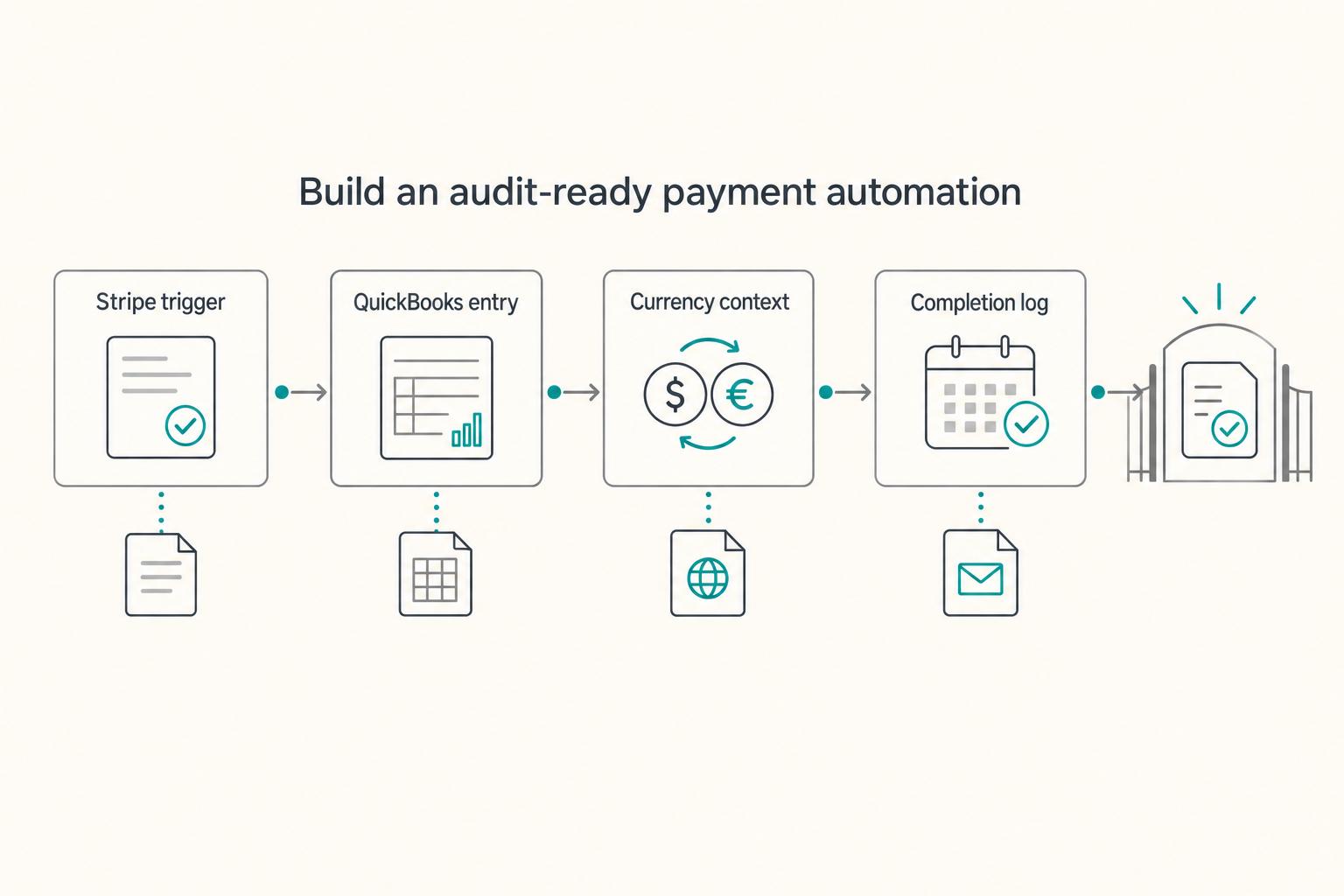
Automating Your Freelance Finances: A Zapier Workflow for Connecting Stripe, QuickBooks, and Wise
Cleaner books and fewer month-end fire drills come from sequence, not software. Run this in the right order: structure, compliance, accounting architecture, then automation.
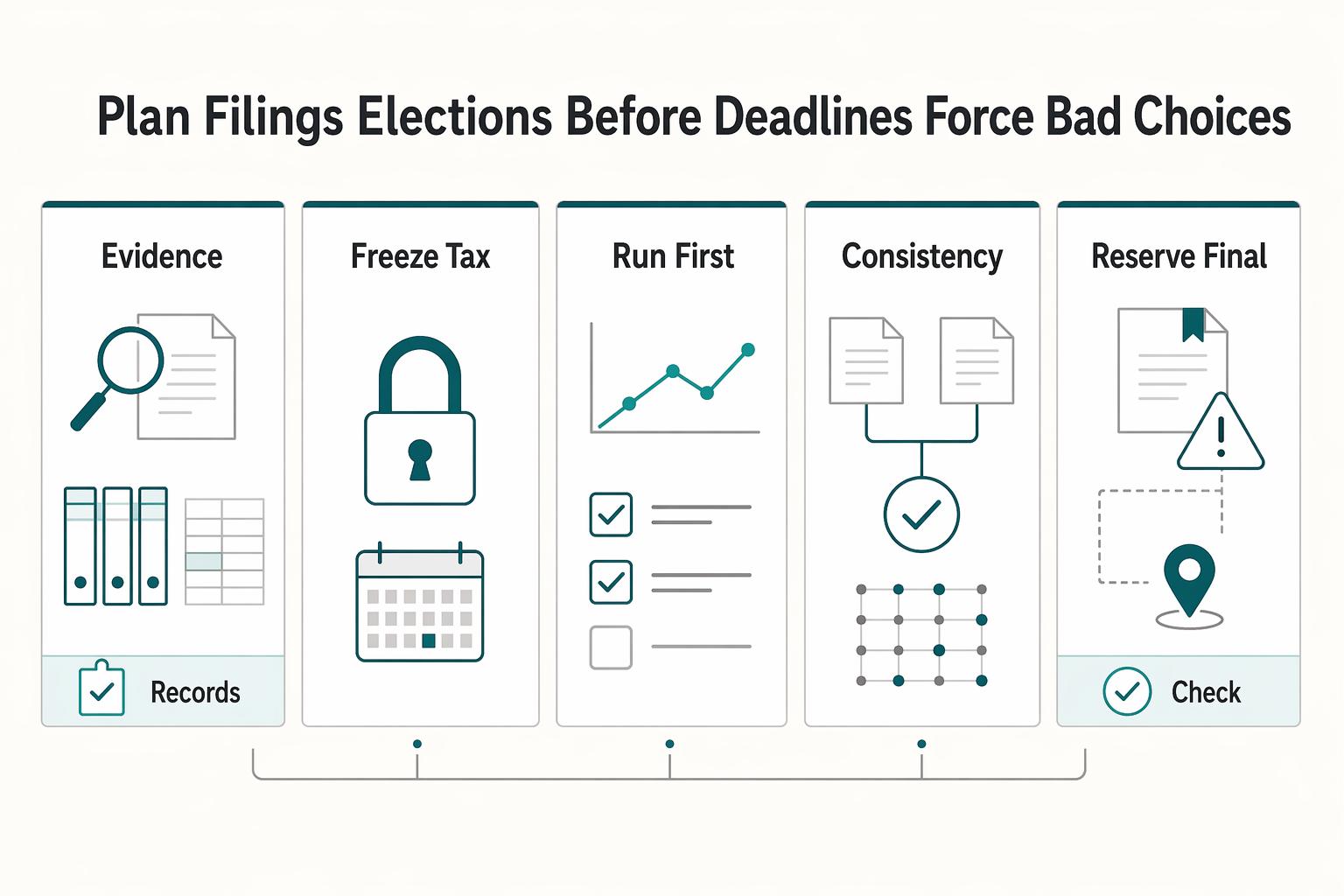
Is Hong Kong Territorial Tax Still Viable for Mobile Consultants?
Hong Kong can still be a viable base for mobile consultants, but only when your filing position matches your facts. In Hong Kong SAR, profits tax turns on where profits arise or are derived, not on a blanket worldwide-income model.
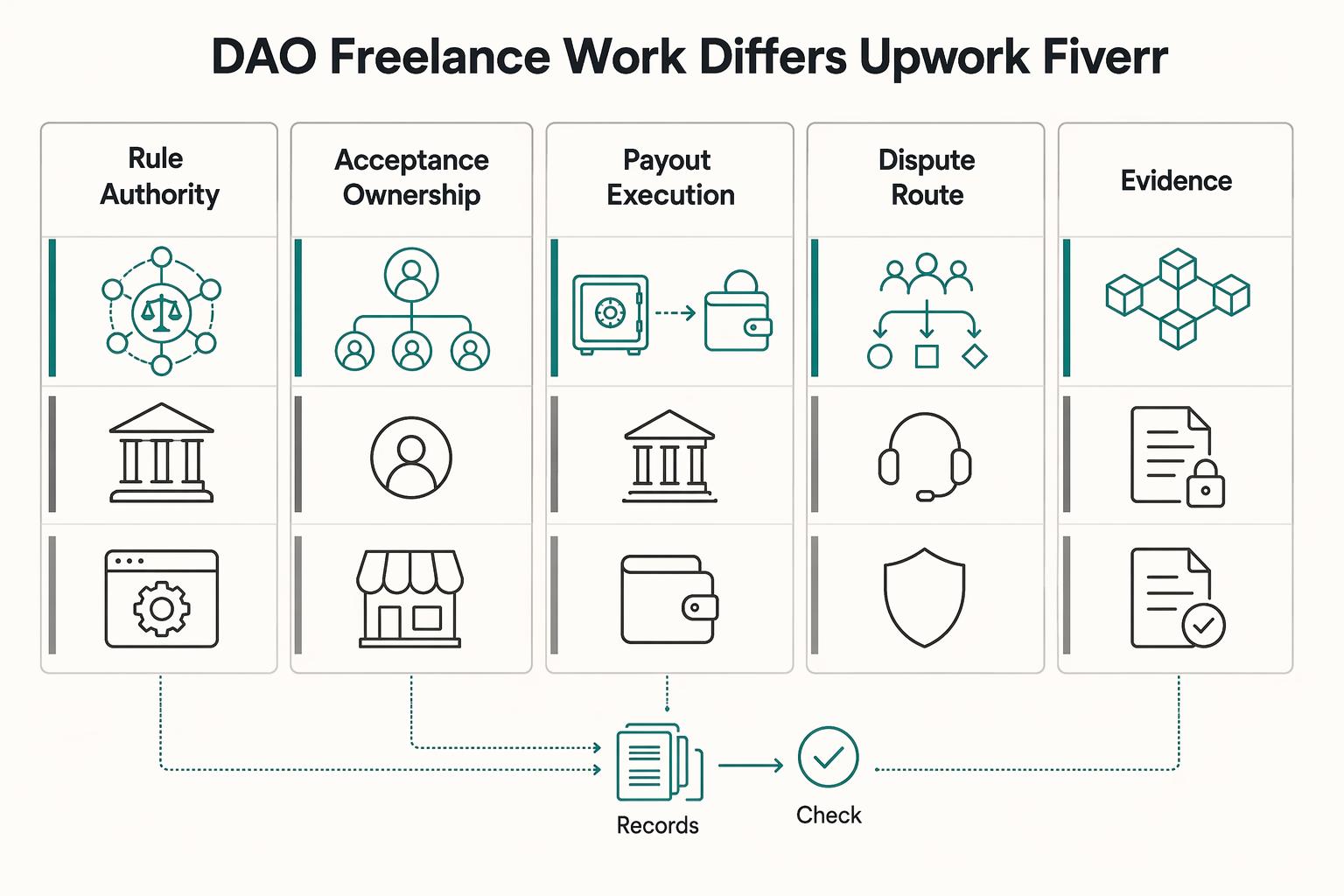
DAO for Freelancers Who Need Payment Certainty
Treat any **dao for freelancers** opportunity as unconfirmed income until you verify who releases funds and how that release happens. A passed vote, active Discord, or busy forum thread may look encouraging, but none of it guarantees payment.