
Quick Answer
Start with a 72-hour setup: map two or three nearby stores, run one small-basket trial, and lock a primary plus backup option. For navigating foreign supermarkets, the fastest win is to verify local reality before buying big: staple availability, label clarity, and checkout flow. The article’s France and Sofia examples both reinforce that first impressions can mislead, while a compact test purchase gives you evidence you can use immediately.
What to Expect on Your First Grocery Trips Abroad#
This guide is for your first 30 days after a move, not for collecting quirky snack photos or turning every grocery run into local color. If you work remotely and have just relocated, the supermarket matters quickly because it controls three things at once: whether you eat normally, whether your week has any structure, and whether your budget stays predictable.
The real tension is simple. You need a food routine almost immediately, but the store may not behave the way your home store did. The pressure is practical, not cultural in the abstract. You are trying to buy breakfast, staples, and a few reliable meals before work on Tuesday, not decode a country through the olive oil aisle.
The mismatch shows up fast. In the French supermarket context, one grounded source notes that new arrivals can feel lost within minutes because product labels, store layouts, and even the unspoken behavior code are unfamiliar. The same source says supermarkets in France are not radically different from elsewhere, but they run on a distinct rhythm and etiquette. That is a useful starting point because it frames the problem correctly. The hard part is often not finding a store, but learning its logic before a rushed, expensive first week.
There is also a broader retail reality worth keeping in view. A Guardian excerpt about France says physical shopping remains dominant there and that two-thirds of French people do their food shopping in hypermarkets or supermarkets. That helps explain why store format and routine matter so much in some places. But the article is explicitly more than 2 years old, so treat it as background, not as a current operating fact you should build your week around without checking locally.
The evidence base for this article has limits, and those limits matter. From the excerpts available here, we have clear framing and a few high-confidence points, but not enough detail to make precise claims about checkout norms, payment habits, or store-by-store tactics. So this guide stays close to what can be verified and pushes you toward first-week checks you can run yourself.
That means one bias throughout: verify before you scale. On your first visits, assume labels, layouts, and store etiquette may differ by country, and do not treat one confusing trip as a personal failure. The bigger risk is doing a large stock-up too early, then discovering that your chosen store, basket, or routine does not actually fit how you live in the new city.
Build the mental model before you shop#
Use this as a repeatable operating model: choose a store, build a test basket, and run checkout once before you scale up. Framing the trip this way makes first-week confusion easier to diagnose.
| Part | Focus |
|---|---|
| Store selection | Distance, repeatability, and whether your basics are consistently available |
| Basket construction | A small test basket with staples plus one or two flexible items before any large stock-up |
| Checkout execution | Line flow, payment acceptance, and any friction that would make this store unreliable on busy days |
Start by separating trip mode from relocation mode. A one-off browse can be loose and curious; a long stay needs repeatable routines that fit your workweek. The goal is practical: find one store you would use again for staples, not to solve every aisle on day one.
Use this three-part model on early visits:
- Store selection: pick for distance, repeatability, and whether your basics are consistently available.
- Basket construction: run a small test basket with staples plus one or two flexible items before any large stock-up.
- Checkout execution: check line flow, payment acceptance, and any friction that would make this store unreliable on busy days.
Treat this as a field method, not a promise about how any country or city behaves. The available source set for this section is policy-focused and does not support precise claims about supermarket checkout or payment norms, so verify locally before you standardize your routine.
For a lighter angle, see The Best Digital Nomad Cities for Food Lovers.
Use a first-72-hours setup checklist#
Use your first 72 hours to set up a repeatable grocery routine, not to explore everything. That window is a practical planning horizon and aligns with EU preparedness messaging that advises households to keep essentials for 72 hours.
Day 1: Map nearby options#
Map two or three nearby stores you could realistically reuse. Save each location, opening hours, travel time, and a quick note on what it seems best for (staples, fresh items, or top-ups). Your test question: would you still use this store on a tired workday?
Day 2: Run a small basket test#
Buy a small basket before any full weekly shop. Include a few essentials you actually use so you can test product fit and checkout flow without overcommitting. Right after checkout, note any friction you would not want to repeat.
Day 3: Lock a default and a fallback#
Pick one default store and one fallback. Keep the default only if it stays reliable for your routine; if repeat friction shows up, switch to the fallback on your next planned shop.
| First-visit checks | Weekly checks | Monthly adjustment checks |
|---|---|---|
| Main goal | Confirm the store is usable | Confirm it still fits your routine |
| What to verify | Basic essentials, checkout clarity, practical convenience | Repeat availability of your core items and overall ease |
| What to record | Hours, travel time, one friction note | Missing items and repeat friction notes |
| Typical action | Small basket test | Main shop plus only needed top-ups |
If you treat these first 72 hours as setup, you reduce first-week grocery friction fast and build a system you can actually sustain.
Related reading: A Guide to the 'Foreign Bank Account Reporting' (FBAR) for a US LLC with a foreign owner.
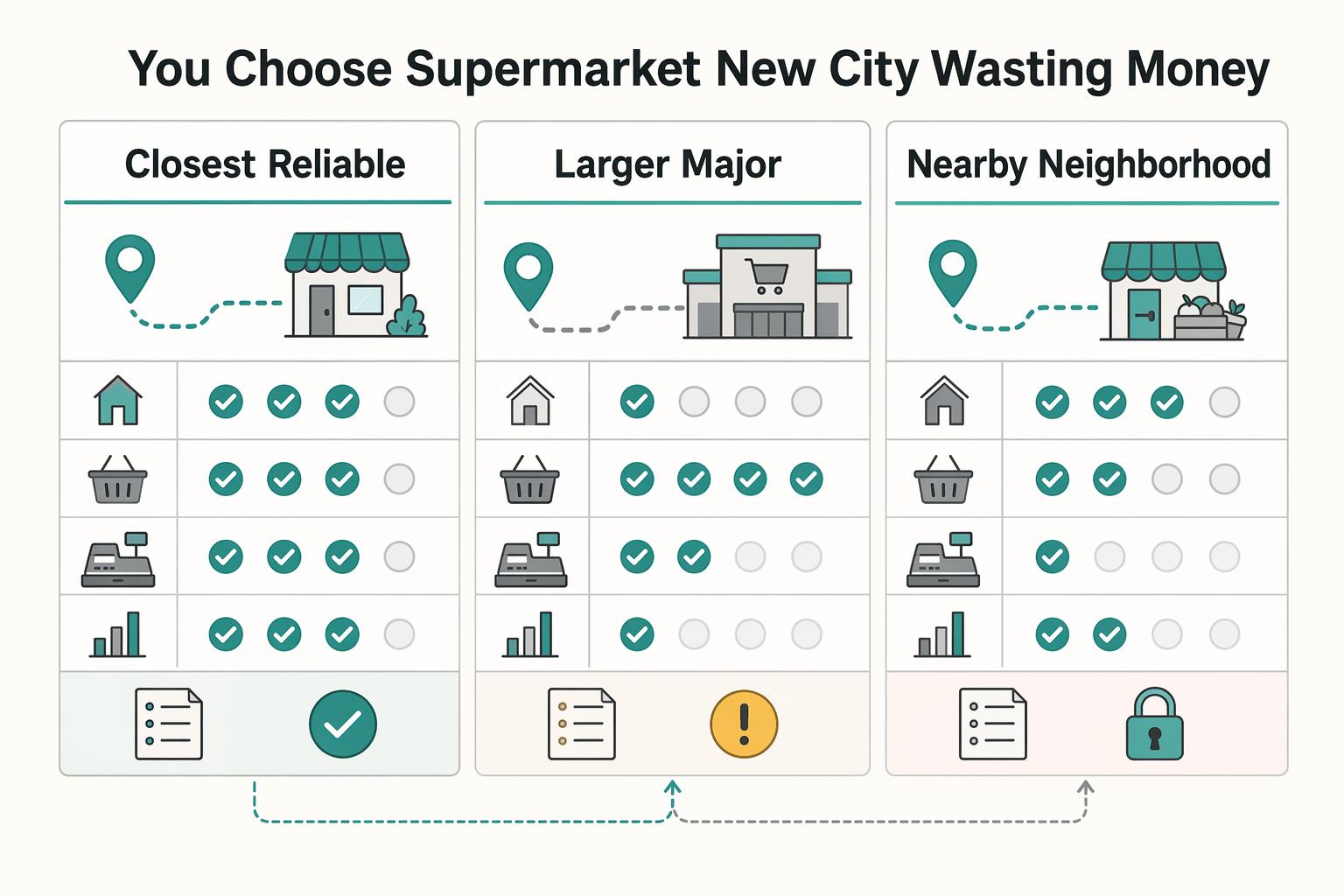
How do you choose a supermarket in a new city without wasting money?#
Choose the store setup you can repeat every week, not the one that feels most interesting on day one. The cheapest-looking option often becomes expensive if distance, stock gaps, or checkout friction keep forcing extra trips.
Use these checks in order:
- Distance you will actually repeat
A store is only "cheap" if you will reliably go there. Access can vary sharply even within one city; in one Guardian example, some residents faced a half-hour walk to a major supermarket.
- Opening reliability
Confirm posted hours in person before making a store your default. If hours are inconsistent for your routine, treat it as backup, not primary.
- Staple stability
Check your real weekly basics first. The Sofia guide (published 10 Feb 2025) notes stores can be easy to handle even without Bulgarian, while some product categories may differ from what international shoppers expect, so a quick staple check matters more than first impressions.
- Checkout and payment friction
Test one small basket and see whether checkout is predictable. In that same Sofia context, card payments are accepted at major supermarkets, but verify locally rather than assuming the same pattern everywhere.
| Store option | Good for first week | Good for weekly restock | Common failure mode |
|---|---|---|---|
| Closest reliable option | Yes, if hours and checkout are consistent | Yes, if staple stock holds week to week | Convenient location but frequent staple gaps |
| Larger major supermarket | Yes, for broad first setup | Yes, when staples and payment are predictable | Strong range but poor fit with your route or schedule |
| Nearby neighborhood market | Yes, for immediate top-ups | Usually better as fallback unless staple coverage proves stable | Narrow range pushes you into second-store runs |
Use a simple decision rule: make your default the store that most reliably reduces repeat friction in your actual week, and keep a backup for gaps. If your "main" store keeps sending you elsewhere to finish basic shopping, demote it quickly.
Read labels fast when language and norms are unfamiliar#
Focus on function first, not perfect fluency. In your first month, use a short must-understand label list so you can shop safely without guessing on every package.
Build a first-month label list#
Keep a quick list in your phone with the distinctions that change whether you can use a product:
| Type | What to distinguish |
|---|---|
| Flavor | plain vs flavored |
| Sweetness | sweetened vs unsweetened |
| Base | dairy vs plant based |
| Storage | fresh vs frozen |
| Preparation | ready to eat vs needs cooking |
| Water | still vs sparkling water |
| Ingredients | any ingredient you avoid for health, allergy, or religious reasons |
In the France-focused context, shoppers can feel lost among unfamiliar labels, unusual layouts, and an "unspoken code of behavior." So use a simple verification habit: compare two similar products side by side, look for repeating front-label cues, then confirm with the ingredient panel or a phone translation app. If you know even a little local language, it helps checkout and in-store questions move faster.
Substitute by function, not by brand#
When your usual item is unavailable, replace it by role in your week, not by logo. Pick an alternative that serves the same job (for example, cooking base, quick protein, pantry carb), with similar storage and practical use at home.
If label clarity is low, do a small test purchase first. Buy one unit, verify taste, texture, cooking behavior, and storage after opening, then scale up only if it works. This avoids the common mistake of bulk-buying something that does not fit your meals.
Travel context from Wander Your Way (Italy) and Time Out can help set expectations, but it is not label proof. Use it for orientation, then trust your own basket test.
Handle checkout and payment friction before it breaks your routine#
Treat checkout as an operational test, not an afterthought. A basket can look fine and still fail if the in-store checkout flow does not match what you expected.
| Check | Timing | Details |
|---|---|---|
| Backup store | Before your first full grocery run | Save one backup store name and location. |
| Receipt note | After your first successful purchase | Keep the receipt and note what slowed you down. |
| Store updates | If the store's Instagram or Facebook shows changed hours, holiday updates, or renovation notices | Confirm in person. |
On your first visit, keep it lightweight: run a small basket, watch the flow before joining a line, and check posted signs near the entrance, self-checkout area, or till. Use that pass to verify the process in real conditions rather than assuming it will match another location. The provided Reddit and The New York Times excerpts do not provide reliable payment-method specifics, so verify on site.
If checkout fails once on a meaningful shop, switch to your fallback store the same day. Do not let one failed attempt delay your week's food setup.
Quick checks that reduce repeat friction:
- Save one backup store name and location before your first full grocery run.
- After your first successful purchase, keep the receipt and note what slowed you down.
- If a store's Instagram or Facebook shows changed hours, holiday updates, or renovation notices, treat that as a signal to confirm in person.
Checkout is the point where your routine either becomes repeatable or breaks. For a step-by-step walkthrough, see A guide to 'Form 8233' for foreign individuals receiving US scholarship or fellowship grants.
Build a weekly basket you can sustain for a long stay#
For a long stay, make your weekly basket repeatable first and exploratory second. Your primary store should be the one that reliably covers your core staples.
Use a simple two-list system on your phone:
- Non-negotiable staples: the items that keep your usual breakfasts, easy meals, and drinks consistent.
- Flexible rotation: produce, snacks, sauces, and one or two optional items you can swap without disrupting the week.
Run the same order each week:
- Check pantry, fridge, and freezer.
- Sketch meals from what you already have.
- Try one-store shopping first.
- Use a fallback store only for true staple gaps.
Apply one clear rule: if a store repeatedly misses your staple list, demote it from primary, even if it is more interesting to browse. Keep the cultural curiosity, but separate it from routine; even travel opinion pieces that frame supermarket visits as part of the experience are better for discovery than for planning your weekly basics.
If your basket supports consistent meals with less daily decision stress, your long-stay routine is easier to maintain. For more on building that kind of routine, see How to Eat Healthy While Traveling Long-Term.
Avoid the mistakes that make relocation grocery costs and stress spike#
The fastest way to cut grocery stress and overspending after a move is to reduce decision churn early: choose one primary store and one backup in week one.
If every shop stays in discovery mode, small frictions compound into extra trips, wasted food, and expensive last-minute meals. A simple two-store setup is more resilient when availability shifts. In a U.S. pandemic-era context, the FTC's March 21, 2024 staff report noted periodic shortages and major price hikes in some grocery categories; that is not proof your current city will behave the same way, but it is a practical reason to plan for gaps instead of reacting to them.
Use a quick validation loop for your first two or three weekly shops:
- Track missing staples.
- Track checkout friction.
- Track whether substitutions actually worked in real meals.
Treat recommendations as discovery inputs, not decisions. Tips from Pinterest, WhatsApp, or Reddit can help you find options, but your decision rule should stay the same: keep the store that reliably fits your routine, and demote the one that repeatedly misses basics.
Do not scale basket size too early. Start with a compact first shop, then expand only after checkout flow and product fit are proven at home.
Red flags that mean you should adjust fast#
- Repeated stockouts on core staples
- Repeated checkout friction
- Repeated "I'll figure it out later" delays that force emergency food choices
If you see these patterns twice in close succession, adjust that week: switch your primary store, shrink basket size, or change shopping day/time.
Conclusion#
The goal is not to find a perfect supermarket on day one. It is to set up a routine that works under normal weeknight conditions, survives small surprises, and lets you shop without re-deciding everything each time.
That is why planning matters more than discovery. One grounded source puts it plainly: planning is key, and you should think about meals for the next few days instead of wandering aimlessly. In practice, that means early success comes from a short list, a modest first basket, and a store choice that fits your real route home, not your curiosity or someone else's recommendation.
By this point, some friction points are easier to spot: local norms and timing can break a good plan. Even careful plans can go sideways, especially when local constraints are invisible until you are standing there. The anecdotal Europe example of a 2-hour lunch break is a good reminder not to assume your home-country shopping rhythm applies everywhere. Your verification step is simple: check store hours, watch one customer ahead of you, and confirm any unclear produce or checkout rule before you build a full weekly cart around it.
If you want a clean next step, keep it small and repeatable:
- Pick one primary store for most staples and one backup store for same-day gaps or checkout friction.
- Run one small test shop with ingredients for a few days, not a full pantry reset.
- After week one, review your basket: what you actually used, what was confusing, what ran short, and which items need a different store or a better substitute next time.
That week-one review is easy to skip. It is also where your routine becomes cheaper in effort. If a store repeatedly misses core staples or creates repeated queue or checkout problems, demote it, even if it feels familiar or interesting. If one unfamiliar product worked well, promote it into your regular list. Keep the adjustment based on evidence from your own kitchen, not on memory from a rushed trip.
As your routine stabilizes, grocery shopping abroad can feel less like a cultural puzzle and more like maintenance. You know where to go, what to buy, and what can derail the trip. Once that routine is stable, supermarket shopping becomes automatic enough to support the rest of your move instead of draining attention from it.
Frequently Asked Questions
How do I handle a foreign supermarket in my first week abroad?
Run one small test shop before you attempt a full weekly haul. Your checkpoint is simple: can you find your staples, understand enough labels to cook one normal meal, and get through checkout without confusion? In France, first visits can feel disorienting because of unfamiliar labels, layout, and unspoken behavior, so treat the first trip as reconnaissance, not a stock-up.
What should I buy first when relocating for a long stay?
Start with a short list you know how to use: a breakfast item, one protein, one carb base, a few pieces of produce, and basic cooking support like oil or seasoning if you do not already have them. Add only one or two unfamiliar items per trip so you can test product fit at home without wasting a full basket. If the store uses EU-style nutrition panels, expect values per 100g or 100ml rather than per serving.
How do I choose between a large chain and a local independent store?
Do not choose by reputation alone. Pick the place that covers most of your staples in one trip, sits close to your actual route home, and does not create repeated checkout friction. If a larger chain handles the core basket reliably, make it your primary. If a local independent store fills gaps faster the same day, keep that as your backup.
What are the most common mistakes expats make when grocery shopping abroad?
Common early mistakes can include overbuying too early, copying recommendations without testing them, and assuming checkout works the same everywhere. A concrete example from Italy is skipping produce pre-weighing and labeling, then getting sent out of line to the scales. Another small miss in that same Italy example is forgetting bags, since plastic bags can cost 5 to 10 Euro cents.
How much should I rely on social recommendations from Reddit or friends versus in-store testing?
Use Reddit and friend advice as a lead list, not as a decision. Those tips might help you find a store you would have missed, but they cannot tell you whether the store fits your commute, cooking habits, or preferred shopping time. Trust your own small-basket test more than a glowing thread.
What information is still unclear in current top search results, and how do I verify it safely myself?
Search results are often thin on the store-specific details that break a routine: exact checkout norms, whether produce needs to be weighed first, bag practices, and other rules that can vary by country and even by branch. Verify those on your first visit by watching one customer ahead of you, checking for produce scales before checkout, reading entrance or till signage, and asking one short question before loading a full cart. Pre-trip research still matters, especially in places where grocery cost is flagged as a concern, but your first in-person test is what turns broad advice into something usable.
Try a related tool
Researched and edited by the Gruv editorial team. Gruv builds cross-border billing, payouts, and finance-operations software for global businesses.
Sources
Educational content only. Not legal, tax, or financial advice.
Related Posts

How Remote Professionals Stay Healthy During Long Stays Abroad
Use this sequence before workload, housing, and travel friction make health tasks harder to execute. If you are traveling for months, treat this as four pass-fail gates. A gate is closed only when you have a written output you can verify.
The Best Digital Nomad Cities for Food Lovers
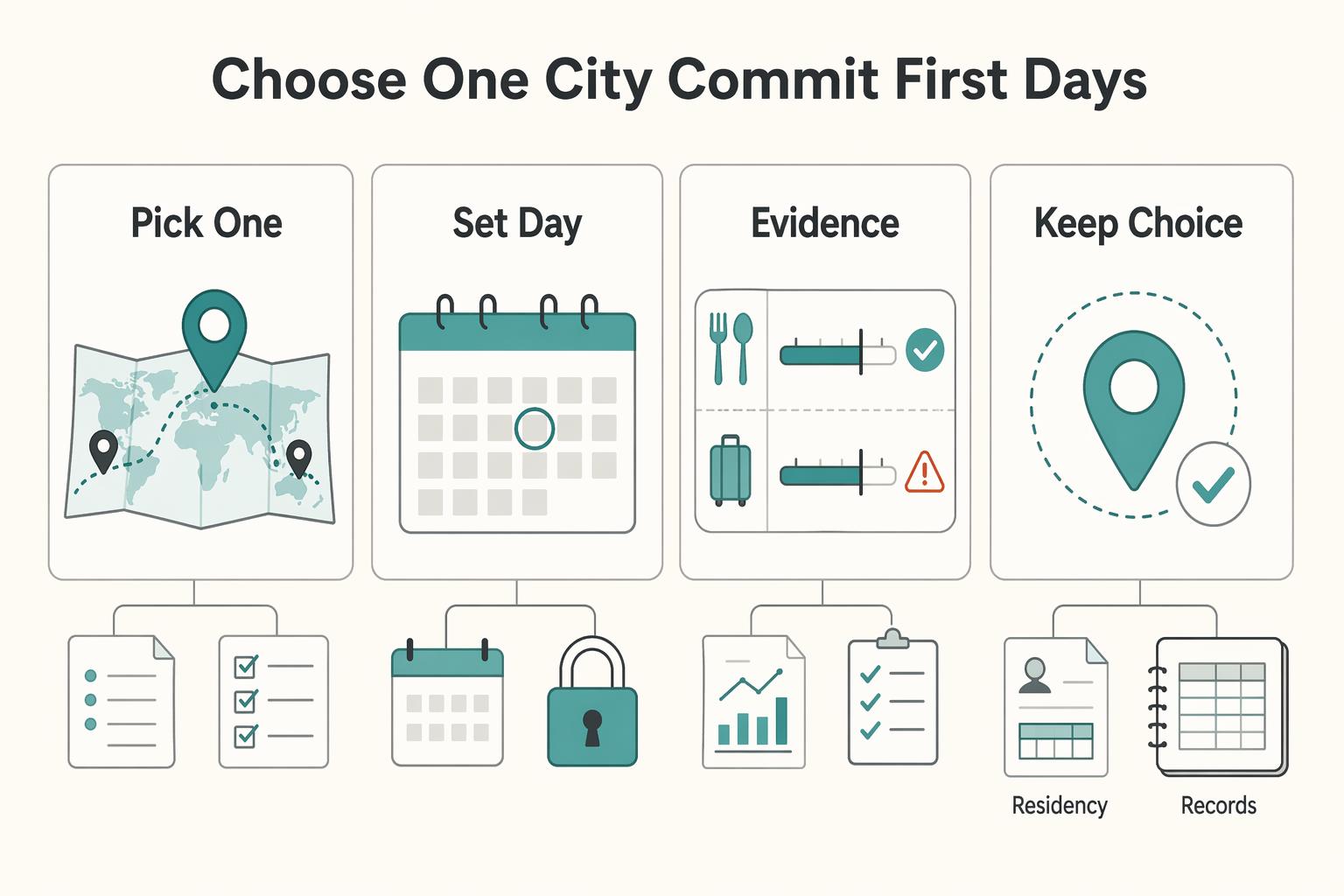
Pick one city in one sitting, then move to your own practical checklist before booking. If your default style is slower city immersion, compare your choice against [Best Digital Nomad Cities for Slow Travel](/blog/best-digital-nomad-cities-for-slow-travel). The goal here is food-focused city selection, not a definitive relocation plan.
How to Eat Healthy While Traveling Long-Term
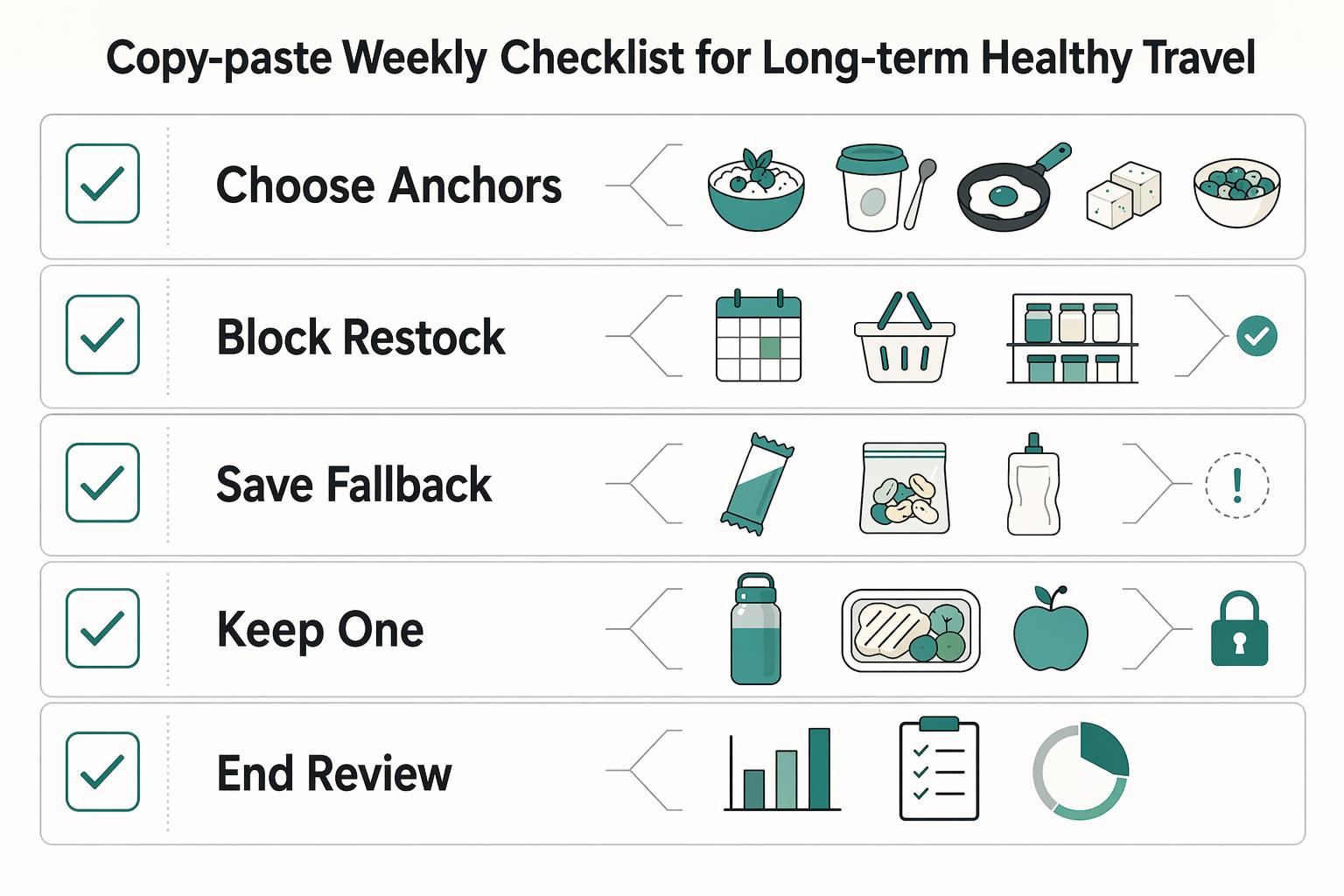
**Step 1. Set a realistic target.** Healthy eating gets harder on long trips for predictable reasons: long travel days, restaurant-heavy routines, and work that keeps moving. If you are staying somewhere for weeks or months, the goal is not to get every meal right. The goal is to make enough solid choices that one rushed breakfast, late dinner, or convenience-store stop does not turn into a full-week slide.