
Quick Answer
All-risk coverage is usually the better choice when one damaged device could interrupt your income because it starts broad and then applies exclusions, while named-perils coverage responds only to listed causes of loss and usually requires more proof from you. Before buying, review exclusions, endorsements, valuation, territory, and claim documentation requirements in writing.
Why the "Burden of Proof" is Your Most Important Insurance Metric#
Quick answer: if one damaged laptop, camera, or recorder would interrupt your income, start by leaning toward an all-risk policy and reviewing exclusions carefully. In practical terms, burden of proof is about who has to prove coverage first, and that can create more claim friction than most buyers expect.
A named peril is a cause of loss specifically listed in your policy. With a named-peril policy, you usually must prove both that the damage happened and that it came from a listed hazard. With an all-risk or open-perils policy, coverage is broad except for stated exclusions. Once you show a covered loss occurred, the insurer generally must prove that an exclusion applies. That pattern is common, but it is not identical across every jurisdiction or policy form.
| Decision point | Named-peril policy | All-risk policy |
|---|---|---|
| What you prove first | Damage occurred and came from a listed peril | Damage occurred within the policy's general coverage grant |
| What the insurer typically proves next | Scope/value issues and whether facts match the listed peril | Whether a stated exclusion bars coverage |
| Where disputes usually start | Cause of loss and fit with named hazards | Exclusions, damage scope, and valuation |
| Admin workload for you | Usually heavier on cause-of-loss proof | Usually lighter on causation, but still documentation-heavy |
| Continuity risk if work is paused | Can be higher when cause-of-loss proof is disputed | Can be lower when exclusions are clear, but depends on policy terms and claim facts |
No matter which policy you choose, keep a clean claim file: a damage list, photos or video, receipts or inventory records, claim forms, bills, and related communications. A common stall point is proving what caused the damage or agreeing on the damage scope. Reporting windows vary by state, so notify your insurer promptly.
Use this rule: choose all-risk for income-critical gear when your downtime tolerance is low and the exclusions are clear enough to trust. Named-peril can still make sense when the asset is easier to replace, downtime is manageable, and you can carry more proof work. Related: Professional Indemnity Insurance for IT Consultants Who Want Fewer Claim Surprises.
Choosing Your Asset Armor: Two Strategic Choices, Not a "Budget" Option#
Treat this as a choice between two operating models, not a cheap policy versus an expensive one. If one failed device can disrupt client delivery, open-perils wording can be the stronger continuity play. If disruption is manageable, named-perils can be a workable baseline.
| Decision factor | Named perils coverage | Open perils / all-risk coverage |
|---|---|---|
| Coverage scope | Covers loss only when the cause is specifically listed | Covers causes of loss unless specifically excluded |
| Claims handling path | Often requires showing the loss was caused by a listed peril | Often turns on exclusions once basic coverage is established |
| Operating model | Baseline loss protection | Continuity-first protection |
| Main tradeoff | Narrower scope and more causation proof on your side | Broader wording, but exclusions and limitations still control practical coverage |
| Common failure mode | Claim friction when the cause of loss is hard to tie to a listed peril | Relying on the word "all" and missing key exclusions |
Before you choose, ask yourself three questions. How dependent are you on mission-critical gear? How much claim admin burden can you absorb? How much downtime can you tolerate before client work slips? If any answer is "not much," lean toward open-perils wording. If you can replace quickly and document causation well, named-perils may be enough. Burden-of-proof rules can vary by policy type and jurisdiction, so confirm how your form handles listed perils and exclusions.
When you compare options, read the form structure instead of the marketing label. A basic causes-of-loss form such as CP 10 10 reflects the listed-peril model. A special causes-of-loss form such as CP 10 30 starts with direct physical loss language and narrows coverage through exclusions and limitations. Ask for the declarations, the causes-of-loss form, and every endorsement that modifies covered property.
If you work internationally, treat territory terms as a go or no-go check. Confirm the coverage territory, confirm whether movable equipment is covered as transportable property, and confirm any worldwide endorsement language before you rely on either model for cross-border work.
If you want a deeper dive, read Canada's Digital Nomad Stream: How to Live and Work in Canada.
Named Perils: "Baseline Catastrophe Coverage"#
Named-perils coverage can be a better fit for assets you could lose temporarily without interrupting client delivery. If losing the item would pause revenue, pressure-test whether this structure gives enough protection.
Named-perils coverage is an inclusion-based policy: coverage applies only to causes of loss specifically listed in your contract. If a peril is not listed, it is not covered. In ISO commercial property wording, the basic and broad causes-of-loss forms are named-perils forms, so read the actual form, not just the quote label.
Covered vs commonly not covered (check your wording)#
| Scenario | Often covered in named-perils form | Common near-miss unless wording/endorsement adds it |
|---|---|---|
| Fire damage | A listed fire peril | A cause not listed in your form |
| Water/catastrophe events | Only if specifically listed | Flood or earthquake unless specifically covered |
| Condition-related loss | Sudden listed peril damage | Routine wear and tear |
These are boundary checks, not universal rules. Policies vary, so verify your own peril list, exclusions, and endorsements.
What to verify before you buy#
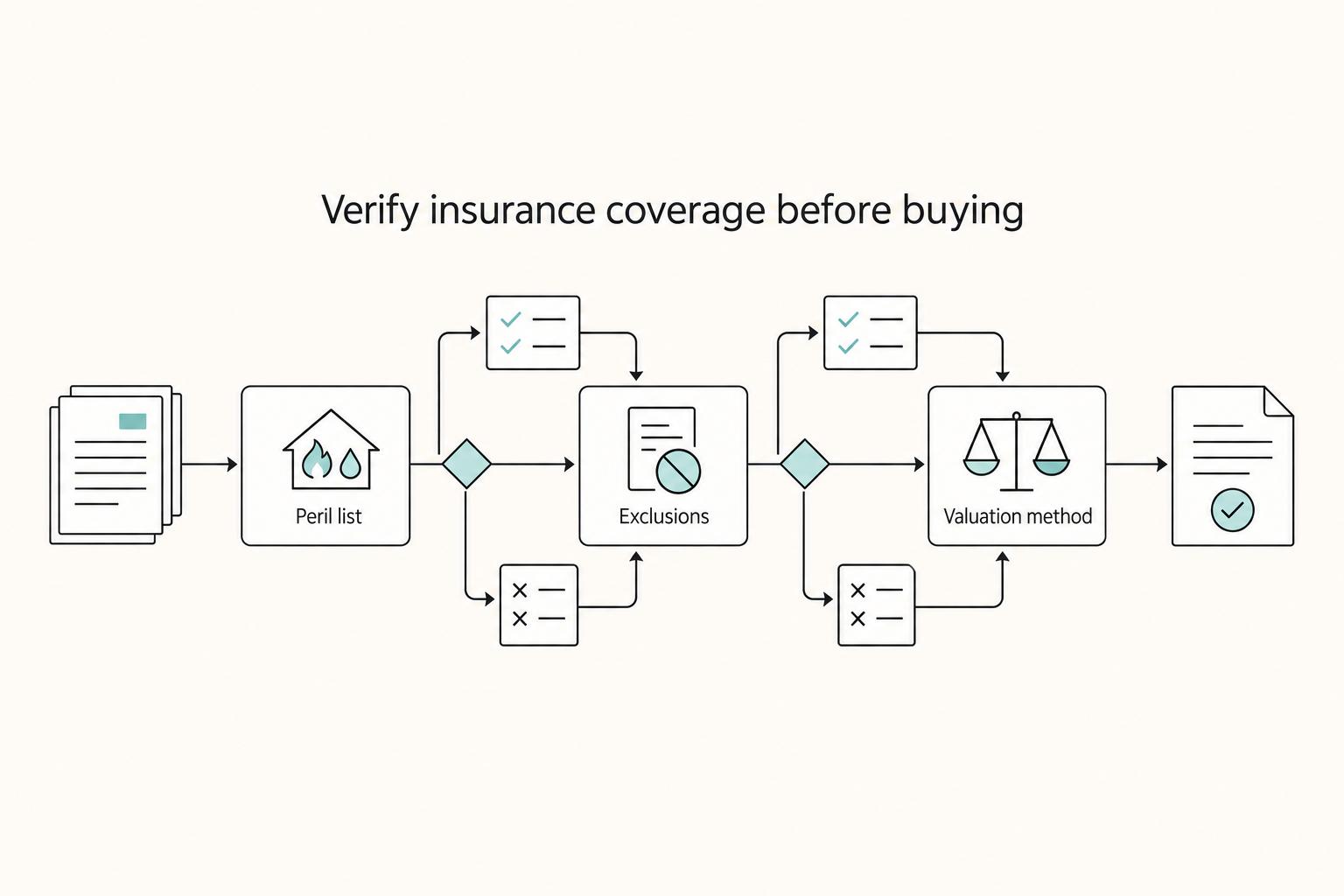
Do not buy based on the words "named perils" alone. Review the full policy wording and endorsements, and confirm:
| Check | What to confirm | Article detail |
|---|---|---|
| Exact peril list | The specific causes of loss that are actually listed | If a peril is not listed, it is not covered |
| Exclusions and endorsements | Review the full policy wording and endorsements | Exclusions remove coverage from the insuring agreement, and endorsements can change policy terms later |
| Valuation method | Whether payment is actual cash value (ACV) or replacement cost value (RCV) | ACV includes depreciation; RCV pays repair or replacement with like kind and quality |
The continuity warning#
The weak point is simple: if the real cause of loss is unlisted, the property claim can fail. That can also affect income protection because business-income claims usually require direct physical damage to business property. They often have a waiting period of 48 to 72 hours, and standard restoration periods may be capped at 30 days unless extended, up to 360 days, by endorsement.
If you are considering named-perils coverage for critical assets, treat the peril list, exclusions, endorsements, and valuation method as go/no-go checks before binding.
Related reading: What is Cyber Liability Insurance and Do Freelancers Need It?.
All-Risk: "Comprehensive Business Continuity Insurance"#
If losing an asset would immediately disrupt client delivery or revenue, start with an all-risk form and then pressure-test its limits. This can be a strong continuity choice, but the real boundary is the exclusions schedule, along with any sublimits and endorsements.
In plain terms, all-risk means losses are generally covered unless the policy excludes them. The starting point is broader than a named-peril form, but it does not mean every loss is covered or fully paid.
| Area | What all-risk usually does | Where protection can narrow |
|---|---|---|
| Cause of loss | Starts from coverage unless excluded | Exclusions can remove specific risks, property classes, or locations |
| Major hazards | Can cover causes not itemized in a named-perils list | Flood or earthquake may require separate coverage |
| Payout size | Pays covered damage under contract terms | Policy limits and sublimits cap recovery |
| Valuation | May pay replacement cost or ACV, depending on wording | ACV applies depreciation; replacement cost pays similar kind and quality without depreciation |
| Downtime support | Business interruption can replace revenue after covered loss | A waiting period of 48 to 72 hours is common, and restoration is often 30 days unless extended to 360 days by endorsement |
Pre-bind checks that matter#
Before you bind, request the policy limit details, full exclusions schedule, and all endorsements, then confirm:
| Check | Question | Article detail |
|---|---|---|
| Valuation basis | Is property settled at replacement cost or actual cash value (ACV)? | Whether your property is settled at replacement cost or actual cash value (ACV) |
| Deductible structure | Are deductibles flat-dollar or percentage-based? | Some named-storm deductibles run 1% to 10% |
| Internal caps | Which sublimits apply, and how do they sit inside the main policy limit? | Which sublimits apply, and how they sit inside the main policy limit |
| Claims documentation expectations | What records must be maintained? | Inventory, receipts, and repair or replacement proof |
Pay close attention to deductible structure in storm-prone situations; some named-storm deductibles run 1% to 10%. You should also confirm what records you must keep, such as inventory, receipts, and repair or replacement proof, so a claim does not bog down over documentation.
If you can absorb longer outages on a non-critical asset, you may choose less breadth. If one equipment failure can stop tomorrow's deliverables, all-risk wording may be the better operational fit.
You might also find this useful: A Guide to Errors and Omissions (E&O) Insurance for Software Developers.
The Decisive Factor: Where the Burden of Proof Lies#
This is the hinge point in the whole decision: who has to do more proving once a claim is filed. If uninterrupted billable work matters, prioritize the structure that can reduce your proof burden and potential claim friction.
Burden of proof is the standard a party must meet to prove a fact. In practice, it means who has to make the case. A named perils policy covers loss only when the cause matches a peril listed in the policy. An all-risk policy, also called open perils or special perils, covers fortuitous loss unless the policy specifically excludes that cause. An exclusion is the policy language that identifies hazards, circumstances, or property the policy does not cover.
How the claims path changes#
In many jurisdictions, including the California framework below, the difference shows up in the opening steps of a claim.
Named perils
- You submit the claim.
- You show the property is covered.
- You prove the cause of loss matches a listed peril.
All-risk / open perils
- You submit the claim.
- You document loss to covered property within the basic coverage scope.
- If denying that cause, the insurer points to a specific exclusion.
All-risk does not erase your evidence burden. You still need to establish basic coverage, and if an exclusion is proven, you may need to prove an exception.
California CACI No. 2304, last reviewed April 2025, reflects this sequence. The insured shows basic coverage, then the insurer proves a specific exclusion, then the insured may need to prove an exception. IRMI reports broad agreement across states on exclusion burden, but state law and policy wording can still vary.
| Decision point | Named perils | All-risk / open perils |
|---|---|---|
| First coverage showing | Loss caused by a listed peril | Loss within basic policy scope |
| Documentation effort | Can be higher when cause is unclear or disputed | Still substantial, but less tied to matching a peril list |
| Common dispute focus | Whether the event fits listed perils | Whether a specific exclusion applies |
| Expected claim friction | Can be higher when cause-of-loss proof is ambiguous | Can be lower at cause-of-loss stage, not zero overall |
| Business continuity effect | More effort can go to proving listed-peril fit | Less emphasis on proving one named cause, though exclusion disputes can still arise |
Use a simple rule: if downtime risk is the bigger operational threat, choose the structure that minimizes your need to prove the exact cause of loss. For non-critical assets you can work around, you may accept more proof burden.
We covered this in detail in How Journalists and Bloggers Should Choose Media Perils Insurance.
The 3-Step Risk Audit to Run Before You Compare Premiums#
Do this audit before you compare premiums. You are deciding what must be replaced fast, what downtime costs in your revenue model, and whether your likely losses fit listed-peril wording or broader wording.
Step 1. Build an asset register for income-critical devices#
Build an asset register for every device that can stop or materially slow your income. Keep it current and accessible even if your primary machine is gone. For each item, record:
- device and role in your work
- make, model, and serial number
- proof of ownership, such as invoice, receipt, lease record, or card statement
- replacement path, meaning what you would buy now if it disappeared
- data exposure status, such as client files, credentials, or regulated data
Keep photos with the register: the serial label, the purchase record, and a current photo of the device in your possession. This can support faster claims handling when you need an itemized loss list and receipts. If you rotate hardware often, pair this with a retirement process and maintain a wipe log when disposing of devices. If needed, use this guide to securely wiping devices before selling them.
Step 2. Price lost revenue during replacement and recovery#
Price the interruption, not just the hardware. Your real exposure is lost revenue during replacement and recovery, plus extra expense. Use your actual model:
- hourly work: lost booked days
- fixed-fee projects: delayed milestones, rush replacement costs, client concessions
- retainers: service credits, missed deliverables, churn risk
Use this working formula: Downtime exposure = daily revenue at risk x estimated recovery window + extra expense
Then verify how your policy trigger works. Business income or interruption coverage is tied to covered events that cause physical property damage, not every slowdown. In the guidance cited here, the waiting period is typically 48 to 72 hours before the restoration period starts. Standard limits may be 30 days unless extended by endorsement, in some cases up to 360 days. Also make sure your records support the claim, because undocumented income is called out as a coverage problem.
Step 3. Stress-test real loss scenarios before you bind#
Stress-test real loss scenarios before you bind. Named-perils responds only when the cause is listed; all-risk starts broader and then applies exclusions.
| Scenario | Likely named-perils response | Likely all-risk response | Expected claim friction |
|---|---|---|---|
| Fire damages your home office and primary laptop | Can fit if fire is listed and property/location conditions are met | Can start within scope unless excluded or limited | Cause of loss may be clearer, but valuation and limits still matter |
| Forced-entry theft from a fixed workspace | Can fit if theft is listed and conditions are met | Can start within scope unless excluded or limited | Ownership and incident documentation can still affect settlement |
| Coffee spill on your laptop at a client site or cafe | Depends on whether this cause of loss and location fit listed wording | May be addressed unless excluded; offsite terms still control | Friction can rise when cause-of-loss or offsite terms are unclear |
| Damage or loss while moving gear between locations | Can be a gap if base-location coverage is assumed to travel | May still require inland marine or floater wording for transit/offsite property | High unless transit/offsite wording is explicit |
Before you bind, send these prompts to the insurer or broker and get written answers:
- Send the full exclusions and limitations wording for business personal property and electronics, not a summary.
- For each mission-critical device, is settlement
actual cash valueorreplacement cost value? - Is the deductible fixed-dollar or percentage-based, and do separate deductibles apply to electronics?
- Which locations are covered in writing: home office, client site, coworking space, hotel, vehicle, and property in transit?
- If transit or offsite property is not fully covered, which inland marine or floater option closes the gap?
Those answers tell you how the policy will perform on an ordinary bad day, which is what you are buying for.
For a step-by-step walkthrough, see A Guide to Key Person Insurance for Small Agencies.
Once you finish your asset and downtime checklist, pair it with a clean payment workflow so a claim delay does not also delay your cash flow: Explore freelancer money workflows.
The Global Professional's Blind Spot: Is Your Coverage World-Proof?#
If you work across borders, treat your policy as domestic until the written forms say otherwise. Even strong-looking coverage can fail once your equipment leaves the policy's defined geography, including under named-perils or special-form ("all-risk") framing.
A coverage territory clause defines where a covered occurrence must happen for coverage to apply. A geographic limitation clause is the operational gate that ties coverage to where the loss happened. In specimen wording, territory can be limited to the U.S., including territories and possessions, Puerto Rico, and Canada, with narrow transit-related extensions in international waters or airspace. The blind spot is simple: broad-looking coverage can still stop at the border.
What the two useful fixes actually do#
Your base property policy is often built around assets at your business address. That can leave gaps when your core equipment moves between coworking spaces, hotels, client sites, and transit legs.
| Option | Primary use | Limit noted |
|---|---|---|
| Base property policy | Often built around assets at your business address | Can leave gaps when core equipment moves between coworking spaces, hotels, client sites, and transit legs |
| Inland marine insurance | Designed for movable business property in transit or temporary offsite storage | Does not automatically make coverage worldwide and does not automatically add business-income protection abroad |
| Property floater | Follows covered property across changing locations | Some property floaters or worldwide endorsements may broaden geography, but only the actual endorsement language controls |
Inland marine insurance is designed for movable business property in transit or temporary offsite storage. It helps with moving or offsite equipment, but it does not automatically make coverage worldwide, and it does not automatically add business-income protection abroad.
A property floater, often an inland marine floater, follows covered property across changing locations. Some property floaters or worldwide endorsements may broaden geography, but only the actual endorsement language controls. Also, some countries restrict non-admitted insurance, so "worldwide" wording and local legal usability are not always the same thing.
What to verify before you bind#
Use written scenario checks, not verbal reassurance. Ask for the exact form name, endorsement name, and policy language that answers each scenario. Confirm these in writing:
- Overseas accidental damage: whether accidental damage to scheduled portable equipment is covered outside your home country, and under which form or endorsement.
- Transit losses: whether theft, breakage, or disappearance in transit is covered, including the transit contexts relevant to your work.
- Temporary work locations: whether coworking spaces, hotels, client sites, and short-term rentals count as covered locations.
- Reimbursement conditions: whether payment is direct or reimbursement, required documents, currency or exchange-rate treatment, and any forum or local-policy conditions.
Also confirm whether equipment must be scheduled, with make, model, and serial, or can sit under a blanket portable-equipment limit. Then match that to the documentation requirements your form uses for claims handling.
Use this scenario template, not a one-off question#
Run this template for each meaningful exposure:
Location: Asset: Cause of loss: Requested coverage confirmation: Please confirm in writing whether this loss is covered, under which policy form and endorsement, subject to which exclusions, and what documents I must submit for reimbursement or replacement.
Example structure, not a script:
- Location: coworking space in Lisbon
- Asset: MacBook Pro listed on equipment schedule
- Cause of loss: accidental liquid spill or power surge
- Requested coverage confirmation: confirm repair or replacement response, whether this site is a covered temporary work location, and whether any overseas payment condition applies.
Pre-bind screening table#
| Verification question | Why claim risk exists | What an acceptable written confirmation must include |
|---|---|---|
| Is accidental damage to my scheduled laptop covered outside my home country? | Broad or special-form wording can still be narrowed by territory or endorsement limits. | Exact form or endorsement extending territory, covered geography, and remaining exclusions that still apply. |
| Is theft or damage while my gear is in transit between countries or cities covered? | Base property forms are often location-centered; transit can be a gap without inland marine or floater wording. | Written confirmation that transit is covered, by which form, plus any reporting or handling conditions. |
| Are coworking spaces, hotels, and client sites treated as covered temporary work locations? | "Offsite" wording may not include every temporary location in practice. | Explicit statement that these locations are covered for listed equipment, not only the main business address. |
| If costs arise abroad, how are they paid or reimbursed? | Worldwide wording may still use reimbursement mechanics, forum conditions, and U.S.-currency exchange-rate terms. | Direct pay versus reimbursement, required documentation, currency or exchange-rate wording, and any remaining court or local-coverage condition. |
Bottom line: if you work internationally, do not bind until geography, transit treatment, temporary-location treatment, and payment mechanics are confirmed in writing. A policy can look broad on page one and still fail where you actually work.
For a related walkthrough, see A Cybersecurity Consultant's Guide to Professional Indemnity Insurance.
Your Final Check: An Investment in Resilience, Not an Expense#
Make the final choice continuity-first, not premium-first. If a quote is cheaper but leaves cause-of-loss wording, exclusions, or territory unclear, you may be accepting more claim friction and downtime risk.
A premium-first decision asks what you can pay now. A continuity-first decision asks what will happen after a covered loss, which policy documents control that outcome, and whether those documents are clear before you bind.
Premium-first versus continuity-first#
A lower premium is not automatically wrong, and a higher premium is not automatically better. The decision gets risky when you compare labels instead of policy documents. Use the form type, exclusions section, and endorsements as your buying test.
| Buying criterion | Premium-first approach | Continuity-first approach |
|---|---|---|
| Burden of proof | Accepts broad verbal assurances | Gets the exact form name and written confirmation of how coverage is triggered and disputed under that form |
| Exclusions clarity | Relies on quote summaries | Reviews the exclusions section and confirms whether endorsements change exclusion scope |
| Coverage territory | Assumes travel or cross-border work is included | Gets written territory language, including any location limits or narrower suit requirements |
| Recovery readiness | Plans to handle claims later | Sets up evidence storage, incident logging, and a backup-device plan before binding |
Use this rule: do not bind until you have the form name, endorsement names, exclusions page, and written yes or no answers for your top claim scenarios.
What to verify before you bind#
Ask for these items in writing and keep them with the quote file:
- The exact form name and, for the relevant property coverage form, whether coverage is named-perils or all-risk subject to exclusions.
- Every endorsement name, because endorsements can modify base terms.
- The exclusions section, where non-covered perils or coverages are typically stated.
- Scenario responses for your highest-impact losses, with asset, location, cause of loss, and expected outcome.
If the discussion stays at label level and never gets to actual wording, treat that as unresolved risk and keep shopping.
Tie the decision to downtime exposure#
If your income depends on specific equipment, downtime can cost more than replacing hardware. So verify whether business income coverage is included, excluded, or omitted, and check any waiting-period and restoration-period terms in writing. If this stays unclear, your continuity plan is incomplete even if property replacement looks covered.
Claim readiness is part of the purchase decision#
Set these controls before the first premium payment:
- Evidence storage: keep receipts, purchase records, serial numbers, and photo or video records in cloud storage you can access away from the loss location.
- Incident workflow: use a simple first-notice template, report promptly, and maintain a dated communication log from first report through adjuster follow-up.
- Backup-device continuity plan: pre-decide how you keep working if your primary device is unavailable, whether that means a spare, a rental path, or a preapproved emergency purchase rule.
If exclusions, territory, endorsements, or claim workflow expectations are still verbal or vague, pause and do not bind yet.
Need the full breakdown? Read Liability Insurance for Freelance IT Consultants: Do You Need It?.
If you want to pressure-test your insurance decision against how you invoice, collect, and reconcile cross-border payments, talk with Gruv.
Frequently Asked Questions
Is all-risk coverage worth it for freelancers?
It can be worth it when one lost or damaged device would interrupt client delivery or revenue. Do not decide from the label alone. Compare the full form language, exclusions, endorsements, and written confirmation of your top loss scenarios.
What is commonly excluded even under all-risk or open perils?
This article does not provide a universal exclusion list. Ask for written yes-or-no answers on the specific scenarios you care about, including whether coverage applies as written or needs an endorsement. Rely on the full wording, not a summary.
How do I protect equipment while traveling internationally?
Do not assume a policy label gives you cross-border protection. Get written confirmation of coverage territory, transit treatment, temporary work locations, and any endorsement that applies to your travel pattern. Keep records such as serial numbers, receipts, and photos organized for claims.
Does this logic apply to E&O or professional liability?
Use the same document-first approach, but do not assume property coverage rules and liability coverage rules work the same way. Confirm scope, exclusions, reporting conditions, and territory in writing before you rely on an E&O policy. This article does not provide E&O-specific policy rules.
Is "all-risk" different from "open perils"?
This article does not support a definitive distinction here. Treat both labels as a prompt to inspect the actual wording and exclusions on your form. If the broker uses the terms loosely, pause until the meaning is clarified in writing.
What should I ask for in writing before I buy?
Ask for the exact form name, each endorsement name, the exclusions page, and written responses to your top claim scenarios. Frame each scenario by location, asset, cause of loss, and the outcome you want confirmed, such as repair, replacement, direct pay, or reimbursement. If the answers stay verbal, keep shopping.
Are floods and earthquakes covered automatically?
Do not assume they are. Ask for a written yes or no on each peril and whether an endorsement is required. If the response is unclear, treat it as an unresolved risk before you bind.
Researched and edited by the Gruv editorial team. Gruv builds cross-border billing, payouts, and finance-operations software for global businesses.
Sources
- ca5.uscourts.gov/opinions/unpub/24/24-60178.0.pdftrusted
- doi.sc.gov/957/Understanding-Your-Insurance-Policytrusted
- fdic.gov/sites/default/files/2024-03/pr22040a.pdftrusted
- flcourts-media.flcourts.gov/content/download/2486591/opinion/Opinion_202...trusted
- law.cornell.edu/wex/burden_of_prooftrusted
- legacy.rma.usda.gov/handbooks/25000/2009/09_25010-1H.pdftrusted
- leginfo.legislature.ca.gov/faces/billTextClient.xhtmltrusted
- ogs.ny.gov/system/files/documents/2021/09/cg-00-01-01-9...trusted
Educational content only. Not legal, tax, or financial advice.
Related Posts
Canada Digital Nomad Visa Planning for Visitor Status and Work Permits
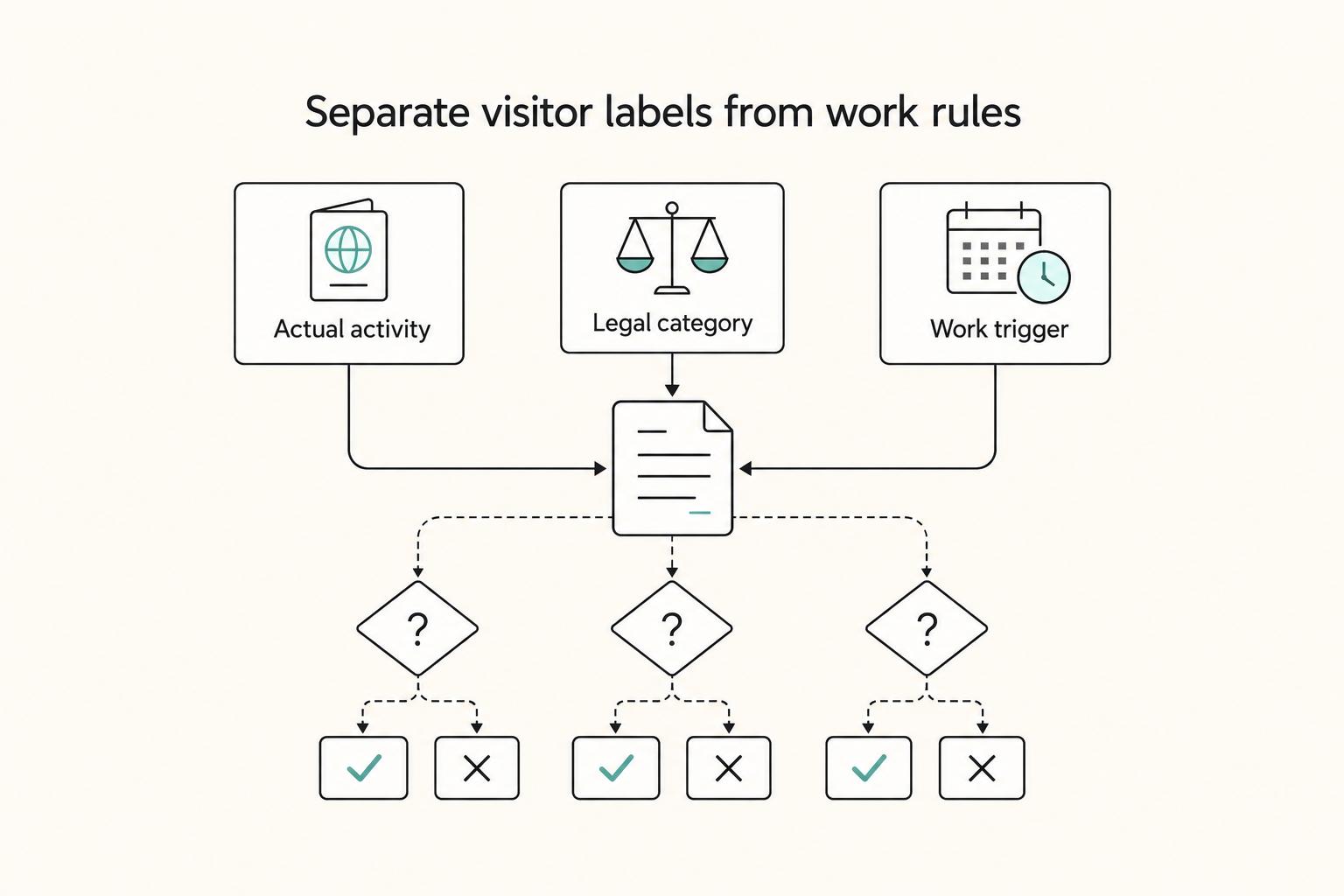
The phrase `canada digital nomad visa` is useful for search, but misleading if you treat it like a legal category. It is shorthand for existing Canadian status options, mainly visitor status and work permit rules, not a standalone visa stream with its own fixed process. That difference is not just technical. It changes how you should plan the trip, describe your purpose at entry, and organize your records before you leave.
Securely Wipe Devices Before Selling Them With Clear Risk Checks
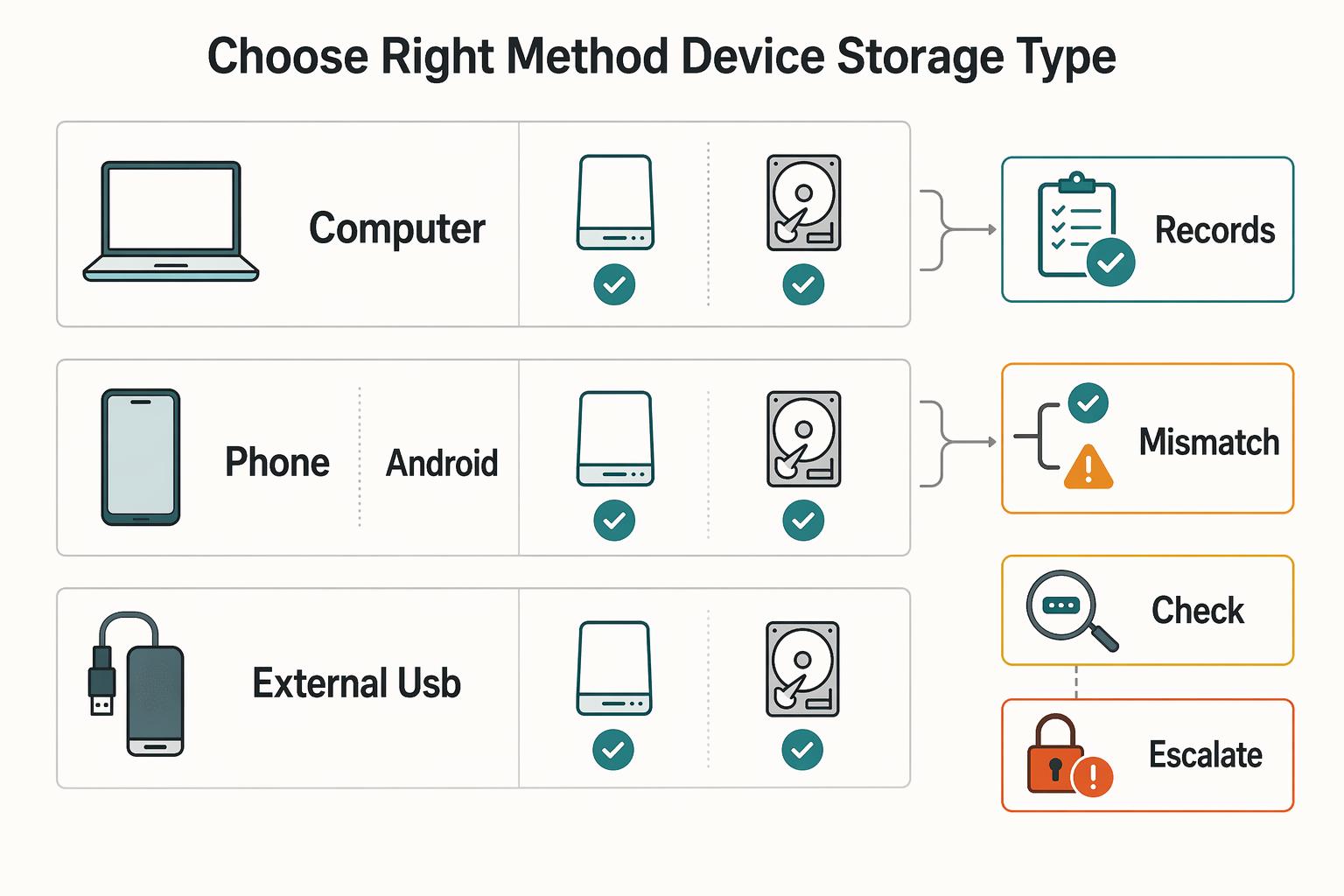
Make one call before you touch the device: choose a wipe level that matches the risk, then document each step you complete. That keeps your decisions consistent when you are under pressure from a buyer, a trade-in deadline, or a handoff date.

The Freelance Payment Penalty: A Modeled Audit of Platform Fees, FX Spreads, and Payout Delays
The money rarely disappears through a single, easy-to-spot fee. The real loss is stacked. A marketplace takes its commission, a processor adds a charge for international cards, a bank or payment company converts the currency at a spread, a platform holds the funds before release, and a wire sheds a little to intermediaries on the way in. Each layer looks defensible on its own, but the worker feels the combined result as a smaller deposit and a later payday.